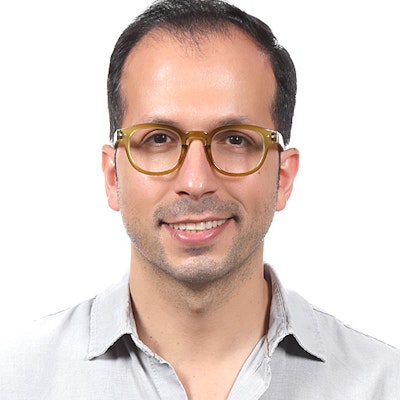
Dr. Wojciech Kosior is a researcher at the Department of Comparative Civilization Studies within the Centre for Comparative Studies of Civilisations at Jagiellonian University, Poland. He holds degrees in Jewish Studies from the Paideia Institute, Religious Studies, and Psychology from Jagiellonian University. Education: Jewish Studies (Paideia Institute) Religious Studies (Jagiellonian University) Psychology (Jagiellonian University) His research focuses on angelology, demonology, and apotropaism, cognitive science of religion, and digital humanities applications in religious text analysis. He specializes in Hebrew Bible, early rabbinic literature (Talmuds, Midrashes), Targums, Dead Sea Scrolls, and apocryphal texts. His work often intersects ancient religious traditions with modern quantitative and qualitative analysis. Key trends in his recent publications include systematic databases for supernatural entities (Elyonim veTachtonim project), cognitive theory of religion applications, and digital humanities tools in Jewish and Biblical studies. His work has been supported by grants from the National Science Centre (2018/31/D/HS1/00513) and Ministry of Science and Higher Education initiatives. While he has not explicitly listed scientific awards, his research has been funded through competitive grants. He manages significant projects like the Elyonim veTachtonim database and co-edits comparative religious studies outputs.
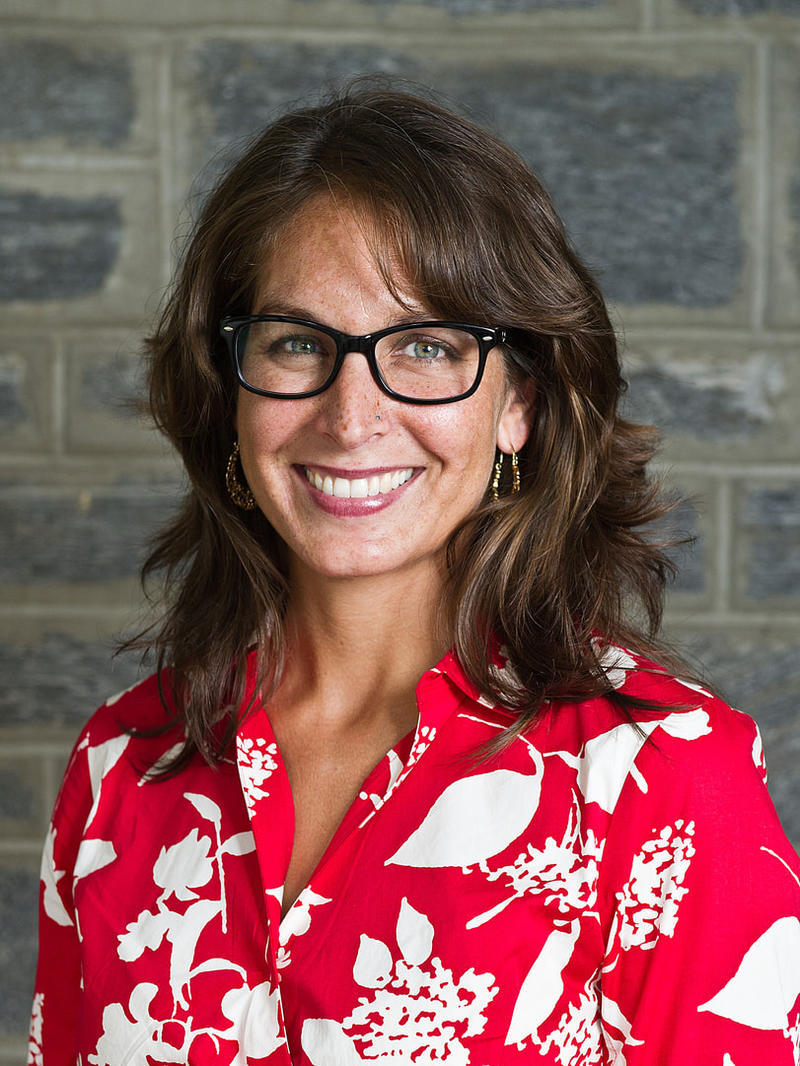
Bethany Silva is a Research Assistant Professor of Education and Director of the Community Literacy Center at the University of New Hampshire. She holds an Ed.D. in reading, writing and literacy from the University of Pennsylvania, an M.F.A. in writing for children and young adults from Vermont College of Fine Arts, and a B.A. from Middlebury College. Her research centers on literacy studies through three interconnected pillars: place-based pedagogies examining how physical environments shape learning, practitioner research methodologies that elevate educator expertise, and digital writing processes among diverse youth populations. Dr. Silva's work consistently emphasizes social justice frameworks, particularly in developing literacy programming that honors community-defined goals and addresses systemic inequities in predominantly white educational settings. Analysis of her recent publications reveals a clear trajectory toward intersectional approaches combining multilingual education, STEM integration, and anti-racist pedagogy. Her scholarship increasingly focuses on creating ecosystemic teaching models that bridge formal and informal learning spaces while centering student voice and cultural identity. Her major scientific recognition includes: 2017 Philadelphia Writing Project Award for outstanding commitment to practitioner inquiry and literacy instructional leadership Dr. Silva secures significant external funding through competitive grants, including: Transforming Literacy Equity (Spencer Foundation, 2024-2025) Multilingual Book Clubs (NH Humanities Council, 2023-2024) Book to Art: Book Clubs for the Seacoast’s Early Readers (New Hampshire Charitable Foundation, 2018-2019) Summer Boot Camps in Public Humanities (Mellon Foundation, 2018-2023) Book to Art: Using Children's Literature to Teach for Social Justice Phonics Programming Professional Development As Director of the Community Literacy Center, she orchestrates a statewide network connecting university faculty, K-12 educators, youth, and families through initiatives like drop-in writing clubs, book-art collaborations, and social justice-focused professional development cohorts that transform New Hampshire's educational landscape.
Mario Caramitti is an Associate Professor in the Department of Modern Literature and Culture at Sapienza University of Rome, specializing in Russian literature and language. He teaches a diverse range of courses including Russian Literature II, Russian Language and Literature I, Russian Studies, and Russian Translation III across multiple degree programs such as Languages, Cultures, Literatures, Translation; Linguistics; English and Anglo-American Studies; and Linguistic and Intercultural Mediation. Professor Caramitti's research interests focus on Russian literary tradition spanning from the 19th to 21st centuries. His scholarly work demonstrates particular expertise in authors such as Tolstoy, Dostoevsky, Gogol, Chekhov, Nabokov, and contemporary writers like Maria Stepanova and Mikhail Shishkin. His teaching portfolio includes specialized courses on Turgenev's short prose, Chekhov's dramaturgy, twentieth-century Russian poetry, and Gogol's genius. His extensive publication record reveals a strong focus on literary criticism, with numerous essays published primarily in ALIAS SUNDAY and academic journals. The analysis of his recent publications shows a consistent engagement with Russian literary tradition, examining both canonical works and contemporary developments. His work often explores narrative structure, psychological depth in characterization, and the interplay between historical context and literary creation. Professor Caramitti maintains an active academic schedule with office hours through September 2025 and current Google Classroom pages for the 2024-25 academic year, teaching courses such as 'Twentieth-century Russian poetry,' 'The extraordinary modernity of Gogol's genius,' 'Russian Studies,' and 'Russian Translation III.' His teaching locations include the Ex Vetrerie Sciarra building at via dei Volsci 122 in Rome.
Amber H Abbas serves as Associate Professor of History in the Department of History within the College of Arts and Sciences at Saint Joseph's University, Philadelphia, where she also directs the Nealis Program in Asian Studies (2023–present). Previously Director of the Asian Studies Program, her academic trajectory at Saint Joseph's spans Assistant Professor (2012–2019) to current Associate Professor (2019–present), reflecting sustained institutional engagement and scholarly contribution. Educational background includes: Doctor of Philosophy in History, The University of Texas at Austin (2012) Master of Arts in History, The University of Texas at Austin (2006) Bachelor of Arts in Comparative Area Studies, Duke University (1999) Her research integrates three interconnected strands: South Asian History (specializing in 1947 Partition and Muslim identity formation), Oral History methodology, and South Asian Diaspora studies. Through extensive archival work across England, Pakistan, India, and Bangladesh, she examines state-building, belonging, and narrative construction while pioneering digital oral history approaches. Recent scholarship extends to South Asian American communities through collaboration with the South Asian American Digital Archive, emphasizing decolonial pedagogy and community-centered knowledge production. Publication trends reveal consistent methodological innovation with oral history at the core, increasingly incorporating digital humanities frameworks. Early works (2007–2014) established foundational analyses of Partition's spatial and institutional impacts, particularly at Aligarh Muslim University, while mid-career publications (2015–2021) expanded into diaspora studies and digital archiving. Current output (2022–2025) demonstrates remarkable interdisciplinary range—from world history pedagogy to Gaza conflict analysis—showcasing her ability to bridge historical scholarship with urgent contemporary discourse through distinctive listening-based methodologies. Major recognitions include: Faculty Merit Awards for Teaching (2018), Research (2022), and Service (2025) S.S. Pirzada Dissertation Prize in Pakistan Studies (2015) Jan Carleton Perry Prize for Best Master’s Thesis (2007) Fulbright Fellowships (1999–2000, 2008) Churchill Fellowships (2007, 2011–2012) Critical Language Scholarship (2008) Dr. Abbas has trained numerous students in oral history methodology while securing significant external funding including a $1 million Andrew W. Mellon Change Capital Grant for Digital Humanities (2022) as co-author. Her grant portfolio demonstrates strategic alignment between institutional support—such as Saint Joseph's Summer Research Grants (2013) and sabbaticals (2019)—and major external fellowships from the National History Center and American Institute of Bangladesh Studies, enabling sustained international archival research. She maintains a vital collaborative relationship with the South Asian American Digital Archive as both researcher and pedagogical partner, developing community-based oral history projects that bridge academic scholarship with public history. Her leadership in the Nealis Program in Asian Studies fosters interdisciplinary connections across Saint Joseph's campus while advancing innovative approaches to South Asian studies through digital and decolonial frameworks.
Dr. Servet Altan serves as Assistant Professor in the Department of Guidance and Psychological Counseling at MEF University's Faculty of Education in Istanbul, Turkey. Appointed in July 2022, he concurrently holds administrative roles as IBEC Coordinator and Vice Dean of the Faculty since September 2023. His academic foundation includes Master's and Doctorate degrees from Bilkent University, complemented by 15 years of K-12 international program implementation experience (2007-2022). Dr. Altan's research centers on students' motivation and engagement, Habits of Mind frameworks, diversity and inclusion practices, and international education systems. His scholarship appears in premier journals including the Journal of Teacher Education and Teaching and Teacher Education, reflecting his focus on practical applications in educational settings. As an International Baccalaureate Lead Educator since 2016, he actively trains teachers across national and international schools. Analysis of his 2022-2025 publications reveals three dominant research trajectories: (1) mindfulness applications for reducing test anxiety and enhancing academic achievement, (2) Habits of Mind integration in teacher development and emergency remote teaching contexts, and (3) equity-focused investigations into IB teacher preparation and student psychological needs. His work spans diverse educational environments from Turkish continuum schools to Latina/o/x community college settings, consistently addressing motivation, inclusivity, and international frameworks. Dr. Altan maintains active scholarly engagement through regular presentations at AERA and EARLI conferences. While specific student advisement details and grant information remain unreported in available sources, his leadership roles and publication record indicate significant contributions to educational psychology and international teaching practices.
Jeroen Dewulf holds the Queen Beatrix Professorship in Dutch Studies at the University of California, Berkeley, within the Department of German. He is also a Professor at Berkeley’s Folklore Program and serves as Faculty Academic Director of Berkeley Study Abroad. Director of Center for Portuguese Studies Director of Austrian Studies Program Director of BENELUX Program at UC Berkeley Chair of UCEAP Faculty Directors group Member, UC Berkeley International Activities Coordination Education: PhD in German Literature (University of Bern, Switzerland), MA in Portuguese Studies (University of Porto, Portugal), BA in Germanic Philology (University of Ghent, Belgium). Research Interests: Focus on Dutch and Portuguese colonial/postcolonial history, literature, and culture; transatlantic slave trade; Black cultural and religious traditions in the Americas; German literature with emphasis on Swiss authors. Publications span Atlantic Studies, African diaspora, and Lusophone/Dutch connections. Scientific Awards: Hellman Family Faculty Fund (2010) Robert O. Collins Award in African Studies (2012) John Gilmary Shea Prize (2023) He has served as visiting professor at LMU Munich, University of São Paulo, and UCL London. Affiliated with UC Berkeley’s Center for African Studies and Center for Latin American Studies, as well as University of Lisbon’s Center of History.
Lisbeth Verstraete-Hansen is an Associate Professor at the Department of English, Germanic and Romance Studies, University of Copenhagen (UCPH), where she also serves as Head of Department since 2021. Previously, she held roles at Copenhagen Business School (2009-14) and UCPH (2002-06). Her research focuses on French and Francophone literature , literary history , and transnational cultural transfer , particularly in the context of language policy and Danish-French intercultural relations . Ph.D. in French (Francophone Belgian) Literature (University of Copenhagen, 2002) DEA in Comparative Literature (Université Lille III, France, 1995) MA in French Studies (University of Copenhagen, 1992) Her recent work examines the international circulation of Francophone literatures and translation studies , with a focus on paratextual representation and language ideologies in higher education . She has published extensively in journals like Meta: Translators' Journal and French Studies in Southern Africa . Notable awards include Einar Hansens Legat for Fremstående Humanistisk Forskning and Chevalier dans l’Ordre des Palmes Académiques . She has led initiatives on parallel language use and participated in international conferences on linguistic policy and postcolonial studies .
Rima Basu serves as Associate Professor of Philosophy at Claremont McKenna College, where her work bridges ethics, epistemology, and philosophy of race. She fundamentally argues that morality speaks to belief formation, establishing that beliefs themselves can wrong others and that moral stakes rightly influence evidential thresholds. Her research program centers on 'doxastic wronging' and 'moral encroachment,' examining how racist beliefs inflict harm and why moral considerations determine sufficient evidence for belief. This work extends to social implications including polarization, educational practices, and digital identity formation, as seen in public writings like 'The Internet Never Forgets.' Analysis of her 15 most recent publications reveals escalating engagement with real-world applications, particularly regarding race, educational justice, and the ethics of forgetting. Her scholarship consistently demonstrates how abstract epistemic principles manifest in concrete social harms and responsibilities. Key recognitions include: Mark Sanders Foundation Prize for philosophical excellence Glenn R. Huntoon Award in Superior Teaching (2024), awarded by student vote Basu has secured substantial research funding from the Social Sciences and Humanities Research Council of Canada (SSHRC), National Endowment for the Humanities (NEH), and American Council of Learned Societies (ACLS). While specific advisees aren't listed, her teaching award indicates significant student mentorship impact within Claremont McKenna's philosophy program.
Aslaug Kristiansen is a professor of education at the University of Agder (UiA), with a doctorate from the University of Oslo (2003). She has been employed at UiA since 1989, after her first temporary position at what was then Kristiansand Teacher Training College. Her academic background includes a Cand. Paed. degree and research assistant work at the Norwegian Teachers' Academy in Bergen. She has studied Martin Buber's philosophy at The Hebrew University in Jerusalem and the Pädagogisches Institut der Universität Freiburg with Professor Maurice Friedman. University of Oslo - Cand. Paed. and Ph.D. Norwegian Teachers' Academy in Bergen - Research Assistant Research Council of Norway - Recipient of recruitment grant Research Interests: Aslaug Kristiansen specializes in values and ethics in educational work, professional theory, democracy, dialogue, and peace pedagogy. Her research explores the role of teachers, trust, ethics and values, silence and dialogue in professional collaborative relationships. She has coordinated the "Democratic Mobilization" initiative at UiA since 2015, which has led to various collaborative projects, including with the ARKIVET Peace and Human Rights Centre in Kristiansand. Publication Trends: Her recent publications focus on democratic education, hate speech among students, and teacher motivation. She has published extensively on Martin Buber's philosophy and its application to modern pedagogical practice, emphasizing interpersonal relationships, dialogue, and ethical considerations in teaching. Her work also addresses post-war educational approaches and the prevention of extremism through educational initiatives. Scientific Contributions: Aslaug Kristiansen has made significant contributions to educational philosophy and practice, particularly in the areas of teacher-student relationships and ethical dimensions in education. She has coordinated major academic initiatives and has been instrumental in advancing dialogical approaches to education. Her publications appear in prominent educational journals and edited volumes, reflecting her influence in the field. Advising and Grants: She has coordinated the "Democratic Mobilization" initiative at the Department of Education since 2015 and has received a recruitment grant from the Research Council of Norway. Her work has led to numerous collaborative projects and has influenced educational practices in Norway and internationally through comparative studies. Research Groups: Aslaug is active in the research group "Professions and professionals in cooperation" and the Democratic Mobilization initiative at UiA. She collaborates with ARKIVET Peace and Human Rights Centre and participates in international research projects including the VALIDE international project on value-based democracy education.
Verónica E Valdez is a tenured Professor in the Department of Education, Culture & Society at the University of Utah. Her work centers on critical language education, Latinx schooling equity, and culturally sustaining pedagogy, with a focus on dual language bilingual education (DLBE), raciolinguistic ideologies, and teacher practices that challenge systemic inequities. A first-generation U.S. born Latina with deep ties to border communities, her research bridges family/community contexts with macro-level policy analysis. PhD in Curriculum & Instruction (Multilingual Studies) from the University of Texas at Austin Master of Science in Psychology from Emporia State University Bachelor of Arts in Psychology from Southwestern University Her research explores four interrelated strands: 1) Language learning in school and community contexts, 2) Educational language policy at macro/micro levels, 3) Latinx educational inequities, and 4) Teacher education for multicultural justice. Recent work highlights tensions between 50:50 vs 90:10 DLBE models and the marginalization of heritage language families. Key trends in her scholarship include raciolinguistic analysis of teacher practices, translanguaging in adult refugee education, and critical examinations of neoliberalism in language policy. Awards recognize her leadership in bilingual education research and mentorship of emerging scholars. She serves on national AERA and AAAL committees and directs the APEX project, a 5-year federal grant building ESL educator capacity in Utah.
Roar Bakken Stovner is an Associate Professor at the Department of Primary and Secondary Teacher Education within the Faculty of Education and International Studies at Oslo Metropolitan University (OsloMet), where he also serves as Head of Studies - Area of Responsibility 2. His academic career at OsloMet began as an Assistant Professor (2021-2023) before his promotion to Associate Professor in 2023. Prior to his university position, he worked as a teacher in lower and upper secondary schools in Oslo (2012-2018) and completed his PhD at the University of Oslo (2016-2020). He holds a Master of Science and Technology from NTNU (2007-2012) with a thesis on applied computational topology. Stovner's research spans several interconnected domains within educational science: Developing methodologies for describing and measuring teaching quality across multiple classrooms, with special emphasis on mathematics education Metascience research examining how citation practices distort findings and confer unwarranted authority to claims in educational research Creating programming tools for educational research, including the gptworkr package for text analysis in R using ChatGPT His scholarly work focuses on classroom research, mathematics education, mathematical competencies, metascience, and citation analysis. He actively participates in research groups focused on Classroom Research and Task Design in Mathematics Education, and leads significant involvement in the Teacher Education Panel Study (TEPS), a comprehensive longitudinal study examining teacher education implementation in Norway. Stovner's recent publications demonstrate substantial engagement with contemporary issues in educational research methodology, AI applications in education, and critical examination of scientific practices. His work on the EDUCATE project has produced influential reports on algorithmic thinking in mathematics education across different grade levels and exploratory teaching approaches in upper secondary education. His contributions to educational discourse include conference presentations, book chapters, and practical resources for teacher education, such as "Bedre masterskriving – en bok for lærerstudenter" (Better Master's Writing - A Book for Teacher Students), which supports academic writing development among future educators.
Mark Biram is a Lecturer at Bilkent University, affiliated with the English (ENG) Program. His professional email address is mark.biram@bilkent.edu.tr. Research Interests English for Academic Purposes (EAP) Academic Writing Instruction English Language Education Language Pedagogy Curriculum Development in EAP Second Language Acquisition
Dr. Shasha Wang is a Lecturer in Chinese Studies at Bangor University's School of Language, Culture and the Arts. With 25 years of teaching experience in higher education institutions across China and UK, she specializes in Chinese language instruction, media representation of China, cross-cultural communication, and translation studies. PhD in Chinese Studies from University of Durham Senior Fellow of Higher Education Academy (SFHEA) Head of Chinese Studies at Bangor University Assistant Director, Confucius Institute at Bangor Her research focuses on Western representations of China, mutual Sino-Western perceptions, and critical discourse analysis of media and political narratives. She has supervised multiple PhD candidates in Chinese and Translation Studies, including work on topics like Yan Lianke translations and David Hawkes' The Story of the Stone. Recent activities include keynote speaking at the Cultural Translation and Foreign Translation Research Centre launch in China, participation in QAA's Area Studies Benchmark Statement development, and extensive seminar presentations on China-related topics at institutions like SOAS and University of Glasgow. Awards include Bangor University's Teaching Fellowship of the Year and Senior Fellowship of HEA. External Examiner for University of Aberdeen (2022-2026) Consultant for MA Translation Studies at University of Science and Technology, China Referee for Routledge and Taylor & Francis publications
Patsy Duff is a Professor at the Department of Language and Literacy Education within the Faculty of Education at the University of British Columbia (UBC). She holds the title of Distinguished University Scholar and is a Fellow of the Royal Society of Canada (FRSC) , reflecting her significant academic contributions. Research Focus: Bilingual/multilingual education, decolonizing methodologies, heritage language policy, identity negotiation in language learning, and sociocultural dimensions of language instruction. Key Themes: Her work examines multilingual socialization, language ideologies, and the intersection of pop culture with language pedagogy, particularly in Chinese and English as additional languages. Publications: Over the past decade, her research has emphasized family language policy, English medium instruction, and transnational identity formation. She has contributed to foundational texts on case study research and language socialization, establishing frameworks for qualitative applied linguistics. Scientific Awards: Fellow of the Royal Society of Canada (FRSC) Distinguished University Scholar, UBC Collaborations: Patsy Duff has collaborated with scholars like Heidi Byrnes, Sharoni Zappa-Hollman, and Debra Li on projects exploring language policy, socialization, and multilingual education. Her work bridges academic discourse with practical language teaching strategies.
Brigitte Pientka is a Full Professor in the School of Computer Science at McGill University, where she leads the Computation and Logic group. She received her PhD from Carnegie Mellon University in 2003, and previously studied at the University of Edinburgh and Technical University of Darmstadt. Her educational background includes: PhD from Carnegie Mellon University (2003) Studies at the University of Edinburgh Studies at Technical University of Darmstadt Dr. Pientka's research focuses on developing theoretical and practical foundations for building and reasoning about reliable, safe software systems. She combines theoretical research on logical foundations of computer science in programming languages and verification with system building. Her work spans logics (classical and non-classical), type theory, theorem proving, logic and functional programming, and logical frameworks. She has made significant contributions to the field of contextual types and mechanized metatheory. Her recent publications demonstrate a strong trend toward modal type theory, contextual types, and session types, with applications to functional programming, verification, and meta-programming. She has made significant contributions to the Beluga system, which explores how to combine functional programming with dependently-typed, higher-order data specified in the logical framework LF. Her work often bridges theoretical foundations with practical implementations for mechanized reasoning. Dr. Pientka has received several notable awards: Humboldt Fellowship Test of Time Award @ PPDP'18 for 'Programming with proofs and explicit contexts' Best student paper award at ICLP'03 She is actively involved in mentoring and academic service, having served as PC Chair for ICFP'24, CPP'23 and CPP'24, and as General Chair for POPL'20. She is an Executive Editor of Logical Methods in Computer Science and serves on the editorial boards of the Journal of Functional Programming and ACM Transactions of Computational Logic. She leads the Computation and Logic group at McGill University, which focuses on developing theoretical and practical foundations for reliable software systems through research in logical frameworks, type theory, and programming language design.