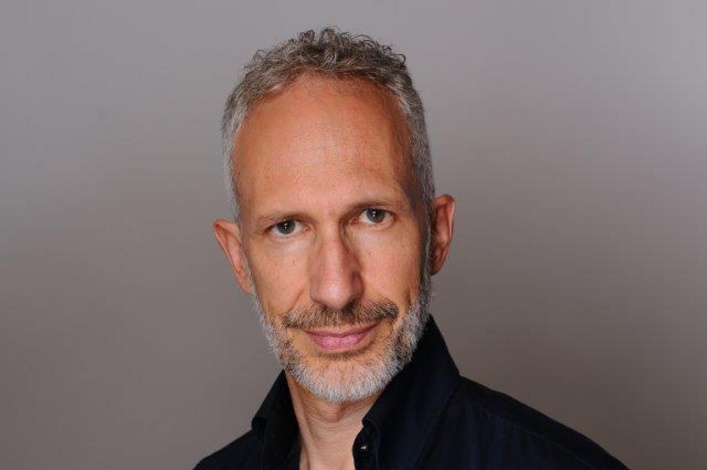
Prof. Martin Boeker is a Professor of Medical Informatics at the Technical University of Munich (TUM), affiliated with the TUM School of Medicine and Health. His work focuses on advancing healthcare through AI-driven solutions, interoperability frameworks, and precision medicine initiatives. Key projects include the German Medical Text Corpus (GeMTeX) and the MIRACUM DIFUTURE Alignment Hub. Expertise: Medical Informatics, AI in Healthcare, Federated Learning, Health Data Integration Key Contributions: FHIR-based systems, clinical decision support, patient-centered outcomes research Leadership: Director of the Institute for AI and Informatics in Medicine at TUM Hospital Right of the Isar Research emphasizes bridging clinical practice and data science through projects like modular health crawlers, automated guideline adherence monitoring, and cross-institutional medical NLP solutions. His work spans oncology informatics, rare disease management, and pandemic response data ecosystems. Recent articles highlight innovations in digital twins for precision oncology, federated analysis in oncology, and German-language medical NLP challenges. He collaborates internationally on EHR standardization and healthcare interoperability, contributing to the Medical Informatics Initiative (MII) and pandemic evidence ecosystems. Grants and collaborations involve the German Federal Ministry of Education and Research, European initiatives, and industry partnerships. Educational efforts focus on training future medical informatics professionals through MII competency programs.
Prof. Dr. Teresa Sansour is a full Professor of Pedagogy and Didactics in Cases of Intellectual Development Impairments with Special Consideration of Inclusive Educational Processes at the Institute for Special and Rehabilitation Education, Carl von Ossietzky University of Oldenburg. She joined the university in April 2020 and has held leadership roles including Vice Director for Teaching at the Center for Teacher Education (since October 2021) and Deputy Institute Director (since April 2025). Her academic affiliations reflect a deep commitment to inclusive and special education. Her research focuses on educational interactions in the context of intellectual disabilities, inclusive subject didactics, the participation of people with complex disabilities, and the professionalization of educators and prospective teachers. Key research areas include inclusive literacy, art education, teacher motivation, and social integration. She leads significant funded projects such as Literary Texts in Simple Language (LiES) and Lighthouses for Participation , both aimed at enhancing inclusion for people with disabilities. The recent publications of Prof. Sansour span topics such as school absenteeism in autism, self-concept in intellectual disabilities, inclusive art education, and participation models. Her work demonstrates a strong interdisciplinary and applied focus, combining qualitative methods with pedagogical innovation. She frequently publishes in peer-reviewed journals and edited volumes on special education, inclusive didactics, and disability studies. Member, German Society for Educational Research (DGFE), Section Special Education Member, Network for Complex Disabilities e.V. Chair, Advisory Board of the Georg-Leffers-Stiftung Chair, Association for the Promotion of Pedagogical Rehabilitation and Social Integration of People in Risk Situations Board Member, German Interdisciplinary Society for Research Promotion for People with Intellectual Disabilities (DIFGB) Prof. Sansour actively contributes to academic leadership and teacher training. She serves as program coordinator for the Bachelor’s in Special Education and accreditation officer for the Special Education/Social Studies cluster. Her work includes advising on inclusive curricula, fostering research collaborations, and securing external funding for inclusive initiatives. She has not received explicitly mentioned scientific awards in the provided text. She is involved in multiple collaborative research teams and projects focused on inclusion, literacy, and disability rights.
Prof. Alexander Pretschner is a Professor of Software & Systems Engineering at the Technical University of Munich (TUM) and Founding Director of the Bavarian Research Institute for Digital Transformation (bidt). He also serves as Scientific Director of fortiss, a Bavarian research institute for software-intensive systems. His research focuses on software engineering, testing, information security, and ethical software development. Pretschner holds a PhD from TUM and has held academic positions at Karlsruhe Institute of Technology (KIT) and TU Kaiserslautern. He is a co-editor of several prestigious journals, including IEEE Transactions on Reliability and the Journal of Software Testing, Verification and Reliability. Education: PhD in Computer Science, Technical University of Munich MSc in Computer Science, University of Kansas (on Fulbright Scholarship) Diplom in Computer Science, RWTH Aachen University Research Interests: His work spans testing methodologies, secure software design, and ethical considerations in agile development. Notable contributions include frameworks for metamorphic testing, distributed data usage control, and accountability mechanisms for cyber-physical systems. Awards: IBM Faculty Award (2012, 2013) Google Focused Research Award (2011, 2012) EARTO Innovation Prize (2014) 2nd Platz Supervisory Award (2020) Advising & Grants: Pretschner has supervised numerous PhD and Master’s students, contributing to over 200 publications. He leads projects like EDAP (Ethical Deliberation in Agile Processes) and collaborates with industry partners on cybersecurity and AI ethics initiatives. Labs & Teams: His work is anchored in bidt, fortiss, and TUM’s Chair of Software & Systems Engineering, focusing on societal impacts of digitalization and trustworthy AI systems.
Hakan Özkan is a Privatdozent and Research Associate at the Institute of Arabic and Islamic Studies, Department of Middle Eastern Studies, University of Münster, where he has been working since 2007 in various capacities. He was awarded his Venia Legendi (Habilitation) in November 2019 for Arabic and Islamic Studies with his thesis 'History of Eastern Zajal – Dialectal Arabic Verse Poetry from the East of the Arab World.' His academic background includes a Franco-German doctorate completed in 2006 from Université de Provence and University of Cologne, supervised by Claude Audebert and Monika Gronke, with external reviewers including Wolfhart P. Heinrichs from Harvard University. His educational background includes: 2019: Venia Legendi for Arabic and Islamic Studies, University of Münster 2002-2006: Franco-German Doctorate in Arabic Studies and Narratology (Université de Provence and University of Cologne) 1995-2000: Master of Arts in Islamic Studies, Oriental Languages and Literatures (University of Cologne) 2000-2001: Course program in Modern Standard Arabic and Syrian-Lebanese dialect at Institut Français d'Etudes Arabes de Damas Özkan's research focuses on premodern Arabic dialect poetry, particularly zajal and muwashshaḥ forms, narratology, prosimeter literature, socio-literary history, and diachronic dialectology. His interdisciplinary approach bridges linguistic analysis with literary criticism, examining how dialectal forms evolved within Arabic literary traditions across different historical periods and geographical regions. He has conducted extensive field research in Arab countries including Syria, Egypt, Lebanon, Tunisia, and Morocco, with particular emphasis on the historical development of poetic forms from the Mamluk through Ottoman periods. His publication history demonstrates consistent scholarly contributions to Arabic literary studies, with his 2020 monograph 'History of Eastern Zajal' representing a landmark study in the field. His recent work has expanded to include analyses of religious poetry praising the Prophet Muhammad in zajal form, wine poetry in Arabic literary traditions, and the integration of dialects into Arabic language teaching methodologies. His scholarly output spans monographs, critical editions, encyclopedia entries, journal articles, and book chapters across multiple languages including German, English, French, and Turkish. Among his academic recognitions: 2018: Second place on shortlist for W2 Professorship for Arabic Language and Translation Science, University of Leipzig 2008: Offered Junior Professorship at American University in Cairo (declined) 2007: Second place on shortlist for maître de conférence position at University of Nancy 2007: Official Qualification from National University Council (CNU) for positions as maître de conférence at French universities Özkan has served on numerous academic committees, including appointment committees for professorships in Sinology and Arabic and Islamic Studies at the University of Münster. He has been a juror for the Sheikh Hamad Award for Translation and International Understanding in Doha and has served on the steering committee for the 'Translation for Dialogue' program of the Anna Lindh Foundation. His editorial work includes reviewing for Mamluk Studies Review, Die Welt des Islams, and Middle Eastern Literatures since 2012. His scholarly activities extend to linguistic fieldwork on Pontic Greek dialects in Turkey and organizing significant academic conferences including 'The Race Course of Literature – An-Nawāǧī and His Contemporaries' in 2018 at the University of Münster. His multilingual capabilities (Arabic, Turkish, German, French, English, Persian, Ottoman Turkish, and knowledge of Modern Greek) enable his comparative work across multiple linguistic and cultural traditions in the Mediterranean region.
Dongwoo Kim is a researcher affiliated with Hanyang University, ERICA Campus (Department of Electronics and Communication Engineering) and has previously collaborated with institutions like POSTECH , Chungnam National University , and Microsoft . His work spans interdisciplinary domains in Computer Science and Engineering . Hanyang University, ERICA Campus - Department of Electronics and Communication Engineering POSTECH - Power Analog Electronics & Semiconductor Devices Lab Microsoft Chungnam National University Kim's research focuses on formal verification of automotive control software, deep learning applications in environmental monitoring, 3D modeling for indoor positioning, and machine learning for signal processing. His recent publications highlight advancements in graph neural networks (GNNs), including analyzing oversmoothing and gradient dynamics, as well as developing geometric vision-language models with domain-agnostic encoders. His 15 most recent articles (2023-2025) address topics like: Optimizing hybrid electric vehicle engine performance 3D modeling for indoor localization GNN training stability UAV-based environmental monitoring Algorithm difficulty prediction for programming problems Millimeter-wave antenna design Kim collaborates with researchers in software engineering , signal processing , and environmental science domains. His work intersects formal methods , applied machine learning , and embedded systems research.
Oliver Hohlfeld is a Professor at the University of Kassel, where he leads the Distributed Systems group. He previously held academic positions at Brandenburg University of Technology and RWTH Aachen University, and was a visiting scholar at the University of Wisconsin–Madison. His research focuses on network security, Internet measurements, and Quality of Experience (QoE). He completed his Ph.D. in Computer Science at TU Berlin under Anja Feldmann and holds a B.Sc. and M.Sc. from Darmstadt University of Technology. He also worked at Fraunhofer IGD on telemedical network architectures. His research adopts a data-driven approach, combining large-scale Internet measurements, user studies, and machine learning to understand and improve Internet performance and security. Key areas include DDoS detection, QUIC, HTTP/2, TLS deployment, and BGP analysis. He investigates how protocols like QUIC and HTTP/2 impact user experience and network efficiency, often through empirical studies of real-world deployments. His recent publications highlight a strong trend in network security and protocol analysis, with significant work on DDoS attacks, traffic ingress detection, and web consolidation. He also explores social media dynamics and censorship circumvention through user reviews. 2022 IETF/IRTF Applied Networking Research Prize Best of CCR (2021) for TLS 1.3 deployment study ACM Senior Member (2020) IEEE QoMEX 2019 Best Reviewer Award ACM IMC Community Contribution Award (2018) He has advised numerous Master’s and Bachelor’s students, primarily at RWTH Aachen, and has been a principal investigator in major projects such as AIDOS (AI-based DDoS mitigation), DFG SFB MAKI, COMTEX, and the EU-funded SSICLOPS. He actively serves on the technical program committees of top-tier conferences including SIGCOMM, NSDI, IMC, and CoNEXT, and is a frequent reviewer for leading journals in networking and systems. He leads the Distributed Systems group at the University of Kassel, which conducts research on Internet observability, secure infrastructures, and scalable networking solutions.
Thomas Riechert is a Professor at the Leipzig University of Applied Sciences (HTWK Leipzig), specifically within the Faculty of Computer Science and Media. He serves as Dean of Media Informatics, Chairman of the Media Informatics Study Commission, and Academic Advisor for Media Informatics. Additionally, he is a Member of the Faculty Council, Faculty representative in the IT committee, and Library Commission. He also acts as Spokesperson of the Institute of Computer Science at the HTWK. Appointed in 2014 in the field of information systems and data management, Riechert holds a doctorate from the University of Leipzig (2012, magna cum laude) and graduated as a computer scientist from TU Dresden in 2000. Professor Riechert's research focuses on information systems, data management, Semantic Web technologies, knowledge engineering, and Linked Data. His work bridges computer science with digital humanities, particularly in creating knowledge graphs for historical research. He has made significant contributions to RDF vocabulary management, ontology editing tools, and academic history databases. His research demonstrates a strong emphasis on practical applications of semantic technologies in information management systems. Analysis of his recent publications reveals a consistent trajectory in semantic web technologies applied to knowledge representation and historical data. His work shows progression from foundational semantic technologies toward increasingly sophisticated applications in digital humanities, particularly in academic history research. The Heloise project appears to be a major focus, developing common research models for collaborative historical research using Linked Open Data. His publications span both technical aspects of semantic technologies and their application in humanities contexts. Professor Riechert actively contributes to academic community building through conference organization and student engagement. His leadership roles in the Faculty of Computer Science and Media demonstrate his commitment to shaping computer science education. His research integrates practical software development with theoretical advancements in knowledge representation. As Dean of Media Informatics, Riechert oversees academic programs and research initiatives in this field. His work with the Heloise network demonstrates leadership in interdisciplinary research connecting computer science with historical scholarship. His office hours are held on Mondays from 10:00 to 11:00 in room ZU 407 at HTWK Leipzig.
Torsten Grust is a Professor of Computer Science at the University of Tübingen, leading the Database Systems research group since 2008. Previously, he held professorships at TU München and TU Clausthal. He earned his M.Sc. (Diploma) and Ph.D. in Computer Science from Universität Konstanz in 1994 and 1999, respectively. His research focuses on database languages, query and programming language technology, and scalable processing of non-relational queries. He bridges database and programming language research, emphasizing mutual benefits between the fields. **Education:** Ph.D. in Computer Science, University of Konstanz (1999) M.Sc. (Diploma), Computer Science, University of Konstanz (1994) Visiting Scientist, IBM Silicon Valley Laboratories (2000) **Research Interests:** Design and optimization of database languages Query compilation and execution engines Integration of functional programming with SQL Query provenance and debugging **Awards and Honors:** ACM SIGMOD Reproducibility Award (2021) University of Tübingen Teaching Award (2021/22) Winner of Dyalog 2019 APL Program Solving Competition Member of the VLDB Endowment Board of Trustees (2022–2027) **Advising & Grants:** Guided numerous students, including alumni such as Alexander Ulrich, Benjamin Dietrich, and Christian Duta Recipient of grants supporting research in query compilation, provenance analysis, and database language design **Labs & Teams:** Leads the Database Systems research group at University of Tübingen Collaborates with the National Institute of Informatics (Tokyo) on query and programming languages
Prof. Margret Keuper is a Professor of Machine Learning at the University of Mannheim's School of Business Informatics and Mathematics, leading the Data and Web Science Group. She is also affiliated with the Max-Planck-Institute for Informatics and ELLIS (fellow since 2024). Her research focuses on robust deep learning, neural architecture search, and computer vision tasks like motion segmentation and adversarial defense. She holds a PhD from the University of Freiburg and previously held positions at the University of Siegen and the University of Mannheim. Her work spans projects funded by DFG and BMBF, including Climate Visions for social media analysis and TrackOpt for motion tracking. She teaches courses on computer vision, generative models, and reinforcement learning. She actively serves on program committees for top conferences like CVPR, ECCV, and NeurIPS, and is an associate editor for IEEE TPAMI and JAIR. Education: PhD in Computer Science from University of Freiburg (advisor: Thomas Brox) Research Projects: Learning to Sense (DFG), Climate Visions (BMBF), TrackOpt (BMBF) Key Roles: Head of Mannheim Master in Data Science Examination Board, Member of MSc Business Informatics Board Her research emphasizes robustness in AI systems, with contributions to adversarial attacks, domain generalization, and efficient solvers for large-scale problems. She advises over 15 PhD students across academic and industry partnerships.
Prof. Dr. Kirsten Meyer is a full professor for Practical Philosophy and Philosophy Education at the Institute of Philosophy, Faculty of Philosophy, Humboldt University of Berlin. She has held this position since the summer semester of 2011, after serving as a junior professor from 2008 to 2011. Her work bridges philosophical theory with educational practice, with a particular focus on ethics and intergenerational justice in the context of contemporary challenges like climate change. Dr. Meyer's interdisciplinary educational background reflects her unique scholarly perspective: Diploma in Biology (1999, University of Münster/Bielefeld/St. Andrews) State Examination in Philosophy (2000) Doctorate from Bielefeld University (2002) Kirsten Meyer's research program spans several interconnected domains of philosophical inquiry. Her primary focus is on intergenerational ethics, where she examines humanity's moral obligations to future generations, particularly regarding climate change and resource consumption. She has made significant theoretical contributions to educational philosophy, exploring how philosophical reasoning can be practically integrated into school curricula. Her work on educational justice addresses complex questions about talent development, equal opportunity, and the relationship between education and conceptions of the good life. Meyer also contributes to environmental ethics, analyzing the intrinsic value of nature and our responsibilities toward it, informed by her background in biology. Analysis of her recent publications reveals a consistent thematic trajectory focused on intergenerational justice and educational philosophy. Meyer frequently examines how abstract philosophical concepts can inform practical educational policy, particularly regarding talent development and educational equity. She has become a prominent voice in climate ethics, connecting theoretical debates about future generations to concrete policy proposals like using estate tax as a climate protection instrument. Her interdisciplinary approach, combining insights from biology, philosophy, and education, allows her to address complex ethical questions with both theoretical rigor and practical relevance. Professor Meyer is deeply engaged in public philosophical discourse, regularly contributing to media discussions on intergenerational justice, climate ethics, and educational policy. She has participated in numerous interviews with major German media outlets including Deutschlandfunk, BR, ZDF, and RBB, helping translate complex philosophical concepts for broader audiences. Her practical contributions extend to educational initiatives, including the development of teaching materials for philosophy education through philovernetzt on topics ranging from 'What should I become? Work and the good life' to 'Fake News' and 'Consent.'
Enrique Sánchez Lansch is a Professor of Media Dramaturgy at the Institute for Music and Media at Robert Schumann University of Düsseldorf, appointed in 2018. Born in Gijón, northern Spain, and raised in Cologne, he has established himself as a prominent documentary filmmaker with a strong focus on music-related subjects. His educational background includes studies in music with a focus on singing, Romance languages, philosophy, and German studies. He completed his master's thesis on adaptation of literature into music films. After gaining professional experience in fictional series production, he pursued further studies in film and screenwriting at Columbia University and UCLA. Sánchez Lansch's research and creative interests center on the intersection of music and visual media. His work explores how musical experiences can be effectively translated to film, examining the relationship between sound and image. He has particular expertise in documenting musical institutions, historical contexts of music, and the educational aspects of musical performance. His approach combines rigorous historical research with innovative visual storytelling techniques that respect the integrity of musical performance while creating compelling cinematic narratives. His filmography reveals a consistent focus on music documentaries that bridge cultural and historical contexts. Early works focused on major musical institutions and figures, while more recent projects have expanded to examine the relationship between music and broader social, political, and cultural phenomena. His films consistently demonstrate a sophisticated understanding of both musical content and cinematic storytelling. His notable awards include: German Film Award German Documentary Film Award Bavarian Film Award German Critics' Award German Kinogilde Award Franz Hofer Prize Best Documentary Film at Los Angeles Latino International Film Festival Best Documentary Film at SEMINCI Festival de Valladolid Diapason d'Or Emmy nomination for "A Celebration for Gershwin" Sánchez Lansch has served as a mentor to young filmmakers, notably curating and presenting music short films by young talents for the Beethovenfest Bonn from 2006 to 2013. His professional activities extend beyond filmmaking to include teaching at institutions such as the dffb (German Film and Television Academy Berlin) and his current professorship at Robert Schumann University. He is an active member of both the German Film Academy and the European Film Academy, contributing to the broader film community through these organizations. As Professor of Media Dramaturgy, Sánchez Lansch contributes to the academic framework of the Institute for Music and Media, bringing his extensive professional experience to bear on the education of future media creators. His work bridges the gap between academic study and professional practice in the field of music-related visual media.
Prof. Torsten Wolfgang Kuhlen serves as a Universitätsprofessor at RWTH Aachen University, leading the Teaching and Research Area for Virtual Reality and Immersive Visualization within the Department of Computer Science. He is affiliated with Chair of Computer Science 12 (High Performance Computing), the Visual Computing Institute, and remains an integral part of the RWTH IT Center where his research group operates one of the world's largest Virtual Reality laboratories including the 30 sqm aixCAVE visualization chamber. The group maintains strong connections with Computational Science & Engineering Division, National High Performance Computing Center for Computational Engineering Science (NHR4CES), and VR in Science and Industry Network NRW e.V. Prof. Kuhlen's research spans virtual reality, immersive visualization, and multimodal 3D user interfaces with applications across simulation science, production technology, neuroscience, and medicine. His work combines basic research on advanced methods and algorithms with interdisciplinary collaborations involving RWTH Aachen institutes, Forschungszentrum Jülich, and industry partners. Recent publications demonstrate strong focus on audiovisual perception, immersive analytics, collaborative virtual environments, and practical VR applications in education and manufacturing. His research group has produced significant work on listening effort in virtual environments, immersive authoring techniques, and VR applications for scientific visualization. Notable projects include VRScenarioBuilder for automated vehicle testing and applications in monitoring additive manufacturing processes. The group actively participates in major conferences including IEEE VIS and EuroVis, with several award-winning contributions. Prof. Kuhlen has advised PhD students including Martin Bellgardt who recently completed his doctoral degree on "Increasing Immersion in Machine Learning Pipelines for Mechanical Engineering". The research group maintains state-of-the-art VR infrastructure including the aixCAVE facility which is open to all RWTH research groups.
Prof. Dr.-Ing. Eric Sax is a Professor of Electronic Systems Engineering and Management at the Karlsruhe Institute of Technology (KIT), serving as Dean of the Department of Electrical Engineering and Information Technology (ETIT). He leads the Institut für Technik der Informationsverarbeitung (ITIV) and directs the Forschungszentrum Informatik ESS division . As Program Director of the Electronic Systems Engineering & Management (ESEM) master's program at the HECTOR School, he focuses on integrating academic and professional education. His research spans automotive systems engineering , self-learning functions , cybersecurity , and data-driven validation . Key themes include over-the-air updates, scenario-based testing, and the synergy between machine learning and automotive systems. His work addresses challenges in autonomous driving validation, software-defined mobility, and cyber-physical system security. Prof. Sax's contributions include frameworks for automotive software partitioning, cloud-enabled vehicle architectures, and methodologies for quantifying data quality impacts on perception systems. He actively collaborates with industry partners to bridge academic research with industrial application. His recent projects include OptiCAM (cloud/edge function offloading), Drive4C (autonomous driving benchmarking), and UNCOVER (data-driven security monitoring). He holds leadership roles in both KIT and the HECTOR School's technology business programs.
Prof. Dr. Johanna Heitzer is a University Professor for Mathematics Education at RWTH Aachen University since 2011. She leads the Teaching and Research Area of Mathematics Education within the university's mathematics department. Her office is located in Room 352 of the Kreuzherrenstraße 2 building in Aachen. She serves as co-editor of the journal 'mathematik lehren,' co-author of the 'Mathematics - New Ways' textbook series, and holds numerous committee positions including membership in the Faculty Advisory Board and Structural Commission of the Center Council. 1989: High school diploma 1989-1994: Mathematics and Physics Teacher Training at RWTH Aachen 1994-1996: Traineeship at Aachen Teacher Training College 1997: Research assistant at University of Münster 1998-2007: Mathematics and Physics teacher at Korschenbroich Gymnasium 2007-2010: Scientific assistant and doctorate at RWTH Aachen 2011-present: University Professor at RWTH Aachen Professor Heitzer's research focuses on the training and further education of mathematics teachers, development of contemporary teaching materials, applied and interdisciplinary mathematics, and the transition from school to university. Her work emphasizes concept formation, linguistic communication in mathematics, and the historical development of mathematical ideas as teaching resources. She investigates mathematics-specific learning and cognitive processes through multiple research projects including the Aachen school-university project iMPACt. Her recent scholarly output demonstrates a strong trend toward integrating digital technologies in mathematics education, particularly 3D printing and e-learning tools. She has increasingly focused on the social relevance of mathematics, exploring concepts of fairness, sustainability, and citizen empowerment through mathematical modeling. Her work bridges theoretical mathematics education with practical classroom applications, maintaining a strong connection to both historical perspectives and contemporary educational challenges. Special prize from Sparkasse Bad Hersfeld-Rotenburg for best mathematics Abitur (1989) Borchers Plaque for doctoral examinations passed with distinction (2011) DMV honor as Mathemaker of the Month (2013) Brigitte Gilles Prize 2013 for the MINT-L4 Center Professor Heitzer has supervised numerous doctoral students, serving as primary or secondary advisor for at least nine PhD dissertations between 2016-2021. Her research projects include the School-University Project MathePlus Aachen (iMPACt), e-Learning 'Mathematics for Civil Engineers,' and the development of mathematics items for StudiChecks NRW. She has secured funding through the Quality Initiative for Teacher Education (both phases) and participates in the ComeIn project focused on digitalization in teacher training. Her grants consistently emphasize practical applications of mathematics education research with direct impact on classroom practice. As a founding member of the MINT-L4@RWTH center and initiator of the working group Mathematical Education for Sustainable Development, Professor Heitzer has established significant collaborative structures. She participates in the Subject Didactics Forum at the Teacher Training Center of RWTH Aachen and has served in leadership roles including Chair of the Center Council (2014-2016) and Board member of the Teacher Training Center (2014-2017). Her work connects with national and international networks through her membership in the Society for Mathematics Education (GDM), the German Association for Mathematics and Science Education (MNU), and the German Mathematical Society (DMV).
Prof. Dr. Frank T. Piller is a University Professor and Co-Leader of the Institute for Technology and Innovation Management (TIM) at RWTH Aachen University, where he also serves as Academic Director of the Executive MBA program at RWTH Business School. He leads a research team of approximately 30 doctoral students, 5 postdocs, and over 20 student researchers within the TIME Research Area of the School of Business and Economics. His educational background includes a doctoral degree in Operations Management from the University of Würzburg (1999) and a Habilitation degree from TUM Business School (2004) on "Innovation and Value Co-Creation." Prior to joining RWTH Aachen in 2007, he was a Research Fellow at MIT Sloan School of Management and faculty at TUM Business School. Prof. Piller is recognized as one of the world's leading experts in customer-centered value creation, specializing in mass customization, personalization, and customer co-creation. His current research focuses on how established companies can transform in response to disruptive business model innovations, with particular emphasis on digital transformation (Industry 4.0), AI-augmented innovation, and sustainable business models. He is particularly known for his work on innovation ecosystems, platform-based business models, and stakeholder-oriented technology development. His recent publications demonstrate a clear trajectory toward integrating artificial intelligence with traditional innovation management frameworks, exploring how AI transforms manufacturing systems, innovation processes, and business models. His work increasingly addresses the challenges of digital transformation in established industries while maintaining focus on customer co-creation and mass customization principles. His scientific achievements have been recognized with numerous awards: Co-Creation Award of the PDMA Nomination for "Innovating Innovation" Prize by Harvard Business Review and McKinsey "Lecturer of the Year" by Executive MBA students at TU Munich RWTH Aachen Rector's Prize for Excellent Teaching (since 2010) Grant for innovative "Flipping the Classroom" teaching concept ERC Synergy Grant for SAFER Grid project (2025-2031) Prof. Piller maintains an extensive research network spanning academia and industry. He collaborates with numerous corporations including 3M, Adidas, BASF, EON, J&J, P&G, Siemens, and Vodafone, as well as many technology startups across Europe and North America. As a co-founder, supervisory board member, and investor in innovative startups, he actively transfers research into practice. His research has received significant funding, most notably the prestigious ERC Synergy Grant for the SAFER Grid project. He leads the Technology and Innovation Management Group (TIM) within the TIME Research Area at RWTH Aachen, which comprises over 100 senior and junior researchers working at the intersection of innovation, technology management, marketing, and entrepreneurship. The institute is a leading European research institution for strategic, behavioral, and computer-supported technology and innovation management.