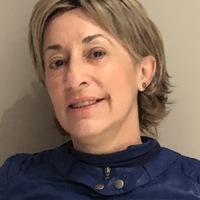
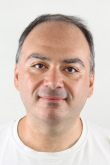
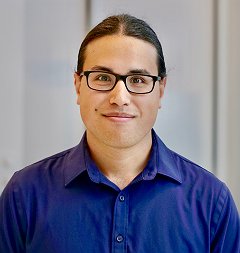
Cecilio Angulo Bahón is a full Professor at the Polytechnic University of Catalonia (UPC), affiliated with the Barcelona School of Industrial Engineering (ETSEIB) and the Department of Systems, Automatics and Industrial Informatics Engineering . He leads research in Artificial Intelligence and Robotics , with significant contributions to healthcare data analytics, digital twins, and human-robot collaboration. His research spans machine learning for medical data harmonization, generative adversarial networks in health informatics, and evolutionary algorithms for control systems. Recent publications focus on synthetic healthcare data generation, climate-resilient agriculture , and UMAP-based data analysis . His work bridges AI theory with practical applications in industrial and healthcare domains. Scientific awards include the Sant Jordi 2023 Digital Polytechnic Initiative Award . He has supervised doctoral candidates like Carlos Flores-Vázquez and N. Raya, with key collaborations at the IDEAI-UPC Intelligent Data Science and AI Research Group and the Institute of Robotics and Industrial Informatics (CSIC-UPC).
Mario Piattini is a Full Professor at the School of Computer Science of the University of Castilla-La Mancha (UCLM) in Spain, where he has served since 2002. He is the founder of the Alarcos research group and has held leadership roles including Director of the Mixed Center for Software Research and Development UCLM-Indra and Director of the Institute of Technologies and Information Systems (ITSI) at UCLM. He has also served as an associate professor at Universidad Complutense and Universidad Carlos III de Madrid. His educational background includes a PhD and degree in Computer Science from Universidad Politécnica de Madrid, a Psychology degree from UNED, and a Doctor Honoris Causa from Universidad de La Plata (Argentina). He holds multiple master's degrees in IT Audit, Human Resources Management, and Project Management, along with professional certifications including CISA, CISM, CRISC, CGEIT, PMP, and data governance certifications from DAMA. Professor Piattini is a leading expert in software quality, information systems, and security, with a recent strong focus on quantum computing and quantum software engineering. His research spans software engineering methodologies, data quality, AI systems, and the emerging field of quantum software development. He has been recognized as one of the top 15 scholars in systems and software engineering (2004-2008) and among the most active software engineering researchers (2010-2017). His recent publications reveal a significant shift toward quantum computing, with numerous articles on quantum software engineering, quantum-classical hybrid systems, quantum testing frameworks, and quantum software architecture. His work bridges theoretical foundations with practical engineering approaches for the emerging quantum computing paradigm. His scientific recognition includes multiple prestigious awards: Premio Nacional a la Trayectoria Profesional del Ingeniero Informático Premio Gabriel Alonso Herrera from JCCM for research trajectory Premio Grace Hooper from COIICLM Premio Aritmel from SCIE Premio FIUM from Universidad de Murcia Premio a la Trayectoria Profesional de ISACA Madrid As an academic leader, Piattini has founded several spinoff companies including Cronos Ibérica (now Alten), Kybele Consulting, Lucentia Lab, DQTeam, AQCLab (the first ENAC-accredited laboratory for software product quality and data evaluation), and I2SC. He serves as secretary of CTN71/SC7 and is a member of various ISO/IEC and UNE standardization committees, contributing significantly to software quality standards development. His research group has established AQCLab, which has been evaluating software quality for 25 years, demonstrating his long-term commitment to practical applications of software engineering research. Through his leadership in both academic and industrial contexts, Piattini has created a robust ecosystem connecting theoretical research with real-world software quality practices.
Ángel M. Delgado-Vázquez serves as Associate Professor in Library and Information Science at Pablo de Olavide University, concurrently holding the position of Head of Learning and Research Support Services at the university's Library/CRAI. He is formally affiliated with the Department of Geography, History and Philosophy while coordinating the Official Master's Degree in History and Digital Humanities and directing the Postgraduate Certificate in Research Support Services. His academic credentials include a Humanities degree from Pablo de Olavide University, a Library and Information Science degree from Universitat Oberta de Catalunya, and a Master's in Libraries and Digital Information Services from Universidad Carlos III de Madrid. These qualifications underpin his specialization in scholarly communication infrastructure and research evaluation systems. Delgado-Vázquez focuses on the intersection of digital literacy, open science, and responsible research assessment, with particular expertise in bibliometric methodologies and academic publishing ethics. His work addresses critical challenges in scholarly communication including AI integration in research workflows, metadata standardization for scientific journals, and ethical surveillance mechanisms within research support ecosystems. Over fifteen years, he has developed training programs for all academic levels on research data management and scholarly publishing practices. Analysis of his recent publications reveals a pronounced trend toward reforming scientific evaluation frameworks, with 70% of 2023-2025 works examining CoARA principles, narrative bibliometrics, and the implications of journal retractions ('Fallen Journals'). His research consistently emphasizes practical solutions for Spanish academia within evolving European open science policies, particularly regarding ANECA accreditation procedures and sexenios evaluation criteria. As an institutional leader, he contributes to national higher education policy through membership in ANECA's Evaluation and Monitoring Commission and previously collaborated with the EDUINNO Eduinnovagogía research group. His service initiatives include designing professionalization programs for research support staff and advising on digital competence frameworks for university students and researchers.
Raul Giraldez Rojo is a Professor at the University of Pablo de Olavide in Seville, Spain, working in the Department of Sports and Information Technology within the area of Computer Languages and Systems. He is affiliated with the DASE (Data Analytics Science & Engineering) research group and contributes to PhD programs in Engineering, Data Science, and Bioinformatics. His research interests focus on computer science with specialization in machine learning, evolutionary algorithms, and data analytics. Dr. Giraldez Rojo has made significant contributions to supervised learning techniques, clustering algorithms, and genetic programming applications. His work bridges theoretical computer science with practical applications in bioinformatics and data mining. His publication record demonstrates expertise in developing algorithms for data analysis, particularly in biclustering methods for expression data and supervised clustering techniques. His research shows a consistent focus on improving efficiency and effectiveness of computational methods for handling complex datasets. Dr. Giraldez Rojo collaborates extensively with researchers including Jesús Salvador Aguilar-Ruiz and José Cristobal Riquelme Santos, indicating strong research partnerships within the Spanish academic community specializing in computational intelligence.
Lluís Codina Bonilla is an Associate Professor at Pompeu Fabra University's Faculty of Communication, specializing in Journalism and Audiovisual Communication. As a founding member of the DigiDoc Research Group (SGR-01103) and Director of the Cybermedia Observatory, he bridges Information Science and Digital Communication through research on SEO, content curation, and digital media systems. PhD in Information Science (Universitat Autónoma de Barcelona) Co-founder of academic journal Hipertext.net Principal Investigator for multiple Spanish national R&D projects Research Interests: His work focuses on Search Engine Optimization (SEO) for news media, Semantic Web applications in journalism, and content curation systems. Recent studies explore AI applications in content creation and academic research. Academic Contributions: With over 200 articles and 6 books (including Design and SEO for Content-Intensive Websites ), his publications analyze digital media quality assessment, information architecture, and media verification. His 21 doctoral theses (all cum laude) highlight his role as a mentor in digital communication. Premio Roblón 2021 for Investigator of the Year Multiple UPF Social Council Awards for Teaching Quality Nominated Scimago Best Scientific Article Recognized Researcher Tranches (CNEAI/AQU) Academic Infrastructure: Leads the Cybermedia Observatory and contributes to UPF's SEO Media Lab, while maintaining affiliations with the Catalan Society of Communication and Institute of Catalan Studies. His teaching spans Journalism, Audiovisual Communication, and Research Master's programs.
Maria Mercedes Eurrutia Cavero is a Professor of French Philology at the University of Murcia's Faculty of Arts and Humanities, within the Department of French, Romanesque, Italian, and Arabic Philology. She holds a Doctorate from the University of Murcia (1997), focusing on specialized French linguistics in legal and medical contexts. Her research primarily revolves around lexicology, sociolinguistics, and translation studies, with notable contributions to the study of slang, color terminology, and digital discourse in tourism. Research Interests: Her work examines lexical semantic change, sociocultural implications of language, and practical applications of specialized French. She explores how language reflects social identity (e.g., slang, color symbolism) and bridges cultural gaps through translation, particularly in festivals and gastronomy. Her recent studies address digital communication's impact on tourism lexicons. Publications: Over 15 articles since 1996, including key works on technical discourse contrast, circus lexicology, and online tourism communication. Her 2007 study on color terminology highlights language as a sociocultural artifact, while 2013's work on Internet-based tourism discourse underscores digital lexical evolution. Affiliations: Leader of the 'General and Applied French Linguistics' research group and part of the 'Translation, Lexicology, and Writing' team. She has supervised doctoral research and contributed to UNED's distance-learning French pedagogy programs.
Rodrigo Lopes De Barros Oliveira is an active Lecturer at the University of the Balearic Islands (UIB), specializing in Spanish Language Education within the Department of Spanish Philology and Language Education. He teaches courses including Teaching Spanish in Primary Education, Language in the Early Childhood Classroom, and Spanish Language Communication Strategies for both Bachelor's and Double Degree programs in Education. His academic career spans teaching activities through the 2025-26 academic year, demonstrating ongoing institutional engagement. His research interests center on Brazilian literature, creative writing, and experimental film production with particular focus on urban cultural studies and representations of social marginalization. Oliveira's creative output reveals a distinctive voice exploring São Paulo's urban landscape, often employing dark social commentary and experimental narrative forms that challenge conventional literary boundaries. His work frequently examines the intersection of Brazilian identity, political resistance, and bodily experience within contemporary society. Oliveira's creative works demonstrate consistent thematic evolution toward increasingly complex explorations of surveillance, urban decay, and cultural resistance. His film projects often blend documentary and experimental techniques while his literary works maintain a strong connection to Brazilian social realities. The academic analysis of his work, such as Milton Francisco's semiotic study of 'A Carne do Metrô,' confirms his significance within contemporary Brazilian literary discourse. Scientific Recognition: Cultural Contest Caderno 2 in the 450 Years of São Paulo (2004) for 'A Carne do Metrô' As an educator, Oliveira guides students through foundational language education courses and supervises Bachelor's Thesis projects in Early Childhood Education. His creative practice informs his pedagogical approach, bringing real-world artistic experience into the classroom. While specific research grants aren't documented in the provided materials, his sustained creative output across multiple media suggests ongoing scholarly engagement. Oliveira is affiliated with the Art and Education - Music and Art Laboratory (GRAiE - Mus&Art Lab), a consolidated experimental R&D&I group at UIB, indicating active participation in interdisciplinary artistic research. His work bridges academic scholarship with creative practice, positioning him at the intersection of education, literature, and visual arts within the university setting.
Juan Gamero Salinas is a Collaborating Researcher at the Instituto de Ciencia de los Datos e Inteligencia Artificial (DATAI) of Universidad de Navarra . He is affiliated with the research groups StatData (Statistical Design and Data Analysis) and SAVIA (Sustainable Architecture, Environmental Sustainability, Industrialized Housing). His primary focus lies in environmental engineering and climate-adaptive building design. Education: PhD in 2021 with thesis on tropical overheating risk mitigation via semi-outdoor spaces. Academic Contributions: >300 hours of teaching in Master’s and undergraduate programs. Research Themes: His work bridges building design , thermal comfort , and data-driven climate adaptation . Key areas include: Passive cooling strategies in high-density tropical settings Impact of building form on overheating and daylight optimization Statistical modeling for environmental performance Publications & Projects: Juan’s publications (2020-2025) span journals like Energy & Buildings and Building & Environment , focusing on semi-outdoor spaces , thermal resilience , and few-shot AI applications . He served as Principal Investigator in the Trees4HeatResilience project. Labs & Groups: Active member of StatData (statistical modeling) and SAVIA (sustainable architecture) research teams.
Georgios Portokalidis is an Associate Research Professor at IMDEA Software Institute and Visiting Research Professor at Stevens Institute of Technology. He leads research in software systems security with focus on binary analysis, software hardening, and operating system security. His research develops practical defenses against software vulnerabilities through techniques like binary debloating, system call filtering, and hardware-assisted security. Current projects explore Rust language security, processor-assisted protection mechanisms, and vulnerability mitigation through code reduction. Publication trends show evolution from foundational binary analysis to applied security hardening, with recent emphasis on Rust security, hardware-assisted defenses, and real-world system protection. Work demonstrates consistent focus on practical, deployable security solutions. He has supervised numerous PhD students and postdocs, currently mentoring researchers at IMDEA. His group investigates binary analysis, software debloating, and system hardening techniques. Major grants include DARPA YFA (2021-2023) and ONR funding (2017-2022) supporting adaptive binary debloating research. Leads the systems security research group at IMDEA Software Institute, collaborating with international partners. Maintains active research partnerships and regularly contributes to top security conferences as program committee member.
Thaleia Dimitra Doudali is an Assistant Professor at the IMDEA Software Institute in Madrid, Spain, leading the Muse research lab. She holds a PhD in Computer Science from Georgia Institute of Technology (2021), advised by Ada Gavrilovska, focusing on hybrid memory management with machine learning. Prior to her PhD, she earned a Diploma in Electrical and Computer Engineering from the National Technical University of Athens (2015). Her research interests span systems for machine learning, machine learning for systems, and computer vision applications in resource management. Her work has been recognized with awards including the 'César Nombela' (2024), 'Juan de la Cierva' (2021), and Rising Star in EECS (2020). She serves on program committees for top conferences (ASPLOS, EuroSys) and organizes workshops. Her lab's projects address cloud resource management, carbon efficiency, and sustainable computing. She advises multiple PhD and intern researchers, contributing to impactful publications in SIGMOD, EuroSys, and other venues. Notable contributions include Cronus (CV-based memory management), CaRE (carbon-efficient cloud-edge orchestration), and foundational work on ML-driven resource forecasting. Her research bridges systems and AI, aiming to optimize data center efficiency and sustainability. She actively promotes diversity in STEM through mentorship roles in ACM-W Greece and Women in HPC initiatives.
Montserrat Calbó i Angrill is a Professor in the Department of Specific Didactics at the University of Girona , affiliated with the Faculty of Education and Psychology . She coordinates visual arts education programs and has served as Vice-Dean of Teachers (2008-09). As a researcher in the Education, Heritage and Intermediate Arts (GREPAI) group under the Institute of Educational Research , her work spans artistic education, ecological art, and interdisciplinary learning. Education : PhD in Fine Arts (2001) from the University of Barcelona with a thesis on environmental interpretations in artistic education. Research Focus : Integrating art into broader educational contexts, emphasizing sustainability, teacher training, and creative learning. Her recent publications highlight interdisciplinary art education trends, including ecological art projects (2022), structured logical materials for early childhood mathematics (2022), and digital education initiatives like UdiGitalEdu (2020). She explores multisensory and multicultural approaches, such as visual poetry analysis (2011-2012) and heritage education (2005-2011). Contact : montserrat.calbo@udg.edu
Tiark Rompf is an Assistant Professor at Purdue University , with research spanning programming languages, compilers, and systems. His work bridges domains including architecture, databases, machine learning, and AI through projects like Reachability Types and Rhyme. Co-director of the Purdue Center for Programming Principles and Software Systems (PurPL) Scientific Advisor at SambaNova Systems Previously a member of the Scala team at EPFL His research focuses on: Runtime code generation and advanced compiler technology Expressive data-centric query languages (Rhyme, Datalog) Reachability type systems for memory safety and effect handling Metaprogramming and logical relations for formal verification Recent publications highlight contributions to Datalog compilation (Flan), nested data structures (Rhyme), and polymorphic reachability types. He leads projects exploring: Compiler optimizations for emerging architectures (GPU, TPU, FPGA) ML-driven compiler improvements Secure multi-party computation via metaprogramming Scientific awards include: NSF CAREER Award (2016) Google Faculty Research Awards (2017, 2018) DOE Early Career Research Award (2017) ACM SIGPLAN PL Software Award (2019) GPCE Test of Time Award (2020) Students and alumni from his group have joined institutions like Databricks, DeepMind, Galois, and Meta. He teaches advanced compiler courses including: CS 590 - Advanced Topics in Compilers CS 352 - Compilers CS 502 - Graduate Compilers
Francisco Javier Oliver Bernal is a Lecturer at the University of Deusto in Bilbao, Spain, within the Faculty of Education and Sport and the Department of Physical Activity and Sports Sciences. He teaches across Computer Engineering, Physical Activity and Sports Sciences, and Primary Education bachelor's programs, as well as the Master's in Secondary Education. He earned his Doctor of Medicine and Surgery from the University of the Basque Country. His research spans Human-Computer Interaction, Educational Technology, and Science Education, with a strong emphasis on accessibility for visually impaired users. He has developed tools for e-learning, digital resource centers, and innovative teaching methodologies in computer science and natural sciences, aiming to enhance educational experiences through technology. His scholarly output, spanning from the 1990s to 2023, demonstrates a consistent focus on technology-enhanced learning, evolving from early work in 3D interfaces and computer graphics to recent applications in health, music, and interdisciplinary educational contexts. Key trends include the integration of accessibility features, the development of domain-specific educational tools (e.g., for biology and astronomy), and responses to contemporary challenges like the COVID-19 pandemic. He has supervised multiple theses on digital accessibility and cooperative systems, though student names were not listed. Details on research grants were not provided in the available text. As a member of the eVida research group (officially recognized by the Basque Government), he contributes to projects advancing accessible educational technologies, including the ACCE project for audiovisual accessibility and READIS digital resource centers for visually impaired users.
Carlo Angiuli is an Assistant Professor of Computer Science at the Luddy School of Indiana University . He is a leading researcher in type theory , with a focus on its applications to programming language design and logic . His work bridges theoretical foundations and practical implementations, particularly through dependent types , proof assistants , and homotopy type theory . His research interests include: Type Theory (foundational systems for programs and proofs) Programming Language Foundations (formal semantics and reasoning) Homotopy Type Theory (higher-dimensional structures) Dependent Types (expressive type systems) Proof Assistants (formal verification tools) Computational Logic (algorithmic reasoning) Angiuli actively contributes to the programming languages community as a POPL Program Committee member and co-author of a forthcoming textbook on dependent type theory. His students include Johnson He, Huang Xu, Kelton OBrien, and Ian Ray , who joined in Fall 2025. He has received significant recognition, including the Best Paper Award at FSCD 2019 and the School of Computer Science Distinguished Dissertation Award from Carnegie Mellon University. His current work explores advanced type-theoretic frameworks and their implementation in proof assistants like the red* family of tools. Scientific awards: Best Paper Award, FSCD 2019 (Junior Researchers category) School of Computer Science Distinguished Dissertation Award, Carnegie Mellon University He teaches courses such as Modern Dependent Types (CSCI-B619), Programming Language Foundations (CSCI-B522), and Introduction to Computer Science (CSCI-C211).
Mariano Rico is an Associate Professor at the Polytechnic University of Madrid (UPM), affiliated with the OEG research group in the Artificial Intelligence Department. Previously, he served as a Senior Researcher at OEG (2016-2020) and held teaching roles at the Autonomous University of Madrid (UAM). His primary affiliations include the UPM's Faculty of Computer Science and the UAM's Computer Engineering Department. Education: PhD in Computer Science (UAM, 2009), MSc in Physics (UAM, 1992), and postgraduate studies in Telecommunications Engineering. He conducted research stays at DERI (Ireland) and Freie Universität Berlin, focusing on Semantic Web and Linked Data. Research interests center on Linked Open Data, Natural Language Processing (NLP), and Semantic Web technologies, with contributions to DBpedia's Spanish branch and projects like Wf4Ever and LIDER. He actively collaborates with institutions in Leipzig, Bielefeld, and Berlin on Linked Data and linguistic applications. Teaching: Coordinates courses in NLP, Linguistic Engineering, and Big Data Visualization at UPM and online programs. Has instructed over 300 UAM faculty through teacher training programs on LaTeX, bibliographic management, and digital scholarly practices. Projects: Lead roles in European and national initiatives including SlideWiki, UpGrid, and Neptune. Current work focuses on NLP applications like text summarization (esT5s) and terminology tools (TermInteract). Labs/Teams: Core member of the OEG group, contributing to semantic web infrastructure and NLP tool development. Maintains international collaborations through AKSW and CITEC groups.