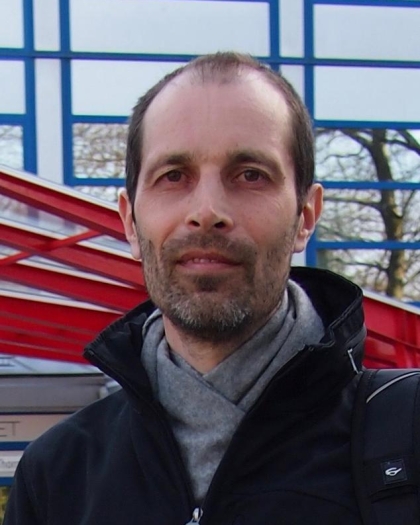
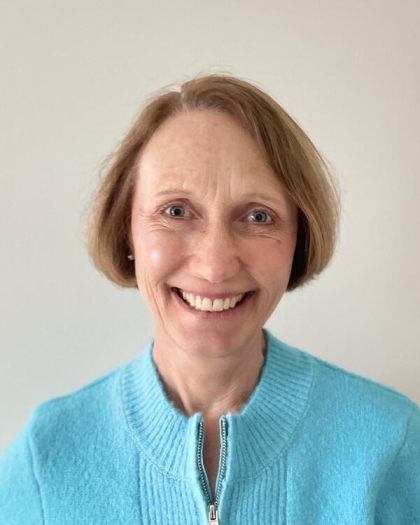
Oleksandr Kapranov is an Associate Professor of English at NLA University College's Teacher Education program. His work intersects discourse analysis, climate change communication, and English language teaching (ELT), with a focus on sustainable development education and intercultural communication. Research areas include political speeches (e.g., Keir Starmer, Rishi Sunak), corporate disclosures (Bank of England, Vedanta Resources), and media framing (Greenpeace branches, King Charles III). Key pedagogical interests: digital competence, beginner EFL training, and discourse markers in academic writing. His recent publications analyze climate change discourse through syntactic structures, metonymy, modality, and evidentiality, emphasizing institutional and political narratives. While no formal awards are listed, his work spans interdisciplinary collaborations with NGOs, governments, and universities.
Roswitha Skare is a Professor of Documentation Science at the Department of Language and Culture, UiT The Arctic University of Norway, within the Faculty of Humanities, Social Sciences and Teacher Education. She is actively engaged in research and teaching, focusing on documentation studies, public libraries, archives, museums (LAM sector), digitalization, and film history. Her research interests include: Documentation and document theory Paratext and digital documents Public libraries and their role in society Libraries and social media Migration and refugee services in libraries Film history, especially silent films and early documentaries Cultural memory and Sámi cultural resilience Institutional convergence in cultural policy Her recent publications (2019–2025) reveal a strong focus on public libraries during and after the Covid-19 pandemic, the role of libraries in supporting immigrants and refugees, theoretical developments in document studies, and historical film analysis—particularly Robert Flaherty’s Nanook of the North . She frequently collaborates with scholars such as Andreas Vårheim, Noah Lenstra, and Sigrid Stokstad. Her work appears in journals like Journal of Documentation , Library & Information Science Research , and Proceedings from the Document Academy . Roswitha Skare teaches courses such as: MDV-1001: Multimediale dokumenter: Historie, teori og analyse MDV-1203: Bibliotek og formidling MDV-1207: Dokumentinstitusjoner og digitalisering MDV-1206: Prosjektoppgave i bibliotek- og dokumentasjonsvitenskap She supervises bachelor’s, project, and master’s students in library and documentation science. She is a member of the research group Engaging Conflicts in a Digital Era (ENCODE) and participates in projects such as LAMCOM – Libraries, archives, and museums in the community and SAMCOM - Sámi cultural centers as community and cultural resilience infrastructure , which explore the societal roles of cultural institutions and Indigenous resilience. No scientific awards are listed in the provided text.
Maj Schian Nielsen is a Senior Research Librarian at the University Library of the University of Agder. Her work focuses on multilingualism, crosslinguistic awareness, and German language pedagogy. She is affiliated with the research groups 'Media and Communication Studies' and 'Multilingualism in Society and Education (MUSE).' University of Agder Research Groups: Media and Communication Studies, MUSE Her research explores how multilingual awareness can enhance grammar instruction in German third-language (L3) teacher education programs across Denmark and Norway. Recent publications analyze curriculum structures, educational materials, and the integration of generative AI tools like ChatGPT in multilingual education contexts. Scientific output trends reveal a focus on: Cross-linguistic pedagogy L3 German acquisition Grammar teaching methodologies AI applications in language learning Teacher training for multilingual classrooms Systemic Functional Linguistics (SFL) frameworks She has not been publicly recognized with scientific awards listed in the available data.
Habib Ullah is an Associate Professor in Data Science at the Norwegian University of Life Sciences (NMBU), Norway, where he conducts research at the intersection of computer vision and machine learning. He is affiliated with the Institute of Data Science under the Faculty of Science and Technology. He has previously held academic positions at COMSATS University Islamabad, Pakistan, and the University of Ha'il, Saudi Arabia, and served as a postdoctoral researcher at The Arctic University of Norway. Educational Background: PhD in Information and Communication Technology (Computer Vision), University of Trento, Italy (2011–2015) MSc in Electronics and Computer Engineering, Hanyang University, South Korea (2007–2009) BSc in Computer Systems Engineering, NWFP University of Engineering and Technology, Pakistan (2002–2006) Habib Ullah's research is primarily focused on computer vision and machine learning, with applications in aquaculture, agriculture, and human behavior analysis. He investigates underwater fish feeding sounds using audio classification, develops zero-shot learning models for recognizing unseen classes, and applies deep learning to detect stress in salmon via skin dot patterns. He also explores AI-driven controlled environment agriculture, leveraging sensors and automation for optimal crop growth. His work emphasizes practical AI solutions for real-world challenges in environmental and biological domains. The recent publications highlight a strong trend in leveraging deep learning for zero-shot and semi-supervised learning, particularly in computer vision tasks such as sea ice classification, crowd anomaly detection, and agricultural monitoring. His research spans remote sensing, biomedical signal processing, and human activity recognition, demonstrating interdisciplinary versatility. The keywords reflect a focus on robust feature representation, knowledge transfer, and model generalization. Scientific Awards and Funding: Industrial PhD grant 'Advancing Controlled Environment Agriculture AI' from The Research Council of Norway (Project number 354125, 2 million NOK, 2024) Team member (Coordinator-Participant) in the Battery Cell Assembly Twin (BatCAT) project funded by Horizon Europe (7 mEuro, 2023–2027) Development of an AI-Based Image Analysis System for Monitoring Plant Status (Funding: 1.8 mNOK, starting 2025) Habib Ullah actively supervises PhD projects and contributes to academic service through editorial and organizational roles. He has served as an Associate Editor for IEEE Access, Guest Editor for MDPI Remote Sensing, and Editor of the Springer book Machine Learning Techniques and Sensor Applications for Human Emotion, Activity Recognition, and Support (ML-SHEARS) . He has also been a Track Chair and Program Committee Member for several international conferences, reflecting his leadership in the academic community. His research is supported by significant grants and collaborative projects, indicating strong institutional and international engagement. He is involved in multiple research teams and projects, including the BatCAT project on battery manufacturing and AI applications in controlled environment agriculture with RIFT LABS AS. His lab work integrates deep learning, sensor fusion, and data analytics for environmental and biological monitoring systems.
Swati Aggarwal is a Professor in Artificial Intelligence at the Faculty of Logistics, Molde University College (HiMolde). Her research focuses on AI applications in healthcare, ethics, cognitive development, and neural networks. She holds a PhD in Neutrosophic Neural Networks, a Master's in Information Technology, and a Bachelor's in Computer Science and Engineering. Previously, she was a Marie Curie Postdoc Fellow at NTNU, working on AI models for cognitive assessment in infants (AIM_COACH project). Research Interests - AI in Health/Medicine - Ethics in AI and Societal Impact - EEG/BCI for Cognitive Assessment - Machine Learning and Deep Learning Publications Her recent work spans AI ethics, BCI applications, adversarial attacks, and healthcare diagnostics. Notable contributions include EEG-based infant perceptual monitoring (2025) and malaria detection via EfficientNet (2023). She also explores cross-lingual adversarial robustness and blockchain in hospitality systems. Labs/Teams - ABC-AI: Applied, Basic, and Conscientious AI Group - Virtual Technologies and Learning Research Group
Tracey Lavalette is a Research Fellow and PhD candidate at the University of Oslo's Department of Teacher Education and School Research, affiliated with the Faculty of Educational Sciences. Her research focuses on educational sociology and social inequality in schools, with a particular emphasis on equity-oriented teacher noticing. She holds a Master's in Pedagogy (2023) and has extensive prior experience as a teacher in lower secondary education and adult education (2014–2021). Education Background: Master's in Pedagogy (2023), University of Oslo Practical-Pedagogical Education with Norwegian and Social Studies Didactics (2014), University of Oslo Research Interests: Tracey investigates how teachers develop equitable practices through noticing and pedagogical reflection. Her work integrates sociological perspectives to address systemic educational inequalities, particularly in teacher training and curriculum design. She advocates for inclusive methodologies that bridge theory and practice in educational settings. Key Contributions: Her recent publications (2024) synthesize literature on equity-oriented teacher noticing, emphasizing its role in fostering inclusive classrooms. These studies highlight methodological innovations in scoping reviews and literature analysis. Professional Background: Doctoral Research Fellow since [start year not specified] Prior teaching roles: Norwegian/social studies teacher (secondary education) and educator for Norwegian language learners in vocational programs
Crina Damsa is a Professor at the Department of Education, University of Oslo. Her research focuses on collaborative learning, interdisciplinary learning, and the role of digital technologies (including AI) in knowledge work and education. She leads projects like Unpacking collaboration: Multimodal analysis and combined method designs and Learning Ecologies in Higher Education , and is involved in research groups such as HEDWORK and LIDA. PhD in Educational Research, University of Oslo (2013) MSc in Learning Design and Technology, Utrecht University (Netherlands) BA in Language and Literature, Babes-Bolyai University (Romania) Her work examines sociocultural and sociomaterial aspects of learning, with a focus on student-centered environments, design-based research, and multimodal learning analysis. She supervises PhD students and contributes to methodological advancements in learning sciences. Editorial roles: Area Editor for Learning in Context , member of editorial boards for journals like Journal of the Learning Sciences and Frontline Learning Research Projects: Academic Hospitality in Interdisciplinary Education (AHIE) , Digital Integration of Video Assessment (DIVA) , Digital Tracing of Collaborative Learning (DigiT) , Global Teacher Education (GatherED)
Marco Seeber is a Professor at the University of Agder's Department of Political Science and Management. He holds a PhD from the University of Chieti Pescara (Italy) and has previously worked at the University of Lugano (Switzerland) and Ghent University (Belgium). His research focuses on public policy, governance, and management with specialization in higher education systems, research evaluation, and science policy. Professor Seeber's research examines policy implementation, research metrics, peer review systems, academic careers, internationalization, and interdisciplinarity in higher education. He employs comparative and quantitative methodologies to analyze governance structures and policy impacts across different educational systems. He has received significant recognition including the Swiss Prize for Research in Education (2019) and fellowships from IEEE, AIUM, and AIMBE. As Co-Editor-in-Chief of the European Journal of Higher Education, he shapes scholarly discourse in his field. He currently coordinates the Horizon CSA project IANUS (2025-) and leads courses in organizational theory, research methodology, and leadership.
Vibeke Grøver is a Professor at the Department of Pedagogical Research, University of Oslo. Her work focuses on language and reading comprehension development for language minority children, with a emphasis on bilingual education, shared book reading interventions, and sociolinguistic factors influencing literacy. Education: Dr.polit., University of Oslo (1992) Master in Educational Psychology, University of Oslo (1982) Elementary School Teacher, University of Oslo (1977) Research Interests include second-language acquisition, early literacy for dual-language learners, home literacy environments, and teacher talk features in preschool settings. She leads projects like Teaching for text comprehension and has contributed to the DEAL (Development, Equality, and Literacy in Learning Contexts) research group. Article Trends show longitudinal studies on bilingual profiles, shared reading interventions, code-switching dynamics, and neighborhood demographic impacts on vocabulary. Key themes include scaffolding language minority students, cross-cultural comparisons (e.g., Chinese-Norwegian families), and teacher-student interaction patterns in multilingual preschools. Leadership Roles include Dean of the Faculty of Educational Sciences (2009–2012) and advisory positions for the Peder Sather Center at UC Berkeley (2012–2014). Research visits span Harvard, UC Berkeley, NYU, and East China Normal University.
Jonas Bakken is a Professor of Norwegian Didactics at the Department of Teacher Education and School Research, University of Oslo. His work bridges rhetoric, children's literature, and sustainable development education through innovative didactic approaches. As academic director of the Associate Professorship Program, he shapes teacher education and curriculum design. Research Interests: Norwegian language arts, rhetoric integration in education, ecocriticism, multicultural narratives, and bilingual pedagogy. Projects: Evaluation of bilingual education (ETOS), Linking Instruction and Student Experiences (LISE), Scandinavian Narratives of Guilt and Privilege (Scanguilt), Minority Literary Voices in Scandinavia. Publications span textbook analysis, rhetorical strategies in Sámi literature, CLIL education equity, and oral creativity pedagogy. His recent works focus on task culture conflicts and curriculum renewal in Norwegian language arts.
May Britt Drugli is a Professor at the Regional Centre for Child and Youth Mental Health and Child Welfare, affiliated with NTNU's Faculty of Medicine and Health Sciences and Department of Mental Health. Her research focuses on early childhood care, student-teacher relationships, child mental health, and intervention research. She has contributed to numerous publications addressing childcare quality, child well-being, and developmental outcomes. Her work includes studies on cortisol levels in toddlers in childcare, the impact of professional development programs like 'Thrive by Three,' and the importance of play-based learning in educational policies. She frequently collaborates with educators and policymakers to translate research into practical pedagogical strategies. Key areas of exploration include transition processes for young children entering childcare, the role of teacher-child interactions, and addressing socioeconomic disparities in early education. Her research emphasizes evidence-based practices to enhance child development and mental health.
Jaakko Timo Henrik Järvi is a Professor in the Department of Informatics at the University of Bergen, Norway, with additional affiliations at the University of Turku, Finland. His research focuses on programming language design, generic programming, and human-computer interaction, particularly in GUI frameworks and software reuse. His research interests include generic programming, programming language design (especially the Magnolia language), high-performance computing, array programming, and GUI engineering. He emphasizes formal methods and algebraic specifications to build reusable and efficient software systems. His work bridges theoretical foundations with practical applications in software development and education. The recent publications highlight a strong trend in declarative GUI frameworks, multi-selection models, and generic programming. His work explores domain-specific languages for GUI structure manipulation, reusable selection semantics across platforms, and optimizing array computations using the Mathematics of Arrays. These efforts reflect a consistent focus on software abstraction, correctness, and reusability. Jaakko Järvi has supervised doctoral students, including Tetiana Yarygina, whose dissertation explored microservice security. While no specific grants are detailed, his work on VisAST was supported by the Research Council of Norway (Project 250683), indicating active external funding. He frequently collaborates with researchers like Magne Haveraaen, Knut Anders Stokke, and Sean Parent. He contributes to tools and frameworks such as the MultiselectJS library and the VisAST educational tool. These are outcomes of collaborative research teams focused on improving software development practices and computer science education.
Sigrid Johanna Håheim Ørevik is an Associate Professor at the Department of Foreign Languages , University of Bergen. Her work focuses on multimodal text analysis in English education, genre theory, and assessment frameworks. Position: Associate Professor Email: sigrid.orevik@uib.no Research Groups: POTENT – Post-Truth English Teaching Research interests include: Multimodal pedagogies Genre patterns in EAL materials Assessment of student multimodal texts Digital learning resources Vocational English teaching Recent publications (2021–2025) explore: Multimodal design principles Agency in semiotic work Curriculum coherence challenges Remediation of digital resources Long-term genre stability in exams She contributes to the POTENT research group and collaborates internationally on multimodal English learning projects.
Aslaug Kristiansen is a professor of education at the University of Agder (UiA), with a doctorate from the University of Oslo (2003). She has been employed at UiA since 1989, after her first temporary position at what was then Kristiansand Teacher Training College. Her academic background includes a Cand. Paed. degree and research assistant work at the Norwegian Teachers' Academy in Bergen. She has studied Martin Buber's philosophy at The Hebrew University in Jerusalem and the Pädagogisches Institut der Universität Freiburg with Professor Maurice Friedman. University of Oslo - Cand. Paed. and Ph.D. Norwegian Teachers' Academy in Bergen - Research Assistant Research Council of Norway - Recipient of recruitment grant Research Interests: Aslaug Kristiansen specializes in values and ethics in educational work, professional theory, democracy, dialogue, and peace pedagogy. Her research explores the role of teachers, trust, ethics and values, silence and dialogue in professional collaborative relationships. She has coordinated the "Democratic Mobilization" initiative at UiA since 2015, which has led to various collaborative projects, including with the ARKIVET Peace and Human Rights Centre in Kristiansand. Publication Trends: Her recent publications focus on democratic education, hate speech among students, and teacher motivation. She has published extensively on Martin Buber's philosophy and its application to modern pedagogical practice, emphasizing interpersonal relationships, dialogue, and ethical considerations in teaching. Her work also addresses post-war educational approaches and the prevention of extremism through educational initiatives. Scientific Contributions: Aslaug Kristiansen has made significant contributions to educational philosophy and practice, particularly in the areas of teacher-student relationships and ethical dimensions in education. She has coordinated major academic initiatives and has been instrumental in advancing dialogical approaches to education. Her publications appear in prominent educational journals and edited volumes, reflecting her influence in the field. Advising and Grants: She has coordinated the "Democratic Mobilization" initiative at the Department of Education since 2015 and has received a recruitment grant from the Research Council of Norway. Her work has led to numerous collaborative projects and has influenced educational practices in Norway and internationally through comparative studies. Research Groups: Aslaug is active in the research group "Professions and professionals in cooperation" and the Democratic Mobilization initiative at UiA. She collaborates with ARKIVET Peace and Human Rights Centre and participates in international research projects including the VALIDE international project on value-based democracy education.
Roar Bakken Stovner is an Associate Professor at the Department of Primary and Secondary Teacher Education within the Faculty of Education and International Studies at Oslo Metropolitan University (OsloMet), where he also serves as Head of Studies - Area of Responsibility 2. His academic career at OsloMet began as an Assistant Professor (2021-2023) before his promotion to Associate Professor in 2023. Prior to his university position, he worked as a teacher in lower and upper secondary schools in Oslo (2012-2018) and completed his PhD at the University of Oslo (2016-2020). He holds a Master of Science and Technology from NTNU (2007-2012) with a thesis on applied computational topology. Stovner's research spans several interconnected domains within educational science: Developing methodologies for describing and measuring teaching quality across multiple classrooms, with special emphasis on mathematics education Metascience research examining how citation practices distort findings and confer unwarranted authority to claims in educational research Creating programming tools for educational research, including the gptworkr package for text analysis in R using ChatGPT His scholarly work focuses on classroom research, mathematics education, mathematical competencies, metascience, and citation analysis. He actively participates in research groups focused on Classroom Research and Task Design in Mathematics Education, and leads significant involvement in the Teacher Education Panel Study (TEPS), a comprehensive longitudinal study examining teacher education implementation in Norway. Stovner's recent publications demonstrate substantial engagement with contemporary issues in educational research methodology, AI applications in education, and critical examination of scientific practices. His work on the EDUCATE project has produced influential reports on algorithmic thinking in mathematics education across different grade levels and exploratory teaching approaches in upper secondary education. His contributions to educational discourse include conference presentations, book chapters, and practical resources for teacher education, such as "Bedre masterskriving – en bok for lærerstudenter" (Better Master's Writing - A Book for Teacher Students), which supports academic writing development among future educators.