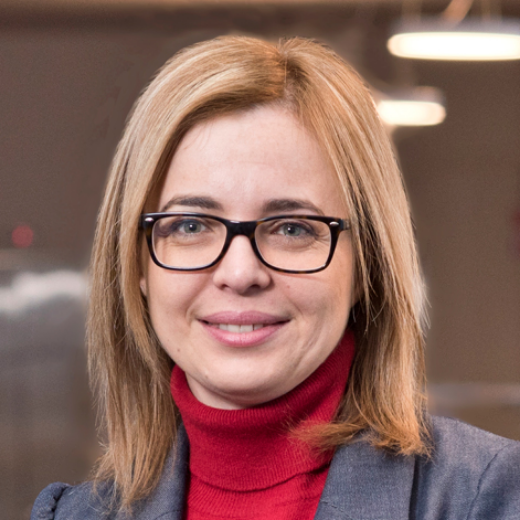
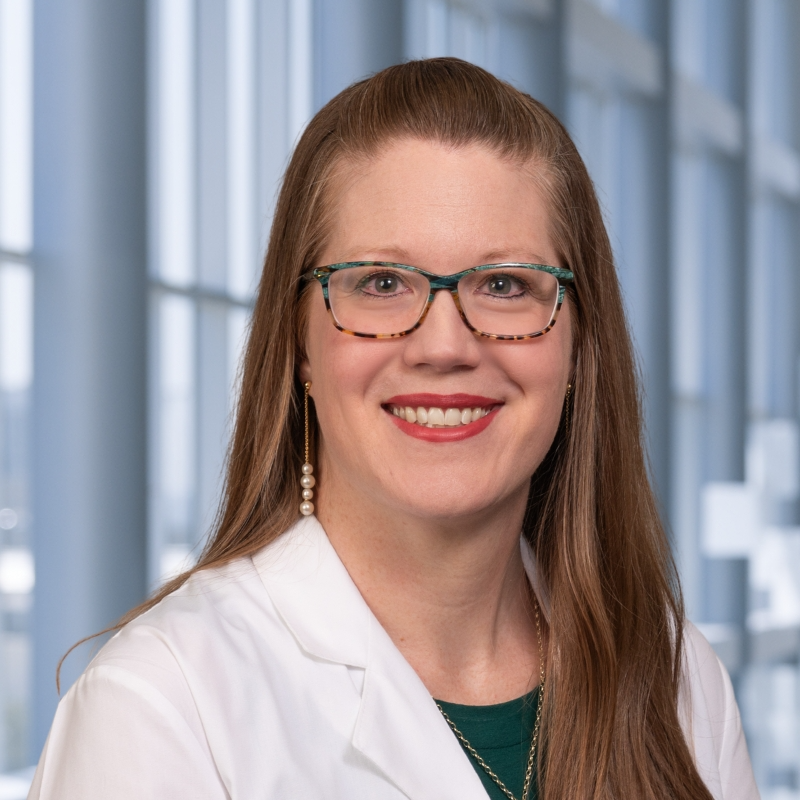
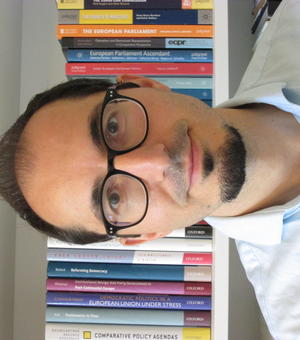
Monica Rosini is a tenured Associate Professor in Public Law and Law of Regions and Autonomies at the Free University of Bozen-Bolzano , affiliated with the Faculty of Economics and Management . Her work focuses on constitutional frameworks for regional autonomy, minority rights, and EU law implementation. Teaches courses on Law of Regions and Autonomies Specializes in Italian regional governance and EU integration Her research explores: Autonomy statutes and constitutional harmony EU law adaptation in special regions Linguistic minority protections Electoral systems and political representation Financial autonomy mechanisms Recent publications analyze: Post-Cartabia judicial reforms Linguistic education policies EU economic constitution evolution Regional implementation challenges South Tyrol autonomy dynamics Legal frameworks for migrant integration
Jessica Rich is an Assistant Professor in the Faculty of Education at Queen's University. She specializes in educational assessment, program evaluation, and competency-based medical education. Her research focuses on curriculum design, interprofessional education, and simulation-based training in healthcare contexts. She holds a PhD from Queen's University alongside degrees in Education and Biological Psychology. Dr. Rich has contributed to advancing medical education through studies on Competency-Based Medical Education (CBME) implementation, programmatic assessment frameworks, and the role of simulation in clinical skill development. Her work bridges theoretical educational models with practical applications in healthcare training programs. Her publications highlight trends in evaluating educational programs, comparing simulation vs real-world performance metrics, and exploring how professions conceptualize entry-to-practice competencies. She teaches courses like PME 828: Conducting Quality Program Evaluations. While no specific awards are listed, her active research portfolio demonstrates sustained engagement with medical education innovation. She maintains an active Google Scholar profile and collaborates across disciplines within Queen's University's Faculty of Education and affiliated medical programs.
James Corcoran is Associate Professor of English as a Second Language & Applied Linguistics at York University's Department of Languages, Literatures and Linguistics. His research examines language teacher education, critical English for academic/specific purposes (EAP/ESP), and power relations in global academic knowledge production. He teaches plurilingual undergraduates, graduate students, and teacher candidates, drawing on expertise in Portuguese, Spanish, and French. Education includes: Ph.D. in Language & Literacy Education, University of Toronto M.A. in Second Language Education, University of Toronto B.Ed. in TESL, McGill University Research explores how pedagogical approaches like translingual practices and multiethnography can address linguistic inequities in academic publishing. His work advocates for critical support of plurilingual scholars navigating English-dominated knowledge systems. Publications investigate EAP practitioner experiences, ERPP course efficacy, and Canadian language program landscapes. Recent work employs participatory methods to examine power dynamics in language education. Corcoran supervises graduate research and contributes to academic communities through editorial roles. His scholarship promotes equity-oriented pedagogies that validate multilingual resources in academic writing.
Amy L. Lerner is an Associate Professor of Biomedical Engineering and the founding Academic Director of the Center for Medical Technology & Innovation (CMTI) at the University of Rochester's Hajim School of Engineering and Applied Sciences. She holds a PhD and post-doctoral training from the University of Michigan, with prior experience as a design engineer for NASA's Shuttle Space Suit program. Her research focuses on computational biomechanical modeling of the knee joint, emphasizing gender/ethnic differences in anatomy, meniscal pressure distributions, and obesity-related osteoarthritis risks. She leads design education initiatives nationally (BME-IDEA) and locally, shaping curricula for biomedical engineering programs. Her work bridges clinical needs with engineering solutions through interdisciplinary collaboration. Research interests include orthopaedic biomechanics, cornea mechanics, and finite element modeling using medical imaging (MRI/micro-CT). Her lab develops personalized computational models to predict treatment outcomes and improve medical device design. Key projects involve studying obesity's biomechanical impacts, corneal collagen fibril dispersion, and gender differences in post-surgical gait asymmetry. She has pioneered design education curricula, including Rochester's MS in Medical Technology & Innovation program. Her research is funded by NSF, NIH, and industry partners, with over 80 publications in top journals. While no specific awards are listed, her leadership roles and programmatic contributions highlight her institutional impact. Advising includes supervising all graduates from CMTI's MS program to date. Current efforts focus on efficient modeling techniques for personalized medicine and advancing biomechanical education standards.
David Baker is a Professor of Pharmacy Administration and Director of Graduate Studies in the Department of Pharmaceutical and Administrative Sciences at the College of Pharmacy, Western New England University. He teaches core courses including Pharmacy Ethics, Health Care Policy, Pharmacy Law, and the Evolution of Pharmacy. His educational background includes: J.D., 1994, Dickinson School of Law, Penn State University, Carlisle, PA M.B.A., 1994, Liberty University, Lynchburg, VA ASHP Hospital Pharmacy Residency Certificate, 1982, Houlton Regional Hospital, Houlton, ME B.S. Pharm., 1981, Philadelphia College of Pharmacy, University of the Sciences in Philadelphia, Philadelphia, PA Dr. Baker's research spans three primary domains: Pharmacy History (examining film/TV depictions of pharmacy, historical pharmacy practices like 1890s prescriptions and prohibition-era medicinal liquors, and the founding of U.S. pharmacy schools), Pharmacy Law (analyzing state continuing education disparities and medical marijuana legislation), and Pharmacy Education (developing simulation-based learning tools and assessment methods). His Voices of Pharmacy Past (VoPP) Project preserves historical practices through student-conducted interviews with pre-1985 pharmacists. Analysis of his 15 most recent publications reveals consistent focus on pharmacy history in media (40% of works), historical pharmacy practices (30%), and educational innovations (20%), with emerging interest in traditional medicine systems. Law-related publications concentrate on regulatory disparities and policy reform. Through the Voices of Pharmacy Past Project, Dr. Baker mentors students in conducting historical oral histories of retired pharmacists. While no specific grants are mentioned, his work demonstrates sustained programmatic research in historical documentation and educational methodology development.
Jaclyn Albin, MD, is a clinical faculty member at the University of Texas Southwestern Medical Center (UTSW), jointly appointed in the Department of Pediatrics and the Department of Internal Medicine. She practices primary care in the Combined Internal Medicine/Pediatrics Clinic and serves as the Associate Program Director for the Internal Medicine/Pediatrics Residency Program. Dr. Albin is also the Founder and Director of UTSW’s Culinary Medicine Program, launched in 2017, which provides hands-on nutrition and cooking education to medical students, residents, healthcare professionals, and the community. Her research and educational interests center on nutrition, lifestyle medicine, and health promotion across the lifespan. She is dedicated to integrating practical nutrition education into medical training, with a focus on culinary medicine as a tool for disease prevention and patient counseling. Her work emphasizes the role of food as medicine, dietary counseling, and interdisciplinary collaboration involving physicians, dietitians, and chefs. Dr. Albin’s recent publications highlight a strong trend in culinary medicine, nutrition education reform, virtual health interventions, and community-based dietary programs. Her work spans medical education innovation, public health nutrition, digital health tools (eConsults), and food security initiatives. She frequently collaborates on research related to teaching kitchens, nutrition in graduate medical education, and lifestyle interventions for chronic diseases like diabetes and cardiovascular conditions. Founder and Director, Culinary Medicine Program, UTSW (2017–present) Associate Program Director, Internal Medicine/Pediatrics Residency Program Active contributor to national discourse on nutrition in medical education Dr. Albin is deeply involved in mentoring medical trainees and residents, particularly through curriculum development and residency education. She has led initiatives to improve nutrition counseling confidence among learners and has secured programmatic support for culinary medicine. Her leadership in building an eConsult service for nutrition demonstrates innovation in clinical and educational integration. While specific grant details are not listed, her repeated involvement in funded research trials suggests active participation in extramural research. She leads the Culinary Medicine Program at UTSW, which functions as an interdisciplinary team involving medical educators, dietitians, and community partners. The program delivers hands-on cooking classes, develops curricula for trainees, and conducts research on nutrition education outcomes. Future directions include expanding virtual culinary interventions, integrating nutrition into electronic health records, and scaling community outreach for food-insecure populations.
Associate Professor Jonathan Paget serves as Associate Dean (Music) at the Western Australian Academy of Performing Arts (WAAPA), Edith Cowan University. A classical guitarist with international performance experience, he leads the classical guitar program and is a member of the Centre for Keyboard Heritage and Performance Research. His research focuses on Australian music, 19th-century guitar works, and historical performance practices. Doctor of Musical Arts (Eastman School of Music, 2003) Master of Arts and Master of Music (USA, 2002 and 1998) Bachelor of Music with First Class Honours (University of Western Australia, 1996) Paget’s research explores intersections between historical guitar traditions and contemporary performance, with particular emphasis on Bel Canto repertoire and Australian composers. His 15 most recent outputs span book chapters on 19th-century guitar manuscripts, cross-cultural collaborations with Chinese musicians, and analytical studies of Romantic guitar works. He investigates historical authenticity in Napoleonic-era compositions, Australian minimalist guitar works, and the application of Sonata Theory to Bel Canto music. Scientific awards include the Beazley Medal , Hackett Studentship , and Fulbright Postgraduate Award . He has won international competitions like the Shell Darwin and Rantucci Guitar Competitions. Grants highlight his leadership in projects such as the Historic Keyboard Instruments Restoration ($350,000) and Cross-Continental Inspirations in Australia-China collaborations. As a research supervisor, Paget mentors PhD candidates exploring topics like Beethoven performance traditions in China and Gilbert Biberian’s influence. He has held leadership roles with organizations including the Classical Guitar Society of Western Australia and contributes to the Fulbright Alumni Association .
Anthony B. Sullers Jr. serves as a Lecturer in the Department of African American Studies at the University of Illinois at Urbana-Champaign, while also working as a Program Evaluator for the Center for Culturally Responsive Evaluation and Assessment. His academic work focuses on higher education policy and culturally responsive program evaluation, with a particular emphasis on promoting equity and inclusion for underrepresented minority students. Education: Ph.D. in Higher Education Policy from the University of Illinois at Urbana-Champaign His research explores intersections between affirmative action , merit-based scholarship design , and diversity outcomes in general education reform . Recent publications highlight strategies for aligning institutional diversity goals with programmatic assessments. Contact: sullers1@illinois.edu
Timothy J. Wood is a Full Professor in the Department of Innovation in Medical Education at the University of Ottawa, with a cross-appointment to the Faculty of Education. His career spans cognitive psychology, medical education, and clinical assessment innovation. PhD in Cognitive Psychology, McMaster University Postdoctoral Fellowship, Program for Educational Research and Development (PERD) Research focuses on rater cognition in clinical assessments, educational intervention impact, and first impressions in judgment. His work bridges cognitive psychology principles with medical education practices. Scientific contributions include 15 recent publications on topics like workplace-based assessment, consensus methods (Delphi, nominal groups), and clinical skill measurement. Articles span journals such as Advances in Health Sciences Education , Academic Medicine , and MedEd . 2024 Recipient of MCC Dr. Maureen Topps Award for Clinical Competence Assessment 2022 Canadian Association for Medical Education Ian Hart Award Associate Editor for Advances in Health Sciences Education and Journal of Continuing Education in the Health Professions Leadership roles include Director of the Scholars for Health Education (DIME) Program and Director of Student and Faculty Assessment in the University of Ottawa Faculty of Medicine. He has served on CAME and CCME executive committees.
Jean Edward is an Associate Professor at the University of Kentucky College of Nursing, serving as Director of Graduate Studies and PhD Program. She contributes to the Markey Cancer Center's Cancer Prevention and Control Research Program and leads the UNITE Research Priority Area. Doctor of Philosophy, University of Louisville (2013) Bachelor of Science in Nursing, Bellarmine University (2008) Her research focuses on health literacy , healthcare access disparities , and healthcare policy , particularly addressing financial toxicity in cancer care. Her work aligns with UN Sustainable Development Goals related to healthcare equity. Recent publications examine racial/rural disparities in AYA cancer survivors, cost-of-care conversations in nursing, interprofessional training programs, and financial navigation systems. Key collaborations involve the KY Cabinet for Health and Family Services and University of California Davis. Fellow, Society for Nurse Scientists, Innovators, Entrepreneurs, and Leaders (2019) Public Health Nursing Junior Investigator Award (2016) Excellence Award for Diversity & Inclusivity (2020) Commonwealth Institute of Kentucky Scholar (2016) Wethington Excellence in Research Award (2019) Active grants include "Implementing Innovative Value-based Financing Models to Promote Medical Legal Partnerships in Kentucky" (2023-2026) and multiple studies on financial toxicity in hematologic cancers. She engages healthcare teams and policymakers through invited talks at organizations like the American Public Health Association.
Cynthia Barron is a Clinical Associate Professor in the Department of Educational Policy Studies at the University of Illinois Chicago (UIC), where she serves as the Coordinator of the EdD in Urban Education Leadership Program. She partners with school districts, including Chicago Public Schools (CPS), to develop leader pipelines, establish residency placements, refine principal eligibility processes, and create systems for principal supervision and success. Teaches graduate courses such as EDPS 559 (Internship in Educational Leadership) and EDPS 553 (System Leadership in Urban Schools). Supervises EdD capstone projects and has coached over 50 EdD candidates through internships, most of whom now work as principals or supervisors in CPS. Focuses on programmatic improvements, including recruitment, admissions, data collection, and external funding for innovative practices. Research and Expertise: Cynthia’s work centers on urban education leadership, emphasizing principal preparation, school district governance, and systemic approaches to improving K-12 education. She integrates practical experience with academic rigor to enhance leadership development strategies and student-centered teaching methodologies. Professional Background: With over 40 years of experience in education and 35 years in CPS, she has held roles as an Area Instruction Officer, principal, assistant principal, counselor, teacher, and athletic coach. Her leadership in CPS areas drove improvements in school performance, attendance, and principal development.
Maryann Wu serves as Assistant Dean for Assessment and Assistant Professor of Clinical Pharmacy at the USC Mann School of Pharmacy and Pharmaceutical Sciences, holding dual assessment leadership roles for PharmD programs and graduate/post-doctoral education since 2023. Her work centers on accreditation compliance and curriculum innovation within the Titus Family Department of Clinical Pharmacy. Her educational background includes a Doctor of Education from the University of Southern California, a Master of Arts in higher education and student affairs from The Ohio State University, and a Bachelor of Arts from Miami University, supplemented by Harvard University's Institute for Management and Leadership in Education. Wu's research integrates artificial intelligence with educational assessment , focusing on curriculum sequencing , student motivation , and technology-driven innovation . Her pioneering work in AI-SiPS demonstrates how machine learning can optimize pharmacy education pathways and predict post-graduation success. Recent publications reveal a clear trajectory toward computational solutions for assessment challenges, particularly in automating syllabus construction and analyzing APPE scheduling impacts. This work bridges pharmacy education with data science to enhance student outcomes. Her scientific recognition includes: 2024 Monash University PES Best Oral Presentation for AI applications in pharmacy education 2023 and 2022 AACP Best Poster Awards for AI-driven student success initiatives 2020 AACP Excellence in Assessment Honorable Mention for AARDVARC development Wu secured the 2022 USC Mann School grant for AI-SiPS and co-founded two patented assessment platforms: AARDVARC (provisional patent 2018, copyright 2020) and PHARCAR. Her leadership in the Stevens Center for Innovation has transformed programmatic assessment through software solutions that standardize curriculum mapping and experiential education analytics. She directs the AARDVARC development team, which maintains the school's assessment infrastructure and provides data-driven insights for accreditation cycles, establishing new industry standards in pharmacy education technology.
Dr. Kate Crane is an Associate Professor of English at Eastern Washington University (EWU), serving as Director of English Composition and Director of the B.A. in English Studies. Her expertise spans rhetoric, technical communication, digital writing, and user experience (UX) design. She focuses on applying UX principles to academic and systemic challenges, particularly for marginalized communities, and has led curriculum redesign initiatives at EWU. Dr. Crane’s work includes collaborations with organizations like EyeGuide and the University of North Texas Libraries’ Portal to Texas History. Education: Ph.D. in Technical Communication and Rhetoric from Texas Tech University (2015) Her research emphasizes UX-driven solutions in education and institutional systems, co-editing User Experience as Innovative Academic Practice and co-authoring Fundamentals of User-Centered Design: A Practical Approach . She advocates for data-driven UX practices and bridges industry insights with academic pedagogy. Dr. Crane’s contributions include advancing EWU’s programs through UX methodologies and publishing on topics like interactive data displays, curriculum responsiveness, and syllabus usability. She actively engages in promoting inclusive design across academic and professional domains.
Matthew Davis serves as an Associate Professor in the English Department at the University of Massachusetts Boston, where he also directs the Center for Society & Media and co-edits the journal Composition Studies . His academic work bridges composition theory, digital rhetoric, and writing pedagogy with a distinctive focus on knowledge transfer across contexts. His educational foundation includes a PhD from Florida State University, an MA from North Carolina State University, and a BA from the University of Kansas. These credentials underpin his expertise in writing studies and curriculum development. Dr. Davis's research centers on writing transfer —how students apply writing knowledge across academic, professional, and personal contexts—and digital rhetoric , particularly how display technologies reshape composing practices. His work explores materiality in multimodal texts , collaborative learning frameworks , and pedagogical design for transfer-oriented writing instruction. Recent publications demonstrate increasing engagement with post-truth discourse challenges and spatial design in digital composition. His publication trajectory reveals a sustained investigation into writing transfer mechanisms (2018-2022), digital rhetoric evolution (2016-2022), and programmatic curriculum design (2011-2015). Co-authoring frequently with Kathleen Yancey and other writing studies luminaries, he has developed influential frameworks like the 'Teaching for Transfer Curriculum' while examining material dimensions of composing in the digital age. No scientific awards are documented in the provided materials. As an educator, Davis teaches undergraduate courses including Freshman English, Digital Culture and Composition, and Advanced Nonfiction Writing, plus graduate seminars in composition pedagogy and digital writing. His directorship of the Center for Society & Media involves interdisciplinary collaboration on media-related projects, while his editorial role with Composition Studies reflects significant service to the field. Though specific grant details aren't listed, his extensive publication record and program development work at Florida State University indicate robust research activity. The Center for Society & Media functions as his primary research hub, fostering projects that connect writing studies with media literacy, public discourse, and digital citizenship through faculty-student collaborations and community partnerships.
Dr. Mihail Chiru serves as a Departmental Lecturer in Politics at the University of Oxford, jointly appointed with the Oxford School of Global and Area Studies (OSGA) and the Department of Politics and International Relations (DPIR) since 2019. Previously, he taught at the University of Southampton and Central European University. His academic work centers on legislative behaviour, party politics, and voting behaviour within the European Union and Central and Eastern Europe, with regional expertise in Romania, Hungary, Bulgaria, Moldova, and broader Eastern European contexts. Dr. Chiru's research spans three interconnected agendas: (1) analyzing how single-shot and relational clientelism shapes political party organization and intra-party democracy in young democracies; (2) examining the European Parliament's institutional responses to democratic backsliding in EU Member States and assessing whether this has catalyzed an East-West political cleavage; and (3) investigating the evolution of programmatic linkages between citizens and political parties in Eastern Europe. His methodological approach combines quantitative analysis of legislative behaviour with qualitative insights into party organization, published in leading journals including European Journal of Political Research and West European Politics. His recent publications demonstrate a concentrated focus on European Parliament dynamics, democratic backsliding, and electoral systems. Key trends include empirical analysis of parliamentary oversight during crises (notably the COVID-19 pandemic), the role of clientelism in party organization, and the impact of electoral rules on representation and candidate selection. His work consistently bridges theoretical political science with empirical analysis across Central and Eastern European contexts, emphasizing institutional responses to democratic challenges. Scientific recognition includes: Achieving Impact Award from Oxford’s Department of Politics and International Relations (2023) for applied work with the European Parliament's Special Committee on the COVID-19 pandemic Dr. Chiru has secured competitive funding from the European Parliament Research Service and the Romanian Ministry of Education and Research, with his grant-supported projects directly informing policy work. While specific student advising details are not provided, his research profile suggests active engagement with graduate students in legislative studies and comparative politics. His institutional affiliations with OSGA and DPIR position him within Oxford's core political science research infrastructure despite no explicitly mentioned laboratory teams.