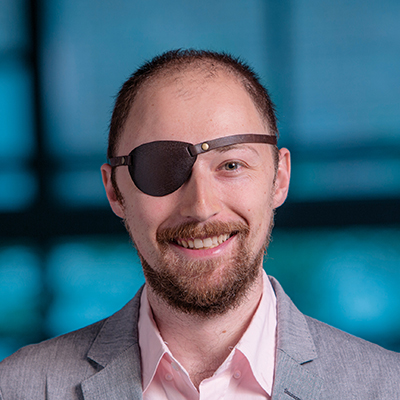
Mark Yatskar is an Assistant Professor in the Department of Computer and Information Science at the University of Pennsylvania. His research focuses on the intersection of natural language processing, computer vision, and fairness in machine learning. He earned his PhD from the University of Washington under advisors Luke Zettlemoyer and Ali Farhadi, and previously worked as a Young Investigator at the Allen Institute for Artificial Intelligence. Education: PhD in Computer Science, University of Washington (Advisor: Luke Zettlemoyer & Ali Farhadi) Research Interests: Yatskar's work explores how language can structure visual perception and mitigate human biases in machine learning systems. Key themes include: Natural language as a scaffold for visual intelligence Bias characterization and control in machine learning systems His lab currently investigates projects like language-guided bottlenecks, annotator cognitive heuristics, and gender bias amplification. Teaching: CIS 5300: Computational Linguistics (2021-2024) CIS 7000: Language and Vision (2020) CIS 6300: Efficient NLP (2023, 2025) Awards: Best Paper Award at EMNLP (Gender Bias Amplification Research) Advising & Grants: Yatskar advises a team of PhD/Master's students and actively seeks motivated researchers. His group has explored funding in areas like interpretable AI, multimodal reasoning, and dataset bias mitigation. Labs/Teams: Leads the Penn NLP & Vision Lab, focusing on projects like MolMo/PixMo open models, ViUniT visual unit tests, and bias mitigation frameworks.
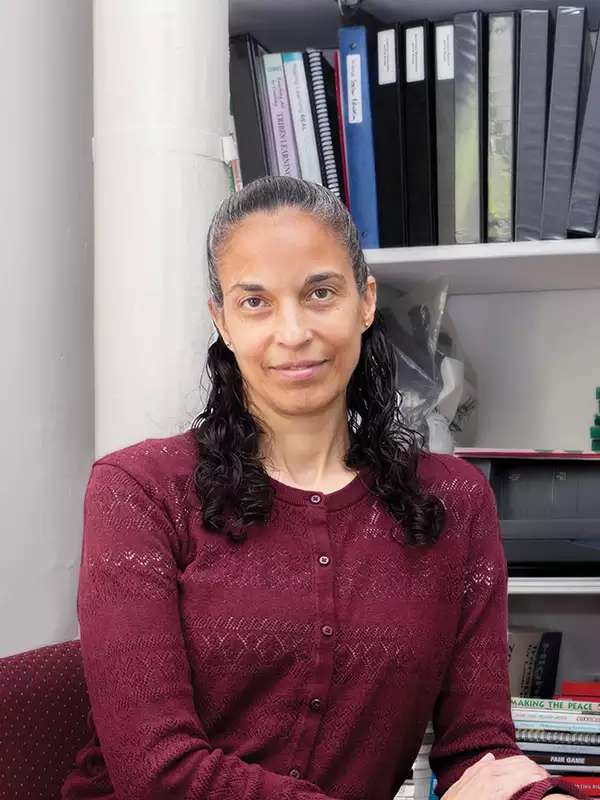
María Rivera Maulucci is the Ann Whitney Olin Professor of Education and serves as the Education Program Director/Chair at Barnard College, Columbia University. She is a proud alumna of Barnard (Class of 1988) and has been a faculty member since 2004. Her work centers on urban education, science pedagogy, and teacher development with a strong commitment to equity and social justice. Education: BS, Barnard College, Columbia University MFS, Yale School of Forestry & Environmental Studies M.Phil, Teachers College, Columbia University Ph.D., Teachers College, Columbia University Her research focuses on how teachers learn to teach for social justice, emphasizing the role of language, identity, and emotions in teacher development. She employs qualitative research and evaluation methods to explore transformative pedagogical practices in urban science education. Her scholarship bridges formal and informal learning contexts and investigates the interplay between teacher agency and structural constraints. Her recent publications and presentations highlight a sustained focus on equity, critical science inquiry, teacher identity, and professional development. She has contributed extensively to journals such as Journal of Research in Science Teaching and Cultural Studies of Science Education , and has authored chapters on social justice, identity, and assessment in science education. Scientific Awards: Barnard College Emily Gregory Teaching Award (2018) National Association for Research in Science Teaching Equity and Ethics Scholar (2007) She is the Principal Investigator of the NSF-funded Barnard College Robert Noyce Teacher Education Scholars Program, which supports future science teachers in urban schools. She advises students and collaborates with national organizations, including the National Association for Research in Science Teaching, Association for Science Teacher Education, and American Educational Research Association. Her teaching includes courses such as Science in the City , Urban School Practicum , and Performance Assessment of Teaching . She is actively engaged in professional development initiatives and has led workshops on family engineering nights, multicultural pedagogy, and social justice in science education. Her lab and programmatic work centers on the Noyce Scholars Program, which functions as a living laboratory for preparing socially conscious science educators.
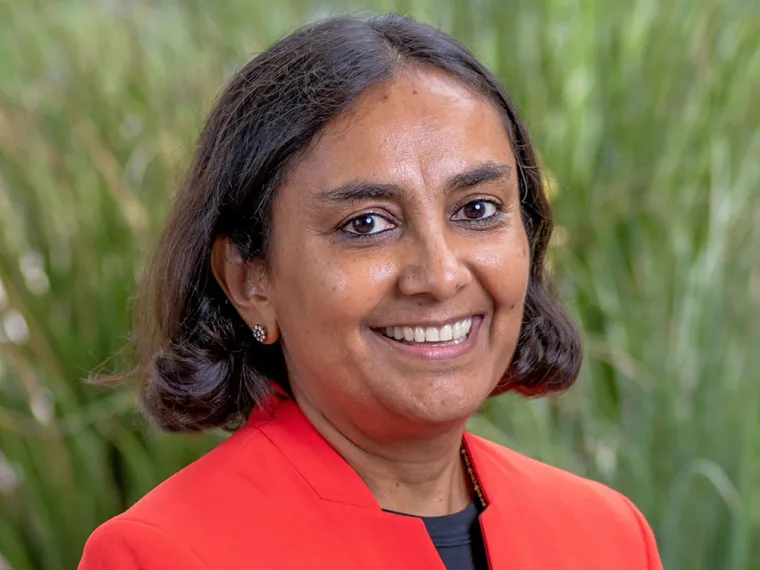
Sudha Ram is the Anheuser-Busch Endowed Professor of MIS, Entrepreneurship & Innovation at the Eller College of Management, University of Arizona. She holds joint faculty appointments as Professor of Computer Science and is a member of the BIO5 Institute and the Institute for the Environment. She is also the Director of INSITE: Center for Business Intelligence and Analytics, a leading research center in data-driven decision-making. Her research focuses on Big Data Analytics , Business Intelligence , Large Scale Network Science , and Machine Learning , with applications in healthcare, smart cities, environmental policy, and social media. She has pioneered methods in explainable AI, conceptual modeling, and multimodal data fusion, integrating statistical, ontological, and machine learning approaches. Recent publications demonstrate a strong trend in healthcare analytics (e.g., asthma, diabetes, fracture prediction), explainable AI (ROLEX, argumentation-based models), and urban/smart systems (mobility, wearables, environmental impact). Her work consistently appears in top-tier journals and conferences, reflecting sustained scholarly impact. AIS Fellow (2018) INFORMS ISS Distinguished Fellow IBM Faculty Award Peter Chen Award Best Paper Award, IEEE Smart Cities (2016) Best Paper Award, ACM Digital Health (2016) Woman of Impact Award, University of Arizona (2023) Dr. Ram has secured over $70 million in research funding from agencies like NSF, NASA, CIA, and corporations including IBM, Intel, and SAP. She has mentored numerous students and leads a multidisciplinary research team at INSITE. She has held editorial leadership roles in Information Systems Research , Journal of AIS , and is founding co-editor of the Journal of Business Analytics . She directs the INSITE Center, which fosters collaboration across business, computer science, and health domains, enabling large-scale data synthesis and knowledge discovery. The center supports projects in healthcare innovation, smart cities, and environmental policy analytics.
Graham Neubig is an Associate Professor at the Language Technologies Institute (LTI) within Carnegie Mellon University (CMU). His research focuses on advancing artificial intelligence, particularly in natural language processing (NLP), multimodal reasoning, and large language models (LLMs). He explores topics such as AI safety, generative AI, and human-AI interaction, with an emphasis on practical applications like machine translation and web-agent systems. His work often involves developing frameworks for evaluating AI systems, such as OpenAgentSafety and BehaviorBox, which assess real-world agent performance and model behavior. Neubig's research also delves into improving LLM capabilities through reasoning analysis, hallucination detection (e.g., ZINA), and culturally aware systems (e.g., CAIRe). He has contributed to open-source projects like Pangea (a multilingual LLM) and frameworks such as Cmulab for model deployment. His recent work addresses challenges in agentic tasks, self-improving agents (Skillweaver), and benchmarking across domains like visual reasoning (VisualPuzzles) and software engineering. Notable achievements include advancing evaluation methodologies for LLMs, developing tools for ethical AI, and creating benchmark suites that test systems under realistic conditions. His lab collaborates on projects like the BrowserGym ecosystem and OpenHands platform, which aim to standardize web-agent research and AI-driven software development. Neubig's contributions span theoretical advancements and practical implementations, bridging the gap between cutting-edge research and real-world applications. He advises students such as Apurva Gandhi and actively publishes in top venues, addressing topics from instruction-following improvements to the societal impacts of AI. His work frequently emphasizes the importance of transparency, controllability, and cultural awareness in AI systems.
Maithilee Kunda is an Associate Professor in the Department of Computer Science and Computer Engineering at Vanderbilt University's School of Engineering. She leads the Laboratory for Artificial Intelligence and Visual Analogical Systems and co-leads the Vanderbilt Initiative for Autism, Innovation, and the Workforce. Her research focuses on AI-driven cognitive systems, particularly visual reasoning and technology applications for neurodiverse populations, including autism spectrum disorder. Dr. Kunda holds a B.S. in Mathematics with Computer Science from MIT (2007) and a Ph.D. in Computer Science from Georgia Tech (2013). She was honored as an MIT Technology Review Innovator Under 35 in 2016 for her groundbreaking work. Her research bridges computational models of visual thinking and real-world impact, emphasizing neurodiverse cognition. Notable projects include developing AI systems for autism-related social skills interventions, designing visual analogy problem-solving frameworks, and advancing nonverbal communication understanding in AI. Her work addresses challenges in abstract reasoning tasks (e.g., Raven's Matrices), visual imagery-based learning, and ethical AI integration. She advocates for inclusive technology design, leveraging both generative AI and cognitive principles to create human-centered solutions. Key awards: MIT Technology Review Innovator Under 35 (2016) Her labs focus on practical AI applications for education, healthcare, and workforce development, emphasizing interdisciplinary collaboration between engineering, psychology, and neuroscience.
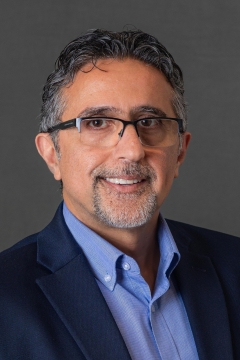
Reza Taheri is a Professor and Senior Associate Dean of Pharmacy Education at Chapman University School of Pharmacy. His expertise spans leadership development, curriculum design, strategic planning, and programmatic accreditation in pharmacy education. Previously, he served as Chief Strategy Officer at RxPrep Inc., founding Associate Dean at West Coast University, and held faculty and leadership roles at Western University of Health Sciences and Loma Linda University School of Pharmacy. Education: Doctor of Pharmacy (University of Minnesota), Executive MBA (University of Southern California) Current Role: Department of Pharmacy Practice, Chapman University His research focuses on pharmacy education , emphasizing emotional intelligence coaching , interprofessional collaboration , and virtual learning modalities . Recent studies examine mock-trial simulations for teaching-assessment, supplemental instruction efficacy, and interprofessional virtual simulations for leadership and patient advocacy. Publications highlight technology integration in pharmacy curricula and resilience measurement in educational contexts. Taheri collaborates extensively on interprofessional education (IPE) interventions, analyzing their impact on patient outcomes like length of stay , medical errors , and mortality . He is a certified Emotional Intelligence Coach and trainer with Crucial Learning and The Table Group.
Christie Toth is an Associate Professor in the Department of Writing & Rhetoric Studies at the University of Utah . Her research focuses on two-year college composition studies, transfer student writing experiences, writing assessment and placement, settler colonial studies, and tribal college writing instruction. Education: PhD in Education from the University of Michigan (2014) MA in English from Portland State University (2008) BA in Anthropology from Bowdoin College (2004) Research Interests center on equity in writing assessment, transfer student literacy sponsorship, and the intersection of settler colonial studies with writing pedagogy. She advocates for transformative practices in community college-university partnerships and guided pathways reforms. Recent Publications explore writing placement equity, transfer student experiences, and the role of two-year colleges in shaping writing studies. Her work emphasizes social justice frameworks and systemic reform. Scientific Awards include the Robert A. Goldberg Endowed Prize in the Humanities (2024), Best Book Award from the Council of Writing Program Administrators (2022), and multiple teaching and leadership accolades from the University of Utah and national organizations. Grants supported initiatives like the Transfer Student Success Fellowship and Martha Bradley Evans Teaching Fellowship, focusing on writing studies and pedagogical innovation.
Amy J. Schulz is the University Diversity and Social Transformation Professor at the University of Michigan School of Public Health , specializing in the Department of Health Behavior and Health Equity . She is a sociologist and leading scholar in community-based participatory research (CBPR) , focusing on how social and physical environmental exposures contribute to racial and socioeconomic health inequities . Her current work with the Community Action to Promote Healthy Environments (CAPHE) partnership addresses air pollution disparities in the Detroit Metropolitan Area through policy intervention and community science initiatives. Education PhD, University of Michigan (1994) MSW, University of Michigan (1990) MPH, University of Michigan (1981) Her research examines environmental racism , health impact assessments , and CBPR methodologies . She has conducted policy evaluations for the Gordie Howe International Bridge and state energy plans, while also linking policing, clean water access, and COVID-19 disparities to systemic racism. Recent publications analyze cumulative environmental risks , neighborhood poverty effects , and policy advocacy tools for health equity. She teaches graduate courses such as Environmental Health Promotion and Community-Based Participatory Research , emphasizing interventions for vulnerable populations. Her collaborative work spans public health practice , community science , and urban health disparities , with funding for projects in air quality monitoring , student environmental advocacy , and policy translation . She maintains active partnerships with community organizations in Detroit and has published extensively on the intersection of social determinants and physical environmental risks .
Shane Dawson is the Executive Dean of UniSA Education Futures and Professor of Learning Analytics at the University of South Australia. His work bridges social network analysis and learner interaction data to enhance teaching quality and educational outcomes. Affiliation : University of South Australia Research Focus : Learning Analytics, Curriculum Mapping, K-12 Decision-Making Systems, and AI in Education Recent Research Trends : Shane’s 2025 publications emphasize generative AI for curriculum analytics, ethical considerations in K-12 dashboards, and longitudinal graduate attribute monitoring. His articles often integrate psychometric models, social network tools, and open-source software like OVAL and SNAPP . Advising and Collaboration : As a co-developer of key learning analytics tools and a supervisor for research students, he collaborates globally with institutions such as Johns Hopkins University and Shahid Beheshti University of Medical Sciences. Labs and Teams : Shane leads UniSA’s Teaching Innovation Unit and is a founding member of the Society for Learning Analytics Research , driving institutional and international initiatives in educational technology.
Sonja Paus-Buzink is an Assistant Professor in Human Factors at TU Delft’s Faculty of Industrial Design Engineering, specializing in the Human-Centered Design department. Her research focuses on integrating human factors/usability evaluation into medical device and healthcare service design, emphasizing inclusive design perspectives. She teaches courses on human factors, usability, and medical device regulation, supervising students in research and graduation projects. Academic Background: PhD from TU Delft (Medisign Research Group), co-funded by Catharina Hospital, focusing on patient safety in image-based surgical procedures and VR/AR simulation tools. Postdoctoral work on surgical skillslabs and scientific coordination of the European Laparoscopic Surgical Skills Program. Previously a Managing Human Factors Specialist at UL-Wiklund R&D, advising medical device manufacturers on regulatory compliance. Research Interests: Human factors, ergonomics, medical device design, patient safety, inclusive design, surgical training, and healthcare technology. Her work bridges clinical, engineering, and psychological disciplines to enhance healthcare outcomes. Awards: Summa Cum Laude MSc in Industrial Design Engineering (TU Delft). Best IDE Graduate of the Year award at TU Delft. Grants & Collaborations: Collaborations with medical institutes, simulator companies, and organizations like the European Association for Endoscopic Surgery (EAES). Her research emphasizes cross-disciplinary teamwork to address challenges in surgical training and medical device usability. Labs/Teams: Engaged with TU Delft’s Medisign research group and skillslab initiatives. Active in developing tools for surgical training and patient safety in operating rooms.
Dr. Robert Verity is an Assistant Professor in the School of Public Health at Imperial College London, affiliated with the Faculty of Medicine. His research focuses on malaria parasite genetics, particularly using molecular surveillance to understand transmission dynamics. He leads projects like the SIMPLEGEN pipeline funded by the Bill and Melinda Gates Foundation, aiming to optimize resource use in malaria research. His work integrates spatial data analysis, Bayesian methods, and population genetics to address global health challenges. During the pandemic, he contributed to early estimates of COVID-19 fatality rates as part of the Imperial College response team. Key affiliations: Imperial College Network of Excellence in Malaria, MRC Centre for Global Infectious Disease Analysis Current projects: Molecular inversion probes analysis in DRC, malaria drug resistance quantification Research interests include Plasmodium falciparum population structure, antimalarial resistance mechanisms, and spatial epidemiology. His work bridges field data collection with advanced computational methods to inform public health strategies.
Sotirios Karatzimas is an Assistant Professor of Accounting at the Department of Accounting and Finance, Athens University of Economics and Business (AUEB). He holds a PhD and MSc from AUEB, with postdoctoral research on Greek public sector accounting during austerity. He has also taught at Universitat Autònoma de Barcelona and Neapolis University Cyprus. His research focuses on public sector accounting, management accounting, and financial sustainability in public institutions. Education: PhD in Accounting (AUEB) MSc in Human Resources Management (AUEB) Bachelor's in Accounting and Finance (AUEB) Research emphasizes public sector accountability mechanisms, fiscal transparency, and citizen engagement through innovative reporting methods. He has contributed to EU-funded projects and collaborates with AUEB’s distance learning programs on public sector accounting. His work bridges accounting practices with socio-political contexts, particularly in crisis-affected economies like Greece. Notable contributions include studies on debt management in local governments, smart cities’ climate change reporting, and participatory budgeting frameworks. He is actively involved in European Study Groups on public sector accounting education and advocates for integrating technology (e.g., eLearning platforms) into teaching. His research often examines the intersection of accounting standards, policy reforms, and citizen literacy for fostering participatory governance.
Eric Widera is a Professor of Clinical Medicine in the Division of Geriatrics at the University of California San Francisco (UCSF) School of Medicine. He serves as Director of the Hospice & Palliative Care Service at the San Francisco VA Medical Center, where he leads clinical, educational, and programmatic initiatives. He is a nationally recognized clinician-educator with leadership roles in the American Academy of Hospice and Palliative Medicine (AAHPM) and the Association of Directors of Geriatrics Academic Programs (ADGAP), where he served as past president. Dr. Widera completed his education with a B.S. in Biology from the University of California, Irvine, an M.D. from UCSF, followed by residency in Internal Medicine at Mount Sinai Hospital and fellowship in Geriatric Medicine at UCSF. He further enhanced his academic skills through the Teaching Scholars program and Diversity, Equity, and Inclusion Champion Training at UCSF. His research and academic focus centers on improving care for older adults with serious illness through educational innovation, prognostication, communication, and policy. He is deeply engaged in medical education, having directed the Geriatrics Fellowship at UCSF for over a decade and currently mentoring residents, fellows, and pharmacy trainees. A key interest is the role of digital media in medical education, exemplified by his co-founding of GeriPal, a leading podcast and blog, and ePrognosis, an online prognostic calculator tool. His recent publications span palliative care, Alzheimer’s disease, medical ethics, and health policy, often addressing critical issues in aging and end-of-life care. His scholarly output is extensive and impactful, with recent articles in JAMA , JAMA Internal Medicine , and The New England Journal of Medicine . The body of his work demonstrates a consistent focus on practical clinical challenges, ethical dilemmas, and system-level improvements in care for vulnerable older populations. Themes include prognostic communication, advance care planning, dementia care, and the integration of palliative services across specialties. Dr. Widera has received numerous scientific awards recognizing his excellence, including: Hastings Center Cunniff-Dixon Physician Award (2011) AAHPM Hospice and Palliative Medicine Leaders Under 40 (2015) PDIA Palliative Medicine National Leadership Award (2014) "Visionary in Hospice and Palliative Medicine" Award (2018) Excellence in Teaching Award, Academy of Medical Educators, UCSF (2022) Master Clinician, Council of Master Clinicians, UCSF (2024) He has been the recipient of multiple grants, including the Geriatric Academic Career Award (GACA), and his work has influenced national policy and clinical guidelines. He is an active advisor and educator, shaping the next generation of geriatrics and palliative care leaders. Through his clinical leadership, educational programs, digital platforms like GeriPal, and national advocacy, Dr. Widera plays a pivotal role in advancing the fields of geriatrics and palliative medicine. His work is supported by a robust interdisciplinary team at the San Francisco VA, and he collaborates widely with researchers across UCSF and nationally. His leadership in developing educational resources and digital tools has significantly expanded the reach and impact of geriatrics and palliative care knowledge.
Professor Timothy Walsh serves as Chair of Critical Care at the University of Edinburgh's Usher Institute within the College of Medicine and Veterinary Medicine. He concurrently holds the position of Director of Innovation for NHS Lothian and Health Innovation South East Scotland, bridging academic research with clinical implementation. His dual roles position him at the forefront of critical care research and healthcare innovation in the UK. Walsh's research spans critical and perioperative care, with a programmatic approach building complex multi-center trials. His work integrates epidemiology, systematic reviews, cohort studies, and stakeholder engagement to develop pragmatic trials. Recent focus includes AI algorithm validation, sedation protocols, transfusion medicine, and sepsis management. His fingerprint reveals deep expertise in Intensive Care Medicine (100%), Intensive Care Unit operations (74%), and Critical Illness (70%), with notable contributions to sedation research (35%) and sepsis (26%). His 221 research outputs include high-impact publications in NEJM, JAMA, and The Lancet. Current projects like the SHORTER antibiotic trial and aerosolized virus quantification study demonstrate ongoing leadership in trial methodology. As Director of Innovation for NHS Lothian (2018-2024), he established data-driven innovation frameworks connecting academic and industry partners to address NHS challenges. Walsh has secured £9 million as Chief Investigator and £34 million as co-applicant from NIHR, MRC, Wellcome, and industry sources. His leadership extends to founding the NIHR critical care specialty group (2007-15) and UK critical care research group (2007-16), which remain foundational to UK critical care research infrastructure. Trustee at Chest Heart & Stroke Scotland (2021-present) Director of Research & Development for NHS Lothian (2017-2021) Chair of 19 trial steering/data safety monitoring committees Leadership in 13 ECTU trials, 9 UK trials, and multiple international studies
Caroline Ketcham is a Professor of Exercise Science and the Associate Dean of Elon College, the College of Arts and Sciences at Elon University. Her research focuses on movement neuroscience, neurodiversity, concussions, and mental health, with expertise in neuromusculoskeletal control and rehabilitative strategies across diverse populations including children, elderly, neurological patients, and athletes. Education: PhD in Exercise Science/Motor Control, Arizona State University (2003) MS in Exercise Science/Motor Control, Arizona State University (1999) BA in Biology/Psychology, Colby College (1996) Her work spans motor control, concussion management, and mental wellness, with over 87 undergraduate mentees and 65+ publications. She co-edited Concussion in Athletics and Cultivating Capstones , and co-directs the Elon BrainCARE Research Institute, which advocates for concussion awareness and mental health. Recent research trends include concussion baseline testing as mental health screening, dual-task gait analysis, and global mentoring frameworks. Scientific awards highlight her contributions: Distinguished Scholar (2023), Ward Family Mentoring Award (2017), and multiple teaching distinctions. Scientific Awards: Distinguished Scholar Award (2023), Elon University Ward Family Excellence in Mentoring Award (2017), Elon University Elon College Service Award (2014), Elon University School of Education Excellence in Scholarship Award (2010), Elon University Teacher of the Year (2007), Texas A&M University She actively mentors students in concussion advocacy and neurodiverse movement research, with hundreds advised in health professions. Her labs focus on neuromuscular control and mental wellness initiatives.