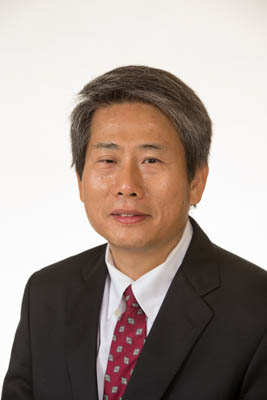
Professor Jingzhe Pan is a Chair in Mechanics of Materials and Dean of the Dalian Leicester Institute (DLI) at the University of Leicester. He specializes in advanced ceramics manufacturing and biodegradable medical implants, with over £2 million in UKRI and industry grants for digital twin research in ceramics. His work combines computational models to predict ceramic behavior at high temperatures and polymer behavior in biological environments. He leads DLI, a joint initiative with Dalian University of Technology, which enrolls 1,200 students in China. Research interests include polymer degradation, finite element analysis, and material modeling. Awards include the 2018 Verulam Medal from the IoM3. Grants and collaborations focus on advancing ceramics manufacturing and biomedical applications. Advising and leadership roles span UK universities since 1990, including roles as Programme Director and College Director of Research. Labs/Teams: Dalian Leicester Institute (DLI) collaboration with Dalian University of Technology focuses on undergraduate engineering education and cross-disciplinary research.
Edel Burton is a Pharmacist and HRB SPHeRE PhD Scholar at the School of Public Health , University College Cork (UCC). Her research focuses on chronic disease prevention, antimicrobial stewardship, and pharmacotherapy optimization in aging populations, with a particular emphasis on the impact of the COVID-19 pandemic on prehospital emergency care for stroke and transient ischaemic attacks (TIAs). She holds First Class Honours degrees in Pharmacy (BPharm, 2019) and Master of Pharmacy (2020), supported by the UCC Quercus Taught Masters Academic Scholarship. Her Master’s thesis explored antimicrobial processes in Irish hospitals. Education & Awards: Bachelor of Pharmacy (First Class Honours), UCC, 2019 Master of Pharmacy (First Class Honours), UCC, 2020 UCC Quercus Taught Masters Academic Scholarship Research Experience: Edel has clinical experience in community and hospital settings, including work on the Horizon 2020-funded OPERAM clinical trial. She currently collaborates with the ESPRIT research team to address health-services challenges in chronic disease prevention and emergency care. Her PhD project examines pandemic-related disruptions to stroke/TIA emergency care pathways. Research Themes: Her work bridges clinical practice and policy, addressing antimicrobial stewardship, geriatric pharmacotherapy, and pandemic resilience in healthcare systems. She employs mixed-methods approaches to analyze prescribing patterns, healthcare disparities, and system-level interventions. Grants & Collaborations: Funded by the HRB SPHeRE Programme, her research aligns with national priorities in chronic disease management and public health preparedness. She contributes to interdisciplinary networks like IPERN to advance paramedicine education and emergency care research. Labs/Teams: Member of the ESPRIT research team at UCC’s School of Public Health.
Dr. Dan Grigoras is a Senior Lecturer at the School of Computer Science and Information Technology, University College Cork. He holds a PhD from Politehnica University, Bucharest, and has industry experience as a computer systems engineer. Dr. Grigoras founded the Mobile and Cluster Computing Group in 2003 and initiated the MSc programme in Software and Systems for Mobile Networks, which he coordinated until 2011. His research focuses on mobile cloud computing, ad-hoc networks, middleware, and smart city applications. Key contributions include the development of context-aware middleware systems and cloud-managed MANETs. His work integrates mobile devices, cloud resources, and IoT infrastructure to enhance user experiences in dynamic environments. Dr. Grigoras' publications emphasize mobile cloud architectures, drone-based services, and emergency response systems. Trends show a shift from theoretical distributed computing to practical applications in real-time data processing, geo-analytics, and scalable cloud frameworks. Best Paper Award, CloudTech 2018 Cloud Challenge Award, IEEE/ACM 2015 He advises PhD and MSc students and has secured grants including €72,000 from IRCSET for mobile cloud user experience research and €16,244 for healthcare mobile cloud enterprises. His lab focuses on crowdsensing for smart cities and mobile cloud middleware.
Dr. Andrea Visentin is a Lecturer and PhD Programme Director at University College Cork's School of Computer Science & IT. He is a Funded Investigator at the SFI Insight Centre for Data Analytics and Principal Investigator for the DATAMITE Horizon Europe project. His academic background includes: BSc and MSc in Computer Engineering (University of Padua) PhD from Insight Centre for Data Analytics (UCC) He maintains affiliations with Tyndall National Institute and the TAILOR research network. Visentin's research integrates: optimization and artificial intelligence across domains: Stochastic inventory control and lot sizing Time series forecasting applications Biomedical optics and spectroscopy Trustworthy AI development His work demonstrates strong interdisciplinary collaboration with healthcare and energy sectors. Recent publications highlight diverse applications: Electricity market forecasting methods Medical spectroscopy for tissue differentiation AI-driven occupational safety systems Road infrastructure monitoring solutions Historical document analysis techniques This breadth reflects his commitment to impactful real-world applications. Visentin contributes significantly to AI ethics frameworks: Co-developed Assessment List for Trustworthy AI (ALTAI) for EU High-Level Expert Group Contributed to TAILOR Handbook of Trustworthy AI His work helps make AI concepts accessible to non-technical audiences. Honored with the UCC President's Award for Excellence in Teaching (2023/24) for his innovative pedagogy in Data Analytics, Data Mining, and Digital Humanities courses.
Ingmar Riedel-Kruse is a Professor of Molecular & Cellular Biology at the University of Arizona, with courtesy appointments in Biomedical Engineering (BME), Physics, and Applied Mathematics. He holds associate professor roles in the Genetics GIDP and Bio5 Institute. His research focuses on synthetic biology, microbiology, and multicellularity biophysics, with notable contributions to biofilm engineering, microbial consortia, and active matter dynamics. He leads labs in Life Sciences South rooms 552 (office) and 522/526 (labs). Riedel-Kruse pioneered cloud-based biology education platforms and biotic games, integrating live microorganisms into interactive learning tools. His work bridges biophysics, synthetic biology, and educational technology. His educational contributions include scalable biology cloud labs, liquid-handling robots for STEM education, and museum exhibits enabling public interaction with living cells. Research interests span optogenetic biofilm patterning, synthetic adhesin design, and microbial energy systems. He has developed innovative tools like the LudusScope (smartphone-based microscopy) and the Biotic Game Toolkit for accessible biophysics experimentation. Notable projects include Biofilm Lithography for high-resolution cell patterning and the design of 4-bit adhesion logic systems enabling programmable multicellular interfaces. His interdisciplinary approach integrates engineering principles with biological systems to address challenges in sustainable chemistry, energy production, and educational accessibility.
Aristidis Kaloudis is a Professor at the Department of Information Security and Communication Technology (ISCT) at the Norwegian University of Science and Technology (NTNU) in Gjøvik. He holds editorial roles including Senior Editor at the Journal of the Knowledge Economy (2010-2014) and co-editor of the Edward Elgar book series on Science, Technology, Innovation and Entrepreneurship. He serves on Norway’s Technology Assessment Board (Teknologirådet) since 2020. His teaching focuses on digital law, quantitative methods, and innovation-related courses at both undergraduate and PhD levels. His research spans innovation policy, digital markets regulation, cybersecurity, and EU policy impacts. Key contributions include studies on university innovation metrics, lean manufacturing networks, and vaccine development economics. He has led major projects like the NTNUs pilot project on innovation indicators and participated in EU research evaluations. Publications span interdisciplinary topics from energy policy to adult education relevance, reflecting his expertise in bridging policy, technology, and societal impacts. His work emphasizes evidence-based policy design for digital economies and sustainable manufacturing systems. Editorial & Advisory Roles: Teknologirådet member (2020–), Journal of the Knowledge Economy (2010–2014) Research Focus: Digital business models, cybersecurity policy, EU regulation impacts, innovation systems Teaching Highlights: Digital Law (IIK5000), Forecasting Methods (Ø8304/IDS4001), Macroeconomics (SMF3021)
Yuming Jiang is a full Professor at NTNU's Department of Information Security and Communication Technology (Faculty of Information Technology and Electrical Engineering). He holds a BSc from Peking University, MEng from Beijing Institute of Technology, and PhD from National University of Singapore (NUS). His research focuses on network performance analysis, stochastic network calculus, and quality of service guarantees in communication networks. He authored the seminal book Stochastic Network Calculus (Springer, 2008). He has held roles including Study Programme Leader for NTNU's Master of Science in Digital Infrastructure and Cyber Security, and is a member of the Norwegian Academy of Technological Sciences (NTVA). Prof. Jiang has extensive experience in academic leadership, serving as conference chair (e.g., IFIP Networking 2014, IEEE Vehicular Technology Conference 2008) and committee roles in major networking communities. His work spans theoretical advancements (e.g., stochastic network calculus properties) and practical applications (e.g., UAV-assisted IoT security, NFV reliability). Key research contributions include modeling wireless channel capacity, analyzing time-sensitive networks (TSN/DetNet), and developing security frameworks for emerging communication systems. His publications (over 150 papers) bridge theoretical foundations and real-world network challenges in areas like energy-efficient communication, cyber-physical systems, and blockchain performance.
Professor Hsieh, Sheng-Jen holds a faculty position at Texas A&M University in the Department of Engineering Technology & Industrial Distribution, with affiliated roles in Electrical & Computer Engineering. He specializes in automation, robotics, infrared imaging, and smart system design. His research bridges engineering education and advanced manufacturing technologies, emphasizing Industry 4.0 applications and cyber-physical systems. Education includes a Ph.D. in Industrial Engineering from Texas Tech University (1995), M.S. from St. Mary's University (1989), and B.S. from National Taipei Institute of Technology (1982). He has received numerous accolades including the NSF CAREER Award, Halliburton Foundation Professorship, and multiple teaching awards. His research interests span additive manufacturing optimization, thermal stress prevention in 3D printing, and remote-access lab development for education. Key achievements include developing AI-driven systems for anomaly detection in motors and smart traffic light control algorithms. He actively contributes to educational outreach through low-cost automation kits and PLC training modules. Scientific contributions include over 100 publications, with recent work focusing on machine learning applications in manufacturing processes and educational technology innovations. He has advised multiple undergraduate research projects in mechatronics and robotic systems. Labs and collaborations involve experimental setups for thermal imaging analysis, automated material handling systems, and IoT-enabled HVAC control strategies. His work integrates cognitive task analysis to improve engineering education practices.
Jiarong Xing is an Assistant Professor of Computer Science at Rice University, starting Fall 2025. Currently a Postdoctoral Scholar at UC Berkeley's Sky Computing Lab under Prof. Ion Stoica, his research focuses on secure, efficient, and scalable networked systems for cloud data centers, ML infrastructure, and 5G networks. He earned his Ph.D. from Rice University in 2024 under Prof. Ang Chen. His expertise spans computer systems, networking, and security. Key contributions include Occam (EuroSys'24), Pipeleon (SIGCOMM'23), and FlexCore (NSDI'22), addressing challenges in network management, SmartNIC optimization, and runtime programmability. His work on NetWarden (USENIX Security'20) mitigates covert channels without performance loss. Education : Ph.D. in Computer Science (Rice University, 2024); B.Sc. in Software Engineering (Shandong University, 2017) Awards : USENIX Security Distinguished Paper (2023), Google PhD Fellowship (2022), Meta Fellowship Finalist (2022), Multiple Rice University Fellowships He has served on program committees for NSDI, EuroSys, ACM SIGCOMM, and USENIX Security, and reviewed for top journals like IEEE Transactions on Networking. His GitHub repositories showcase open-source contributions to systems research, including Occam, Pipeleon, and Ripple.
Professor Colin Lewis is a distinguished academic in the Department of Economic History at the London School of Economics and Political Science (LSE). His research focuses on the political economy of development, fiscal and monetary history, and Latin American economic and social policy, with a particular emphasis on British business influence in Argentina and Brazil. He holds the academic rank of Professor and has contributed extensively to scholarship on Latin American industrial growth, state formation, and the role of external actors in economic development. Key research areas include the political economy of development, fiscal and monetary history, social policy, industrial growth, and the impact of British investment in Latin America. His work spans both monographs and edited volumes, including British Railways in Argentina, 1857-1914 and Historical Dictionary of Argentina . Recent projects explore the long-term trajectory of British enterprises in Argentina and the broader implications of economic imperialism in Latin America. Professor Lewis's publications frequently analyze the intersections between historical context, economic policy, and political structures. His articles and chapters often address themes such as colonial legacy, comparative modernization, and the evolution of social and economic institutions in Latin America. Notable contributions include analyses of the Argentine railway sector’s transformation during the inter-war period and re-evaluations of historical debates around economic imperialism and industrialization. His academic career has been marked by a commitment to interdisciplinary research, blending economic history with political science and sociology to understand complex developmental processes. This approach is evident in his collaborative work on edited volumes such as Latin America, Economic Imperialism and the State and Exclusion and Engagement: Social Policy in Latin America .
Yuanzhu Zhan is an Associate Professor in Operations and Supply Chain Management at the University of Birmingham's Birmingham Business School, holding the Department of Management's PGR Lead role. Previously, he served as Programme Director for the BSc Business Management (PT) program in Singapore (2021/22). He holds a PhD and MSc from the University of Nottingham, specializing in Risk Management and Business Management. His research focuses on emerging technologies' impacts on operations, innovation, and sustainability, with notable contributions to blockchain governance, AI-driven supply chains, and circular economy frameworks. He co-edits special issues on 'Blockchain in Operations' (International Journal of Production Economics) and 'Generative AI in Digital Platforms' (IEEE Transactions on Engineering Management). Editorial Roles: Associate Editor of Journal of Operations Management, Department Editor of IEEE TEM, Board Member of IJOPM/IJPE/IMDS Awards: 2024 Best Reviewer (JOM), 2022 Emerald Award (IMDS), 2018 Early Career Award (ULMS) Funding: Secured grants from British Academy/Leverhulme Trust, NSFC, and MSI Key Projects: Blockchain-enabled social media platforms, AI in healthcare logistics, electric vehicles for net-zero Zhan's teaching expertise spans Operations Management and Business Analytics at both undergraduate and postgraduate levels. He is a certified expert in Big Data Analytics and actively supervises PhD candidates in technology-driven innovation and sustainable supply chains.
Dr Gordon Drummond Hastie is a Principal Research Fellow in the School of Biology at the University of St Andrews. His research focuses on marine mammal interactions with renewable energy developments, risk balancing strategies of marine predators, and the use of dynamic marine habitats. He holds affiliations with the Sea Mammal Research Unit (SMRU) and the Scottish Oceans Institute. Dr Hastie has a PhD in Marine Biology from the University of Aberdeen (1997) and a BSc in Zoology from the same institution (1994). He has supervised over a dozen PhD students and collaborates internationally on projects addressing marine conservation and energy sustainability. His research combines field studies, acoustic monitoring, and technological innovation to assess the ecological impacts of tidal and wind energy installations. Key projects include the Marine Mammal Scientific Support Programme and the PrePARED project, which investigate behavioral responses to renewable energy infrastructure. Dr Hastie has developed novel tracking systems like the HiCUP platform to monitor marine mammals in high-current environments. His work bridges academic research and industry applications, informing policy for sustainable marine energy development. Current research includes studying seal avoidance behaviors around operational tidal turbines and quantifying physiological impacts of anthropogenic noise on marine mammals. Dr Hastie’s interdisciplinary approach integrates ecology, engineering, and policy to address global challenges in marine conservation and renewable energy integration.
Anjo Vahldiek-Oberwagner is a Research Scientist at Intel Labs and an Adjunct Lecturer at TU Munich, where he contributes to both industrial R&D and academic education in systems and security. His work bridges hardware and software security, focusing on confidential computing, in-process isolation, and secure cloud deployments. PhD in Computer Science, Max Planck Institute for Software Systems & Saarland University, 2019 B.Sc. in Applied Computer Science, Cooperative University State University Baden-Wuertemberg, 2009 His research centers on system security, particularly techniques for protecting data confidentiality and integrity at rest, in-flight, and in-memory. He explores operating systems, distributed systems, and hardware-assisted security mechanisms such as Intel MPK and SGX. His work on ERIM, HFI, Endokernel, and Graphene has advanced secure in-process isolation and trusted execution environments. He has published extensively in top venues like USENIX Security, ASPLOS, and IEEE S&P. His recent publications reflect a strong trend toward practical, deployable security solutions for modern computing environments, including secure AI/ML deployments, efficient in-process isolation, and hardware-accelerated sandboxing. Themes include memory safety, performance optimization, and real-world applicability of security primitives. Scientific awards include: Distinguished Paper Award and Internet Defense Prize, USENIX Security 2019 (ERIM) Distinguished Paper Award, ASPLOS 2023 (HFI) IEEE Micro Top Picks 2024 (HFI) Intel Hardware Security Academic Award (Honorable Mention) DARPA Riser 2022 Intel Labs Gordy Award Honorable Mention He actively mentors and serves on program committees (EuroSys, USENIX Security, ASPLOS), chairs artifact evaluation (USENIX Security, EuroSys, SC), and is an Associate Editor for ACM TOPS. He has advised no formal students listed, but collaborates widely across Intel and academia. His work is supported by Intel and DARPA, and he holds multiple patents in secure computing and TEEs. He leads research on memory-safe architectures and secure cloud deployments at Intel Labs. He is involved in several research projects, including: Secure In-Process Memory Isolation, Shielding Applications in Untrusted Clouds via SGX, Memory-Safe Hardware and Software Architecture, and Research Artifacts and Evaluation. He is also a key contributor to the Graphene Library OS and works on validation and endorsement services for confidential computing.
Venkat Arun is an Assistant Professor in the Department of Electrical and Computer Engineering at The University of Texas at Austin, within the Cockrell School of Engineering. He previously completed his PhD at MIT under the supervision of Hari Balakrishnan and Mohammad Alizadeh, focusing on networking, systems, and formal methods. Education: Bachelor's Degree, IIT Guwahati PhD, Massachusetts Institute of Technology (MIT) Research Interests: Dr. Arun's research bridges the gap between practical heuristics in computer systems and formal proofs of their performance. He specializes in congestion control , formal verification of network protocols , privacy-preserving systems , and wireless networking . His work develops tools to mathematically prove the behavior of real-world algorithms under real-world conditions, ensuring robustness and fairness. Publication Trends: His recent publications, appearing in venues like ACM SIGCOMM, USENIX NSDI, and NDSS, focus on formally analyzing and improving congestion control (e.g., BBR, Copa), developing verification frameworks (CCAC, CCmatic), designing privacy-preserving reporting systems (SAE), and optimizing real-time communication. A recurring theme is using formal methods to uncover hidden flaws in widely deployed heuristics and designing better alternatives. Scientific Awards: Best Student Paper Award, ACM SIGCOMM 2022 Best Paper Award, NDSS 2020 Advising and Grants: As a new faculty member, Dr. Arun is beginning to build his research group and advise graduate students. While specific grant details are not listed in the provided text, his impactful research and industrial adoption (e.g., by Facebook) suggest strong potential for securing research funding in networking and systems. Labs and Teams: During his PhD at MIT, he was part of a prominent networking research group led by Hari Balakrishnan and Mohammad Alizadeh. At UT Austin, he is establishing his own research lab focused on formal methods for systems, likely continuing collaborations with researchers from MIT, CMU, UT Austin, and industry labs like Facebook and Microsoft Research.
Meri Lintuvuori is a University Researcher at the Department of Education, University of Helsinki, affiliated with the Helsinki research community on Special Educational Needs (SEN) and the Centre for Educational Assessment (CEA). She supervises the Doctoral Programme in School, Education, Society, and Culture. With a PhD in Education, her work focuses on inclusive education systems, special education needs, and pandemic impacts on schooling. She leads major projects like the EU Horizon Europe-funded 'Mapping of Longitudinal Data of Inequalities' (2024–2028) and contributes to the Finnish Flagship Programme 'EDUCA: Education for the Future'. Education : PhD in Education (details unspecified). Research Interests : Special education needs, inclusive pedagogy, educational assessment, and policy implementation. Her work examines support systems for students with disabilities, digital learning tools, and pandemic-era educational continuity. Recent studies include comparative analyses of student achievement across educational placements and municipal support service efficacy. Grants & Projects : Principal Investigator: EU Horizon Europe 'Mapping of Longitudinal Data of Inequalities' (€X funding) Co-PI: 'INCLUSIVE' project on educational outcomes of inclusive vs. special education (2020–2024) Lead Researcher: 'Schooling, teaching and well-being during the pandemic' (2020–2022) Labs/Teams : Active member of the Centre for Educational Assessment (CEA), collaborating on national and international research networks.