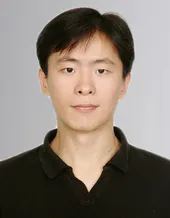
John Nassour is a Researcher at the Technical University of Munich's School of Computation, Information and Technology, affiliated with the Chair of Cognitive Systems. He holds engineering degrees from Tishreen University (electronics), a Master's in intelligent systems from University of Cergy-Pontoise/École Nationale Supérieure de l'Électronique, and a joint PhD from University of Versailles/TUM. His interdisciplinary research focuses on computational cognitive systems applied to robotics, including wearable devices, humanoid robots, soft robotics, and robot learning for locomotion/manipulation. Before joining TUM in 2020, he was a lecturer/researcher at Chemnitz University of Technology. He teaches courses in cognitive systems, neuro-inspired engineering, and soft robotics.
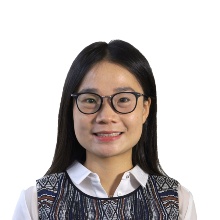
Marta Severo is a Lecturer at University of Paris Nanterre in the Department of Information, Communication, Digital Media within the Faculty of Humanities and Social Sciences. She also maintains significant research affiliations with University of Lille where she has directed multiple projects including the PEPS Digital Routes Project (2015-2016). Her academic profile is characterized by interdisciplinary research at the intersection of digital technologies and cultural heritage. Her research focuses on digital representations of cultural heritage, particularly intangible cultural heritage (ICH) and cultural itineraries like the Via Francigena. She investigates how digital methods can be used to study, represent, and safeguard cultural heritage through social media analysis, network mapping, and participatory platforms. Her work examines the relationship between amateurs and institutions in knowledge production, with special attention to Wikipedia as a citizen science tool. Her publication portfolio demonstrates consistent scholarly output with significant contributions to understanding digital representations of cultural routes, stakeholder networks along heritage paths, and participatory approaches to cultural heritage management. Her research shows a clear trajectory from methodological development in digital humanities to applied studies of specific heritage contexts. Humboldt Research Fellowship for Experienced Researchers (2023-2025) for project on ethics of digital participation IUF project funding for 'Data in action' research on research trajectories of implication NEST project (Marie Skłodowska-Curie RISE Action Programme) visiting fellowship at UC Berkeley (2022) As a research leader, Marta Severo has directed multiple significant projects including the ANR COLLABORA project (construction of an observatory of cultural contributory devices), the Wikipatrimoine project (exploring collaborative management of cultural heritage), and the ICH Observatory project (mapping digital networks of ICH stakeholders in France). Her work demonstrates strong commitment to interdisciplinary collaboration across computer science, social sciences, and heritage management. She frequently partners with European institutions including the European Association of Via Francigena Routes and has presented at numerous international conferences on cultural heritage and digital methods.
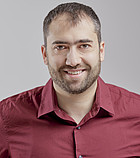
Tsun-Ming Tseng is a Professor and principal investigator at the Chair of Electronic Design Automation at the Technical University of Munich (TUM). He leads the Emerging Technology Group and oversees multiple DFG/BMBF-funded research projects in the areas of microfluidic large-scale integration, optical network-on-chip design, and novel microfabrication techniques. Dr. Tseng's research focuses on design automation for emerging technologies, with particular expertise in three main areas: microfluidic large-scale integration, optical network-on-chip systems, and novel microfabrication processes. His work bridges the gap between electronic design automation and cutting-edge applications in bioengineering, photonics, and advanced manufacturing. His research group develops sophisticated algorithms and tools for optimizing design, reliability, and performance in these emerging domains. Analysis of Dr. Tseng's recent publications reveals a strong focus on practical implementation challenges in emerging technologies. His work spans both theoretical algorithm development and practical system implementation, with particular emphasis on reliability, performance optimization, and manufacturing considerations. The research shows increasing integration between different technology domains, particularly the convergence of microfluidics, optical networking, and electronic design automation. Dr. Tseng has been awarded multiple significant research grants including: "DE-TW-CloudWRONoC" (BMBF-NSTC project, PI, 2025-2028, EUR 797.7K) "DE-TW-PI3D" (BMBF-NSTC project, PI, 2024-2027, EUR 391.6K) "Physical Design for Microfluidic Large-Scale Integration" (DFG research grant, PI, 2024-2026, EUR 331.9K) Multiple other DFG and industrial projects totaling over EUR 3 million in funding He has successfully supervised numerous doctoral researchers and postdoctoral fellows, with current group members including Jiahui Peng, Debraj Kundu, Liaoyuan Cheng, and several others. Dr. Tseng leads the Emerging Technology Group at TUM, which focuses on developing design automation methodologies for next-generation technologies. The group maintains strong collaborations with international institutions, including partnerships with researchers in Taiwan and Hong Kong. The team operates state-of-the-art facilities for research in microfluidics, optical networking, and advanced microfabrication techniques.
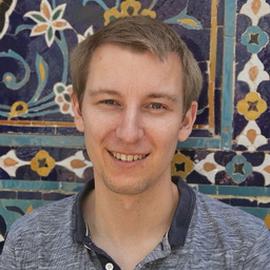
Paul R. Genssler is a Dr.-Ing. researcher at the Chair of AI Processor Design (AI-Pro) within the Technical University of Munich (TUM), actively advancing hardware solutions for artificial intelligence under Prof. Hussam Amrouch. His work bridges computer engineering and emerging technologies, focusing on overcoming fundamental limitations in conventional computing architectures through brain-inspired paradigms. His research spans critical domains in next-generation computing: Hyperdimensional Computing for robust pattern recognition and bioinformatics applications Neuromorphic and In-Memory Computing architectures for energy efficiency Reliability engineering for emerging memory technologies (FeFET, etc.) Quantum computing support systems including cryogenic embedded electronics Machine learning-driven transistor aging prediction and mitigation Analysis of his 15 most recent publications (2023-2024) reveals a dominant trend toward hyperdimensional computing as a unifying framework for addressing reliability challenges in emerging technologies. His work consistently integrates in-memory computing techniques to bypass von Neumann bottlenecks while targeting real-world applications like genome matching and unsupervised learning. A significant portion focuses on error-resilient implementations for unreliable nanoscale devices, demonstrating exceptional cross-stack expertise from transistor physics to algorithm design. As a core member of TUM's AI Processor Design group affiliated with the Munich Institute of Robotics and Machine Intelligence (MIRMI), Genssler collaborates extensively on projects spanning cryogenic quantum control systems, FPGA-based AI resilience, and monolithic 3D integration. The team operates at the intersection of semiconductor physics, computer architecture, and machine learning, with strong industry connections evident through publications at DATE, ASP-DAC, and ICCAD.
Prof. Dr. rer. nat. Rainer Leupers is a faculty member at RWTH Aachen University, chairing the Department of Software for Systems on Silicon. His research focuses on embedded systems, hardware-software co-design, virtual prototyping, and security in computing-in-memory architectures. He has published extensively on RRAM accelerators, logic locking, and neuromorphic security. Chair of Software for Systems on Silicon Research in hardware security and deep learning accelerators Recent publications on cross-tool virtual frameworks and thermal side-channel attacks His work bridges system-level modeling with practical security implementations, emphasizing reliability and performance in heterogeneous computing environments. Key trends in his 2025-2023 articles include compute-in-memory optimization, neural network inference efficiency, and security vulnerabilities in emerging hardware. Awards and formal recognitions are not explicitly detailed in the provided materials. He has not directly mentioned advising students or research grants in the given text fragments. The chair's contact information includes an office at ICT Cube 1, Electrical Engineering, Aachen, with direct email and website links.
Tsung-Yi Ho is a Professor in the Department of Computer Science at National Tsing Hua University, Taiwan. He holds the Hans Fischer Fellowship at the Technical University of Munich's Institute for Advanced Study (TUM-IAS). His primary research focuses on design automation for microfluidic biochips and nanometer integrated circuits, emphasizing reliability, optimization, and interdisciplinary applications in bioengineering. Ho received his Ph.D. in Electrical Engineering from National Taiwan University in 2005. He has held positions at National Cheng Kung University and National Chiao Tung University before joining National Tsing Hua University. His work bridges algorithmic design with practical biochip fabrication, addressing challenges like contamination control, routing optimization, and fault tolerance in microfluidic systems. His research interests span design automation for emerging technologies, including paper-based biochips and 3D microfluidic architectures. He has pioneered methods for integrating hardware-software co-design principles into biochip development, enhancing both functionality and reliability. His contributions include novel routing algorithms, contamination mitigation techniques, and reliability-aware synthesis frameworks. Ho has authored over 100 publications, including influential papers in IEEE Transactions on CAD and ACM journals. He serves on the editorial boards of multiple top-tier journals and chairs professional chapters for ACM and IEEE. His awards include the Humboldt Research Fellowship, Dr. Wu Ta-You Memorial Award, and Best Paper Awards at VLSI Test Symposium and IEEE Transactions on CAD. His current projects involve optimizing control-fluidic co-design for paper-based biochips and developing AI-driven frameworks for microfluidic functionality prediction. He collaborates widely, leading cross-disciplinary initiatives at TUM-IAS and Taiwan's academic institutions.
Zheng Yang is a Professor at Tsinghua University's School of Software, with significant research contributions in cryptography, cybersecurity, and privacy-preserving systems. His work spans multiple institutions including collaborations with University of Helsinki's Secure System Group and Chongqing University of Technology. He maintains active research in both theoretical and applied security domains, with particular focus on industrial applications. Professor Yang's research interests center on cryptographic protocols, authentication mechanisms, and security for emerging technologies. His work addresses critical challenges in Cyber-Physical Systems security, Industrial Internet of Things protection, and privacy-preserving computation. He has made significant contributions to secure key exchange protocols, authentication systems, and defenses against sophisticated network attacks including DDoS mitigation strategies. His research bridges theoretical cryptography with practical implementations for resource-constrained environments. Analysis of Professor Yang's recent publications reveals a strong trend toward practical security solutions for industrial and embedded systems. His work increasingly focuses on balancing security with performance constraints in Cyber-Physical Systems and Industrial IoT environments. Key research themes include lightweight cryptography for resource-constrained devices, privacy-preserving location services, and novel authentication mechanisms that maintain security while minimizing computational overhead. His publications demonstrate consistent innovation in adapting cryptographic techniques to real-world security challenges. Professor Yang has established himself as a leading researcher through his extensive publication record in top security venues including IEEE Security & Privacy, USENIX Security, and ACM conferences. His work has been published consistently in high-impact journals and conferences, demonstrating sustained research productivity and influence in the security community. Professor Yang maintains active research collaborations with numerous institutions globally, evidenced by his extensive co-authorship network. His research has attracted significant funding for projects addressing critical security challenges in emerging technologies. His work on secure authentication protocols and privacy-preserving systems has practical applications across multiple industry sectors. Professor Yang leads research initiatives focused on secure Cyber-Physical Systems and Industrial IoT security. His laboratory work emphasizes practical implementations of cryptographic protocols for real-world systems, with particular attention to performance constraints in embedded environments. Current research directions include secure communication for programmable logic controllers, privacy-preserving location services, and adaptive defenses against sophisticated network attacks.
Prof. Dr. Haris Gačanin is a faculty member at RWTH Aachen University, affiliated with the Institute for Distributed Signal Processing under the College of Electrical Engineering. His research focuses on integrating machine learning with wireless communication systems, particularly in industrial IoT, edge computing, and network optimization. Current academic rank: Professor Contact: harisg@dsp.rwth-aachen.de Research Interests: Wireless systems, machine learning, signal processing, and network optimization. Key contributions include: Adaptive resource allocation in IIoT and vehicular networks AI-driven channel estimation and feedback mechanisms Security-oriented emitter identification via metric learning Federated/transfer learning for edge environments Hardware-efficient deep learning models for mmWave and THz communications Methodological Focus: Combines reinforcement learning, attention mechanisms, and robust neural architectures with practical implementations on FPGA and vehicular systems.
Sisi Fan is a Researcher at the 2nd Physics Institute, University of Stuttgart, specializing in DNA nanotechnology and synthetic biology. Her work focuses on engineering DNA-based nanoscale systems for applications in materials science, biomedicine, and molecular computing. Her research interests include DNA origami structures, programmable molecular systems, and their integration into synthetic cells and diagnostic platforms. Notable projects involve reconfigurable DNA networks for membrane engineering and spatiotemporal control of biochemical reactions. Recent publications highlight advancements in DNA-based photonic materials, enzyme-free catalytic circuits, and nanomedicine applications using gold nanostars for targeted therapy. She explores interdisciplinary interfaces between nanotechnology and cell biology, with contributions to cellular nanomechanics and immune response modulation via nanoparticle systems. Dr. Fan collaborates with interdisciplinary teams to advance nanotechnology-driven solutions in diagnostics, therapeutics, and biomaterials. Her lab at the University of Stuttgart emphasizes both fundamental research and translational biomedical applications.
Dr. Karin Leistner serves as Group Leader for Nanoelectrodeposition and Magneto-ionic Materials at the Leibniz Institute for Solid State and Materials Research Dresden (IFW Dresden). Her research focuses on the intersection of electrochemistry and magnetism, developing energy-efficient methods for voltage-controlled magnetic nanostructures. Her primary research interests include Magneto-ionic Materials , Nanoelectrodeposition , Magnetic Nanostructures , and Voltage-Controlled Magnetism . Through electrochemical approaches, she pioneers methods to manipulate magnetic properties at the nanoscale without requiring external magnetic fields, enabling applications in low-power spintronics and memory devices. Her work emphasizes redox transformations, electrolytic gating, and interfacial engineering to achieve programmable magnetism in hybrid metal/oxide systems. Analysis of her publication trends reveals consistent innovation in magneto-ionic effects (2021-2025), with increasing focus on microscale patterning (2023-2025) and energy-efficient device applications . Her research spans fundamental electrochemistry (e.g., self-terminated electrodeposition) to applied nanotechnology (e.g., magnetoresistance switching aerogels), demonstrating strong translational potential. Recent work integrates advanced characterization techniques like Kerr microscopy with electrochemical control for precise magnetic manipulation. Dr. Leistner has delivered over 20 invited talks at international institutions including TU Chemnitz, Forschungszentrum Jülich, and Simon Fraser University, highlighting her recognition as a leading expert in electrochemically controlled magnetism. Her collaborative research spans multiple continents, with publications co-authored by teams in Germany, USA, Mexico, Austria, and Slovenia. She leads research activities within IFW Dresden's nanoelectrodeposition laboratory, utilizing specialized electrochemical cells coupled with in situ magnetic characterization. Her group maintains strong collaborations with transmission electron microscopy facilities for real-time observation of electrochemical deposition processes, as demonstrated in joint work with the Wigner Research Centre for Physics.
Dr. Elisha Krieg serves as Group Leader at the Leibniz Institute for Polymer Research Dresden and TUD Young Investigator at Dresden University of Technology, Germany. Her research pioneers programmable biomaterials using DNA nanotechnology for advanced biomedical applications, bridging synthetic polymer science with biological complexity. Her academic foundation includes: Ph.D. in Chemistry, Weizmann Institute of Science, Israel (2013) M.Sc. in Chemistry, Weizmann Institute of Science, Israel (2009) Vordiplom in Chemistry, University of Cologne, Germany (2006) Krieg's work centers on developing DNA-based nanomaterials that translate nanoscale programmability to macroscopic functional materials. Her group designs synthetic polymers functionalized with DNA modules to create reconfigurable platforms for diagnostics, tissue engineering, and nucleic acid purification. This approach leverages DNA's molecular precision to overcome limitations of conventional synthetic polymers, enabling dynamic biomaterials that respond to biological cues. Recent publications reveal a clear trajectory toward clinical translation, with 12 of 15 recent papers focusing on DNA-encoded hydrogels for cell culture matrices and nucleic acid diagnostics. The research spans fundamental supramolecular chemistry to applied biomedical engineering, emphasizing scalability and point-of-care compatibility. Key recognition includes: HFSP Postdoctoral Fellowship during Harvard tenure Krieg actively recruits MSc/PhD students through DIGS-BB and secures competitive funding including the TUD Young Investigator program. Her mentorship emphasizes interdisciplinary training in polymer chemistry, molecular biology, and nanomaterial characterization. Current grants support three core application areas: DNA/RNA purification for sequencing diagnostics, dynamic 3D cell culture matrices, and pathogen detection systems. The Krieg Group operates within the Max Bergmann Center of Biomaterials, utilizing advanced facilities for DNA nanotechnology, polymer synthesis, and nanomaterial characterization including cryo-EM and rheology.
Prof. Georg Carle is a full Professor in Network Architectures and Network Services at the Technical University of Munich (TUM), affiliated with the TUM School of Computation, Information and Technology. He leads research in Internet technology, focusing on future network architectures, security, and real-time communication. Prior roles include positions at the University of Tübingen and Fraunhofer Institute for Open Communication Systems (FOKUS). Education: Electrical Engineering diploma from University of Stuttgart (1992), Master of Science in Digital Systems (Brunel University, London), and PhD in Telematics from University of Karlsruhe (1996). He held scholarships in complex systems and European Union-funded research at Institut Eurécom. Research Interests: Prof. Carle's work spans network security, sensor networks, autonomous systems, and future Internet protocols. His group develops tools like MoonGen (packet generator) and pos (experiment workflow system). Recent focus includes QUIC protocol analysis, network slicing, and reproducible experimentation frameworks. Key Contributions: Award-winning research includes Applied Networking Research Prizes (2017-2018), Best Paper Awards in IMC/PAM, and innovations in network measurement, security, and programmable data planes. His lab explores cutting-edge topics like post-quantum cryptography, low-latency networking, and 6G automation. Recognition: Honors include ACM SIGCOMM Community Contribution Award, IRTF ANRP, and multiple conference best paper accolades. He advises on network infrastructure for industrial IoT, automotive systems, and secure multiparty computation.
Nicolai Kröger is a researcher at the Chair of Communication Networks (Prof. Kellerer) at the Technical University of Munich (TUM). He holds an M.Sc. in Electrical and Computer Engineering from TUM, where his thesis focused on P4 switch performance modeling using queuing theory. His current research centers on 6G networks for critical telemedicine applications, particularly within the 6G-Life project, emphasizing end-to-end communication for medical robotics and surgical systems. He contributes to projects like the 6G Future Lab Bavaria and collaborates with the MITI group at Rechts der Isar Hospital to develop medical testbeds requiring high availability and low latency. Kröger also supervises student theses on 5G/6G security, network optimization, and in-network computing. His technical expertise spans programmable networks (P4), SDN, and performance analysis of network devices. He serves as a supervisor for student projects and internships, including implementations of medical testbeds and security analyses of cellular broadcast messages. His work bridges academic research with practical applications, aiming to advance communication networks for healthcare and future 6G systems.
Mario Baldi is a researcher affiliated with the Polytechnic University of Turin, Italy , with significant contributions to computer networking , distributed systems , and software-defined networking . Key research themes: network function virtualization , programmable dataplanes , time-driven scheduling , and traffic analysis . Recent work focuses on RDMA-enabled compute offloading (2023) and DNN inference in network data planes (2023). Longstanding expertise in multicast routing , voice/data packet efficiency , and XML-based protocol parsing (2000–2006). Collaboration network includes Yoram Ofek , Fulvio Risso , and Han Hee Song , with 99+ publications spanning 1994–2023.
Jan Pennekamp is a postdoctoral researcher at the Chair of Communication and Distributed Systems (COMSYS) within the Department of Computer Science at RWTH Aachen University. He is a member of the Security and Privacy research group and is actively involved in the Cluster of Excellence 'Internet of Production,' where he serves as deputy workstream coordinator. His academic journey includes a B.Sc. and M.Sc. in Computer Science from RWTH Aachen, with exchange studies at Aalto University and an internship at the University of Luxembourg. His research interests center on security and privacy in the Industrial Internet of Things (IIoT), privacy-enhancing technologies (PETs), secure computation, and interdisciplinary applications in healthcare, particularly synthetic data and single-cell genomics. He has led and contributed to numerous research projects, including CALCIPROTECT, RFC, RUST, SUSTAINET-guardian, and SYNCLIVER. His methodological focus includes both technical innovation and rigorous evaluation in real-world scenarios. His recent publications demonstrate a strong trend toward privacy-preserving data sharing in industrial and healthcare contexts, leveraging techniques such as confidential computing, blockchain, and machine learning. His work bridges computer science with industrial engineering and clinical research, emphasizing secure, interoperable, and accountable data ecosystems. Scientific Awards: Klaus Tschira Boost Fund Fellow 2025 Attendee of the 12th Heidelberg Laureate Forum 2025 Young Researcher Award 2022, Cluster of Excellence Internet of Production ICT Young Researcher Award 2021 TDWI Award 2018 (best master thesis) Google Scholarship 2018 Finalist, Artifacts Competition and Impact Award at ACSAC 2022 Outstanding Reviewer Award, TheWebConf/WWW 2024 Jan has advised numerous B.Sc. and M.Sc. theses on topics ranging from privacy-preserving benchmarking to intrusion detection and blockchain-based accountability. He has received research stipends and travel grants from RWC and ACSAC and has held leadership roles in academic service, including organizing conferences and serving on program committees for top venues like IEEE S&P, CCS, and EuroS&P. He is also a Certified ScrumMaster and RWTH Research Manager, reflecting his strong project and team leadership skills. He is actively engaged in interdisciplinary research labs and teams, particularly within the 'Internet of Production' initiative, collaborating with industrial partners and medical researchers to develop secure and privacy-preserving information systems for real-world applications.