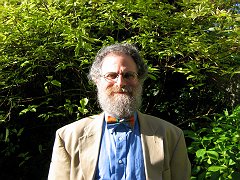
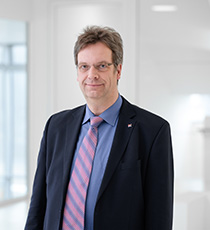
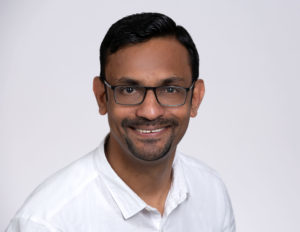
Philip Wadler is Professor of Theoretical Computer Science at the University of Edinburgh and Senior Research Fellow at IOHK. He is an ACM Fellow, Fellow of the Royal Society, and Fellow of the Royal Society of Edinburgh. His work spans programming language design, type systems, and formal verification, with significant contributions to Haskell, Java, and XQuery. He has held leadership roles in ACM SIGPLAN and served on editorial boards for major journals. Research Interests: Wadler's research focuses on the foundations of programming languages , including Gradual and session typing Language-integrated query Functional and logic programming XML data models Parametricity and free theorems Verification of smart contracts Publication Trends: Recent articles emphasize type safety, formal verification, and blockchain applications. Key themes include gradual typing (blame calculus), session types for concurrency, and logical foundations of programming. His 2015–2025 papers show sustained focus on type theory and language design . Awards & Recognition: POPL Most Influential Paper (2003 for 1993 work) SIGPLAN Distinguished Service Award Best Paper SBMF 2018 Royal Society-Wolfson Fellowship (2004–2009) ACM Fellow (2007) Fellow of Royal Society of Edinburgh (2005) Advising & Grants: He has supervised numerous PhD students in programs like the Centre for Doctoral Training in Pervasive Parallelism. His EPSRC Programme Grant "From Data Types to Session Types" (2013–2020) funded major advances in concurrency theory. Current work with IOHK explores blockchain verification using Haskell-based Plutus.
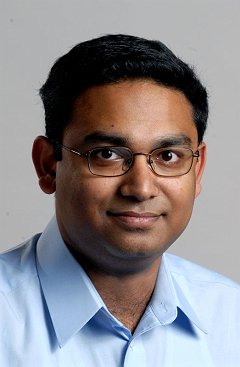
Koushik Sen is a Professor in the Department of Electrical Engineering and Computer Sciences at the University of California, Berkeley. His research focuses on developing software tools and methodologies to enhance programmer productivity and software quality, with expertise in Software Engineering, Programming Languages, and Formal Methods. Education: B.Tech from Indian Institute of Technology, Kanpur M.S. and Ph.D. in Computer Science from University of Illinois at Urbana-Champaign Research Focus: Professor Sen pioneers automated testing techniques including concolic testing and DART (Directed Automated Random Testing). His work bridges formal methods with practical software development, emphasizing bug detection, program synthesis, and AI-driven software analysis tools. Recent innovations include machine learning approaches for code recommendation and fuzzing. Publication Trends: His recent publications (2019-2023) demonstrate strong emphasis on fuzzing techniques, program synthesis, and AI/ML applications in software engineering. Notable domains include smart contract security, automated testing, and developer tooling, with frequent collaborations in top-tier conferences. Awards and Honors: NSF CAREER Award (2008) Sloan Foundation Fellowship (2011) IFIP TC2 Manfred Paul Award (2010) Okawa Foundation Research Grant (2015) Multiple ACM SIGSOFT Distinguished Paper Awards UIUC Distinguished Alumni Educator Award (2014) Leadership: Active program committee member for premier conferences (PLDI, ICSE, ISSTA) and keynote speaker. His research is supported by NSF, Okawa Foundation, and Sloan Foundation.
Zheng Yang is a Professor at Tsinghua University's School of Software, with significant research contributions in cryptography, cybersecurity, and privacy-preserving systems. His work spans multiple institutions including collaborations with University of Helsinki's Secure System Group and Chongqing University of Technology. He maintains active research in both theoretical and applied security domains, with particular focus on industrial applications. Professor Yang's research interests center on cryptographic protocols, authentication mechanisms, and security for emerging technologies. His work addresses critical challenges in Cyber-Physical Systems security, Industrial Internet of Things protection, and privacy-preserving computation. He has made significant contributions to secure key exchange protocols, authentication systems, and defenses against sophisticated network attacks including DDoS mitigation strategies. His research bridges theoretical cryptography with practical implementations for resource-constrained environments. Analysis of Professor Yang's recent publications reveals a strong trend toward practical security solutions for industrial and embedded systems. His work increasingly focuses on balancing security with performance constraints in Cyber-Physical Systems and Industrial IoT environments. Key research themes include lightweight cryptography for resource-constrained devices, privacy-preserving location services, and novel authentication mechanisms that maintain security while minimizing computational overhead. His publications demonstrate consistent innovation in adapting cryptographic techniques to real-world security challenges. Professor Yang has established himself as a leading researcher through his extensive publication record in top security venues including IEEE Security & Privacy, USENIX Security, and ACM conferences. His work has been published consistently in high-impact journals and conferences, demonstrating sustained research productivity and influence in the security community. Professor Yang maintains active research collaborations with numerous institutions globally, evidenced by his extensive co-authorship network. His research has attracted significant funding for projects addressing critical security challenges in emerging technologies. His work on secure authentication protocols and privacy-preserving systems has practical applications across multiple industry sectors. Professor Yang leads research initiatives focused on secure Cyber-Physical Systems and Industrial IoT security. His laboratory work emphasizes practical implementations of cryptographic protocols for real-world systems, with particular attention to performance constraints in embedded environments. Current research directions include secure communication for programmable logic controllers, privacy-preserving location services, and adaptive defenses against sophisticated network attacks.
Martin Fleischmann is Professor of E-Commerce Management & Digital Business at Rosenheim Technical University of Applied Sciences (Campus Chiemgau), where he co-leads the Bachelor's degree programme in E-Commerce. With over a decade of prior industry experience in multinational marketing roles, he has conducted research and taught at the University of Bamberg, HFU Business School, and the University of Southern California. Research Expertise His research integrates digital business innovation with practical applications: E-Commerce Systems : Platform management and transactional technologies Blockchain Integration : Web3 applications in business processes Brand Strategy : Digital brand identity and consumer engagement Marketing Technologies : Automation tools and sales analytics Administrative Leadership Head of Bachelor's Programme in E-Commerce Dean of Studies at Campus Chiemgau Chairman of E-Commerce Examination Board International Representative and Campus Board Member
Jan Pennekamp is a postdoctoral researcher at the Chair of Communication and Distributed Systems (COMSYS) within the Department of Computer Science at RWTH Aachen University. He is a member of the Security and Privacy research group and is actively involved in the Cluster of Excellence 'Internet of Production,' where he serves as deputy workstream coordinator. His academic journey includes a B.Sc. and M.Sc. in Computer Science from RWTH Aachen, with exchange studies at Aalto University and an internship at the University of Luxembourg. His research interests center on security and privacy in the Industrial Internet of Things (IIoT), privacy-enhancing technologies (PETs), secure computation, and interdisciplinary applications in healthcare, particularly synthetic data and single-cell genomics. He has led and contributed to numerous research projects, including CALCIPROTECT, RFC, RUST, SUSTAINET-guardian, and SYNCLIVER. His methodological focus includes both technical innovation and rigorous evaluation in real-world scenarios. His recent publications demonstrate a strong trend toward privacy-preserving data sharing in industrial and healthcare contexts, leveraging techniques such as confidential computing, blockchain, and machine learning. His work bridges computer science with industrial engineering and clinical research, emphasizing secure, interoperable, and accountable data ecosystems. Scientific Awards: Klaus Tschira Boost Fund Fellow 2025 Attendee of the 12th Heidelberg Laureate Forum 2025 Young Researcher Award 2022, Cluster of Excellence Internet of Production ICT Young Researcher Award 2021 TDWI Award 2018 (best master thesis) Google Scholarship 2018 Finalist, Artifacts Competition and Impact Award at ACSAC 2022 Outstanding Reviewer Award, TheWebConf/WWW 2024 Jan has advised numerous B.Sc. and M.Sc. theses on topics ranging from privacy-preserving benchmarking to intrusion detection and blockchain-based accountability. He has received research stipends and travel grants from RWC and ACSAC and has held leadership roles in academic service, including organizing conferences and serving on program committees for top venues like IEEE S&P, CCS, and EuroS&P. He is also a Certified ScrumMaster and RWTH Research Manager, reflecting his strong project and team leadership skills. He is actively engaged in interdisciplinary research labs and teams, particularly within the 'Internet of Production' initiative, collaborating with industrial partners and medical researchers to develop secure and privacy-preserving information systems for real-world applications.
Prof. Dr. Jürgen Seitz is a full Professor and Head of the Business Information Systems programme at the Baden-Württemberg Cooperative State University (DHBW) in Heidenheim, Germany. Since April 2001 he has shaped the university’s applied informatics curriculum and serves as data-protection liaison and German Informatics Society (GI) trustee. Internationally, he is Associate Editor for several journals and chairs tracks at conferences such as WHICEB and Bled eConference. Education 1988–1991 Diplom-Betriebswirt (BA), Berufsakademie Stuttgart (now DHBW) – focus on data processing 1992–1996 Diplom-Ökonom, University of Hohenheim – economics 1998 Dr. rer. pol., Europa-Universität Viadrina – dissertation on the impact of IT on banking structures Research Interests Seitz’s research integrates business informatics with pressing societal challenges. Key themes include: e-Finance & FinTech: cryptocurrency literacy, blockchain sustainability, digital payment futures e-Health & Health Telematics: barrier-free e-kiosk design, telematics infrastructure for electronic health cards, pandemic digital health solutions Data Management & Analytics: heterogeneous data-warehouse integration, big-data approaches to agriculture, water-quality prediction, renewable-energy forecasting IT Management & Modeling: business-model evaluation, Industry 4.0 architectures, enterprise system integration Publication Trends Across more than 150 peer-reviewed works (1998–2024), Seitz demonstrates a shift from foundational studies in e-commerce and digital watermarking to cutting-edge applications of AI, blockchain, and data analytics in finance, health, and sustainability. Recent articles emphasize machine-learning techniques (k-means, ARIMA, PCA) applied to global agriculture, renewable-energy growth, and gendered cryptocurrency adoption, reflecting a commitment to data-driven, cross-disciplinary impact. Editorial & Scientific Service Associate Editor: International Journal of Networking and Virtual Organisations (IJNVO) , Journal of Cases on Information Technology (JCIT) , International Journal of Cases on Electronic Commerce (IJCEC) Editorial Board Member: International Journal of Global Sourcing and Management (IJGSM) , Journal of Digital Marketing (JDM) , Journal of Internet Banking and Commerce (JIBC) , among others Conference Chair/Co-Chair: WHICEB (Wuhan International Conference on E-Business), Bled eConference eHealth Track Technical Programme Committee Member: IEEE ICDMAI, IEEE IEMCON, IEEE UEMCON, CCWC External examiner & guest lecturer in China, India, USA, Australia, Malaysia, Jordan, Poland, UK, Belarus Advising & Collaborative Networks While individual student names are not disclosed, Seitz mentors within the DHBW cooperative-education model and supervises industry-linked capstone projects. He is a key liaison for German industry partners and international universities, facilitating funded research on FinTech adoption, e-health feasibility, and sustainable IT architectures. His leadership of the Business Informatics programme positions him to coordinate grants and consortia across Europe and Asia. Laboratories & Teams At DHBW Heidenheim, Seitz steers the Business Informatics Lab —a hub for applied R&D projects with corporate partners such as Landesbank Baden-Württemberg and health-sector IT providers. The lab focuses on prototyping blockchain-based e-prescription systems, evaluating FinTech business models, and deploying predictive-maintenance analytics in automotive supply chains. Interdisciplinary student teams work under his guidance to translate academic insights into market-ready solutions.
S. Boumerdassi is a researcher at the CEDRIC Laboratory of Conservatoire National des Arts et Métiers (CNAM) . He has been actively involved in interdisciplinary research spanning networking , machine learning , image encryption , and IoT systems since the early 2000s. His work has focused on security protocols, energy efficiency in data centers, and anomaly detection frameworks. Key Research Areas: Networking: VANETs, LoRaWAN, network anomalies, and edge computing. Security: Blockchain oracles, cryptographic protocols, and wireless sensor network security. Machine Learning: Applications in network optimization and sustainable agriculture. Image Encryption: Chaotic maps, DCT coefficients, and grain algorithms. Recent Publications highlight his contributions to federated learning, anomaly detection, and mobility models. Leadership and Collaboration He has co-organized conferences like Mobile, Secure, and Programmable Networking and contributed to edited volumes on machine learning and IoT. His collaborations include researchers from Springer, IEEE, and institutions across France, Italy, Spain, and Canada.
Dr. Daniel Hellwig serves as Professor and Chair of Production Management within the Supply Chain Management Group at WHU - Otto Beisheim School of Management in Vallendar, Germany. His academic expertise is complemented by his professional role as Principal at Kepler Cannon in New York since 2014, demonstrating a strong integration of theoretical research and practical business applications in the field of supply chain innovation. His educational background includes: M.Eng. from University of California at Berkeley (2013) B.S.E. from The Wharton School, University of Pennsylvania (2011) Dr. Hellwig's research focuses on blockchain technology applications in supply chain management, with particular emphasis on distributed ledger systems for trade finance, resource allocation, and supply chain resilience. His work bridges technical blockchain implementation with business process optimization, exploring how cryptographic techniques like fully homomorphic encryption can enable secure information sharing among competing retailers. He has developed innovative simulation frameworks such as the DISASTER token trading game to study supply chain behavior during crises, demonstrating practical applications of theoretical concepts. His publication trajectory reveals an evolution from foundational blockchain concepts to increasingly sophisticated supply chain applications. Early works established fundamental blockchain knowledge through comprehensive guides, while recent research focuses on behavioral aspects of blockchain-enabled markets and privacy-preserving technologies for supply chain collaboration. This progression demonstrates both technical depth and growing business relevance in his scholarly contributions. As an educator, Dr. Hellwig has been a consistent guest lecturer at WHU since 2018, teaching blockchain programming and introduction courses at both bachelor's and master's levels. His teaching approach emphasizes practical implementation alongside theoretical understanding, reflecting his dual expertise in academic research and professional consulting. He frequently collaborates with Goran Karlic and Professor Arnd Huchzermeier, suggesting strong research partnerships within WHU's Supply Chain Management Group.
Christian Mönch is a Researcher in the Stochastics Group at the Johannes Gutenberg-Universität Mainz , where he leads the DFG-funded project Inhomogeneous long-range percolation beyond the weak decay regime within Priority Programme 22655 Random Geometric Systems . He has held academic positions including acting Professor at the University of Augsburg (2022/23), postdoctoral roles with Lisa Hartung and Frank Aurzada, and lecturing at the University of Mannheim. Education: PhD in Mathematics (2013, University of Bath, supervised by Peter Mörters) Research Interests: Probability theory at the intersection of statistical physics, analysis, and combinatorics, focusing on Directed scale-free networks Inhomogeneous percolation models Persistence probabilities Stochastic processes on random graphs Key Projects include: Analyzing infinite clusters in long-range percolation with dependencies Directed network dynamics and their irreversible behavior Soft constraint DAG models for distributed ledgers Resolute voter models with heavy-tailed clock distributions Collaborations span institutions such as TU Darmstadt, University of Augsburg, and WIAS Berlin. His work has been published in journals like Probability Theory and Related Fields , Stochastic Processes and their Applications , and Electronic Journal of Probability .
Professor Sebastian Faust is a faculty member in the Department of Computer Science at Technical University of Darmstadt, where he heads the Applied Cryptography department. He has been at TU Darmstadt since 2017, holding a full professorship. His research focuses on applied cryptography with applications in blockchain security, side-channel resistance, and secure multi-party computation. Professor Faust's educational background includes: Doctorate from KU Leuven, Belgium (2010) Postdoctoral fellowship at Aarhus University, Denmark Marie Curie IEF scholarship at EPFL, Switzerland Assistant professor position at Ruhr University Bochum Professor Faust's research interests span multiple areas of cryptography and security. He specializes in developing practical cryptographic solutions that are resilient against real-world attacks, particularly side-channel attacks and implementation-level vulnerabilities. His work bridges theoretical cryptography with practical implementation concerns, focusing on making cryptographic systems secure against both passive observation and active fault injection. He has made significant contributions to masking schemes, threshold cryptography, and blockchain security protocols. His research often addresses the gap between theoretical security guarantees and practical implementation challenges. Analysis of Professor Faust's recent publications (2023-2025) reveals a strong focus on practical cryptographic applications, particularly in blockchain and cryptocurrency security. His work addresses critical challenges like MEV (Miner Extractable Value) prevention, secure wallet implementations, and threshold cryptography for decentralized systems. He continues to advance fundamental cryptographic techniques like secret sharing and masking schemes, with a particular emphasis on making these techniques practical for real-world implementation. His research demonstrates a consistent trajectory from theoretical foundations to practical applications. Professor Faust has received numerous prestigious awards: Copernicus Award (2020) 2nd place with Perun in the category scientists at the TU Ideas Competition (2019) DFG Emmy Noether Programme for project "Cryptography beyond the black-box model" (2015) Best paper award at Eurocrypt 2014 for "Unifying leakage models: from probing attacks to noisy leakage" (2014) Marie Curie Fellowship (2013) Microsoft Research PhD Scholarship (2007) Professor Faust leads an active research group focusing on applied cryptography. His research has been supported by prestigious grants including the DFG Emmy Noether Programme, which provides exceptional early-career researchers with the opportunity to qualify for professorship by leading an independent junior research group. His work on the Shutter Network represents a significant practical application of his research in threshold cryptography for real-world blockchain systems. He has advised numerous PhD and Master's students who have gone on to contribute to both academia and industry. Professor Faust heads the Applied Cryptography research group at TU Darmstadt. This group focuses on bridging the gap between theoretical cryptography and practical implementation security. Their work encompasses side-channel resistance, secure multi-party computation, blockchain security, and cryptographic protocol design. The group maintains strong collaborations with both academic institutions and industry partners to ensure their research addresses real-world security challenges.
Gustavo A. Oliva is an Adjunct Professor at Queen's University in Canada, where he leads the blockchain research team at the Software Analysis and Intelligence Lab (SAIL). His research focuses on enabling cost-effective decentralized applications on programmable blockchain platforms like Ethereum, alongside empirical studies in software ecosystems, code analytics, and explainable AI. Dr. Oliva earned his PhD from the University of São Paulo (USP) in Brazil under Professor Dr. Marco Gerosa. Prior to his current role, he was a Post-Doctoral Fellow at Queen's University supervised by Professor Dr. Ahmed Hassan. His primary research spans programmable blockchains, software ecosystems (particularly npm), code analytics, and explainable AI. He employs static analysis, historical repository mining, and machine learning to investigate software evolution, dependency management, and smart contract development. Current projects address gas efficiency challenges in Ethereum, upgradeability patterns in smart contracts, and the impact of foundation models on software engineering practices. Recent publications reveal a dominant focus on blockchain systems (70% of recent work), with growing emphasis on foundation model challenges (FMware). His Ethereum research explores transaction processing, gas optimization, and technical debt, while newer work catalogs software engineering challenges in trustworthy AI-powered systems. Scientific recognition includes: Microsoft Azure for Research sponsorship Capes/CNPq scholarship for Visiting Research at Queen's University (2014) HPE scholarships for Smart Cities and Cloud Service Choreography projects European Commission FP7 funding for CHOReOS project Dr. Oliva actively mentors 8+ students across academic levels. His PhD advisees include Muhammad Ahasanuzzaman (ongoing), Amir Mohammad Ebrahimi, and Filipe Cogo (now at Huawei). Master's students Michael Pacheco and Ahmad Abdullah Zarir now work at Huawei and Amazon respectively. He also supervises visitor and undergraduate researchers in blockchain projects. His service includes program committees for ICSE, SANER, and MSR conferences, plus tutorial leadership at ASE, KDD, and FSE. As director of SAIL's blockchain research team, he manages projects on Ethereum smart contract analysis, npm dependency ecosystems, and AI-driven software engineering. Current initiatives include SPICE (automated issue labeling) and foundational work on trustworthy FMware development, with industry collaborations at Huawei and Amazon.
Kristóf Marussy is an Assistant Professor at the Department of Artificial Intelligence and Systems Engineering, Budapest University of Technology and Economics. His work bridges model-driven engineering , dependability analysis , and logic solvers to address challenges in critical cyber-physical systems (railway, automotive, aerospace). He leads research in formal verification , automated reasoning , and graph generation , integrating AI with logic-based techniques for system reliability. His recent publications focus on stochastic analysis , abstraction algorithms , and distributed ledger architectures , often leveraging his tool Refinery for constraint-based model generation. Notable awards include the 2024 University Researcher Scholarship Programme (EKÖP) and the 2023 Josef Heim Award . He has served on program committees for OOPSLA, ECOOP, and MODELS. Education: PhD in Computer Science, Budapest University of Technology and Economics (2018–2023) MSc and BSc in Computer Science, Budapest University of Technology and Economics Professional Highlights: 2025–: Assistant Professor at BME, leading research in formal verification and graph-based logic reasoning 2020–2023: Assistant Research Fellow in Hungarian national projects (railway/automotive verification) 2018–2019: Assistant Research Fellow at MTA-BME Lendület Cyber-Physical Systems Research Group Scientific Contributions: Developed Refinery , an open-source graph solver for model generation Contributed to European Space Agency's VAMPIR project for positioning systems Created formal verification methods for critical subsystems in railway/automotive industries Awards: 2024 EKÖP Postdoctoral Scholarship Multiple ÚNKP Excellence Program grants (2016–2023) 2023 Josef Heim Award for innovation Conferences & Journals: Published 15+ papers in top venues (ICSE, ASE, MODELS, IEEETSE, etc.) Active in program committees for OOPSLA, ECOOP, and LLM4MDE Teaching: Course Coordinator for Critical Systems Laboratory since 2024 TA for 9 years, supervising 7 BSc and 4 MSc theses Advising Scientific Students' Association (5 Gold, 5 Silver awards)
Riikka Koulu serves as Assistant Professor in Law and Digitalisation at the University of Helsinki, where she also earned her doctorate in 2016. She directs the University of Helsinki Legal Tech Lab—an interdisciplinary hub examining law, technology, and society—and is a member of HELDIG (Helsinki Centre for Digital Humanities). Currently, she holds a visiting researcher position at HIIG (Humboldt Institute for Internet and Society) in Berlin within the 'Data, Actors, Infrastructures' research programme. Her educational foundation includes a University of Helsinki doctorate (2016), culminating in the dissertation Dispute Resolution and Technology: Revisiting the Justification of Conflict Management . This work critically analyzed how dispute-resolution technologies privatize enforcement mechanisms and challenge legal justifications for coercion—a theme expanded in her 2019 Routledge book Law, Technology, Dispute Resolution: Privatisation of Coercion . Koulu's research centers on algorithmic fairness and the limits of transparency in AI-driven legal systems, with particular focus on how digital platforms reshape conflict management. She investigates the ethical implications of technology-driven privatization of enforcement—from e-commerce platforms to blockchain smart contracts—arguing these developments expose fundamental tensions in law's coercive nature. Her work bridges legal theory, digital governance, and practical technology implementation. Recent publications reveal a strategic shift toward legal design patterns as analytical tools for translating between legal frameworks and technological systems. This interdisciplinary approach addresses critical gaps in managing societal impacts of algorithmic decision-making, emphasizing actionable frameworks for developers and legal practitioners. As director of the Legal Tech Lab, Koulu leads collaborative research at the law-technology-society intersection. She co-organized the 2022 'Design Patterns in Law' event at HIIG with international experts, fostering cross-disciplinary dialogue on law-software design integration. Her leadership cultivates environments where technical innovation engages deeply with legal ethics and social accountability.
Daniel Graziotin is Professor of Business Informatics and Digital Technologies at the University of Hohenheim. His research examines human aspects of software engineering, including developer well-being, emotional intelligence, and research methodologies. Research Focus: Graziotin investigates psychological factors in software development, including stress and emotional intelligence in developers, collaborative coding practices, and open science methodologies. His work bridges behavioral science and technical software engineering practices. Publications: Recent articles (2022-2025) focus on developer psychology, qualitative research methods in software engineering, GitHub collaboration patterns, and blockchain developer ecosystems. His research often employs longitudinal analyses and phenomenological approaches to understand developer experiences.
Dr. Kapil Patil is a Research Fellow at Friedrich-Alexander-Universität Erlangen-Nürnberg, holding a postdoctoral position in the ERC-funded project 'Living with Radiation: The Role of the International Atomic Energy Agency in the History of Radiation Protection' at STGS. His research focuses on science policy, nuclear diplomacy, and defense technology sectors. He earned his Ph.D. in Science Policy from Jawaharlal Nehru University, New Delhi, where his thesis explored public technology procurement in India’s military radar industry. Dr. Patil’s career includes roles at the Research & Information System for Developing Countries (RIS) and the Indian Pugwash Society, collaborating on projects like India’s nuclear program sponsored by the Indian Board of Nuclear Sciences (BRNS). He co-edited India’s Nuclear Energy Programme: Challenges, Prospects, and Public Concerns (2014). Notably, he received the 2018 Emerging Leaders Fellowship from the Korean Ministry of Unification and participated in the Nuclear History Boot Camp (2011). His current research examines post-Cold War radiation protection standards and IAEA’s role in global governance. He has published widely on science diplomacy, technology policy, and international relations, with articles spanning cybersecurity, AI applications, and nuclear energy challenges. Dr. Patil’s work integrates historical analysis with policy advocacy, emphasizing ethical and geopolitical dimensions of scientific advancements. His contributions bridge academic research and practical policy implementation in defense, energy, and nuclear sectors.