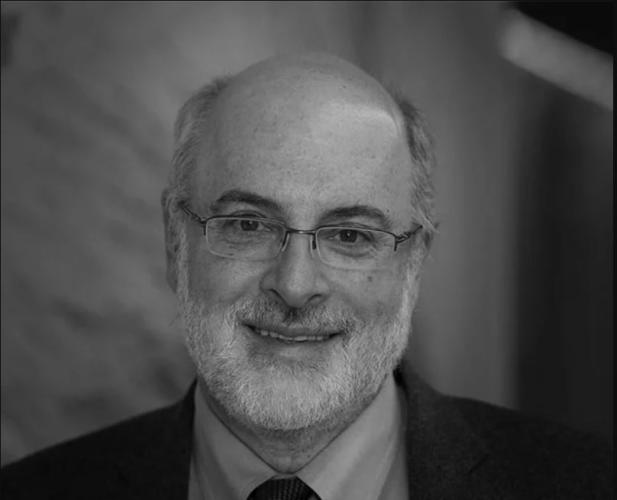
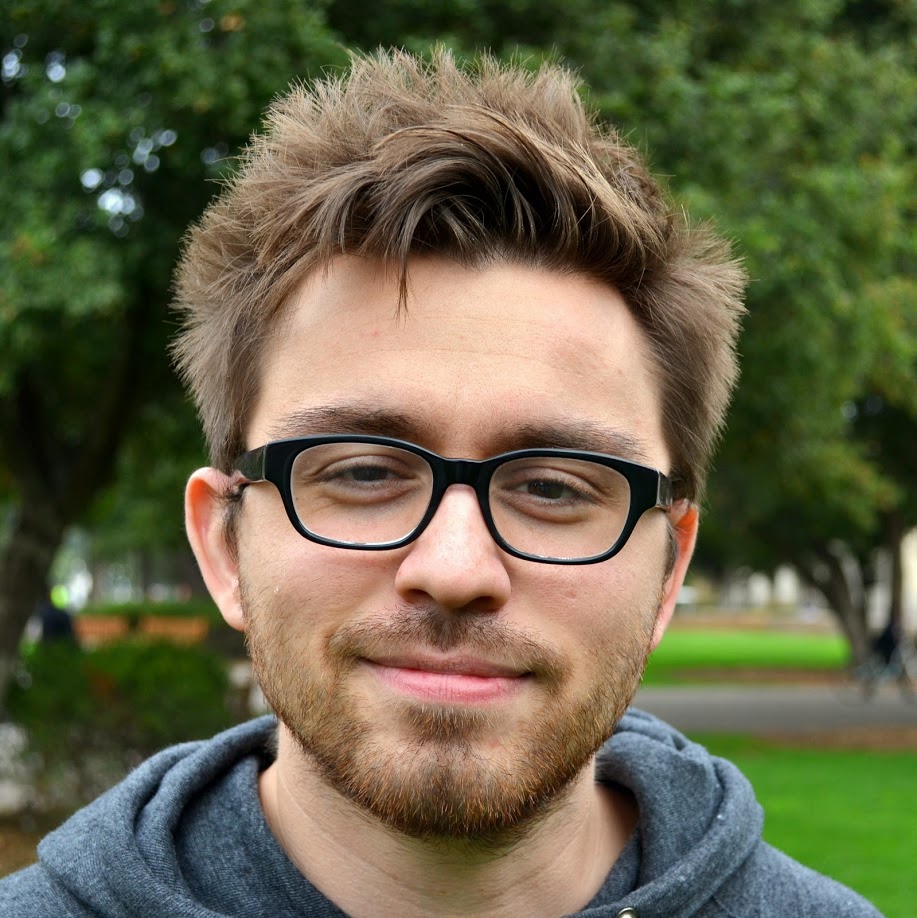
Sıtkı Egeli is an Associate Professor at the Department of Political Science and International Relations at İzmir University of Economics since 2015. With a PhD in International Relations from Bilkent University, an MA in Security Studies from University of Chicago, and a BA in Political Science from Boğaziçi University, he specializes in defense policy, security studies, and military technology. PhD: Bilkent University, International Relations (1993-1999) MA: University of Chicago, Security Studies (1988-1991) BA: Boğaziçi University, Political Science (1983-1988) His research focuses on weapons of mass destruction proliferation , air and missile defense , nuclear deterrence , space security , and disruptive military technologies . His publications analyze Turkish defense industrialization, Arctic geopolitics, and strategic stability in aerospace warfare contexts. Recent collaborative work (2017-2025) spans: • Balancing defense autarky (2025) • Arctic region involvement (2022) • Historical air power development (2021) • Military space operations (2021) • Turkish missile defense (2019) • Ballistic missile programs (2017)
Kenneth P. Birman is the N. Rama Rao Professor of Computer Science at Cornell University, where he has had a long and impactful career in distributed systems, cloud computing, and AI/ML infrastructure. He is known for foundational contributions to reliable and scalable distributed systems, and for leading high-impact projects such as Cascade, Vortex, and Derecho. He is also the author of a widely used textbook on reliable distributed systems and has founded multiple companies based on his research. Education: Ph.D. in Computer Science, University of California, Berkeley M.S. in Computer Science, University of California, Berkeley B.A. in Computer Science, Columbia University Research Interests: Professor Birman's research focuses on building reliable, secure, and scalable distributed systems . His current emphasis is on AI and ML infrastructure , particularly in reducing latency and improving performance through hardware acceleration, RDMA-based communication, and edge computing. He explores how to eliminate data movement bottlenecks in AI pipelines and how to support real-time, mission-critical applications in domains like healthcare, smart grids, and industrial IoT. His work spans systems programming, cloud computing, fault tolerance, and formal verification . He has designed systems that have been deployed in high-stakes environments such as the New York Stock Exchange, the Swiss Exchange, and the French Air Traffic Control system. Scientific Awards: ACM Fellow (1999) IEEE Fellow (2014) IEEE Tsutomu Kanai Award for innovations in distributed computing Teaching and Mentorship: Professor Birman teaches two courses in the fall semester: CS4414: Systems Programming and CS5416: Cloud and ML Systems Programming . He has advised numerous Ph.D. and M.S. students, including Alicia Yang, Tiancheng Yuan, Yifan Wang, Weijia Song, Edward Tremel, Sagar Jha, Jonathan Behrens, and Mae Milano. He has announced that Fall 2025 will be his last semester teaching, and he is no longer recruiting new students, though he will continue supervising current ones. Labs and Projects: He leads the Derecho Project and the Cascade/Vortex Project , both focused on high-performance distributed systems. These projects are collaborative efforts with students and industry partners, and the software is released under open-source licenses. He also maintains strong ties with Cornell's systems group and collaborates with faculty across CS, ECE, IS, and the Cornell Tech NYC campus.
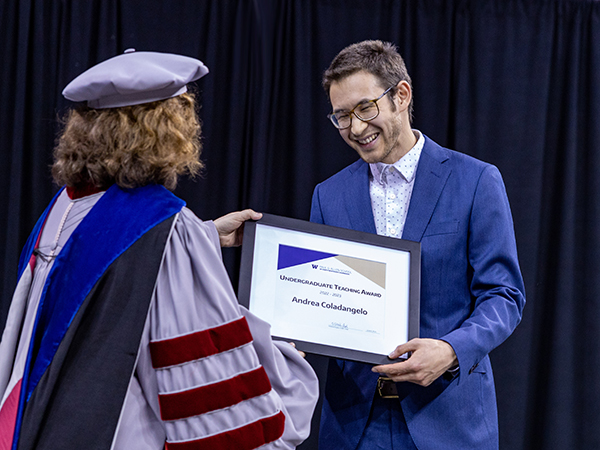
Andrea Coladangelo is an Assistant Professor at the Allen School of Computer Science & Engineering , University of Washington , co-leading the Quantum group and contributing to the Theory and Crypto groups. He coordinates the NSF-funded Quantum@UW REU program , fostering undergraduate research in quantum information. Previously, he was a postdoctoral researcher at UC Berkeley and the Simons Institute , advised by Umesh Vazirani , following a PhD in Computer Science at Caltech under Thomas Vidick . His academic journey began with a B.A. in Mathematics from Oxford and a Master in Mathematics from Cambridge . He co-founded qBraid , a platform for quantum computing education. Research Interests : Andrea explores the intersection of quantum computation and cryptography , focusing on foundational questions in entanglement , quantum correlations , and quantum learning theory . His work investigates quantum pseudorandomness , device-independent security , quantum algorithms , and quantum copy-protection , often leveraging computational assumptions to bridge quantum information theory with cryptographic applications. Scientific Awards : 2025 Google Research Scholar Program Award in Quantum Computing 2023 CSE Undergraduate Teaching Award for his course on quantum computation 2019 Best Student Paper Award at QIP Teaching & Outreach : Andrea designed and taught CSE 434: Intro to Quantum Computation (Spring 2023, 2024, 2025), CSE 534: Quantum Information and Computation (Autumn 2023), and CSE 599C: Quantum Learning Theory (Winter 2025). He also delivered lectures at the 22nd Bellairs Crypto Workshop (2024) and led a quantum programming tutorial using qBraid . Labs & Teams : As co-leader of the Quantum group at the Allen School, he collaborates with researchers in Theory and Crypto , advancing quantum computing through interdisciplinary projects and educational initiatives.
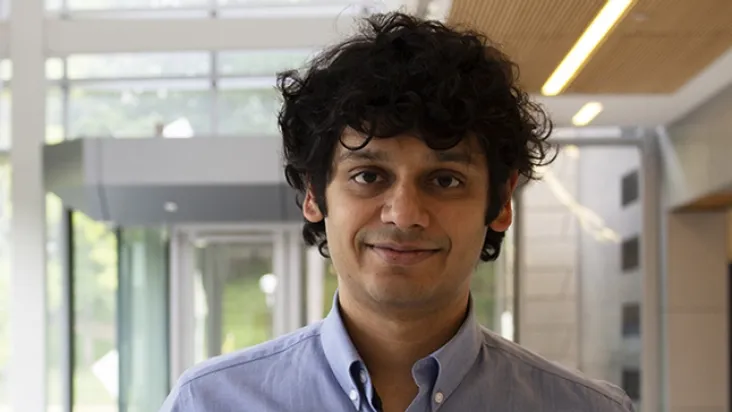
Ram Vasudevan is an Associate Professor and Associate Chair of Graduate Studies in the Department of Robotics at the University of Michigan. His research focuses on developing tools for safe and robust deployment of robotic systems, emphasizing optimization, nonlinear control, and real-world applications. Key areas include legged robot locomotion, shared control systems, and safety-critical autonomous systems. Research Interests: Optimization and control of nonlinear systems, locomotion of legged robots, shared control active safety systems, and automation of diagnostic/rehabilitative tasks. His ROAHM Lab prioritizes mathematical guarantees for robotic performance, with applications in medical robotics, autonomous vehicles, and soft robotics. Recent work emphasizes trajectory optimization, sensor fusion, and safety-aware control strategies. He has contributed to benchmarks for autonomous vehicle perception and novel methods in thermal image restoration using neural radiance fields. Awards: None explicitly listed in provided text. Labs/Teams: Directs the ROAHM Lab, collaborating on projects like robotic tail mechanics, real-time motion planning, and sensor data analysis. Active in academic conferences including RSS and ICRA.
Kamalika Chaudhuri is a Professor in the Department of Computer Science and Engineering at the University of California, San Diego (UCSD), and also serves as a Director and Research Scientist with the FAIR team at Meta AI. Her research focuses on the foundations of trustworthy machine learning, including robust machine learning, learning with privacy, and out-of-distribution generalization. Dr. Chaudhuri has earned her PhD from UC Berkeley in 2007 with a dissertation on "Learning Mixtures of Distributions." Her academic journey has led her to become a leading researcher in machine learning theory with a particular emphasis on privacy and robustness. Her research interests span machine learning foundations with a strong focus on trustworthy AI . She investigates problems at the intersection of differential privacy , adversarial robustness , and out-of-distribution generalization . Her work addresses critical challenges in developing machine learning systems that maintain privacy while preserving utility, resist adversarial attacks, and generalize effectively beyond training data distributions. She has pioneered approaches in privacy-preserving machine learning, robust learning theory, and methods for detecting and mitigating data memorization in models. An analysis of her recent publications (2024-2025) reveals a strong focus on the intersection of privacy, security, and machine learning. Her work spans differential privacy mechanisms, membership inference attacks, memorization detection, and fairness certification. She has been particularly active in developing methods for privacy-preserving foundation models, with several papers on differentially private computer vision and language models. Her research demonstrates a consistent thread of addressing fundamental challenges in trustworthy AI while developing practical solutions that balance privacy, accuracy, and utility. Best Award at the ICLR 2024 Workshop on Privacy Regulation and Protection in Machine Learning Distinguished Paper Award at IEEE Conference on Secure and Trustworthy Machine Learning (SaTML), 2024 Dr. Chaudhuri has advised numerous PhD students who have gone on to prominent positions at Google, DeepMind, Microsoft Research, and other leading AI institutions. Her group maintains an active research blog with guest posts from UCSD researchers. She has served in significant leadership roles including General Chair for ICML 2022 and Program Co-Chair for both ICML 2019 and AISTATS 2019, where she pioneered initiatives to improve reproducibility in machine learning research. Her research group at UCSD focuses on trustworthy machine learning, with current projects spanning privacy-preserving AI, robustness against adversarial attacks, and methods for ensuring reliable out-of-distribution generalization. The group collaborates closely with the FAIR team at Meta AI, where Dr. Chaudhuri serves as a Research Scientist.
Yang P. Liu is an Assistant Professor at Carnegie Mellon University 's Department of Computer Science . He received his PhD from Stanford University under the supervision of Aaron Sidford and previously studied at MIT . Fields of Interest : Graph Algorithms, Optimization, High-Dimensional Geometry, Additive Combinatorics, Theoretical Computer Science. His research focuses on algorithmic design and analysis for graph problems, optimization, and combinatorics, with applications in machine learning and complexity theory. Recent work includes advancements in parallel repetition games , combinatorial lines , and dynamic graph algorithms . In 2024, his research spanned FOCS , STOC , and RANDOM conferences, addressing problems in k-CSPs , min-cost flow , and hypergraph sparsification . Earlier contributions (2023) included deterministic flow algorithms and spectral hypergraph techniques. Scientific Awards : NDSEG Fellowship (2018-2021), Google PhD Fellowship (2022-2023), FOCS Best Paper (2022), STOC Best Student Paper (2022), FOCS Best Student Paper (2021). He teaches CS 15-759 , a graduate course on convex optimization theory and applications, covering gradient descent, interior point methods, and algorithmic sparsification techniques.
Kaiyuan Yang is an Associate Professor in the Department of Electrical and Computer Engineering at Rice University, leading the Secure and Intelligent Micro-Systems (SIMS) Lab. His research focuses on low-power integrated circuits and bioelectronic implants for applications like the Internet of Everything and medical devices. He holds a B.S. from Tsinghua University (2012) and M.S./Ph.D. degrees from the University of Michigan (2017). Research Interests: Low-power digital/analog/mixed-signal systems Bioelectronics and implantable devices Hardware security and PUF design Mixed-signal computing and emerging materials Recent work emphasizes magnetoelectric-powered implants, secure backscatter communication, and in-memory computing architectures. His publications span top venues like IEEE ISSCC, IEDM, and ACM MobiCom. Awards: 2022 NSF CAREER Award 2022 IEEE Top Picks in Hardware Security 2016 IEEE SSCS Predoctoral Achievement Award Dr. Yang serves on editorial boards for IEEE TVLSI and program committees for ISSCC/CICC. His lab develops miniature, secure, and energy-efficient systems for healthcare and IoT applications.
Jenna Wise DiVincenzo is an Assistant Professor at the Elmore Family School of Electrical and Computer Engineering at Purdue University. She specializes in research areas such as software verification, formal methods, and programming languages, with a focus on gradual verification techniques that combine static and dynamic analysis. Her work emphasizes usability and scalability in verification tools, and she has contributed to projects like Gradual C0 and gradual null-pointer analysis. Dr. DiVincenzo earned her PhD in Software Engineering from Carnegie Mellon University (2023) and a BS in Mathematics and Computer Science from Youngstown State University (2017). She has interned at IBM Research, MIT Lincoln Laboratory, and the Software Engineering Research and Empirical Studies Lab at YSU. Her awards include the Google PhD Fellowship, NSF GRFP Fellowship, and 2022 Rising Star in EECS. Her research projects span theoretical advancements in gradual verification, empirical studies on usability, and practical tool development. She advises PhD students (e.g., Craig Liu, Conrad Zimmerman) and collaborates on initiatives like gradual verification for Rust and educational tools to teach verification concepts. Her work also explores leveraging large language models for specification generation and enhancing verification tool soundness through formal proofs.
Benjamin Carrison-Schafer is an Associate Professor and Assistant Dean for Graduate Student Success at the Department of Electrical and Computer Engineering, Erik Jonsson School of Engineering and Computer Science, University of Texas at Dallas. He leads the Design Automation and Reconfigurable Computing Laboratory (DARClab), focusing on systems, high-level design, and programming methodologies for VLSI computing systems and FPGAs. Education: MBA from McGill University, Canada (2012) PhD in Electrical and Electronic Engineering from University of Birmingham, UK (2003) Research Interests: His work spans modeling, analysis, synthesis, optimization, and implementation of VLSI systems. Current projects include: Approximate Computing, High-Level Synthesis Design Space Exploration, Hardware Security, Behavioral MPSoC Optimization, and Automatic Fault-Tolerant System Generation. His research blends theory and practice, using analytical and experimental techniques to solve real-world problems. Publication Trends: Recent publications demonstrate strong focus on hardware security, FPGA optimization, and automated design methodologies. Key themes include High-Level Synthesis innovations, hardware acceleration techniques, and cross-disciplinary applications of reconfigurable computing. His work frequently addresses challenges in hardware trustworthiness, energy efficiency, and design automation scalability. Professional Activities: Associate Editor: IEEE Transactions on Sustainable Computing (2022-present) Conference Chair: ICCD 2024, DCAS 2024 Program Committee: ASP-DAC, DATE, FCCM, GLSVLSI Advising & Labs: Supervises multiple PhD and Master's students at DARClab. Current research includes domain-specific architecture design, hardware security, sustainable computing, and ML for VLSI design. The lab collaborates with industry partners like Renesas Electronics and develops commercial tools through spin-off company highX Technologies.
Marlon Dumas is a Professor of Information Systems at the University of Tartu's Faculty of Science and Technology, with a 20-year academic career spanning Estonia and Australia. He holds a PhD in Computer Science from the University of Grenoble 1, France, and has served as Head of Chair and Programme Director in Software Engineering programs. Specializes in Business Process Management (BPM) and Process Mining Current research focuses on prescriptive process monitoring, simulation modeling, and data privacy Recipient of 25+ scientific awards, including multiple Test of Time Awards and the Estonian National Research Award in Technical Sciences Editorial leadership: Area Editor for Information Systems (Elsevier) and ERC Starting Grant Panel Chair His work bridges theoretical advancements in BPM with practical applications in financial services and anti-money laundering. He has developed tools like SIMOD, Kronos, and Kairos for process optimization and analysis. His research integrates AI/ML techniques (reinforcement learning, causal inference) with traditional process modeling. Key trends in his recent publications include: Prescriptive monitoring systems combining causal inference and machine learning Privacy-preserving process mining techniques (differential privacy, anonymization) Resource availability modeling and multi-objective process optimization LLM applications for process analysis and intervention policies Scientific honors include: 2024 BPM Best Paper & Prototype Awards 2023 ICPM Best Prototype Award 2019 ERC Advanced Grantee 2017 Estonian National Research Award in Technical Sciences 2019 MODELS Test of Time Award 2017 BPM Best Prototype Award He has mentored PhD candidates as thesis examiner and contributed to 30+ conference program committees, including General Co-Chair roles at ESEC-FSE 2019 and CAiSE 2018. His work has been supported by European Research Council grants and Estonian Science Foundation projects.
Eric Wong is an Assistant Professor in the Department of Computer and Information Science at the University of Pennsylvania, affiliated with the ASSET Center and leading the Brachio Lab. His research focuses on robust and reliable machine learning, including model debugging, adversarial robustness, and explainable AI. He holds a PhD from Carnegie Mellon University (CMU), advised by J. Zico Kolter, and completed a postdoc with Aleksander Madry. His work bridges theory and practice, addressing challenges in model interpretability, safety, and scalability. Teaching includes CIS 5200 (Machine Learning), CIS 3333 (Mathematics for Machine Learning), and a specialized course on debugging ML pipelines. Notable contributions include the FIX Benchmark for interpretable features and defenses against LLM jailbreaking attacks. He received an Amazon Research Award in 2024 and has published extensively in top conferences like ICML, NeurIPS, and ICLR. Affiliations: University of Pennsylvania (CIS), ASSET Center, Brachio Lab Education: PhD in Machine Learning (CMU), Postdoc at MIT Key Projects: FIX Benchmark, DOLPHIN framework, SmoothLLM defense Awards: Amazon Research Award (2024) Lab Focus: Safe AI, model debugging, neurosymbolic learning
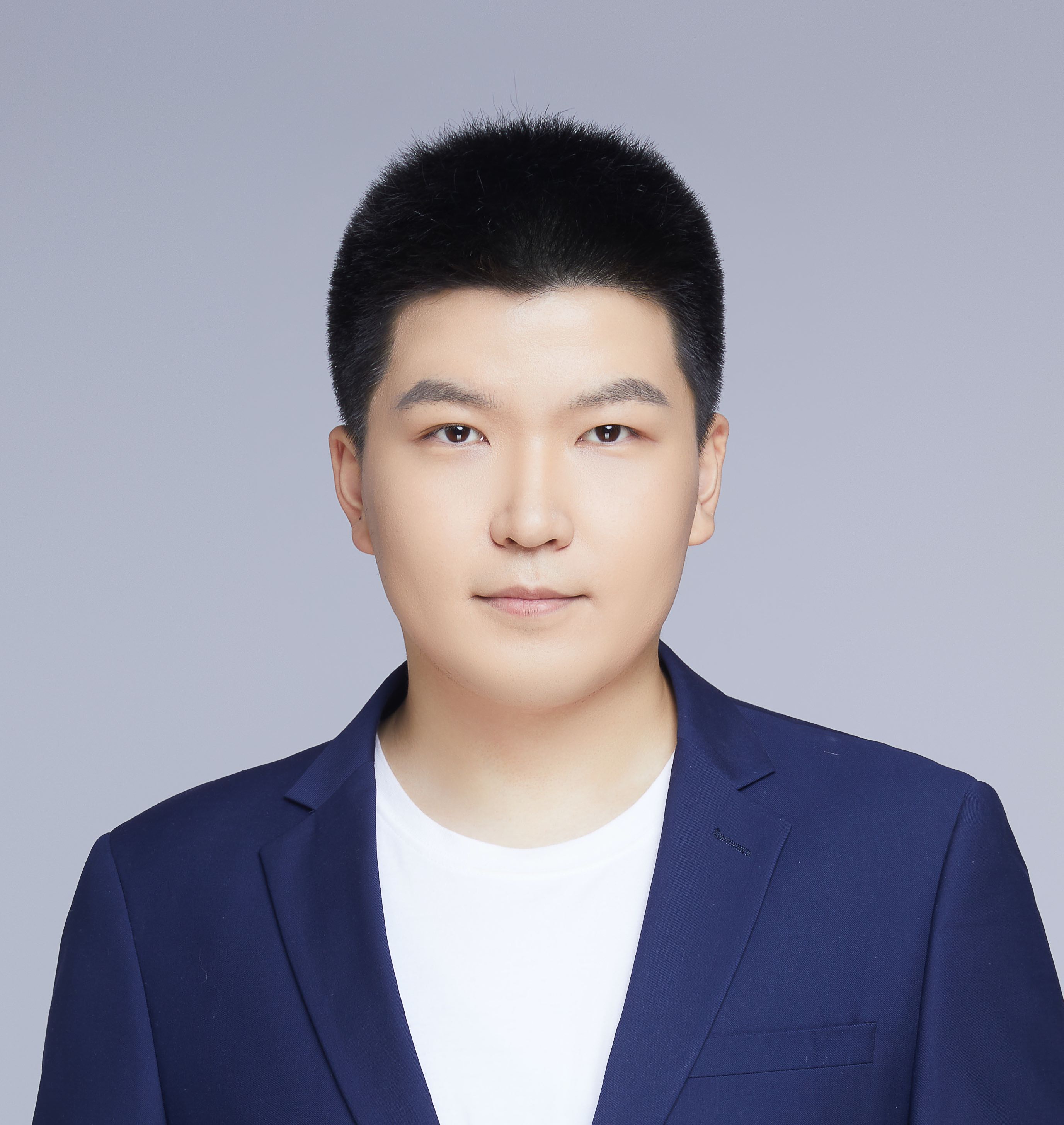
Xupeng Miao is a Visiting Assistant Professor in the Department of Computer Science at Purdue University, holding the Kevin C. and Suzanne L. Kahn New Frontiers Assistant Professorship. Previously, he was a Postdoctoral Fellow at Carnegie Mellon University's Catalyst Group under Professors Zhihao Jia and Tianqi Chen. He earned his Ph.D. in Computer Science from Peking University (2022) and a Bachelor’s degree from Northeastern University. His research focuses on machine learning systems, distributed computing, and data management, with notable contributions to systems like Hetu (a distributed deep learning framework) and innovations in large language model (LLM) serving (e.g., SpotServe, SpecInfer). He has received awards including the 2024 WAIC Yunfan Award and an Outstanding Paper Award at ACL 2024. Current projects emphasize efficient systems for generative AI, including optimizing LLM training and inference on heterogeneous hardware, fault-tolerant distributed training, and scalable graph-based machine learning. He teaches CS 59200-MLS: Machine Learning Systems at Purdue and actively mentors students in PhD/MS programs and internships. Key achievements include NVIDIA Academic Awards, IEEE Micro Top Picks recognition, and leadership in international conference roles (e.g., Artifact Evaluation Co-Chair for KDD 2025 and MLSys 2025). His work bridges system design, algorithmic innovation, and hardware-aware optimizations to advance scalable AI infrastructure.
Eytan Adar is a Professor of Information and Computer Science at the University of Michigan, holding dual appointments in the School of Information and the College of Engineering's Electrical Engineering and Computer Science department. His work sits at the intersection of human-computer interaction and artificial intelligence, focusing on large-scale systems analysis and novel interface design. Adar's research spans multiple domains including social media analysis (Twitter, Reddit), academic citation networks, meme propagation, information extraction, and political networks. His methodological expertise includes data mining, data visualization, and graph-based network analysis. His work often operates at internet scale, examining language, creativity, social network dynamics, and text production. His recent publications reveal a strong focus on AI-human collaboration, with particular attention to generative AI interfaces, visualization techniques for complex data, and ethical considerations in AI systems. His work shows a consistent pattern of bridging theoretical insights with practical system implementations. Best Paper Award at ProtoAI: Model-Informed Prototyping for AI-Powered Interfaces, IUI'21 Honorable Mention Award at CHI'24 for feminist interaction techniques research Best Paper Award at ICWSM'18 for Wikipedia language edition analysis Best Paper Award at ICML 2016 Workshop for neural language model visualization Best Student Paper at WSDM'09 for web dynamics research Best of CHI at CHI 2008 for web revisitation patterns analysis Adar has advised numerous PhD students who have gone on to prominent positions at organizations including Google, Apple, RAND, Northwestern University, and Stanford. His research is generously supported by the NSF, IARPA, NIH, the Education Department, and major technology companies including Adobe, Microsoft, Facebook, Google, and Yahoo. He is also a founder of the International Conference on Web and Social Media (ICWSM) and has served as Co-General Chair for WSDM and Co-Program Chair for UIST.
Maria José Lisboa Brites de Azeredo is an Associate Professor with Habilitation at Lusófona University, Portugal. She serves as Vice-President of the Centre for Research in Applied Communication, Culture and New Technologies (CICANT) and coordinates the Media Literacy and Civic Cultures Lab (MeLCi Lab). She holds leadership roles in the Portuguese Association for Communication (SOPCOM) and the European Communication Research and Education Association (ECREA). Her academic career spans over two decades, including roles at institutions like Universidade Lusófona do Porto and Universidade Nova de Lisboa. Her education includes a PhD and Habilitation in Communication Sciences from Universidade Nova de Lisboa. She has completed specialized courses in digital education, intercultural dialogue, and pedagogical training from institutions like the University of Edinburgh and the Knight Center for Journalism in the Americas. Brites’ research focuses on youth journalism, audience studies, digital citizenship, and participatory methodologies. She has led projects such as the YouNDigital study (PTDC/COM-OUT/0243/2021) and the SMaRT-EU initiative. Her work has been recognized with awards including the Research Prize (2017, 2020, 2023) and the Gold Medal of Academic Value (2019). She coordinates the Master's Degree in Media and Information Literacy and Digital Citizenship at Lusófona University and has trained educators through initiatives like the Media in Action (MIA) project. Her publications span peer-reviewed journals, edited books, and conference proceedings addressing media literacy, generational media practices, and civic engagement.
Deian Stefan is an Associate Professor in the Department of Computer Science and Engineering at the University of California, San Diego (UCSD). His research focuses on building secure systems through interdisciplinary approaches spanning security , programming languages , and systems . Key areas include WebAssembly security , JavaScript JITs , constant-time programming , memory safety , information flow control , and program analysis tools. He co-founded Intrinsic , a web-security startup later acquired by VMWare, and contributed to standards like W3C WebAppSec and Node.js Security Working Groups. Education: PhD in Computer Science from Stanford University (2015), advised by David Mazières, John C. Mitchell, and Alejandro Russo BE and ME in Electrical Engineering from Cooper Union (2011) Research Trends: His work targets secure systems (Web frameworks, sandboxing, runtime systems), language-based security (constant-time programming, memory safety), and verification for security . Recent publications focus on mitigating speculative execution attacks, hardware-assisted sandboxing, and WebAssembly security. Awards & Recognition: Distinguished Paper Award at POPL 2021 and IEEE MICRO Top Picks 2024 Best Paper Award at CollaborateCom 2010 2010.01 Prize by Daniel J. Bernstein (DJB) Most Influential Paper Award at ICFP 2022 Teaching: He has taught graduate and undergraduate courses including Graduate Computer Security (CSE 227) , Building Secure Systems with Rust , and Programming Languages: Principles and Paradigms at UCSD since 2018. Prior teaching experience includes Stanford and Cooper Union.