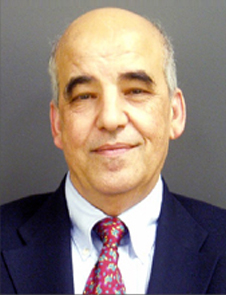
Professor Ahmed Karmouch is a faculty member at the University of Ottawa's School of Electrical Engineering and Computer Science. He holds a Ph.D. and specializes in advanced networking research, including Network Slicing, Software Defined Networks (SDN), Named Data Networking (NDN), and Cloud Computing. His IMAGINE Lab focuses on developing innovative solutions for autonomic and cognitive networks, emphasizing programmable data planes and in-network computing. Research Interests: Network Slicing Software Defined Networking Named Data Networking Programmable Data Plane Intelligence In-Network Computing Ambient Intelligence & IoT Publications reflect a focus on SDN, NDN, and cloud infrastructure optimization. His work often bridges theory and practical implementation, addressing challenges in network efficiency, reliability, and scalability. Supervised over 30 graduate students, contributing to advancements in edge computing, virtual networks, and autonomic systems. Labs/Teams: Leads the IMAGINE Lab, dedicated to research in mobile autonomic networks, context-aware systems, and future broadband infrastructure. Projects include WiMAX security, policy-based overlay networks, and semantic resource discovery.
Nao Nishida serves as Assistant Professor at Waseda University's Institute for Advanced Study since 2022, following appointments at Tokyo Medical University and Fred Hutchinson Cancer Center. Her research bridges cancer biology and cell-cell communication mechanisms within tumor microenvironments. Her educational background includes: PhD in Agriculture (2014) from Kyoto University Master's in Applied Life Sciences (2011) from Kyoto University Bachelor's in Applied Life Sciences (2009) from Kyoto University Nishida's research centers on extracellular vesicle-mediated tumor-stroma crosstalk, with particular focus on exosome-driven metastasis, tumor-associated macrophage reprogramming, and organotypic culture modeling. She investigates how lipid composition and serine metabolism in cancer-derived EVs regulate microenvironmental remodeling and therapeutic resistance. Her work integrates advanced lipidomics, real-time tissue imaging, and spatial EV distribution analysis to uncover metastatic mechanisms. Analysis of her 17 publications reveals dominant themes in exosome biology (71% of works), cancer microenvironment dynamics (63%), and therapeutic targeting strategies (41%). Recent work increasingly incorporates spatial tissue context (2022-2024) and clinical translation potential. Her awards include: ISEV2025 New Parents Scholarship Japan Society for Promotion of Science Outstanding Researcher Candidate (2021) ISEV2017 Junior Member Scholarship Young Researcher Excellent Presentation Award (2015) Nishida directs multiple active grants including JSPS KAKENHI projects on EV secretion mechanisms (2023-2026) and nutritional stress adaptation (2025-2028), plus Mitsubishi Foundation and Uehara Memorial Foundation awards. She mentors through Waseda's bioscience curriculum while developing organotypic slice platforms for drug screening. Her laboratory utilizes advanced tumor slice culture systems and spatial EV mapping techniques to dissect microenvironmental heterogeneity, with current work focusing on stromal contribution to therapeutic resistance and organ-specific metastatic niches.
W. Eric Wong is a Professor of Computer Science at The University of Texas at Dallas (UTD), affiliated with the Erik Jonsson School of Engineering and Computer Science. He holds a Ph.D. in Computer Science from Purdue University (1993), following earlier degrees from Purdue and Eastern Michigan University. His research focuses on reducing software production costs while enhancing reliability, safety, and quality through program-based and architecture/design-based testing methodologies. Key areas include automated test generation, fault localization, debugging, and software safety analysis. Professional Background: Tenured Professor at UTD since 2002 Prior roles include Senior Scientist at Telcordia Technologies (1995–2002) and Consultant at Texas Instruments (2004–2005) Active in industry partnerships, such as projects with Motorola, Avaya Labs, and Raytheon Research Interests: Software Testing & Debugging Dependable Software Development Security Requirements Engineering Fault Localization Techniques Model-Based Testing Software Reliability Modeling Awards & Recognition: 2007 IEEE COMPSAC Best Paper Award 1997 NASA Quality Assurance Special Achievement Award Recipient of a $404,772 NSF grant for software safety and reliability research (2021) Professional Activities: Editorial roles for journals like Journal of Systems and Software and International Journal of Software Engineering Program Chair for ISSRE 2012, COMPSAC 2010, and multiple ACM SAC conferences Member of IEEE Reliability Society Administrative Committee (2008–2013) IBM System z Curriculum Advisory Panel member Labs & Teams: Leads the Software Engineering Group at UTD, collaborating on projects like eXVanatge (dependable software solutions) and Fault-Prone Module Identification in telecommunications systems. Engages in cross-disciplinary efforts with industry and international institutions.
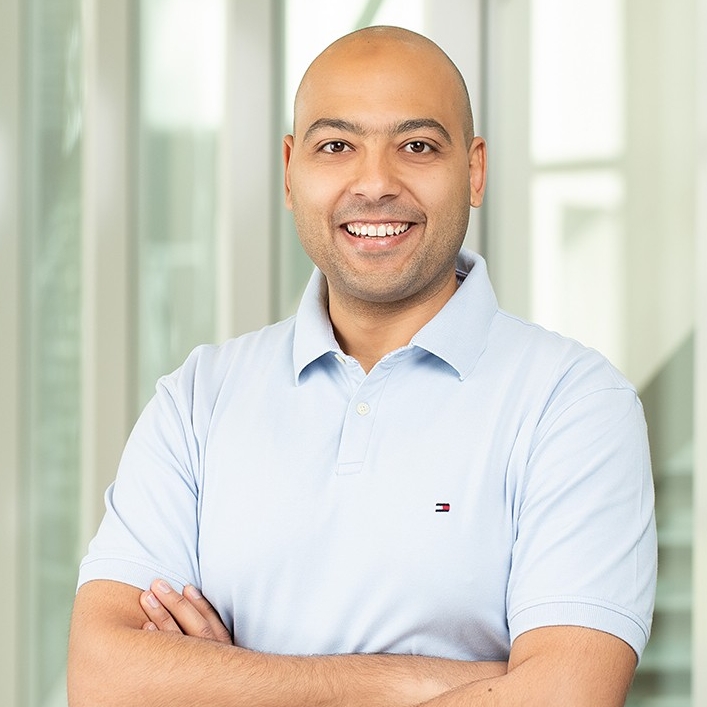
Karim Ali is an Associate Professor of Computer Science at New York University Abu Dhabi (NYUAD), where he leads research in programming languages, static analysis, security, and compilers. He is affiliated with the Department of Computer Science within the College of Arts and Science. Prior to joining NYUAD, he served as an Associate Professor at the University of Alberta. His academic training includes a BSc from The American University in Cairo, and MMath and PhD degrees from the University of Waterloo, completed in 2014. BSc: The American University in Cairo MMath: University of Waterloo PhD: University of Waterloo (2014) His research focuses on making static analysis tools more practical by enhancing their scalability, precision, and usability. He investigates program analysis techniques applicable to real-world software, with applications in security, just-in-time compilation, and mobile app development. His work spans theoretical foundations and tool development, including the SWAN framework for Swift and contributions to secure cryptographic API usage through CogniCrypt. The recent publications reflect a strong trend in developer-centric static analysis, secure coding, energy efficiency in mobile apps, and compiler optimization. His work combines empirical studies with tool-building, emphasizing usability and integration into developer workflows. Scientific Awards: Dahl-Naygaard Junior Prize (2021) ACM SIGSOFT Distinguished Paper Award ACM SIGPLAN Distinguished Paper Award Distinguished Artifact Award, ECOOP 2014 Karim Ali has mentored numerous students and collaborated extensively with researchers worldwide. His lab has contributed tools adopted by major static analysis frameworks like Soot, WALA, and DOOP. He has secured research recognition through awards and industrial impact, including helping Symantec fix a security vulnerability. He teaches core courses such as Computer Systems Organization and supervises capstone projects, guiding students in original research. His lab conducts research on programming languages and static analysis, with projects including SWAN for Swift analysis, usability studies of static analysis tools, and development of precise pointer analysis techniques. The team works on both academic research and practical tooling for developers.
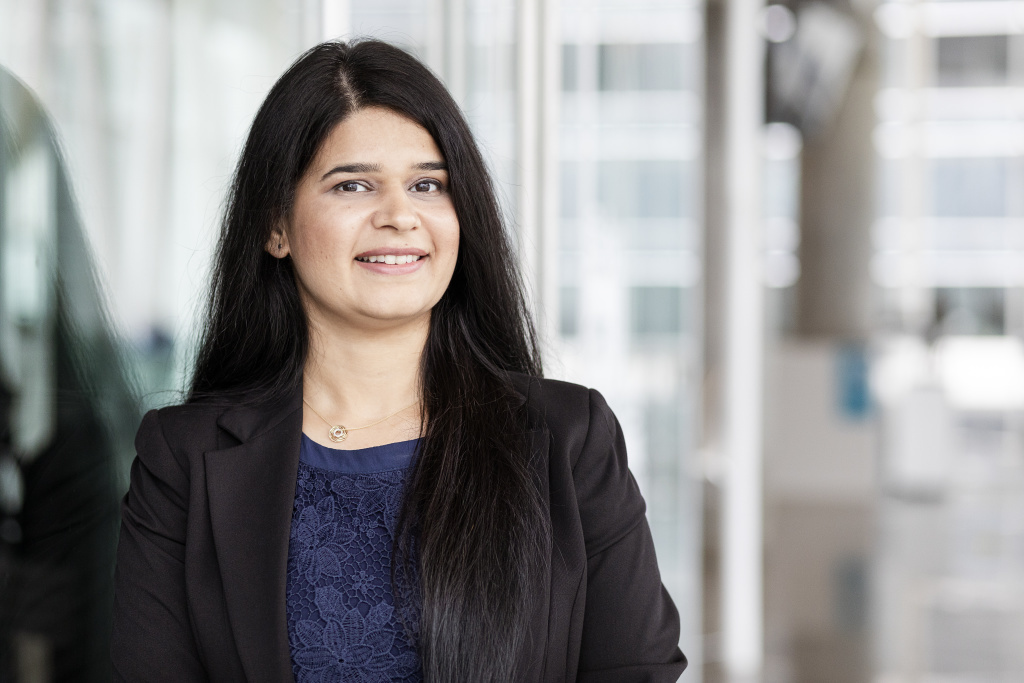
Kuljeet Kaur is a Professor in the Department of Electrical Engineering at École de technologie supérieure (ÉTS) in Montreal, Canada. Her research is conducted through the LACIME (Communications and Microelectronic Integration Laboratory), a renowned research unit focusing on communications and microelectronic integration. She maintains an active research program with numerous publications and student supervision activities. Professor Kaur's research spans multiple interconnected domains focused on next-generation computing and communication systems. Her primary research axes include Sensors, Networks and Connectivity; Intelligent and Autonomous Systems; and Software Systems, Multimedia and Cybersecurity. Within these broad areas, she specializes in Cloud Computing, Edge/Fog Computing, Internet of Things (IoT), Cybersecurity, Privacy, Federated Learning, and Energy Management. Her work bridges theoretical foundations with practical implementations in intelligent transportation systems, healthcare applications, and smart grid technologies. Analysis of Professor Kaur's recent publications reveals a strong focus on security and privacy challenges in emerging computing paradigms. A significant portion of her work addresses federated learning approaches that maintain data privacy while enabling collaborative AI model training. Her research also demonstrates expertise in edge computing architectures, particularly for IoT applications, with emphasis on energy efficiency and security. The publications show consistent interdisciplinary collaboration across computer science, electrical engineering, and transportation domains. Professor Kaur actively supervises multiple graduate students at various levels. Her supervision portfolio includes doctoral candidates working on topics like decentralized AI networks and secure federated learning, as well as master's students focusing on edge AI for IoT applications, sensor drift compensation, and zero trust architecture for IoT. She also guides project students working on practical implementations of AI for smart grid optimization and secure IoT protocols. Her research is conducted within the LACIME laboratory, which brings together researchers working on everything from micro- and nanofabrication processes to communication protocols and signal processing. The lab provides a transdisciplinary environment where Professor Kaur's work on cyber-physical systems and secure communications benefits from complementary expertise in integrated circuit design and microsystems.
Felix E. Schweizer is a Professor in the Department of Neurobiology at the David Geffen School of Medicine, UCLA. He serves as Director of the Neurosciences Interdepartmental Program and Vice-Chair for Education in the Department of Neurobiology, with affiliations to the Neuroscience GPB Home Area, Vestibular Neuroscience Laboratory, Brain Research Institute, Cell & Developmental Biology GPB Home Area, and Molecular, Cellular & Integrative Physiology GPB Home Area. His research focuses on the molecular mechanisms of neuronal communication and synaptic regulation. PhD in Biochemistry, University of Basel (1989) Postdoctoral fellowships: Stanford University (1990–1994), Duke University (1994–1998) Dr. Schweizer’s laboratory investigates how protein ubiquitination modulates neuronal excitability and synaptic transmission, utilizing multiplexed SILAC with Dr. James Wohlschlegel to identify dynamically regulated synaptic proteins. Collaborations with Dr. David Krantz (Drosophila models) and Dr. Larry Hoffman (vestibular system studies) explore disease mechanisms and gravity-induced synaptic changes through electrophysiology, serial EM, and EM tomography. The lab employs cultured neurons, brain slices, and in vivo models to analyze neurotransmitter release dynamics. Current projects include defining the synaptic transfer function in the vestibular system and characterizing structural-physiological correlations under altered gravitational loads. His affiliations span multiple interdisciplinary programs and research institutes at UCLA, reflecting his integrative approach to neurobiology research.
Prof. Dr. Susanne Kuger is a Professor for Empirical Social and Educational Research in Childhood and Adolescence at the Faculty of Psychology and Education, Ludwig-Maximilians-Universität München (LMU). She serves as Research Director and Acting Head of Department at the Center for Continuous Monitoring and Methods , German Youth Institute (DJI). Her work focuses on educational processes in life-course-specific learning environments, survey methodology in cross-national comparative studies, and pandemic-related educational adaptations. Key academic roles: LMU Professor (2022–present), DJI Research Director (2023–present) Research areas: Educational contexts, early childhood development, international comparative studies Current projects: "Growing Up in Germany: Everyday Worlds" (AID:A), "Corona-KiTa Study", "EarlyMath" Research Highlights : Her 15+ recent publications (2016–2023) address pandemic impacts on childcare quality, instructional practices, home learning environments, and methodological innovations in educational surveys. Collaborative projects span Germany-wide studies on daycare infection patterns, mathematical development, and policy frameworks for educational equity. Leadership : She leads the NEPS research group "Educational Processes in Life-Course-Specific Learning Environments" and chairs multiple methodological advisory boards. Her methodological expertise includes anchoring vignettes, thin slices technique, and longitudinal data analysis.
Matthew Edward Hedden is a Professor in the Department of Mathematics at Michigan State University's College of Natural Science, where he maintains an active research program in low-dimensional topology. His office is located in D325 Wells Hall, and he holds regular office hours via Zoom on Wednesdays and Thursdays. Hedden has established himself as a leading researcher in Heegaard Floer homology and its applications to knot theory and 4-manifold topology. Hedden's research centers on low-dimensional topology, with emphases on Heegaard Floer homology, knot concordance, and connections between symplectic topology and gauge theory. His work explores deep relationships between knot invariants, 3- and 4-manifold structures, and complex curves in Stein domains. He has made significant contributions to understanding how Floer-theoretic invariants detect geometric properties of knots and 3-manifolds, particularly through his investigations of cabling operations, satellite constructions, and concordance invariants. His research often bridges abstract topological frameworks with concrete computational techniques in knot theory. Hedden's publication record demonstrates consistent innovation in low-dimensional topology over the past two decades. His work shows a clear trajectory from foundational studies in knot Floer homology toward increasingly sophisticated applications in 4-manifold topology and connections with symplectic geometry. Key thematic developments include the systematic exploration of concordance invariants, the geometric interpretation of Floer homology through pillowcase geometry, and the extension of these techniques to study complex curves in Stein domains. His collaborative work spans multiple subfields, reflecting the interdisciplinary nature of modern geometric topology. Hedden has received significant recognition for his research, most notably the prestigious Alfred P. Sloan Research Fellowship (2011-2013). His work has been supported by multiple National Science Foundation grants, including a CAREER award. Hedden has directed substantial research funding through six National Science Foundation grants spanning 2005-2020, including the CAREER grant DMS-1150872 on Floer Homology and Low-Dimensional Topology (2012-2018) and the research grant DMS-1709016 on Floer Homology, Concordance, and Complex Curves (2017-2020). His research program has fostered numerous collaborations across the topology community, resulting in over 30 publications in top mathematics journals. Through his extensive lecture notes and resource compilations on Heegaard Floer homology, Hedden has significantly contributed to the education and training of new researchers in the field.
Professor Christopher Goldring serves as Deputy Executive Dean of the Institute for Systems, Molecular and Integrative Biology at the University of Liverpool's Department of Pharmacology and Therapeutics. He co-directs the Human Liver Research Facility and the Joint Centre for Pharmacology and Therapeutics with XJTLU in Suzhou, China, while holding advisory roles with the MHRA Herbal Medicines Advisory Committee and MRC DiscoveryMedicineNorth doctoral training program. Goldring's research centers on translational drug safety , focusing on developing humanised biologically-relevant models for predicting adverse drug reactions. Key initiatives include: Leading UKRI's 3Dbionet project to enhance 3D in vitro liver models Establishing pipelines for human primary liver cells (>380 samples since 2011) Developing industry-adopted roadmaps for pharmaceutical safety assessment Creating precision-cut tissue slice models for drug metabolism studies Investigating cholangiocarcinoma genomics and targeted therapies Analysis of his 2020-2025 publications reveals three dominant trends: biomarker validation for drug-induced liver injury (DILI), physiological refinement of complex in vitro models (organoids, 3D cultures), and translational oncology focusing on biliary tract cancers. His work bridges academic research with pharmaceutical industry needs through twelve industry partnerships. Recognition includes: Fellow of the British Pharmacological Society Goldring supervises PhD research on stem cell-derived hepatocyte models, DILI biomarkers, and NRF2-mediated immune responses while securing major funding including: TransBioLine consortium (EU Commission, 2019-2025): $22M for translational biomarker development AMMF Charity projects (2017-2026): Cholangiocarcinoma immunosuppression studies NW Cancer Research (2023-2027): Uveal melanoma metastasis modeling MRC/BBSRC grants: Liver model reproducibility and physiological relevance He co-directs the Centre for Drug Safety Science and Human Liver Research Facility, leading teams that include pharmaceutical partners (Janssen, Pfizer, Merck) and international academic collaborators to establish standards for preclinical safety assessment.
Edward V. DiBella, PhD, is a Professor in the Department of Radiology & Imaging Sciences at the University of Utah School of Medicine, where he serves as director of the Utah Center for Advanced Imaging Research (UCAIR). He holds adjunct faculty appointments in Bioengineering and is affiliated with the Center for Arrhythmia Research and Management (CARMA) and the Experimental Therapeutics Program in the Huntsman Cancer Institute. Dr. DiBella leads the Cardiovascular MRI Group, focusing on developing advanced imaging techniques for cardiac applications. Dr. DiBella's educational background includes a Master's degree from the University of Vermont and a PhD from the Georgia Institute of Technology, followed by postdoctoral training at the University of Utah Department of Radiology. His research spans over two decades of contributions to medical imaging science. His primary research interests center on improving MRI acquisition, reconstruction, and post-processing techniques, with particular emphasis on cardiac, cancer, and stroke applications. Dr. DiBella's work addresses fundamental challenges in medical imaging including motion artifacts, image reconstruction from undersampled data, quantitative perfusion analysis, and advanced techniques for cardiac imaging. His group has pioneered radial simultaneous multi-slice (SMS) approaches for myocardial perfusion MRI that enable whole-heart coverage without gating. Analysis of Dr. DiBella's recent publications reveals a strong focus on deep learning applications in MRI reconstruction, quantitative myocardial perfusion techniques, and advanced diffusion imaging for stroke recovery prediction. His work demonstrates a consistent trajectory toward more efficient, accurate, and clinically applicable imaging methods that address real-world challenges in cardiac MRI. Dr. DiBella has mentored numerous graduate students and postdoctoral researchers who have gone on to successful careers in academia and industry. His laboratory maintains active collaborations with cardiology, electrophysiology, and bioengineering departments, reflecting the interdisciplinary nature of modern medical imaging research. Current projects in Dr. DiBella's Cardiovascular MRI Group include Deep Learning for Radial SMS Reconstruction, Diffusion imaging for predicting stroke recovery, Quantitative myocardial perfusion, and Radial SMS for myocardial perfusion MRI. The group's work is particularly relevant to heart failure, coronary artery disease, and atrial fibrillation diagnosis and management, addressing the fact that heart disease remains the leading cause of death worldwide.
Marsha Chechik is a Professor in the Department of Computer Science at the Faculty of Arts and Science, University of Toronto. She previously served as Department Chair from 2019-2022 and as Acting Dean in the Faculty of Information from July-December 2022. Her academic career spans numerous research contributions and leadership roles within the software engineering community. Professor Chechik's primary research interests focus on software engineering with emphasis on formal methods to enhance software quality. Her work encompasses scalable automated verification techniques including model-checking and theorem-proving, formal specification languages, verification of protocols, non-classical logics, and reasoning under inconsistency. She has made significant contributions to model management, software product lines, safety and security assurance, and automotive safety systems. Her research bridges theoretical foundations with practical applications, particularly in managing uncertainty in software models and developing techniques for automotive safety verification. Her recent publications demonstrate a strong focus on model management and transformations, software product lines and variability analysis, safety and security assurance cases, and semantic analysis of software evolution. The integration of formal methods with practical software engineering challenges, especially in safety-critical domains like automotive systems, represents a consistent theme throughout her work. Professor Chechik has been recognized with multiple prestigious awards including a Best Paper Award at RE'12, a SIGSOFT Distinguished Paper Award at ICSE'12, a Best Student Paper Award at CASCON'07, and a Distinguished Paper Award at ICSE'07, highlighting the impact and quality of her research contributions. She actively supervises graduate students and has successfully guided numerous Ph.D. candidates to completion. Her group has produced graduates who predominantly pursue research careers in both academic institutions and industrial research labs. She currently leads several funded projects including the Automotive Safety project (in collaboration with General Motors) and the Software Evolution project, focusing on practical applications of her research interests. Professor Chechik leads the Software Engineering Lab at the University of Toronto, where innovative projects like Matchmakers (a serious game for software engineering) are developed. Her collaborative network extends across institutions, with notable partnerships including Julia Rubin at the University of British Columbia, demonstrating her commitment to interdisciplinary research and academic collaboration.
Avery Berman is an Assistant Professor in the Department of Physics at Carleton University and a Scientist at the University of Ottawa Institute of Mental Health Research (IMHR) at The Royal. His work focuses on advancing functional MRI (fMRI) techniques for high-resolution imaging of brain activity and physiology, with applications in neuroscience and mental health disorders. PhD in Biomedical Engineering and MSc in Medical Radiation Physics from McGill University Postdoctoral research at Harvard Medical School and the Martinos Center for Biomedical Imaging Research Interests include: High-resolution fMRI at 7 Tesla Biophysical modeling of vascular networks Quantitative biomarkers for oxygen metabolism PET-MRI hybrid imaging systems Neurovascular coupling in mental illness Scientific Awards include: NSERC Canada Graduate Scholarship (Master's) CIHR Canada Graduate Scholarship (Doctoral) CIHR Postdoctoral Fellowship (top 10/600 applicants) NSERC Postdoctoral Fellowship (top Physics section recipient) Research Funding from NSERC, CFI, and institutional support from Carleton University and IMHR. His lab develops the open-source BOLDsωimsuite software for fMRI signal modeling and collaborates with Canada-wide vascular training programs.
Alvin Cheung is an Associate Professor in the Computer Science Division at UC Berkeley's EECS department. He is affiliated with the Data Systems and Foundations group, Programming Systems group, Sky Lab, and SLICE Lab, and serves as a faculty affiliate at the Berkeley Institute for Data Science. He advises the Data Science Discovery Program and provides technical guidance to industry partners. His research spans data management, programming languages, and scalable software systems, with emphasis on helping users process large datasets efficiently. Key innovations include verified lifting (applying formal methods and ML to infer program properties) and systems for optimizing database-backed applications and geospatial analytics. Recent work explores LLM-driven code optimization and transpilation techniques. His publications (2023-2025) show strong trends in ML-enhanced systems, verified compilation, and data management tools. Articles frequently integrate formal methods, program synthesis, and hardware-aware optimizations across domains like databases, distributed computing, and HCI. Scientific Awards: ACSIC Rock Star Award (2025) Dahl-Nygaard Junior Prize (2024) VLDB Early Career Research Contribution Award (2023) IEEE TCDE Rising Star Award (2020) Sloan Fellowship (2019) NSF CAREER Award (2017) 20+ additional honors Advising & Grants: He mentors PhD/MS students (e.g., Lily Liu at OpenAI, Chenglong Wang at Microsoft Research). Research is funded by: NSF DOE ONR ARO Intel Notable grants include ONR Young Investigator Award and ARO Early Career Program Award. Labs & Teams: Leads projects in Berkeley's Data Systems/Programming Systems groups and collaborates with Sky Lab/SLICE Lab. Manages labs focused on verified compilation (e.g., Tenspiler) and data infrastructure (e.g., Spatialyze).
Patricia Cahn is Associate Professor of Mathematical Sciences and Codirector of the Postbaccalaureate Program at Smith College. Her research focuses on geometric and low-dimensional topology, including trisections of 4-manifolds, branched coverings of 3- and 4-manifolds, and contact topology. Supported by an NSF CAREER grant. Education: Ph.D. and M.A. in Mathematics, Dartmouth College A.B. in Mathematics, Smith College Research explores: Algebraic invariants for topological intersections Knot theory under geometric constraints Branched coverings and dihedral invariants Computational methods in topology Publications demonstrate consistent focus on knot invariants and manifolds, with recent work on trisected branched covers (2023) and dihedral linking invariants (2021). Computational projects include algorithms for topological invariants. Grants: Currently funded by NSF CAREER award for research on branched covers in dimensions three and four. Teaching: Courses include Multivariable Calculus (MTH 212) and Topology (MTH 370) for 2024-2025. Laboratory: Leads computational topology projects with code repositories available on GitHub.
Juanita Pinzón Caicedo is an Assistant Professor of Mathematics at the University of Notre Dame. She earned her Ph.D. in Mathematics from Indiana University (2014) and a B.Sc. in Mathematics from Universidad de los Andes, Colombia (2008). Her research focuses on geometric topology, particularly knot concordance, 4-manifolds, and the interplay between gauge theory and Floer homologies. She has held postdoctoral positions at the University of Georgia, NC State University, and the Max Planck Institute for Mathematics. Her research investigates trisections of 4-manifolds, satellite knots, and SU(2) representations. Notable contributions include work on concordance independence of iterated Whitehead doubles and foundational trisection diagrams. Awards include the David A. Rothrock Award (2013) and NSF FRG grants (2016). Dr. Pinzón Caicedo has taught over 20 courses, including topology and calculus, with 900+ students. She actively promotes diversity in mathematics, organizing conferences and mentoring programs. Her service includes roles at the AMS, GLBT Center at NCSU, and Women in STIM initiatives.