معرفی
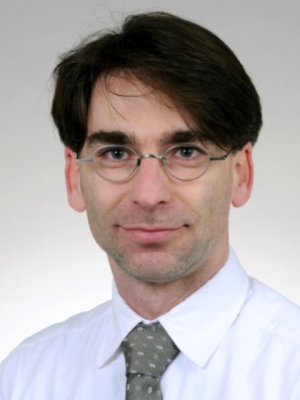
Edward V. DiBella, PhD, is a Professor in the Department of Radiology & Imaging Sciences at the University of Utah School of Medicine, where he serves as director of the Utah Center for Advanced Imaging Research (UCAIR). He holds adjunct faculty appointments in Bioengineering and is affiliated with the Center for Arrhythmia Research and Management (CARMA) and the Experimental Therapeutics Program in the Huntsman Cancer Institute. Dr. DiBella leads the Cardiovascular MRI Group, focusing on developing advanced imaging techniques for cardiac applications.
Dr. DiBella's educational background includes a Master's degree from the University of Vermont and a PhD from the Georgia Institute of Technology, followed by postdoctoral training at the University of Utah Department of Radiology. His research spans over two decades of contributions to medical imaging science.
His primary research interests center on improving MRI acquisition, reconstruction, and post-processing techniques, with particular emphasis on cardiac, cancer, and stroke applications. Dr. DiBella's work addresses fundamental challenges in medical imaging including motion artifacts, image reconstruction from undersampled data, quantitative perfusion analysis, and advanced techniques for cardiac imaging. His group has pioneered radial simultaneous multi-slice (SMS) approaches for myocardial perfusion MRI that enable whole-heart coverage without gating.
Analysis of Dr. DiBella's recent publications reveals a strong focus on deep learning applications in MRI reconstruction, quantitative myocardial perfusion techniques, and advanced diffusion imaging for stroke recovery prediction. His work demonstrates a consistent trajectory toward more efficient, accurate, and clinically applicable imaging methods that address real-world challenges in cardiac MRI.
Dr. DiBella has mentored numerous graduate students and postdoctoral researchers who have gone on to successful careers in academia and industry. His laboratory maintains active collaborations with cardiology, electrophysiology, and bioengineering departments, reflecting the interdisciplinary nature of modern medical imaging research.
Current projects in Dr. DiBella's Cardiovascular MRI Group include Deep Learning for Radial SMS Reconstruction, Diffusion imaging for predicting stroke recovery, Quantitative myocardial perfusion, and Radial SMS for myocardial perfusion MRI. The group's work is particularly relevant to heart failure, coronary artery disease, and atrial fibrillation diagnosis and management, addressing the fact that heart disease remains the leading cause of death worldwide.