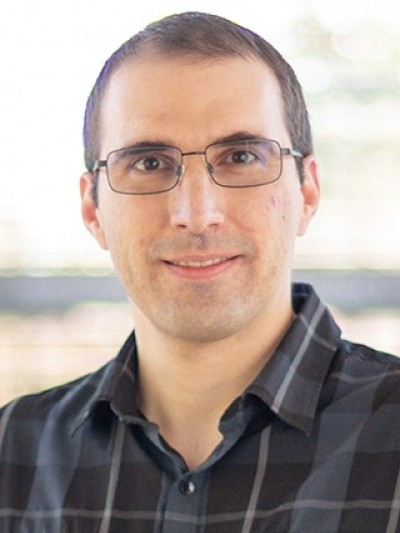
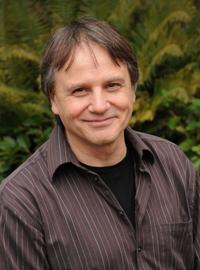
Manolis Savva is an Associate Professor in the School of Computing Science at Simon Fraser University and holds the Canada Research Chair in Computer Graphics. He specializes in 3D scene analysis, generative methods for 3D content, and computer graphics for AI. His research bridges computer graphics, vision, and robotics. Education: Ph.D. (Computer Science, Stanford University, 2016), MS (Computer Science, Stanford, 2012), B.A. (Physics & Computer Science, Cornell, 2009). Research Interests: Human-centric 3D scene analysis, generative 3D content creation, AI-driven rendering, and applications in robotics. Key projects include Habitat (Embodied AI platform), ScanNet , and ShapeNet datasets. Recent Articles: Focus on articulated object modeling, 3D scene synthesis, and AI-driven visualization. Notable work includes SceneMotifCoder (generating object arrangements) and R3DS (panoramic scene understanding). Awards: CHCCS Early Career Award (2022), ICLR 2023 Outstanding Paper Award, ICCV 2019 Best Paper Nomination, and SGP 2020 Dataset Award (ScanNet). Lab/Teams: Leads research groups in 3DLG (3D Learning and Graphics) and GrUVi (Graphics and Vision). Collaborates on projects like AI Habitat and HomeRobot .
Stephen L. Bearne is a Professor in the Departments of Biochemistry and Molecular Biology and Chemistry at Dalhousie University, affiliated with the Faculty of Medicine. He has been a department member since 1996 and served as Department Head from 2012 to 2022. His research focuses on enzymology, enzyme catalysis, and protein engineering, with a particular emphasis on transition state analogues, enzyme inhibition mechanisms, and the chemical basis of disease-associated enzymes. His work integrates organic synthesis, biophysical techniques, and computational modeling to explore enzyme function and design inhibitors for therapeutic applications. Dr. Bearne holds a PhD from the University of Toronto and an MDCM from McGill University. His lab is part of the Protein Assembly Research Team and the BioActives CREATE Training Program. Current research themes include understanding carbon acid substrate catalysis in mandelate racemase, developing inhibitors for CTP synthase and racemases involved in diseases like cancer and neglected tropical infections, and proteomic tools for enzymatic activity profiling. His research leverages advanced techniques such as site-directed mutagenesis, isothermal titration calorimetry, NMR spectroscopy, and macroion mobility spectrometry. His lab supports equity, diversity, and inclusivity and has been funded by NSERC, CIHR, and other agencies. Recent publications highlight advancements in enzyme inhibition strategies, allosteric regulation mechanisms, and enzyme filamentation roles in metabolic pathways.
Dr. April Nowell is a Professor of Anthropology in the Department of Anthropology at the University of Victoria's Faculty of Social Sciences, specializing in Paleolithic archaeology, cognitive archaeology, and the archaeology of children. Currently on leave, she leads internationally recognized research projects across Europe, the Levant, Australia, and Africa while actively accepting graduate students. She earned her PhD from the University of Pennsylvania and has developed expertise in Neanderthal lifeways, Paleolithic art, and hominin life histories. Her academic journey reflects deep engagement with both theoretical frameworks and fieldwork across diverse geographical contexts. Nowell's research examines how prehistoric societies structured knowledge transmission, childhood development, and symbolic expression. Her groundbreaking work on finger flutings in Australian caves reveals children's roles in Paleolithic storytelling traditions, while her analysis of Levantine wetland ecosystems demonstrates how Pleistocene humans adapted to environmental shifts. She challenges conventional narratives about Neanderthal cognition and has pioneered methodologies for reconstructing prehistoric childhood experiences through skeletal and material evidence. Her recent publications show consistent innovation in archaeological methodology, particularly in digital documentation of rock art and interdisciplinary approaches to human development. Key trends include integrating bioarchaeological data with cognitive models, examining material culture as evidence of social learning, and analyzing environmental archives to understand human dispersal patterns. Her scientific recognition includes: 2023 EAA Book Prize for Growing Up in the Ice Age: Fossil and Archaeological Evidence of the Lived Lives of Plio-Pleistocene Children Nowell secures major research funding including Social Sciences and Humanities Research Council grants supporting her Azraq Basin project in Jordan and Koonalda Cave research in Australia. She mentors graduate students in Paleolithic theory while collaborating with Indigenous communities and international scholars on field projects spanning five continents. Her work bridges academic research and public engagement through TEDx talks and media appearances examining science communication. She directs field programs at Jordan's Azraq Basin wetlands and Australia's Koonalda Cave, working with multidisciplinary teams including geochronologists, bioarchaeologists, and Traditional Owners to investigate Pleistocene human adaptation and cultural transmission.
Dr. Nancy L. Sin is an Associate Professor in the Department of Psychology within the Faculty of Arts at the University of British Columbia. She teaches undergraduate and graduate courses in health psychology and supervises students at multiple levels. She is Co-Chair of the Antiracism Task Force for the Society for Biopsychosocial Science and Medicine and a member of the Steering Committee at the UBC Edwin S.H. Leong Centre for Healthy Aging. Previously, she served on the Executive Committee for the American Psychological Association's Division on Adult Development and Aging and established the Diversity Mentorship Program. PhD, University of California, Riverside, 2012 Dr. Sin's research focuses on biological and behavioural pathways linking daily well-being and stress to health. Her work demonstrates that emotional responses to daily stressors are associated with inflammatory, neuroendocrine, and autonomic mechanisms implicated in aging-related conditions like cardiovascular disease. She investigates daily positive events as protective factors for stress processes and health, with particular interest in emotional well-being and aging, stress-sleep cycles, and health equity. Her research spans multiple disciplines including health psychology, gerontology, and social psychology. Analysis of Dr. Sin's recent publications reveals consistent focus on daily stress processes, positive emotions, and health outcomes across the lifespan. Her work increasingly examines pandemic-related stressors, social determinants of health, and health disparities, with strong emphasis on methodological rigor through daily diary and longitudinal approaches. The publications demonstrate interdisciplinary collaboration across psychology, public health, and medicine, with growing attention to diversity, equity, and inclusion in health research. Distinguished Alumni Award, Department of Psychology, University of California, Riverside (2025) Fellow, Gerontological Society of America (2025) Innovative Research on Aging Award (Bronze Award) from the Mather Institute (2021) Michael Smith Foundation for Health Research Scholar (2020) Springer Early Career Achievement Award in Research on Adult Development and Aging (2019) Gerontological Society of America's Behavioral and Social Sciences Student Research Award Editor's Choice article at Annals of Behavioral Medicine Dr. Sin actively supervises undergraduate, MA, and PhD students, with a current focus on Health Psychology graduate students specializing in adult development and aging, stress, and health equity/disparities. Her research has been supported by significant grants as PI or Co-I from the U.S. National Institute on Aging, Social Sciences and Humanities Research Council of Canada, Canadian Institutes of Health Research, Canada Foundation for Innovation, and the Michael Smith Foundation for Health Research. She has established a strong research program examining daily experiences and their health implications across adulthood. Dr. Sin directs the UPLIFT Health Lab (Understanding Pathways Linking Inter- and Intraindividual Factors To Health), which explores psychosocial well-being and biobehavioural mechanisms underlying healthy aging. The lab investigates how daily positive events promote health through lower inflammation, adaptive cortisol profiles, and better health behaviors, with particular attention to how positive emotions buffer stress processes. The lab actively recruits community participants for studies on daily experiences and health, contributing to intervention development for promoting psychological and physical well-being across adulthood.
Rachel Pottinger is a Professor in the Department of Computer Science at the University of British Columbia within the Faculty of Science. She has been at UBC since 2004, progressing from Assistant Professor to Associate Professor in 2012 and to full Professor in 2021. She is affiliated with research centers including CAIDA (Centre for Artificial Intelligence Decision-making and Action) and DFP (Designing for People), and is part of ICICS (Institute for Computing, Information and Cognitive Systems). Her research focuses on data management, particularly semantic data integration, metadata management, and making data more accessible and understandable to users. She leads the Data Management and Mining Lab and has supervised numerous doctoral and master's students. Her work addresses three main areas: helping people understand and explore their data, managing data not well supported by databases, and coordinating data across multiple databases. Her recent publications demonstrate strong trends in database usability, data provenance visualization, query recommendation systems, and building information modeling integration. Her work bridges theoretical database concepts with practical human-centered applications, particularly in making complex data systems more accessible to non-expert users. UBC Computer Science Department Faculty Teaching Award 2013 Computer Science Department Teaching Award 2010 CS Department Teaching Award Denice Denton Emerging Leader Award 2007 Pottinger has supervised numerous PhD and Master's students, with research focusing on data provenance, database usability, and data coordination. She has been involved in significant research projects related to data lakes, open data navigation, and query recommendation systems. Her current research explores table annotation and discovery in data lakes, query refinement for aggregation queries, and query prediction based on past user behavior. She is actively involved in the academic community, serving as Secretary-Treasurer for SIGMOD, on the VLDB Journal editorial board, and as a member of the Computing Research Association's Board of Directors. She previously served as General Co-Chair of SIGMOD 2020 and as Associate Head for the Undergraduate Program of the Department of Computer Science from 2018-2020.
Caitlin Mullarkey is an Associate Professor in the Department of Biochemistry and Biomedical Sciences at McMaster University's Faculty of Health Sciences. She teaches across multiple undergraduate programs including Biochemistry, Biomedicine, and Health Sciences, with courses ranging from Cellular and Molecular Biology to Immunological Principles in Practice and Principles of Virology. Dr. Mullarkey's research focuses on immunology and virology with particular emphasis on influenza virus immunity, antibody-mediated responses, and vaccine development. Her work explores intricate mechanisms of antibody function including Fc-mediated effector functions, neutrophil responses to viral infection, and the role of broadly neutralizing antibodies. She also investigates innovative approaches to biomedical education through virtual laboratory simulations and online course development. Analysis of her publication record reveals a strong focus on influenza immunology, with particular expertise in antibody structure-function relationships, hemagglutinin stalk-specific antibodies, and Fc-mediated immune responses. Her work bridges basic immunological mechanisms with practical vaccine development approaches, demonstrating consistent contributions to understanding host-pathogen interactions and immune protection mechanisms. Scientific Awards: Equality of Opportunity Award from the Government of Ontario (2024) for developing and leading McMaster's Biochemistry and Biomedical Sciences Summer Scholars Program Dr. Mullarkey actively supervises undergraduate research through Senior Research Thesis and Senior Thesis courses, providing mentorship to students across multiple academic years. Her teaching portfolio demonstrates significant commitment to both foundational and advanced topics in biochemistry and immunology. Beyond formal teaching, she leads the Summer Scholars Program which provides full research scholarships to students who identify as Black, Indigenous, and/or 2SLGBTQIA+, addressing barriers to participation in STEM research through comprehensive support for training, mentorship, and living expenses. As Chair of the Biochemistry and Biomedical Sciences Summer Scholars Program, Dr. Mullarkey has graduated 17 diverse scholars in just two years, with many continuing research at McMaster and receiving competitive awards. The program, supported by McMaster's Global Nexus and Michael G. DeGroote Institute for Infectious Disease Research, exemplifies her commitment to creating inclusive research opportunities in biomedical sciences.
Csaba Szepesvari is a Professor in the Department of Computing Science at the University of Alberta and Canada CIFAR AI Chair at Amii. His research focuses on developing efficient learning algorithms for sequential decision making problems, with particular emphasis on reinforcement learning theory, online learning, and bandit algorithms. Research interests include: Foundations of reinforcement learning and online decision making Convergence properties of learning algorithms Bandit problems and exploration-exploitation tradeoffs Function approximation in machine learning His publications demonstrate consistent theoretical contributions to understanding algorithmic convergence, complexity, and efficiency in reinforcement learning. Recent work explores LLM uncertainty estimation, policy gradient methods, and offline-to-online learning transitions. Leadership roles include: Foundations team lead at DeepMind Organizer of RL Theory Virtual seminar series He mentors graduate students in theoretical machine learning through the University of Alberta and Amii research programs.
Jian Zhao is an Associate Professor at the University of Waterloo's School of Computer Science, specializing in Information Visualization (InfoVis), Human-Computer Interaction (HCI), and Data Science. With a Ph.D. from the University of Toronto (2016), his research emphasizes interactive visualization techniques, AI integration in design processes, and socio-technical systems. He explores how human-AI collaboration can enhance data analysis, presentation, and user experience in complex systems. Key research areas include: 1) AI-Driven Design (e.g., code generation via sketching, infographic creation), 2) Health Informatics (therapeutic AI tools for autism support), 3) Immersive Technologies (VR/AR interfaces for presentations and education), and 4) Social Computing (remote family communication, multi-modal emoticons). His work bridges technical innovation with human-centered design principles. His publications (2021–2025) reflect a focus on interactive visualization frameworks (e.g., iTrace for cross-view data analysis), AI-human collaboration (CoLadder for hierarchical code editing), and specialized applications like TherAIssist for art therapy and EMooly for autism support. Zhao frequently explores novel interaction modalities , including gesture-based VR interfaces and sketch-based programming tools. He leads projects in computational notebooks (EDAssistant, Slide4N), visual analytics (MissBin for bipartite networks), and neurofeedback training games (Eggly). His work often emphasizes systematic design considerations for missing data, cross-view analysis, and contextual visualization in spatial AR environments.
Paul Daly is Professor and University Research Chair in Administrative Law & Governance at the University of Ottawa's Faculty of Law (Common Law Section), appointed in July 2019. Fluent in English and French, he maintains an active external role as part-time member of Canada's Environmental Protection Tribunal since 2019 and has held prior positions at the University of Cambridge and Université de Montréal, with visiting appointments at Harvard Law School, Université Paris II, Louvain Global College of Law, Trinity College Dublin, and Ireland's Law Reform Commission. His academic credentials include: BCL and LLM from University College Cork LLM from University of Pennsylvania Law School PhD from University of Cambridge Professor Daly's research centers on public law with exceptional focus on administrative law, examining judicial review standards, deference principles, and the constitutional foundations of administrative decision-making. His scholarship on the Vavilov framework and Doré duty has reshaped understanding of reasonableness review and fundamental rights application in administrative contexts. He pioneers interdisciplinary approaches connecting legal theory with practical governance challenges, emphasizing procedural fairness and accountability within the administrative state. Analysis of his publication trends reveals deep engagement with Canadian administrative law evolution while maintaining strong comparative perspectives across common law jurisdictions. His work consistently bridges doctrinal analysis with practical implications for tribunals, courts, and policymakers, particularly regarding standard of review methodologies and rights protection mechanisms. Scientific recognition includes: Lexpert Rising Stars Award (2023) for outstanding contributions to public law While specific doctoral students aren't documented, Professor Daly actively mentors through judicial training seminars and continuing legal education events nationwide. His scholarly influence extends through over 150 judicial citations internationally and frequent expert testimony. Grant funding details aren't specified, but his University Research Chair position signifies substantial institutional support for his administrative governance research program. His influential blog Administrative Law Matters serves as a central hub for global administrative law discourse, featuring case commentaries and theoretical analyses that directly inform judicial reasoning as evidenced by multiple Supreme Court of Canada citations.
Dr. Xin Li is a Professor at the University of British Columbia (UBC), affiliated with the Michael Smith Laboratories and the Department of Botany. She holds a Tier 1 Canada Research Chair in Plant Immunity and leads research on plant innate immunity mechanisms, focusing on molecular pathways in Arabidopsis thaliana. Her work explores how plants defend against pathogens through gene regulation, protein interactions, and signal transduction. Education: BSc in Genetics from Fudan University (1989), PhD in Plant Pathology from Oklahoma State University (1995), postdoctoral training at Duke University (1996-1999). Prior to UBC, she was a Scientist at Maxygen, Inc. (1999-2001). Research spans biochemistry, genomics, and proteomics, with a focus on regulatory components of plant disease resistance. Key areas include NLR immune receptors, salicylic acid signaling, and translational strategies for sustainable agriculture. Lab members include PhD students (e.g., Paul Kapos, Kevin Ao), MSc students (e.g., Nanbing Zhang), and postdocs (e.g., Tongjun Sun). The Li Lab collaborates internationally, notably through the PRoTECT training program funded by NSERC and DFG. Notable awards include the Tier 1 CRC nomination (2022) and grants supporting the PRoTECT initiative. Her research has led to over 70 peer-reviewed publications, advancing understanding of plant immunity and its applications in crop protection.
Frank Russo is a Professor in the Department of Psychology at Toronto Metropolitan University, where he holds the NSERC-Sonova Senior Research Chair in Auditory Cognitive Neuroscience. He leads the Science of Music Auditory Research and Technology (SMART) Lab and holds affiliate and adjunct positions at the University Health Network and the University of Toronto, respectively. Research Interests: Dr. Russo's work lies at the intersection of auditory cognitive neuroscience, music psychology, and rehabilitation. His research explores how humans perceive music and speech, particularly under challenging conditions such as hearing loss or non-native accents. He investigates the cognitive and neural mechanisms of listening effort, emotional speech processing, and the social and therapeutic benefits of music, especially through community choirs and digital interventions. Publication Trends: His recent publications emphasize objective measurement of listening effort using functional near-infrared spectroscopy (fNIRS), music-based interventions for Parkinson’s disease and dementia, vocal and emotional responses to singing, and multisensory integration in beat perception. The work is highly translational, bridging basic cognitive neuroscience with clinical and community applications. Scientific Awards and Honors: NSERC-Sonova Senior Research Chair in Auditory Cognitive Neuroscience Fellow of the Canadian Psychological Association Fellow of Massey College Fellow of the Canadian Society for Brain, Behavior and Cognitive Science Past President of the Canadian Acoustical Association Advising and Grants: Dr. Russo actively mentors students and researchers, as evidenced by his co-authorship with numerous junior colleagues. He has secured major funding through NSERC and industry partnerships, enabling the development of impactful technologies such as hearing aid algorithms, sensory substitution systems, and digital therapeutics. His SingWell project fosters collaboration across academic, clinical, and community sectors. Labs and Teams: He directs the SMART Lab at Toronto Metropolitan University, a hub for interdisciplinary research on music, hearing, and cognition. The lab collaborates extensively with KITE Research Institute, Rehabilitation Sciences at the University of Toronto, and various community organizations focused on aging, hearing loss, and neurodegenerative conditions.
Dr. Steven P. Miller is a Professor and Head of the Department of Pediatrics at the University of British Columbia's Faculty of Medicine. He also serves as the Chief of Pediatric Medicine at BC Children's Hospital & Sunny Hill Health Centre under the Provincial Health Services Authority. Additionally, he holds the Hudson Family Hospital Chair in Pediatric Medicine and is an Investigator at BC Children's Hospital. Dr. Miller's research focuses on neonatal neurology, particularly brain development and injury in newborns. His work utilizes advanced magnetic resonance techniques and bedside brain monitoring to understand how a baby's critical care experience influences their risk of brain injury and developmental trajectory. His research areas include birth defects, concussion, preterm labor, and steroid effects on neonatal brain development. Analysis of Dr. Miller's recent publications reveals a strong emphasis on understanding the relationship between neonatal pain exposure, analgesia, and brain development in preterm infants. His work also extensively examines neurodevelopmental outcomes in infants with congenital heart disease, exploring how fetal hemodynamics, surgical interventions, and brain imaging findings correlate with long-term cognitive outcomes. A significant portion of his research investigates the impact of socioeconomic status on brain development and neurocognitive outcomes in preterm infants. Dr. Miller is actively involved in graduate education, supervising students in Neuroscience and Women+ and Children's Health Sciences programs at UBC. His research group, part of the Brain, Behaviour & Development Research Theme and the Neurodevelopmental and Neurological Disorders Visualizing the Brain Research Group, has published extensively in top-tier journals across neurology, pediatrics, and neuroscience.
Dr. Ryan Ziels is an Associate Professor in the Department of Civil Engineering at the University of British Columbia's Faculty of Applied Science. His research focuses on sustainable biological wastewater treatment and resource recovery through advanced microbial biotechnologies, with affiliations to the BioProducts Institute and Clean Energy Research Centre. Education: PhD and MSE in Civil and Environmental Engineering, University of Washington BS in Environmental Resources Engineering, Humboldt State University Research Focus: Ziels pioneers microbial ecology studies in engineered waste treatment systems, employing multi-omics approaches to optimize anaerobic digestion for biomethane production and biological nutrient removal. His work targets recovery of water, nutrients, and bioenergy while enhancing human and environmental health through microbial community engineering. Publication Trends: Recent publications (2022-2025) reveal intensified focus on metaproteomics for syntrophic metabolism characterization, high-throughput sequencing for microbial community analysis, and wastewater-based epidemiology for pathogen surveillance. His research increasingly integrates ethical frameworks for public health applications while advancing fundamental understanding of microbial processes in anaerobic systems. Academic Engagement: Ziels teaches core courses including Fundamentals of Environmental Engineering (CIVL 204), Environmental Lab Analysis (CIVL 407), and Environmental Biotechnology (CIVL 569). He supervises graduate students in Civil Engineering and Genome Science and Technology programs through UBC's Graduate and Postdoctoral Studies, directing the EMBERr Lab for microbiome engineering research.
Curtis Suttle is a Professor in the Department of Botany at the University of British Columbia's Faculty of Science. He also holds affiliations with Earth and Ocean Sciences, Microbiology and Immunology, and the Institute for Oceans and Fisheries. His research focuses on marine virology and the ecological roles of viruses in aquatic ecosystems, particularly their impact on phytoplankton and microbial communities. Dr. Suttle received his B.Sc. and Ph.D. from UBC, was a Coastal Marine Scholar at SUNY StonyBrook (1987-88), and served as Assistant/Associate Professor at the University of Texas at Austin (1988-96) before returning to UBC. His research program investigates the biology and ecology of viruses that infect microalgae and cyanobacteria. Key areas include discerning viral effects on primary productivity, isolating novel marine viruses, developing molecular identification methods, and studying viral distribution patterns. His work has revealed that viruses can occur in seawater at concentrations exceeding 10 5 ml -1 , with cyanophage concentrations reaching 10 6 infectious units ml -1 in coastal waters. Dr. Suttle's team has developed PCR primers specific for viral DNA polymerase genes, showing these viruses belong to a single family related to herpes viruses. Recent publications show a strong focus on marine viral ecology, with particular attention to oyster microbiomes, viral taxonomy, and the role of viruses in marine ecosystems. His research spans from coastal environments to the deepest ocean trenches, examining viral diversity across environmental gradients and investigating viral impacts on carbon cycling and marine food webs. Dr. Suttle leads an active research group with several post-doctoral associates, research scientists, and graduate students. His team conducts field work at multiple locations including the Naica Mine in Mexico, Pavilion Lake in British Columbia, Saanich Inlet, and the Strait of Georgia. Current projects include collaborations with the Hakai Institute, Line P Research Cruise, and CASES (Canadian Arctic Shelf Exchange Study). His laboratory has made significant contributions to understanding viral roles in marine ecosystems, particularly through expeditions to extreme environments like the Naica crystal caves and deep ocean trenches. Ongoing research explores viral impacts on microbial community structure, carbon cycling, and ecosystem function across diverse marine habitats.
Gauthier Gidel is an Associate Professor at the Department of Computer Science and Operations Research (DIRO) within the Faculty of Arts and Science at Université de Montréal, where he also holds the prestigious Canada CIFAR AI Chair position. He is a core faculty member of Mila, Quebec's AI research institute, and maintains active research collaborations with leading institutions. His academic journey includes a PhD in Computer Science under the supervision of Simon Lacoste-Julien, with internships at Sierra, ElementAI, and DeepMind during his doctoral studies. Dr. Gidel's research spans multiple critical areas in machine learning, with particular emphasis on generative modeling , adversarial machine learning , and variational inequalities for machine learning. His work explores the intersection of optimization theory and practical AI systems, focusing on challenges like LLM safety alignment, multi-agent cooperation, and robustness against adversarial attacks. He is particularly known for his contributions to understanding the theoretical foundations of generative adversarial networks through variational inequality frameworks. His recent publications reveal a strong trend toward addressing critical challenges in large language model safety and alignment, with numerous 2024-2025 papers focusing on adversarial robustness, safety evaluation methodologies, and alignment techniques for LLMs. Simultaneously, his foundational work continues in optimization theory, particularly in variational inequalities and performative prediction, demonstrating his dual focus on practical AI safety concerns and theoretical machine learning foundations. Canada CIFAR AI Chair Core member of Mila Organizer of popular NeurIPS workshops on smooth games Co-founder of the ICLR blog post track Dr. Gidel actively supervises an extensive research group with approximately 10 current graduate students and numerous alumni who have secured positions at leading institutions including Inria Lyon, Oxford, and industry research labs. His research is supported by multiple substantial grants from CRSNG, MITACS, and IVADO, including the prestigious CRSNG Discovery Grant program and MITACS Acceleration Québec projects focused on fraud detection in music streaming and conditional generation. His laboratory maintains strong connections with both academic and industry partners, fostering a collaborative environment focused on advancing AI safety and theoretical understanding.