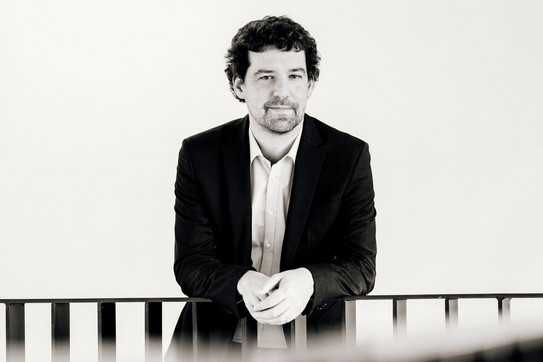
Max Martin Hansmann is a Full Professor in the Department of Organic Chemistry at the Faculty of Chemistry and Chemical Biology, TU Dortmund University. His research group focuses on the synthesis of redox-active organic molecules and their applications in photo-catalysis and redox-flow batteries. He leads an active research team with multiple PhD students and postdoctoral researchers. Professor Hansmann's research interests span synthetic organic chemistry with significant overlap into main-group chemistry, spectroscopy, electro-chemistry, and computational studies. His group is particularly known for work on strong carbon-based donor ligands (including mesoionic olefins), unusual heterocycles like azaphosphinines, and novel radicals and diradicaloids. Current research directions include developing new reagents for organic synthesis, exploring C-C bond polarization strategies, and investigating photo-physical properties for applications in singlet-fission. Hansmann has secured substantial research funding including an ERC Starting Grant for the CC-CHARGED project, funding from the DFG Emmy-Noether program, and participation in the DFG SPP 2248 program for organic polymer batteries. His group is also a member of the Cluster of Excellence 'RESOLV' focusing on solvation effects in chemistry. Klung-Wilhelmy Science prize ORCHEM award of the Liebig association of the German Chemical Society Dozentenpreis des Fonds der chemischen Industrie ADUC prize of the GDCH Ernst-Haage prize 2021 of the Max-Planck-Institute Member of Science of Synthesis Early Career Advisory Board Member of Organic Chemistry Frontiers Early Career Advisory Board Professor Hansmann actively mentors PhD students including Yijie (from Nanjing University with CSC scholarship), Justus, Patrick Antoni, and others. His group has established international collaborations, including with researchers at Tohoku University in Japan. The Hansmann group regularly participates in major conferences such as ORCHEM and ESOC, with team members frequently receiving presentation awards. The research group operates within the Department of Organic Chemistry at TU Dortmund University, with laboratory facilities on campus. The group maintains active collaborations with other research groups both within Germany and internationally, including joint projects with the Theatό group at KIT and Bresser group at Helmholtz Ulm.