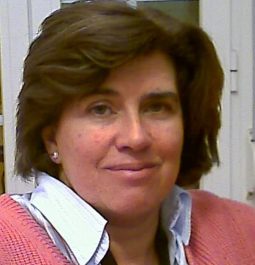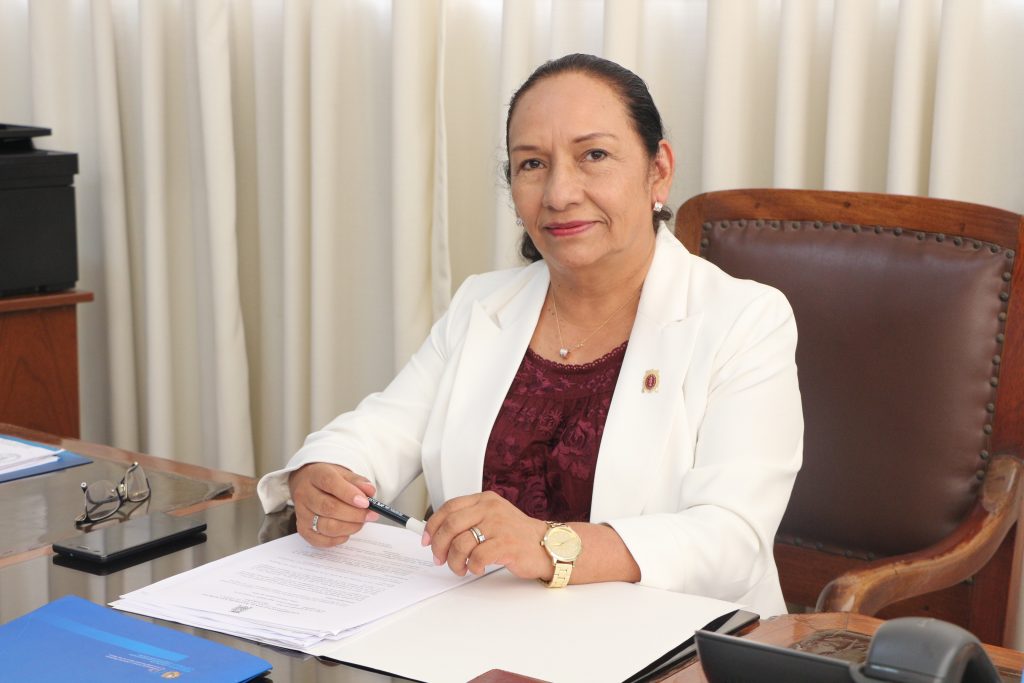
Dr. Lilia Salomé Llanto Chávez serves as Director of the Professional School of Languages and Senior Lecturer in the Department of Linguistics at the National University of San Marcos (UNMSM), Faculty of Letters and Human Sciences. Her leadership extends to directing the Research Institute of Applied Linguistics (CILA, 2012-2016) and coordinating the Center for Studies on Dialogue, Systematization, and Intercultural Exchange of Knowledge (NEDSIIS). Her academic credentials include: Master's and doctoral studies in Linguistics from UNMSM and University of São Paulo (USP) Second Specialization Diploma in Intercultural Bilingual Education Postgraduate diploma in Neurolinguistics Dr. Llanto Chávez's research critically examines Andean and Amazonian Peruvian native languages through cognitive semantics frameworks, as demonstrated in her book Pacha, on Quechua Polysemy . Her work bridges neurolinguistics with practical applications in bilingual education for indigenous communities (Asháninka, Yanesha, Nomatsiguenga), while advancing Portuguese pedagogy through publications like Oi Gente and her chapter in Fundamentos do Ensino de Português . This interdisciplinary approach integrates language preservation with educational policy implementation across rural Peru. She has directed UNMSM's Language Program across five administrative periods (1998-2016) and led the MINEDU-affiliated Specialization Program for Teachers of Hispanic Intercultural Bilingual Education (2014-2017). Her 2009-2014 Decentralized Program for Bilingual Teachers in Central Selva established foundational training methodologies now used nationwide. As a Harvard-affiliated Laspau program participant (2016), she contributes to academic leadership development. Through NEDSIIS and CILA, she spearheads collaborative research frameworks connecting UNMSM with indigenous knowledge systems. These centers facilitate intercultural knowledge exchange while documenting endangered languages, directly supporting Peru's Prior Consultation processes through her interpreter training workshops.