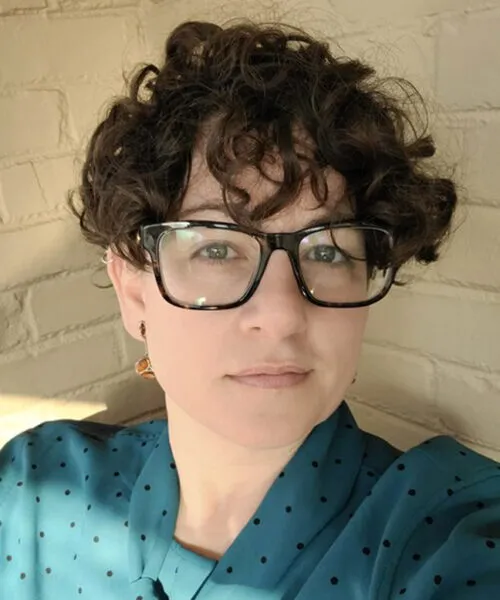
Jenny L. Davis is an Associate Professor at the University of Illinois, Urbana-Champaign in the Department of Anthropology , American Indian Studies Program , and Gender and Women's Studies . As a citizen of the Chickasaw Nation, her work focuses on Indigenous language futurism , Queer Indigenous Studies , and decolonizing research ethics . Her research has been published in leading journals including: Annual Review of Anthropology American Anthropologist Journal of Linguistic Anthropology Award-winning author of Talking Indian (2018) and co-editor of Queer Excursions (2014), she has received: Beatrice Medicine Award (2019) Ruth Benedict Book Prize (2014) Dynamic Woman of the Year - Chickasaw Nation (2021) She leads the NAGPRA & Ethics course, co-chairs the campus NAGPRA Advisory Committee , and directs the Native American and Indigenous Languages (NAIL) Lab , focusing on: Language reclamation technologies Indigenous community partnerships Anti-colonial research frameworks
Gunnar Kratz is a Professor at Linköping University, affiliated with the Department of Biomedical and Clinical Sciences (BKV) and the Division of Surgery, Orthopedics and Oncology (KOO). He is part of the Wallenberg Centre for Molecular Medicine (WCMM), focusing on medicine-technology interfaces in medical technology, materials science, and bioengineering. His research spans plastic and reconstructive surgery, wound healing mechanisms, antimicrobial treatments, and tissue engineering. Key areas include gender-affirming surgical techniques, cell transplantation using biodegradable scaffolds, and the role of amniotic fluid in keratinocyte behavior. Kratz has contributed to studies on hyaluronic acid's effects on wound healing, novel antimicrobial debridement methods, and ex vivo/in vivo wound models. His work bridges clinical surgery with advanced biomaterials and regenerative medicine. Research interests prominently feature interdisciplinary collaboration, with a focus on translating lab innovations into clinical applications. He has published extensively on topics like gelatin microcarrier-based cell delivery systems, CFSE tracking of transplanted cells, and the analysis of human fibroblast/keratinocyte secreted factors. Kratz’s affiliations include the WCMM at LiU and BKV’s Faculty of Medicine and Health Sciences, emphasizing both clinical and basic research. Notable contributions include a 2019 retrospective study comparing metoidioplasty and phalloplasty outcomes in female-to-male gender-confirming surgery. His 2021 work on autologous cell transplantation via porous gelatin microcarriers highlights advancements in wound healing strategies. Recent studies (2023-2024) explore biphasic bioinks, amino acid-buffered hypochlorite for infected burn wounds, and the role of amniotic fluid in keratinocyte gene expression. Labs/Teams: Active in WCMM’s molecular medicine initiatives and the BKV division’s surgical oncology and orthopedics research programs. Collaborations emphasize bioengineering solutions for clinical challenges in reconstructive surgery and chronic wound management.
Thomas Lemberger is a researcher in the Department of Computer Science at Ludwig-Maximilians-Universität München (LMU Munich), contributing to the Software and Computational Systems Lab. He specializes in software verification, formal methods, and automated testing, with a focus on improving tool efficiency and scalability. His work includes extensions to CPAchecker, such as distributed summary synthesis and cooperative verification approaches, as well as developing user-friendly tools like CoVeriTeam GUI. His research interests involve integrating verification into build systems and IDEs, optimizing verification workflows, and exploring hybrid techniques that combine testing and formal methods. He has actively participated in competitions like SV-COMP and Test-Comp, contributing tools like PRTest and Nacpa. His projects aim to reduce tool restarts, enhance fault localization, and streamline verification processes through parallel portfolio analyses. Thomas mentors students on topics related to verification tool development, test-case generation, and open-source software. His contributions are supported by grants from the DFG (CONVEY, COOP, IDEFIX), emphasizing cooperative verification and scalable analysis. Recent work focuses on enabling developers to use verification tools seamlessly within their existing workflows.
Prof. Dr. Frauke Melchior is the Rector of Heidelberg University, overseeing strategic development, fundraising, and governance. Previously, she held the position of Professor (W3) for Molecular Biology at the Center for Molecular Biology of Heidelberg University (ZMBH). Her research focuses on posttranslational SUMOylation, elucidating its role in cellular stress responses, protein regulation, and disease mechanisms. Key roles include Dean of the Faculty of Biosciences (2016-2018) and leadership in collaborative research initiatives such as the CellNetworks Excellence Cluster. Education: PhD in Chemistry (1990), Philipps-Universität Marburg Chemistry Diploma (1987), Philipps-Universität Marburg Research Interests: SUMOylation pathways, cellular adaptation to environmental changes, protein modification dynamics, and translational pharmacology. Her work has advanced understanding of SUMOylation’s role in health and disease, highlighted by publications in EMBO Reports , Nature , and Annual Review of Biochemistry . Awards include the FEBS/EMBO Women in Science Award (2018) and membership in the Leopoldina (2014). She has advised numerous research programs and holds leadership roles in academic governance and international scientific bodies. Labs/Teams: ZMBH Molecular Biology Group, collaborations with DKFZ-ZMBH Alliance and Max Planck Institutes.
Dr. Dustin Flanagan is a NHMRC Senior Research Fellow at the Monash Biomedicine Discovery Institute, leading the Cell Competition and Niche Signalling Laboratory in the Department of Biochemistry and Molecular Biology. His research focuses on stem cell biology, gastrointestinal cancers, and Wnt signaling pathways. He received his PhD in Gastrointestinal Biology from the University of Melbourne (2016) and conducted postdoctoral work at the CRUK Beatson Institute. His lab investigates stem cell regulation using genetically engineered mouse models (GEMMs) and 3D organoids, integrating advanced techniques like single-cell RNAseq and proteomics. He leads an active project (2022-2026) on gastric cancer mechanisms. Notable awards include the Metcalf Prize for Stem Cell Research (2023) and the Monash BDI Cancer Program MCR Shining Star award (2023). Education: Bachelor's with First-Class Honours, University of Melbourne (2008) PhD in Gastrointestinal Biology, University of Melbourne (2016) Research Interests: Stem cell dynamics, cell competition, intestinal and gastric tumorigenesis, Wnt signaling, and organoid modeling. His work bridges basic science and translational applications, aiming to develop therapies for gastrointestinal cancers. Recent Articles: Focus on hepatitis B virus infection modeling, NOTUM inhibition in colorectal cancer, and BCL-3’s role in DNA repair. These studies highlight his lab’s contributions to understanding cancer initiation and therapeutic targets. Grants & Awards: NHMRC Investigator Grant (2021) Metcalf Prize (2023) Monash BDI Award (2023) Labs/Teams: Directs the Cell Competition and Niche Signalling Lab, collaborating internationally on gastrointestinal cancer research.
Professor Fabio Variola holds a joint academic appointment at the University of Ottawa as a Professor in the Department of Mechanical Engineering , cross-appointed in the Departments of Physics (Faculty of Science) and Cellular and Molecular Medicine (Faculty of Medicine) . He earned his BEng and MEng from the University of Trieste (Italy) and a PhD from a joint program at the Institut National de la Recherche Scientifique-Énergie, Matériaux et Télécommunications (INRS-ÉMT) and Université de Montréal . His research focuses on developing micro- and nano-structured biomaterials to control cellular responses for applications in tissue engineering , medicine , and biophysics , with an emphasis on understanding how cells interact with physicochemical environments. Research interests include biomedical engineering , biomaterials , biophysics , nanotechnology , and regenerative medicine . His work spans surface engineering of titanium implants , nanocomposite hydrogels , plasmonic carbon materials , and 3D in vitro disease models . Recent studies explore applications in neuroengineering , cardiac tissue repair , and targeted cancer therapy . Key research trends in his articles include laser-material interactions , biomaterial-cell interfaces , and nanostructured materials for medical devices . His work bridges materials science and biomedical applications , with a focus on in vitro and in vivo validation of novel materials. Professor Variola has no listed scientific awards but maintains a prolific publication record. His research group collaborates across departments at the University of Ottawa and international institutions. He advises students in interdisciplinary biomaterials and biomedical engineering, though specific advisee names are not publicly listed.
Yiannis Charalambous is a PhD researcher in the Department of Computer Science. His work focuses on the intersection of Large Language Models (LLMs) , Formal Verification , and Software Security . Key Research Areas: Automated Program Repair, Formal Verification, Large Language Models, Software Security, Artificial Intelligence, Neural Networks, Fuzzing His recent research explores self-healing software architectures by integrating LLMs with formal verification techniques. This work has significant implications for improving software reliability and security through automated repair mechanisms . Analysis of his publications reveals a consistent focus on leveraging neural architectures (e.g., transformers) for program verification and security enhancement. The research emphasizes both theoretical foundations and practical implementations of AI-driven software repair systems.
Andrew Phillips is a Professor in Structural Biomechanics at Imperial College London's Department of Civil and Environmental Engineering within the Faculty of Engineering. He leads the Structural Biomechanics Group and coordinates the MEng Civil Engineering degree program. His research focuses on musculoskeletal modeling, finite element analysis, and bioinspired structures. Phillips holds a PhD from the University of Edinburgh (2005) and an MEd from Imperial College (2014). Key affiliations include the Additive Manufacturing Network, Centre for Blast Injury Studies, and Musculoskeletal Medical Engineering Centre. His work integrates computational methods with biomechanical principles, addressing topics like bone adaptation, trauma injury effects, and wearable sensor technologies. Notable contributions include developing motoneuron-driven muscle models and synthetic motion capture datasets via generative adversarial networks (GANs). Phillips also organizes the Parametric Engineering Course with Arup and SimplyRhino. Recent publications emphasize bone health in amputees, neural drive estimation, and energy-absorbing metamaterials. His 2018 European Society of Biomechanics SM Perren Award recognizes outstanding contributions to hip dysplasia biomechanics. Research trends highlight interdisciplinary approaches merging machine learning with traditional biomechanics to solve clinical and engineering challenges.
Kristine N. Williams serves as the E Jean Hill Professor at the University of Kansas School of Nursing, where she has established herself as a leading researcher in gerontological nursing and dementia care. With over two decades of experience since joining the faculty in 2001, she has developed a robust research program focused on improving communication between healthcare providers, family caregivers, and older adults with dementia. Dr. Williams earned her PhD in Gerontology from the University of Kansas in 2001 and completed her MS in Nursing as a Family Nurse Practitioner at the University of Connecticut in 1983. She maintains her ANCC certification as a Family Nurse Practitioner and has extensive clinical experience in community and home health nursing settings. Her research program centers on enhancing care for older adults through innovative approaches to communication, cognitive training, and technology applications. She's particularly renowned for her groundbreaking work on 'elderspeak' - identifying how infantilized speech patterns affect dementia care outcomes. Her research has evolved to include developing and testing practical interventions like the Changing Talk communication education program and FamTechCare telehealth system that directly address communication challenges in dementia care settings. Analysis of Dr. Williams' recent publications reveals a consistent focus on communication dynamics in dementia care across multiple settings. Her work spans nursing homes, hospitals, and home care environments, with particular attention to mealtime interactions, mask-wearing communication challenges, and technology-assisted caregiver support. The research demonstrates a progression from identifying communication problems to developing and implementing practical solutions that can be scaled across care settings. Midwest Nursing Research Society John A. Hartford Award for Gerontological Nursing Leadership Fellow of the Gerontological Society of America (FGSA) Fellow of the American Academy of Nursing (FAAN) Dr. Williams has secured continuous NIH funding since 2005, including R03, K12, CTSA, R21, R34, R61, and R01 mechanisms, demonstrating sustained research productivity. She has collaborated on over 15 studies as co-investigator or consultant, often partnering with interdisciplinary teams across nursing, gerontology, communication sciences, and technology development. Her leadership extends to serving on NIH scientific review panels, editorial boards, and professional organization boards, significantly influencing dementia care research directions nationally. Her work has directly led to the development of evidence-based communication education programs implemented in nursing homes nationally, particularly the Changing Talk Online (CHATO) training system. Through her research, she has established practical interventions that bridge the gap between research findings and clinical practice in dementia care settings.
Professor Anna Paradowska is a Conjoint Professor in Advanced Structural Materials at the University of Sydney's School of Civil Engineering and School of Aerospace, Mechanical and Mechatronic Engineering. She also serves as Industrial Engagement Manager at the Australian Centre for Neutron Scattering (ACNS) at ANSTO. As Node Leader and Program Leader of the $250M Australian Composites Manufacturing Cooperative Research Centre (ACM CRC), her research focuses on advanced materials, residual stress analysis using neutron diffraction, and additive manufacturing. Education: PhD in Mechanical Engineering from Monash University (2008) MSc in Materials Science Engineering from Wrocław University of Technology (2001) Research Interests: Advanced structural materials, residual stress measurement techniques, welding and additive manufacturing, neutron scattering, and condensed matter characterization. Her work bridges academic research and industry applications, emphasizing collaboration with global partners. Recent Research Trends: Her publications emphasize residual stress analysis in manufacturing processes, additive manufacturing optimization, and material characterization for engineering applications. She frequently collaborates on studies involving neutron diffraction and synchrotron techniques. Awards: Dean's Award for Excellence 2021 (ECR/MCR Research Leadership) Sir George Julius Medal 2020 ANBUG Neutron Award 2020 Advising & Grants: Supervises PhD students on projects like laser cleaning for infrastructure and 3D-printed steel structures. She has secured grants from ARC, CRC, and international agencies. Current projects include opportunities for female PhD students in advanced construction materials. Labs & Teams: Leads the Sydney Node of ACM CRC and collaborates with ACNS, ANSTO, and industry partners to advance composites manufacturing and neutron scattering applications.
Dr. León Poblete serves as an Associate Professor at Uppsala University's School of Business and Economics and as a Senior Research Fellow at the University of Sydney Business School. His academic career spans multiple institutions including Chalmers University of Technology, Södertörn University, and BI Norwegian Business School. Dr. Poblete holds a Ph.D. and M.Sc. in Business and Economics from Uppsala University, with portions of his doctoral studies conducted at Harvard University's Kellogg School of Management and the University of Michigan. His research focuses on interorganizational relationships and complex industrial networks, with the aviation industry serving as a primary empirical context. His publication record demonstrates consistent contributions to leading business journals including Industrial Marketing Management, Long Range Planning, Journal of Business Research, and Harvard Business Review. His research trajectory shows a clear focus on relationship reactivation processes, beginning with his 2017 doctoral dissertation on defense industry relationships and continuing through recent publications examining business operations after disruptions and relationship reconstitution. Challenges with collaboration in infrastructure construction (2024) Value co-creation in well-being ecosystems (2023) Resuming business operations after hiatus (2022) Reconstitution of broken interfirm relations (2021) Dr. Poblete has received recognition for guiding students to win the global L'Oréal Brandstorm competition in 2021. His teaching spans multiple programs including the Master Programme in Business and Economics at Uppsala University, the Master Programme in Sociotechnical Systems Engineering, and various programs at Chalmers University of Technology and Stockholm University. Notably, Dr. Poblete also serves as Venezuela's ambassador to Sweden appointed by interim president Juan Guaidó, frequently contributing to Swedish media discussions about Venezuelan politics and re-democratization processes. This dual role creates a unique intersection between his academic expertise in relationship reactivation and his practical political work.
Caius Gabriel Radu is a Professor in the Department of Molecular and Medical Pharmacology and the Department of Surgery at the University of California Los Angeles (UCLA) School of Medicine. His research program focuses on understanding fundamental biological processes at the interface between metabolic and signal transduction networks in cancer, immune cells, and stromal cells, with the goal of developing new diagnostic and therapeutic approaches. Dr. Radu's research expertise spans cancer immunobiology, immunotherapy, nucleotide metabolism, and molecular imaging. His laboratory has established a highly integrated research program that includes state-of-the-art instrumentation for Positron Emission Tomography (PET) and Mass Spectrometry platforms for metabolomics, proteomics, and phosphoproteomics. His interdisciplinary team collaborates with experts across UCLA and other institutions in molecular imaging, cancer metabolism, immunobiology, signal transduction, structural biology, radiochemistry, medicinal chemistry, and virology. Dr. Radu's research has led to significant discoveries, including uncovering a new role for the nucleoside salvage pathway in hematopoiesis, developing new PET probes for nucleotide metabolism (some of which have been translated to clinical use), and discovering novel small molecule inhibitors of metabolic kinases. One of these inhibitors has entered Phase I clinical trials (NCT05055609) for selected solid tumors and autoimmune disorders. His work also focuses on the immunobiology of pancreatic and prostate cancers, seeking to identify novel immunometabolic checkpoints that could be pharmacologically modulated alone or in combination with other therapies. Challenge Award, Prostate Cancer Foundation, 2017-2019 Challenge Award, Prostate Cancer Foundation, 2019-2021 Dr. Radu is currently Principal Investigator or Multiple Principal Investigator on multiple NIH-funded research projects, including studies on innovative mRNA vaccines for solid tumors, adenosine signaling in pancreatic cancer, PSMA-targeted radiopharmaceutical therapy, and targeting KRAS and adenosine-mediated immunosuppression. In collaboration with Dr. Norbert Pardi at UPenn, he has established a platform for evaluating mRNA lipid nanoparticle platforms for cancer immunotherapy.
Dr Sally Eales is a Research Fellow at POLIS: The Centre for Social Policy Research, Australian National University. She holds a PhD in English and Sociocultural Linguistics and specializes in Restorative Justice, Courts and Crime Policy, and Critical Discourse Analysis. Education PhD in English and Sociocultural Linguistics Research Focus Her work examines restorative justice practices, gender dynamics in court systems, and assisted dying policy. She employs critical discourse analysis to explore sociolinguistic dimensions of legal and social policies. Key Projects Weaving Repair: Restorative Justice Program for Young People (2025–2026) Service Provision of Adult Restorative Justice Across Queensland (2023–2024) Literature Review on Women and Girls in Court Services (2023–2024) Collaborations Active collaborations with researchers like Prof. Rossner, Dr. Bartels, and others in criminology and social policy domains.
Eishi Noguchi is a Professor in the Department of Biochemistry and Molecular Biology at Drexel University College of Medicine and Director of the Molecular & Cell Biology & Genetics (MCBG) Graduate Program. He also directs courses in Molecular & Cellular Biology & Genetics and Cell Cycle & Apoptosis. His research focuses on genome maintenance mechanisms, cancer, and aging, using mammalian cells and the fission yeast Schizosaccharomyces pombe . Education: PhD in Molecular Biology (Kyushu University, Japan, 1997) followed by postdoctoral research at The Scripps Research Institute (2000-2004). Research Interests: Investigates DNA replication challenges at difficult chromosomal regions, alcohol-induced carcinogenesis, and lifespan extension via genomic integrity preservation. Current projects include mechanisms of alcohol-mediated esophageal cancer, replication fork stability, and calorie-restricted lifespan regulation. Scientific Awards: Includes the 2022 Elias Abrutyn Mentoring Award, 2018 Faculty Launch Leadership Fellowship, and 2009 Young Investigator Award. Recognized for contributions to mentoring and cancer research. Teaching & Advising: Supervises numerous graduate students and postdocs. Notable advisees include Jasmine Peake (Assistant Professor at Lincoln University) and Adam Leman (Lead Scientist at The Good Food Institute). Labs & Affiliations: Leads the Noguchi Lab, part of the Aging Initiative at Drexel Med. Collaborates with interdisciplinary teams across departments and institutions, advancing research in replication stress and environmental genotoxicology.
Filiz Tepekoy serves as Lecturer in Biomedical Science with specialization in Histology at the College of Science and Engineering. Her research program centers on cellular mechanisms in reproductive biology, particularly proteolytic processes during oocyte maturation. Recent publications investigate signaling pathways in gamete development and stem cell applications. Research domains include: Molecular regulation of oocyte maturation and fertilization Wnt signaling pathways in reproductive tissues Stem cell differentiation and therapeutic applications Histological analysis of reproductive systems Her publication record demonstrates consistent focus on fundamental reproductive mechanisms, with recent work examining kinase regulation in oocyte development (2023) and PIP2 signaling effects (2020). Technical expertise spans immunohistochemistry, cell culture, molecular biology techniques, and histological analysis across multiple model systems.