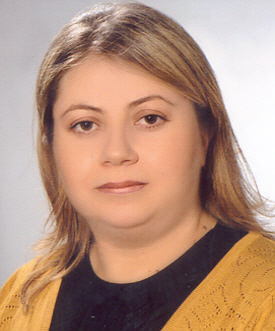
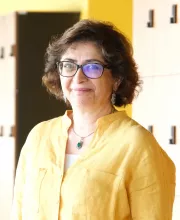
Gizem Kayişoğlu is an Assistant Professor in the Department of Maritime Transportation and Management Engineering at Istanbul Technical University. Her research focuses on cybersecurity challenges in maritime systems, human error probability, and risk assessment methodologies. She actively explores vulnerabilities in shipboard systems such as ECDIS, VDR, and radar while emphasizing regulatory compliance and maritime safety standards. Her work integrates frameworks like CORAS, Fuzzy FUCOM, and SLIM to address cybersecurity dynamics and human factors in maritime operations. Key collaborations involve analyzing ransomware threats, AIS system vulnerabilities, and port infrastructure protection through interdisciplinary approaches. Her articles highlight trends in maritime cybersecurity, including ransomware mitigation, cyber hygiene practices, and critical infrastructure protection. She has contributed to developing risk assessment tools and checklists tailored for maritime environments, emphasizing both technological and human aspects of safety. No scientific awards have been explicitly mentioned. She has not listed formal advisees, and her professional activities focus on advancing maritime cybersecurity through academic and applied research.
Assoc. Prof. Dr. Sema Alaçam Doğan has been affiliated with Istanbul Technical University since 2014, serving as an Associate Professor in the Department of Architecture . She has held administrative roles including Deputy Head of Department and Erasmus Coordinator. Education : PhD in Informatics in Architectural Design (2008-2014), MS in Informatics in Architectural Design (2005-2008), and BS in Architecture (1999-2005) from Istanbul Technical University. Her research explores Computational Design , Artificial Intelligence in Architecture , and Sustainable Material Innovation . She investigates digital tools for heritage preservation, daylight optimization in BIM, and cognitive development in architecture students. Recent publications analyze AI-assisted design literacy , machine learning for Sinan mosques , and environmental comfort in Harran houses . Her work integrates algorithmic frameworks with sustainable practices. Scientific awards include multiple ITU Publication and Performance Awards (2021-2024), FABFEST Prizes , and the 2024 Artemis Educator Award from NASA. Active projects like "Physical Computation in Architectural Drawing" and "Robotic Fabrication with Recycled Wind Turbine Blades" demonstrate her leadership in computational and sustainable research.
Prof. Sadettin Emre Alptekin is a full Professor of Industrial Engineering at Galatasaray University, Faculty of Engineering and Technology, where he also serves as Vice Dean. Since joining the university as a research assistant in 2000, he has steadily advanced through the academic ranks, becoming an Assistant Professor (2006–2010), Associate Professor (2010–2023), and finally Professor in 2023. Education: PhD (Dr), Industrial Engineering, Istanbul Technical University, Institute of Science and Technology, 2001–2006 MSc, Industrial Engineering, Galatasaray University, Faculty of Engineering and Technology, 1999–2001 BSc, Industrial Engineering, Istanbul Technical University, Faculty of Management, 1995–1999 Languages: Advanced English (C1), Upper-Intermediate French (B2), Advanced German (C1) Research Interests: Prof. Alptekin’s research focuses on Computer Learning , Fuzzy Sets and Systems , and Decision Support Systems . His work integrates artificial intelligence, machine learning, and soft-computing techniques to solve complex industrial and managerial problems in areas such as supply chain management, quality function deployment, blockchain adoption, and mental-health prediction. Publication Trends: Across more than 50 refereed publications, Prof. Alptekin has consistently explored hybrid intelligent models that combine fuzzy logic, machine learning, and multi-criteria decision-making. Recent articles emphasize deep-learning-based anomaly detection in industrial time-series data, blockchain adoption in supply chains, and machine-learning applications in subjective well-being and mental-health modeling. Scientific Awards & Honors: No specific awards or medals are listed in the provided documents. Research Leadership & Funding: Since 2008 he has been the principal investigator (executive) of 12 nationally funded projects, covering topics such as Industry 4.0 sub-system design, Internet of Things applications, artificial neural networks in organizational decision-making, big-data analytics, and strategic decision processes. Graduate Advising: He has formally supervised at least 8 master’s theses and numerous undergraduate projects. Representative thesis titles include Gaussian-process-regression-based man-hour prediction, machine-learning-driven human-behavior modeling, recommender-system design for e-commerce, thyroid-nodule diagnosis from scintigraphic images, software-effort estimation via neural networks, spreadsheet heuristics for joint-replenishment problems, cross-selling decision systems in insurance, and profitability analyses of Turkish banks under disinflation. Laboratories & Teams: While no dedicated laboratory name is disclosed, his continuous role as Vice Dean and principal investigator implies active leadership of the Industrial Engineering department’s research clusters in intelligent systems and decision support technologies.
Prof. Dr. Ercan Yüksel is a full Professor in the Department of Civil Engineering at Istanbul Technical University (ITU), College of Engineering. He has been a faculty member at ITU since 1990, progressing from Assistant Professor to Professor in 2017. His research focuses on earthquake engineering, structural dynamics, and numerical modeling, with applications in seismic design, energy dissipation, and structural health monitoring. PhD, Civil Engineering, Istanbul Technical University MS, Structural Engineering (with thesis), Istanbul Technical University BS, Civil Engineering, Istanbul Technical University His research interests are centered on earthquake engineering , particularly seismic input energy analysis , energy dissipation systems , reinforced and precast concrete structures , and seismic isolation . He actively investigates the dynamic behavior of structures under earthquake loads and develops innovative solutions for improving structural resilience. His work integrates advanced numerical modeling with experimental validation. Recent publications (2023–2025) highlight a strong focus on energy-based seismic design, performance of mechanical couplers, damping systems for high-voltage insulators, and fatigue behavior of railway tracks. These works are closely tied to real-world seismic events like the 2023 Kahramanmaraş earthquake, demonstrating applied and impactful research. His scientific recognition includes: Notable Work Award, Turkish Academy of Sciences (TÜBA), 2012 Golden Beam Award, Turkish Prefabricated Association, 2011 Prof. Yüksel is an active Principal Investigator on multiple research projects funded by ITU’s BAP program, covering topics such as smart sleepers for railway monitoring, novel seismic input energy spectra, and earthquake isolation for racking systems. He has supervised numerous theses and is involved in professional organizations including UNESCO-IPRED and the Turkish Earthquake Foundation. He leads research on structural health monitoring of ballasted railway lines using smart sleeper technology and is developing earthquake isolation systems for industrial storage racks. His lab integrates experimental testing with numerical simulation to validate new structural components under cyclic and biaxial loading.
Prof. Dr. Menelaos Gkartzios is a distinguished academic affiliated with the Department of City and Regional Planning at Middle East Technical University , with extensive experience at institutions including Newcastle University , Izmir Institute of Technology , and University College Dublin . He has served as a Visiting Professor at Tongji University and contributes to editorial boards such as Habitat International and Journal of Rural Studies . Education: PhD in Regional & Urban Planning, University College Dublin (2008) MSc in Environmental Resource Management, University College Dublin (2003) MAgrSc in Agricultural Economics & Rural Development, Agricultural University of Athens (2002) PGCert in Advanced Studies in Academic Practice, Newcastle University (2014) Research Focus: His work bridges sustainable rural development , urban-rural dynamics , and the cultural dimensions of place-making . Key themes include counterurbanisation , rural mobilities , and artistic practice in planning . Publication Trends: Recent articles and books examine climate-driven migration , community co-creation , and rural housing paradoxes . His scholarship spans interdisciplinary frameworks, merging rural sociology , geography , and planning theory . Leadership Roles: He co-leads the AESOP Thematic Group on Rural Planning and contributes to global planning discourse through edited volumes like The Routledge Companion to Rural Planning .
Tuğba Dalyan is an Associate Professor in the Department of Computer Engineering at Istanbul Bilgi University, Faculty of Engineering and Natural Sciences. She holds a Ph.D. in Computer Engineering from Yıldız Technical University (2014), an MSc from Kocaeli University (2007), and dual BSc degrees in Mathematics and Computer Science and Business Administration (Minor) from Istanbul Bilgi University (2003). She has been a faculty member since 2016 and previously served as a Teaching Staff member and Research Assistant at the same institution. Her research focuses on Natural Language Processing , Machine Learning , Deep Learning , Text Mining , Data Science , and Big Data Analytics . Her work spans computational linguistics, sentiment analysis, author profiling, machine translation, and smart systems. She has led and contributed to numerous research projects, particularly in AI-driven urban solutions and health technologies. The most recent publications show a strong trend in Turkish NLP, zero-shot classification, multimodal AI (image captioning), emotional robotics, and decision support systems using fuzzy logic. Her work combines theoretical rigor with practical applications in smart cities, education, and healthcare. Best Paper Award , CICLing 2012 TÜBİTAK 2209-A student project awards (2022–2024) Horizon2020 Eşik Üstü Ödülü , MIMOSCSA 2024 TÜBİTAK 2242 competition: 2nd and 3rd place (2016, 2018) She has advised numerous student research projects, many of which have received national recognition. She has directed multiple TÜBİTAK and institutional research grants, including projects on smart homes, blockchain crowdfunding, mental health, and AI for social polarization. Her leadership roles include Head of Department, Vice Dean, and Director of Graduate Programs. Tuğba Dalyan leads research in AI and NLP with a strong emphasis on Turkish language technologies. She is involved in interdisciplinary teams working on emotional robots, smart city platforms, and citizen science ecosystems. Her lab activities focus on neural networks, text analysis, and intelligent systems development.
İsmail Eren Kürkçüoğlu is an Assistant Professor at the Department of Urban and Regional Planning, Faculty of Architecture, Istanbul Technical University. With a PhD in Urban and Regional Planning (2009) and a Master's in Urban Space Organization and Design (2006), his academic career spans over 15 years at ITU, including roles as Doctor Lecturer (2018–present), Web Commission Member (2018–2021), and Deputy Head of Department (2020–2022). He also served as Visiting Researcher at the University of Georgia's College of Environment and Design (2014–2015). Educational Background: PhD in Urban and Regional Planning (2009), Istanbul Technical University Master's in Urban Space Organization and Design (2006), Yıldız Technical University Bachelor's in Architecture (2003–2008) and Urban and Regional Planning (2001–2005), Yıldız Technical University Research Focus: Specializing in urban morphology and design, his work examines spatial psychology, pedestrian-environment interactions, and the role of water elements in urban perception. Key projects include analyzing İstiklal Street's micromovement patterns, assessing Balat's safety perception, and exploring Istanbul's historical city walls. Scientific Contributions: His research spans five peer-reviewed publications, including three 2025 articles on Istanbul's urban spaces and a 2020 study on square perception. These works integrate socio-spatial analysis, behavioral studies, and sensory urbanism. Awards: 5th Honorable Mention (2009) in Denizli Government Office Architectural Project Competition Purchase Award (2008) for Sarıkamış Operation Memorial Areas Idea Competition Professional Affiliations: He contributes to academic governance as a member of the Double Major and Minor Program Committee (2018–2021) and coordinates design workshops at ITU.
Mustafa ÇETİN serves as an Assistant Professor at the Department of Philosophy and Religious Sciences within the Faculty of Theology at Artvin Coruh University, Turkey, since 2023. His academic work bridges critical theory with practical religious pedagogy, focusing on transformative approaches to Islamic education in contemporary Turkish contexts. His educational background includes: PhD in Philosophy and Religious Sciences, Recep Tayyip Erdogan University (2014-2022) Master's in Philosophy and Religious Sciences, Recep Tayyip Erdogan University (2011-2013) Bachelor's in Theology (distance education), Ankara University (2008-2010) ÇETİN's research centers on critical pedagogy in religious education, examining intersections with character development, historical philosophy (particularly Rousseau), and spiritual formation. His work challenges conventional frameworks through critical analysis of Turkish religious curricula and Ottoman educational texts, while exploring democratic values in theology programs. Recent scholarship investigates accreditation standards for Islamic studies and archetypal representations of religious educators. His eight publications (2012-2024) reveal an evolving trajectory from foundational studies on democratic attitudes to contemporary analyses of program accreditation, unified by a commitment to decolonizing religious pedagogy. Key trends include applying critical theory to Turkish religious education contexts and historical-spiritual dimensions of Islamic pedagogy. Recognition includes: Young Scientist and Artist Award, Kocaeli University (2009) He has secured significant research funding including TÜBİTAK project "Grounding Religious Education on Critical Pedagogy" (2018) and ethnographic study "Artvin Folk Beliefs" (2012). His teaching portfolio spans graduate courses like "Posthumanism and Religious Education" and undergraduate instruction in character education, critical thinking, and teaching methods, reflecting applied commitment to pedagogical innovation. Professional development contributions include national workshops on digital learning methodologies and religious education techniques, extending his scholarly impact to practitioner communities.
Assoc. Prof. Dr. Sibel Polat is an Associate Professor at Kafkas University State Conservatory, Department of Turkish Folk Music, specializing in vocal pedagogy and ethnomusicology. With a PhD in Music Sciences from İnönü University and Master's degree in Musicology from Atatürk University, she has established herself as a leading scholar in Turkish traditional music education and preservation. Her research focuses on vocal training methodologies, particularly through her innovative 'Polat Vocal Exercises' series across various voice types (Soprano, Alto, Tenor, Bass), examining microtonal singing techniques within the Hicaz makam framework. She investigates cultural transmission in Turkish folk music, regional musical traditions of Eastern Anatolia, and the role of women in preserving intangible cultural heritage. Her work bridges academic research with practical performance applications. Prof. Polat's publication record demonstrates consistent scholarly output with 27 publications including journal articles, books, and conference proceedings. Her recent work includes ethnographic studies of local musicians in Kars region, analysis of Ahiska Turkish musical traditions in Erzurum, and critical examinations of vocal pedagogy practices in Turkish conservatories. Her research shows particular emphasis on practical applications for music education and cultural preservation. 2019 İKSAD Science Awards recipient Healthy Life Festival award (2013) As founder of the Kars-ı Dilbeste Community, she actively promotes regional folk music through performances and community engagement. Her work extends to cultural preservation projects, including documentation of endangered musical traditions in Sarıkamış district. She serves in leadership roles with Kars Ozanlar ve Şairler Derneği (Honorary President) and Turkish Red Crescent Kars Branch, demonstrating commitment to both academic and community service.
Prof. Dr. Emine Erçelebi is a full-time faculty member at Gaziantep University Faculty of Engineering, Department of Food Engineering . With over 25 years of academic experience, her research focuses on nanoemulsions, food preservation, and rheological properties of food systems. PhD (2007) : Food Engineering, Gaziantep University MS (2000) : Food Engineering, Gaziantep University BS (1997) : Food Engineering, Gaziantep University Her research program investigates: Stability and functionality of nanoemulsions for food applications Thermal degradation kinetics of natural food pigments Hydrocolloid effects on food rheology and texture Encapsulation techniques for bioactive compounds Physicochemical properties of fruit concentrates Recent publications demonstrate strong focus on nanoemulsions (2018-2024), fruit concentrate stability (2013-2020), and hydrocolloid applications (2016-2022). She has mentored 5 graduate students to completion and served as Domestic Erasmus Coordinator (2010-2014). Project Leadership : 2 completed research projects including a TÜBİTAK-funded study on protein-hydrocolloid systems Teaching : Delivers English-language courses in Analytical Chemistry, Instrumental Analysis, and Physical Properties of Foods (2014-2020)
Professor Seda Kundak at Istanbul Technical University's Faculty of Architecture is a leading expert in Disaster Risk Management , Urban Resilience , and Multi-hazard Impact Chains . She has served as Program Head, Deputy Head of Department, and Commission President at Istanbul Technical University's Urban and Regional Planning Department since 2010. PhD in Urban Planning (Istanbul Technical University) Research focus: Seismic Risk, Climate Change Adaptation, Disaster Logistics Her scientific work includes 21 research outputs (Scopus h-index: 94) analyzing earthquake scenarios, compound disasters, and systemic risk assessment. Recent articles explore Impact Chains frameworks and Istanbul's seismic risk dynamics. Awards : SRA Fellow (2022) SRA/Sigma Xi Distinguished Lecturer (2017) She leads the PARATUS Project (€2,064,375 budget) developing open-source tools for multi-hazard risk assessment and has completed 5 major research projects on disaster logistics since 2005.
Prof. Selim YAZICI is a Professor at the Department of Business Administration, Faculty of Political Sciences, Istanbul University. He has been actively involved in academic and managerial roles since 1993, including multiple terms as Head of Department and Deputy Head of Department , and serves on ethics committees and academic boards. Education: PhD (1999) and Master's (1994) in Business Administration from Istanbul University; BSc (1992) in Mechanical Engineering from Yildiz Technical University. Research Interests span Entrepreneurship , FinTech , Business Ethics , Organizational Behavior , Project Management , and Healthcare Management , with a focus on cultural and cognitive factors influencing organizational resilience and technological adoption. Recent Publications highlight trends in FinTech ecosystems , organizational governance , and design thinking applications for business models. His studies often integrate cross-sectoral analysis, especially in healthcare and financial services. Thesis Advisory includes mentoring 18 doctoral and 21 non-thesis Master's students on topics ranging from project culture to entrepreneurial potential . He has contributed to Technopark research projects and scientific consultancies for institutions like TARSİM . International Collaborations include Erasmus lecturing at Universität Hamburg (2007) and conference presentations in Turkey, Sweden, and the USA.
Prof. Dr. Mehmet TAŞDEMİR is a faculty member at Kirsehir Ahi Evran University's Faculty of Education, Department of Educational Sciences, specializing in Curriculum and Instruction. He has been a Full-Time Professor since 2016, following roles as Associate Professor (2011-2016) and Doctor Lecturer (2006-2011). His academic career spans over three decades, including administrative roles such as Department Head and Scientific Projects Coordinator. Education: PhD in Primary Education Curriculum and Instruction from Hacettepe University (1995); Master's in Educational Sciences from Gazi University (1988); Bachelor's in Educational Sciences from Gazi University (1985); Associate Degree in Classroom Teaching from Gazi University (1983). Research Interests: His work focuses on curriculum development, instructional design, educational assessment, and values education. He has extensively studied foreign language teaching, mathematics education, and inclusive practices in primary and secondary schools. Recent Publications: His 2025-2024 articles analyze community-centered curricula, problem-based learning models, and mind games in education. Trends include foreign language motivation, mathematics teaching methods, and values integration in school programs. Scientific Awards: TÜBİTAK Yayın Teşvik Awards (2010-2012) Advising: Mentored 23 theses (Master's and Doctoral) and collaborated with researchers like Figen Taşdemir and Cem Şahin on topics spanning educational psychology, curriculum theory, and instructional practices.
Tülay Yazar ÖZTÜRK serves as Assistant Professor and Head of both the Real Estate Development and Management Undergraduate Program and Customs Management Undergraduate Program at Yeditepe University. As a full-time academic staff member, she maintains an active office presence in TBF-Z04 with direct contact via tyazar@yeditepe.edu.tr and (0216)5780955. Education: 1978-1983: B.A. in Business Administration, Boğaziçi University, Faculty of Administrative Sciences 1991-1994: M.A. in Accounting and Finance (English-taught), Marmara University 2004-2007: Ph.D. in Banking and Finance, Kadir Has University Her research centers on International Trade Financing mechanisms and Real Estate Market dynamics, with specialized expertise in export revenue analysis for developing economies and macroeconomic housing sector evaluation. Current work examines intersections between trade policy frameworks and real estate valuation systems under evolving financial regulations. Publication trends reveal a strategic shift from foundational trade policy research (2008) toward contemporary real estate economics (2013-2022), culminating in macroeconomic housing analyses. Her scholarly output demonstrates consistent focus on Turkish market applications within global trade and property finance contexts. Dr. ÖZTÜRK led two significant EU-funded initiatives: the 2005 Leicester College collaboration on footwear industry education and the 2010-2012 INTELS-TR project advancing electronic international trade education systems. These projects highlight her applied research leadership in trade education infrastructure development.
Tülin Haşlaman is an Associate Professor at the Department of Elementary Education - Primary Education, TED University. She holds roles as a Coordinator and Vice Head of Department. Her teaching portfolio includes courses such as Instructional Technologies, Technology-Enhanced Language Learning, and Micro Teaching, reflecting her expertise in educational technology and pedagogical innovation. Her research focuses on ICT integration in education, self-regulated learning strategies, and teacher development. Notable areas of interest include the use of digital storytelling for computational thinking, infographics in supporting student autonomy, and smartphone addiction among university students. She has also studied the impact of social media platforms like Facebook on teacher training and the integration of ICT into teaching processes. Dr. Haşlaman’s work emphasizes bridging technology with educational practices, particularly in primary education contexts. Her articles highlight themes such as pre-service teacher digital competency, disabled teachers’ technology integration challenges, and peer assessment in online environments. Despite her extensive academic contributions, she has no explicitly listed awards or grants in the provided materials. Her courses over the years span foundational education topics like Learning Environments, Observation in Schools, and Research Methods, demonstrating a commitment to both theoretical and applied aspects of education. While she has not specified any affiliated labs or teams, her teaching and research activities suggest active engagement in educational technology initiatives and teacher professional development programs.