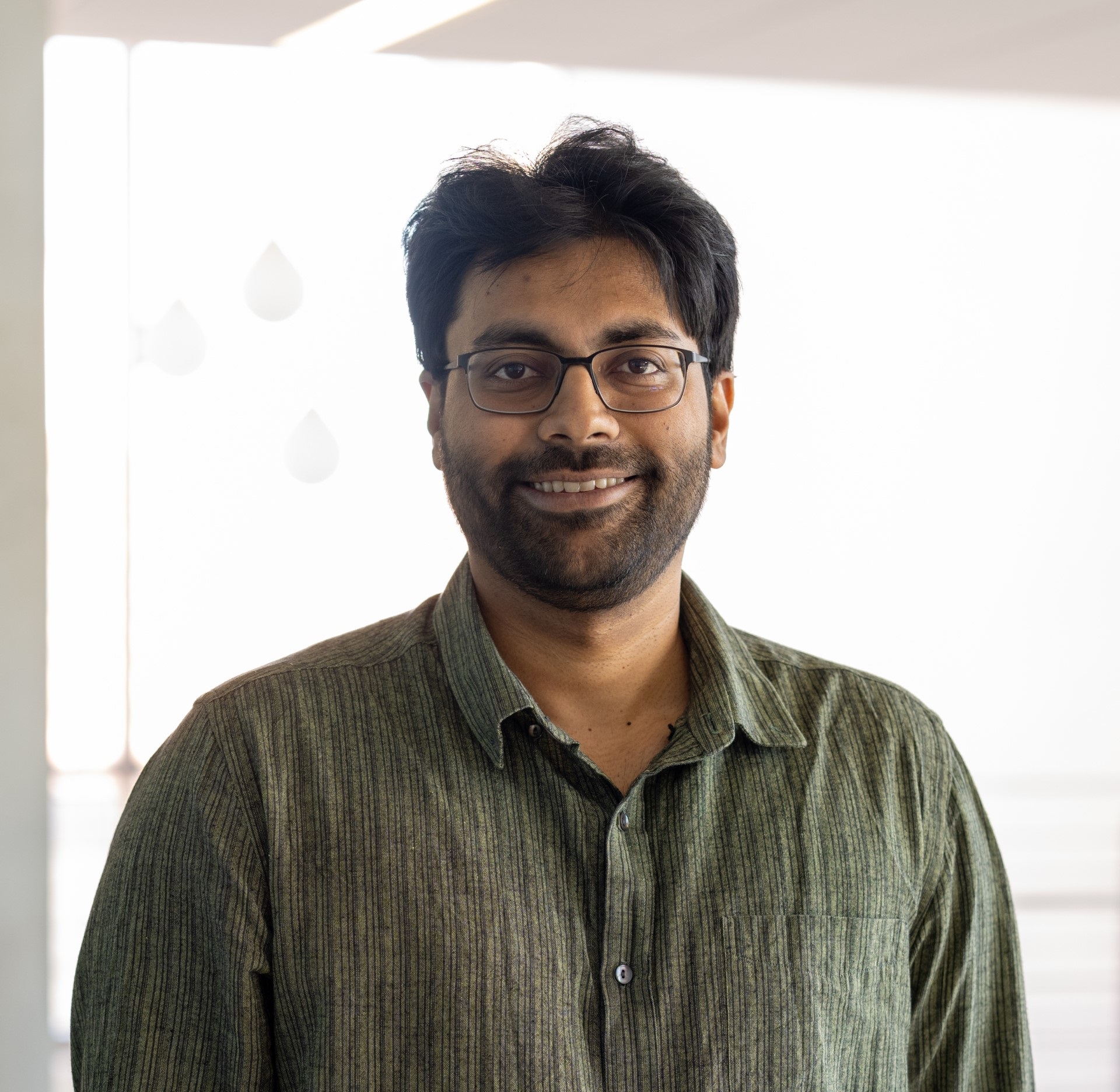
Dr. Shravan Ravi Narayan is an Assistant Professor in the Computer Science department at The University of Texas at Austin. His research focuses on secure systems, program verification, and hardware-based security, with groundbreaking work in Software Fault Isolation (SFI), WebAssembly security, and Spectre attack mitigation. He teaches courses like CS361S (Network Security and Privacy) and CS380S (Theory and Practice of Secure Systems). 2023 - Distinguished paper award at ASPLOS 2022 - Mozilla research award 2022 - IEEE Cybersecurity Award for Practice 2022 - NSA Best Scientific Cybersecurity Paper Honorable Mention 2021 - Google V8 research award His publications highlight innovations in hardware-assisted isolation (HFI), sandboxing runtime design (WaVe), and browser security frameworks like RLBox. His work bridges systems security, programming languages, and hardware architecture to create practical, verifiable security solutions. He actively recruits exceptional PhD candidates with expertise in security, programming languages, or computer architecture and collaborates with industry leaders like Firefox and Fastly.
Dr. Tanushree Roy serves as an Assistant Professor in the Department of Mechanical Engineering at Texas Tech University's Whitacre College of Engineering and is an Affiliate Faculty member at the National Wind Institute. Her research pioneers resilient human-centric smart city infrastructures through the integration of control theory, mathematical modeling, and machine learning to address critical challenges in safety, security, and resource optimization for urban systems. Her academic foundation includes: Ph.D. in Mechanical Engineering from The Pennsylvania State University (2022) M.S. in Mathematics from University of Central Florida (2015) M.E. in Electrical Engineering from Indian Institutes of Engineering Science and Technology, India (2011) B.Tech in Applied Electronics and Instrumentation from Maulana Abul Kalam Azad University of Technology, India (2009) Dr. Roy's research centers on cybersecurity , fault diagnostics , and socio-technical systems with specialized applications in smart transportation networks and battery energy storage systems. She develops innovative frameworks that merge human-centric sensing with technical measurements to combat cyberattacks and physical faults in cyber-physical-social systems, emphasizing safety-critical resilience for urban citizens. Her methodology uniquely combines model-based control with data-driven machine learning to address challenges like social data integrity, human behavior modeling, and multi-scale anomaly characterization. Analysis of her 15 most recent publications (2021-2025) reveals dominant trends in cyberattack detection for connected vehicles, thermal fault tolerance in battery systems, and socio-technical traffic modeling. Key technical approaches include Koopman operator theory for secure estimation, control barrier functions for safety certification, and redundancy-based data fusion techniques. These works consistently bridge theoretical control systems with practical smart city implementation, demonstrating strong interdisciplinary connections between transportation engineering, energy systems, and cybersecurity. No scientific awards are documented in the provided information. Dr. Roy actively mentors three PhD students—Sanchita Ghosh (since 2022), Faysal Ahamed, and Soumyoraj Mallick (both since 2024)—alongside undergraduate researcher Mercedes Hernandez. Her research is executed through the Smart Human-centric Automation Resilience (SHARE) Lab, which has secured projects including the secure autonomous mobility testbed and participates in workforce development via Texas Tech's Engineering Research Internship Experience (ERIE) program for high school students. The SHARE Lab operates at the intersection of transportation and energy systems, maintaining two primary research thrusts: resilient human-centric transportation networks and safeguarding battery energy storage infrastructure. Current projects include SUMO-based cyberattack validation for connected vehicle platoons, self-learning voltage estimation under sensor attacks, and thermal fault-tolerant battery management. The lab maintains active collaborations with national conferences (ACC, CCTA) and industry partners to advance real-world implementation of resilient smart city technologies.
Alexey Gotsman is a tenured Research Professor at the IMDEA Software Institute in Madrid, Spain, where he leads research at the intersection of software verification and distributed computing. He also works part-time as a visiting academic at Amazon Web Services. His educational background includes a Ph.D. from the University of Cambridge, where he was previously a postdoctoral fellow. His research spans theoretical foundations and practical implementations of distributed systems, with particular emphasis on fault tolerance, consensus algorithms, and consistency models. His research interests focus on the theoretical and practical aspects of distributed systems, including Byzantine fault tolerance, state machine replication, distributed transactions, and consistency models. His work bridges the gap between formal verification techniques and real-world distributed systems implementations, with numerous publications in top-tier venues like PODC, DISC, and NSDI. His recent publications show a clear progression from theoretical foundations to practical implementations, with increasing focus on real-world applications, performance considerations, and fault tolerance in large-scale distributed systems. The research demonstrates strong connections between formal methods and practical system design, particularly in the areas of consensus protocols, replication strategies, and transaction processing. Best paper award at OPODIS'23 Best paper award at DISC'18 Best paper award at CONCUR'12 EAPLS Best Dissertation Award Runner-up prize in the BCS Distinguished Dissertation Competition ERC Starting Grant 'RACCOON: A Rigorous Approach to Consistency in Cloud Databases' (2017-2022) Ramón y Cajal Fellowship (2017-2022) Alexey actively mentors PhD students including Alejandro Naser Pastoriza, Fedor Ryabinin, and Antonio José Fernández Pinto, while his alumni have gone on to faculty positions at institutions like University of Paris 7 and University of Colorado Boulder, as well as industry roles at companies like ARM and Informal Systems. He has received significant funding including an ERC Starting Grant and served on program committees for numerous top conferences including POPL, DISC, and PODC. He currently co-organizes the International Symposium on Distributed Computing (DISC) and has been instrumental in organizing workshops focused on consistency in distributed systems. His research group at IMDEA Software Institute focuses on developing rigorous approaches to consistency in cloud databases and distributed systems, with active projects spanning theoretical analysis, protocol design, and practical implementation of fault-tolerant distributed systems.
Brigitte Pientka is a Full Professor in the School of Computer Science at McGill University, where she leads the Computation and Logic group. She received her PhD from Carnegie Mellon University in 2003, and previously studied at the University of Edinburgh and Technical University of Darmstadt. Her educational background includes: PhD from Carnegie Mellon University (2003) Studies at the University of Edinburgh Studies at Technical University of Darmstadt Dr. Pientka's research focuses on developing theoretical and practical foundations for building and reasoning about reliable, safe software systems. She combines theoretical research on logical foundations of computer science in programming languages and verification with system building. Her work spans logics (classical and non-classical), type theory, theorem proving, logic and functional programming, and logical frameworks. She has made significant contributions to the field of contextual types and mechanized metatheory. Her recent publications demonstrate a strong trend toward modal type theory, contextual types, and session types, with applications to functional programming, verification, and meta-programming. She has made significant contributions to the Beluga system, which explores how to combine functional programming with dependently-typed, higher-order data specified in the logical framework LF. Her work often bridges theoretical foundations with practical implementations for mechanized reasoning. Dr. Pientka has received several notable awards: Humboldt Fellowship Test of Time Award @ PPDP'18 for 'Programming with proofs and explicit contexts' Best student paper award at ICLP'03 She is actively involved in mentoring and academic service, having served as PC Chair for ICFP'24, CPP'23 and CPP'24, and as General Chair for POPL'20. She is an Executive Editor of Logical Methods in Computer Science and serves on the editorial boards of the Journal of Functional Programming and ACM Transactions of Computational Logic. She leads the Computation and Logic group at McGill University, which focuses on developing theoretical and practical foundations for reliable software systems through research in logical frameworks, type theory, and programming language design.
Sarah Neuwirth is a tenured Professor for Computer Science at Johannes Gutenberg University Mainz (JGU) and a Visiting Researcher at the Jülich Supercomputing Centre. She manages JGU's High Performance Computing (HPC) division, coordinates regional/national HPC activities, and represents JGU in NHR, Gauss-Allianz, and HPC committees. Education : PhD (Dr. rer. nat.) in Computer Science (2018), Heidelberg University Diplom in Computer Science (2012), University of Mannheim Bachelor of Science in Computer Science (2010), University of Mannheim Research Interests : Parallel File and Storage Systems Modular Supercomputing (resource disaggregation/virtualization) Performance Engineering High Performance Computing Networking Reproducible Benchmarking Parallel I/O Publications Trends : Her work focuses on HPC performance modeling, parallel I/O optimization, modular supercomputing, network characterization, and reproducible benchmarks. Key themes include resource disaggregation, automated workflows, and data-intensive distributed applications. Scientific Awards : 2023 PRACE Ada Lovelace Award for HPC ZONTA Science Award 2019 Grants & Leadership : She leads the High Performance Computing division at JGU, participated in European DEEP projects, and serves on SC conference committees.
Ajitha Rajan is a Professor (Personal Chair of Software Testing and Verification) at the School of Informatics, University of Edinburgh. Previously, she was a post-doctoral researcher at Oxford University's Computer Science Department and Laboratoire d'Informatique de Grenoble (LIG) in France. She earned her PhD in Computer Science from the University of Minnesota in August 2009 under the supervision of Prof. Mats Heimdahl. Her research spans two main directions: Automated Software Testing Techniques covering test input generation, test oracles, and coverage metrics; and Biomedical Artificial Intelligence focusing on cancer survival models, interpretability for biological sequences, and medical images. Her work bridges software engineering and biomedical applications, particularly in the development of trustworthy AI systems for healthcare. Professor Rajan leads several significant research projects including a Royal Society Industry Fellowship (2022-2025) on AutoTest for autonomous vehicle perception safety, the H2020 European Project KATY (2021-2025) on AI for genomics and personalized medicine where she serves as Edinburgh Lead PI, and an EPSRC Trustworthy Autonomous Systems Node project (2020-2024). Her recent publications demonstrate strong activity across software testing, explainable AI, and biomedical applications, with numerous papers accepted to top conferences in 2025 including ML for Healthcare, IJCAI, and ESEM. Among her scientific recognitions, she received the Best Reviewer Award at ISSTA'25. Her work has been consistently published in leading venues including ICSE, ICASSP, and Communications Biology. Professor Rajan actively mentors PhD students working on diverse topics from automated testing of speech recognition systems to explainable AI for medical image analysis and cancer immunotherapy. She teaches undergraduate courses in Software Testing, Computer Programming, and Embedded Systems, and has been instrumental in establishing several fully funded PhD positions through Centres for Doctoral Training at the University of Edinburgh.
Pierre Picard is a Professor of Economics at École Polytechnique , where he is also a member of the Haut Collège . He holds a PhD in Economics and is a graduate of HEC-Paris. His academic career includes leadership roles such as President of the Risk Theory Society (2005) and President of the European Group of Insurance Economists (EGRIE) (2009). Education: PhD in Economics, HEC-Paris Affiliations: CREST, Risk Theory Society, EGRIE His research focuses on insurance economics , risk management , and contract theory , with applications to catastrophic risks, health insurance, and parametric insurance. Recent publications analyze pandemic business interruption insurance, nuclear liability insurance, and optimal health insurance under ex post moral hazard. Key trends in his work include modeling insurance markets with adverse selection, designing parametric insurance for technology adoption in developing countries, and exploring the role of policy dividends in market equilibrium. He has co-authored multiple papers with A. Louaas, J.-M. Bourgeon, and J. Pinquet. Scientific Awards and Leadership: Junior member, Institut Universitaire de France (1991-1996) President, Risk Theory Society (2005) President, European Group of Insurance Economists (2009) Co-Editor, Annals of Economics and Statistics (past) Co-Editor, Geneva Risk and Insurance Review (past) At École Polytechnique, he teaches courses in Corporate Finance , Microeconomics , and General Insurance at the Master’s level. He also instructs on Topics in Insurance Economics at ENSAE’s Engineering Cycle program.
Dr. William Charlton is a Professor at the University of Texas at Austin , holding the John J. McKetta Energy Professorship in the Walker Department of Mechanical Engineering. He serves as the Director of the Nuclear Engineering Teaching Laboratory , which houses the newest nuclear research reactor in the U.S. His career spans leadership roles in academic nuclear security and nonproliferation research, including founding the Nuclear Security Science & Policy Institute at Texas A&M University (2006–2015) and leading research programs at the University of Nebraska’s National Strategic Research Institute (2015–2018). Dr. Charlton’s research focuses on nuclear security , nonproliferation , radiation detection , and nuclear forensics . His work addresses technical solutions for nuclear threats, including reactor design, spent fuel verification, and border monitoring systems. Recent publications highlight advancements in neutron resonance densitometry, gamma-ray background modeling, and proliferation resistance analysis tools. His scientific awards include the Special Service Award from the Institute of Nuclear Materials Management (2010), multiple Faculty Fellowships at Texas A&M, and the NSRI Distinguished Research Award (2017). Dr. Charlton has supervised numerous students, including R. Coogan, D. Sweeney, and B. Goddard, on topics ranging from nuclear detection to safeguards. As Director of the Nuclear Engineering Teaching Laboratory , he oversees cutting-edge research facilities and collaborates with national security agencies. His security clearances (TOP SECRET, SCI) reflect his role in high-impact projects for the U.S. Department of Defense and National Nuclear Security Administration.
Ross Horne is a Senior Lecturer in the Department of Computer & Information Sciences at the University of Strathclyde, Glasgow, United Kingdom. He is a member of the StrathCyber and Mathematically Structured Programming research groups. Education: PhD (University of Southampton, 2012), BA (Oxford University, 2005) Prior Appointments: Research Fellow at University of Luxembourg (2018-2023), Senior Research Fellow at Nanyang Technological University (2015-2018), Associate Professor at Kazakh-British Technical University (2012-2015) Research Interests: Dr. Horne's work focuses on security and privacy protocols for digital systems, particularly addressing threats in payment technologies, ePassports, and decentralized identity management (e.g., Solid protocol). His theoretical contributions bridge concurrency theory, proof theory, and logic through applications to security verification and process calculi. Developed formal models for unlinkability in EMV payment protocols Created intuitionistic logical frameworks for process equivalence Explored graphical proof systems beyond formulaic representations Investigated legal-compliant AI for space systems (CubeSat anomaly detection) Scientific Contributions: He has published extensively in top venues including ACM CCS, IEEE CSF, LICS, and CONCUR. His 2017 CONCUR best paper introduced intuitionistic characterizations of bisimilarity. Principal Investigator for EU COST Action on Distributed Knowledge Graphs Co-developed privacy models adopted in Luxembourg parliamentary responses Advising: Currently accepting PhD students with strong mathematical and computer science skills for research in security/privacy of emerging systems. Former student Semen Yurkov completed a thesis on privacy-preserving smart card payments. Interdisciplinary Work: Collaborates with space lawyers through the Interdisciplinary Master Program in Space Resources. Projects include AI for CubeSat reliability and legal-compliant software certification frameworks.
Andrej Bogdanov is a Professor at the University of Ottawa in the School of Electrical Engineering and Computer Science . He earned his B.S. and M.Eng. from MIT and Ph.D. from UC Berkeley . Before joining Ottawa, he held positions at the Chinese University of Hong Kong , ITCS (Tsinghua) , DIMACS (Rutgers) , and the Institute for Advanced Study . He has served as a Visiting Professor at the Tokyo Institute of Technology (2013) and the Simons Institute (2017, 2021). Research Interests : Computational complexity, cryptography foundations, pseudorandomness, one-way functions, property testing, quantum algorithms, and sublinear-time algorithms. Teaching : Courses on Discrete Mathematics, Great Algorithms, Computational Complexity, and Cryptography at University of Ottawa, Chinese University of Hong Kong, and Rutgers University. Publications : 15+ recent works in TCC , CRYPTO , ICALP , RANDOM , and journals like Journal of Cryptology and Theory of Computing . Service : Program co-chair for SAC 2026 , and committee member for major conferences including CRYPTO , TCC , Eurocrypt , and FOCS . Advising : 12 current and former Ph.D./M.Phil. students, with postdoctoral advisees at institutions like IIT Palakkad and Academia Sinica . His work bridges theoretical computer science with applications in cryptography, quantum computing, and network security.
Sandrine Blazy is a Professor in the Computer Science Department at the University of Rennes, France. She is a member of CELTIQUE (also referred to as Epicure), a joint project-team with Inria Rennes Bretagne Atlantique and the IRISA laboratory. Since 2021, she has served as deputy director of the IRISA CNRS UMR 6074 laboratory and will be the general chair for POPL 2026, which will be held in Rennes. She is also a member of the editorial board of the LMCS journal. Dr. Blazy completed her PhD at CNAM (Conservatoire National des Arts et Métiers) in 1993 with a thesis titled "La spécialisation de programmes pour l'aide à la maintenance du logiciel" (Program Specialization for Software Maintenance Assistance). She later completed her Habilitation à diriger des recherches (HDR) in 2008 at the University of Évry Val d'Essonne with a thesis titled "Sémantiques formelles" (Formal Semantics). Her research focuses on the formal verification of program transformations and semantic properties of programming languages, particularly in the context of the CompCert compiler and Verasco static analyzer. She develops mechanized semantics using the Coq (or Rocq) proof assistant to ensure software correctness and security. A prime application domain of her work is software security, including constant-time programming for cryptographic applications and software obfuscation techniques. Her teaching includes mechanized semantics (in Coq), functional programming (in OCaml), formal methods (using Why3), and software vulnerabilities. Dr. Blazy's publication record from 2019-2025 shows a sustained focus on verified compilation techniques, particularly in preserving security properties during compilation. Her work bridges theoretical formal methods with practical compiler implementation, resulting in tools that have real-world impact in safety-critical systems. She has made significant contributions to the CompCert formally verified compiler project, with particular attention to constant-time preservation for cryptographic applications and JIT compilation verification. Her scientific achievements have been recognized with several major awards: CNRS Silver Medal (2023) Lucas Award from Formal Methods Europe (2023) ACM SIGPLAN Programming Languages Software Award for CompCert (2022) ACM Software System Award for CompCert (2021) Dr. Blazy has been actively involved in the programming languages research community, serving on numerous program committees for major conferences including POPL, ICFP, PLDI, and CPP. She has mentored students and contributed to education through teaching mechanized semantics and formal methods. Her work with the CompCert compiler has led to practical applications in safety-critical systems, with industry collaborations documented in publications like "CompCert: Practical experience on integrating and qualifying a formally verified optimizing compiler" (ERTS 2018). She leads research within the CELTIQUE project team, which focuses on developing trustworthy software using deductive verification. Her team works on advancing the state of the art in formal verification of compilers and static analyzers, with applications in security-critical domains including cryptographic implementations and safety-critical embedded systems.
Brigitte Pientka is a Professor at McGill University's School of Computer Science , where she leads the Computation and Logic group . She earned her PhD from Carnegie Mellon University in 2003 and previously studied at the University of Edinburgh and Technical University of Darmstadt. Education PhD in Computer Science, Carnegie Mellon University (2003) University of Edinburgh Technical University of Darmstadt Research Interests Her work focuses on the theoretical and practical foundations for building reliable software systems, combining logic, type theory, and verification with system-building. Key areas include: Type Theory and Dependent Types Logical Frameworks and Mechanized Metatheory Session-Typed Concurrency and Linear Logic Metaprogramming and Contextual Type Systems Theorem Proving and Formal Verification Functional Programming and Language-Based Security Professional Roles She has served as: PC Chair for ICFP'24 and CPP'24 General Chair for POPL'20 Executive Editor of Logical Methods in Computer Science Steering Committee Member for LICS, POPL, and ESOP Scientific Awards Dr. Pientka has received: Test of Time Award at PPDP'18 Humboldt Fellowship for research at MPI-SWS, Germany Labs & Teams She actively develops the Beluga programming language , a tool for mechanizing meta-theory proofs and type-driven program manipulation.
Sahar Abdelnabi is an AI Security Researcher at Microsoft and will join the ELLIS Institute Tübingen as a Faculty/Principal Investigator. She is co-affiliated with the Max-Planck Institute for Intelligent Systems and Tübingen AI Center , leading the COMPASS Research Group focused on safe, aligned, and steerable AI agents with emphasis on security, human-AI interaction, and cooperative systems. Her research spans three pillars: (1) Probing AI failures through biases, emergent risks, and misuse scenarios; (2) Developing defenses like white-box control methods and reasoning enhancements; and (3) Leveraging AI for societal good through scientific discovery. Key contributions include coining indirect prompt injection vulnerabilities (2023), pioneering generative AI watermarking (2020), and receiving the ACL2025 Best Paper Award for work on LLM sampling heuristics. PhD in Computer Science (2019-2024) from CISPA Helmholtz Center , advised by Prof. Dr. Mario Fritz MSc in Computer Science from Saarland University Research Highlights Her work bridges AI security and safety with sociopolitical implications, focusing on prompt injection , cooperative multi-agent systems , and contextual integrity . She has been recognized by policymakers and industry leaders, including NIST , OWASP , and Microsoft's AI Bug Bounty Program . Scientific Awards Best Paper Award at ACL2025 Best Paper Award at AISec'23 Workshop Spotlight Paper at NeurIPS Datasets and Benchmarks 2024 Academic Leadership She actively contributes to the AI and security communities through: Program Committee: IEEE S&P (2026) , SaTML (2024-2026), USENIX Security (2025) Organized IEEE SaTML'25 LLMail-Inject Challenge Reviewed for top conferences: ICLR , NeurIPS , CVPR
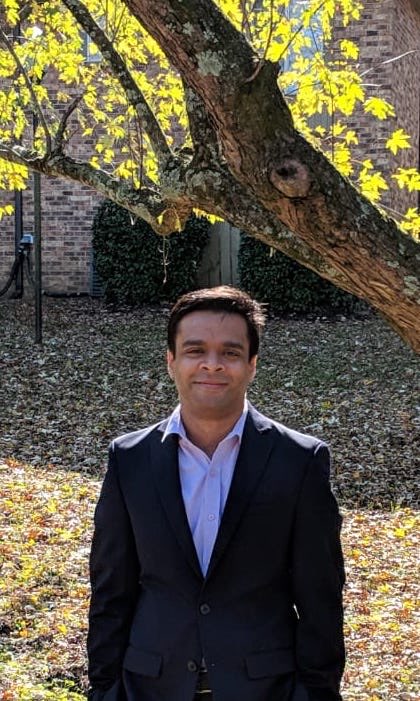
Dr. Ayan Mukhopadhyay serves as a Senior Research Scientist in the Department of Electrical Engineering and Computer Science at Vanderbilt University's School of Engineering. Previously, he was a Post-Doctoral Research Fellow at Stanford Intelligent Systems Lab where he received the 2019 CARS post-doctoral fellowship. His academic journey includes a Ph.D. from Vanderbilt University's Computational Economics Research Lab with a doctoral thesis nominated for the Victor Lesser Distinguished Dissertation Award 2020. His research spans critical domains in smart infrastructure systems with particular focus on: Developing robust decision-making frameworks for cyber-physical systems under uncertainty Creating multi-agent solutions for emergency response optimization Designing machine learning approaches for urban mobility and energy management Building proactive incident detection pipelines using heterogeneous data sources Analysis of his recent publications reveals strong thematic continuity in applying artificial intelligence to real-world infrastructure challenges, particularly in transportation systems, emergency response, and energy management. His work consistently bridges theoretical AI advances with practical implementation in smart city contexts, demonstrating expertise in both algorithmic innovation and systems integration. Award highlights include: CARS Post-Doctoral Fellowship (2019) Best Paper Award at ICLR's AI for Social Good Workshop Victor Lesser Distinguished Dissertation Award Nomination (2020) Dr. Mukhopadhyay leads significant research initiatives through ScopeLab, focusing on creating deployable solutions for public transit, emergency response, and energy systems. His work on vehicle-to-building charging, traffic incident localization, and equitable transit network design demonstrates commitment to solving high-impact urban challenges through rigorous computational methods. Current projects involve developing simulation environments for non-stationary environments (NS-Gym) and explainable planning frameworks integrating formal logic with large language models.
Aravindan Vijayaraghavan is an Associate Professor in the Department of Computer Science at Northwestern University (affiliated with McCormick School of Engineering). He also holds courtesy appointments in the Industrial Engineering and Management Sciences (IEMS) department. Research interests include theoretical computer science , machine learning algorithms , quantum information , and combinatorial optimization under non-worst-case paradigms. He leads IDEAL (Institute for Data, Economics, Algorithms and Learning) as Site Director at Northwestern and former Institute Director (2023-24). Academic Background : PhD in Computer Science from Princeton University (advisor: Moses Charikar ) Bachelor's Degree in Computer Science from Indian Institute of Technology Madras Postdoctoral work at Courant Institute (NYU) and Carnegie Mellon University via Simons Collaboration grants Research Contributions : Developed smoothed analysis frameworks for random matrices with dependent entries Created sum-of-squares certificates for anti-concentration beyond Gaussian distributions Advanced quantum entanglement certification algorithms for subspaces Improved weak-to-strong generalization theory with data distribution expansion properties Designed error-tolerant e-discovery protocols for legal document classification Scientific Recognition : NSF CAREER Award NSF AITF Award (CCF-1637585, CCF-2154100) Google Research Scholar Program grant Amazon Research Awards program support Simons Postdoctoral Fellowship Academic Leadership : General Chair for FOCS 2024 Co-organizer of Junior Theory Workshop and Northwestern QTW series Active in program committees for COLT , ICML , NeurIPS , and STOC conferences Teaching Portfolio : CS262: Mathematical Foundations of CS (Continuous Mathematics for Computer Science) CS212: Mathematical Foundations of Computer Science (multiple offerings since 2015) CS496: Graduate Algorithms (since 2016) CS396/496: Quantum Computation & Information (co-taught with S. Rao) CS497: Machine Learning Theory (Spring 2025 offering)