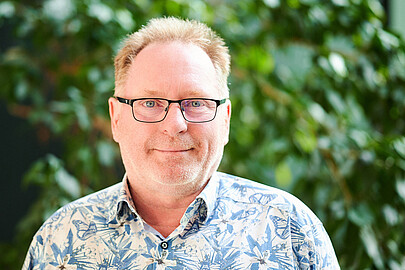
Prof. Stefan Müller is a Professor at the Institute for German Language and Linguistics , part of the Faculty of Languages and Literature at Humboldt University. His research focuses on syntax, formal grammar theories (especially Head-Driven Phrase Structure Grammar), and computational linguistics. He leads the CoreGram Project , developing cross-linguistic grammars using HPSG formalisms. His work includes analyses of German syntax, constituent order, anaphoric binding, and register phenomena. He is also involved in open-access publishing initiatives through Language Science Press . Contact: St.Mueller@hu-berlin.de . Education and academic background details are not explicitly stated in the provided text, but his professional trajectory indicates deep expertise in theoretical linguistics. His research spans multiple languages including German, Mandarin, and Persian, with a focus on grammar implementation and syntax-semantics interfaces. Key contributions include the Head-Driven Phrase Structure Grammar Handbook (2024), analyses of headless nominal structures in German (2022), and exploration of large language models' theoretical implications (2024). He actively engages in interdisciplinary projects bridging formal grammar and computational methods.
Benjamin Mako Hill is an Associate Professor in the University of Washington Department of Communication and an Adjunct Associate Professor in Human-Centered Design & Engineering , the Paul G. Allen School of Computer Science & Engineering , and the Information School at UW. He is a Faculty Associate at the Berkman Klein Center for Internet and Society at Harvard University and a Fellow at the Center for Information Technology Policy at Princeton University during the 2023–2024 academic year. Educational Background : PhD in an interdepartmental program at Massachusetts Institute of Technology (MIT) , involving the MIT Sloan School of Management and the MIT Media Lab , advised by Eric von Hippel, Yochai Benkler, Tom Malone, and Mitch Resnick. MS in Media Arts and Sciences from MIT. B.A. in Technological and Legal History from Hampshire College . Research Interests span peer production, online communities, collective action, cooperation, learning, and computer-mediated communication. His work explores how communication and information technologies shape social outcomes in collaborative environments like Wikipedia and Linux, focusing on governance, moderation, anonymity, and educational platforms such as Scratch. Article Trends : His publications analyze peer production dynamics, privacy in open collaboration, and computational thinking in youth. Topics include underproduction in open source software, algorithmic fairness, taboo knowledge production, and legitimate peripheral participation in online communities. Methodologies combine big data, quasi-experimental, and comparative analyses. Scientific Awards : Dordick Award for Best Dissertation (2013). CHI '22 Best Paper Honorable Mention (2022). CSCW '18 Best Paper Honorable Mention (2018). CHI '17 Best Paper Honorable Mention (2017). CSCW '13 Best Paper Award (2013). CHI '11 Best Paper Honorable Mention (2011). Advising and Grants : He co-founded the Community Data Science Collective and collaborates with researchers like Aaron Shaw. Grants include multiple National Science Foundation awards for studies on digital knowledge commons, anonymous participation, and collaborative success, as well as a Sloan Foundation grant for modeling underproduction in peer production. Labs and Teams : He leads the Community Data Science Collective , an interdisciplinary research group studying online communities, and contributes to open-source projects like Debian and Ubuntu . He actively edits Wikimedia projects and participates in the Cascadia Wikimedians User Group .
Prof. Dr. Evi Hartmann holds the Chair of Business Administration, especially Supply Chain Management at Friedrich-Alexander University Erlangen-Nuremberg (FAU) within the Department of Business, Economics, and Social Sciences. She is actively involved in multiple research focus areas including sustainability, energy markets and energy system analysis, and insurance and risk. Her academic leadership extends across interdisciplinary collaborations with engineering, mathematics, and industry partners. Dr. Hartmann studied industrial engineering at the University of Karlsruhe (TH), received her doctorate in 2002 from the Institute of Technology and Management at the Technical University of Berlin, and completed her habilitation in business administration in 2008. Prior to her academic career, she worked as a consultant at AT Kearney from 1998 to 2005, followed by a junior professorship for 'Purchasing and Supply Management' at the Supply Chain Management Institute at the European Business School. Her research program focuses on supply chain management, purchasing, and strategic foresight, with particular emphasis on application-oriented approaches that bridge theory and practice. Current research trajectories include supply chain resilience in crisis situations (including pandemic response), digital transformation through Industry 4.0 technologies, sustainable and low-carbon supply chains, and the integration of strategic foresight methodologies in logistics decision-making. Her work frequently employs Delphi studies, bibliometric analyses, and multi-tier case studies to examine complex supply chain phenomena. Analysis of her recent publications reveals a strong trend toward interdisciplinary research that combines supply chain management with digital transformation, sustainability, and crisis response. Her work increasingly examines the intersection of technology adoption (particularly Industry 4.0), organizational culture, and supply chain resilience across multiple industries including automotive, food, and maritime logistics. Prof. Hartmann is recognized as the author of two academic bestsellers in her field, though specific awards are not detailed in available materials. Her research has been published in top-tier journals including IEEE Transactions on Engineering Management, International Journal of Production Research, and Journal of Cleaner Production. Her research program demonstrates extensive industry collaboration, with numerous projects involving real-world implementations and close partnerships with companies. She leads research initiatives examining the practical implications of digital transformation, sustainability challenges, and resilience strategies in supply chain operations. Current projects include studies on digital ecosystems, physical internet applications, and the future of freight forwarding technologies. Prof. Hartmann participates in several research networks including the Energy Campus Nuremberg (EnCN) and collaborates with the Department of Mathematics on gas networks and markets research. She is also involved with the Nuremberg Energy Region (Energieregion Nürnberg eV) and contributes to interdisciplinary research centers focused on sustainable development and digital transformation in supply chains.
Hakan Özkan is a Privatdozent and Research Associate at the Institute of Arabic and Islamic Studies, Department of Middle Eastern Studies, University of Münster, where he has been working since 2007 in various capacities. He was awarded his Venia Legendi (Habilitation) in November 2019 for Arabic and Islamic Studies with his thesis 'History of Eastern Zajal – Dialectal Arabic Verse Poetry from the East of the Arab World.' His academic background includes a Franco-German doctorate completed in 2006 from Université de Provence and University of Cologne, supervised by Claude Audebert and Monika Gronke, with external reviewers including Wolfhart P. Heinrichs from Harvard University. His educational background includes: 2019: Venia Legendi for Arabic and Islamic Studies, University of Münster 2002-2006: Franco-German Doctorate in Arabic Studies and Narratology (Université de Provence and University of Cologne) 1995-2000: Master of Arts in Islamic Studies, Oriental Languages and Literatures (University of Cologne) 2000-2001: Course program in Modern Standard Arabic and Syrian-Lebanese dialect at Institut Français d'Etudes Arabes de Damas Özkan's research focuses on premodern Arabic dialect poetry, particularly zajal and muwashshaḥ forms, narratology, prosimeter literature, socio-literary history, and diachronic dialectology. His interdisciplinary approach bridges linguistic analysis with literary criticism, examining how dialectal forms evolved within Arabic literary traditions across different historical periods and geographical regions. He has conducted extensive field research in Arab countries including Syria, Egypt, Lebanon, Tunisia, and Morocco, with particular emphasis on the historical development of poetic forms from the Mamluk through Ottoman periods. His publication history demonstrates consistent scholarly contributions to Arabic literary studies, with his 2020 monograph 'History of Eastern Zajal' representing a landmark study in the field. His recent work has expanded to include analyses of religious poetry praising the Prophet Muhammad in zajal form, wine poetry in Arabic literary traditions, and the integration of dialects into Arabic language teaching methodologies. His scholarly output spans monographs, critical editions, encyclopedia entries, journal articles, and book chapters across multiple languages including German, English, French, and Turkish. Among his academic recognitions: 2018: Second place on shortlist for W2 Professorship for Arabic Language and Translation Science, University of Leipzig 2008: Offered Junior Professorship at American University in Cairo (declined) 2007: Second place on shortlist for maître de conférence position at University of Nancy 2007: Official Qualification from National University Council (CNU) for positions as maître de conférence at French universities Özkan has served on numerous academic committees, including appointment committees for professorships in Sinology and Arabic and Islamic Studies at the University of Münster. He has been a juror for the Sheikh Hamad Award for Translation and International Understanding in Doha and has served on the steering committee for the 'Translation for Dialogue' program of the Anna Lindh Foundation. His editorial work includes reviewing for Mamluk Studies Review, Die Welt des Islams, and Middle Eastern Literatures since 2012. His scholarly activities extend to linguistic fieldwork on Pontic Greek dialects in Turkey and organizing significant academic conferences including 'The Race Course of Literature – An-Nawāǧī and His Contemporaries' in 2018 at the University of Münster. His multilingual capabilities (Arabic, Turkish, German, French, English, Persian, Ottoman Turkish, and knowledge of Modern Greek) enable his comparative work across multiple linguistic and cultural traditions in the Mediterranean region.
Prof. Dr. Markus Schwarzländer leads the Arbeitsgruppe for Plant Energy Biology at the Institute for Plant Biology and Biotechnology (WWU Münster) . His research focuses on mitochondrial physiology, redox signaling, and biosensor development in Arabidopsis thaliana and other plant species, integrating molecular biology with systems-level analyses to understand energy regulation. Key Research Areas: Mitochondrial-NAD(P)H dynamics Redox-regulated signaling networks Organelle communication Stress-adaptive metabolism Recent work highlights Golgi-localized mitochondrial uncoupling proteins , chloroplast-mitochondria redox coupling , and mitochondrial calcium uniporter function . His group employs cutting-edge fluorescent biosensors and proteomic approaches to dissect energy physiology. Students benefit from hands-on training in bioimaging , metabolic modeling , and organelle biology through iMoPLANT and Life Sciences programs. Scientific Awards: DAAD Fellowship (2019) As an active member of the Faculty of Biology , he collaborates with international institutions including University of São Paulo , CEA France , and Siberian Institute of Plant Physiology , while maintaining a robust publication record in top journals like Plant Cell and Nature . His teaching emphasizes integrative plant sciences and advanced biosensing techniques for B.Sc. and M.Sc. students.
Christian Moormann serves as Director and Full Professor of the Institute of Geotechnics at the University of Stuttgart, where he has held his position since 2010. His leadership extends to national and international geotechnical organizations, including serving as Chairman of the German Geotechnical Society (DGGT) since 2022. His educational background includes a distinguished Diplom in Civil Engineering from Leibniz University Hannover (1989-1994), followed by doctoral studies at TU Darmstadt where he earned his Dr.-Ing. with distinction in 2002 for research on soil-groundwater interaction in deep excavations. He completed his habilitation at TU Darmstadt in 2009 on optimization of geotechnical composite structures. Professor Moormann's research spans the critical intersection of theoretical geomechanics and practical engineering applications. His work focuses on material behavior of semi-solid and variable-strength rocks, numerical methods in geotechnics, and reliability analyses for geotechnical composite structures. He has made significant contributions to deep foundation systems, pile-raft foundations, and the application of geosynthetics in construction. His recent work increasingly addresses sustainable applications including near-surface geothermal energy systems and innovative ground improvement techniques. With over 350 publications throughout his career, Moormann's scholarly output demonstrates consistent focus on practical geotechnical challenges. His publication themes reveal evolving emphasis from fundamental soil mechanics to complex system behavior, with growing attention to sustainability and reliability-based design approaches in geotechnical engineering. Professor Moormann holds numerous leadership positions that reflect his standing in the field: Chairman of the German Geotechnical Society (DGGT) since 2022 Head of the "Earth and Foundation Engineering" section of DGGT since 2018 German Delegate to Eurocode 7 Technical Committee (TC 250/SC 7) Chair of the DIN Standards Committee "Piles" (NABau 005-05-07) Member of the Professional Image Committee of ISSMGE His professional activities extend to significant consulting work through his own firm "Prof. Moormann Geotechnik Consult" established in 2010, and leadership of the PÜZ certification office. Moormann serves as an officially appointed expert for earthworks, foundation engineering, and rock engineering. His work on developing practical engineering standards through multiple DIN committees and Eurocode 7 implementation demonstrates his commitment to bridging academic research with practical engineering applications. The Institute of Geotechnics under Professor Moormann's leadership maintains strong connections with industry through its COMMAS program and extensive field testing capabilities. His team actively participates in developing practical engineering solutions for complex geotechnical challenges, particularly in deep foundation systems, excavation support, and sustainable geotechnical applications including geothermal energy systems.
Tom Stargardt is a Professor of Health Care Management at the Hamburg Center for Health Economics, University of Hamburg. His research focuses on health economics, pharmaceutical policy, and healthcare system efficiency. He holds a Dr. rer. oec. from TU Berlin (2008) and has held academic positions including Junior Professor for Pharmacoepidemiology at the University of Hamburg and a postdoctoral fellowship at LMU Munich and Helmholtz Zentrum München. His work spans cost-effectiveness analyses of treatments, health technology assessment, and pandemic-related behavioral economics. He has been recognized with the 2009 Nachwuchspreis for health economics/politics and a 2007 Merck-funded stipend. Research interests include pharmaceutical market dynamics, telemedicine cost-benefit analyses, and socioeconomic disparities in healthcare access. He has authored over 100 publications on topics like drug pricing regulations, vaccine hesitancy, and pandemic policy responses. His current projects analyze healthcare system efficiency during crises and the impact of digital health interventions. He is affiliated with the Hamburg Center for Health Economics and serves on editorial boards for journals like Pharmacoeconomics and Health Economics. Educations: TU Berlin (PhD 2008, Diplom 2005) Key Awards: Progenerika Early Career Prize (2009), Merck Stipend (2007) Professional Memberships: Verein für Socialpolitik, International Health Economics Association His advisory work includes evaluations of disease management programs and health policy reforms. Recent grants focus on pandemic healthcare economics and biosimilar market dynamics. He leads research teams investigating cost-utility of innovative cancer therapies and digital health solutions for chronic disease management.
Cornelia Betsch serves as Director of the Institute for Planetary Health Behaviour (IPB) at the University of Erfurt, where she holds a professorship in Health Communication within the Faculty of Philosophy. She is responsible for the Master's program in Health Communication through the Department of Media and Communication Studies and leads the Health Communication Working Group at the Bernhard Nocht Institute for Tropical Medicine in Hamburg as an external position. Her interdisciplinary work bridges behavioral science, psychology, and public health to address critical global challenges. Habilitation (2006), University of Erfurt: 'The role of risk perception and risk communication in prevention decisions – the example of vaccination decisions' PhD (Dr. phil., summa cum laude, 2006), University of Heidelberg: 'Preference for intuition and deliberation– measurement and consequences of affect- and cognition based decision making' Diplom in Psychology (2002), University of Heidelberg Betsch's research focuses on understanding health and planetary health behaviors, particularly examining vaccination behavior, prudent antibiotic use, and climate-friendly actions. Her work extends globally, with investigations in various African countries on vaccination and antibiotic practices. She pioneered the influential COVID-19 Snapshot Monitoring (COSMO) and subsequently developed the Planetary Health Action Survey (PACE), large-scale studies that regularly track public knowledge, risk perception, protective behaviors, and trust during crises. Her research emphasizes applying behavioral and cultural insights to design effective policy frameworks and explanatory communication that promotes positive health behaviors. The 15 most recent articles showcase Betsch's research evolution toward integrating behavioral science with planetary health, climate action, and vaccine communication. Her work increasingly examines the psychological foundations of climate behavior while maintaining her established expertise in vaccine hesitancy and antimicrobial resistance. Recent publications demonstrate methodological diversity, including systematic reviews, meta-analyses, survey experiments, and large-scale monitoring datasets that bridge academic research with practical policy applications. German Psychology Prize (2021) Thuringian Research Prize (2022) Betsch has secured research funding from independent research organizations, ministries, and foundations to support her work on health communication and planetary health behavior. She serves as a scientific advisor to multiple organizations including the WHO Technical Advisory Group on Behavioral and Cultural Insights, Science Media Center Germany, and Museum für Naturkunde Berlin. At the Bernhard Nocht Institute for Tropical Medicine, she established the WHO Collaborating Center for Behavioral Research in Global Health, demonstrating her commitment to translating research into global health practice. Her engagement extends to policy advising, having served on the Corona Expert Council of the Federal Chancellery during the pandemic. As Director of the Institute for Planetary Health Behaviour, Betsch leads an interdisciplinary team applying social and behavioral science perspectives to planetary health and the climate crisis. The institute serves as a hub for research, education, and science communication at the intersection of human health and environmental sustainability. Her work through the IPB emphasizes Open Science principles and aims to understand the comprehensive factors influencing climate-friendly behavior to identify effective intervention points for policy development.
Prof. Dr. Andreas Peichl is a leading academic in Economics, holding a Professorship in Macroeconomics and Public Finance at the Faculty of Economics, Ludwig Maximilian University of Munich. He is Head of the ifo Center for Macroeconomics and Surveys, and previously led the Research Group “International Distribution and Redistribution” at ZEW, Mannheim. His expertise spans macroeconomic policy, tax systems, income inequality, and public finance. Peichl’s work bridges theoretical frameworks with empirical analysis, focusing on policy implications for redistribution, fiscal sustainability, and labor markets. Education: PhD in Public Economics, University of Cologne Professorial appointments at LMU Munich (since 2013) and University of Mannheim (2008–2013) Research Interests: Peichl’s research emphasizes the interplay between tax policies, income distribution, and macroeconomic stability. Key themes include: Optimal design of tax systems to reduce inequality while maintaining economic efficiency Impact of fiscal policies on labor markets and household behavior Analysis of redistributive effects of social welfare programs Global and regional economic inequality dynamics His recent work explores post-pandemic policy responses, energy security challenges, and the political economy of taxation. Grants & Advising: Peichl has led numerous interdisciplinary projects funded by institutions like the EU, DFG, and ifo Institute. He advises policymakers on tax reforms, fiscal consolidation, and social security systems. Notable collaborations include the ECONtribute and EconPol initiatives. Labs/Teams: Directs the ifo Center for Macroeconomics and Surveys, fostering collaboration between economists, policymakers, and data scientists. The center produces real-time analyses of economic trends and policy impacts.
Stefan Rohdewald is a Professor of East and Southeast European History at the University of Leipzig since 2020. His research focuses on the historical entanglements between Eastern Europe and the Middle East, emphasizing transconfessionalism, urban history, and memory discourses. Education: Studied and completed his doctorate at the University of Zurich (2004), habilitation at Passau (2005–2012). Affiliations: Past professor at Giessen (2013–2020), research associate in Passau (2003–2012), and Max Planck scholarship for doctoral research. Research interests span Transottoman studies, examining mobility dynamics between Eastern Europe, the Ottoman Empire, and Persia. He leads the DFG priority program Transottomanica (2017–2023) and contributes to decolonial and transimperial frameworks in Ukrainian history. Recent publications include analyses of geopolitical imaginaries, edited handbooks on the Black Sea region, and studies on Ottoman-Europe knowledge exchange. His work critiques national historiographies and explores multiculturality in Habsburg Bosnia-Herzegovina.
Uwe Cantner is a Full Professor of Economics at Friedrich Schiller University Jena and holds a professorship at the University of Southern Denmark/Odense. He has held significant roles such as Vice President for Young Researchers and Diversity Management at FSU Jena (2014–2024), Chairman of the German Federal Government's Commission of Experts for Research and Innovation (EFI), and Spokesman of the DFG-GRK 1411 Research Training Group. His work focuses on the economics of innovation, evolutionary economics, industrial economics, productivity measurement, and public finance. Education : Dipl.oec. in Business Administration/Economics (1985) from University of Augsburg; MA in Economics (1984) from Wayne State University; Dr.oec.publ. (1990) and Dr.rer.pol.habil. (1996) from Ludwig-Maximilians-University Munich. Cantner's research bridges theoretical and empirical analyses of innovation systems, technological sovereignty, and entrepreneurial ecosystems. He has contributed to debates on missions-oriented innovation policy, productivity dynamics in global value chains, and the role of institutional transparency in regional development. His recent publications analyze industrial policy frameworks (2023), digitalization challenges in European higher education (2022), and corruption-innovation linkages (2020). Articles span evolutionary economics, environmental economics, and policy analysis, with cross-cutting themes in sustainability, governance, and regional development. Cantner actively shapes academic discourse as President of the International Joseph A. Schumpeter Society (since 2015) and editorial roles in journals like the Journal of Evolutionary Economics . He has directed graduate programs and contributed to EU energy transition research through expert surveys.
Dr. Carsten Nowak serves as Head of Conservation Genetics at the Senckenberg Research Institute and Natural History Museum Frankfurt, where he leads the national reference center for genetic analyses of wolves and lynx. His work bridges cutting-edge molecular methods with practical conservation applications, focusing on wildlife monitoring and species preservation. Since 2010, his laboratory has been responsible for central examination of all samples collected through Germany's nationwide wolf and lynx monitoring programs. Nowak's research interests center on developing highly sensitive molecular marker systems for wildlife monitoring, with particular expertise in environmental DNA (eDNA) methods and SNP chips optimized for genotyping forensic and non-invasively collected environmental samples. His work addresses critical questions in conservation biology, including inbreeding, genetic impoverishment, population origins, and human environmental impacts on genetic population structures of native species. He investigates how genetic methods can clarify previously unanswered questions in nature conservation, where data limitations often hinder efficient and targeted conservation measures. His extensive publication record (2023-2025) reveals a strong focus on wolf population dynamics across Europe, hybridization detection methodologies, and conservation genomics of endangered species like the garden dormouse. Nowak's research demonstrates sophisticated approaches to tracking animal movements across national borders, assessing genetic diversity in recovering populations, and developing practical tools for non-invasive wildlife monitoring. His work on wolf-dog hybridization has particular policy relevance as wolf populations expand across Europe. As a public-facing scientist, Nowak regularly engages with policymakers and the public through presentations, media appearances, and citizen science projects. He has participated in high-profile events including briefings for Federal Environment Minister Svenja Schulze and numerous public lectures on wildlife conservation topics. His leadership extends to coordinating international research collaborations, including the CEwolf Consortium and various transboundary monitoring networks. Nowak directs the Center for Wildlife Genetics in Gelnhausen, where his team conducts DNA-based analyses of predator-prey interactions, livestock depredation incidents, and wildlife population monitoring. His laboratory serves as the national reference center for genetic analyses of wolves and lynx in Germany, processing samples from across the country to distinguish individuals, determine relatedness, and monitor population health. The center also develops molecular methods for detecting wolf-dog hybrids and other conservation genetics applications.
Professor Georg Guggenberger is a distinguished academic at Leibniz University Hannover, where he serves as Professor of Soil Chemistry within the Department of Soil Science at the Institute of Earth System Sciences, Faculty of Natural Sciences. In addition to his research and teaching responsibilities, he holds several significant administrative positions including Vice Dean for Research in the Dean's Office of the Faculty of Natural Sciences, Executive Management at both the Institute of Soil Science and Department of Soil Science levels, and Chair of the Selection Committee for the M.Sc. Landscape Sciences program. Prof. Guggenberger's research program focuses on fundamental processes governing soil organic matter dynamics across diverse ecosystems worldwide, from Arctic to tropical regions. His work investigates biotic and abiotic factors influencing the formation, transport, and stabilization of soil organic matter, with particular emphasis on soil fertility maintenance. He employs advanced methodologies including stable isotope approaches, biomarker analyses, microspectroscopic techniques (XPS, ESEM, NMR, NanoSIMS), and molecular biological methods to study biogeochemical interactions on mineral surfaces, dissolved organic matter dynamics, plant-mycorrhizal-soil interactions, permafrost soil organic matter, and impacts of land use and climate change on soil organisms. Analysis of Prof. Guggenberger's recent publications reveals a strong interdisciplinary research program spanning soil biogeochemistry, carbon cycling, soil microbiology, and climate change impacts. His work integrates field experiments along environmental gradients with laboratory manipulation studies to identify underlying mechanisms. The research shows particular strength in understanding organic matter stabilization mechanisms, microbial contributions to soil processes, and development of sustainable soil management practices that address climate change challenges. Prof. Guggenberger actively contributes to academic service through his leadership roles in examination boards and committees, including the Examination Board for Geosciences programs and the Selection Committee for Landscape Sciences. His administrative responsibilities as Vice Dean for Research demonstrate his commitment to advancing research within the Faculty of Natural Sciences at Leibniz University Hannover.
Prof. Dr. Udo Zolleis is an Adjunct Professor in the Political Science Institute at Eberhard Karls University Tübingen, affiliated with the Department of Social Sciences within the Faculty of Economics and Social Sciences. He holds an Honorarprofessor title since 2010 and focuses on parties & elections, comparative political systems, and political communication. His career includes academic roles alongside political management in Baden-Württemberg and CSU parliamentary planning. Education: PhD (Dr.) in Political Science from Georg-August University Göttingen & Eberhard Karls University Tübingen (2000-2006), with a thesis on the CDU’s ideological shift. Earlier studies in Political Science, German, and History at Ludwig-Maximilians-Universität (Munich), including time abroad in London and Perugia. Research emphasizes German Christian democratic parties, electoral strategies, and regional political systems. Key works include analyses of CDU adaptation, political marketing, and Baden-Württemberg election campaigns. Collaborations with Daniel Buhr and Josef Schmid produced influential edited volumes like *Innovation im Wohlfahrtsstaat* (2021) and *Wahlkampf im Südwesten* (2007). Publications span monographs, journal articles, and policy analyses, with a focus on applying comparative methodologies to party systems. Active in interdisciplinary projects such as the Baden-Württemberg Democracy Monitor and Hans-Böckler Foundation doctoral programs.
Prof. René Geißler is a Professor of Public Administration at the Technical University of Wildau (TH Wildau). He holds a PhD in public law and local government from the University of Potsdam, where his doctoral thesis focused on municipal budget consolidation. Previously, he worked at the Bertelsmann Foundation for eight years, leading national and international fiscal policy research projects. His academic career includes roles as a research associate at the Hertie School in Berlin (2006-2012). Research interests center on municipal finance monitoring, federal fiscal relations, property tax reform, and addressing skilled labor shortages in public administrations. Key works include analyses of Germany's fiscal equalization mechanisms and case studies on infrastructure investment programs for childcare facilities. He frequently publishes in journals like Zeitschrift für Kommunalfinanzen and Verwaltung und Management . Recent media engagements include commentary on municipal fiscal crises for RBB Brandenburg, Der Tagesspiegel, and Die Welt. His applied research often informs policy debates through Bertelsmann Stiftung studies on topics like municipal debt management and workforce planning. Collaborative projects include co-editing Local Public Finance: An International Comparative Regulatory Perspective (Springer, 2021). Teaching focuses on public finance fundamentals, municipal budgeting systems, and cameralistic accounting practices. Active in academic networks, he contributes to EGPA conference panels on decentralized governance and financial supervision. Current research emphasizes sustainable fiscal strategies for municipalities facing demographic and economic challenges.