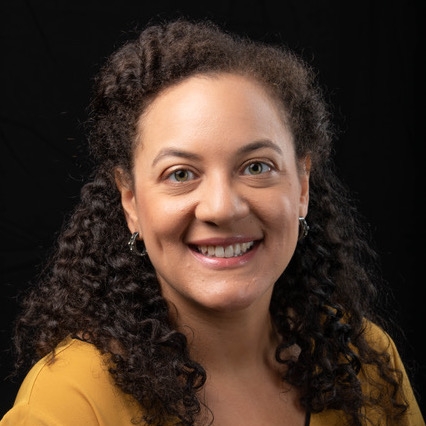
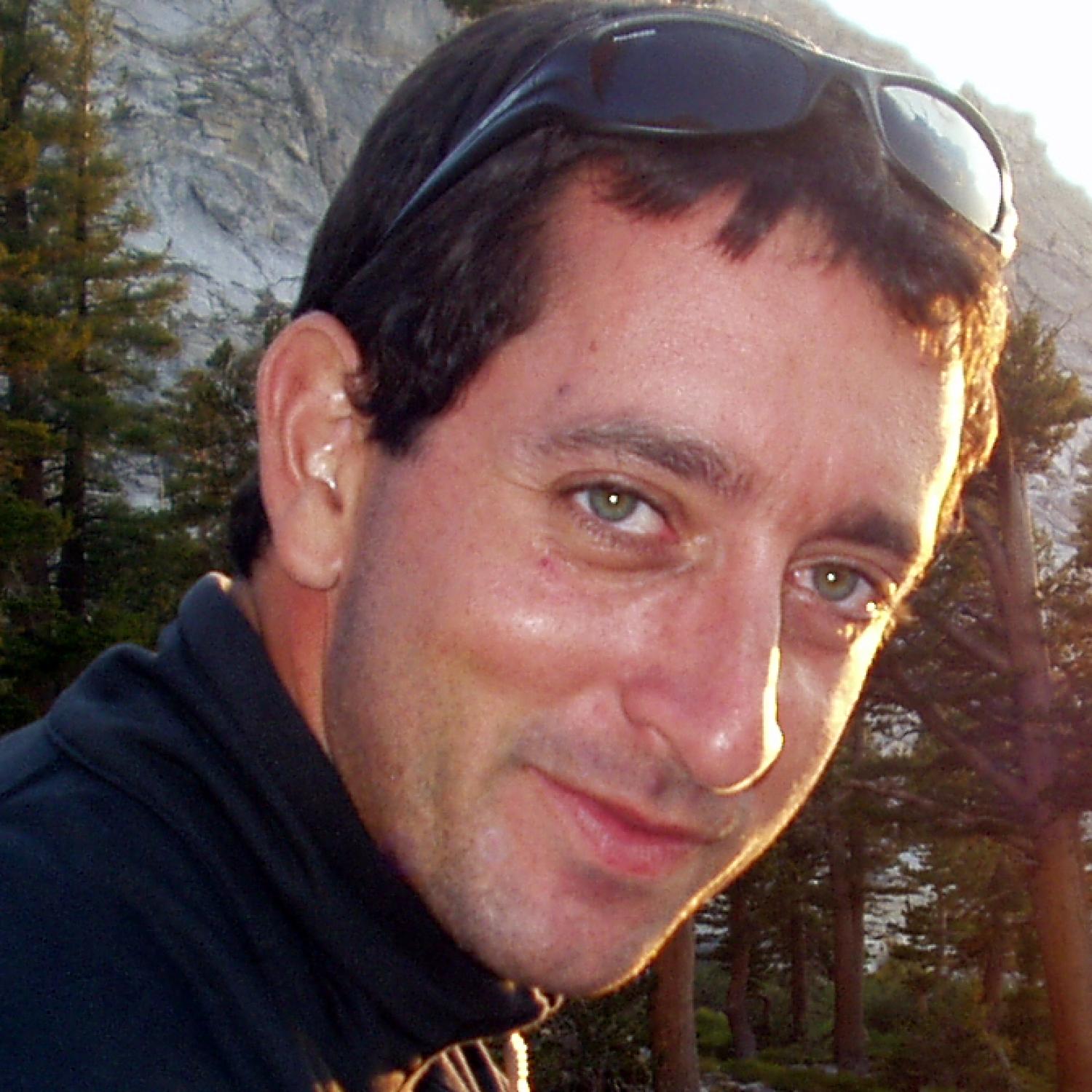
Stacey Garrett (she/her/hers) is an Associate Professor in the Counseling, Family Therapy, and Higher Education Department at Appalachian State University’s Reich College of Education. Her research focuses on diversifying higher education through qualitative exploration of faculty, staff, and students of color’s experiences. She advises graduate students across certificate, master’s, and doctoral programs delivered both online and in-person. Member of the Reich College of Education Mentoring Guild Advocate for faculty professional and personal growth Emphasizes institutional leadership strategies for recruitment/retention of diverse faculty Her work highlights challenges like pandemic-era community disruption and burnout prevention through mentorship. Key research themes include Black women faculty navigation, culturally responsive teaching, and systemic barriers faced by marginalized groups in academia.
Lucia Savadori is an Associate Professor in Psychology at the Department of Economics and Management, Università degli Studi di Trento. Her research focuses on risk perception, decision-making processes, behavioral economics, and effective communication strategies for risk-related information. She holds a BA and PhD in Psychology from the University of Padua, with postdoctoral research at Padova and visiting scholarships at institutions like the University of Illinois and Decision Research (USA). Education : B.A. in Psychology (1993), University of Padua PhD in Social and Personality Psychology (1999), University of Padua Research Interests : Risk communication in healthcare, technology, and environmental contexts Behavioral economics and decision-making under uncertainty Cognitive processes in judgment and choice Her work has been supported by grants including the Horizon 2020-funded BuildERS project (2019–2022) and the Italian Ministry of Health’s prenatal diagnostics initiative (2010–2012). She has led over a dozen research projects on topics like workplace safety, disaster preparedness, and consumer trust in food systems. Professional Activities : Head of Training and Communication at the Centro di Scienze della Sicurezza e della Criminalità (2021–present) Scientific Committee member for European research networks (e.g., SAFE, SMARTHEALTH) Editorial reviewer for journals like Risk Analysis and Medical Decision Making Her teaching spans courses on general psychology, behavioral economics, decision-making tools, and organizational psychology.
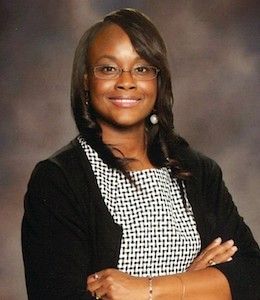
LaRonda M. Lockhart-Keene is an Assistant Professor of Occupational Therapy at Widener University. She holds dual roles in clinical practice and academia, specializing in dementia care and occupational justice. With over 20 years of clinical experience across diverse settings including NICU, geriatric care, and HIV/addiction services, she actively mentors students in community-based practice. Bachelor of Science in Occupational Therapy (1997), Temple University Postprofessional Doctorate in Occupational Therapy (OTD, 2017), Philadelphia University (now Thomas Jefferson University) Her research focuses on teaching pedagogy, clinical reasoning, and bridging police-community relations through healthcare. She previously served as Program Director at Thomas Jefferson University’s OTA program and held adjunct roles at Penn State Berks and Philadelphia University. Professional leadership includes chairing POTA’s Commission on Justice, Equity, Diversity, and Inclusion. Her work emphasizes occupational justice and trauma-informed approaches, with publications exploring adjunct faculty readiness and student clinical reasoning development.
Tatjana Schnell is a Professor of Existential Psychology at MF Norwegian School of Theology, Religion and Society, where she has worked since October 2020. She also holds a fellowship at the Humanistic University Berlin (since 2024). Her professional journey includes academic training in psychology, theology, religious studies, and philosophy across Germany, the UK, and Austria, with a doctorate from the University of Trier (Germany) and habilitation from the University of Innsbruck (Austria), where she founded the Existential Psychology Lab. Education : Psychology, Theology, Religious Studies, and Philosophy from the University of Göttingen, University of London, University of Heidelberg, and University of Cambridge Degree : Doctorate in Psychology (University of Trier, Germany) Habilitation : Psychology (University of Innsbruck, Austria) Tatjana Schnell's research focuses on existential themes including meaning in life, existential health, death attitudes, alienation, and religious/spiritual/secular worldviews. Her work bridges individual psychology with societal and environmental implications, with extensive international collaborations and publications. She has authored key works like "The Psychology of Meaning in Life" (2nd ed., 2025) and "Sinn finden" (2024). Her recent publications examine pandemic psychology, existential resources in gifted adults, workplace spirituality, and meaning-based interventions for chronic pain and cancer rehabilitation. Her research projects include "Making Sense of Volunteering," "Sinnmacher - The Meaning App," and studies on existential resources in palliative care. The Tatjana Schnell website provides further details about her work. Fellow : Humanistic University Berlin (2024) Tatjana Schnell has developed innovative tools like the Sources of Meaning Card Method (SoMeCaM) and Meaning in Work Inventory (ME-Work), with validated versions across multiple cultures. Her work emphasizes the practical application of existential psychology in mental health, organizational behavior, and ecological engagement. She founded the Existential Psychology Lab at the University of Innsbruck and continues to lead impactful research at MF Norwegian School of Theology, Religion and Society.
Dr. Donald Osborn is an Assistant Professor and Program Director of the Graduate Addictions Counseling Division at Indiana Wesleyan University. With over three decades of experience, he serves as a licensed clinical addictions counselor, mental health professional, and ordained minister in the Christian Church/Church of Christ. His career spans roles as a Psychiatric Case Manager, Clinical Supervisor, and Medical Administrative Officer in community mental health and government sectors. Education includes a PhD in Guidance and Psychological Services (Indiana State University, 2013), Master of Arts in Theology (Saint Mary-of-the-Woods College, 1987), and a Bachelor of Arts in Christian Ministries (Lincoln Christian University, 1979). He holds certifications as a National Board Certified Counselor and Master Addiction Counselor. Research interests focus on ethics in behavioral sciences, integration of psychology and theology, addictions education, clinical supervision, and licensure standards. He has authored articles on addiction policy, curriculum development, and professional practice. Notable leadership roles include National President of NAADAC and Chair of the Indiana Behavioral Health Licensure Board. Professional Memberships: NAADAC, ACA, AAMFT, ACES Awards: Senior Fulbright Scholar in Addictions Presentations: Over 20 national and international talks on addiction counseling, licensure, and clinical supervision (2006–2016). Dr. Osborn’s work bridges clinical practice, education, and policy, emphasizing ethical standards and professional development in addiction counseling.
James Rothwell is a Professor of Physical Geography at The University of Manchester, specializing in environmental pollution and hydrology. He leads the MSc in Green Infrastructure and has held senior academic roles including Deputy Head of Geography and Co-Director of the Manchester Environmental Research Institute. His research focuses on urban challenges, microplastics, and peatland ecosystems, supported by over £15M in grants from NERC, EU, and others. He has supervised 8 PhD students and teaches courses on pollution, hydrology, and sustainable cities. Education: PhD (2006) and BSc (2002) in Geography from The University of Manchester. Professional roles include Lecturer (2008-2014), Senior Lecturer (2014-2017), Reader (2017-2019), and current Professorship since 2019. Research interests include green infrastructure for urban flooding, microplastic transport, and heavy metal dynamics in peatlands. Major projects include EU-funded GrowGreen (€11M+) and UK-based flood management initiatives. Over 50 peer-reviewed articles address environmental challenges in cities, peatlands, and global ecosystems. Grants highlight interdisciplinary work across continents, with notable projects like the Manchester Sky Garden Challenge (2024) and studies on peatland restoration. Media coverage includes high-profile reports on UK microplastic pollution in rivers. Teaching spans undergraduate to postgraduate levels, integrating research into courses like Environmental Pollution and Green Infrastructure Planning. Administrative roles include leading admissions and undergraduate programs in Geography.
Dr. Jennifer Koch is an Associate Professor at the Laboratory of Geo-information Science and Remote Sensing, part of Wageningen University & Research. Previously, she served as an Associate Professor and Associate Research Director at the University of Oklahoma's Data Institute for Societal Challenges. Her research integrates data-driven methods like simulation modeling to address socio-economic and climate change challenges, focusing on sustainable urbanization and environmental management. Education: She holds a Diplom (Univ.) in Geoecology from the University of Bayreuth and a Dr.-Ing. in Electrical Engineering/Computer Science from the University of Kassel. She teaches courses on geo-information management and data analytics. Research emphasizes multi-scale modeling, stakeholder engagement, and participatory approaches to socio-ecological systems. Recent work explores urban growth in Africa, methane emission monitoring, and renewable energy siting. Articles highlight interdisciplinary methods in GIS, climate policy, and community geography. Professional service includes roles with iEMSs, IALE, and the AAG. No ancillary activities reported. Her work bridges technical geospatial tools with societal challenges, emphasizing practical policy applications.
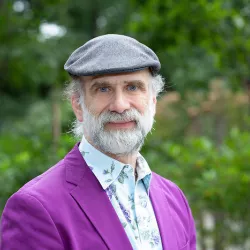
Bruce Schneier is a Lecturer in Public Policy at the Harvard Kennedy School and a Fellow at the Berkman-Klein Center for Internet and Society at Harvard University. His work focuses on cybersecurity, privacy, and the societal implications of technology. Schneier holds adjunct roles at Inrupt, Inc., and serves on the boards of the Electronic Frontier Foundation and AccessNow. He is a leading voice on AI ethics, data protection, and government surveillance. Education and professional background are not explicitly detailed in the text, though his academic and industry roles indicate extensive expertise in security and public policy. Research interests include the balance between security and privacy, AI governance, and the impact of technology on democracy. His influential writings, including 14 books and hundreds of articles, explore topics like encryption, AI risks, and cyber threats. Recent work emphasizes AI’s societal challenges, such as job displacement, legislative drafting, and election integrity. He has testified before Congress and advised on federal cybersecurity policies. Awards include his fellowship at the Berkman-Klein Center. Schneier collaborates frequently with Nathan Sanders and others on AI-related projects, advocating for transparent and accountable technological development. His advocacy spans academic, corporate, and governmental sectors, emphasizing the need for ethical frameworks in emerging technologies.
Caitriona M. O'Driscoll is Professor and Chair of Pharmaceutics at University College Cork's School of Pharmacy, Ireland. With over four decades of academic experience, she previously served as Head of the School of Pharmacy at UCC from 2003-2009 and 2010-2013. Her established drug delivery research team spans from pre-formulation through to production and manufacture of prototype delivery systems suitable for clinical trial, with strong industry links underpinning many research projects. Her research interests focus on translational drug delivery with emphasis on 'problem' drugs including poorly water soluble compounds and biopharmaceuticals like peptide/protein drugs, plasma DNA and siRNA. She develops nano-sized delivery constructs that are robust enough to survive processing, stable on storage, and achieve cell/site specific delivery in vivo. Greater than 40% of new chemical entities are poorly water soluble Biopharmaceuticals now approach 50% of all new drugs in development Major barrier is design of efficient delivery systems Special focus on oral drug delivery despite challenges Analysis of her recent publications reveals a strong emphasis on targeted nanodelivery systems for cancer therapy, particularly prostate and colorectal cancer, as well as neurodegenerative diseases like Huntington's. Her work demonstrates expertise in cyclodextrin-based nanoparticles, siRNA delivery, and disease-specific formulations that account for conditions like Crohn's disease that affect drug delivery. Scientific awards include: 'Person of the Year award' by Parenteral Drug Association (Ireland Chapter) in 2013 'Award for Professional Excellence' by Helix Health in 2007/2008 'Award for Pharmacist of the Year' by Helix Health in 2007/2008 With €10.5M in career research income and 25 PhDs graduated, Professor O'Driscoll's work has attracted funding from diverse sources including Science Foundation Ireland, Enterprise Ireland, and industry partners. Her research group maintains strong links with Pharmaceutical Chemistry and Process & Chemical Engineering at UCC, creating a unique strength for drug development research from design through to clinical trial. She has served as external examiner for multiple universities and as PhD thesis examiner at institutions worldwide. Her research team operates within UCC's drug delivery group, which has established expertise spanning from pre-formulation through to production and manufacture of prototype delivery systems. The group maintains strong industry connections and offers various PhD positions, focusing particularly on translational research with product-driven applications.
Sheelagh Carpendale is a Professor and Canada Research Chair in Information Visualization at Simon Fraser University's School of Computing Science. Her research focuses on Information Visualization, Interaction Design, and Human-Computer Interaction, with a strong emphasis on large display interaction, visual analytics, and personal visualization. She leads the Innovations in Visualization Interactive Experiences (ixLab) and has contributed to over 200 publications. Education: PhD (Computing Science, Simon Fraser University, 1999); BSc (Computing Science, Simon Fraser University, 1992). Research Interests: Dr. Carpendale's work bridges theory and practice, emphasizing user-centered design and interdisciplinary collaboration. Key areas include data physicalization (e.g., Kirigami-inspired visualizations), interactive technologies for healthcare, and educational tools like TangiBooks for programming concepts. Her lab explores novel interaction paradigms for large displays and mobile devices. Recognition: Recipient of the 2018 IEEE Visualization Career Award, numerous best paper awards, and leadership roles in conferences like IEEE VIS. Her contributions span academic, industrial, and public engagement contexts, including projects on clinical decision support and public data literacy. Grants & Labs: Active in securing research grants for projects like the Arctic Movement visualization and Energy Data initiatives. The ixLab collaborates with artists, scientists, and healthcare professionals to create impactful visualizations.
Linda J. Peake is a Professor at York University in the Faculty of Environmental and Urban Change. She previously served as Director of The City Institute (2013–2023) and is a leading feminist geographer specializing in urbanization, gendered urban insecurities, and marginalized communities in the global south, particularly Guyana. Her work intersects with mental health advocacy, co-chairing the AAG Affinity Group on Mental Health. Education : PhD in Political Geography, University of Reading BA (Honours) in Geography, University of Reading Research Interests : Focuses on feminist and anti-racist geographies, urban placemaking, mental health in academia, and global south urbanization. She co-leads the SSHRC-funded GenUrb project investigating gendered urbanization impacts in six global south cities. Recent Projects : GenUrb Partnership Grant (2017–2024) Summer Institute in Urban Studies (2022) China-Canada Initiative on Urbanization (2020–2021) Publications : Recent works include Urbanization in a Global Context (2nd ed., 2022) and A Feminist Urban Theory for Our Time (2021) . Her articles address feminist urban theory, pandemic impacts, and decolonial methodologies. Awards : Honors include the AAG Lifetime Achievement Award (2023), Fellow of the Royal Society of Canada (2022), and multiple research excellence awards from York University. Editorial Roles : Serves on editorial boards of Urban Geography and Signs: Journal of Women in Culture and Society .
Dr. Monika Dacka is an Assistant Professor at the Department of Developmental Psychology, Faculty of Social Sciences, John Paul II Catholic University of Lublin. Her research focuses on personality development, procrastination behaviors, moral intelligence, and psychosocial challenges across life stages. Academic Rank: Assistant Professor Institution: John Paul II Catholic University of Lublin Key Research Areas: Developmental Psychology, Personality Psychology, Adolescent Risk Behaviors Her recent work examines time perception in digital contexts, the quarter-life crisis, and moral development in young adults. She actively reviews for journals like Annales Universitatis Mariae Curie-Skłodowska and Seminare. Poszukiwania naukowe . Dr. Dacka supervises master's theses on topics spanning adolescent procrastination, helicopter parenting, and social media challenges. She contributes to educational workshops on judicial mediation, forensic psychology, and pandemic-era coping strategies. Notable projects include the adaptation of the Developmental Crisis Questionnaire (DCQ-12) and participation in international conferences on Kazimierz Dąbrowski's psychological theories. Her publications address chronic fatigue in adolescents, sexual abuse prevention, and health behavior transformations.
Noah Molotch is a Professor of Geography at the University of Colorado Boulder, where he serves as Director of the Mountain Hydrology Group and is a Fellow of INSTAAR (Institute of Arctic and Alpine Research). His research and teaching focus on hydrologic processes in mountainous regions with expertise in snow hydrology, remote sensing, and ecohydrology. Molotch earned his Ph.D. from The University of Arizona in 2004. His research utilizes ground-based observations, remote sensing, and computational modeling to understand hydrological processes, particularly snow distribution and water-carbon-nitrogen fluxes in mountain ecosystems. His work has significant implications for sustainable resource management and environmental policy. His recent publications show a strong focus on snow water equivalent estimation, snowmelt timing impacts on forest productivity, and the development of advanced remote sensing techniques for monitoring mountain hydrology. His research increasingly addresses climate change impacts on water resources, with particular attention to the Western United States. Fellow of INSTAAR Art+Science fellowship in partnership with artist Hannah Taylor Molotch advises numerous graduate students and leads significant research projects including those funded by NASA and NSF. His Mountain Hydrology Group operates field sites across the Western U.S., including Storm Peak Laboratory and Niwot Ridge Long Term Ecological Research Program. The group produces near-real-time snow water equivalent estimates and contributes to the Snow Today website at the National Snow and Ice Data Center.
Dr. Leah S. Horvath is an Associate Professor and Program Director at the Illinois School of Professional Psychology (ISPP) within National Louis University. She holds a PhD in Clinical Psychology from the University of Kentucky, with prior degrees from the University of Illinois, Urbana-Champaign. Her clinical expertise includes Dialectical Behavior Therapy (DBT), cognitive-behavioral treatments for anxiety, PTSD, trauma, and eating disorders, alongside mindfulness-based interventions. She has specialized training from Yale-New Haven Psychiatric Hospital and New York University. Education: PhD, Clinical Psychology, University of Kentucky MS, Clinical Psychology, University of Kentucky BS, Psychology, University of Illinois, Urbana-Champaign Research & Clinical Focus: DBT and exposure-based therapies Treatment of eating disorders and self-harming behaviors Romantic relationships dynamics Professional development of psychologists Affiliations: Licensed clinical psychologist in Illinois, active in teaching (courses like PSYD711/712, PSYD820/821), and clinical supervision. She emphasizes client-centered care and training future psychologists. Personal Interests: Enjoys yoga, theater, Chicago tourism, and family time.
Christopher Parlett is a **Lecturer** in the **CE - Academic & Research** division at the University of Manchester, concurrently serving as a **University of Manchester-Diamond Light Source Research Fellow in Catalysis**. He leads research at the **University of Manchester at Harwell group**, focusing on heterogeneous catalytic systems and operando X-ray spectroscopy to study catalytic active sites. His work emphasizes sustainable chemical conversions, including selective oxidations and biomass upgrading, alongside functional nanomaterials for applications in gas storage and healthcare. **Education**: PhD in Chemistry from Cardiff University (under Professors Adam F. Lee and Karen Wilson), MSc in Green Chemistry from the University of York, and BSc in Chemistry from Anglia Ruskin University. **Research Themes**: Catalyst design, metal-support interactions, porous oxide materials, and operando X-ray absorption spectroscopy. His projects aim to develop nano-engineered materials for industrial applications, replacing costly and environmentally harmful reagents. **Key Activities**: Organized the 25th Annual Green Chemistry & Engineering Conference (2021), co-edits the *Emergent Materials* journal, and chairs the SCI Early Careers Materials Committee. Active in professional organizations like the Institution of Chemical Engineers. **Grants & Projects**: Principal Investigator for the ongoing *UoMaH: The University of Manchester at Harwell* project (since 2018), exploring nanoparticles, catalytic reactions, and advanced materials. **Labs/Teams**: Part of the Manchester at Harwell research hub, collaborating on synchrotron-based studies and catalytic material development.