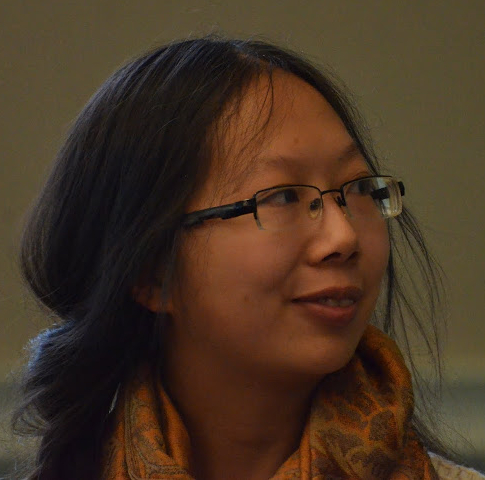
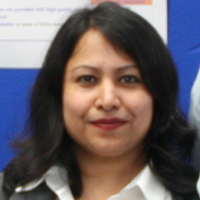
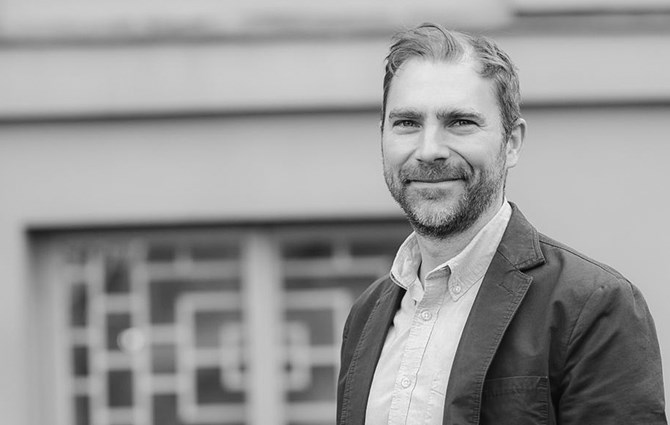
Mai Ha Vu is an Assistant Professor at the University of Toronto Mississauga , split between the Department of Language Studies and the Department of Mathematics, Computer Science, and Statistics . Her work bridges theoretical linguistics, computational methods, and biological data modeling. Ph.D. in Linguistics, University of Delaware (2020) M.A. in Linguistics, University of Delaware (2014) B.A. in Psychology and Linguistics, Grinnell College (2013) Research focuses on applying formal language theory to understand human language patterns and train biologically reliable language models . Recent work includes antibody language modeling (Nature Computational Sciences 2022) and syntax-prosody mapping via logical transductions (SIGMORPHON 2022). Key research trends in publications: interdisciplinary applications of computational linguistics to immunology, psycholinguistic modeling of neural language models, and formal syntactic analysis of negation and wh-questions across languages.
Professor Anna Korre is a leading academic in Environmental Engineering at Imperial College London's Faculty of Engineering. She serves as Associate Provost (Sustainability) and held the role of Co-Director of Energy Futures Lab (2018-2024). Her primary affiliation is with the Department of Earth Science & Engineering, where she leads the Minerals, Energy and Environmental Engineering Research Group. Her research focuses on risk modeling, environmental impact assessments, and engineering solutions for sustainable resource production and decarbonization. Key areas include carbon capture and storage (CCS), geothermal energy, and life cycle analysis of industrial systems. Affiliations: Energy Futures Lab, Institute for Molecular Science & Engineering, Minerals, Energy and Environmental Engineering Group Committee Roles: Chair of Earth Science & Engineering Sustainability Committee, member of University Sustainability Strategy Committee Her work integrates computational modeling, artificial intelligence, and multi-disciplinary collaboration to address global energy challenges. Over 150+ peer-reviewed publications and high-impact projects funded by UKRI, EU, and industry partners demonstrate her leadership in advancing sustainable technologies. She has appeared in media including BBC's The Life Scientific podcast discussing carbon capture innovations. Research highlights include optimizing CO2 storage networks, assessing geothermal reservoir risks, and evaluating lithium production sustainability. She champions industry-academia partnerships to translate research into real-world decarbonization solutions.
Prof. Vesa Välimäki is an Audio Signal Processing Professor at Aalto University's School of Electrical Engineering, leading the Audio Signal Processing Research Group within the Aalto Acoustics Lab. He also serves as Vice Dean for Research and Head of the Doctoral Programme at the university. His research focuses on digital signal processing, machine learning, and their applications in audio, acoustics, and music technology, particularly in artificial reverberation, audio filter design, and virtual analog modeling. He has pioneered techniques like velvet noise for reverberation synthesis and contributed to open-source tools like FLAMO. His academic accolades include IEEE, AES, and AAIA Fellowships, along with multiple best paper awards at venues like DAFx and ICASSP. He has advised numerous students, including recipients of prestigious awards like the Huawei Master's Thesis Award. Prof. Välimäki has held editorial roles at the Journal of the Audio Engineering Society and organized major conferences such as SMC-17. His work extends to applied projects like acoustic optimization for early childhood education facilities and immersive audio in virtual reality (e.g., the 'Space Walk' project). Key Projects: NordicSMC (Nordic University Hub for Sound and Music Computing), Aalto Acoustics Lab, FLAMO library Grants: NordForsk funding (2018–2023), Foundation for Aalto University Science and Technology His research spans both theoretical advancements (e.g., diffusion models for audio restoration) and practical implementations (e.g., real-time equalizers, headphone compensation systems). He collaborates internationally, contributing to acoustic measurement techniques and noise reduction strategies for diverse environments.
Professor David Taubman is a distinguished academic serving as Professor and Deputy Head of School (Research) at the School of Electrical Engineering and Telecommunications (EE&T) at the University of New South Wales (UNSW) in Sydney, Australia. He is also co-director of Kakadu Software Pty. Ltd. and its affiliates Kakadu R&D and Kakadu GPU. With a career spanning over three decades, Professor Taubman has made significant contributions to the field of image and video compression, most notably as the author of the EBCOT coding algorithm adopted in the JPEG2000 international standard. Professor Taubman earned his B.Sc. in Mathematics and Computer Science (1986) and B.E. (Medal) in Electrical Engineering (1988) from the University of Sydney, followed by an M.Sc. (1992) and Ph.D. (1994) in Electrical Engineering from the University of California at Berkeley. His professional journey includes engineering work at the Electricity Commission of N.S.W. (1988-1990), research positions at Hewlett-Packard Laboratories in Palo Alto (1994-1998), and an academic career at UNSW where he progressed from Senior Lecturer (1998-2003) to Associate Professor (2004-2009) and finally to Professor (2009-present). He has held various leadership roles including Head of the EE&T Telecommunications Research Group (2003-2014), Head of the EE&T Signal Processing Research Group (2014-present), Director of Research for the School of EE&T (2011-2016), and Deputy Head of School (Research) since 2017. Professor Taubman's research interests center on image and video compression, with particular expertise in JPEG2000 standards and implementations. His work spans signal processing, wavelet transforms, scalable video coding, motion modeling, and multimedia systems. He has pioneered numerous compression algorithms and frameworks, including the EBCOT coding algorithm that became central to the JPEG2000 standard. His recent research focuses on efficient motion modeling with cuboidal partitioning, learned lifting-based transform structures, and high-throughput implementations of JPEG2000 for video applications. His work bridges theoretical foundations with practical implementations, as evidenced by the commercially successful Kakadu Software tools that have garnered around 500 commercial licensees. Analysis of Professor Taubman's recent publications reveals a consistent focus on advancing compression technologies with particular emphasis on scalability, efficiency, and adaptability. His work spans traditional image compression (JPEG2000 extensions), video coding (cuboid-based partitioning for UHD/360-degree video), and emerging applications (nanopore sequencing data compression). A notable trend is the integration of machine learning techniques with traditional compression frameworks, as seen in his work on learned lifting-based transform structures. His research maintains strong connections to real-world applications across diverse domains including medical imaging, astronomical data processing, and genomic sequencing. IEEE Fellow Engineers Australia Fellow (by invitation) Professor Taubman has served as Associate Editor for the IEEE Transactions on Image Processing for two four-year appointments (2003-2005 and 2010-2013). He has been actively involved in numerous research grants focused on image and video compression technologies, particularly those related to the JPEG2000 standard and its extensions. His work has received significant industry support, reflected in his consultancy with various U.S., Japanese, and Australian corporations. He has also contributed to international standards development as a member of Standards Australia Technical Committee MS-065 (mirroring ISO TC42 on Digital Photography) and as a constitutional member of Standards Australia Technical Committee IT-029 (Coded Representation of Picture, Audio and Multimedia/Hypermedia Information). Professor Taubman co-directs Kakadu Software Pty. Ltd. and its research affiliates Kakadu R&D and Kakadu GPU, which have developed the commercially successful Kakadu Software tools for JPEG2000. His research group at UNSW focuses on advanced image and video compression techniques, with particular expertise in wavelet-based methods, scalable coding, and motion modeling. The group maintains strong industry connections and has contributed significantly to the development and standardization of image compression technologies worldwide.
Professor Jing Meng is a leading academic at University College London's Bartlett School of Sustainable Construction, holding the position since 2023 after progressing from Lecturer (2019-2021) to Associate Professor (2021-2023). She concurrently serves as a fellow at the Cambridge Centre for Environment, Energy and Natural Resource Governance and maintains active editorial roles as Executive Editor of the Journal of Cleaner Production and Associate Editor for Journal of Geophysical Research: Atmospheres. Her research spans three interconnected domains: Energy Transitions and Technology Innovation (examining cost forecasts and structural emission declines in China), Climate Change Policies (analyzing South-South trade effects and multinational enterprise emissions), and Emission-Health-Socioeconomics Nexus (assessing air pollution impacts and integrated co-mitigation strategies). This interdisciplinary approach is reflected in her publication record across Nature family journals and PNAS. Analysis of her recent publications reveals a consistent focus on global carbon accounting methodologies, with increasing attention to subnational (city-level) analyses, health co-benefits of climate policies, and technological innovation pathways for hard-to-abate sectors. Her work frequently employs multi-regional input-output modeling to trace emissions through complex supply chains. AGU Global Environmental Change Early Career Award (2023) MIT Technology Review Innovators Under 35 Asia Pacific (2022) Clarivate Highly Cited Researcher (2020-2024) Nature Communications Top 50 Earth Sciences Article (2018) MDPI Emerging Sustainability Leader Award (2020) Environmental Research Letters Best Early Career Article (2017) Professor Meng has secured substantial funding from diverse sources including NERC, the British Council, Quadrature Climate Foundation, The Royal Society, and UCL internal grants. She leads an interdisciplinary research group focused on technology innovation and climate policy, with particular emphasis on China's role in global emissions systems. Her work directly supports Sustainable Development Goal 13 (Climate Action) through actionable policy insights.
Markku Karjalainen is a Professor in the Department of Architecture at Tampere University's Faculty of Built Environment. With over 80 research publications spanning from 2016 to 2025, he has established himself as a leading expert in timber construction and wooden building systems in Finland. Professor Karjalainen's research primarily focuses on timber construction , particularly multi-story wooden buildings, dovetail wood construction techniques, and sustainable building practices. His work spans architectural design, structural engineering, fire safety, and environmental impact assessment of wooden structures. He has conducted extensive statistical analyses of Finnish timber residential buildings, examining construction practices from 1995 to the present. His research demonstrates a strong commitment to advancing wooden construction technologies while addressing practical challenges in fire safety, structural performance, and building physics. Analysis of his recent publications (2023-2025) reveals a consistent focus on dovetail construction techniques for mass timber elements, with numerous studies examining structural performance, fire properties, and air permeance. His work bridges theoretical research with practical applications in the construction industry, particularly in Finland where wooden multi-story construction has seen significant growth. Karjalainen's research often involves international collaboration, with studies comparing practices across different countries and examining global perspectives on timber construction. His scholarly output demonstrates a methodical progression from basic statistical analysis of building practices to increasingly sophisticated investigations of specific construction techniques and their performance characteristics. This evolution reflects both his growing expertise and the maturation of timber construction as a field of academic inquiry.
Dr. Bence Borda is an Assistant Professor in Mathematics at the University of Sussex, affiliated with the School of Mathematical and Physical Sciences. He holds a PhD from Rutgers University (2016), advised by József Beck, and has held postdoctoral positions at the Alfréd Rényi Institute of Mathematics (2017–2019) and Graz University of Technology (2019–2024), supported by a Lise Meitner Fellowship (FWF) from 2022–2024. PhD: Mathematics, Rutgers University (2016) His research lies at the intersection of probabilistic number theory , Diophantine approximation , random walks on groups , and harmonic analysis , with a focus on equidistribution theory and discrepancy measures. Recent publications explore limit laws for cotangent sums, quantum modular forms, and stochastic behavior in number-theoretic sequences. Key trends in his work include the use of Wasserstein metrics for quantifying equidistribution, random matrix eigenvalues in compact groups, and determinantal point processes on geometric manifolds. His contributions span both theoretical analysis and computational applications. Scientific Awards Lise Meitner Fellowship (FWF), 2022–2024 He has supervised teaching at institutions including Rutgers University and Budapest Semesters in Mathematics, covering calculus, analysis, and graduate-level courses. He co-organized the 2025 Analysis and Optimal Transport Workshop at Sussex and actively participates in international conferences.
Gabor Virag is an Associate Professor of Economic Policy Analysis at the University of Toronto, Mississauga , with a cross-appointment to the Rotman School of Management . He serves as the PhD Coordinator for the Economic Analysis and Policy area. His research focuses on market dynamics, auction theory, and search theory, with a particular interest in decentralized market interactions and information policy. Education : PhD in Economics from Princeton University, MA from Central European University, BA from Budapest University of Technology and Economics. Research Interests : Economic Theory, Industrial Organization, Game Theory, and their applications to dynamic contests, patent markets, and labor economics. Publications : His work appears in top-tier journals such as the American Economic Journal, Games and Economic Behavior, and Review of Economic Studies, emphasizing auctions with resale, innovation prizes, and wage inequality. Collaborations : Co-author of studies with scholars from Bocconi University, Claremont McKenna College, and the Hungarian Academy of Sciences.
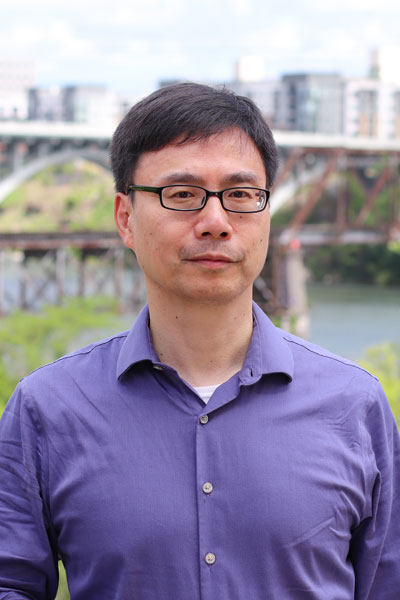
Mingzhou Jin is a Professor and Department Head in the Department of Industrial and Systems Engineering at the University of Tennessee, Knoxville, within the Tickle College of Engineering. He also directs the Institute for a Secure and Sustainable Environment (ISSE) and the FERSC Center, a DOT/UTC Tier-1 Center. Holding the John D. Tickle Professorship, he is a recognized leader in sustainability, optimization, logistics, and smart manufacturing. PhD, Industrial and Systems Engineering, Lehigh University, 2001 MS, Management Science, Zhejiang University, 1998 BS, Electrical Engineering and Mixed Class, Zhejiang University, 1995 Dr. Jin's research focuses on sustainability, climate change, transportation and logistics, supply chain engineering, additive and smart manufacturing, and energy efficiency. His work integrates operations research and systems engineering to solve complex environmental and industrial challenges. He has secured over $19 million in research funding from agencies including NSF, DOE, DOT, DHS, and industry partners like FedEx, Boeing, and Schneider Electric. His recent publications span high-impact journals such as Nature , Nature Communications , and European Journal of Operational Research , with themes in net-zero strategies, wildfire modeling, smart manufacturing, and sustainable supply chains. The research demonstrates a strong trend toward interdisciplinary, data-driven solutions for global environmental and industrial systems. 2023 Dr. Kenneth Kirby Endowed Faculty Award 2021 UTK Award for Success in Multidisciplinary Research 2020 UTK Chancellor’s Research and Creative Achievement Award 2020 TCE Research Achievement Award IISE Fellow (2018) Multiple teaching, advising, and service awards from TCE and UTK Dr. Jin has advised numerous graduate students and led large-scale research initiatives. He has served as Editor-in-Chief of Cleaner and Circular Bioeconomy , Executive Editor of Journal of Cleaner Production , and held leadership roles in IISE. His research has been supported by extensive grants from federal agencies and industry, reflecting strong collaboration and real-world impact. He also held adjunct professorships at Zhejiang University and Central South University of Forestry and Technology. He leads the Institute for a Secure and Sustainable Environment (ISSE) and the FERSC Center, fostering interdisciplinary research in sustainability, energy, and resilient infrastructure. These centers bring together experts from engineering, environmental science, and policy to address pressing global challenges through systems-level innovation.
Dr. Sumsun Naher is a Senior Lecturer in the Department of Engineering at City, University of London , where she has worked since 2013. Previously, she served as Lecturer and Research Development Officer at Dublin City University (2006–2013) and as Scientific Officer at Bangladesh Council of Scientific & Industrial Research (1998–2000). Her academic career includes a Post Graduate Diploma in Academic Practice from City, University of London. PhD , School of Mechanical & Manufacturing Engineering, Dublin City University MSc , Materials & Metallurgical Engineering, Bangladesh University of Engineering and Technology BSc , Materials & Metallurgical Engineering, Bangladesh University of Engineering and Technology Her research focuses on semi-solid processing , laser processing , simulation & modelling of materials technologies , and materials characterisation . Recent work explores cellulose nanofiber-based water filters for antibiotic removal and phase change materials in geothermal energy systems. Key article trends reveal expertise in: Laser Surface Modification of metals and composites Advanced Casting Methodologies and semi-solid metal forming Nanoparticle Reinforcement in metal matrix composites Thermal Modelling for energy systems Sustainable Material Solutions in water treatment and energy Computational Materials Science via finite element analysis Naher has received the DCU Invent Commercialisation Award (2011) and holds fellowships from IMechE , Institute of Materials, Minerals & Mining , and Advance Higher Education Authority . She actively reviews for funding bodies and examines PhD theses internationally. As an organiser of the ESAFORM Conference and co-organiser of its Additive Manufacturing symposium since 2017, she contributes to academic leadership. Her professional roles include Board of Directors for the European Association of Materials Forming and participation in EU COST Action projects (Thixoforming, Thixosteel, Nanostructured Materials).
Roine Vestman is a Professor of Economics at Stockholm University and a visiting researcher at the Swedish House of Finance. He serves as the director for CeMoF and is a Research Fellow at CEPR. Additionally, he holds significant advisory positions including board member at AP7 (Sjunde AP-fonden), scientific advisor to the Swedish Debt Office (Riksgälden), and has previously advised the Swedish FSA (Finansinspektionen) and government inquiries on macroprudential policy. Vestman's educational background includes: Ph.D. in Economics from New York University, USA M.Sc. degree from Stockholm School of Economics Professor Vestman's research focuses on household finance, examining how individuals make consumption, savings, and housing decisions and how these choices impact the broader economy. His work specifically investigates pension plan design, the functioning of mutual fund industries, and household debt dynamics. His research combines theoretical models with empirical analysis of detailed Swedish data to provide insights into financial behavior and policy implications. Vestman has made significant contributions to understanding how default options in pension systems can be optimized to improve outcomes for passive investors. His recent publications demonstrate a strong focus on household financial decision-making, with particular attention to pension systems, housing markets, and investment behavior. Vestman's work often employs sophisticated empirical methods using detailed administrative data from Sweden, allowing for nuanced analysis of household financial behavior. A recurring theme across his publications is the examination of how financial institutions and policies affect individual economic outcomes, with implications for designing better financial products and regulatory frameworks. Through his advisory roles at AP7, the Swedish Debt Office, and previous engagements with Sveriges Riksbank and Finansinspektionen, Vestman actively translates his research into practical policy recommendations. His work on default pension fund allocation has particularly influenced discussions about how to improve retirement savings systems through personalized approaches that consider individual financial circumstances beyond just age.
Eunchun Park serves as an Assistant Professor in the Department of Agricultural Economics and Agribusiness at the University of Arkansas, concurrently holding the position of Director of the Experiment Station (DREX). A specialist in Bayesian spatial statistics and econometrics, his research focuses on agricultural risk analysis with particular emphasis on crop insurance mechanisms and financial commodity markets. His methodological expertise addresses critical data scarcity challenges in federal crop insurance premium calculations through advanced spatial modeling techniques. Dr. Park's academic foundation includes: Ph.D. in Agricultural Economics from Oklahoma State University (2017) M.S. in Food and Resource Economics from Korea University (2013) B.S. in Food and Resource Economics from Korea University (2010) His research program centers on extreme price and yield risk quantification in agricultural commodities, employing sophisticated Bayesian modeling frameworks to overcome data limitations in spatial risk assessment. Current work develops innovative approaches for measuring catastrophic risks in crop production systems and refining insurance rating structures through spatial smoothing of yield densities. This research bridges theoretical econometric advances with practical applications for risk management tools used by farmers and policymakers. Analysis of Dr. Park's recent publications reveals a consistent trajectory in spatial risk modeling for agricultural insurance systems, with increasing focus on prevented planting coverage factors, commodity market volatility around information releases, and climate-related production risks. His work demonstrates methodological progression from theoretical Bayesian frameworks toward actionable risk assessment tools, particularly through the application of kriging techniques to non-normal yield distributions and extreme event modeling. Dr. Park's scholarly contributions have been recognized through: Outstanding Contribution to Applied Risk Analysis Award (2020) from the Agricultural and Applied Economics Association Outstanding Graduate Student Paper Award (2018) from the Agricultural and Applied Economics Association Outstanding Doctoral Dissertation Award (2018) from the Southern Agricultural Economics Association While specific details of current advisees and grant funding are not provided in available materials, his active publication record in top agricultural economics journals suggests an ongoing mentorship role for graduate students and potential involvement in externally funded research initiatives related to agricultural risk management. His work on spatial smoothing techniques and extreme risk modeling likely informs collaborative projects with agricultural extension services and federal risk management agencies. No specific laboratory facilities or dedicated research teams are mentioned in the available documentation, though his methodological expertise suggests collaboration with spatial statistics and agricultural risk modeling groups within the university's research infrastructure.
Andrea Burattin is an Associate Professor at the Department of Applied Mathematics and Computer Science, Technical University of Denmark. His work bridges formal methods and practical process analysis, focusing on process mining, business process management, and hybrid modeling techniques. He actively contributes to research in healthcare process optimization, streaming data analysis, and system verification through Petri nets and CCS transformations. UN Sustainable Development Goals: Poverty eradication, environmental protection, and prosperity for all (via process optimization) Active projects: Immersive Process Mining (2024-2027), Usability and Understandability of Hybrid Process Models (2018-2021) His research explores large language model integration with process mining, proposing frameworks like Tiramisù for multi-faceted process visualization and PN2CCS for formal model translation. Recent work emphasizes real-time monitoring, conformance checking, and IoT-driven process analytics. Key trends in his publications include: 1) Streaming process mining pipelines (2022-2025); 2) LLM-plan generation frameworks (2024); 3) Formal verification techniques (Petri nets, CCS); 4) Healthcare process modeling (2019-2023); 5) Behavioral pattern analysis in process compliance. Scientific Awards Best Demo Award (2022, 2016) Best Process Mining Dissertation Award (2014) Best Workshop Paper (EDBA and PODS4H, 2023) As advisor, he supervises PhD projects on process mining and hybrid modeling. His editorial roles include Information Systems reviewer (2024-2025) and past editor for Engineering Applications of AI (2022-2023). Collaborations span Denmark, Italy, and the Netherlands.
Aleksandar Mihajlovic is a researcher and Art Director at Singidunum University, Serbia. With a doctoral degree in Contemporary Business Decision-Making (2022), a master's in Business Economics (2014), and a bachelor's in Computer Graphics and Design (2008), he combines academic rigor with creative leadership in the university's marketing strategy. Doctoral studies: Contemporary Business Decision-Making, Singidunum University (2022) Master studies: Business Economics, Singidunum University (2008–2014) Undergraduate: Computer Graphics and Design, Faculty of Informatics and Management (2005–2008) High school: Robotics and Flexible Production Systems Technician, Polytechnic Academy (1995–1999) His research spans visual communication , digital marketing , and artificial intelligence applications in creative industries. Key contributions include Co-authoring 11 academic papers (2015–2025) on topics like Instagram ad effectiveness, techno-feudalism, and responsive logo design. Developing the scientific research portal 'Singipedia' and international magazine 'SingiLogos'. Participating in 7 global projects including Erasmus+ and TEMPUS initiatives. His scientific awards include the JISA Discobolos Special Award (2010), IT Globus Award (2010), and Grafima Fair Special Award (2025). He serves on the organizing committee for conferences like Sinteza and Sitcon , and has judged marketing competitions while volunteering for NGOs like the City Organization of the Deaf of Belgrade.
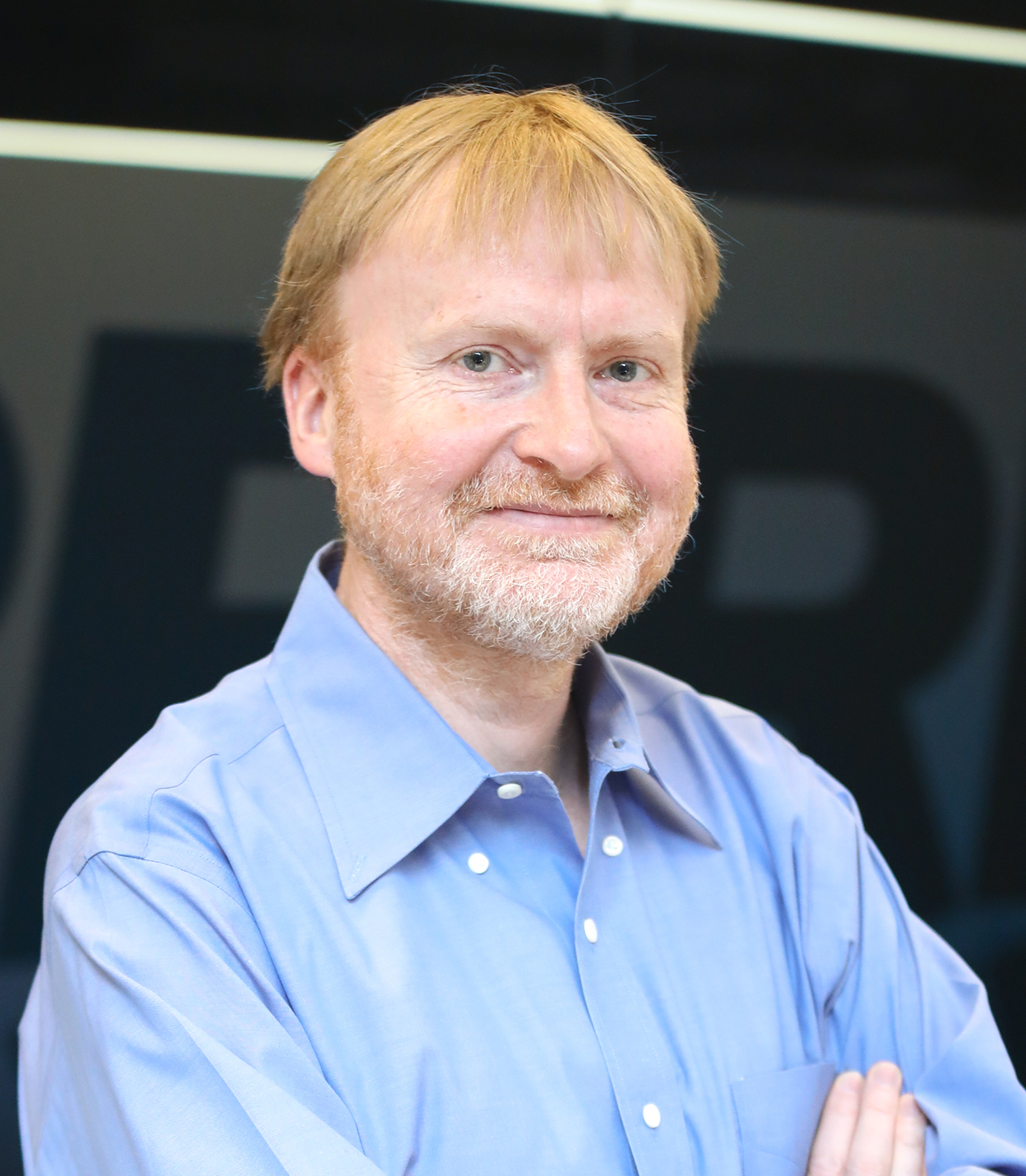
Herman Bruyninckx is a Part-Time Full Professor at Eindhoven University of Technology (TU/e) in the Mechanical Engineering department, specifically within the Control Systems Technology group and EAISI High Tech Systems initiative. He also serves as a professor (Hoogleraar) at KU Leuven in Belgium. Academic focus on robotics, control systems, and multi-agent coordination Active research in model predictive control , semantic mapping , and dynamic constraint algorithms Recent publications address industrial automation , agro-food robotics , and haptic technology Research Highlights : Developed hybrid decision-making frameworks for multi-agent navigation Innovated swing-free control methods for robotic pick-and-place operations Formulated constrained dynamics algorithms with LQR-Gauss principle integration Created ExoTen-Glove for haptic feedback in virtual environments Collaborative Projects : Coordinated with researchers like René van de Molengraft , Elena Torta , and Koen de Vos Contributed to NWO/TTW FlexCRAFT project for cognitive robotics in agro-food technology