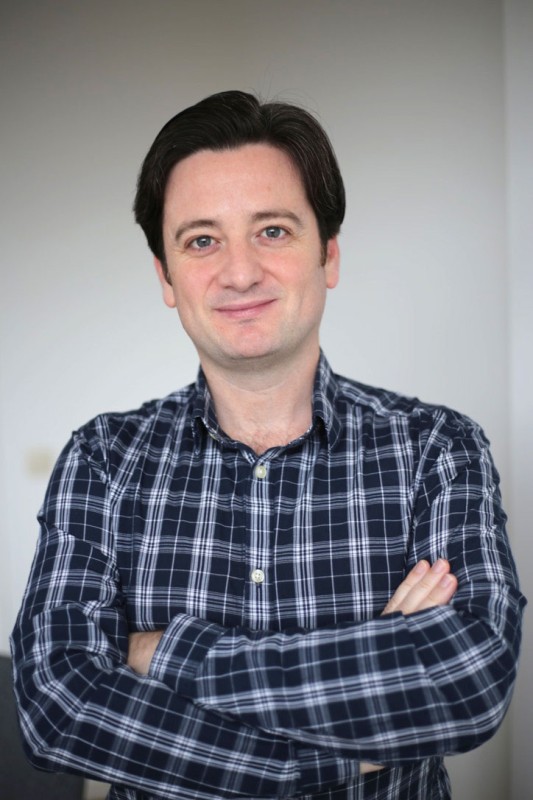
Prof. Dr. Gonzalo Guillén Gosálbez is a Full Professor at the Department of Chemistry and Applied Biosciences , ETH Zürich. He holds a PhD in Process Systems Engineering (UPC, 2005) and has held academic positions at Imperial College London (Reader), University of Manchester (Senior Lecturer), and Universitat Rovira i Virgili (Assistant/Associate Professor). His research focuses on Sustainable Chemical Processes , integrating life cycle assessment, optimization techniques, and planetary boundary analysis to evaluate and design low-carbon technologies. Current position: Full Professor, ETH Zürich (2019–present) Prior roles: Imperial College London (2016–2019), University of Manchester (2014–2016), URV Spain (2008–2014) Education: PhD (UPC, 2005), MEng/BEng (University of Murcia) His research explores CO2 valorization , green methanol synthesis , circular marine fuels , and planetary boundary compliance in energy and chemical systems. Recent work emphasizes machine learning for process modeling, single-atom catalysis , and decentralized ammonia production . Scientific contributions include 15+ peer-reviewed articles (2023–2025) in journals like Nature Chemical Engineering , ACS Sustainable Chemistry & Engineering , and Energy & Environmental Science . Key themes: Optimization of hybrid fossil/renewable carbon systems Environmental impacts of energy transitions Catalyst design for sustainable chemistry Life cycle assessment of emerging technologies Awarded UPC Top Doctoral Student Award and Top National Student Award , he combines process systems engineering with sustainability metrics to address global challenges in chemical and energy systems.
Michael Baldea is an Associate Professor in the Department of Chemical Engineering at the University of Texas at Austin . He holds a Ph.D. in Chemical Engineering from the University of Minnesota (2006), with prior degrees from 'Babeş-Bolyai' University in Romania (M.Sc. 2001, Diploma 2000). His research group develops theoretical and computational methods for Process and Energy Systems Engineering , focusing on integrated decision-making, performance optimization, and process intensification with industrial validation. Education: Ph.D., Chemical Engineering, University of Minnesota (2006) M.Sc., Interface Process Engineering, 'Babeş-Bolyai' University (2001) Diploma, Chemical Engineering, 'Babeş-Bolyai' University (2000) Research Thrusts: Integrated decision-making in chemical/energy supply chains Process performance monitoring and optimization Process integration and intensification Key applications include grid-responsive chemical plants, intensified distillation/column designs, and renewable energy integration for building systems. Scientific Awards: Frank A. Liddell, Jr. Fellowship NSF CAREER Award (2015-2020) Moncrief Grand Challenges Faculty Award (2014) AIChE Outstanding Young Researcher Award (2017) Implementation : His group has translated research into commercial tools through partnerships with industrial test beds and is working to integrate methods into commercial simulators. They explore predictive approaches for building energy management and strategic capital investment analysis in next-generation energy systems.
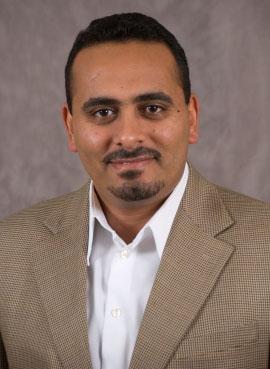
Professor Nagi Gebraeel serves as the Georgia Power Early Career Professor in the H. Milton Stewart School of Industrial and Systems Engineering at Georgia Institute of Technology, where his research integrates predictive analytics, machine learning, and optimization for industrial IoT applications. His work focuses on real-time equipment diagnostics, prognostics, and operational decision-making in critical infrastructure systems. Education: Ph.D. in Industrial Engineering (2003), Purdue University M.S. in Industrial Engineering (1998), Purdue University Research Focus: Dr. Gebraeel develops statistical learning algorithms for IoT-enabled maintenance, repair, and operations (MRO), with emphasis on federated learning frameworks for distributed fault diagnosis and cybersecurity protection against Industrial Control System (ICS) attacks. His research spans manufacturing, power generation, and deep space habitats through NASA's HOME Space Technology Research Institute, where he pioneers self-aware habitat systems. Recent work addresses data heterogeneity in high-consequence industrial environments using causal-informed analytics. Publication Trends: His 2024-2025 publications demonstrate a strong trajectory toward distributionally robust optimization for maintenance logistics, federated learning architectures for distributed fault diagnosis, and prognostics for complex systems like offshore wind farms and industrial robots. Key themes include handling imbalanced data in fault diagnosis, state-space representations for interdependent systems, and cybersecurity integration in manufacturing networks. Awards and Recognition: NSF CAREER Award (2007) SAE Aircraft Electrical Power System Recognition Award (2008) SAE Materials Modeling and Testing Recognition Award (2006) IEEE-AUTOTESTCON Certificate (2006) Fellow of the Institute of Industrial and Systems Engineers Advising and Funding: Dr. Gebraeel mentors doctoral students including Michael Ibrahim (2025 IISE Best Student Paper winner), Heraldo Rozas (now Assistant Professor at University of Chile), Ayush Mohanty, and Nazal Mohamed. He secured a $500,000 NSF grant in August 2025 for AI-driven cybersecurity in distributed manufacturing networks and leads NASA-funded research on deep space habitat systems. His work bridges academic research with industry applications through Georgia Tech's Strategic Energy Institute collaborations. Research Infrastructure: He directs the Analytics and Prognostics Systems laboratory at Georgia Tech's Manufacturing Institute and leads the Predictive Analytics and Intelligent Systems (PAIS) research group. Previously, he served as associate director of Georgia Tech's Strategic Energy Institute (2014-2019), fostering data science applications in energy systems.
Daniel Adelman is the Charles I. Clough, Jr. Professor of Operations Management at the University of Chicago Booth School of Business. He joined the faculty in 1997 after completing his PhD in industrial engineering and operations research at Georgia Tech. Adelman is a leading expert in Business Analytics and Management Analytics, helping companies deploy data and decision analysis to build world-class strategic and tactical management capabilities. Adelman received his PhD in industrial engineering and operations research in 1997, along with a bachelor's degree in industrial engineering and a master's degree in operations research, all from the School of Industrial and Systems Engineering at the Georgia Institute of Technology. Daniel Adelman's research focuses on applying analytical models to solve complex business problems across multiple industries. He has worked with firms from diverse sectors including internet services, chemical distribution, airlines, third party logistics, fiber-optics manufacturing, semiconductor manufacturing, oil, and healthcare. His research integrates real-world data with analytical models to bring structure and discipline to decision and control processes, enabling firms to achieve higher profits with lower risk. Adelman's recent work has concentrated heavily on healthcare analytics, where he leads the Healthcare Analytics Laboratory at Chicago Booth. This lab works with teams of doctoral and MBA students on projects with major healthcare institutions to optimize clinical, operational, and financial outcomes. His research spans foundational operations research including approximate dynamic programming, inventory theory/supply chain management, and revenue management/pricing optimization, as well as examining the linkage between operational performance metrics and financial performance of firms. Adelman's publications show a clear trend toward increasing focus on healthcare applications while maintaining strong theoretical foundations in operations research. His earlier work focused more on general operations management problems like inventory control and supply chain optimization, while his recent publications demonstrate a strategic shift toward healthcare analytics, particularly examining surgical team dynamics, hospital performance metrics, and resource allocation during public health emergencies like the COVID-19 pandemic. George B. Dantzig Prize (1998) for the best dissertation in operations research and management sciences that is innovative and relevant to practice Adelman regularly advises doctoral and MBA students through the Healthcare Analytics Laboratory at Chicago Booth. He has served as Associate Editor for Management Science, currently serves as Associate Editor for Manufacturing and Service Operations Management, and is the Area Editor for Operations and Supply Chain at Operations Research. His industry collaborations include significant projects with Akamai on internet pricing, with GE Global Research Labs on the electricity smart grid, with BP on gasoline supply contract portfolio optimization, and with Symantec on software release planning. Adelman leads the Healthcare Analytics Laboratory at Chicago Booth, which brings together interdisciplinary teams of doctoral and MBA students to work on a portfolio of projects with major healthcare institutions. The lab focuses on optimizing clinical, operational, and financial outcomes through advanced analytics and decision modeling.
Francesco Pilati is an Associate Professor at the Department of Industrial Engineering, University of Trento, where he serves as local coordinator for the scientific field ING-IND/17 (Industrial Plants and Logistic Systems). He chairs the research group on Industrial Plants, Production Systems, and Logistics, and teaches courses in Industrial Plants and Design of Digital Production and Assembly Systems. As coordinator of the Master's program in Management and Industrial Systems Engineering and University Coordinator for the EIT double degree in Zero-Defect Manufacture, Pilati bridges academic leadership with advanced manufacturing research. He has also served as Invited Lecturer at universities in Vienna and Göttingen. His research focuses on integrating environmental sustainability with technical-economic criteria through multi-objective optimization and impact assessment. Key areas include: Distribution networks and warehousing systems Manufacturing and assembly line design Hybrid energy production systems Digitization of manual production processes using depth cameras Recent publications highlight applications of Industry 4.0 technologies to pandemic safety, logistics optimization, and smart manufacturing. Pilati has received significant recognition including the Philip Morris Italia Empowering Research Award (2016) and Autostrade per l'Italia academic recognition. His editorial contributions include guest editing special issues on Digital Twins and Smart Factories in Q1 journals.
Tim Huh is a Professor and Chair of the Operations and Logistics Division at the University of British Columbia's Faculty of Commerce and Business Administration. He specializes in inventory control, supply chain management, and operations research, with a focus on dynamic decision-making under uncertainty. B.A., B.Math, M.Math from University of Waterloo M.A. from Regent College M.S., Ph.D. from Cornell University His research spans theoretical and applied topics including renewable energy systems, healthcare operations, and digital learning analytics. Recent work explores wind power storage optimization, asynchronous video usage in education, and multi-echelon inventory solutions. Scientific recognition includes the Canada Research Chair in Operations Excellence and Business Analytics He teaches core business analytics and operations management courses at both undergraduate and graduate levels, emphasizing quantitative decision-making and process fundamentals.
Nallan C. Suresh is the Associate Dean for Faculty, Research and Centers and a SUNY Distinguished Professor in the Operations Management and Strategy department at the School of Management, University at Buffalo . His work bridges academic research with industry practice, focusing on manufacturing systems, supply chain agility, and sustainable operations. PhD , University of Cincinnati MBA , McMaster University, Canada BTech , Indian Institute of Technology Suresh's research spans cellular manufacturing , flexible automation , forecasting models , and reverse supply chains . He has pioneered frameworks for evaluating manufacturing systems and optimizing supply chain agility through empirical and simulation-based studies. Recent publications emphasize sustainability and disruptive technologies in supply chains, including reverse logistics for plastics recycling and agile responses to catastrophic events using data analytics. His work integrates DEA models , neural networks , and policy analysis . Summer Research Fellowship, University at Buffalo Joseph T.J. Stewart Faculty Scholar Alfred V. Bodine/SME Award for Machine Tool Economics Cleveland Foundation Grant for High Technology Firms Suresh has secured grants totaling over $145,000, advised numerous students, and contributed to global research through empirical studies in the Netherlands and executive training in China/Latvia. His consulting spans automotive, electronics, and manufacturing sectors.
Johan Eklöf is a Professor at Stockholm University within the Department of Ecology, Environment and Plant Sciences . His research emphasizes marine ecology , focusing on interactions between marine biodiversity, environmental conditions (including climate), and societal impacts . He teaches courses such as Management of Aquatic Resources in the Tropics , Marine Ecology for the Biogeo Program , and Ecology II . Research Focus: Causal relationships between biodiversity and ecosystem resilience Foundation species as drivers of ecosystem services Optimizing resource management under climate change Projects: Principal Investigator for FORCE (2023-present), a transdisciplinary Baltic Sea recovery project Contributor to NordSalt (climate impacts on Nordic salt marshes) and PlantFish (Baltic Sea vegetation-fish interactions) Scientific Leadership : Supervises 2 current PhD students and co-supervises 6 additional PhD/postdocs Formerly mentored 4 PhD graduates and >40 MSc students Environmental Context: His work spans Baltic Sea and Western Indian Ocean ecosystems, using seagrass beds , mussel beds , and coastal benthic systems as primary models. Recent publications highlight climate change impacts on trophic cascades , habitat connectivity , and policy frameworks for marine conservation .
Bert DE REYCK is the Dean of the Lee Kong Chian School of Business at Singapore Management University (SMU) and holds the rank of Professor of Operations Management. He holds a PhD in Business Economics from the University of Leuven, Belgium, along with an MSc in Business Information Systems and a BSc in Business Engineering from the same institution. His career includes roles as Founding Director and Professor at UCL School of Management (2015–2021), Professor and Head of Department at University College London (2009–2015), and various visiting professorships at institutions like London Business School and the University of Ghent. He has held academic positions since 1998, including Assistant and Associate Professor roles at prestigious institutions such as the London Business School and Rotterdam School of Management. DE REYCK’s research focuses on Operations Management, Business Analytics, and Project Management, with notable contributions to AI applications, transportation systems, and strategic sourcing. His work bridges theoretical rigor and practical impact, addressing challenges in project valuation, contract design, and operations optimization. He has received numerous accolades, including INFORMS’ AAS Best Paper Award (2022), multiple Daniel H. Wagner Prize recognitions, and teaching awards from London Business School and UCL. His research has been supported by grants from organizations like Eurocontrol, NHS, and private sector firms such as Vungle and Noble Group. DE REYCK has led significant industry collaborations, including projects on airport operations optimization, pharmaceutical R&D valuation, and AI-driven advertising strategies. His advisory work spans sectors like aviation, healthcare, and transportation, emphasizing real-world problem-solving through analytics and decision science.
Professor Yongbo Xiao serves at Tsinghua University's School of Economics and Management, Department of Management Science and Engineering. His academic journey includes a BEng in Management Information Systems (2000), Master/PhD in Management Science and Engineering (2006), and postdoctoral research in applied economics at Tsinghua University. 2000: BEng in Management Information Systems 2006: Master/PhD in Management Science and Engineering 2006-2008: Postdoctoral Fellow in Applied Economics His research spans revenue management, pricing strategies, operations/supply chain management, and service systems. Recent work explores live-streaming e-commerce dynamics, supply chain resilience, and platform co-opetition models. Articles appear in top journals including Operations Research , Production and Operations Management , and Naval Research Logistics . Notable awards include National Natural Science Foundation Outstanding Young Scholars Fund, Changjiang Scholar Young Scholars recognition, and multiple Tsinghua University teaching/research honors. He serves as Associate Editor-in-Chief for Naval Research Logistics and Executive Editor for Journal of Systems Science and Systems Engineering . 2024: China Aviation Association Second Prize 2023: Huawei Collaborative Innovation Award 2022-2024: Tsinghua EMBA/Executive Education Teaching Excellence Professor Xiao teaches undergraduate Operations Research, Master's-level Operations Research & Optimization, and MBA courses including Data Models & Decisions, Operations Management, and ESG Frontier Exploration. His work bridges theoretical operations research with practical applications in digital commerce and supply chain innovation.
Gerald Reiner serves as Head of the Institute for Production Management at the Vienna University of Economics and Business (WU), within the Department of Information Systems and Operations Management. He holds a Magister Degree, doctorate, and Habilitation in Business Administration from WU. His academic career includes positions as full professor in Production Management and Logistics at the University of Neuchatel (Switzerland, 2007-2014) and Universitaet Klagenfurt (Austria, 2014-2018), where he also served as head of the department of Operations, Energy, and Environmental Management. Dr. Reiner has held visiting professorships at Aston Business School (UK), HEC Lausanne (Switzerland), University of Bergamo, and Università Cattolica del Sacro Cuore in Milan (Italy). His research spans several critical areas including Industry 4.0 implementation, integrated capacity and inventory management, humanitarian logistics operations, circular supply chains, and operations management for base of the pyramid contexts. His work particularly focuses on practical applications addressing food waste reduction, sustainable manufacturing, and blockchain technology in supply chains. His publication portfolio demonstrates a clear evolution toward digital transformation in operations, with recent focus on hydrogen production systems, AI integration in manufacturing, and blockchain applications for food supply chain transparency. The research shows increasing emphasis on sustainability integration within traditional operations management frameworks, particularly addressing European manufacturing challenges and food system inefficiencies. Publication Excellence Award 2021 (2023) Researcher of the month (January 2023) Highly Commended paper in the 2017 Emerald Literati Network Awards for Excellence ISIR Service Award (2014) Emerald Outstanding Paper Award (2013) Dr. Reiner coordinates multiple significant international research projects including EU-project 'Keeping Jobs in EU', EU/Ecsel-project 'Power Semiconductor and Electronics Manufacturing 4.0', 'Integrated Development 4.0', and 'Artificial Intelligence in Manufacturing leading to Sustainability and Industry 5.0'. His current projects focus on FOODIS (cross-border ecosystem for innovation in food supply chains), Circular Design implementation, and blockchain applications for banana supply chains. He actively supervises research teams working on food waste reduction, sustainable packaging systems, and AI applications in operations management.
Yuri Levin is a Professor at the Smith School of Business, Queen’s University, where he holds the Stephen J.R. Smith Chair of Analytics and serves as Founding Executive Director of the Smith School of Business Analytics and AI. He also leads the Scotiabank Centre for Customer Analytics. His research focuses on Analytics & AI, with expertise in revenue management, dynamic pricing, and strategic consumer behavior. Levin holds a Ph.D. in Operations Research from Rutgers University and degrees in Economics and Applied Mathematics from Belarus State University. Levin’s academic contributions include co-winning the 2013 INFORMS Revenue Management and Pricing Practice Prize and the 2009 INFORMS COIN-OR Cup. He has advised companies like Scotiabank, Loblaws, and McDonald’s on pricing strategies and consumer analytics. As an Associate Editor of Operations Research , he shapes academic discourse in operations research and pricing strategies. Education: Ph.D. in Operations Research, RUTCOR, Rutgers University (2001) B.S. in Economics, Belarus State University (1998) M.S. (Honours) in Applied Mathematics, Belarus State University (1998) His research explores dynamic pricing models under social influence, strategic consumer behavior, and revenue management in hospitality and retail industries. He has pioneered methodologies for optimizing pricing strategies in networked markets and developed algorithms for cargo capacity management. Awards: 2010 Queen’s School of Business Award for Research Achievement 2003 New Researcher Achievement Award Levin’s teaching spans MBA, Master of Management Analytics (MMA), and executive education programs, covering analytical decision-making and pricing optimization. His advisory work includes roles as a Visiting Professor at the Skolkovo Moscow School of Management and the University of Cambridge’s Judge School of Business.
Professor Daniel Eyers is a Professor of Manufacturing Systems Management at Cardiff Business School, Cardiff University , where he also serves as Director of Quality Assurance & Enhancement. He is co-director of the Centre for Advanced Manufacturing Systems (CAMSAC) and Cardiff University RemakerSpace , highlighting his leadership in sustainable and advanced manufacturing innovation. Professor of Manufacturing Systems Management, Cardiff University (2024–present) Co-Director, Centre for Advanced Manufacturing Systems (CAMSAC) (2024–present) Co-Director, Cardiff University RemakerSpace (2020–present) External Advisor, Open University (2022–present) His research focuses on the strategic management of advanced manufacturing technologies , particularly Additive Manufacturing (3D printing) , within operations and supply chain contexts. He explores how digital technologies enhance supply chain flexibility, sustainability, and performance. His work spans flexible manufacturing systems, servitization, and change management in industrial settings. His recent publications (2020–2025) reveal a strong trajectory in AI-human collaboration in decision-making , sustainable manufacturing , urban logistics , and the integration of 3D printing in circular economies. Themes include risk management, digital transformation, and the strategic impact of emerging technologies on operations. He frequently publishes in top-tier journals such as International Journal of Operations and Production Management , Production Planning and Control , and Omega . CEng, Engineering Council (UK) FHEA, Higher Education Academy ESRC Early Career Impact Acceleration Fellowship Daniel Eyers actively supervises PhD, MSc, and MBA students and has attracted over £2.5 million in research funding from research councils, the Welsh Government, and industry. He contributes to academic program design and quality assurance, serving on university committees and as an external examiner for other institutions. He is deeply engaged in applied research with industrial partners, reflecting his background in commercial manufacturing. His leadership in research centers and commitment to sustainability, digital innovation, and education underscore his role as a key figure in modern operations management scholarship.
Dr. Anas Iftikhar is an International Lecturer (Assistant Professor) in Logistics and Supply Chain Management at Lancaster University's Management School, United Kingdom. He is affiliated with the Centre for Productivity and Efficiency and contributes to the Supply Chain Management department with research focusing on contemporary supply chain challenges. Dr. Iftikhar completed his Ph.D. in Economics, Management, and Quantitative Methods from the University of Salento, Italy in May 2021. During his doctoral studies, he held visiting researcher positions at Ghent University (Belgium) and Cardiff Business School at Cardiff University (UK), gaining valuable international research experience. Prior to his academic career, he accumulated industry experience in inventory planning and operations management. Dr. Iftikhar's research primarily investigates how supply chain capabilities enhance resilience in disruptive and complex environments. His work explores the intersection of supply chain complexity, digital technologies, and resilience strategies. He employs methodological approaches including systematic literature reviews, meta-analysis, and structural equation modeling. His research has significant implications for organizations navigating geopolitical uncertainties, digital transformation, and supply chain disruptions. His publication portfolio demonstrates a clear evolution from foundational work on network trust and ripple effects to more sophisticated examinations of digital transformation's role in supply chain resilience. Recent publications increasingly focus on the synergistic effects of multiple capabilities (network capability, innovation ambidexterity) in addressing complex challenges like geopolitical turmoil. The research trajectory shows a progression from single-factor analyses to more complex, integrated models that better reflect real-world supply chain dynamics. Dr. Iftikhar actively participates in the academic community through presentations at major conferences including the European Operations Management Association (EUROMA) annual conference, IFAC Conference on Manufacturing Modelling, Management & Control, and Industrial Engineering Operations Management (IEOM) society events. He has also delivered invited talks such as 'Contemporary Issues in Logistics Management' at Bukhara State University. As an educator, Dr. Iftikhar is willing to supervise PhD students in supply chain resilience, disruption management, supply chain complexity, and innovative technologies in supply chain management. His industry experience enriches his teaching approach, bridging theoretical concepts with practical applications. His research outputs have been published in leading Operations and Supply Chain Management journals including International Journal of Production Research, Production Planning and Control, Annals of Operations Research, and Journal of Business Research.
Retsef Levi is the J. Spencer Standish (1945) Professor of Operations Management at the MIT Sloan School of Management, affiliated with the MIT Operations Research Center. He co-directs the Leaders for Global Operations (LGO) Program. His work focuses on data-driven decision models for healthcare systems, supply chain optimization, and risk management. Levi holds a PhD in Operations Research from Cornell University and has led industry collaborations with major hospitals and organizations like the FDA and Walmart Foundation. Education: PhD in Operations Research, Cornell University, 2005 Bachelor’s in Mathematics, Tel-Aviv University, 2001 Research Interests: Levi’s research addresses complex decision-making under uncertainty in healthcare, supply chains, and logistics. Key areas include food safety analytics, risk-based sampling, and predictive modeling for zoonotic diseases. He designs algorithms for inventory control, appointment scheduling, and healthcare resource allocation. Articles Overview: Recent work spans AI-driven epidemiological models, supply chain cybersecurity, and agricultural market interventions. His articles emphasize practical applications of operations research in healthcare and public health. Awards: NSF Career Grant INFORMS Optimization Prize (2008) Wagner Prize (2013) Harold W. Kuhn Award (2016) Advising & Grants: Advised 10 PhD students and 34 master’s students. Led multi-million-dollar projects like the Walmart Foundation initiative for China’s food safety. Active in hospital process optimization and FDA risk management contracts. Labs & Teams: Runs MIT’s Food Supply Chain Analytics and Sensing Initiative, collaborating with global partners on predictive risk tools and healthcare analytics.