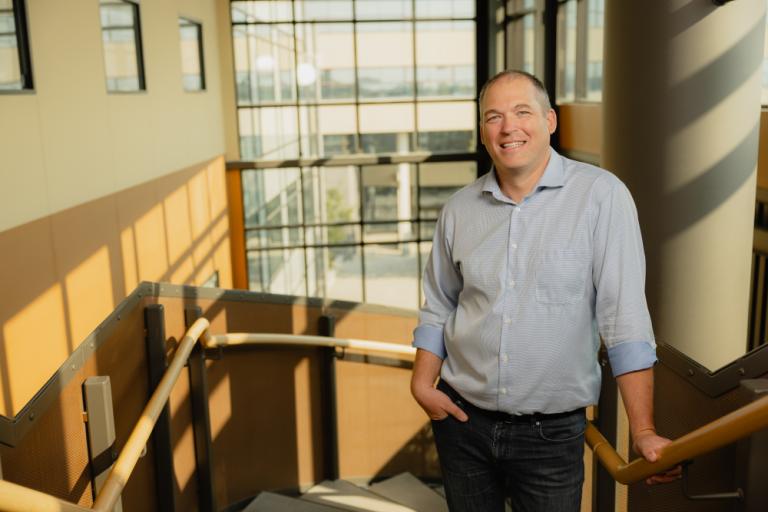
Audrey Paradis is a University Lecturer at the University of Oulu's Faculty of Education and Psychology, affiliated with the Education and Globalisation (Edglo) research group. Her work focuses on social justice, decolonial approaches, and Indigenous education. She has held her position since 2014, teaching over 20 courses and supervising 25+ Bachelor's/Master's theses. Her research combines community-based methodologies with investigations into mathematics education, collaborative learning, and systemic racism in academia. Dr. Paradis holds a Master's in Education (2013) from the University of Oulu, Finland, and a Bachelor's in Mathematics/Physics Education (2004) from Université du Québec à Montréal. Prior to academia, she taught high school mathematics, physics, and chemistry in Canada's Northwest Territories for 7 years, holding leadership roles during this period. Her research collaborations emphasize shifting knowledge production through participatory methods and advancing progressive higher education frameworks. She is part of the Education, Diversity, Globalisation and Ethics (EDGE) research group and maintains an active profile on LinkedIn and ResearchGate.
Marco Andreatta is a Full Professor of Geometry at the University of Trento's Department of Mathematics, Faculty of Science. He earned his Ph.D. in Mathematics from the University of Trento in 1981 with highest honors. His academic career includes positions as Researcher (1983-1987), Associate Professor (1987-2000), and Full Professor (since 2000). He has held visiting professorships globally, including at the University of Notre Dame, Max-Planck Institute, and MSRI Berkeley. Research Interests: Andreatta specializes in algebraic geometry, focusing on classification of projective varieties, minimal models, Mori theory, and adjunction theory. His work extends to complex differential geometry, topology, and the philosophy of space. Since the 2000s, he has actively researched science communication, exploring mathematics' societal role through books and public engagement. Publications & Research: His 60+ publications emphasize birational geometry and higher-dimensional varieties. Recent works analyze Fano varieties, geometric contractions, and historical/theoretical intersections in mathematics. He frequently contributes to interdisciplinary topics linking geometry with art, history, and education. Awards & Leadership: Corresponding Member, Accademia delle Scienze di Torino (2014) Ordinary Member, Accademia Roveretana degli Agiati (2014) Finalist, Premio Nazionale di Divulgazione Scientifica (2022) Andreatta directs the Centro Internazionale di Ricerche Matematiche (CIRM) and has led the Department of Mathematics (2018-2021), the Faculty of Science (2004-2008), and the Trento Science Museum. He coordinates national research projects (PRIN) and advises doctoral students. Outreach: He authors popular science books (e.g., La Forma delle Cose , Archimede, l’arte della misura ) and lectures at festivals globally on mathematics' cultural and practical impact.
Romeo Brunetti is an Associate Professor of Mathematical Analysis at the Department of Mathematics, University of Trento. His academic career includes roles such as 'Rientro dei Cervelli' fellow (2006–2010) and research positions at the University of Naples and the DFG (Germany). He specializes in foundational aspects of classical and quantum field theories, with a focus on quantum gravity, algebraic structures in QFT, and relativistic systems. Education: Bachelor’s Degree in Physics, University of Rome 'La Sapienza' (supervised by Prof. Marzio Cassandro and Prof. G. Parisi). PhD in Physics, University of Naples 'Federico II' (supervised by Prof. G. Marmo and Prof. R. Longo). Research Interests: His work explores perturbative quantum gravity, Bose-Einstein condensation in relativistic QFT, quantum spacetime coordinates, nonlinear dynamics in field theories, and classical relativistic scalar fields. He emphasizes rigorous mathematical approaches to quantum field theories in curved spacetimes. Publications: His articles span topics like renormalization in algebraic QFT, quantum gravity models, and time observables in quantum mechanics. The most recent studies address thermodynamic aspects of fermions and covariant approaches to effective quantum gravity. Awards: Featured Review in Mathematical Reviews (MR1736329). Conferences & Committees: Co-organized major events including 'Recent Mathematical Developments in Quantum Field Theory' (Oberwolfach, 2016) and 'Advances in Mathematics and Theoretical Physics' (Accademia dei Lincei, 2017). Active in promoting interdisciplinary dialogue between mathematics and physics. Labs/Teams: Collaborates extensively with international groups on algebraic QFT and quantum gravity, though no dedicated lab is explicitly mentioned in the text.
Francesca Toso is an Assistant Professor in Human Centered Design at the University of Venice, where she contributes to interdisciplinary research at the intersection of design, technology, and human well-being. Her work actively supports the UN Sustainable Development Goals, particularly in Education and Health. She has held external positions including Postdoctoral Researcher and Project Manager at Eindhoven University of Technology, where she led initiatives in AI ethics and healthcare robotics. PhD in Design, University of Venice (awarded May 2018) Postdoctoral Researcher & Project Manager, Eindhoven University of Technology (2020–2022) Assistant Professor, Human Centered Design, University of Venice Her research focuses on human-centered and transdisciplinary design, with strong emphasis on ethical AI, co-creation methodologies, and inclusive technologies for vulnerable populations such as people living with dementia. She explores how design can empower marginalized users, promote equity in healthcare, and foster meaningful social communication through technology. Her work integrates psychology, social sciences, and computer science to create tools that are not only functional but also culturally and emotionally resonant. The analysis of her recent publications reveals a consistent trajectory toward critical engagement with emerging technologies—particularly generative AI—in educational and healthcare contexts. Her scholarship emphasizes participatory design, living labs, and stakeholder collaboration, often resulting in open-access outputs and datasets. Themes across her work include accessibility, inclusivity, ethical implications of AI, and the pedagogical transformation of design education. Francesca Toso has delivered multiple oral presentations and organized academic events, including the workshop 'Á la recherche du santé perdue' in 2023. Her scientific contributions have been recognized through citations and downloads, though formal awards are not listed in the provided text. She is actively involved in advising and mentoring through co-design practices in educational settings, as seen in her course development approach. Her collaborative network includes researchers from diverse disciplines and institutions, particularly in the Netherlands and Italy. She has contributed to projects involving industry partnerships aimed at improving technological products for dementia care, demonstrating applied impact beyond academia. Francesca leads and participates in living labs and co-design initiatives focused on dementia care and invisible disabilities. Her dataset 'Á la recherche du santé perdue' exemplifies her commitment to open science and community-driven innovation. These labs function as multi-stakeholder networks integrating patients, caregivers, designers, and technologists to co-create sustainable, user-centered solutions.
Bang Nam Jeon is a Professor in the Department of Economics at Drexel University's LeBow College of Business. His research focuses on international economics, financial economics, global banking, and Asian economies, with a strong emphasis on macroprudential policy, bank risk, and financial stability in emerging markets. He has published extensively in top-tier journals and presented at numerous international conferences. His research interests include: International and comparative banking Financial regulation and macroprudential policy Monetary policy transmission Financial contagion and systemic risk Economic uncertainty and financial stability Foreign direct investment and trade linkages in Asia His recent publications show a consistent focus on the interplay between macroeconomic conditions, regulatory frameworks, and bank risk behavior, particularly in China and other emerging Asian economies. He frequently employs empirical and panel data methods to analyze bank-level data. His work contributes significantly to understanding financial stability in developing economies amid global shocks such as the 2008 crisis and the COVID-19 pandemic. Scientific awards and honors include: Fulbright U.S. Scholar Award (2020) Service and Appreciation Awards from the Korea-America Economic Association Peter G. Stercho Memorial Research and Service Award (2005) Excellence in Teaching Award (2003) University Research Scholar Award (1990–1991) The Henry M. Oliver Memorial Award (1987) Jeon has advised numerous researchers and co-authored extensively with scholars like Ji Wu, Minghua Chen, and Qiaoling Kang. He has received research funding and institutional support, evidenced by his visiting positions and co-directorship of executive training programs. He has held leadership roles including President of the Korea-America Economic Association (2013) and has served on advisory boards for journals such as Journal of Economic Integration and Panoeconomicus . He has also been a visiting scholar at institutions in Hong Kong, Korea, China, and Romania, indicating strong international collaboration. He is actively involved in research dissemination through working papers, conference presentations, and editorial roles, including Guest Editor for the International Finance Review . His research program is well-established, continuously funded, and highly productive, with publications extending into 2025.
Diana Denham is an Assistant Professor in the Department of Geography and Environmental Sustainability at the University of Oklahoma. Her research focuses on how Indigenous and subaltern communities assert autonomy through struggles over environmental and cultural resources, with particular attention to how environmental sustainability initiatives manifest within contexts of settler colonialism and global capitalism. Dr. Denham received her PhD in Urban Studies from Portland State University in 2020, along with master's degrees in Latin American Studies and Urban Planning from UCLA. She completed her undergraduate studies at Brown University with a BA in Development Studies and Latin American Studies, graduating magna cum laude and as a Phi Beta Kappa. Her research trajectory is defined by more than a decade of collective knowledge production with communities on the frontlines of struggles against inequality. She has worked extensively in Mexico, Brazil, and with Indigenous communities, documenting social movements and producing documentary films on migration and grassroots mobilization. Her current book project, The Struggle for Food Sovereignty in Urban Mexico , examines precolonial Mesoamerican urban markets known as tianguis and their role in contemporary urban struggles for self-determination. She has coordinated participatory action research with Chinantec youth researchers in Mexico's cloud forest on food sovereignty initiatives. Dr. Denham's scholarly work demonstrates a consistent focus on food sovereignty, Indigenous markets, environmental justice, and the intersection of urban development with cultural preservation. Her publications span interdisciplinary journals in geography, environmental studies, and Latin American studies, reflecting her commitment to transdisciplinary approaches to complex socio-environmental issues. She has developed innovative methodologies that blend participatory action research with critical pedagogy, examining how Indigenous markets persist amid corporate food systems and urban modernization. Her scientific achievements have been recognized with numerous awards including the ACSP/Lincoln Institute of Land Policy Curriculum Innovation Award (2020), the P.E.O. International Scholars Award (2020), and the Mabel M. Otis Endowed Scholar Award (2019), among many others. Dr. Denham has secured significant research funding from organizations including the National Science Foundation, Inter-American Foundation, and Wenner-Gren Foundation. Her teaching philosophy is inspired by Freirean critical pedagogy, emphasizing learner-centered environments that position students as agents of change. She teaches courses on qualitative methods, community development, and environmental sustainability, often incorporating community-engaged learning approaches. She recently co-designed a transdisciplinary undergraduate class on urban sustainability that won the Curriculum Innovation Award from the Association of Collegiate Schools of Planning and the Lincoln Land Institute. She has coordinated participatory action research with Chinantec youth researchers in Mexico, trained community researchers, and facilitated international exchanges focused on urban sustainability and food systems. Her professional development includes specialized training in Decolonial Methods in Social and Solidarity Economies through El Cambalache in Chiapas, Mexico.
Terje Stordalen is a Professor at the Faculty of Theology, University of Oslo. He is a leading scholar in Hebrew Bible and Old Testament studies, with interdisciplinary expertise in memory studies, cultural studies, canon theory, and material religion. He has held visiting positions at Aalborg University, Denmark, and leads the national research school Authoritative Texts and Their Receptions . His work bridges theology, history, and social sciences. Full Name: Terje Stordalen Institution: University of Oslo School: Faculty of Theology Academic Rank: Professor Email: terje.stordalen@teologi.uio.no Stordalen’s research focuses on the Hebrew Bible, particularly wisdom literature such as the Book of Job, the formation and function of biblical canons, and the role of memory and material culture in ancient religion. He integrates social scientific methods to analyze textual production and reception in the ancient Levant. His recent projects emphasize local-level dynamics in ancient societies and the interplay between elite texts and grassroots religious practices. His recent publications reflect a consistent engagement with canonical ecology, textual authority, and the socio-cultural dimensions of biblical interpretation. Themes across his articles include memory practices, aniconism, logocentrism, and the reinterpretation of sacred texts in both ancient and modern contexts. His work often appears in interdisciplinary and international volumes, highlighting his collaborative scholarly network. Scientific Leadership and Editorial Roles: Scientific Director, National Research School Authoritative Texts and Their Receptions (2020–2023) Leader, International Research Group Local Dynamics of Globalization in the Pre-Modern Levant , Centre for Advanced Study, Oslo (2014–2015) Coordinator, Research Network OTSEM (2004–2010) Member of Leadership Group, Centre for the Study of Family Law, Aalborg University (2016–2020) Editorial Board, Scandinavian Journal for the Old Testament (since 2006) Stordalen has supervised numerous students and contributed extensively to academic discourse through publications, conferences, and collaborative research. He has no explicitly listed awards in the provided text, but his leadership in national and international research initiatives underscores his scholarly impact. His interdisciplinary approach continues to shape contemporary biblical scholarship.
Dr. David Vegh is a Senior Lecturer in Theoretical Physics at Queen Mary University of London, affiliated with the School of Physical and Chemical Sciences and the Centre for Fundamental Physics. His research focuses on quantum gravity, holography, and strongly correlated condensed matter systems. He holds a PhD from MIT and has held postdoctoral positions at institutions including the Simons Center and CERN before joining Queen Mary in 2017. Education: Bachelor's degree from Eötvös University (Budapest) PhD in Physics from MIT Postdoctoral fellowships at Simons Center (Stony Brook), CERN, IAS (Princeton), Harvard, and Utrecht University Research Interests: Emergent gravity models via quantum entanglement Holographic dualities and spacetime emergence Condensed matter systems without quasiparticle excitations Grants & Fellowships: Co-PI on STFC-funded 'Amplitudes, Strings and Duality' project (£1.48M, 2023–2026) Ernest Rutherford Fellowship from STFC (2020–2025 & 2017–2023) Teaching: Undergraduate: Physical Dynamics (SPA5304), research projects on string theory/holography Postgraduate: Advanced Quantum Field Theory (SPA7001P) Key Contributions: Over 20 peer-reviewed publications in journals like Physical Review D and Journal of High Energy Physics , focusing on topics such as holographic superconductors, pole-skipping phenomena, and quantum gravity models.
Markus Schartau is a Researcher in the Biogeochemical Modelling Research Unit at GEOMAR Helmholtz Centre for Ocean Research Kiel, where he has worked since 2013. His research focuses on marine biogeochemical modeling, plankton dynamics, and parameter optimization in ecosystem models. With over 69 publications spanning two decades, Schartau has established himself as a leading expert in marine biogeochemical modeling, particularly in the areas of model calibration, mesocosm experiment simulation, and plankton community dynamics. His research interests encompass uncertainty and trustworthiness of biogeochemical model results, species composition and size frequency structures of plankton, methods of parameter optimization and model selection, simulations of mesocosm experiments, physiological and ecological variations of plankton, and temporal and spatial variations of organic substances in coastal ocean areas and estuaries. Schartau's work often bridges theoretical modeling with experimental observations to improve our understanding of marine biogeochemical processes. The analysis of his recent publications (2020-2024) reveals a strong focus on marine biogeochemical modeling, with particular emphasis on plankton dynamics, carbon cycling, and the impacts of environmental change. His work spans multiple spatial scales from coastal systems to the global ocean and integrates approaches from data science, biogeochemistry, and ecosystem modeling. Key themes include model calibration techniques, mesocosm experiment analysis, marine particle dynamics, and the effects of ocean acidification on biogeochemical processes. Schartau actively participates in major research projects including OceanNETs (EU project), BASS (funded by DFG), ICEBERG (EU project), and μARC (funded by BMBF), demonstrating his integration into the international marine science community. His collaborative approach is evident in his extensive co-authorship network across multiple institutions and countries. His career trajectory shows progression from postdoctoral positions at Stony Brook University and the Alfred Wegener Institute to permanent research scientist roles at Helmholtz-Zentrum Geesthacht (now HEREON) and finally at GEOMAR. This path reflects his growing expertise and recognition in the field of marine biogeochemical modeling.
Kelly Baker Josephs is a Professor of English and Digital Humanities at York College and the CUNY Graduate Center, where she has served since 2006, advancing from Assistant Professor to her current full Professor position since 2019. She also holds a concurrent appointment at the CUNY Graduate Center in English and Digital Humanities since 2018. Her academic journey includes a Ph.D. in English from Rutgers University with a Certificate in Women's and Gender Studies, an M.A. in Literature from Florida International University, and a B.S. in Communications (Magna Cum Laude) from the University of Miami. Her dissertation, 'Defining Madnesses: Representations of Insanity in Anglophone Caribbean Literature,' was directed by Brent Hayes Edwards. Dr. Josephs' research spans Caribbean Literature, Postcolonial Literature, Literature of the African Diaspora, Gender and Sexuality studies, and Digital Humanities. Her scholarly output shows a clear evolution from traditional literary analysis in 'Disturbers of the Peace' (2013) toward digital methodologies in 'The Digital Black Atlantic' (2021), reflecting her growing focus on digital infrastructure for Caribbean scholarship. Her digital projects reveal a cohesive vision: Caribbean Commons provides regional networking for Caribbean Studies in the Northeast US; The Caribbean Digital conference series creates scholarly exchange spaces; and sx salon served as a digital literary platform from 2010-2019. These initiatives demonstrate her commitment to building sustainable digital ecosystems for Caribbean scholarship. Academic Co-Director, Faculty Fellowship Publication Program, CUNY Director, York College Honors Program, 2012–2014 Managing Editor, Small Axe: A Caribbean Journal of Criticism, 2007–2012 Editor, sx salon: a small axe literary platform, 2010–2019 Through her teaching of innovative courses like 'The Digital Caribbean' and 'Introduction to Digital Humanities,' Dr. Josephs has cultivated a new generation of scholars who bridge literary analysis with digital methods. Her recent work on virtual residencies and summer institutes indicates an expanding vision for Caribbean digital scholarship that increasingly incorporates creative practice alongside academic research.
Kent Engelhardt is a Professor at the Dana School of Music & University Theatre at Youngstown State University (YSU). He has maintained a dual career as both an academic scholar and professional performer, with faculty appointments at YSU since 1994, Lakeland Community College (1991-2011), and the Youngstown State University Summer Jazz Camp (1997-1999). As a Conn-Selmer Artist and active musician, he bridges scholarly research with practical musical application through performance. Dr. Engelhardt's educational background includes: PhD in Ethnomusicology/Jazz from the University of Pittsburgh (2001) MA in Ethnomusicology/Jazz from the University of Pittsburgh (1999) BM in Performance/Clarinet from Youngstown State University (1993) MM in Performance/Jazz from Youngstown State University (1986) His research focuses on Kansas City Jazz, Charlie Parker, and Tadd Dameron , with particular emphasis on jazz composition, arranging, and historical performance practices. Dr. Engelhardt has created 47 critical editions and arrangements of Dameron's music, representing one of the most comprehensive scholarly efforts on this important jazz composer. His work combines meticulous historical research with practical musical application, often resulting in performances that bring historical works to contemporary audiences. His teaching interests span Jazz Studies: Improvisation, Composition/Arranging, Ethnomusicology, and instruction on multiple instruments including saxophone, flute, clarinet, and piano. Dr. Engelhardt's scholarly output demonstrates a consistent focus on preserving and reinterpreting jazz history, particularly the works of Tadd Dameron. His research spans from historical analysis of Count Basie's arrangements to contemporary reinterpretations of Dameron's music for modern big bands. The January 2023 release of "Central Avenue Swing & Our Delight" represents the culmination of years of research into Dameron's work, featuring 22 new editions and arrangements that have received significant critical acclaim. His scholarly contributions have been recognized through multiple university research appointments: YSU Research Professorship 2011-2012: "The 'Head' Arrangements of the Count Basie Orchestra 1937-1939" YSU Research Professorship 2012-2013: "Musical Contextualization of Charlie Parker's Solos with The Jay McShann Orchestra" CCAC re-assigned time 2013-2014: "The Music of Tadd Dameron for Harlan Leonard and his Rockets" YSU Research Professorship 2016-2017: "Tadd Dameron: The Magic Touch" for Dameron's centennial His recording "Central Avenue Swing & Our Delight" (2023) received significant recognition, being named among the "Top 25 Jazz Recordings of 2023" by Scott Yanow and appearing in the "Top 10 Critics Poll in Cadence Magazine," with additional reviews from major jazz publications including Jazz Wax, LA Jazz Scene, and All About Jazz. As an educator and performer, Dr. Engelhardt has mentored countless students through his teaching positions and ensemble leadership. His Madd For Tadd ensemble serves as both a creative outlet and educational platform, having performed at numerous festivals including the TRI-C Jazz Fest, Kaleidoscope Festival, and Lakeland Jazz Festival. Dr. Engelhardt's research has been consistently supported by university grants, enabling him to preserve and reinterpret important jazz repertoire for contemporary audiences. Dr. Engelhardt leads the Madd For Tadd ensemble, which focuses on performing and recording Tadd Dameron's music in new arrangements for big band. The ensemble has performed at major jazz festivals and venues including the TRI-C Jazz Fest, Cleveland's Bop Stop, and BLU-Jazz. Recently, he has expanded the reach of his work by performing Dameron's music with the Orlando Jazz Orchestra and at the University of South Florida, demonstrating the national recognition of his scholarly and artistic contributions to jazz studies.
Riccardo Resciniti is a Full Professor at the University of Sannio, working within the Department of Law, Economics, Management and Quantitative Methods (DEMM). His academic position falls under the SECS-P/08 classification for Business Economics and Management. Based in De Simone Palace at the University, Professor Resciniti maintains an active research profile with over 180 publications spanning more than two decades. Professor Resciniti's research primarily focuses on contemporary marketing challenges, with particular expertise in brand activism, consumer behavior in cross-border contexts, and international business strategies. His recent work examines how brands engage in political and social issues, analyzing consumer perceptions of authenticity in activist branding. He has conducted significant research on cross-border acquisitions, investigating how psychic distance and corporate reputation affect consumer reactions to international mergers and acquisitions. His publication record shows a clear evolution from early work on e-commerce internationalization and biotechnology industry analysis toward more recent, high-impact research on brand activism. The 2022-2024 period has been particularly productive, with multiple publications examining the nuances of authentic brand activism and consumer responses to politically engaged brands. Professor Resciniti frequently collaborates with researchers including Antonella Cammarota, Vittoria Marino, and Michela Matarazzo, forming a productive research team that has generated numerous publications in marketing and business journals. His research methodology often combines quantitative experimental designs with qualitative text analysis, as evidenced by his Instagram comment analysis in recent brand activism studies. His work on cross-border acquisitions represents a significant contribution to understanding consumer behavior in international business contexts, particularly regarding how consumers react to foreign ownership of domestic brands. This research has practical implications for companies engaging in international expansion through acquisition strategies.
Chris Hackley is Professor of Marketing at Royal Holloway University of London's School of Business and Management, where he established the marketing teaching and research department as founding Chair in Marketing in 2004. His academic career includes previous positions at Birmingham University, Aston Business School, and the Open University. He holds a PhD from Strathclyde University (awarded 1999) focusing on the creative advertising development process in UK advertising agencies. Professor Hackley's research centers on managerial, cultural and policy issues around marketing and advertising communication. His work spans critical marketing studies, qualitative research methods, product placement regulation, business education, and media ethics. He has published extensively including the Routledge textbook 'Qualitative Research in Marketing and Management' (3rd edition), 'But...How Do You Teach, Business?' (Edward Elgar, 2024), and 'Rethinking Advertising as Paratextual Communication' (co-authored, Edward Elgar, 2022). His recent scholarly output shows a trajectory toward critical examinations of business education, evolving advertising practices in digital environments, and the sociocultural implications of marketing. His work on product placement regulation has been particularly influential in UK broadcasting policy debates. He has supervised PhD students researching TV product placement, political marketing, children's gaming consumption, and influencer marketing. Editorial Board: Marketing Theory, Journal of Marketing Management, European Journal of Marketing Media Contributor: BBC TV Breakfast, ITV1, Channel 4 News, BBC Radio 4 Publications: 133 research outputs including 73 articles, 34 book chapters Hackley has been active in public discourse through The Conversation, Times Higher Education, and other media outlets. His research has been cited in Harvard Business Review, Times of India, and major UK national newspapers. He maintains active research collaborations across Europe and has appeared on international media discussing advertising psychology and marketing practices.
Tim Causon is an Associate Professor at the Institute of Analytical Chemistry, Department of Chemistry, University of Natural Resources and Life Sciences (BOKU) in Vienna, Austria. With a PhD from the University of Tasmania and habilitation in analytical chemistry, he has established himself as a leading expert in mass spectrometry and metabolomics applications. His research focuses on developing advanced analytical methods with particular emphasis on ion mobility mass spectrometry techniques and their applications in biotechnology and metabolomics. Dr. Causon's research interests center on method development for mass spectrometric analyses in metabolomics, particularly for biotechnology and bioprocess engineering applications. His work explores fundamental studies of molecular ions and analytical applications of ion mobility mass spectrometry (IM-MS), with significant contributions to capillary electrophoresis, chromatography, and metabolomics. His laboratory develops innovative approaches for metabolite identification, structural characterization, and quantitative analysis, with applications spanning from bioproduction to environmental analysis. His recent publications demonstrate a strong focus on advancing ion mobility mass spectrometry techniques, with particular attention to collision cross section measurements, metabolite identification, and method development for complex biological and environmental samples. His work spans fundamental studies of ion behavior to practical applications in biotechnology, food science, and environmental analysis. Scientific Awards: Fritz Feigl Award from the Austrian Society of Analytical Chemistry (2022) Dr. Causon has successfully secured substantial research funding through numerous projects, including the EU-funded MobiliTraIN: Ion Mobility-Mass Spectrometry Training Network (2024-2028) and several industry collaborations. He has supervised multiple doctoral and master's students whose work focuses on analytical method development, metabolomics, and ion mobility applications. His laboratory maintains strong collaborations with both academic and industrial partners across Europe. As an active member of the scientific community, Dr. Causon organizes major conferences such as the IMS Symposium 2023 and serves on editorial boards and as a reviewer for leading analytical chemistry journals. His laboratory is well-equipped for advanced mass spectrometry research with multiple ion mobility-capable mass spectrometers and complementary analytical instrumentation.
Dr. David Slomp serves as Associate Dean of Graduate Studies and Research and Professor in the Faculty of Education at the University of Lethbridge. Previously holding positions at the University of Ottawa and University of Alberta, he specializes in writing assessment and literacy education across educational levels. His leadership includes co-directing the MEd General program in Curriculum and Assessment and serving as Co-Editor-in-Chief of Assessing Writing . His educational background features a Master's degree in Teaching English as a Second Language and a PhD in Secondary Education focused on writing assessment. Key research interests include principled assessment design, ethics and validity in writing evaluation, and writing development across the lifespan. His work critically examines justice, fairness, and equity in literacy assessment practices. Recent publications (2019-2025) demonstrate consistent focus on workplace communication assessment, digital literacy frameworks, and dismantling anti-Black assessment practices. Key trends include sociocognitive construct development, equity-centered design, and big data implications for formative assessment. His scholarship bridges theoretical rigor with practical classroom applications. Dr. Slomp's scientific contributions have been recognized through prestigious awards: Graduate Student Teaching Award, University of Alberta Writing Program Certificate of Excellence, Conference on College Composition and Communication President's Achievement Award, University of Alberta Issak Walton Killam Memorial Scholarship Board of Governor's Teaching Chair, University of Lethbridge As Associate Dean and MEd program co-director, he mentors graduate students and shapes curriculum development. His editorial leadership at Assessing Writing significantly influences global assessment scholarship. Current projects address workplace English communication frameworks and equity-centered design principles through major collaborative research initiatives. Dr. Slomp actively contributes to scholarly communities through editorial work and professional organizations, advancing writing assessment theory and practice globally while addressing contemporary challenges in digital literacy and assessment justice.