Maurizio MUZZUPAPPA is a Full Professor at the Department of Mechanical, Energy and Management Engineering (University of Calabria) since 2018. His roles include Rector's Delegate for Technology Transfer, Academic Delegate for Education at DIMEG, and Head of the Physical Prototyping Laboratory at the MaTeRiA Center (UNICAL-CNISM collaboration). He supervises the Unical Racing Team in Formula SAE competitions and co-founded three university spin-offs: 3DResearch, Tech4Sea, and Q-BOT. As Scientific Director of projects like TECH4YOU (climate change adaptation technologies) and GROWN IN THE BLUE (Mediterranean reef conservation), he integrates research in industrial design, augmented reality, and underwater cultural heritage. He has authored over 200 publications (h-index 27) and holds 10 patents. His teaching includes Tools and Methods for Industrial Design and Formula SAE LAB . His research focuses on: Industrial design methodologies with parametric and sustainable approaches 3D prototyping and additive manufacturing User-Centered Design for product ergonomics Virtual/Augmented Reality applications in engineering and cultural heritage Underwater robotics and artifact restoration Recent publications highlight trends in AR for industrial maintenance, generative design tools, and mechatronic solutions for underwater heritage. He has supervised over 300 theses and 10 Ph.D. students while leading technology transfer initiatives.
Dr. Natasha L. Cornea is an Associate Professor in Human Geography at the School of Geography, Earth and Environmental Sciences, University of Birmingham, where she has served since February 2018 and was promoted in 2022. Her research examines urban environmental governance and politics in Indian and Zambian cities through urban political ecology and everyday state frameworks. Her academic qualifications include: PhD in Geography from the University of Lausanne (2016) MA in Social Development from the University of Sussex (2011) BA (Hons) in International Studies with Economics minor from the University of Regina (2010) Cornea's work centers on the intersections of urban and development geographies, emphasizing everyday practices in South Asian urban contexts. She employs post-structuralist approaches to analyze how governance operates in the 'actually-existing city,' particularly regarding waste management, water systems, and socio-nature production in Global South cities. Her publication trends (2016-2024) reveal consistent focus on urban political ecology in the Global South, with increasing interdisciplinary collaboration evident in plastics research and sustainable urban futures. Key recurring themes include municipal capacity in small cities, state performance in informal settlements, and infrastructure politics through postcolonial lenses. Cornea received Swiss National Science Foundation funding for her pre-Birmingham fellowship at University College London and actively contributes to postgraduate teaching, including Geopolitics and Globalisation (Module 406) and Berlin fieldwork. She supervises graduate research in human geography though no specific students are listed. She co-leads the Birmingham Plastics Network (40+ interdisciplinary researchers) addressing plastic sustainability and is affiliated with the Centre for Urban and Regional Studies (CURS), focusing on urban environmental challenges in Global South contexts.
Christian Lundahl is Professor of Education at Örebro University, specializing in the history of assessments, evaluation, and Swedish educational research. His work focuses on internationalization of educational data, marketization of schools, and the role of PISA in policy debates. He leads the transnational research project The Global Laboratory – Torsten Husén and the Internationalization of Educational Research (funded by the Swedish Research Council) and co-edited books like Beyond PISA . Lundahl also developed Sweden’s first MOOC for teacher education and serves as scientific leader for the Open Parliament Laboratory (OPaL) . Research Interests : History of educational assessments and evaluations Transnational educational policy flows Marketization and computational analysis in education PISA data utilization and mis/trust Curriculum theory and policy Equity in grading and national tests Recent Trends in Publications include computational analytics in policy data, historical analysis of educational laboratories, and critiques of PISA’s political role. His 2025 articles examine sampling bias in parliamentary data and school marketization. Projects and Leadership : Principal investigator for The Global Laboratory (2020-2024) Co-developer of Sweden’s first MOOC for teacher training (2013) Scientific leader of OPaL – The Open Parliament Laboratory Visiting Professor at Humboldt University (2020)
Dr. Kelly Fagan Robinson is an Assistant Professor in Medical Anthropology at the University of Cambridge, affiliated with Clare Hall and the Department of Social Anthropology. Her research examines how social relations, communication practices, and institutional structures create epistemic dissonances that marginalize individuals categorized as disabled, autistic, or migrants. University of Cambridge Clare Hall Department of Social Anthropology Early Cancer Research Institute Her work spans medical anthropology, disability studies, and policy analysis, focusing on the material ecologies of policy failures, communication inequalities in cancer research, and multimodal methodologies rooted in Deaf values. She lectures on non-normal ways of being, multimodal attention techniques, and communication differences. Research Projects: Elusive Risks, Communication Faultlines, Shared Risk - ACED Teaching: Multimodal Communication, Epistemic Justice, Deaf-Centered Methodologies Dr. Robinson holds an NVQ 6 in British Sign Language, emphasizing practical engagement with Deaf communities. Her publications analyze Deaf epistemologies, translanguaging in performance, and institutional barriers to inclusivity.
Peter Hodgins is an Associate Professor at Carleton University's Faculty of Arts and Social Sciences, with a focus on Canadian public history and cultural critique. He holds degrees from the University of Ottawa (B.A.) and Carleton University (M.A., Ph.D.), and serves as a Research Associate at the Carleton Centre for Public History. Academic Rank: Associate Professor University: Carleton University Research Affiliation: Carleton Centre for Public History Research Interests: Dr. Hodgins specializes in analyzing how memory, nationalism, and colonial legacy intersect in Canadian cultural production. His work explores: Politics and poetics of public memory Canadian cultural nationalism Settler colonial intellectual histories Haunted landscapes and affective memory Critical analysis of national identity formation Subversion of romantic/extractive gazes in contemporary art Publication Trends: His publications reveal sustained engagement with: Decolonizing historical narratives Media representation of national trauma Language politics in francophone-anglophone dynamics Artistic interventions in memory studies Historiography of Canadian institutions Critical theory applications to Canadian contexts
Nidhi Singal serves as Professor of Disability and Inclusive Education at the University of Cambridge's Faculty of Education and holds the position of Vice President at Hughes Hall. Her academic leadership extends to roles as Trustee of the Cambridge Trust and UKFIET, alongside significant contributions to global education initiatives through the World Bank, UNESCO, and UNPRPD. Her educational background includes a PhD and MPhil from the University of Cambridge, complemented by an M.A. and B.A. (Honours) in Applied Psychology from the University of Delhi. This clinical psychology foundation informs her distinctive approach to educational research. Singal's research centers on educational equity for marginalized groups in Southern contexts, with particular emphasis on children with disabilities in South Asia and Africa. She pioneers culturally-sensitive methodological frameworks that challenge power imbalances in North-South research partnerships and prioritize ethical knowledge dissemination. Her work critically examines classroom teaching quality, schooling impacts, and the complex interplay between disability, poverty, and development. Analysis of her recent publications reveals consistent focus on inclusive education measurement (2024), pandemic impacts on disabled learners (2021-2022), and Southern perspectives on disability-inclusive schooling. Her scholarship bridges rigorous academic research with actionable policy development, evident in her leadership of the Global Disability Summit's International Statement of Action. Fellow of the Academy of Social Sciences (2022) President of the British Association for International and Comparative Education Technical Advisory Council member for World Bank's Inclusive Education Initiative Contributor to UNESCO's Foundations of Disability-Inclusive Education Sector Planning Course Singal mentors a vibrant cohort of postgraduate researchers through the Cambridge Network for Disability and Education Research (CaNDER) and South Asian Approaches to Researching Education (SaareNetwork). Her grant portfolio demonstrates exceptional partnership with international agencies including the World Bank, UNESCO, and MasterCard Foundation, focusing on projects like the Girls Education Challenge Fund evaluation and Ethiopia's Inclusive Education Resource Centres. Current initiatives explore teacher effectiveness in African secondary schools and disability-inclusive education during humanitarian crises. Her research infrastructure includes CaNDER, which connects Global South stakeholders to advance disability-inclusive education scholarship, and active collaboration with international networks like UKFIET and UNPRPD to shape policy frameworks that center lived experiences of disabled learners.
Prof. Dr. Ulrich Frank is a full Professor of Business Information Systems and Enterprise Modeling at the University of Duisburg-Essen, Faculty of Computer Science. He serves as Director of IS:link, an international student exchange network he founded. His academic career spans multiple prestigious institutions including University of Mannheim, GMD, IBM Almaden Research Center, University of Koblenz-Landau, and University of Duisburg-Essen since 2004. His educational background includes: Business Administration studies (minor in Applied Computer Science) at University of Cologne Doctorate in Political Science from University of Mannheim (1986) Habilitation at University of Marburg (1993) Prof. Frank's research focuses on multi-perspective enterprise modeling, with particular emphasis on object-oriented and multi-level modeling approaches. His work bridges business administration and computer science, exploring conceptual modeling, knowledge management systems, business process reorganization, and the theoretical foundations of business informatics. He has made significant contributions to modeling languages like FMMLx and XModelerML, advancing multi-level modeling techniques for enterprise information systems. His recent publications demonstrate a strong focus on multi-level modeling languages, with particular attention to UML extensions, language engineering, and the application of large language models in systems engineering. The research trajectory shows consistent development of modeling frameworks that support enterprise architecture, business process modeling, and domain-specific language design, with increasing attention to AI-assisted modeling approaches in recent years. Prof. Frank has received significant recognition through editorial positions at leading journals: Co-Editor of Enterprise Modelling and Information Systems Architectures Co-Editor of Business & Information Systems Engineering Co-Editor of Information Systems and E-Business Management Co-Editor of Software and Systems Modeling Member of the Standing Committee of the European Conference on Information Systems (ECIS) Prof. Frank has served in numerous academic leadership roles including as Chairman of the Examination Board for Business Information Systems, member of the Research Commission at University of Duisburg-Essen, and Appointment Commissioner (2021-2023). He has reviewed for major funding organizations including the German Research Foundation, Federal Ministry of Education and Research, and Swiss National Science Foundation. As founder and senior consultant of IS:link, Prof. Frank leads an international student exchange network connecting universities worldwide. His research group focuses on multi-perspective enterprise modeling (MEMO), developing frameworks and tools for business information systems design and implementation.
Frédéric Robert-Nicoud is Full Professor of Political Economy at the Geneva School of Economics and Management (GSEM) , University of Geneva. He has held academic positions at HEC Lausanne and the London School of Economics (LSE), with visiting roles at CEMFI, CERAS, CORE, Princeton, and other institutions. His research focuses on Economic Geography, Urban Economics, and International Trade , with significant contributions to agglomeration theory, trade liberalization, and spatial sorting. Education: PhD in Economics, London School of Economics (2002) Master's in Econometrics and Mathematical Economics (Summa Cum Laude, 1999) Master's in International Relations (HEID, 1996) Bachelor's in Economics (University of Geneva, 1994) His research interests explore the interplay between trade liberalization, urban inequality, tech clusters, and labor market dynamics. Recent work analyzes climate change's geographic implications and structural transformation in cities. He has developed frameworks for understanding highway impacts on spatial sorting, agglomeration effects, and trade's role in unemployment. Key scientific awards include: CEPR Fellow Affiliated with Spatial Economic Research Centre (SERC) Former Editor of Journal of Economic Geography (6 years) Former Associate Editor of Review of International Economics (4 years) Member of Conseil scientifique des économistes His grants and fellowships span NBER, CEPR, and SERC affiliations. He has presented at major conferences including the Urban Economics Association Annual Meetings, European Economic Association Congress, and World Trade Institute seminars.
Stacy E. Wolf is Professor of Theater in the Lewis Center for the Arts and the Effron Center for the Study of America at Princeton University, where she also serves as Director of Fellowships and Founding Director of the Program in Music Theater. She will serve as Acting Chair of the Lewis Center for the Arts in fall 2025. Wolf is one of America's foremost scholars on musical theatre, with extensive publications exploring gender, sexuality, and American culture through the lens of musical performance. Wolf's educational background includes a B.A. in English from Yale University, an M.A. in Drama from the University of Virginia, and a Ph.D. in Theater from the University of Wisconsin-Madison. Her academic journey has positioned her at the forefront of musical theatre scholarship, where she has helped establish this field as a legitimate area of academic study. Her research interests focus on musical theatre as a cultural phenomenon , particularly examining gender and sexuality in the American musical , feminist approaches to performance , and the relationship between musical theatre and American history . Wolf investigates how musicals both shape and are shaped by larger cultural forces, challenging assumptions about musical theatre as merely entertainment rather than serious art. She explores the pleasure principle in musical theatre while analyzing its political and social dimensions, examining how this commercial art form can simultaneously be cutting-edge and culturally significant. Wolf's publications reveal a consistent focus on feminist perspectives in musical theatre history , with particular attention to how women and LGBTQ+ communities engage with and reinterpret musicals . Her work spans from historical analysis of Broadway classics to contemporary examinations of how musicals function in community settings beyond professional theatre. Recent scholarship increasingly addresses diversity and inclusion in musical theatre , examining how productions in educational settings can empower students of color and create pathways for greater representation on professional stages. Guggenheim Fellow (2017) President's Award for Distinguished Teaching (2017) 2024 Distinguished Scholar by the American Society for Theatre Research Two Bogliasco Fellowships As an educator, Wolf has mentored numerous students including Abigail Jean-Baptiste, with whom she collaborated on the course 'Sondheim's Musicals and the Making of America.' Her teaching philosophy emphasizes the integration of theory and practice, encouraging students to see no separation between art-making and scholarship. Wolf has received significant grant support for her research, including the prestigious Guggenheim Fellowship that enabled deep exploration of musical theatre's cultural impact across America. Wolf is actively involved in Princeton's artistic community as a faculty fellow at Wilson College and academic fellow for the women's basketball team. She regularly participates in student productions, attending rehearsals and leading talkbacks. Her current research includes a book on feminist approaches to musical theatre (co-written with Paige Allen) and an article examining composer Jeanine Tesori's contributions to the field.
Ian C. Bourg is an Associate Professor at Princeton University with dual appointments in the Department of Civil and Environmental Engineering and High Meadows Environmental Institute . He directs undergraduate studies in CEE and leads the Interfacial Water Group , focusing on atomistic-level simulations and macroscopic modeling of environmental systems. His concurrent affiliations include the Princeton Institute for the Science and Technology of Materials and Chemical and Biological Engineering department. Education Ph.D. in Civil and Environmental Engineering, University of California-Berkeley (2004) MSc in Chemical Engineering, INSA Toulouse (1999) B.Eng. in Chemical Engineering, INSA Toulouse (1999) Research Interests span clay mineral surface geochemistry, geologic CO 2 sequestration, kinetic isotope effects, water behavior at interfaces, and coupling geochemistry with geomechanics in porous media. His work integrates molecular simulations with experimental validation to study environmental phenomena like contaminant transport, soil carbon storage, and water dynamics in clays. Publications from 2023-2025 reveal expertise in molecular dynamics of clay-water systems, organic contaminant partitioning, cement hydration, and isotope fractionation. Key themes include Environmental Nanoscience , Geochemical Modeling , and Soft Matter Physics applications to environmental systems. Scientific Recognition NSF CAREER Awardee (2018) Advising includes mentoring 12 current and former PhD/postdoc researchers, with notable alumni at institutions like Cornell, University of Poitiers, and Oak Ridge National Laboratory. His group has produced 20+ undergraduate advisees now in academia and industry. Laboratory develops multiscale simulation tools like HybridBiotInterFoam and HybridPorousInterFoam, with active collaborations in nuclear waste management, soil remediation, and sustainable construction materials.
Elisa Maarit Lähde serves as an Assistant Professor in the Department of Architecture at Aalto University, where she advances sustainable urban design through interdisciplinary research at the intersection of landscape architecture, ecology, and planning. Her work focuses on transforming urban environments through biodiversity integration and socio-ecological innovation. Dr. Lähde's research centers on urban biodiversity mainstreaming, regenerative design frameworks, and landscape architectural storytelling. She pioneers approaches for integrating ecosystem services into urban planning, with particular emphasis on climate adaptation, green-blue infrastructure, and human-nature connection building. Her methodologies frequently employ co-creative processes with stakeholders to develop context-specific socio-ecological solutions. Recent publications (2024-2025) demonstrate a cohesive research trajectory examining practical applications of biodiversity principles across diverse urban contexts. Key thematic clusters include: (1) ecological assessment frameworks for built environments; (2) regenerative design strategies for Anthropocene challenges; (3) maritime spatial planning innovations; and (4) narrative techniques for enhancing ecological literacy. Her work bridges theoretical rigor with Finnish and international case studies, reflecting strong commitment to both scholarly contribution and real-world implementation. Dr. Lähde's scholarly contributions have been recognized through significant professional accolades: First prize in the Elielinaukio architectural competition (December 2021) for Helsinki Central Railway Station surroundings renewal Finalist in Ericsson Innovation Awards for FoodGrid project (June 2017) addressing Future of Food challenges First prize in International Stormwater Innovation Competition (November 2014) for urban furniture with water detention Honorary mention in Hiedanranta ideas competition (January 2017) for "There’s a New Town in the City" proposal While specific advising relationships and grant funding details aren't documented in available materials, her research portfolio demonstrates substantial collaborative engagement through multi-institutional publications and competition participations that likely involve student mentorship and research team leadership.
CHIEN-WEI CHEN is Professor and Chairman of the Department of International Business at National Chengchi University's College of Commerce. With over two decades of service at NCCU, he progressed from Assistant Professor (2000) to Associate Professor (2012) and full Professor (2019), concurrently serving as Department Chair (2023-2026). His research specializes in marketing strategy, international business, and competitive analysis, with particular focus on technology product launches and consumer behavior dynamics. Education: Ph.D. in Business Administration, University of Warwick (1996-2000) M.S. in Business Administration, National Taiwan University (1988-1990) B.S. in Electrical Engineering, National Taiwan University (1983-1987) Research Focus: Dr. Chen's work bridges marketing strategy and behavioral economics, examining how technological disruption influences consumer decisions (e.g., smartphone upgrades), how firms signal value through product preannouncements, and how co-branding strategies shape market perceptions. His research consistently applies empirical methods to high-technology contexts in international markets. Publication Trends: His 15 most recent articles (2002-2023) reveal three dominant themes: 1) Strategic signaling in product launches and financial markets, 2) Psychological drivers of technology adoption/upgrading, and 3) Cross-border marketing efficiency. Methodologically, they combine behavioral experiments, event studies of stock reactions, and empirical analyses of firm strategies. Awards & Honors: 20-Year Outstanding Teacher Award (NCCU, 2020) 10-Year Outstanding Teacher Award (NCCU, 2010) International Research Excellence Award (NCCU, 2006) Research Leadership: As Principal Investigator for 10+ National Science and Technology Council projects (2013-2021), he secured funding for studies on consumer technology adoption patterns, signaling theory applications in marketing, and service innovation frameworks. Projects include 'Fear of Product Obsolescence' (2013-2015) and 'Upgrade Decisions for High-Tech Durables' (2015-2017).
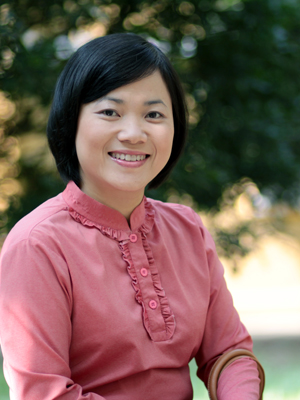
Associate Professor, Dr. Nguyễn Thị Thanh Huyền serves as Deputy Director of the Institute of Journalism and Communication at Vietnam National University, Hanoi. With her academic title awarded in 2014 and PhD received in 2010 from Sogang University (Korea), she represents a prominent figure in Vietnamese communication and journalism studies with extensive administrative and research responsibilities. Her educational background demonstrates remarkable interdisciplinary breadth: Bachelor of Journalism (1995) from Hanoi University of Science, Bachelor of English (1996) from University of Foreign Languages, Hanoi, Master of Journalism (2001), and PhD in Public Relations and Advertising (2010) from Vietnam National University and Sogang University respectively. This diverse training underpins her comprehensive approach to communication studies. Professor Huyền's research spans multiple critical areas including digital journalism practices, strategic communication, public relations theory, and cross-cultural communication studies with special focus on Korea-Vietnam relations. Her work examines communication in special contexts like crisis situations and war, national image construction, information access challenges for journalists, and the evolving role of social networks in organizational communication. She has developed particular expertise in analyzing Korean public relations models and their applicability to Vietnam's communication landscape. Her publication record from 2009-2016 reveals consistent scholarly output with increasing focus on digital transformation in journalism, information access challenges in the digital age, and sophisticated analysis of national image representation. The research demonstrates methodological diversity including content analysis, survey research, and comparative historical approaches, with strong emphasis on practical applications for Vietnamese media professionals and communication educators. Professor Huyền has led significant research projects including the comprehensive study of relationships between businesses and the press (surveying Vietnam's top 500 companies in 2012-2013), investigations into Vietnamese journalists' information access challenges, and analyses of foreign information activities during Hanoi's integration period. These projects reflect her commitment to addressing practical communication challenges facing Vietnam's evolving media ecosystem. As Deputy Director of the Institute of Journalism and Communication, she plays a crucial role in shaping communication education and research direction at Vietnam National University. Her leadership extends to developing training programs that address contemporary challenges in digital media, public relations, and international communication, ensuring Vietnamese communication professionals remain competitive in the global information landscape.
Anna Theakston is a Professor of Developmental Psychology at the University of Manchester where she holds the position of Head of Division for the Division of Psychology Communication and Human Neuroscience. She is also Co-director of the ESRC International Centre for Language and Communicative Development (LuCiD), a major research initiative focused on language development in children. Dr. Theakston completed her undergraduate degree in Psychology at the University of Nottingham and earned her PhD through research at the University of Manchester on early language development in children aged 2-3 years. She subsequently coordinated the Manchester-based Max Planck Child Study Centre before being appointed to her current professorship. Her research focuses on children's early language and communicative development during preschool and early school years, situated within a usage-based framework that emphasizes child-environment interactions and caregiver input. Her work spans multiple areas including early gestural communication, caregiver-child interactions, grammatical construction acquisition, grammatical error origins, inflectional morphology, and syntax-semantics-pragmatics interfaces in complex language development. She frequently conducts crosslinguistic comparisons and employs diverse methodologies from corpus analysis to behavioral experiments, often collaborating with computational modelers. Analysis of her recent publications reveals strong emphasis on children's comprehension and production of complex sentence structures, particularly adverbial and complement clauses, with investigations into how information structure, iconicity, and pragmatic factors influence language development. Her work increasingly examines applications in real-world contexts including schools, nurseries, and cultural institutions, with growing attention to supporting deaf children's communication development and multilingual education. Co-Director, ESRC International Centre for Language and Communicative Development (LuCiD) Active researcher with 111 research outputs including articles, datasets, and book chapters Recipient of research funding from ESRC and Max Planck Institute Professor Theakston supervises numerous PhD students investigating various aspects of language development, with recent projects examining tag questions, cultural institutions' role in language learning for minority populations, science interventions for deaf children, and Modern Foreign Language teaching in multilingual classrooms. Her research has practical impact through tools like the Teacher Toolkit for Teaching Primary MFL in Multilingual Key Stage 2 Classrooms and initiatives supporting deaf children's social communication skills. She maintains active collaborations with researchers across multiple disciplines and institutions, as evidenced by her extensive co-authorship network. Her work contributes to UN Sustainable Development Goals related to quality education and reduced inequalities.
Jennifer E Miller is an Associate Professor of Medicine (General Internal Medicine) and Biomedical Informatics & Data Science at Yale School of Medicine. She serves as Co-Director of the Program for Biomedical Ethics and holds leadership positions including Director of the Good Pharma Scorecard (an index that ranks pharmaceutical companies on bioethical performance) and Founder of Bioethics International. Her academic appointments reflect her interdisciplinary expertise spanning clinical medicine, ethics, and data science. Dr. Miller's research program focuses on critical ethical dimensions of biomedical innovation, with particular emphasis on ethics, equity and governance in drug, vaccine, and medical device research, development, and accessibility. She specializes in developing metrics to enhance accountability and social responsibility in the pharmaceutical industry. Her work examines clinical trial diversity, international research ethics, healthcare data sharing, and the implementation of ethical frameworks in medical product development. Through the Good Pharma Scorecard initiative, she has created a systematic approach to evaluating pharmaceutical company performance across multiple ethical dimensions including clinical trial transparency, diversity in research participation, and access to medicines. Analysis of Dr. Miller's recent publications (2021-2025) reveals a strong thematic focus on diversity and equity in clinical research, with particular attention to demographic representation in trials, ethical considerations in international trial site selection, and equitable access to newly approved drugs and vaccines. Her work bridges bioethics, health policy, and data science, creating measurable frameworks for assessing ethical performance in the pharmaceutical industry. The interdisciplinary nature of her research connects clinical medicine, public health, and corporate accountability, with direct implications for regulatory policy and industry practice. Appointment to World Economic Forum Center for the Fourth Industrial Revolution, Precision Medicine Council (2019) Appointment to World Economic Forum Biotechnology Council (2018) Appointment to World Economic Forum Futures Council (2017) Appointment to World Economic Forum Human Enhancement Working Group (2017) Fellow at Foundation Brocher for Ethical Issues in Global Population Health (2014) As Director of the Good Pharma Scorecard and Founder of Bioethics International, Dr. Miller leads initiatives that connect academic research with practical applications in industry ethics. Her work involves collaboration with pharmaceutical companies, regulatory agencies, and patient advocacy groups to develop and implement ethical standards in biomedical innovation. Through editorial roles at journals including Nature Medicine, The BMJ, and JAMA, she influences discourse on research ethics and scientific integrity. Dr. Miller is actively involved in advising and mentorship through her academic appointments at Yale, where she contributes to training the next generation of researchers in biomedical ethics and data science.