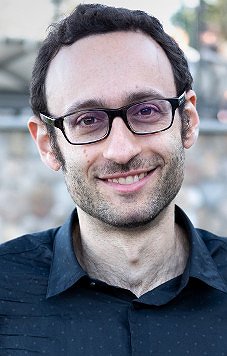
Sara Achourمشاهده پروفایل
استادیار
- Compilers
- Programming Languages
- Program Analysis
- +۵ مورد دیگر
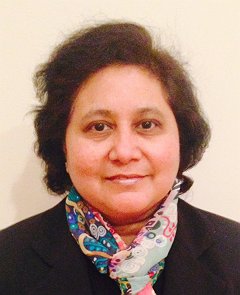
Sara Achour is an Assistant Professor jointly appointed in both the Computer Science and Electrical Engineering Departments at Stanford University's School of Engineering. Her work bridges computer science and electrical engineering, focusing on enabling end-users to develop computations for emerging computing platforms with analog behaviors. Dr. Achour received her PhD in Computer Science from the Massachusetts Institute of Technology in 2021. Her academic journey led her to Stanford where she currently teaches courses including Introduction to Essential Software Systems and Tools (CS 104), Software Engineering (CS 295), and Software Techniques for Emerging Hardware Platforms (CS 349H/EE 349). Her research program centers on developing new programming languages, compilers, and runtime systems that address the challenges of emerging computing platforms. She specializes in creating tools that help developers harness the potential of analog and non-traditional hardware systems. Her work spans quantum computing, analog computing paradigms, hyperdimensional computing, and memory systems, with a particular emphasis on compiler techniques and hardware-aware optimization. Analysis of her recent publications reveals a strong focus on bridging the gap between software and emerging hardware platforms. Her work spans quantum computing (qubit/qutrit circuits), analog computing paradigms, hyperdimensional computing, and novel memory systems. A recurring theme is developing compiler techniques that optimize for specific hardware characteristics while maintaining programmer productivity. Dr. Achour actively mentors students across multiple levels of their academic careers. She serves as a Doctoral Dissertation Advisor, Co-Advisor, Reader, and Master's Program Advisor for numerous students working on cutting-edge research in compilers and emerging hardware. Her teaching portfolio includes both foundational courses like Introduction to Essential Software Systems and specialized advanced courses focused on emerging hardware platforms. She appears to be building a research group focused on programming languages and compilers for non-traditional computing architectures, with students working across quantum computing, analog systems, and memory technologies.