Peng Liu is a Professor at Iowa State University, specializing in statistical modeling and computational methods for microbiome and RNA-sequencing data analysis. His work spans plant genomics, stress response studies, and bioinformatics tool development. Developed software tools like C-REx and RiboZIP for genomic data analysis Key research areas: microbiome dynamics, differential translation, plant-pathogen interactions Collaborates with agricultural scientists to address drought tolerance and nutrient stress in crops His recent publications focus on advanced statistical approaches (e.g., hurdle Poisson models, variational inference) applied to multi-omics studies in sorghum and maize systems. He has contributed to understanding gene expression heterosis, ER stress responses, and microbiome impacts on plant resilience through peer-reviewed studies in journals like Bioinformatics, ISME J, and BMC Genomics.
Professor Zhu Qi is a faculty member in the Department of Electrical and Computer Engineering at Northwestern University's McCormick School of Engineering, with courtesy appointment in Computer Science. He leads the IDEAS Lab (Design Automation of Intelligent Systems Lab) where his research focuses on design automation for intelligent cyber-physical systems and Internet-of-Things applications. His research interests include safe and robust machine learning for embodied AI systems, cyber-physical security, energy-efficient CPS, and system-on-chip design. Professor Zhu's work particularly addresses safety, robustness, security, adaptability, resiliency, and energy challenges in the design and operation of embodied AI systems. His applications span connected and autonomous vehicles, robotics, advanced manufacturing, wearable computing, smart buildings and infrastructures, and IoT. Professor Zhu's recent publications reveal a strong focus on safety verification of neural network controlled systems, robust reinforcement learning methods, and applications of large language models in autonomous systems. His work often combines formal verification techniques with machine learning approaches to provide safety guarantees for AI-enabled cyber-physical systems. DATE 2022 Best Paper Award AutoSec 2021 Best Short Paper Award ACM TODAES 2016 Best Paper Award IEEE TCCPS Early-Career Award (2017) Humboldt Research Fellowship for Experienced Researchers (2017) NAE US Frontiers of Engineering participant (2020) Professor Zhu has secured multiple research grants from NSF (including FM, DESC, and Fuse grants), DOE, ONR, and industry partners including GM and Toyota. His advising includes PhD students Shuyue Lan and Hengyi Liang, and postdoc Chao Huang who became a Lecturer at University of Liverpool. He leads the IDEAS Lab which focuses on cross-layer design, verification, and adaptation of learning-enabled cyber-physical systems.
Wei Ai is an Assistant Professor at the University of Maryland, affiliated with the College of Information (INFO) and the Institute for Advanced Computer Studies (UMIACS). His research focuses on data science for social good (DSSG), integrating machine learning, causal inference, and experimental design to address societal challenges in education, virtual collaboration, and quantum computing. He leads the Center for Educational Data Science and Innovation (EDSI) and has secured grants from the NSF, Gates Foundation, and Walton Family Foundation for projects like M-Powering Teachers and classroom quality assessment tools. Education: PhD in Information from the University of Michigan (advised by Qiaozhu Mei). Previous academic roles include teaching at the University of Michigan and Peking University in courses like Data Mining and Information Retrieval. Research Interests: Machine Learning and Causal Inference, AI for Education, Virtual Teams and Social Identity, Large Language Models for Social Applications. He has published in venues such as PNAS, Management Science, ACL, and the Web Conference. Grants: Major awards include a NSF grant on middle-grade math instruction analysis (with Min Sun) and a Gates Foundation grant for classroom dataset development (with Jing Liu). Labs/Teams: CLIP Lab member, collaborating on interdisciplinary projects with UMIACS and the Joint Quantum Institute. Prospective students: Open to mentoring PhD students through INFO and Computer Science programs. Actively supervises current students in education technology and quantum computing domains.
Dr. Istvan Rajcan is a Professor and Graduate Coordinator in the Department of Plant Agriculture at the University of Guelph, Ontario Agricultural College. His research focuses on soybean breeding and genetics, particularly developing high-yielding, disease-resistant cultivars for short- and medium-season environments. He leads efforts to enhance seed quality traits, such as protein and isoflavones, using genomic tools like GWAS and genomic selection. Education: B.Sc. (Agr.) from the University of Novi Sad and Ph.D. in Plant Agriculture from the University of Guelph. Research Interests: Soybean seed quality (nutraceuticals), disease resistance (Sclerotinia, soybean cyst nematode), genomic technologies, and breeding innovation. His work integrates molecular markers, quantitative genetics, and phenotyping to address challenges in soybean production. Collaborative projects include the SoyaGen initiative, advancing genomic resources for breeders. Publications highlight advancements in soybean genetics, remote sensing applications, and sustainable breeding strategies. His contributions span trait dissection, disease management, and the application of machine learning in genomics. Advising and Grants: While specific grants are not detailed, his extensive publication record indicates sustained research funding. He mentors graduate students and collaborates widely with institutions like the Ontario Oil & Protein Seed Crop Committee. Labs/Teams: Research activities are based in the Crop Science Building, with involvement in the SoyaGen project and collaborations on soybean diversity panels.
Jonathan W. Moore is a Professor of Aquatic Ecology & Conservation and Liber Ero Chair of Coastal Science and Management at Simon Fraser University's Department of Biological Sciences. His research focuses on the conservation and ecology of aquatic systems, particularly Pacific salmon ecosystems, and integrates field experiments, modeling, and stable isotope techniques to address human impacts on freshwater and coastal environments. He leads the Salmon Watersheds Lab, collaborating with over 40 organizations on projects across British Columbia. Education: B.A. from Carleton College, Ph.D. from University of Washington, Seattle, and postdoctoral fellowship at National Marine Fisheries Service. Research Interests: Glacier retreat and salmon habitats, climate change impacts on salmon populations, estuary resilience to sea-level rise, Indigenous data sovereignty, and terminal fisheries management. Moore’s work emphasizes conservation implications, such as mitigating mining claims on future salmon habitats, restoring estuaries, and advancing adaptive management strategies. His lab has published in high-impact journals like Science and collaborates with First Nations on land-use planning and stewardship. Notable grants include funding for the Watershed Futures Initiative. He advises numerous graduate students and has contributed to policy discussions on salmon futures through media and podcasts.
Georgia Seyfried is an Assistant Professor of Belowground Forest Ecology at Oregon State University's College of Forestry, Department of Forest Engineering, Resources & Management. She earned a Ph.D. in Plant Biology from the University of Illinois and a B.S. in Biology from the University of Washington. Her research focuses on soil biogeochemistry, greenhouse gas emissions, and fungal-soil interactions in tropical and temperate ecosystems. She investigates how belowground processes influence ecosystem recovery post-wildfire and under climate change stressors like salinization. Her work combines field studies in diverse environments, including tropical forests and coastal wetlands, to address ecological assumptions. Key projects include studying ectomycorrhizal fungi's role in nutrient cycling and assessing coastal forest resilience to salinization. She advises graduate students and has authored over 10 peer-reviewed articles since 2019. Her lab emphasizes interdisciplinary approaches to inform land management practices. Research highlights include exploring fungal community responses to nitrogen dynamics, the interaction between tree mortality and greenhouse gas emissions, and watershed-scale biogeochemical processes. Seyfried collaborates globally, with fieldwork in Panama, the southeastern U.S., and now the Pacific Northwest. She prioritizes mentoring students from diverse backgrounds, fostering inclusive scientific exploration.
Dora Biro is the Beverly Petterson Bishop and Charles W. Bishop Professor of Brain and Cognitive Sciences at the University of Rochester, serving as Interim Chair of the Department of Brain and Cognitive Sciences. Her research focuses on animal cognition, collective behavior, and decision-making in primates and other species. Key interests include navigation, tool use, social learning, and animal culture. She leads studies in Gorongosa National Park, Guinea-Bissau, and other野外 environments, employing deep learning technologies for behavior analysis and social network mapping. Research emphasizes primate behavioral ecology, particularly in chacma baboons and chimpanzees, exploring how environmental factors (e.g., predation, seasonality) shape social and foraging strategies. She investigates cumulative culture in animal groups, collective intelligence, and cognitive evolution through tool-use studies. Her work bridges neuroscience, ecology, and anthropology. Education: Not explicitly stated in provided text. Affiliations: School of Arts & Sciences, Department of Brain and Cognitive Sciences, University of Rochester. Recent studies analyze leadership hierarchies in homing pigeons, collective learning dynamics, and the impact of human activity on wildlife behavior. She collaborates on projects involving genomic analysis of baboon populations and fossil records in Mozambique. Her lab integrates field observations with computational models to explore emergent behaviors in animal groups.
Elena Denisova Schmidt serves as a Privatdozent (equivalent to Associate Professor) and Research Associate at the University of St. Gallen (HSG) in Switzerland, where she maintains an active research profile through the university's CRIS system. Her work focuses on corruption mechanisms across multiple domains in post-Soviet contexts, particularly examining electoral processes, academic institutions, and everyday informal practices in Russia and neighboring countries. Her primary research interests include Corruption Studies , Russian Politics , Higher Education Systems , Academic Integrity , and Informal Practices . Through extensive fieldwork and analysis, she investigates how administrative resources are deployed in Russian electoral processes, regional variations in corruption perception, and historical patterns of academic dishonesty. Her methodological approach frequently employs qualitative techniques including in-depth interviews with political strategists, officials, and students across multiple Russian regions. Analysis of her recent publications reveals a significant shift toward comparative international research, particularly examining academic integrity challenges across China, Russia, and Ukraine. Her 2023-2025 work demonstrates increasing attention to how geopolitical changes following February 2022 have impacted corruption research in Russia, with her noting that "after three decades of courage and innovation, the topic is now on hold" in the Russian context. This evolving research trajectory reflects both scholarly adaptation to changing political realities and expansion into new geographical contexts. Dr. Denisova Schmidt has led significant research projects including "Forming Values and Stereotypes in the Perception of Corruption by Students in Russia" (with 13 associated publications) and has collaborated extensively with researchers including Yaroslav Prytula, Elvira Leontyeva, and Stanislav Shekshnia. Her scholarly output is substantial, with 229 research items spanning from 2003 to 2025, including 70 journal articles, 42 book sections, and 17 books. Her work appears in journals such as Journal of Eurasian Studies, Demokratizatsiya, and Mir Rossii, demonstrating interdisciplinary reach across political science, education, and sociology.
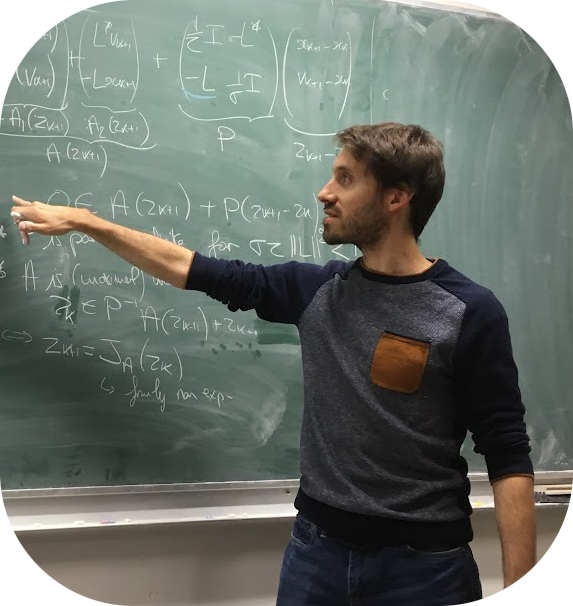
Franck Iutzeler is a Professor of Applied Mathematics at Université de Toulouse, working within the Statistics & Optimization team of the Institut Mathématique de Toulouse and teaching in the Department of Mathematics. He previously served as an Assistant Professor at Université Grenoble Alpes from 2015 to 2023 and completed his Habilitation à Diriger des Recherches in 2021. His research focuses on the intersection of optimization, statistics, and optimal transport theory to develop robust data-driven models. Key areas include numerical optimization, statistical learning, stochastic programming, and optimal transport. He is particularly interested in distributionally robust optimization using Wasserstein metrics and has developed the skwdro Python library for implementing these methods. Iutzeler's recent publications demonstrate a strong focus on Wasserstein Distributionally Robust Optimization (WDRO), with multiple papers in top venues like NeurIPS and SIAM Journal on Optimization. His work bridges theoretical guarantees with practical implementation, particularly through the skwdro library which provides efficient code for WDRO in machine learning applications. ANR JCJC grant for project STROLL: Harnessing Structure in Optimization for Large-scale Learning Co-PI of ANITI chair on Trust and Responsibility in Artificial Intelligence led by JM. Loubes and J. Bolte Iutzeler actively supervises PhD students including Yu-Guan Hsieh (awarded Université Grenoble Alpes's PhD award), Gilles Bareilles, Waïss Azizian, and Victor Mercklé. He has secured research funding through the ANR (MAD project on Automatic Differentiation) and ANITI. His current research includes statistical fairness using optimal transport theory and automatic differentiation for stochastic optimization. He leads the development of the skwdro library for Wasserstein Distributionally Robust Optimization and is involved with ANITI (Toulouse's AI Cluster), where he also took responsibility for the 2nd year of the Master SID in Data Science & Engineering in September 2024.
Anna M. Jensen is an Associate Professor in Forestry at the Department of Forestry and Wood Technology, Linnaeus University. She holds a Ph.D. in Forest Management from the Swedish University of Agricultural Sciences and has worked in the USA as a researcher before joining Linnaeus University. Her research focuses on plant ecophysiology, particularly how woody plants respond to environmental stressors like drought, elevated CO2, and interspecific competition. Education: M.S. in Biology, Lund University Ph.D. in Forest Management, Swedish University of Agricultural Sciences Research Interests: She investigates stress tolerance mechanisms in trees at leaf and whole-plant levels, linking physiology to forest survival and production. Key projects include CO2 reassimilation, climate change impacts on oak regeneration, and carbon sequestration in boreal ecosystems. Scientific Trends: Her recent work emphasizes climate adaptation strategies, carbon dynamics under warming, and the interplay between plant physiology and ecosystem services. Articles highlight mesophyll conductance, interspecific competition, and drought effects on carbon allocation. Collaborations: She partners with The Bridge (Södra, IKEA) for sustainable forestry innovations. Her lab group, Forest Ecology and Ecophysiology , studies nutrient cycles, conservation, and climate-resilient silviculture.
Dr. Laura Grange is a Lecturer in Marine Biology at Bangor University's School of Ocean Sciences, with a focus on benthic marine ecology and polar regions. She has over 10 years of teaching experience and has led initiatives in assessment feedback innovation, including HEFCE-funded projects. Her academic qualifications include a BSc in Oceanography with Marine Biology and a PhD in Reproductive Success of Antarctic Marine Invertebrates from the University of Southampton. She previously worked as a Marine Environmental Consultant and held a part-time Assistant Professor role at the University of Hawai'i, where she developed the first Marine Biology graduate program. Laura's research centers on benthic systems as models for marine ecological theory under climate change. She investigates reproductive resilience of polar invertebrates, pelagic-benthic coupling, and functional trait variation. Her recent publications span biodiversity databases (BioTIME 2.0), microplastics in sea salts, and climate-driven biogeochemical processes. Scientific awards include the Collaborative Award in Teaching Excellence (2018), HEA Senior Fellowship (2019), and Bangor University Teaching Fellowship (2020). She supervises PhD and MRes students on topics like species resilience and plastic pollution at the poles, and co-leads staff training projects in blended learning.
Sarah Franklin is an Associate Professor of Cardiovascular Medicine at the University of Utah School of Medicine, where she leads research on epigenetic regulation of heart disease. She also serves as Assistant Director for the Rural & Underserved Utah Training Experience (RUUTE) program, mentoring students through summer research initiatives. Education: B.S. and Ph.D. in Molecular Biology from Brigham Young University Her research focuses on chromatin remodeling and histone modifications in cardiac hypertrophy and failure, utilizing proteomics, animal models, and biochemical approaches. Recent work explores SMYD1a's role in mitochondrial protection and translational applications for ischemic injury. The 15 most recent publications highlight her contributions to proteomic analysis of cardioprotective therapies (2025), genetic cardiomyopathy mechanisms (2023-2024), and foundational studies on chromatin structure in cardiac physiology (2011-2016). Key subfields include histone methylation, mitochondrial dynamics, and rural medical education.
Matthieu Defrance is an Associate Professor in the Computer Science Department at Université Libre de Bruxelles (ULB), Belgium, a position he has held since October 2016. Prior to this, he worked as a PostDoc at ULB's Laboratory of Cancer Epigenetics from May 2010 to September 2016. Dr. Defrance's research bridges computer science with biological sciences, focusing on computational methods for analyzing complex biological data. His work spans epigenetics, genomics, and algorithm development for biological applications. His primary research interests include: Gene Regulation and Chromatin Biology Epigenetics and Epigenomics DNA Methylation analysis Computational Statistics for biological data Algorithm Development for genomic applications Next Generation Sequencing data analysis Dr. Defrance's publication record demonstrates a strong interdisciplinary approach, with recent work focusing on improving DNA methylation analysis techniques, developing novel bioinformatics tools like RedRibbon for gene expression signature comparison, and applying these methods to understand diseases like diabetes and cancer. His research shows consistent innovation in computational biology, with publications spanning from method development to biological applications across diverse fields including diabetes genetics, cancer epigenetics, and evolutionary adaptations in desert ants. With 61 publications and nearly 5,000 citations, Dr. Defrance has established himself as a significant contributor to computational biology and epigenetics research.
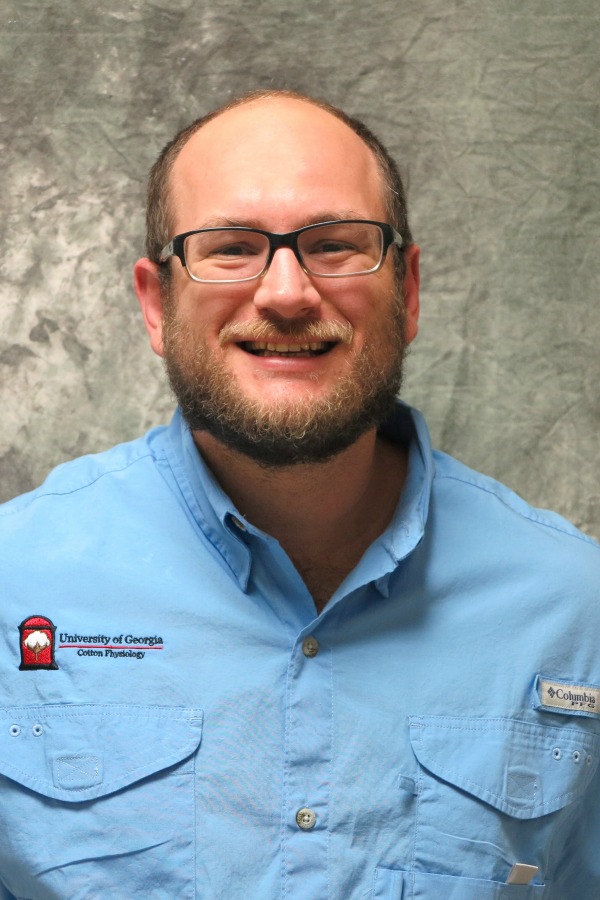
Dr. John L Snider is a Professor at the University of Georgia's College of Agricultural & Environmental Sciences, Department of Crop & Soil Sciences. His research appointment (85%) focuses on cotton physiology with emphasis on stress responses, water use efficiency, and sustainable production systems. He leads the Cotton Physiology Lab at UGA's Tifton Campus, collaborating with agricultural stakeholders across Georgia. Research interests include: Characterizing physiological responses to yield-limiting stresses Developing water optimization strategies Improving cotton seedling vigor Enhancing sustainability in cotton production systems Dr. Snider advises graduate students and teaches undergraduate/graduate courses in crop science. Recent publications demonstrate strong focus on precision agriculture technologies (UAVs, LiDAR), stress physiology, and genotype-environment interactions. Article keywords reveal emphasis on remote sensing applications, thermal stress adaptation, genetic improvement, and sustainable management practices. Laboratory: Cotton Physiology Lab (Tifton Campus)
Mason Porter is a Professor in the Department of Mathematics at the University of California, Los Angeles (UCLA). His research focuses on network science, nonlinear dynamics, and mathematical modeling of complex social systems. He explores topics such as opinion dynamics, temporal networks, multilayer networks, and the interplay between network structure and dynamical processes. Porter’s work spans theoretical and applied domains, including the analysis of social networks, epidemic spread, and infrastructure resilience. He has contributed to methods for detecting community structures, analyzing hypergraphs, and modeling collective behavior in systems ranging from online social media to biological networks. His recent studies emphasize bounded-confidence models, quantum walks on networks, and the application of topological data analysis to spatial systems. His research also intersects with interdisciplinary projects, such as modeling disease mitigation strategies, customer mobility in supermarkets, and the coevolution of disease spread and opinions. He has collaborated on initiatives like the NSF-funded project to predict microbiome assembly via multilayer networks. Porter’s publications reflect a deep engagement with both foundational theory and real-world applications, often leveraging computational and analytical techniques to uncover principles governing complex systems. His work bridges mathematics, physics, and social sciences, addressing challenges in data ethics, information diffusion, and network-driven phenomena.