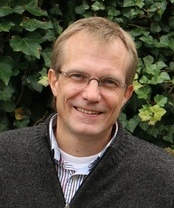
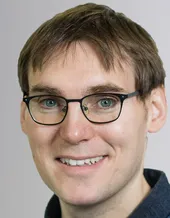
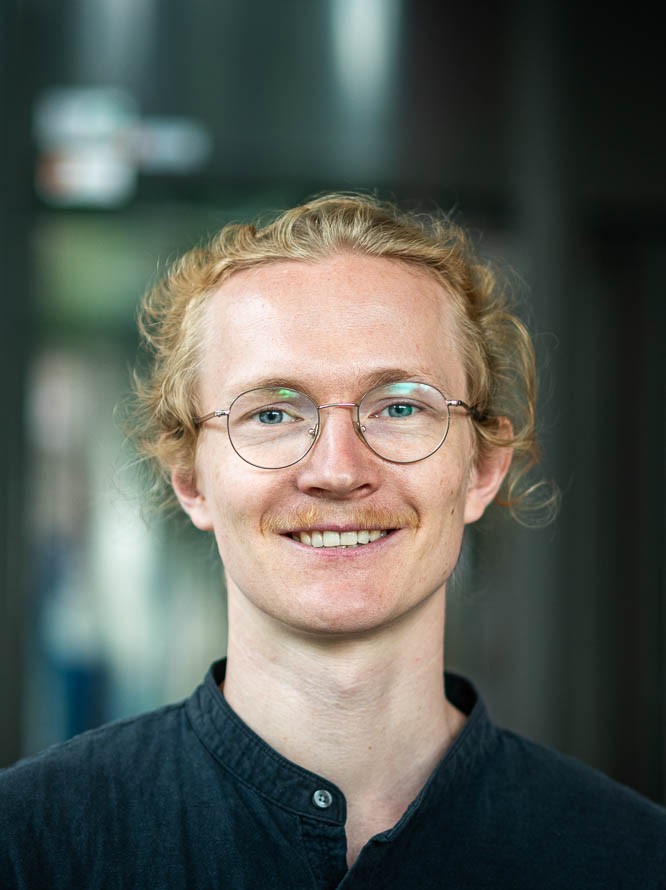
Prof. Dr. rer. nat. Christopher Wiebusch is a University Professor at the III. Physikalisches Institut B (Experimental Physics III B) at RWTH Aachen University. His research focuses on Particle and Astroparticle Physics , with active involvement in major experiments: IceCube, Double Chooz, EnEx-RANGE, and JUNO. His work spans neutrino astronomy, dark matter searches, cosmic ray anisotropy studies, and detector development.
Dr. Christian Scharinger is an Associated Scientist and Principal Investigator at the Leibniz-Institut für Wissensmedien (IWM) in Tübingen, Germany, where he has been actively engaged in research since 2010. He is a member of the Multimodal Interaction Lab and leads a DFG-funded project on neurophysiological measures in instructional design. His research integrates cognitive psychology with educational technology, focusing on how digital learning environments affect cognitive processes. Christian Scharinger earned his M.A. in Linguistics, Informatics, and Media Sciences from the University of Trier and the University of Konstanz in 2007. He completed his doctoral thesis in Cognitive Science at the University of Tübingen in 2015. From February to September 2017, he served as a postdoctoral researcher at the University of Tübingen’s Chair of Applied Cognitive Psychology and Media Psychology. His research interests center on the cognitive and neurophysiological mechanisms underlying learning in digital environments. He employs advanced methodologies such as combined EEG and eye-tracking to investigate cognitive load, working memory, and the effects of multimedia elements like decorative pictures and virtual reality. He is particularly interested in how seductive details influence learning and how user-friendly digital interfaces can be designed based on neurocognitive data. The recent publications of Christian Scharinger reflect a strong trend in using neurophysiological indicators—especially EEG frequency band power and pupil dilation—to assess cognitive load across various learning contexts, including text reading, VR, and gamified tasks. His work bridges cognitive theory with practical applications in educational design, often evaluating the validity of multimedia learning principles through empirical neurocognitive data. Task-irrelevant decorative pictures increase cognitive load (2024) Effects of emotional decorative pictures on cognitive load (2023) Gamification of n-back tasks (2023) EEG and eye-tracking in text-picture learning (2020) Cross-subject cognitive load classification (2018) Christian Scharinger has been involved in multiple DFG and interdisciplinary research projects, including those on virtual reality, working memory load, and perception of historical sites. He has taught seminars at Hochschule Tuttlingen and Hochschule Fresenius Heidelberg, contributing to academic training in psychology and technology. He is also a member of the IWM postdoc network 'Cognitive Conflicts During Media Use', indicating active engagement in collaborative research. While no formal advisees are listed, his role as a PI and lab member suggests mentorship responsibilities. He has contributed to setting up and operating a combined EEG-eye-tracking laboratory at IWM, demonstrating technical leadership. His work spans both basic and applied research, with implications for instructional design, human-computer interaction, and educational technology. He regularly presents at major conferences such as EARLI, TeaP, and ETRA, and has organized symposia and workshops, reflecting strong academic leadership.
Dr. Christian K. Karl, Senior Lecturer in Civil Engineering Didactics at the University of Duisburg-Essen, combines engineering practice with educational innovation. As Head of the Civil Engineering Didactics group and Chair of the VDI 2552 Guidelines Committee, he pioneers simulation games, BIM training frameworks, and AI integration in pedagogy. Lead developer of simulation tools like 'Einsatz in Grimhausen' for disaster management Recipient of the Best Workshop Award at ISAGA 2025 Principal investigator for projects: KI4Edu , DigiTeamsBau , and BIM Kommunal Author of 20+ publications on BIM, AI, and educational games His research focuses on competency-oriented teaching methods, digital transformation in construction, and immersive learning technologies. Recent work explores AI's impact on teacher roles, Smart Home systems, and circular construction practices. Articles highlight trends in simulation games for crisis training, BIM education frameworks, and AI applications for personalized teaching. He emphasizes human-centered technology development and collaborative digital workflows . Scientific recognition includes: Best Workshop Award (ISAGA 2025) Hochschuldidaktische Innovationen (2010) As Chair of the VDI 2552 committee, he shapes national BIM training standards. His leadership in EU Academy platform development and initiatives like 'Personalisierte KI-generierte Podcasts' underscores his commitment to accessible, forward-thinking education.
Elissaios Sarmas is a researcher in the field of AI and machine learning applications for energy systems and smart cities. He has collaborated extensively with researchers like Vangelis Marinakis, Haris Ch. Doukas, and Ioannis Papias across institutions. Research Interests: AI in Energy Sector Smart Grid Analytics Data-Driven Decision Making Demand Response Programs Energy Poverty Mitigation Climate Change Adaptation Publication Trends: His recent work focuses on ensemble AI models for energy measurement, clustering methodologies for electricity loads, and large language models in energy digital twins, covering 2023-2025. Articles span journals like IEEE Access , Applied Soft Computing , and Information Sciences .
Ali Hassan is a researcher affiliated with the National University of Sciences and Technology (NUST), School of Electrical Engineering and Computer Science, Department of Computer and Software Engineering. His work spans multiple domains in computer science, engineering, and applied mathematics, focusing on areas such as machine learning, IoT, energy systems, and medical informatics. His research explores: Reinforcement learning applications for battlefield information systems IoT antenna design and performance evaluation Optimization of second-life battery systems in electric vehicles Transformers for real-time vehicle collision avoidance Image hashing techniques using visual attention models Neural network-based phasor estimation for power grids Biomedical sensor systems for non-invasive health monitoring Mathematical modeling of viral dynamics Recent publications demonstrate his emphasis on interdisciplinary approaches combining AI, signal processing, and sustainability. He has collaborated with institutions across Pakistan, France, Saudi Arabia, and the USA, with a focus on practical implementations in cybersecurity, energy optimization, and healthcare technology.
Katherine J. Kuchenbecker is the Director of the Haptic Intelligence Department at the Max Planck Institute for Intelligent Systems in Stuttgart, Germany, and an Honorary Professor at the University of Stuttgart. She previously held a tenured position as an Associate Professor at the University of Pennsylvania. Her research focuses on haptic interfaces and sensing systems, enabling users to interact with virtual and distant objects through touch. She earned her Ph.D. in Mechanical Engineering from Stanford University and completed postdoctoral research at Johns Hopkins University. Her academic journey includes leadership roles such as co-chair of the IEEE Technical Committee on Haptics and associate editorships for major conferences. She has received numerous awards, including the NSF CAREER Award (2009), IEEE Academic Early Career Award (2012), and elevation to IEEE Fellow (2021). Her work spans applications in medical robotics, teleoperation, and human-robot interaction. Kuchenbecker’s research emphasizes translating haptic technology into real-world applications, such as surgical training, tactile feedback in virtual environments, and assistive devices. Her team’s contributions include innovations in wearable haptic devices and tactile sensing for robots. She frequently delivers keynote addresses and chairs international conferences, furthering the field’s global impact. Her publications highlight advancements in haptic feedback systems, surgical robotics, and biomimetic sensors. She also advocates for diversity and leadership in academia, serving as Spokesperson for the International Max Planck Research School for Intelligent Systems since 2017.
Tianbai Xiao is a Researcher at the Karlsruhe Institute of Technology (KIT) within the Department of Mathematics and Steinbuch Centre for Computing. His work spans mesoscopic science , uncertainty quantification , and scientific machine learning , focusing on multi-scale, multi-physics problems in flow transport. His research in kinetic theory addresses nonlinear partial differential equations, hyperbolic conservation laws, and the unified modeling of continuum/rarefied flows. He develops high-performance numerical algorithms like the Unified Gas-Kinetic Scheme (UGKS) and Kinetic.jl (a finite volume toolbox for scientific computing). Current projects include mesoscopic science , stochastic data science , and physics-informed neural networks . He contributes to open-source tools including FluxReconstruction.jl for advection-diffusion methods and Langevin.jl for stochastic kinetic modeling. Publications cover Journal of Computational Physics , Engineering Fracture Mechanics , and Entropy , with preprints on arXiv in 2025 addressing force-driven flows and hybrid peridynamics. Teaching activities include the Introduction to Kinetic Theory lecture at KIT, and mentoring in the CAMMP (Computational and Mathematical Modeling Program) to develop problem-solving skills through real-world modeling tasks. He advocates for problem-based learning where students translate non-mathematical problems into mathematical language.
Dimitrios Georgakopoulos is a researcher at Swinburne University of Technology and National Measurement Institute, focusing on Internet of Things (IoT), digital twins, fog computing, and smart manufacturing. His work bridges theoretical advancements with real-world applications in urban infrastructure, precision agriculture, and industrial IoT. Research Areas: IoT, Digital Twins, Fog Computing, Smart Cities, Precision Agriculture Key Contributions: Sensor sharing marketplaces, 5G-enabled smart city frameworks, metadata-assisted IoT data classification Recent Articles (2023-2025): Explore topics like digital manufacturing consistency, AI-powered roadside asset management, and deep learning for heterogeneous IoT data. Trends emphasize autonomic systems, sensor integration, and contextual data analysis. Collaborations: Frequently works with Prem Prakash Jayaraman, Ali Yavari, Abhik Banerjee, and Anas Dawod on IoT security, sensor networks, and time-sensitive applications.
Peter G. Kropf is a Professor in the Department of Computer Science at the University of Neuchâtel, Switzerland, with a distinguished research career spanning over three decades. His academic journey reflects significant contributions to distributed systems, peer-to-peer networks, and cloud computing, with recent focus on IoT analytics and scientific computing applications. Dr. Kropf's research interests center on Distributed Systems , Peer-to-Peer Networks , Cloud Computing , Wireless Mesh Networks , and Scientific Workflows . His work demonstrates a clear evolution from foundational distributed systems research to practical applications in environmental monitoring, IoT analytics, and large-scale scientific computing. He has maintained consistent research productivity throughout his career, with publications appearing regularly from 1990 through 2024. Analysis of his recent publications reveals a strong trend toward real-time data processing for environmental applications, IoT analytics , and cloud-based scientific workflows . His work often bridges theoretical distributed systems concepts with practical implementations, particularly in environmental monitoring and resource management contexts. The interdisciplinary nature of his research connects computer science with environmental science and hydrology. Dr. Kropf has established long-term collaborations with researchers including Gilbert Babin (15 joint publications), Pascal Felber (14 publications), and Sabina Serbu (7 publications), forming a productive research network focused on distributed systems challenges. His work has appeared in prestigious venues including IEEE Internet Computing, Future Generation Computer Systems, and Middleware conference proceedings.
Christian Mendl is a Rudolf Mößbauer Tenure Track Assistant Professor at the Technical University of Munich (TUM) , affiliated with the School of Computation, Information and Technology and the Institute for Advanced Study (TUM-IAS) . His career includes a postdoctoral position at Stanford University (2015-2017) under a Feodor Lynen Fellowship from the Alexander von Humboldt Foundation, a Junior Professorship at TU Dresden (2017-2019), and a PhD in Physics from LMU Munich (2012). Education : Physics and Mathematics (TUM) Appointments : Rudolf Mößbauer Assistant Professor (TUM, 2019), Junior Professor (TU Dresden, 2017), Postdoc (Stanford, 2015-2017) Research Focus : Mendl specializes in Quantum Computing , Computational Physics (tensor networks, quantum Monte Carlo, neural-network quantum states), Statistical and Non-Equilibrium Physics , and Numerical Simulation . His work bridges quantum information theory with condensed matter physics, emphasizing efficient quantum algorithms and simulators for complex systems. Scientific Contributions : Recent publications highlight advancements in quantum circuit optimization , tree tensor network simulations , block encoding of operators , and quantum-assisted optimization for problems like the capacitated vehicle routing and Toda lattice dynamics. His methods often integrate machine learning with quantum information to address challenges in Hamiltonian simulation and quantum error analysis . Awards : Alexander von Humboldt Feodor Lynen Fellowship, Boehringer Ingelheim Fonds PhD Fellowship, TopMath Graduate Program, Studienstiftung des deutschen Volkes Grants : Rudolf Mößbauer Tenure Track Fellowship (TUM-IAS), Dieter Schwarz Fellowship
Friedrich Boeing is a Researcher at the Department of Hydrosystem Modeling in the Computational Hydrosystems unit of the Helmholtz Centre for Environmental Research − UFZ in Leipzig, Germany. He is simultaneously pursuing his PhD at the University of Potsdam under the supervision of Prof. Dr. Sabine Attinger, Prof. Dr. Thorsten Wagener, and Dr. Andreas Marx. PhD Candidate: University of Potsdam University: Helmholtz Centre for Environmental Research − UFZ Department: Hydrosystem Modeling His research focuses on drought quantification , water resource monitoring , and climate change impact assessment for Germany. He develops high-resolution drought indicators and leads knowledge transfer through the WIS-D project , collaborating with stakeholders across water sectors. Recent publications highlight his expertise in soil moisture dynamics , hydrological modeling , and climate-water interactions . His work appears in journals like Environmental Research Letters and Hydrology and Earth System Sciences . Key Projects: WIS-D, CLIMALERT, HOKLIM Collaborations: University of Potsdam, ICOS network, Zenodo data repository
Klaus Melchers is a Professor of Work and Organizational Psychology at Ulm University, where he has held a W3 professorship since October 2012. Previously, he served as an Assistant and Senior Assistant at the Department of Psychology, University of Zurich, from 2003 to 2012. He completed his psychology studies at Philipps-University of Marburg and University College, followed by a dissertation in 2003 on stimulus processing in human learning. His research focuses on key areas in personnel selection, including applicant reactions, personality assessment in work contexts, impression management, and the effectiveness of training. He investigates how candidates respond to various selection procedures, particularly focusing on fairness, transparency, and the impact of digital tools such as video interviews and gamified assessments. The recent publication trends reveal a strong emphasis on technology-mediated interviews, applicant faking, fairness in hiring, and the validity of assessment methods. His work increasingly explores digital transformations in recruitment, including asynchronous video interviews, game-based assessments, and algorithmic bias. Themes such as psychological reattachment to work, mobile device use, and sleep also reflect a growing interest in daily work experiences and well-being. Klaus Melchers frequently collaborates with researchers such as Janine Basch, Benjamin Bill, Nina Merkl, and Martin Kleinmann. His publications appear in top journals like Personnel Psychology , Journal of Business and Psychology , and International Journal of Selection and Assessment . While there is no explicit mention of advising students or receiving awards, his extensive publication record and book chapters suggest active mentorship and leadership in the field. He leads the Department of Work and Organizational Psychology at Ulm University, contributing to both academic research and practical applications in HR diagnostics. His work bridges theory and practice, often addressing real-world challenges in personnel selection and organizational psychology.
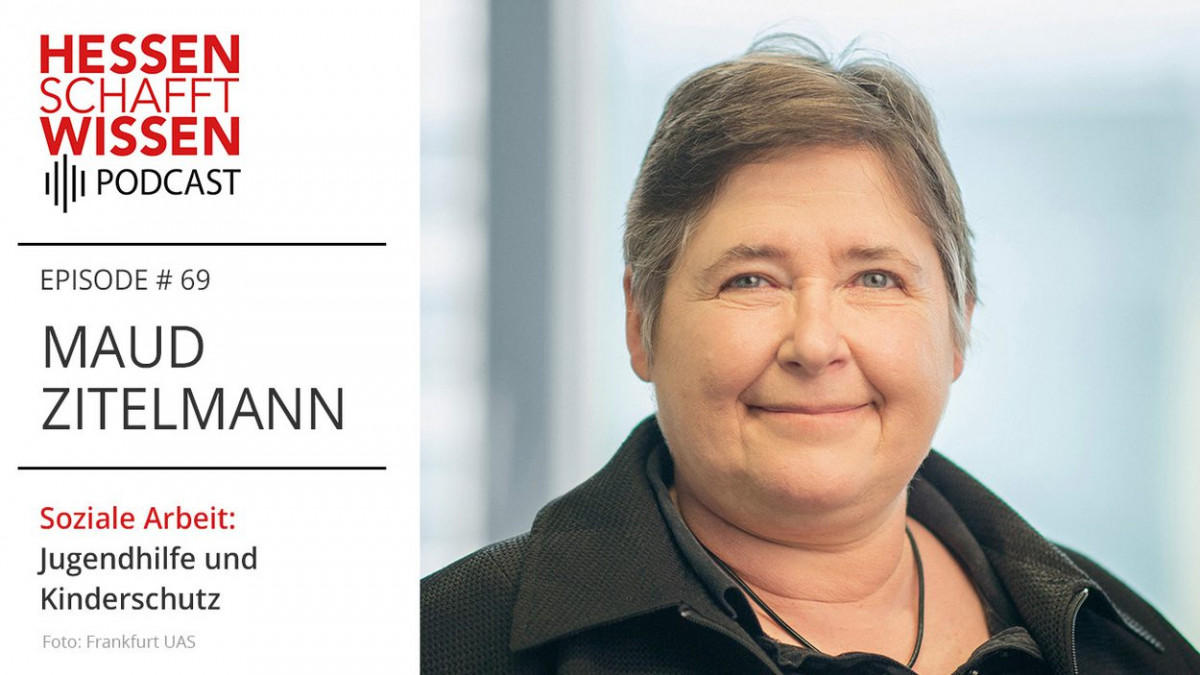
Prof. Dr. Maud Nordstern is a Professor of Youth Welfare and Child Protection at the Frankfurt University of Applied Sciences , College of Social Work & Health. Her work focuses on integrating child protection into academic curricula, emphasizing interdisciplinary collaboration and digital teaching innovations. Education: Diplom-Pädagogik (1992-1996), Promotion in Erziehungswissenschaften (Goethe-Universität Frankfurt). Research: Child rights, procedural representation for minors, professional qualification in child protection, digital learning tools, and early childhood education. Notable Projects: FallbeiSpiel Thomas (multimedia learning platform), Kinderschutz in der Lehre (digital education development). Awards: Hessian University Prize for Excellence in Teaching (2013), Hanse Merkur Child Protection Award (2018), Stifterverband University Pearl (2024). Publications: Over 20 years, she has authored/edited 15+ works on child protection, including handbooks on Verfahrensbeistandschaft , trauma pedagogy, and interdisciplinary training frameworks. Her FallbeiSpiel Thomas project (2024) exemplifies her commitment to gamified learning. Scientific Awards: Hessian University Prize for Excellence in Teaching (2013) Hanse Merkur Child Protection Award (2018) Stifterverband University Pearl (2024) Grants and Projects: Leads the Kinderschutz in der Lehre initiative (2024-2027) and SKILL - FallbeiSpiel Thomas phases 1&2, funded by the Stiftung Innovation in der Hochschullehre and Pflege-Adoptiv-Familien-Stiftung. Leadership & Collaborations: Vorsitzende des Kuratoriums der Stiftung zum Wohl des Pflegekindes (since 2013), member of AG IX Landespräventionsrat Hessen (since 2006), and expert advisor for the Hessisches Ministerium für Soziales und Integration (2023). Collaborates with institutions like Goethe-Universität Frankfurt, Deutsche Psychoanalytische Vereinigung, and BZgA.
Stefanie Elgeti is Associate Professor and Private Lecturer at the Chair for Computational Analysis of Technical Systems (CATS), Faculty of Mechanical Engineering, RWTH Aachen University. She previously held a professorship in lightweight design at TU Vienna starting in 2019. Her research integrates computational mechanics with manufacturing process optimization, focusing on plastics extrusion, injection molding, and high-pressure die casting. Diploma in Mechanical Engineering, majoring in 'Manufacturing Techniques for Microsystems' PhD (2011): 'Free-Surface Flows in Shape Optimization of Extrusion Dies' Habilitation (2016): 'CAD-Conforming Finite Element Methods in Engineering Design' Her research centers on solving inverse problems in manufacturing through numerical simulation. She employs advanced techniques such as free-surface flow modeling, non-Newtonian material models, spline-based finite elements, and PDE-constrained shape optimization. Her group simulates entire process chains from filling to solidification and warpage prediction, enabling design optimization of cavities and cooling systems. The recent publications (2022–2024) reveal a strong trend toward integrating artificial intelligence—particularly physics-informed neural networks and Bayesian optimization—into traditional simulation workflows. There is increasing emphasis on warpage compensation, shape optimization of extrusion dies, and modeling of biomedical and environmental systems, showcasing a broadening scope from industrial manufacturing to interdisciplinary applications. She is actively involved in academic service, having served as vice-spokesperson of GAMM-Juniors (2013–2014) and currently co-chairing the ECCOMAS Young Investigator Group. While no formal awards are listed, her leadership roles and editorial contributions reflect significant recognition in the computational mechanics community. Prof. Elgeti advises students and leads multiple research initiatives at CATS, including work groups focused on production engineering, fluid-structure interaction, and INTERESST. Her team develops model hierarchies and digital twins for industrial processes, aiming to bridge simulation and real-world manufacturing through intelligent, adaptive systems.
Oliver Ahrend is a doctoral student and researcher at RWTH Aachen University, affiliated with the Chair of Methods for Model-based Development in Computational Engineering (MBD) and the Institute of General Mechanics (IAM). He holds an M.Sc. in Simulation Sciences from RWTH Aachen and a B.Eng. in Mechanical Engineering from Aalen University. His research focuses on bridging quantum computing and engineering applications, particularly in developing methods to apply quantum algorithms to real-world computational engineering problems. A key area of interest is the use of quantum computing in Gaussian processes and discrete-element simulations. Quantum Computing for Engineering Model-Based Development Simulation and Optimization Quantum Algorithms in Mechanics His recent work centers on quantum annealing techniques for particle matching in quasi-cyclic discrete-element simulations, presented at the 16th World Congress on Computational Mechanics in 2024. This reflects a growing trend in applying quantum computing to classical mechanical simulations. Oliver Ahrend has no listed scientific awards at this time. He has been actively involved in research and development projects, contributing to both academic and applied computational engineering. He has served as a research assistant at MBD and IAM from 2022 to 2024 before advancing to his current doctoral position. There is no mention of formal student advising or grant leadership. He is associated with the Chair of Methods for Model-based Development in Computational Engineering, where he contributes to advancing model-driven approaches in computational systems. His GitHub activity indicates engagement in symbolic quantum simulation, GPU computing, and educational quantum computing projects.