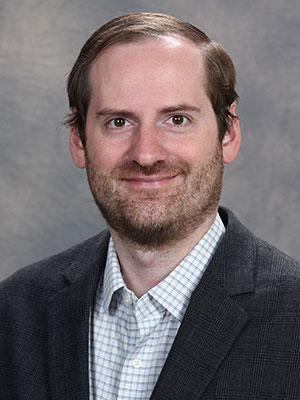
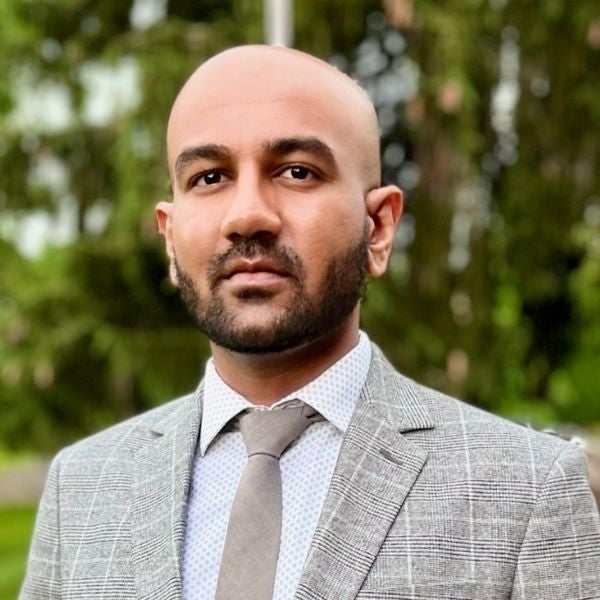
Sanjay Nagarajan is Lecturer in Chemical Engineering and Deputy Director of the Centre for Sustainable Energy Systems at University of Bath. His credentials include a Ph.D. in Chemical Engineering from Queen's University Belfast (2017), M.S. in Environmental Engineering from National University of Singapore (2010), and B.Tech in Biotechnology from Anna University (2009). Research focuses on sustainable process engineering with specialization in: Hydrodynamic cavitation for biomass processing Advanced oxidation processes Anaerobic digestion and biogas production Photocatalytic wastewater treatment His publications demonstrate consistent innovation in cavitation reactor design and process intensification. Recent work explores synergistic effects combining cavitation with photocatalysis for environmental remediation and resource recovery. Dr. Nagarajan received the Gianni Astarita Young Investigator Award (2018) and Marie Curie CareerFIT Plus Fellowship (2021). He currently supervises PhD student Michal Ciesielka and leads multiple projects funded by BBSRC and Horizon 2020 focusing on sustainable biorefineries.
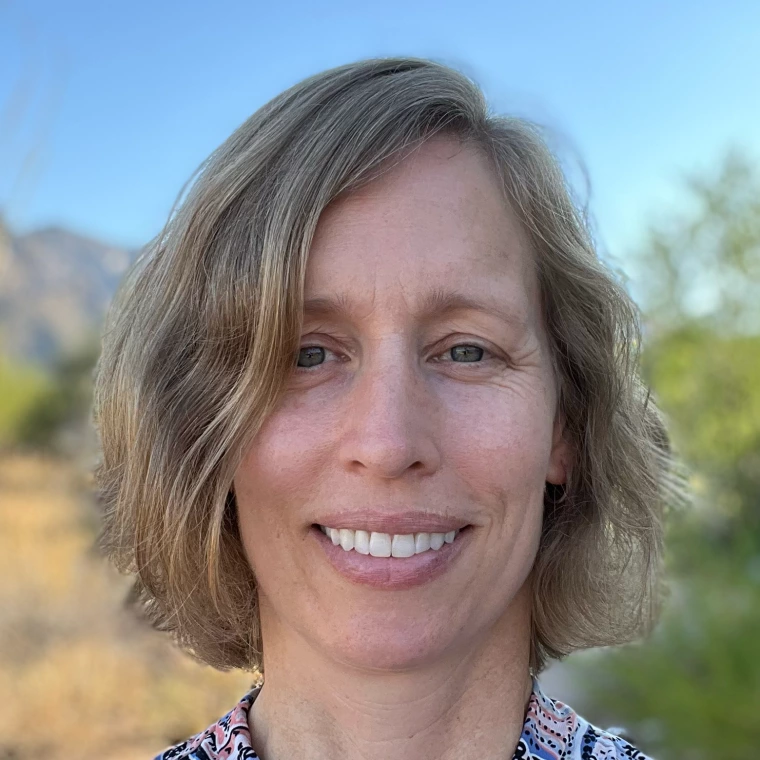
Samantha Orchard is an Associate Professor of Practice at the University of Arizona, affiliated with the School of Plant Sciences in the College of Agriculture, Life & Environmental Sciences. Her academic background includes a PhD in Bacteriology from the University of Wisconsin-Madison, a NIH postdoctoral fellowship in bacterial genetics at San Diego State University, and a BS in Microbiology from the University of Washington-Seattle. Her research focuses on biotechnology applications of microbes, particularly heterologous protein production and industrial uses of fungi. She does not train graduate students but actively teaches foundational courses such as Introductory Biotechnology , Biotechnology Laboratory , and Industrial Biotechnology . Notable courses include the Applied Biotechnology Senior Capstone for program seniors. Her publications emphasize fungal strain applications in pharmaceuticals, bioreactor systems, and sustainable agriculture. Recent work explores methods for protein production optimization in yeast and valorization of fungal biomass in animal feed. Prior industry experience informs her teaching and applied research. Labs/Teams: Active in the School of Plant Sciences’ biotechnology labs, focusing on microbial fermentation and industrial microbiology applications.
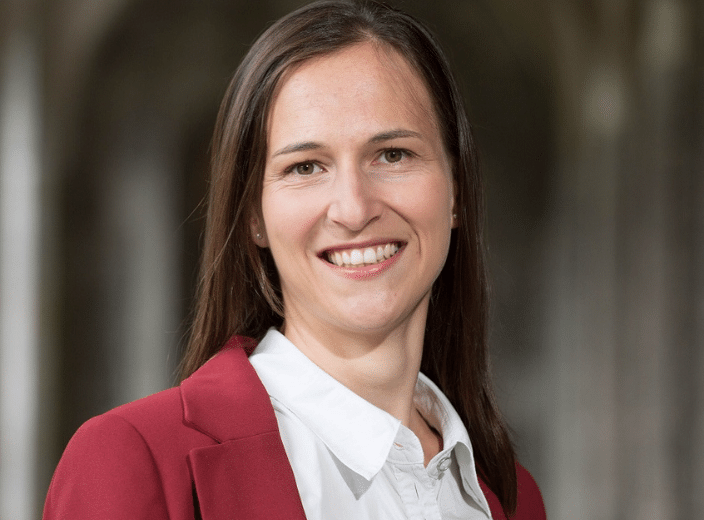
Esther Tippmann is Professor of Strategy, Leadership and Change at University of Galway and Co-Director of the Centre for Entrepreneurial Growth and Scaling (CEGS). Her research examines scaling processes in multinational corporations and technology ventures. Research focuses on global scaling strategies, subsidiary initiatives in multinational enterprises, and leadership challenges in distributed organizations. Recent work investigates digital globalization patterns and the role of middle management in strategy implementation within complex organizational structures. Her publications contribute to understanding how organizations navigate international expansion while maintaining strategic coherence, with particular emphasis on knowledge transfer mechanisms and adaptive governance in scaling businesses.
Dr. Zivko Nikolov is Professor in the Department of Biological and Agricultural Engineering at Texas A&M University, with joint affiliation to the College of Engineering. His Bioseparations Lab develops innovative strategies for protein purification and bioprocess optimization, focusing on cost-effective recovery of recombinant biomolecules from transgenic systems. Research integrates protein biochemistry with process economics, addressing industrial biotechnology challenges. Recent publications examine therapeutic cell manufacturing, SARS-CoV-2 protein interactions, and algal protein applications. His educational background includes a PhD in Chemical Engineering from Iowa State University.
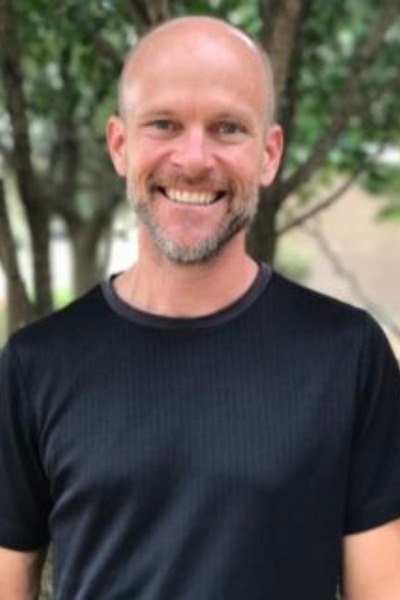
Jason West is a Professor at Texas A&M University, affiliated with the College of Agriculture & Life Sciences and Texas A&M AgriLife Research. He earned his B.S. in Range Science from Utah State University and a Ph.D. in Botany from the University of Georgia. His research focuses on plant physiological ecology and ecosystem ecology, particularly the roles of vegetation in water, carbon, and nitrogen cycling, with emphasis on subterranean tissues and global change impacts. Dr. West’s expertise includes stable isotope analysis to study ecological processes, such as water cycling and scaling-up mechanistic insights to large spatial scales. His work addresses consequences of climate change, land-use decisions, and biodiversity on ecosystems. He has held prior positions at the University of Minnesota and University of Utah, contributing to research on forest decomposition, nutrient cycling, and invasive species like Arundo donax. His lab (West Lab Group) develops tools like the RAIN platform for precipitation data visualization and explores ecohydrological patterns in diverse ecosystems, including tropical dry forests and semi-arid savannas. Current projects emphasize plant-water relations, drought responses, and forensic applications of isotopic signatures.
Alan Kuhnle is an Assistant Professor in the Department of Computer Science & Engineering at Texas A&M University, part of the College of Engineering. His research focuses on algorithms and theory, machine learning, data science, and combinatorial optimization with applications to submodular maximization, network analysis, and algorithmic optimization. Kuhnle holds a Ph.D. in Computer Science from the University of Florida (2018), an M.S. in Mathematics (2013) from the same institution, and a B.S. in Mathematics from Florida State University (2010). His work emphasizes practical and theoretically grounded algorithms for discrete optimization, particularly in submodular function maximization. He has contributed scalable solutions for non-monotone submodular maximization, parallel optimization frameworks, and efficient algorithms for large-scale combinatorial problems. Recent research explores adaptive complexity models, distributed computing paradigms (e.g., MapReduce), and benchmarking learned heuristics for combinatorial optimization. Kuhnle’s publications span submodular maximization techniques, streaming algorithms, and applications in bioinformatics (e.g., de Bruijn graphs, pan-genomics). His work bridges theoretical guarantees with real-world scalability, addressing challenges in parallel computing, dynamic data structures, and network resilience. Notable contributions include the ResQue Greedy algorithm, DASH distributed framework, and RELS-DQN reinforcement learning-based heuristic for combinatorial optimization. Awards: Office of Naval Research Summer Faculty Research Fellow (2022), Best Runner-Up Paper at ASONAM 2018 Labs/Teams: Active in Texas A&M’s CSE department research groups focused on algorithms and optimization His research also addresses network vulnerability assessment, interdependency analysis, and misinformation containment in social networks. Kuhnle’s algorithms are designed for billion-scale networks, emphasizing linear-time and nearly linear-time computational efficiency.
Tirthak Patel is an Assistant Professor in the Department of Computer Science at Rice University and Director of the Positive Technology Lab. His research focuses on systems-level challenges at the intersection of quantum computing and high-performance computing (HPC), emphasizing reliability, performance, and energy efficiency trade-offs. He holds a PhD from Northeastern University (2023) and prior degrees from Northeastern and the University of Toronto. Education: PhD in Computer Engineering, Northeastern University (2023) MS in Electrical and Computer Engineering, Northeastern University (2019) Bachelor of Applied Science in Electrical Engineering, University of Toronto (2017) His research explores quantum system software, compiler design for neutral atom quantum architectures, and quantum machine learning. Notable contributions include frameworks like PARALLAX (compiler for neutral atom quantum computers) and GEYSER (compilation for neutral atom systems). He prioritizes open-source tools and reproducible research. Research Trends in Publications: Recent work emphasizes quantum noise utilization, quantum GANs, and compiler optimizations for NISQ-era hardware. He also addresses challenges in hybrid quantum-classical systems and quantum cloud security (e.g., OpaQue for program obfuscation). Awards: 2024 ACM SIGHPC Doctoral Dissertation Honorable Mention 2021 ACM-IEEE CS George Michael HPC Fellowship 2024 Rice Outstanding Undergraduate Research Mentor Award Advising & Grants: While specific grant details aren't listed, his work is supported by open-source contributions and industry collaborations. He advises students through Rice's Quantum Computing programs and teaches courses like COMP 448/558: Quantum Computing Algorithms. Labs & Teams: Directs the Positive Technology Lab, focused on advancing quantum computing systems through interdisciplinary approaches. Collaborates with industry partners and international conferences as a TPC member for venues like SC, ISCA, and ICCAD.
R. Stuart Geiger is an Assistant Professor at the University of California, San Diego with joint appointments in the Department of Communication and the Halıcıoğlu Data Science Institute. He holds affiliate faculty roles in Computer Science & Engineering, Computational Social Science, and the Institute for Practical Ethics, where he leads the Working Group on Data Governance & Accountability. His interdisciplinary work spans Science and Technology Studies, Data Science, and AI Ethics. Geiger earned his Ph.D. in Information Management & Systems from UC Berkeley, an M.A. in Communication, Culture, and Technology from Georgetown University, and a B.A. in Humanities from the University of Texas at Austin. His postdoctoral research at Berkeley Institute for Data Science (BIDS) focused on ethnographic studies of data science practices and institutions. Research Interests : His research examines the social, cultural, and political dimensions of data science, AI, and automation. Key areas include algorithmic fairness, open-source software governance, Wikipedia’s socio-technical dynamics, and the ethics of AI in social media moderation. He employs mixed methods, blending ethnography, trace analysis, and computational techniques. Publications Trends : Recent work critiques algorithmic bias in AI systems (e.g., ChatGPT’s salary negotiation advice), advocates for participatory auditing practices, and explores labor dynamics in open-source projects. His studies often bridge technical and social dimensions, emphasizing contextual inquiry and institutional critiques. Awards & Grants : - Best presentation award at ECSCW 2018 - 1st runner-up David B. Martin Best Paper Award (2018) - Sloan Foundation grants for open-source software studies - UC Humanities Research Institute funding (2022) - Top paper award at 2009 Science & Technology in Society Conference Advising & Grants : Geiger has led grants totaling over $200,000, including projects on open-source maintainers’ labor and data science ethics. He advises students in data science, communication, and STS, fostering interdisciplinary collaboration. His teaching includes courses on data ethics, algorithmic auditing, and communication theory. Labs & Teams : He co-founded the Best Practices in Data Science series at BIDS and collaborates with teams like the Moore-Sloan Data Science Environments. His work intersects with initiatives on diversity in data science and reproducible research practices.
Dr Ann-Marie Gibson is a Lecturer in Sport & Exercise Psychology at the Australian Catholic University (ACU), affiliated with the School of Exercise Science within the Faculty of Health Sciences. She holds dual campus appointments at ACU's Blacktown and Strathfield campuses. Previously, she served as a Senior Lecturer and Course Leader at the University of Strathclyde, Glasgow, demonstrating an international academic footprint. Her educational and professional background includes being a Chartered Psychologist with the British Psychological Society and a Senior Fellow of the Higher Education Academy, reflecting her commitment to evidence-based teaching and student-centered learning. She is also an Associate Member of the Australian Psychological Society and accredited by the British Association of Sport and Exercise Sciences. Ann-Marie's research centers on the psychological determinants of physical activity and sedentary behaviour, particularly in children and adolescents. She investigates obesity prevention strategies, behaviour change mechanisms, and mental well-being in both educational and workplace settings. Her work often employs systematic reviews, feasibility trials, and mixed-methods evaluations, with a strong emphasis on intervention translation and implementation science. Her recent publications reveal a consistent focus on physical activity promotion, sedentary behaviour reduction, and childhood obesity prevention. These studies utilize frameworks like RE-AIM and target diverse populations including schoolchildren, office workers, and families in socioeconomically deprived areas. Interventions often involve digital tools, teacher-led programs, and family-based approaches. ACU Citation for Outstanding Contribution to Student Learning (Team) - 2021 Senior Fellowship of the Higher Education Academy - 2022 Ann-Marie has secured and contributed to multiple research grants, serving as Principal Investigator and Co-investigator on projects funded by ACU, the Scottish Funding Council, and the Hannah Foundation. She has supervised PhD students and collaborated with institutions in the UK, Australia, Canada, and the USA. Her advisory role extends to guiding evidence-based practice in clinical supervision and student retention. She is actively involved in public engagement through platforms like The Conversation and the INSPIRE toolkit, translating research into accessible insights. Her work with the Welbot project exemplifies her engagement with industry partners to validate digital health interventions.
Prof. Seda ERSUS is a Professor in the Department of Food Engineering at Ege University's Faculty of Engineering. Her research focuses on food technology, plant protein resources, functional food development, and sustainable food packaging solutions. She has extensive experience in food processing methodologies, including thermal analysis, enzymatic extraction, and biodegradable material synthesis. Her work emphasizes valorization of agricultural byproducts and waste materials, with notable contributions to aerogel production from plant proteins, cellulose nanocrystals from black carrot waste, and biocomposite packaging films from safflower residues. She also explores innovative drying techniques and encapsulation methods to enhance food quality and shelf-life. Key research areas include food chemistry, food engineering, and the application of nanotechnology in food systems. Her studies often bridge fundamental science with industrial applications, aiming to address challenges in nutrition, sustainability, and food safety. Over 150 publications and active collaborations reflect her leadership in advancing food science and engineering.
Francesco Aristodemo is an Associate Professor in the Department of Civil Engineering at the University of Calabria, where he leads the Coastal and Offshore Engineering research group (CAMEL Laboratory) within the “Grandi Modelli Idraulici” facility. His academic career includes prior roles as Assistant Professor at both the University of Calabria and eCampus University. He holds a PhD in Hydraulic Engineering for Environment and Territory from the University of Calabria and a degree in Civil Engineering cum Laude. His research expertise lies in hydraulic, coastal, and environmental engineering, with a focus on experimental and numerical modeling. Key areas include wave-structure interaction, hydro-morphodynamic processes, Smoothed Particle Hydrodynamics (SPH), tsunami dynamics, wave energy conversion, pollutant transport, and statistical analysis of marine trends. He employs advanced computational techniques such as CFD and LES within SPH frameworks and conducts large-scale physical experiments. The 15 most recent articles highlight a consistent research trajectory centered on coastal hydrodynamics, numerical modeling innovation (especially SPH), and environmental impact assessment. Topics span solitary wave run-up, wave trends in the Mediterranean, propeller-induced scour, multiphase flows, and sustainable coastal protection systems. The publications reflect strong interdisciplinary collaboration and a blend of experimental and computational methodologies. Scientific Awards: 2017 Outstanding Reviewer Award, journal Water (MDPI) Francesco Aristodemo has supervised over 60 graduate theses and 3 PhD students. He has been actively involved in numerous national and international research projects including PRIN, HYDRALAB, RITMARE, and PON initiatives (SILA, SIGIEC, SMoRI). He also serves on the editorial board of Mathematical Problems in Engineering (Hindawi) and has acted as Guest Editor for special issues in Water . His research has been supported through academic and industrial collaborations across Europe and beyond. He is a key member of the Coastal and Offshore Engineering research group (CAMEL Laboratory) within the “Grandi Modelli Idraulici” at the University of Calabria. This laboratory supports both research and teaching activities in hydraulic modeling, with facilities for large-scale physical experiments in coastal and fluvial environments. The team focuses on innovative, low-impact solutions for coastal defense and environmental sustainability.
Sergi Sanz is an Associate Professor in the Department of Public Health at the Faculty of Medicine, University of Barcelona, and a key leader in biostatistics and data management at ISGlobal, where he coordinates the Biostatistics and Data Management Unit (UBIOES-GD). His work focuses on advancing data harmonization, statistical analysis, and training in global health research, particularly in low-resource settings. Research Interests: Sergi Sanz’s research spans biostatistics, infectious diseases, global health, and data science . He has made significant contributions to studies on malaria, Chagas disease, yaws, HIV, and tuberculosis , with a strong emphasis on clinical trials, diagnostic accuracy, and epidemiological modeling. His work promotes FAIR data principles, data anonymization, and capacity building in data management for multicenter studies. The most recent publications highlight a consistent focus on infectious disease diagnostics, maternal and child health, and global health equity . Trends include the development and validation of point-of-care molecular assays (e.g., LAMP), implementation of preventive treatments in vulnerable populations (e.g., HIV+ pregnant women), and large-scale epidemiological assessments across Africa and Latin America . His collaborations span high-impact journals such as The Lancet and NEJM , reflecting his role in shaping evidence-based global health interventions. Scientific Awards: No awards explicitly mentioned in the provided text. Advising and Grants: While specific students and grant details are not listed, Sergi Sanz plays a central role in mentoring through his coordination of data training and biostatistics support at ISGlobal. He contributes to major multicenter projects funded by international agencies, particularly those focused on tropical diseases and maternal health. His leadership in data management suggests involvement in securing and managing research grants for large-scale studies. Labs and Teams: He leads the Biostatistics and Data Management Unit (UBIOES-GD) at ISGlobal, which supports institutional data harmonization and provides statistical expertise for global health research. This unit is integral to multicenter projects on malaria, Chagas disease, and other infectious diseases, ensuring rigorous data analysis and methodological consistency.
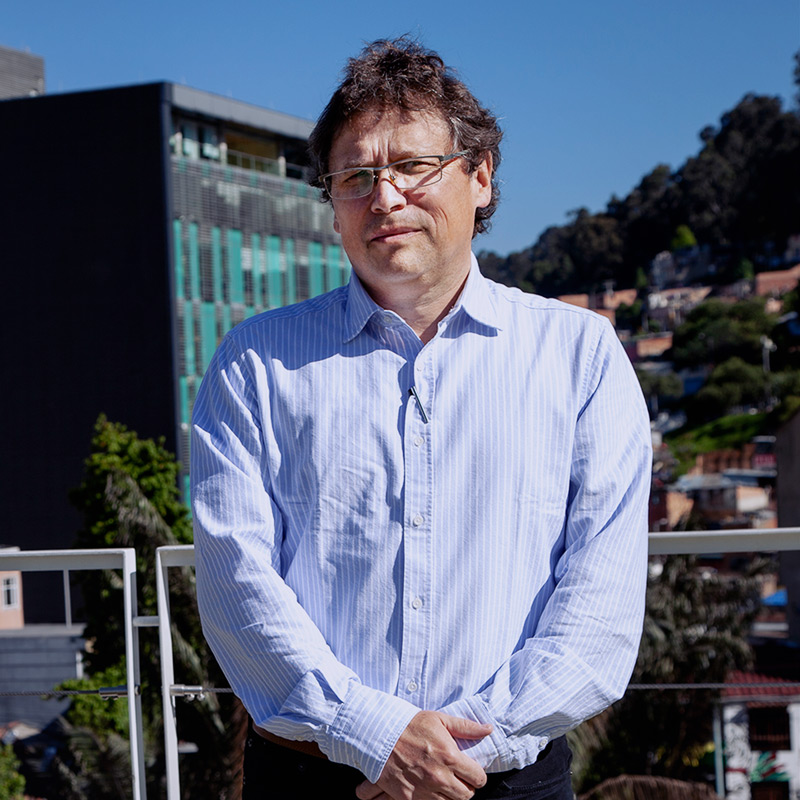
Carlos Pombo Vejarano is a Full Professor at the Faculty of Business Administration of the University of Los Andes, Colombia , where he serves as Director of the Finance Department. He holds a Ph.D. and MSc in Economics from the University of Illinois at Urbana-Champaign, along with a Master's in Economics from the University of Los Andes and a Bachelor's degree in Economics from Pontifical Javeriana University. Ph.D., Economics, University of Illinois (1999) MSc, Economics, University of Illinois (1996) Master in Economics, University of Los Andes, Colombia (1994) Economist, Pontifical Javeriana University (1990) His research focuses on Finance , Corporate Governance , Regulatory Economics , and Industrial Organization . Recent publications explore political connections in emerging markets, blockholder coalitions in cross-border deals, and board capital diversity as governance mechanisms. He has been Editor-in-Chief of the Latin American Journal of Administration (ARLA) since 2013 and has served on the Colombian Securities Market Self-Regulatory Board since 2018. His work spans diverse topics such as ESG disclosures , entrepreneurship trends , and game theory applications in M&A processes, with publications in journals like the Journal of Corporate Finance , International Review of Finance , and Family Business Review . He has also contributed to policy discussions at institutions like INSEAD and Pompeu Fabra University.
Dr. Markus Holler is a Scientific Staff member at the Institute for Astro- and Particle Physics, Faculty of Mathematics, Computer Science and Physics, University of Innsbruck, Austria. He is a key contributor to the H.E.S.S. (High Energy Stereoscopic System) collaboration, focusing on very-high-energy gamma-ray astronomy and astroparticle physics. His research spans a wide range of high-energy astrophysical phenomena, including pulsars, supernova remnants, active galactic nuclei, gamma-ray binaries, and transient events such as gamma-ray bursts and neutron star mergers. His research interests are centered on high-energy gamma-ray astronomy , astroparticle physics , and multi-messenger astronomy . He specializes in the morphology and spectral analysis of extended gamma-ray sources, diffuse emission studies, and the development of advanced data analysis and simulation techniques for Imaging Atmospheric Cherenkov Telescopes. His work often involves large-scale international collaborations such as H.E.S.S., LIGO/Virgo, IceCube, and the Event Horizon Telescope (EHT). He has contributed to landmark discoveries, including the detection of 100 TeV gamma rays from the Crab Nebula, the study of particle acceleration in SS 433, and multi-messenger follow-ups of neutron star mergers. The trends in his recent publications highlight a strong focus on TeV emission from extreme astrophysical environments , morphological studies of nebulae and halos , multi-wavelength and multi-messenger campaigns , and methodological advancements in gamma-ray data analysis . His work frequently bridges observational results with theoretical models of particle acceleration, cosmic-ray propagation, and emission mechanisms. Dr. Holler actively participates in public outreach, delivering popular science lectures on topics such as Cherenkov telescopes and cosmic messengers. He has also held organizational roles within the H.E.S.S. collaboration, including chairing sessions and leading task forces related to diffuse emission and analysis frameworks. There are no indications of formal teaching roles or academic advising in the provided data.
Jo Eidsvik is a Professor at the Department of Mathematical Sciences, NTNU. His research focuses on spatio-temporal statistics, computational statistics, and their applications in Earth sciences, geophysics, and data assimilation. He leads projects like the Center for Geophysical Forecasting (SFI-CGF), GEOPARD, and MASCOT. He has authored a seminal book on 'Value of Information in the Earth Sciences' (2017), recognized with a runner-up award by INFORMS. Eidsvik has supervised numerous PhD and MSc students, including current advisees André Olaisen and Oscar Ovanger. He holds editorial roles in 'Mathematical Geosciences' and 'Statistics and Computing'. Education: MSc in Applied Mathematics (University of Oslo, 1997), PhD (NTNU, 2003). Industry experience includes roles at the Norwegian Defense Research Establishment and Statoil. He has been a visiting scholar at Stanford University and Duke University. Research highlights include Bayesian inversion methods, adaptive sampling with autonomous vehicles, and value of information analysis in decision-making. Recent work explores machine learning for irregular time series (ML4ITS) and oceanographic data assimilation. Over 60 MSc theses supervised, emphasizing interdisciplinary approaches. Labs/Teams: Center for Geophysical Forecasting (SFI-CGF), GEOPARD, MASCOT, Games. Grants/Awards: INFORMS Decision Analysis Society award (2017), extensive project funding through SFI and industry. Key Projects: Havvarsel (ocean data), CO₂ storage monitoring, and robotic sampling systems.