Robert Goodspeed is an Associate Professor of Urban and Regional Planning at the University of Michigan's Taubman College of Architecture and Urban Planning. His work bridges urban planning with information technologies, focusing on tools like GIS and sociotechnical systems to enhance planning processes and outcomes. Education: Ph.D. in Urban and Regional Planning, Massachusetts Institute of Technology M.C.P., University of Maryland B.A. in History, University of Michigan (dissertation on Detroit’s Gratiot Area Redevelopment Project) His research explores digital planning tools, smart cities, and collaborative practices. He leads initiatives like the Justice InDeed project addressing racial housing covenants and the Michigan Eviction Project analyzing eviction dynamics. Scientific Awards: Donald Schön Award for Excellence in Learning from Practice (2013) Planetizen Leading Thinker in Urban Planning and Technology Goodspeed teaches courses in scenario planning, negotiation techniques, and planning methods, with recent offerings including URP 526 (Scenario Planning) and URP 522 (Negotiation, Collaboration & Equitable Engagement).
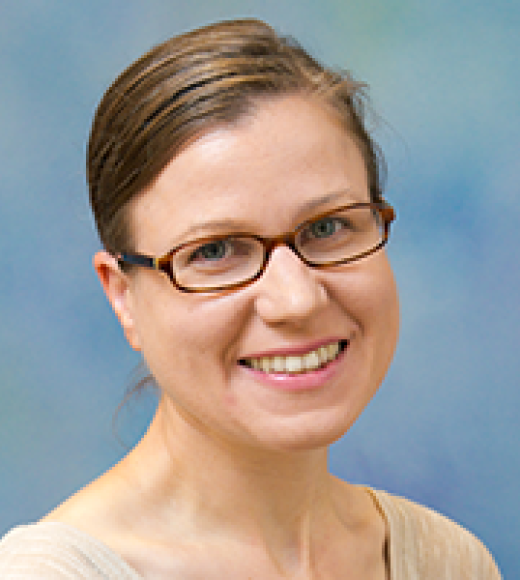
Heather Elko is an Associate Professor and Director of Undergraduate Studies in the Department of Political Science at the University of California - Davis. She holds a PhD from the University of Pittsburgh and completed a postdoctoral fellowship at Princeton University’s Niehaus Center for Globalization and Governance. Her research focuses on international negotiations, exploring why and how states choose diplomacy over coercion, strategic bargaining approaches, and the conditions enabling cooperative agreements. Key areas include civil conflict resolution, human rights treaty negotiations, trade policy, and multilateral diplomacy. Her work emphasizes contextual factors influencing negotiation success, such as state capabilities, institutional frameworks, and political agendas. Elko has authored textbooks including Essentials of International Relations and contributed to debates on arms exports, international reputation, and EU decision-making processes. Her research bridges theoretical analysis with practical case studies across diverse geopolitical contexts. Education: PhD in Political Science, University of Pittsburgh Postdoctoral Research, Princeton University (Niehaus Center) Labs/Teams: Active in the UCD Dublin European Institute and collaborates on global governance research initiatives. Her articles examine topics such as external interventions in civil conflicts, reservation practices in human rights treaties, and trade policy framing. While no formal grants or awards are listed, her extensive publication record reflects sustained academic impact in international relations theory and practice.
Xiaogang Wu is a Professor of Sociology and Yufeng Global Professor of Social Science at New York University, affiliated with the College of Arts & Science and the Department of Sociology. He holds a Ph.D. from UCLA, an M.A. from Peking University, and a B.A. from Renmin University of China. His research focuses on China's social stratification, education policy, inequality dynamics, urban studies, and quantitative methodologies. Key interests include social cohesion, housing policy impacts, migrant labor outcomes, and the interplay between education and socioeconomic status. His recent work analyzes pandemic vulnerability, educational expansion effects on earnings, and gender dynamics in reform-era China. He has contributed to major publications like Research in Social Stratification and Mobility and Demographic Research .
David Danks is a Professor of Data Science, Philosophy, and Policy at the University of California, San Diego. His work bridges AI ethics, causal inference, and policy, focusing on governance frameworks for emerging technologies. He leads research on trustworthy AI systems, healthcare technology applications, and sociotechnical risks. Danks is affiliated with the DIVER Lab, exploring interdisciplinary approaches to AI's societal impact. His research spans causal discovery algorithms, ethical AI design, and the intersection of science and policy. Notable themes include mitigating bias in quantum machine learning, dynamic certification for autonomous systems, and addressing unforeseen technological harms. He has contributed to national AI policy through roles like the National Artificial Intelligence Advisory Committee. Publications emphasize ethical challenges in AI development, such as algorithmic fairness, epistemic utility, and moral responsibilities in dual-use technologies. His work frequently intersects with healthcare innovation, including personalized hemodynamic models for surgical risk reduction. While no formal awards or grants are listed, Danks' involvement in high-profile initiatives like the CCC Whitepaper on pandemic prevention underscores his leadership in translational ethics and policy.
Associate Professor Mathias Baumert is affiliated with the University of Adelaide, where he holds a position in the School of Electrical and Mechanical Engineering under the Faculty of Sciences, Engineering and Technology. He leads the Health Technology research theme in the School of Electrical Electronic Engineering and specializes in biomedical signal processing, focusing on dynamic electrocardiography and sleep-related phenomena. His work integrates clinical applications and technological advancements to address challenges in cardiology and sleep disorders. His research interests include the physiological underpinnings of ventricular repolarization variability and its clinical implications, particularly in post-myocardial infarction patients and those with sleep-disordered breathing. He also develops brain-computer interface (BCI) systems for stroke rehabilitation, leveraging real-time EEG analysis and motor function recovery techniques. Collaborations with clinical partners such as the Women’s and Children’s Hospital, Adelaide Institute of Sleep Health, and the Victor Chang Cardiac Research Institute highlight his translational research focus. His recent articles emphasize signal processing applications for risk stratification in cardiovascular disease, sleep apnea, and diabetes. Key themes include nocturnal hypoxemic burden prediction, REM sleep dynamics, and the development of novel diagnostic markers using ECG and EEG data. His work often bridges engineering and medicine, aiming to translate findings into clinical tools like adaptive servo-ventilation treatment optimization and personalized BCI systems. No scientific awards or fellowships are explicitly listed in the provided texts. He is eligible to supervise Masters and PhD students but current advisee names are not available. His research projects are supported by grants such as ARC DP110102049 (as noted in some articles). He teaches courses including Biomedical Instrumentation and Introduction to Medical Technology . His facilities include ECG equipment, polysomnogram repositories, and a BCI workstation with 64-channel EEG capabilities. He collaborates on lab-based and clinical partner studies to advance cardiac sensing algorithms and sleep-related diagnostic technologies.
Rajeev Sahay is an Assistant Teaching Professor in the Department of Electrical and Computer Engineering at the University of California San Diego (UCSD), affiliated with the Jacobs School of Engineering. He holds a Ph.D. and M.S. from Purdue University (2022 and 2021) and a B.S. from the University of Utah (2018). Prior to UCSD, he worked as a Senior Machine Learning Software Engineer at Saab, Inc., and taught courses at Purdue, earning the Purdue Engineering Dean’s Teaching Fellow award in 2021. His research bridges machine learning and networking, focusing on social learning networks (SLNs) for personalized education and robust wireless communications in adversarial environments. Key areas include federated learning for privacy preservation, adversarial attack mitigation, and next-generation 6G wireless systems. His work emphasizes data-driven methodologies to enhance learning outcomes and secure communication networks against vulnerabilities. Dr. Sahay’s teaching spans undergraduate and graduate courses in machine learning, data science, and programming languages (C/C++/Python), with a passion for tailoring curricula to student needs. His publications reflect expertise in federated learning, adversarial defense mechanisms, and signal processing, with recent contributions to AI-assisted education and robust wireless systems. Scientific Awards: Purdue Engineering Dean’s Teaching Fellow (2021) Teaching and Research Interests: Machine Learning Pedagogy Adversarial Robustness in ML Systems Federated Learning Applications Social Learning Network Analysis 6G Wireless Communication Security
Dr. Kristin Valentino is a Professor of Psychology and Director of the Veldman Family Psychology Clinic at the University of Notre Dame, holding the William J. Shaw Center for Children and Families Collegiate Chair. She is also a Faculty Fellow at the Eck Institute for Global Health and the Institute for Educational Initiatives. Her research focuses on how adversity, particularly child maltreatment, impacts development and resilience, emphasizing caregiver-child interactions and intervention design. She evaluates strategies to improve caregiving quality and mitigate developmental risks in high-risk families. Education: Ph.D. in Psychology from the University of Rochester and A.B. in Psychology from Georgetown University. Research Interests: Child maltreatment prevention and intervention Developmental psychopathology Parent-child dynamics Autobiographical memory specificity Racial discrimination impact Professional Roles: President-Elect of the APA Division 37 Section on Child Maltreatment, Associate Editor for Child Maltreatment , and NIH Study Section member. Her work integrates developmental psychopathology perspectives and multi-level analysis to address child psychopathology and adversity. Labs/Teams: Leads the Development & Psychopathology Laboratory, focusing on translational research to bridge clinical practice and scientific inquiry. Collaborates on projects addressing trauma-informed interventions and intergenerational adversity.
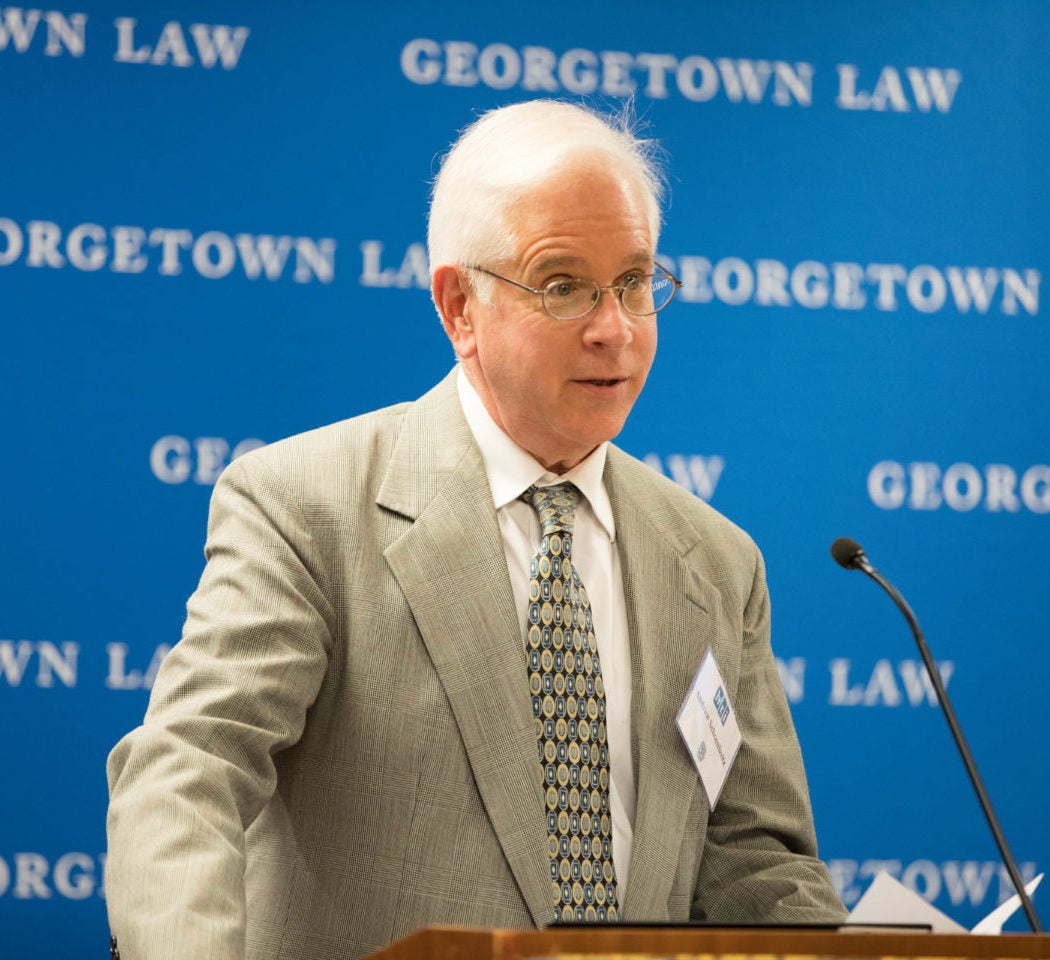
Andrew I. Schoenholtz is a Visiting Professor of Law and Professor from Practice at Georgetown University Law Center, where he directs the Human Rights Institute and Center for Applied Legal Studies asylum clinic. He also oversees the Certificate in Refugees and Humanitarian Emergencies program. His teaching includes courses on Refugee Law, Immigration Policy, and experiential learning on detained immigrants' rights. Previously, he served as Deputy Director of the U.S. Commission on Immigration Reform and practiced immigration law at Covington & Burling. Dr. Schoenholtz holds a Ph.D. from Brown University , a J.D. from Harvard Law School , and a B.A. from Hamilton College . His research focuses on refugee protection, asylum adjudication, and the intersection of migration policy with human rights. He has conducted fieldwork in Haiti, Cuba, Germany, and other regions to analyze root causes of forced migration and humanitarian responses. His work emphasizes reforming legal frameworks to ensure fair treatment of migrants, particularly through publications like Refugee Roulette and Lives in the Balance , which critique systemic disparities in asylum processes. He actively advocates for policies balancing national security with refugee rights, informed by his extensive field experience and legal expertise. Key affiliations include the Institute for the Study of International Migration (ISIM) as Deputy Director and leadership roles in Georgetown Law’s clinical programs. His interdisciplinary approach integrates academic research with practical advocacy, influencing both legal education and policy debates globally.
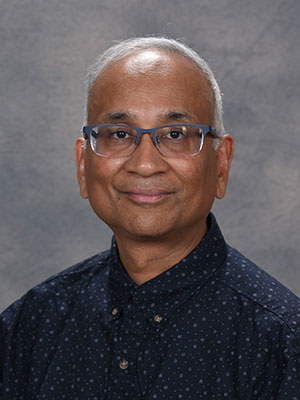
Sandeep Kumar is an Associate Professor in the Department of Computer Science and Engineering at Texas A&M University, College Station. He holds a PhD in Computer Science from Purdue University (1995) and a B.Tech in Electrical Engineering from the Indian Institute of Technology, New Delhi (1985). His research focuses on computer security, networking, and system-level programming. Prior to academia, he worked in industry roles including at VMware in Palo Alto, CA. He currently teaches courses such as CSCE 313 (Introduction to Computer Systems) and CSCE 222 (Discrete Mathematics), emphasizing system software, networking, and cybersecurity. His teaching philosophy incorporates modern tools like GCP and Docker for practical learning. He advises students on technical projects but notes his non-tenure track role limits formal research supervision. Professional interests include curriculum design, educational technology, and bridging industry-academia gaps in cybersecurity. Education: Ph.D., Computer Science, Purdue University, 1995 M.S., Computer Science, University of Tennessee, 1987 B.Tech, Electrical Engineering, IIT Delhi, 1985 Research Interests: Computer Security, Networking, Operating Systems Teaching: CSCE 313 (Computer Systems), CSCE 222 (Discrete Math), CSCE 111 (Java Programming) Industry Experience: VMware (Networking & Security), Former Googler Awards: Hagler Fellow (2023), Google GCP Educational Grants Dr. Kumar’s work emphasizes practical system-level programming and security, with contributions to intrusion detection systems and secure enterprise networks. His courses integrate modern tools like RustRover and Docker, reflecting industry standards. He actively engages with educational technology, including LaTeX-based lecture materials and Gradescope integration.
Stephanie Torres is an Assistant Professor in the Department of Educational Psychology at the University of Illinois Chicago (UIC). She leads the FLOR (Familias Overcoming stress with Resilience) Lab, which develops school- and community-based programs to promote mental health among Latinx families. Her research focuses on contexts of risk and resilience, particularly addressing immigration-related stress and structural racism through a trauma-informed lens. She collaborates with The Resurrection Project, a local community agency, to pilot the FIESTA intervention program for Latinx immigrant families. Her clinical expertise includes trauma-informed care for minoritized families, with specialization in bilingual Spanish-speaking populations. She teaches courses on child development (EPSY 255), child-family-community relationships (EPSY 382), and trauma-informed practices (EPSY 471). Her work emphasizes community-based participatory research (CBPR) and policy advocacy, aiming to bridge clinical practice with systemic change. Recent publications highlight her focus on immigration stress, trauma interventions, and structural oppression. While no scientific awards are listed, her professional memberships include the National Latinx Psychological Association (NLPA), Society for Community Research and Action (SCRA), American Psychological Association (APA), and Society for Research in Child Development (SRCD).
Tianyu Guan is an Assistant Professor in the Department of Mathematics and Statistics at York University, Faculty of Science. He previously served as an Assistant Professor at Brock University and joined York University in 2024. He holds a PhD in Statistics from Simon Fraser University (2020), an MSc in Actuarial Science from the same institution (2014), and a BSc in Statistics from Jilin University (2011). PhD in Statistics, Simon Fraser University, 2020 MSc in Actuarial Science, Simon Fraser University, 2014 BSc in Statistics, Jilin University, 2011 His research centers on sports analytics, functional data analysis, and nonparametric statistics, with strong applications in machine learning and data science. He applies statistical methodologies to understand sports performance, player behavior, and game dynamics. His work also extends to theoretical developments in sparse modeling and functional regression. The recent publications highlight a clear trend toward integrating advanced statistical techniques with real-world sports and entertainment data. His work combines functional data analysis, machine learning, and probabilistic modeling to extract insights from complex longitudinal and high-dimensional datasets. Topics span soccer, rugby, football, and movie reviews, demonstrating interdisciplinary reach. While no formal scientific awards are listed in the provided text, his publications in high-impact journals such as Annals of Applied Statistics and Statistics and Computing reflect strong academic recognition. Tianyu Guan actively advises multiple graduate students at both MSc and PhD levels, primarily at Brock and Simon Fraser Universities. His teaching portfolio includes advanced courses in nonparametric statistics, sampling theory, and experimental design at the undergraduate and graduate levels. He has not received external grant information in the provided text, but his research output suggests active engagement in funded or independent research projects. He leads methodological and applied research in sports analytics, often co-supervising students with colleagues across institutions. His lab or research group appears focused on developing and applying statistical tools for performance analysis and decision-making in sports, supported by computational implementations such as the R package ngr .
Zhu-Tian Chen is an Assistant Professor in the Department of Computer Science and Engineering at the University of Minnesota, Twin Cities, where he leads research in data visualization, human-computer interaction, and augmented reality. Prior to this, he held postdoctoral positions at Harvard University and UC San Diego, working with leading researchers in visual computing and interactive design. Ph.D. in Computer Science, Hong Kong University of Science and Technology B.Eng. in Software Engineering, South China University of Technology His research focuses on augmenting human intelligence through hybrid human-AI systems, particularly in everyday and outdoor environments. He specializes in designing intelligent AR interfaces, embedded visualizations, and language-oriented interactions for applications in sports analytics, education, and data analysis. His work integrates human-centered design with applied machine learning to create intuitive and effective visualization tools. The recent trend in his publications shows a strong emphasis on intelligent AR systems for dynamic scenes, LLM-based code generation interfaces, and real-time augmentation of sports videos using natural language and gaze-based interactions. His work frequently appears in top-tier venues such as IEEE VIS, ACM CHI, and UIST. Best Paper Award, ACM CHI'23 Best Short Paper Honorable Mention, EuroVis'23 Best Paper Honorable Mention, IEEE VIS'22 (twice) Certificate of Distinction and Excellence in Teaching, Harvard University Hong Kong Ph.D. Fellowship Dr. Chen actively mentors undergraduate, master’s, and PhD students, as well as visiting scholars and interns, and is building a new research lab focused on visualization for intelligent AR systems. He has served on program committees for major conferences including ACM CHI, IEEE VIS, and EuroVis, and has been invited to speak at institutions such as Apple, JP Morgan, and multiple universities worldwide. He also contributes to the academic community through grant reviewing for NSF and the Department of Energy. He leads research projects in intelligent AR systems for sports, language-oriented interactions with LLMs, and immersive data visualization, often in collaboration with institutions like Harvard, UC San Diego, and HKUST. His lab welcomes students and collaborators interested in visualization, HCI, and applied AI.
Prof. Sophie Schwartz is a leading neuroscientist at the University of Geneva , where she heads the Sleep & Cognition Lab within the Faculty of Medicine . Her research integrates neuroimaging (fMRI, hd-EEG, MEG) , behavioral testing , and computational modeling to unravel the neural mechanisms underlying memory consolidation , emotion processing , and dreaming during sleep, while also developing clinical interventions to enhance sleep in neurological and psychiatric disorders.
Alain Lempereur is the EUI Chair in Leadership and Negotiation at the Florence School of Transnational Governance , with a focus on responsible negotiation and mediation frameworks. As a tenured professor at Brandeis University (Alan B. Slifka Chair in Conflict Resolution), he bridges academic theory with field practice across 75+ countries. Harvard Law School affiliate faculty since 1993 Co-founder of Co-Dev capacity-building organization Former director of Brandeis Coexistence Program (2011-2021) Research Pillars : Humanitarian negotiation power dynamics, post-conflict reconciliation in Burundi/DRC, and philosophical foundations of negotiation. His work emphasizes joyful mediation , nonverbal emotional perception , and responsible leadership through 20+ books and 150+ articles. Training Impact : Designed executive programs for EU institutions, UN initiatives, and global corporations (Airbus, Sanofi-Pasteur). Pioneered the LEARN hybrid program for senior humanitarian leaders with the Slifka Chair. Awards & Recognition : Chevalier des Tastevins (2019) UN Mediation Roster member Harvard PON affiliate faculty Who's Who (2009, 2010) Global Engagement : Facilitated Israeli-Palestinian dialogues with the Negotiation Strategies Institute. Developed negotiation methodologies for MSF, ICRC, and UNDP. Holds degrees from Harvard (SJD) and Université Libre de Bruxelles (MPhil, LL.M).
Prof. Dr. Christian Breunig is a Professor of Comparative Politics at the Department of Politics and Public Administration, University of Konstanz, and serves on the Board of the Cluster of Excellence "The Politics of Inequality." He previously held academic positions as Associate Professor at the University of Toronto and Postdoctoral Researcher at the Max-Planck Institute for the Study of Societies. His research focuses on political representation, public policy in advanced democracies, and comparative political economy. Projects: Political elites and inequality (2019-2025) Conditional Responsiveness in France/Germany (2016-2020) Comparative Agendas Project (2014) Key research areas: Political methodology Legislative dynamics Policy institutionalization Public opinion estimation Redistribution preferences His recent work analyzes: Political misrepresentation of marginalized groups Redistribution mechanisms in pension systems Legislative bargaining behaviors Policy venue creation dynamics Public opinion estimation accuracy Awarded three American Political Science Association prizes, he has conducted comparative studies across Germany, Belgium, Canada, Switzerland, and the Netherlands, with methodological innovations in legislative ideology measurement.