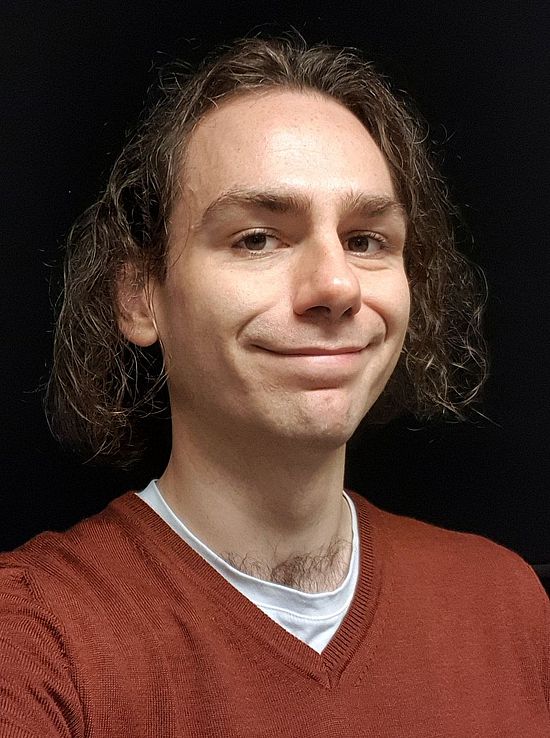
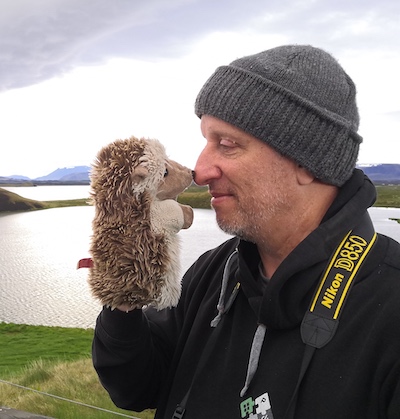
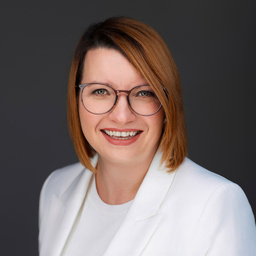
Dr. Laurent Marot is a Researcher at the Department of Physics, University of Basel, affiliated with the Faculty of Humanities and Natural Sciences. His work focuses on plasma-material interactions, diagnostic systems for nuclear fusion, and advanced materials science. He contributes to ITER-related research through projects like the development of plasma cleaning techniques for first mirrors and studies on plasma-facing materials. Research interests include plasma physics, fusion energy, surface engineering, and catalytic processes. Key projects involve mirror cleaning technologies in tokamak environments (e.g., JET and EAST), optimization of tungsten and rhodium coatings, and nanoscale surface modifications for biomedical and fusion applications. Recent publications address plasma cleaning efficacy, material erosion under high heat loads, and novel catalytic materials. His work bridges experimental and computational approaches to solve challenges in fusion energy and material durability.
Dr. Gianni Buser is a Researcher at the University of Basel's Department of Physics, affiliated with the Quantum Optics Lab under Prof. Philipp Treutlein. He holds a PhD (2021) and Master’s degree (2016) from the University of Basel, specializing in quantum atom optics and atomic vapor-based quantum technologies. His research focuses on developing scalable quantum memories and optical storage systems using atomic vapor cells, with applications in quantum communication and quantum networking. Key contributions include advancements in microfabricated vapor cells, diode laser control techniques, and single-photon storage protocols. Buser’s work bridges quantum optics with optomechanical systems, exploring hybrid atom-light interfaces for next-generation quantum technologies. Teaching includes courses such as Physik IV (Quantum Optics), Physik II, and introductory computational quantum mechanics. His experimental techniques span laser manipulation, hyperfine state engineering, and optomechanical coupling. No scientific awards are explicitly listed for Buser, though his group has received recognition for related work. His research is supported by collaborations in quantum atom optics, optomechanical systems, and semiconductor-atomic interfaces.
Anita Marton is a Researcher at the Department of Medicine, University of Fribourg, within the Faculty of Mathematics, Natural Sciences and Medicine. Her primary affiliation is the Department of Medicine, where she contributes to interdisciplinary medical research programs. She holds a position as Research Associate focusing on pharmacological mechanisms and inflammatory processes. Her research interests center on poly(ADP-ribose) polymerase (PARP) inhibition, cardiovascular dysfunction, and inflammatory diseases. Key areas include developing novel therapeutic agents for age-related heart failure, sepsis, and diabetes-related vascular complications. She has explored adenosine derivatives, inosine, and other small molecules for their anti-inflammatory and cytoprotective effects. Her work spans experimental models (murine, porcine, rat) investigating mechanisms of periodontitis, sepsis-induced organ damage, and endothelial dysfunction. She has also contributed to risk management methodologies in software development projects, demonstrating cross-disciplinary research capabilities. Notable experimental approaches include evaluating PARP inhibitors in acute lung injury, studying flagellin's role in sepsis-related pulmonary inflammation, and analyzing cytokine modulation via adenosine receptors. Her preclinical studies bridge molecular mechanisms with translational medicine. Marton's research emphasizes translational applications, with focus on drug candidates targeting inflammation and cellular necrosis. Her work has implications for critical care medicine, cardiology, and chronic disease management.
Frank Kagan Gürkaynak is Director of the Microelectronics Design Center (DZ) and a Researcher at ETH Zurich's Department of Information Technology and Electrical Engineering (D-ITET). He leads the PULP open-source hardware project and works closely with Prof. Luca Benini in the Integrated Systems Laboratory (IIS). His academic journey includes BSc/MSc from Istanbul Technical University and a PhD from ETH Zurich. Roles: Microelectronics Design Center Director, Senior Scientist in IIS, VLSI course lecturer Research focuses on energy-efficient digital circuits, cryptographic hardware security, and open-source processor architectures. Key projects include EU-funded initiatives like European Processor Initiative (EPI), Convolve, and NeuroSoC, along with SNSF grants Tiny Trainer and PEDESITE. Active in teaching VLSI design, embedded systems, and essential engineering skills. Publications emphasize secure cryptographic accelerators, low-power processor clusters, and GALS system design methodologies. Contributions include energy-efficient ASICs for IoT to HPC domains and pioneering work in side-channel attack-resistant hardware.
Igor Stefanini is a Senior Researcher and Head of the BIOMEDtech Unit at the Department of Innovative Technologies (DTI), SUPSI. He coordinates the Biomedical Technologies Research Line and oversees the Medical Technologies Teaching Module. He also serves as Research Coordinator at the Cardiocentro Ticino Foundation. His academic career includes a Doctorate from EPFL (2001-2006) and postdoctoral fellowship at EPFL (2006-2007). **Research Interests:** Development of precision systems in MEDtech and BIOtech fields, including biosensors for viral detection ( e.g. , SARS-CoV-2), energy harvesting for medical devices, and advanced biomedical instrumentation. Projects focus on microfluidic platforms, implantable sensors, and medical device prototyping. **Key Projects:** Includes a microfluidic platform for real-time SARS-CoV-2 detection , self-powering pacemakers , and CPR monitoring devices . Collaborations span institutions like the Institute of Oncology Research (IOR) and the Swiss Institute for Regenerative Medicine. **Patents:** Inventions include devices for adipose tissue globule production and CPR assistance systems. Over 30+ publications in journals like Biosensors and Bioelectronics: X and conference proceedings. **Grants & Roles:** Managed projects funded by CTI, Swiss Stem Cell Foundation, and industry partners. Served as Director of the Foundation for Cardiological Research and Education (2013–2015). **Labs/Teams:** Leads the Medical Devices (ADM) division at DTI, focusing on translational biomedical engineering and industry-academia partnerships.
Andrea Baldassari is a researcher at the Department of Innovative Technologies (DTI) of SUPSI, affiliated with the Institute of Information Systems and Networking (ISIN). His work focuses on semantic web applications, mobile learning platforms, smart campus solutions, and mobility analysis. He leads projects like LiveSmart-CAMPUS (enhancing campus experiences via IoT), e-mobiliTI (electric mobility transition studies), and Ondigita (educational document management). Key research areas include wearable device data analysis for health monitoring, proximity-based systems for smart environments, and probabilistic models for burnout prevention. He collaborates on EU-funded projects analyzing teleworking impacts and employee well-being. Publications span semantic frameworks (e.g., Semantic DB, IRCS Water), mobility tracking methodologies, and mobile app development for education and workplace optimization. His work emphasizes real-world application in domains like water management, transportation, and e-learning. Award recognition details are not explicitly listed in provided texts.
Ramon Sommerhalder serves as a Researcher at the Department of Education and Learning within the University of Teacher Education at the University of Applied Sciences and Arts of Southern Switzerland (SUPSI) in Locarno, Switzerland. His institutional affiliation centers on teacher education and learning sciences within the SUPSI framework. His research focuses on core educational disciplines including: Contemporary pedagogical methodologies Learning process optimization Teacher professional development frameworks Educational psychology applications Curriculum design for modern educational contexts Based at Piazza San Francesco 19 in Locarno, his work integrates theoretical and practical dimensions of teacher training. Contact details are maintained through SUPSI's official channels: Email: ramon.sommerhalder@supsi.ch Physical address: Piazza San Francesco 19, CH-6600 Locarno, Switzerland
Birgit Fuhrmann is a Lecturer at the Zurich University of Applied Sciences (ZHAW) , affiliated with the School of Applied Linguistics and its Institute of Multilingual Communication . She leads the Technical Communication team and co-heads the Technical Communication & Information Design specialization in the BA Multilingual Communication program. Her work integrates usability testing , accessibility , and human-machine interaction research within technical documentation and digital health contexts. Master of Arts in Applied Linguistics with Specialization in Organizational Communication (ZHAW, 2009–2012) Bachelor of Arts in Translation with Specialization in Technical Communication (ZHAW, 2022–2024) Professional education in Technical Communication (Endress+Hauser, 1993–2002) Her research focuses on technical communication , usability testing , accessibility , and the integration of AI in language and documentation . She explores how human-machine interaction can enhance user experiences in digital health and clinical contexts, emphasizing standardization and legal aspects in technical writing. Recent publications highlight trends in AI-driven technical communication , web accessibility , and usability optimization for healthcare applications. She actively leads projects like the Innoscheck Usability Study for mobile speech documentation and contributes to industry best practices via conferences such as Tekom and Mensch und Computer .
Urs Streichenberg is a Senior Lecturer & Project Leader at the Zürcher Hochschule für Angewandte Wissenschaften (ZHAW) School of Management and Law. His academic work focuses on Sustainable Financing , Cost Accounting , and Financial Accounting . Education: lic.oec. HSG in Banking/Finance (University of St. Gallen, 1999-2004) Continuing Education: CAS in Hochschuldidaktik (ZHAW, 2012), Cambridge ESOL Level 2 Certificate (2009) Streichenberg's research spans process cost accounting , sustainable financial products , and ESG integration in SME financing . His publications analyze topics like IFRS compliance, lease accounting impacts on aviation, and beyond-budgeting frameworks. Recent collaborative work includes the KMU ZH Monitor series examining Zurich SME conditions and the Swiss Sustainable Lending Market Study . His projects focus on sustainability assessment integration in financial processes. He applies practical expertise from roles in banking (BMW 2004-present) to credit limit determination, risk policy implementation, and financial indicator supervision.
Dr. Peter Fusek is a researcher at the Zurich University of Applied Sciences (ZHAW) School of Engineering, affiliated with the Institute of Data Analysis and Process Design. He specializes in operations research and optimization, focusing on integer programming applications for staff scheduling and business efficiency improvements. Affiliation: Zurich University of Applied Sciences School: School of Engineering Department: Institute of Data Analysis and Process Design Email: peter.fusek@zhaw.ch Research Focus: Integer programming, staff scheduling, energy optimization, business process automation His recent publications explore advanced scheduling techniques for airports and energy systems, demonstrating practical implementations of optimization algorithms. Projects include airport ground staff scheduling (2023), operational staff planning (2021), and automated staff scheduling (2020).
Stephan Bütikofer is a researcher at the Zurich University of Applied Sciences (ZHAW), School of Engineering, specializing in operations research and transportation systems. He focuses on public transport optimization, railway timetabling, urban logistics, and network modeling. His work integrates customer behavior and infrastructure constraints into scheduling algorithms. Current Projects: Smart UMH (urban multihub logistics), Customer-oriented Traffic Management Systems, and automated timetable planning. Research Themes: Mesoscopic infrastructure modeling, periodic timetabling with PESP/FPESP, energy optimization in vessel operations, and ULD stock allocation in air transport. Recent Publications: Address periodic timetabling with travel chain integration, maintenance scheduling stability, and graph contraction for railway optimization. Keywords: Operations Research, Public Transport, Network Analysis. Collaborations: Regularly works with ETH Zurich, RWTH Aachen University, and Swiss transport stakeholders like SBB and Swiss International Air Lines.
Dr. Steffen Eger is a professor at the Technical University of Darmstadt, focusing on Natural Language Processing, Machine Translation, and Computational Linguistics. His work spans both theoretical and applied aspects of NLP, including adversarial robustness, evaluation metrics, and creative text generation. Key Contributions: • Pioneering research in LLM-based evaluation metrics • Development of efficient translation quality frameworks • Analysis of social solidarity in historical discourse • Exploration of poetic creativity through neural models His recent publications demonstrate expertise in: - Human-Aware Translation Evaluation - Summarization of Historical Texts - Adversarial Defense Mechanisms - Explainable AI for Generation Metrics While no explicit awards or student supervision details are provided, his collaborative work appears across major NLP venues like ACL, EMNLP, and COLING. His research frequently intersects with human-centric NLP tasks, emphasizing reproducibility and robustness in system design.
Dr. Thomas Möllenhoff is a post-doctoral researcher at RIKEN AIP's Approximate Bayesian Inference Team. He earned his PhD in Informatics from the Technical University of Munich in 2020, where he focused on nonconvex optimization methods for image processing and computer vision. Education: PhD in Informatics (Technical University of Munich, 2020) His research bridges Bayesian principles with deep learning advancements. Recent work involves Sharpness-aware minimization (SAM) and uncertainty estimation in neural networks. He received recognition for his contributions to computer vision (CVPR 2016) and Bayesian deep learning (NeurIPS 2021 challenge). Scientific Awards: Best Paper Honorable Mention at CVPR 2016 First-place at NeurIPS 2021 Challenge on Approximate Inference in Bayesian Deep Learning
Dr. Jean-Marie Fuerbringer is a Lecturer and Scientific Assistant at École Polytechnique Fédérale de Lausanne (EPFL), affiliated with the School of Basic Sciences and the Section of Physics. He also collaborates with the SCI STI FM Group at EPFL Valais Wallis and contributes to teaching at UNIL’s College of Sciences. His roles span academic instruction, scientific collaboration, and pedagogical management. PhD in Sensitivity Analysis of Numerical Simulation Models, EPFL (1992) Engineer in Physics, EPFL (1987) Visiting Researcher, NIST, USA (1995–1997) Visiting Professor, Catholic University of Lima, Peru (1997–2001) His research centers on Design of Experiments (DOE) , skills and competence management , and building physics , particularly air exchange and simulation validation. He has contributed significantly to university pedagogy and industrial training systems. His work bridges engineering, education, and applied statistics. His publications from 1990 to 2017 reflect a trajectory from building energy modeling and sensitivity analysis to educational diagnostics and industrial competence systems. Key themes include experimental design, simulation confidence, airflow modeling, and fuzzy logic in skills assessment. The research spans civil, mechanical, and environmental engineering, with strong applications in pedagogy and organizational management. While no formal scientific awards are listed, his long-standing contributions to EPFL’s academic and administrative structures, including leadership roles in mechanical engineering and doctoral education, reflect institutional recognition. Dr. Fuerbringer has taught courses on experimental design, physics education, and modeling. He has collaborated with researchers and students across disciplines, though no formal PhD advisees are listed. His work in project management at the Laboratory of Production Management and Processes (LGPP) involved skills development and pedagogical innovation. He has also contributed to online learning platforms and proactive competence management systems. He is actively involved in research and teaching, with affiliations to the Section of Physics and the SCI STI FM Group, focusing on experimental methodologies and their applications in both academia and industry.
Amel Abdelraheem is a Doctoral Assistant at the Signal Processing Laboratory 4 (LTS4), part of the Institute of Electrical Engineering (IEM) within the School of Engineering (STI) at École Polytechnique Fédérale de Lausanne (EPFL). She is concurrently pursuing her doctoral studies in the Doctoral Program in Computer and Communication Sciences (EDIC), under the Education division (ETU) at EPFL. Her academic work is situated at the intersection of signal processing and computer science, with potential applications in data analysis, machine learning, and communication technologies. Given her affiliation with LTS4, a lab known for advanced research in statistical signal processing and data modeling, her research likely involves algorithmic development, optimization, and inference in complex systems. The trend in her academic environment emphasizes interdisciplinary research in information and communication technologies, particularly in areas such as sparse modeling, inverse problems, and AI-driven signal analysis. While no publications are listed, her involvement in a leading signal processing lab suggests active contribution to cutting-edge research. Scientific Awards: No scientific awards listed in the provided text. Advising and Grants: There is no explicit information about students she advises or grants she leads. As a Doctoral Assistant, she may support teaching and research supervision at the graduate or undergraduate level, but no advisees are mentioned. Labs and Teams: She is a member of the Signal Processing Laboratory 4 (LTS4) at EPFL, a research group focused on foundational and applied aspects of signal processing, machine learning, and data science. The lab is part of the broader STI and IEM ecosystem, which fosters collaboration across engineering disciplines.