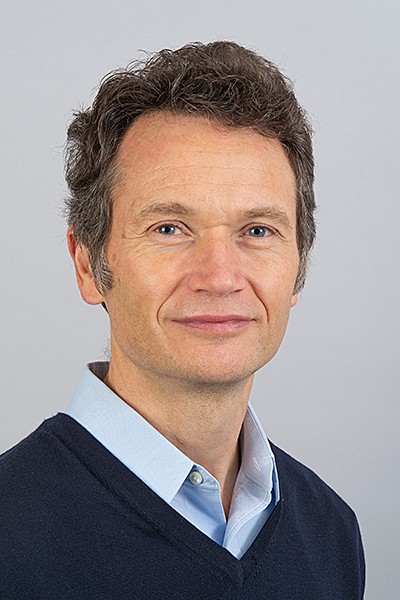
Emilio Frazzoli is a Full Professor at ETH Zurich’s Department of Mechanical and Process Engineering. He leads the Institute for Dynamic Systems and Control and the Center for Sustainable Future Mobility, focusing on autonomous systems, robotics, and socio-technical control frameworks. Current affiliations: ETH Zurich (Dynamic Systems and Control, Sustainable Future Mobility) Research: Autonomous mobility-on-demand, game theory for resource allocation, and safety verification in multi-agent systems His work bridges robotics, control theory, and economics, with projects like the open-source AMoDeus simulation framework for autonomous taxis and karma-based resource allocation systems. Recent publications emphasize trustworthy AI, reproducibility in autonomous vehicle control, and human-robot interaction challenges. Notable projects include nuReality (VR-based pedestrian interaction studies) and CARSI II (context-driven vehicle interfaces).
Andras Kis is a Full Professor at the École Polytechnique Fédérale de Lausanne (EPFL), affiliated with the School of Engineering (STI) across multiple institutes including the Institute of Electrical Engineering (IEL), Institute of Materials Science (IMX), and teaching programs in Electrical Engineering (SEL-ENS). He leads the Laboratory of Nanoscale Electronics and Structures (LANES) and serves on the PhD program committee for Microsystems and Microelectronics. PhD, EPFL (2003) MS, Physics, University of Zagreb (1999) Baccalaureate, MIOC High School Research Focus: Pioneering work on 2D materials for electronic and optoelectronic devices, particularly transition metal dichalcogenides like MoS2 and PtSe2. His research spans: Transistor design with atomically thin semiconductors Excitonic devices and valleytronics Nanofluidics and ionic logic Optical properties of 2D heterostructures Scalable fabrication of 2D materials Defect engineering and doping techniques Scientific Impact: Based on analysis of 15 most recent publications, his work focuses on advancing 2D materials for next-generation electronics through innovations in: Van der Waals heterostructures Thermoelectric and optoelectronic applications Nanofabrication techniques Spintronic and quantum transport phenomena Memristive and neuromorphic devices Characterization of electronic and optical properties Awards & Recognition: Fellow of the Institute of Electrical and Electronics Engineers (IEEE) Lotfi A. Zadeh Award for Emerging Technologies (2024) Highly Cited Researcher (Clarivate Analytics) Teaching & Academic Leadership: Currently teaching courses including Lab in Nanoelectronics , Physical Models for Micro and Nanosystems , and Semiconductor Devices II . He has supervised over 20 PhD students in his research group at EPFL. Laboratory & Collaborations: Directs the Laboratory of Nanoscale Electronics and Structures (LANES) which focuses on fundamental and applied research in 2D materials and nanoelectronic devices. His work bridges materials science, condensed matter physics, and microelectronics engineering.
Prof. Stefan Wiemer is the Director of the Swiss Seismological Service (SED) and holds the Chair of Seismology at ETH Zurich's Department of Earth and Planetary Science. He obtained a geophysics diploma from Ruhr University Bochum (1992) and a PhD from the University of Alaska Fairbanks (1997). His research focuses on earthquake processes, probabilistic hazard assessments, induced seismicity, and geothermal energy applications. He has published over 200 articles and supervised 30 PhD students, while also lecturing at the University of Bern. Key Roles: Member of ERC Grants Evaluation Panel (2015–present) Scientific Advisor to GFZ German Research Center for Geosciences (2021–present) President of Swiss Geophysical Commission Projects: Leader of Switzerland's national earthquake risk model Coordinator of EU-funded RISE (risk assessments) and DEEP (geothermal de-risking) projects Principal Investigator for ERC Synergy grant FEAR (BedrettoLab fault experiments) His research spans operational earthquake forecasting, CO2 storage monitoring, and the BedrettoLab underground experiments. He has won the Humboldt Foundation Fellowship (1997) and contributed to international initiatives like the Dutch Mining Effects Panel. Teaching includes ETH's Geophysics I course. Scientific contributions include developing seismic hazard models (ERM-CH23), real-time induced seismicity forecasting frameworks, and innovative techniques for fault dynamics analysis. His work integrates field data, laboratory experiments, and computational modeling to address both natural and human-induced seismic risks.
Tobi Delbruck is a titular professor of physics and electrical engineering at ETH Zurich, where he leads the Sensors Group at the Institute for Neuroinformatics (INI) in Zurich, Switzerland. He collaborates closely with Shih-Chii Liu and Giacomo Indiveri as part of the 'hardware groups' at INI. Delbruck has also served as visiting faculty at Caltech and is a Fellow of the IEEE. His work focuses on bio-inspired and neuromorphic event-based sensory processing systems. Professor Delbruck's research spans multiple areas of neuromorphic engineering, with particular emphasis on event-based vision systems and low-power analog VLSI circuits. His work has significantly advanced the field of Dynamic Vision Sensors (DVS), which mimic the human retina's response to changes in brightness rather than capturing full frames. This approach enables extremely low-latency vision processing with minimal power consumption, making it ideal for high-speed applications and robotics. His research has applications in robotics, autonomous systems, and low-power embedded vision. Delbruck is an active contributor to the neuromorphic engineering community, co-organizing the annual Telluride Workshop on Neuromorphic Engineering and serving in leadership roles with IEEE. He has authored numerous influential publications and co-authored books including "Event-Based Neuromorphic Systems" and "Analog VLSI: Circuits and Principles." His jAER (Java Address-Event Representation) project provides open-source tools for real-time event-based sensory processing. Analysis of his recent publications shows a clear trend toward integrating event-based vision with deep learning techniques and applying these systems to practical robotics problems. His scientific achievements have been recognized with multiple awards including: IEEE Fellow Winner of Best Live Demonstration award at ISCAS 2012 Honorable Mention Award from Sensory Systems Technical Committee at ISCAS 2012 Overall Best Student Paper Award and Best Paper Award from Sensory Systems Technical Committee at ISCAS 2010 Winner of the 2006 ISSCC Jan Van Vessem Outstanding European Paper Award Professor Delbruck actively mentors students and has supervised numerous PhD and Master's theses in the areas of neuromorphic engineering and event-based vision systems. His group has secured significant research funding from various sources to support their innovative work in bio-inspired sensory processing. He teaches courses on "Electronics for Physicists II (Digital)" and "Neuromorphic Engineering," helping to train the next generation of researchers in this field. The Sensors Group at INI, which Delbruck leads, operates state-of-the-art facilities for designing and testing neuromorphic vision systems. The group maintains close collaborations with researchers worldwide and has developed several important open-source resources including the jAER project and bias generator design kits. Their work continues to push the boundaries of what's possible with event-based sensory processing, with applications ranging from high-speed robotics to low-power embedded vision systems.
Prof. Dr. Matthias A. Tietz is an Assistant Professor and leads the Competence Center for Entrepreneurship at the St.Gallen Institute of Management in Asia (SGI-HSG), part of the University of St.Gallen in Singapore. He holds affiliate positions at IE Business School (Madrid), INDEG ISCTE (Lisbon), and the Mediterranean School of Business (Tunis). His academic journey includes degrees from Ivey Business School (Ph.D. in Entrepreneurship), Universidad del Pacífico (Peru), and Nanyang Business School (MBA, Singapore). Research focuses on entrepreneurial decision making, corporate innovation in SMEs and MNCs, and business model copycats. He regularly presents at global conferences like the Babson College Entrepreneurship Research Conference and Academy of Management Annual Meetings. Prior to academia, he consulted for companies like DHL, Henkel, and Sulzer Engineering, focusing on HR and turnaround management. He teaches courses on business consulting, social entrepreneurship in Southeast Asia, and executive education programs globally. Awarded multiple Best Paper Awards (2012, 2014, 2020) and Best Lecturer Awards across IE University programs (2019-2020). Engaged in startups as an advisor and investor, emphasizing cultural diversity in entrepreneurial contexts. Active in pro bono projects, such as supporting rural entrepreneurs in Peru.
Dima Damen is a Professor of Computer Vision at the School of Computer Science, University of Bristol, where she leads the Machine Learning and Computer Vision Group. She also serves as a Senior Research Scientist at Google DeepMind. As an EPSRC Early Career Fellow (2020-2025) and a Fellow of ELLIS for Europe, her research focuses on advancing computer vision, particularly in egocentric (first-person) vision, video understanding, and action recognition. Her educational background and professional journey have positioned her as a leader in the field of computer vision, with a particular emphasis on understanding human activities from wearable cameras. She has received numerous awards including Best Paper at ACCV 2024 and Outstanding Paper at ICASSP 2021. Professor Damen's research interests span multiple areas of computer vision and machine learning. She specializes in egocentric vision, where she has made significant contributions to understanding human activities from first-person perspectives. Her work explores video understanding, action recognition, hand-object interactions, and the development of vision-language models that can interpret and generate instructions from visual data. She has pioneered approaches to unique video captioning, long video understanding through active memory representations, and spatial reasoning from egocentric videos. Her research often bridges the gap between theoretical computer vision and practical applications in human-centered AI. Her recent publications demonstrate a strong focus on egocentric vision, with papers like "AMEGO: Active Memory from long EGOcentric videos" (ECCV 2024) and "HOI-Ref: Hand-Object Interaction Referral in Egocentric Vision" (2024) advancing the state of the art in understanding long-form first-person videos. She has also contributed to vision-language models with works like "ShowHowTo: Generating Scene-Conditioned Step-by-Step Visual Instructions" (CVPR 2025) and "It's Just Another Day: Unique Video Captioning by Discriminitave Prompting" (ACCV 2024, Best Paper). Her research shows a consistent trajectory toward building systems that can understand human activities in natural environments with human-like capabilities. Professor Damen has received significant recognition for her work, including: EPSRC Early Career Fellow (2020-2025) ELLIS Fellow for Europe (Nov 2024) Best Paper at ACCV 2024 Outstanding Paper at ICASSP 2021 (awarded to only 3 out of 1700 papers) Outstanding Reviewer for CVPR 2020 and 2021 Program Chair for ICCV 2021 She has successfully advised numerous PhD students and postdoctoral researchers, many of whom have gone on to prestigious positions in academia and industry. Her group has secured significant research funding including the EPSRC Programme Grant Visual AI and the EPSRC UMPIRE grant. She actively collaborates with industry partners including Google DeepMind, Adobe, and Meta, ensuring her research has practical impact. Professor Damen leads the Machine Learning and Computer Vision Group at the University of Bristol, which focuses on egocentric vision, video understanding, and the development of vision-language models. The group has created influential datasets like EPIC-KITCHENS, which has become a standard benchmark in egocentric vision research. Her team regularly participates in and organizes workshops at major computer vision conferences including CVPR, ICCV, and ECCV.
Dr. Cesar Dario Cadena Lerma is a Lecturer at the Department of Mechanical and Process Engineering and a tenured Senior Scientist at the Institute of Robotics and Intelligent Systems (IRIS) at ETH Zurich. He leads the Perception, Mapping and Navigation team within the Robotics Systems Lab (RSL), co-founded and directs the ETH RobotX initiative focusing on educational robotics, and previously held roles at ETH Zurich's Autonomous Systems Lab, University of Adelaide, and George Mason University. His research focuses on robotics perception, particularly in SLAM (Simultaneous Localization and Mapping), semantic scene understanding, and robust perception systems for dynamic environments. Education: PhD in Computer Science and System Engineering from the University of Zaragoza, followed by postdoctoral research at George Mason University and The University of Adelaide. Professional roles include managing director of ETH RobotX and leadership in multi-modal mapping frameworks like maplab 2.0. Research interests emphasize integrating perception and learning in robotics, with a focus on semantic mapping, data association, place recognition, and navigation in unstructured environments. His work bridges traditional SLAM techniques with modern deep learning approaches to create robust, modular systems. Key contributions include the PHASER registration algorithm, SCIM obstacle avoidance framework, and C-Blox dense mapping system. Awards include the Best Paper Award at the 2017 IEEE International Symposium on Safety, Security, and Rescue Robotics. His articles span topics like semantic pointcloud filtering, volumetric mapping, and embodied domain adaptation. He collaborates widely, with over 50 peer-reviewed publications in top venues such as IEEE Robotics and Automation Letters and International Journal of Robotics Research.
Mohamed Bouri is a Senior Lecturer and Researcher at École Polytechnique Fédérale de Lausanne (EPFL), where he is affiliated with the School of Engineering (STI) and specifically the Microengineering Department (SCI-STI-MB). He is part of the ReHAssist research group (http://rehassist.epfl.ch), which focuses on rehabilitation robotics and human-robot interaction. His office is located in the MED Building (MED 3 1016) at Station 9, 1015 Lausanne. Dr. Bouri's research spans several key areas in robotics and rehabilitation engineering. His primary focus is on the development and control of exoskeleton systems for mobility assistance and rehabilitation. He has made significant contributions to hip exoskeleton technology, adaptive control strategies, and human-robot interaction paradigms. His work bridges engineering principles with clinical applications, particularly for individuals with mobility impairments and neurological conditions. Additional research interests include sensory substitution techniques, balance control systems, and astronomical instrumentation involving robotic fiber positioners for multi-object spectrographs. Analysis of Dr. Bouri's recent publications reveals a strong emphasis on practical applications of robotics in rehabilitation settings. His work increasingly focuses on user-centered design, adaptive control systems that respond to individual user needs, and ecological validity in testing environments. There's a clear trend toward developing systems that can function effectively in real-world scenarios rather than controlled laboratory settings. His research also shows growing integration of physiological feedback mechanisms and multimodal sensing to enhance human-robot cooperation, with applications spanning from Parkinson's disease rehabilitation to astronomical instrumentation. Dr. Bouri has supervised numerous doctoral students whose theses reflect the breadth of his research interests, including work on lower-limb exoskeletons, robotic control systems, and rehabilitation technologies. His collaborative approach is evident in the extensive list of co-authored publications across multiple institutions and disciplines, demonstrating his ability to bridge engineering with clinical and astronomical applications. Based at EPFL's Microengineering Department, Dr. Bouri leads research activities within the ReHAssist laboratory, which specializes in rehabilitation assistance technologies. The lab focuses on developing innovative robotic solutions for mobility assistance, with particular expertise in exoskeleton design, control algorithms, and human-robot interaction paradigms. His work on projects like TWIICE One has demonstrated real-world impact in assistive technology development.
Dr. Elisa Donati is a researcher and independent group leader at the Institute of Neuroinformatics , affiliated with both the University of Zurich and the Swiss Federal Institute of Technology Zurich . Her work bridges neuromorphic engineering, biomedical signal processing, and wearable healthcare technologies, with a focus on creating brain-inspired systems for neuroprosthetics and rehabilitation. Affiliation: Institute of Neuroinformatics, University of Zurich & ETH Zurich Email: elisa@ini.uzh.ch Elisa’s research emphasizes developing neuromorphic signal processing strategies for wearable and embedded systems, enabling real-time closed-loop interactions with the nervous system. She specializes in translating neuroscience insights into energy-efficient technologies for digital health applications, including neuroprosthetics and personalized biomedical devices using neuromorphic hardware. Her recent publications (2024–2025) highlight advancements in gesture recognition via EMG and event-based systems, neuromorphic heart rate monitoring , and spiking neural network architectures . These works span biomedical signal processing, low-power computing, and adaptive algorithms, reflecting her commitment to robust, real-time, and brain-inspired solutions for healthcare. Elisa’s contributions to neuromorphic computing are evident in her exploration of heterogeneous population encoding , event-driven processing , and ultra-low-power microcontrollers . Her projects often integrate wearable systems with neuroscience, aiming to improve prosthetic control and rehabilitation technologies .
Eugene Demler is a Full Professor at the Department of Physics, ETH Zurich. Previously, he held academic positions at Harvard University from 1998 to 2021, including Assistant Professor (2001-2004), Associate Professor (unspecified dates), and Full Professor (2005-2021). His work bridges theoretical condensed matter physics, atomic and molecular physics, quantum optics, and quantum simulations. Education: MSc in Physics, Moscow Institute of Physics and Technology (1993) Diploma work, Lebedev Physics Institute (1992-1993) PhD in Theoretical Physics, Stanford University (1998), supervised by S.C. Zhang Demler's research focuses on strongly correlated quantum systems, spintronics, quantum sensing, and photo-induced phase transitions. His recent publications explore topics such as quantum polarons, Josephson plasmons, magnon dynamics, and terahertz spectroscopy in superconductors. He has pioneered hybrid quantum-classical methods for electron-phonon systems and cavity-mediated quantum materials. His Google Scholar articles (2023-2025) span theoretical and experimental domains, with keywords including Quantum Physics , Condensed Matter Physics , and Quantum Optics . Subfields include Quantum Control , Superconductivity , Spin Waves , Quantum Sensing , Non-Equilibrium Dynamics , and Quantum Simulation . Scientific Awards: Hamburg Prize for Theoretical Physics (2021) Simons Investigator (2021) Moore Distinguished Scholar (2020) Hanna Visiting Scholar (2019) Highly Cited Researcher (2017-2020) Senior Fellow at ETH Zurich's Institute for Theoretical Studies (2015) Simons Fellowship (2015) Distinguished Scholar at Max Planck Institute of Quantum Optics (2015) Thomson Reuters Highly Cited Researcher (2014) Siemens Research Award (2006) Johannes Gutenberg Lecture Award (2006) NSF Career Award (2002) Sloan Fellowship (2002) Demler teaches courses such as Statistical Physics and Strongly Correlated Systems in Atomic and Condensed Matter Physics . His work integrates theoretical modeling with experimental collaborations, particularly in quantum optics and condensed matter systems.
Varun Jog is Professor of Information Theory and Statistics in the Department of Pure Mathematics and Mathematical Statistics (DPMMS) at the University of Cambridge, Faculty of Mathematics. Previously, he served as Assistant Professor at the University of Wisconsin-Madison (2016-2020) and at the University of Cambridge (2021-2024). His academic background includes a B.Tech. in Electrical Engineering from IIT Bombay (2010) and a Ph.D. in Electrical Engineering and Computer Sciences from UC Berkeley (2015). Professor Jog's research centers on fundamental questions at the intersection of information theory, statistics, and machine learning. He develops theoretical frameworks for statistical inference under constraints such as limited communication and privacy requirements, with significant contributions to hypothesis testing, differential privacy, adversarial risk analysis, and information-theoretic inequalities. His work bridges abstract mathematical principles with practical applications in data science and robust machine learning. Recent publications demonstrate a concentrated focus on distributed inference systems, particularly examining sample complexity limits in hypothesis testing under information constraints and privacy-preserving mechanisms. His research consistently reveals deep connections between information theory and statistical learning, with increasing emphasis on adversarial robustness and foundational inequalities. His scientific contributions have earned recognition through prestigious awards: NSF-CAREER Award (2020) R. Narasimhan Memorial Lecture Award (2020) Eli Jury Award from UC Berkeley EECS Department (2015) Jack Keil Wolf student paper award at ISIT (2015) Professor Jog maintains an active research group, currently supervising one PhD student while having graduated four PhD students and four Master's students. His mentorship extends to postdoctoral researchers including Amir Asadi, Deepanshu Vasal, and Andre Wibisono. Research funding includes the competitive NSF-CAREER grant. He co-organizes the Cambridge Information Theory Seminar, fostering academic exchange and collaboration within the theoretical research community.
Kumar Varoon Agrawal is an Associate Professor at École Polytechnique Fédérale de Lausanne (EPFL), holding the Gaznat Chair for Advanced Separations. He is affiliated with the School of Basic Sciences (SB), the Institute of Chemical Sciences and Engineering (ISIC), and the Laboratory of Advanced Separations (LAS) in Sion, Switzerland. Additionally, he contributes to the Swiss Doctoral School in Chemical and Bioengineering (SCGC) and serves as Vice President of the Confédération des Chimistes et des Génie Chimique (CCE). Research Focus: Material Chemistry & Engineering at the Ångström scale for high-performance inorganic and hybrid membranes, emphasizing energy-efficient molecular separations. Teaching: Courses include Fundamentals of separation processes , Diffusion and mass transfer , and Chemical engineering product design . Scientific Contributions: His 15 most recent publications (2025-2020) span topics like graphene pore engineering , 2D material synthesis , carbon capture , and gas separation membranes , with keywords such as Nanotechnology , Materials Science , and Molecular Transport . Subfields include Atomic-Scale Pores , Membrane Stability , and Industrial Scalability . Students and Collaborations: He advises 10 current PhD students and has mentored 9 past PhD candidates in areas like graphene membranes , ion separation , and MOF films . He is an Academic Referent for the EPFL Carbon Team and a committee member for the EDCH Doctoral Program in Chemistry and Chemical Engineering.
Jan Skaloud serves as an Adjunct Professor at École Polytechnique Fédérale de Lausanne (EPFL), affiliated with the School of Architecture, Civil and Environmental Engineering (ENAC). He holds positions across multiple departments including SSIE (Institute of Earth Surface Dynamics), EDCE (Doctoral Program in Environmental Sciences and Engineering), and leads the Earth Sensing and Observation (ESO) Lab. His office is located at GC C2 397 in the EPFL campus in Lausanne, Switzerland. Dr. Skaloud's research expertise spans satellite positioning, inertial and integrated navigation systems, sensor orientation and calibration, attitude determination, mobile mapping, airborne laser scanning, and Kalman filtering techniques. His work bridges theoretical development with practical applications in UAV navigation, photogrammetry, and remote sensing. He teaches across three EPFL sections and two faculties, demonstrating his interdisciplinary approach to education. His publication record shows consistent contributions to the field, with recent work (2023-2025) focusing on vehicle dynamic model-based navigation for various UAV platforms, including delta-wing and fixed-wing drones. His research demonstrates a clear trajectory toward increasingly sophisticated navigation systems that integrate aerodynamic modeling with traditional sensor fusion approaches. This trend reflects the growing importance of model-based navigation in achieving higher precision and autonomy in UAV operations. 2021: Samuel Gamble Award for career contribution in photogrammetry & sensing (ISPRS) 2020: U.V. Helava Award for best paper in ISPRS Journal (2016-2019) 2017: Best Demo Award at IEEE International Workshop on Metrology & Aerospace 2014: Hansa Luftbild Award for best paper in PFG journal 2012: Karl Kraus Medal for best textbook in Photogrammetry 2009: GNSS Leader to Watch Innovation Award (GPS World) Dr. Skaloud has supervised numerous PhD students whose work focuses on advanced navigation systems, sensor calibration, and UAV applications. His research has received funding for projects involving direct georeferencing, mobile mapping systems, and UAV-based search and rescue operations. The ESO lab he directs serves as a hub for cutting-edge research in Earth observation technologies. The Earth Sensing and Observation Lab under Dr. Skaloud's direction brings together researchers working on navigation systems, sensor integration, and data processing techniques for geospatial applications. The lab maintains strong connections with industry partners and international research organizations, facilitating technology transfer and collaborative research projects.
Dr. Igor V. Pivkin is a Full Professor at the Institute of Computing within the Faculty of Informatics at the Università della Svizzera italiana (USI) in Lugano, Switzerland. His academic journey includes degrees from Novosibirsk State University (B.Sc./M.Sc. Mathematics), Brown University (M.Sc. Computer Science and Ph.D. Applied Mathematics), and postdoctoral research at MIT's Department of Materials Science and Engineering. His research focuses on multiscale/multiphysics modeling , numerical methods , and large-scale simulations of biological and physical systems. Key areas include biophysics, cellular/molecular biomechanics, stochastic modeling, and coarse-grained molecular simulations. He leverages high-performance computing (HPC) and particle-based methods to address complex biological phenomena. His work spans diverse applications, from understanding cellular mechanosensitivity and biofilm engineering to modeling cancer cell behavior and red blood cell dynamics in the spleen. His contributions bridge computational science, biotechnology, and biomedical research. He has published extensively in top-tier journals, with recent work advancing automated biofilm analysis, deep learning for microbial classification, and systems biology approaches to metal bioleaching. His lab collaborates on interdisciplinary projects, emphasizing computational innovation for real-world biological challenges.
Elias Passerini is a Researcher at the Institute of Electromagnetic Fields (IEF), ETH Zürich, part of the Department of Information Technology and Electrical Engineering. His work focuses on memristive devices and their applications in neuromorphic computing, photonics, and nanoelectronics. He completed his doctoral thesis on 'Memristors for Neuromorphic Computing' in 2025, exploring volatility control and synaptic response tuning. His research emphasizes atomic-scale memristive systems, three-terminal architectures, and material innovations like Sn alloying for improved device stability. Key contributions include developing versatile nanoscale memristive switches with gate tuning capabilities and demonstrating metamaterial graphene photodetectors with record-breaking bandwidth. Passerini collaborates with the Center for Single-Atom Electronics and Photonics, advancing low-power neuromorphic hardware and optoelectronic integration. His publications span conferences like MEMRISYS and journals such as ACS Nano and Light: Science & Applications .