Bissan Ghaddar is a Professor in the Department of Technology, Management and Economics at Technical University of Denmark (DTU). Her work focuses on robust optimization, edge computing, and sustainable energy systems, contributing to UN Sustainable Development Goals related to affordable and clean energy. She supervises PhD projects on sector coupling in energy models and quantum computations for power systems. Her research interests include optimizing energy consumption in electric vehicle routing and application placement in edge computing under uncertainty. She has published influential papers in journals like Transportation Research Part C and Omega , addressing latency and efficiency challenges in dynamic systems. Current projects include modeling large-scale sectoral energy systems using smart-linking approaches (2024–2027) and secure power system operation leveraging quantum computations (2021–ongoing). She collaborates internationally with experts in operations research and telecommunications.
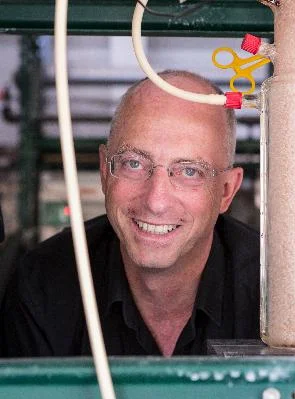
Mark van Loosdrecht is a Full Professor of Environmental Biotechnology at Delft University of Technology (The Netherlands). He holds academic ranks including Prof.dr.ir. and is affiliated with the Faculty of Applied Sciences and the Department of Environmental Biotechnology. His research focuses on biofilm processes, nutrient conversion, and wastewater treatment innovations such as the Anammox, Nereda, and BCFS processes. He has pioneered technologies for resource recovery and sustainable water treatment. Dr. van Loosdrecht has published over 700 scientific papers, holds 15 patents, and supervised over 50 PhD students. He is Editor-in-Chief of Water Research , a member of prestigious academies (KNAW, AcTI, NAE), and has received major awards including the Stockholm Water Prize and Lee Kuan Yew Water Prize. His work integrates scientific discovery with practical process development, addressing global environmental challenges. Education: MSc/PhD from Wageningen University. Active roles include leadership in the International Water Association (IWA) and editorial boards. Key achievements include the development of full-scale processes like Nereda aerobic granular sludge technology. He has been knighted in the Order of the Dutch Lion and recognized with the Beijing Great Wall Friendship Award. Research interests emphasize microbial ecology, bioremediation, and sustainable engineering solutions. His contributions span from fundamental microbiology to industrial-scale process implementation, with a focus on circular economy principles in water management.
Yang Cheng is an Associate Professor at the Department of Materials and Production, Aalborg University, Denmark. He holds a PhD in Mechanical Engineering from the same institution (2011), focusing on manufacturing strategy and network dynamics. His research spans supply chain management, sustainability, and global operations, with a focus on integrating technology and environmental policies into manufacturing systems. He leads or participates in high-impact projects like MAASive (2024–2026) and the Sino-Danish Center Research Project (2011–present), addressing resilience in value networks and global operations innovation. Research Interests: Supply Chain Management & Integration Sustainability & Green Technologies Manufacturing Strategy & Networks Technology Policy & Digitalization Global Operations & Cross-Border Collaboration Recent Work Trends: Prof. Cheng's 2025 articles emphasize blockchain in sustainable supply chains, green technology investments under carbon policies, and digitalization's ethical implications. His 2024 research explores smart factories, EU battery regulations, and robotization in manufacturing. These studies blend quantitative models with case-based analysis to address real-world challenges. Awards: 2024 Emerald Literati Awards – Outstanding Reviewer Advising & Grants: As PI for multiple Global Operations Management PhD programs (2019–2025), he guides research on digital transformation and university-industry collaboration. His projects receive funding from Danish and international grants, focusing on innovation and resilience in manufacturing networks. Labs/Teams: Collaborates with the Center for Industrial Production at Aalborg University and engages in international partnerships through the Sino-Danish Center. Active editorial roles include Production Planning & Control and Journal of Manufacturing Technology Management .
Faisal Mahmood is a Professor at the Department of Clinical Research, University of Southern Denmark (SDU), with dual affiliations at Odense University Hospital (OUH). He is a key member of the Research Unit of Oncology and the AgeCare - Academy of Geriatric Cancer Research in Odense, where he leads advanced research in imaging biomarkers for radiotherapy response. His work bridges clinical oncology and medical physics, with a focus on improving cancer treatment through innovative imaging techniques. Research Interests: Dr. Mahmood's research centers on imaging biomarkers of response to radiotherapy , with expertise in radiation therapy , medical image processing , and diffusion MRI . His work explores tumor microstructure using time-dependent diffusion imaging and MRI-Linac systems, with applications in glioblastoma and pancreatic cancer. He is actively involved in developing low-dose, adaptive radiotherapy protocols to enhance treatment precision. The recent trend in his publications shows a strong focus on adaptive radiotherapy , quantitative MRI , and biologically guided treatment . His work integrates engineering principles with clinical oncology, emphasizing reproducibility and feasibility in clinical settings. Topics such as automatic beam gating, diffusion coefficient discrepancies across scanners, and histological validation of imaging biomarkers reflect his translational research approach. Scientific Awards and Recognition: Research supported by Knæk Cancer foundation Advising and Grants: Dr. Mahmood has supervised at least 3 academic works, including PhD-level research. His projects are supported by institutional and external funding, notably from cancer research foundations. He actively collaborates with multidisciplinary teams across Denmark and internationally, contributing to both national and global oncology research initiatives. Labs and Research Teams: He is affiliated with the Research Unit of Oncology and the AgeCare - Academy of Geriatric Cancer Research at OUH, where he contributes to cutting-edge research in geriatric oncology and advanced radiotherapy. His team integrates clinical data, imaging physics, and machine learning to develop personalized treatment strategies for cancer patients.
Federico Casanova is an Associate Professor at the National Food Institute of the Technical University of Denmark (DTU), specializing in sustainable food processing and biotechnological valorization of food waste. His work focuses on extracting high-value molecules (proteins, chitins, fatty acids) using green technologies like ultrasound, ohmic heating, and pulsed electric fields to enhance functional properties. Education : PhD (2015–2017, Federal University of Vicosa, Brazil), MSc (Agrocampus Ouest, France, 2009–2010; Universitat Jaume I, Spain, 2006–2007), BSc (Università Cattolica, Italy, 2003–2006). Research Trends : Recent publications highlight applications of green technologies to modify protein-polyphenol interactions, characterize gelatin from jellyfish by-products, and optimize plant protein emulsifying properties. Keywords include Food Science, Food Chemistry , and Biotechnology , with subfields spanning bioactive peptides, rheological properties, and sustainable processing . Projects : Casanova contributes to active initiatives like seaweed-derived bioactives (2025–2027) and SUSTAIN-A-BITE (2025–2028), alongside supervising PhD students investigating dairy proteins and insect-based ingredients. He also serves as an editor for International Journal of Biological Macromolecules (2025–2027). External Roles : Junior Project Leader at Nestlé Purina (2017–2018), Engineer at CNRS's Soft Matter Group (2010–2014). Teaching : Delivered guest lectures on food proteins and sustainable food systems at universities globally.
Rasmus Pagh is a Professor at the Department of Computer Science, University of Copenhagen, specializing in algorithms and complexity. His career includes a 2002 PhD from Aarhus University under Peter Bro Miltersen and a tenure at IT University of Copenhagen until 2020. He leads theoretical research with practical applications in big data, databases, and modern computer architecture parallelism. His research interests span algorithms, data structures, and privacy-preserving computing. Recent work includes the ERC-funded project on Scalable Similarity Search and contributions to the BARC center for basic algorithms research. He has collaborated with Google Research (2019-2020) and focuses on theoretical foundations with real-world impact. Key research trends in his 2023-2024 publications include privacy-preserving data analysis probabilistic data structures distributed secure computation noise-robust coding hashing efficiency continual privacy mechanisms Scientific recognition includes 2024 ACM Fellowship ERC grant leadership multiple top-tier conference publications
Shuang Ma Andersen is a Full Professor at the Department of Green Technology (IGT) and SDU Chemical Engineering, specializing in electrocatalysis, fuel cell technologies, and sustainable resource recovery. Her research focuses on oxygen evolution reaction (OER) catalysts, membrane electrode assemblies, and innovative synthesis methods for iridium/platinum-based systems.
Ole Winther is a Professor at the Department of Biology, University of Copenhagen, specializing in Computational and RNA Biology. He also holds a joint appointment as Professor at DTU Compute, Technical University of Denmark. His research bridges machine learning, bioinformatics, and natural language processing with applications in biological sequence analysis, transcriptomics, and health informatics. Education: 1998: PhD in Physics, University of Copenhagen 1994: Master of Science in Physics, University of Copenhagen Winther's research focuses on developing advanced machine learning methodologies for biological applications. He has pioneered protein language models for sequence analysis (DeepLoc, SignalP, DeepTMHMM), interpretable deep learning for RNA subcellular localization, and benchmarking frameworks for DNA language models. His work spans latent variable models, variational inference, diffusion models, and novel architectures for deep generative modeling, with increasing emphasis on practical healthcare applications including rare disease diagnosis through findzebra.com and medical question answering with large language models. Scientific Recognition: ELLIS Fellow (2021) Head of ELLIS Copenhagen Unit H-index of 61 (Google Scholar, May 2023) 19,700+ citations (Google Scholar, May 2023) Winther has supervised 25+ PhD students to completion with 7 currently in progress, along with over 100 master's projects. He frequently serves as PhD opponent and committee chairman across European institutions. His research is supported by substantial funding including multiple Novo Nordisk Foundation grants totaling over 60 million DKK for the Center for Basic Machine Learning Research in Life Science and CAZAI projects, plus significant funding from the Danish Independent Research Fund. He leads an active research group developing cutting-edge machine learning approaches for bioinformatics and NLP challenges. Winther co-founded two spin-out companies: findzebra.com (2014, 2018), a search engine for rare diseases, and raffle.ai, an NLP startup for enterprise search. He initiated DTU's popular BSc in AI and Data program and teaches the highly enrolled MSc course in Deep Learning (450+ students) and PhD course in Bayesian Data Analysis.
Arash Nemati is an Assistant Professor at the Department of Energy Conversion and Storage, Technical University of Denmark (DTU). His research focuses on sustainable energy technologies, particularly solid oxide fuel cells, ammonia-fueled systems, and multiphysics modeling of energy conversion processes. He leads and participates in EU-funded projects such as RESCUE and X-SEED, aiming to advance renewable energy storage and green hydrogen production. His work addresses challenges in electrochemical systems, including durability, efficiency, and integration of renewable energy sources. He has received notable recognition, including a Highly-cited Paper award (Web of Science, 2022) and the DAAD Green Hydrogen Research Tour Scholarship (2024). Nemati actively supervises PhD students in areas like co-electrolysis and solid oxide electrolysis cell modeling. His expertise spans thermochemical processes, numerical simulations, and techno-economic evaluations of energy systems. Key projects include developing ammonia-driven reversible solid oxide cells for grid storage and optimizing pyrolysis-electrolysis systems for methanol and char production. His research aligns with UN Sustainable Development Goals, emphasizing clean energy and climate action.
Elham Ramin is a Researcher at the Department of Chemical and Biochemical Engineering at the Technical University of Denmark (DTU), affiliated with the Center for Energy Resources Engineering (CERE) and the Process and Systems Engineering Centre (PROSYS). Her work contributes to multiple UN Sustainable Development Goals, particularly in clean water and sanitation, affordable and clean energy, and industry innovation. Dr. Ramin completed her PhD at DTU (2010-2014) with research focused on modeling water quality in sewer-WWTP systems. Her academic journey demonstrates a strong foundation in environmental process engineering with applications to real-world water treatment challenges. Her research interests span wastewater treatment optimization, Power-to-X applications for water resource recovery, industrial symbiosis in water management, and biomanufacturing process modeling. She specializes in computational fluid dynamics, activated sludge modeling, and one-dimensional simulation models for wastewater treatment plants. Her work bridges environmental engineering with sustainable resource management, focusing on practical solutions for water-energy nexus challenges. Analysis of her recent publications reveals a strong trend toward integrating sustainable energy solutions with water treatment processes, particularly Power-to-X technologies. Her research portfolio shows increasing focus on digitalization of water resource recovery facilities and cross-sectoral industrial symbiosis for optimal resource utilization. The work demonstrates strong interdisciplinary connections between environmental engineering, chemical process modeling, and sustainable development. Dr. Ramin has participated in significant research projects including ERASE (Evaluation of Resource recovery Alternatives in South African water) and GECKO (Green and Circular Innovation for Kenyan Companies), demonstrating international collaboration and application of research to diverse water management contexts. Her work has generated substantial academic interest with multiple publications receiving significant downloads and reader engagement on platforms like Mendeley. She is actively involved with research centers including CERE and PROSYS at DTU, contributing to interdisciplinary teams focused on energy resource engineering and process systems optimization. Her collaborations extend to pharmaceutical industry applications, particularly in vaccine manufacturing development and digital twin implementation for bioprocesses.
Henrik Myhre Jensen is a Professor at the College of Engineering , Aarhus University, specializing in Mechanics of Materials , Solid Mechanics , and Mechanical Engineering . His research focuses on fracture mechanics, composite materials, and computational modeling of structural behaviors. Research Focus Fracture mechanics in composites and layered materials Computational modeling of kink band propagation Surface wear and coating technologies Ultrasound imaging applications in mechanical systems Notable Contributions Henrik has contributed to understanding crack propagation in cantilever beams, developed numerical methods for simulating delamination in composites, and explored buckling instabilities in solids. His recent work connects machine learning (holomorphic neural networks) to traditional fracture mechanics problems. Key Projects MAGFLY (2017-2021): Magnets for Flywheel Energy Storage InnoVacc (2009): Pressure Testing of Vacuum Chambers Simulation of composite structures (2011-2020): Micro-mechanical modeling
Ali Akhavan is an Assistant Professor at the Faculty of Engineering and Science , Aalborg University, specializing in Electric Power Systems and Microgrids . His work focuses on grid-connected inverters, microgrid stability, and advanced control algorithms. Research Interests: Control systems for power electronics, stability analysis in asymmetrical grids, passivity-based control, and harmonic compensation. Projects: Participated in CROM (Villum Foundation), SYNCHRONY (private funding), and ASSET (Horizon Europe) to develop high-performance converter systems for renewable energy integration. Scientific Awards: Recipient of the Best Paper Award (May 2021). Email: alak@energy.aau.dk Publications Trend: 15 recent works emphasize grid-forming inverters, harmonic voltage compensation, and stability analysis in renewable energy systems. Key subfields include power quality, passivity enhancement, and dynamic response optimization.
Jeanette Willert is an Associate Professor at the Department of Accounting , Copenhagen Business School , specializing in Management Control Systems and Accounting Information Systems . Her research explores cross-cultural management practices, corporate governance, and digital transformation in accounting. Education: PhD in Management Control Systems, Copenhagen Business School (2016) She has published extensively on cultural influences on management controls, regulatory compliance in digital systems, and organizational performance. Her work includes empirical studies across Nordic, Anglo-Saxon, and Germanic cultural regions. Advising: Supervises graduate and diploma theses in Accounting Information Systems She also contributes to media discussions on Danish accounting legislation and participates in projects analyzing ERP system effectiveness.
Jes Frellsen is an Associate Professor at the Department of Applied Mathematics and Computer Science (DTU) since 2016. Previously, he held academic positions at the IT University of Copenhagen (2016-2019), postdoctoral roles at University of Cambridge (2013-2016) and University of Copenhagen (2011-2013). Education: PhD in Bioinformatics (2011), University of Copenhagen MSc in Bioinformatics (2007), University of Copenhagen BSc in Mathematics and Computer Science (2005), University of Copenhagen EAP Exchange at University of California, Santa Cruz (2004-2005) Research Focus Jes Frellsen specializes in statistical machine learning , particularly generative AI and deep generative models with applications in bioinformatics . His work integrates Bayesian inference , directional statistics , and Markov chain Monte Carlo methods to address challenges in macromolecular structure prediction and missing data imputation . Recent efforts explore uncertainty quantification in image segmentation and generative modeling for materials science. Advising & Collaborations He actively supervises PhD students and postdoctoral researchers in projects spanning news recommendation systems , medical imaging , and 3D structure generation . Collaborations include work with Zoubin Ghahramani (Cambridge) and Thomas Hamelryck (Copenhagen), with contributions to protein structure prediction and statistical methods in structural bioinformatics .
Morten Ambye-Jensen is an Associate Professor in the Department of Biological and Chemical Engineering at Aarhus University, specializing in biorefinery technology and sustainable protein production. His work focuses on optimizing green biorefining processes for agricultural residues to produce high-value products like biochar, proteins, and bio-based materials while minimizing environmental impact. Key research interests include: Development of integrated biorefinery systems for grasses and legumes Protein extraction from residual biomass for food and feed applications Life cycle assessment of bio-based technologies Waste-to-resource valorization strategies Climate-smart agricultural practices He leads or collaborates on major projects such as Green Valleys 2.0 (2023-2025) and ENTRANCE (2022-2025), which aim to create circular bioeconomies and reduce reliance on imported soybeans. His research also explores energy-efficient processing techniques and biochar applications in agriculture. Notable achievements include advancing fractionation technologies for alfalfa and grass-clover biomass, and demonstrating how pyrolysis integration can enhance biorefinery energy efficiency while producing valuable biochar.