Abdellah Ajji is a Full Professor in the Department of Chemical Engineering at Polytechnique Montréal and holds the NSERC Prolamina Industrial Research Chair on Safe, Smart and Sustainable Packaging (3SPack). He directs the Flexible Polymer Packaging Laboratory (PolyFlexPack) and is a member of the Institute of Biomedical Engineering and the Center for High-Performance Polymer and Composite Systems (CREPEC). Rheology and processing of polymers Biomedical materials and tissue engineering Polymer properties and characterization Smart and sustainable packaging solutions His recent publications focus on 3D bioprinting , electrospun nanofibers , and polymer recycling across biomedical, food packaging, and renewable energy applications. Current research includes multifunctional films with antibacterial properties and photocrosslinkable bioinks for cardiac regeneration. Scientific awards include over $1M in CFI funding (2015) and recognition as one of the top 2% most cited researchers globally (2021). He supervises 6 postdoctoral researchers, 6 doctoral students, and 1 master’s student, with 32 completed PhDs and 23 completed master’s theses since 2006.
Denis Millette, Ph.D. in Earth Sciences (University of Waterloo, 1995), is an Adjunct Professor in the Department of Civil, Geological and Mining Engineering at École Polytechnique de Montréal since 1996. He specializes in contaminant hydrogeology , groundwater remediation , and geothermal energy with over 30 years of experience. Since 2018, he serves as a part-time Senior Consultant and Hydrogeologist at Golder Associates, focusing on contaminated land management and expert litigation. Education : Ph.D., Earth Sciences (University of Waterloo, 1995); Master's Thesis on Reclamation of Canal Seepage-Affected Land (McGill University, 1989). Research Interests center on physical hydrogeology , multiphase flow , numerical modeling , and geothermal energy integration . He holds a NSERC Industrial Chair in Geothermal Energy related to permanent column wells in institutional buildings. His work bridges environmental engineering with agricultural water management , particularly in salinity control and soil-water conservation. Publication Trends over 15 years highlight groundwater contamination (e.g., nitrate and petroleum plumes), bioremediation technologies (bioventing, bioaugmentation), and numerical modeling of contaminant transport. His studies span hydrology , environmental geochemistry , and mathematical modeling , with a focus on contaminated site rehabilitation in diverse geologies, including fractured aquifers and low-permeability soils . Scientific Awards : NSERC Industrial Chair in Geothermal Energy for Permanent Column Wells in Institutional Buildings (current). Advising and Grants include supervising Ph.D. theses on landfill gas emissions and creosote-contaminated soil modeling . He has conducted emergency response training for oil spills and international regulatory consultancy in Brazil (CONAMA, ABNT standards). Labs and Teams involve collaboration with École Polytechnique de Montréal , National Research Council Canada , and Golder Associates , integrating field studies and laboratory experimentation in bioremediation and hydrogeological modeling.
Cedric Briens is a Professor and NSERC/Syncrude Industrial Research Chair in Fluid Coking Technologies at the Department of Chemical and Biochemical Engineering, Faculty of Engineering, Western University. He founded and directs the Institute for Chemical and Fuels from Alternative Resources (ICFAR), focusing on converting biomass and fossil fuels into valuable products through fluidization and particulate operations. His work spans industrial applications with Syncrude Canada, ExxonMobil, Agri-Therm, and Imperial Oil. Diplôme d'Ingénieur (ENSIC) 1975 Ph.D. (Western) 1980 His research includes: Commercial-scale fluid coking processes Mobile pyrolyzers for agricultural/forestry waste Upgrading pyrolytic bio-oil Advanced multiphase reactors for thermal/catalytic cracking Recent publications focus on biochar granulation, acoustic monitoring of powder mixing, and pyrolysis reactor design. His work bridges chemical engineering fundamentals with industrial implementation across energy, agriculture, and pharmaceutical fields. Students in his group include Shahzad Barghi, Amarjeet Bassi, Franco Berruti, Paul Charpentier, and others. Cedric has over 25 years of combined academic and industrial experience.
Anand Prakash is an Associate Professor in the Department of Chemical and Biochemical Engineering at Western University. His research focuses on multiphase particulate systems, particularly the design and optimization of three-phase slurry bubble column reactors for applications in clean energy and environmental pollution control. Education: B.Tech., Indian Institute of Technology (IIT) Delhi, 1973 Ph.D., Western University, 1991 Dr. Prakash has developed two groundbreaking techniques: a fast response heat transfer probe and ultrasonic methods for real-time characterization of particulate systems. These innovations have both academic and industrial applications, particularly in crystallization, precipitation, and reactor design. His team has collaborated with major organizations like USDOE, Bechtel, and AECL to advance multiphase reactor technologies. Research Trends from his group’s work span: Renewable fuel production Bioreactor optimization Online process monitoring Environmental remediation Hydrodynamic modeling Heat/mass transfer analysis Lab Members: Current students and collaborators include Shahzad Barghi, Amarjeet Bassi, Franco Berruti, Cedric Briens, and other graduate researchers working on reactor design and characterization. External Links: Prakash Lab Website
Wilson Q. Wang is a Professor at Lakehead University's Department of Mechanical and Mechatronics Engineering, where he serves as Lakehead Research Chair, Director of Mechatronics Engineering, and PhD Graduate Program Coordinator. He founded and directs both the Intelligent Mechatronics Systems Lab and Electric Vehicle Lab, supported by CFI/ORF grants. With cross-appointment in Electrical and Computer Engineering, he maintains an adjunct professorship at the University of Waterloo. PhD, Mechatronics Engineering, University of Waterloo MEng, Industrial Engineering, University of Toronto MSc, Mechanical Engineering, Northeastern University, China BASc, Electro-mechanical Engineering, SIT, China Dr. Wang's research focuses on the intersection of artificial intelligence and mechanical systems, specializing in signal processing techniques for condition monitoring, fault diagnosis, and prognostics. His work develops intelligent control systems that enhance machinery reliability through early fault detection and predictive maintenance strategies. The research spans both theoretical development of novel algorithms and practical implementation in industrial settings, with particular emphasis on mechatronic systems and electric vehicles. His publication record demonstrates consistent contributions to high-impact journals including IEEE Transactions on Fuzzy Systems, IEEE Transactions on Instrumentation and Measurement, and IEEE/ASME Transactions on Mechatronics. The work shows an evolving trajectory from fundamental signal processing techniques toward increasingly sophisticated AI-driven prognostic systems, with growing emphasis on real-time implementation and industrial applications. CFI John Evens Leaders Grant Award (2022) Excellent Teaching Award, Lakehead University (2018) Distinguished Researcher Award, Lakehead University (2017) NSERC DG Accelerator Grant Award (2016) Innovation Award, Lakehead University (2015) Dr. Wang has supervised an extensive research team including 9 postdoctoral fellows, 15 PhD students, and nearly 40 MSc students. His research has been supported by multiple NSERC grants (DG, AG, CRD, DAS, EG, IG), CFI (JELF, NOF), ORF, and industry partners including Bombardier Transportation, Siemens Mahon Electric, and Techform Group. He serves as Associate Editor for several prestigious journals including IEEE/ASME Transactions on Mechatronics and IEEE Transactions on Instrumentation and Measurement. He directs two specialized research facilities: the Lab for Intelligent Mechatronic Systems (LIMS) and the Lab for Electric Vehicles (LEV), which support his team's work on smart sensors, fault diagnosis systems, and intelligent control applications across various mechanical and electromechanical systems.
Dr. Kathryn Sinden is an Associate Professor in the Department of Kinesiology at Lakehead University and holds an adjunct appointment in Health Sciences. She focuses on preventing workplace injuries through applied ergonomics and knowledge translation initiatives, collaborating with employers, workers, and stakeholders to develop practical tools for injury prevention. PhD in Kinesiology (McMaster University) MSc in Kinesiology (University of Waterloo) BSc in Kinesiology (University of Waterloo) Her research explores: Applied ergonomics and injury prevention strategies Determinants of occupational task performance using wearable technology Gender-related health dynamics in the workplace Firefighter and paramedic health, including critical incident exposure Recent publications highlight her work on mental health literacy workshops, biomechanical analyses of lifting tasks, and return-to-work frameworks for first responders. Over 60% of her research focuses on public safety personnel (firefighters, paramedics), with methodologies spanning systematic reviews, movement analysis, and stakeholder-driven interventions. Scientific awards include a CIHR Post-Doctoral Fellowship and a Canadian Institutes of Health Research grant (2020). She leads student-driven research projects and has contributed to firefighter injury prevention standards through collaborations with the Ottawa Paramedic Service Research Team.
Christian Vincelette serves as Assistant Professor at the University of Montreal's Faculty of Nursing, with active research affiliations at CRCHUM (Centre de recherche du Centre hospitalier de l'Université de Montréal) and the Digital Health Network. His work bridges critical care nursing practice with data-driven innovation in high-acuity settings. His educational background includes a B.Sc. in Nursing (2016), M.Sc. in Health Research with nursing concentration (2018), and Ph.D. in Health Research with nursing concentration (2022), all from Université de Sherbrooke, followed by a 2025 postdoctoral fellowship in Clinical Sciences at University of Montreal. Vincelette's research focuses on intensive care nursing practices , particularly examining drug administration protocols for critical medications like sedatives and vasopressors, developing objective measures of clinical practice quality, and leveraging high-frequency clinical data for decision support. His work employs mixed-methods approaches with emphasis on quantitative analysis of complex clinical workflows. His publication record shows consistent output since 2019, with accelerating productivity through 2025. The research trajectory reveals increasing sophistication in data analysis methods, moving from foundational studies on omitted nursing care to advanced applications of machine learning for medication safety and real-time clinical decision support in critical care environments. As an active researcher recruiting Master's and Ph.D. students, he focuses on innovative modalities for clinical decision support, adjustment of critical continuous infusions, objective measurement of nursing practices, and utilization of high-frequency clinical data including vital signs and volumetric pump metrics.
Adrian Ilinca is a Professor at the Department of Mechanical Engineering within École de Technologie Supérieure (ÉTS), Université du Québec . His research focuses on Renewable Energy systems, particularly Wind Energy and Solar Energy , with specialization in Cold Climate Technology Adaptation , Energy Storage , and CO2 Capture solutions. Director: ÉDÉ – ÉTS Sustainable Energy Laboratory Research Axes: Sensors & Connectivity, Circular Economy, Intelligent Systems Key Expertise: Thermal Systems, Hybrid Energy, Wind Turbine Aerodynamics His academic contributions span Computational Fluid Dynamics , Machine Learning for energy systems, and Hybrid Renewable Technologies . Recent publications emphasize Hydrogen Liquefaction , Battery Storage Integration , and Wind Energy Optimization in extreme environments. As principal supervisor, he mentors over 20 graduate students in projects ranging from Wind Turbine Icing to Microgrid Decarbonization . His work frequently addresses Arctic Energy Challenges and Industrial Sustainability through innovative system design.
Stephen Kelly is an Assistant Professor in the Department of Computing and Software at McMaster University. His interdisciplinary work spans surgical research methodology, biomedical informatics, and machine learning. Affiliation: McMaster University Roles: Faculty in Computing and Software, Surgical Research Collaborator Research Interests: Dr. Kelly’s work focuses on applying evolutionary computation and reinforcement learning to medical and educational challenges, such as detecting mind wandering via EEG and optimizing surgical training programs. His research bridges clinical practice and software innovation. Recent Publications: Trends include automated program synthesis, neural memory frameworks for RL, and evidence-based surgical education tools. Key areas: AI for healthcare, algorithmic design, and educational technology. Contact: Email: kellys32@mcmaster.ca
Christopher Werner is an Adjunct Assistant Professor (part-time) in the Department of Earth, Environment & Society at McMaster University. His research focuses on hydrogeological systems, coastal aquifer dynamics, and paleoenvironmental reconstruction, with significant fieldwork in Mexico's Yucatan Peninsula. He investigates the impacts of extreme weather events on groundwater and utilizes geological proxies for climate studies. Research Interests: Werner's interdisciplinary work spans: Coastal aquifer sensitivity to hurricanes and tidal forces Karst hydrology and cave sedimentology as paleoenvironmental archives Lunar geophysics, including mantle convection and basalt distribution Innovative methods in groundwater monitoring and signal analysis Publication Trends: His recent articles (2015-2018) concentrate on Mexican coastal systems, analyzing hurricane impacts on aquifer salinity and calcite precipitation patterns. Earlier work includes foundational studies on lunar asymmetries (2002) and tidal influences on spring discharge (2005-2007). A 2015 biophysics paper reflects interdisciplinary collaboration.
Bryan Ross is an Assistant Professor in the Department of Medicine at McGill University's Faculty of Medicine and Health Sciences. He serves as a Junior Scientist at the Research Institute of the McGill University Health Centre (RI-MUHC), specifically within the Translational Research in Respiratory Diseases Program under the Centre for Outcomes Research and Evaluation (CORE). His research focuses on chronic obstructive pulmonary disease (COPD), acute exacerbations of COPD (AECOPD), pulmonary rehabilitation, and remote patient monitoring, with his clinical research program grounded in physiology, epidemiology, and digital health. Dr. Ross's primary research interests include: Chronic Obstructive Pulmonary Disease (COPD) pathophysiology and management Acute exacerbations of COPD (AECOPD) triggers and monitoring Pulmonary rehabilitation techniques and outcomes Remote patient monitoring and wearable technologies for respiratory conditions Physiological responses to exercise in respiratory disease Effects of air pollution on respiratory health His recent research has focused on leveraging digital health technologies to monitor and manage COPD, with particular attention to wearable devices that can detect exacerbations in real-world settings. He has conducted studies examining the relationship between air pollution and COPD exacerbations, as well as investigations into non-invasive ventilation strategies for COPD patients. His work often utilizes data from the Canadian Cohort Obstructive Lung Disease (CanCOLD) study. Dr. Ross has published extensively in high-impact respiratory and medical journals, with recent publications appearing in journals such as Chest, Thorax, EBioMedicine, and the American Journal of Respiratory and Critical Care Medicine. His research demonstrates a strong interdisciplinary approach, bridging clinical medicine, physiology, epidemiology, and digital health technology. Among his notable scientific contributions are studies examining: Continuous characterization of COPD exacerbation pathophysiology using wearable technologies Peak inspiratory flow and inhaler prescription strategies in specialized COPD programs Long-term home non-invasive ventilation and its relationship to COPD exacerbations Short-term air pollution exposure and exacerbation events in mild to moderate COPD Effects of inhaled nitric oxide on ventilatory efficiency in COPD patients Dr. Ross collaborates extensively with researchers across Canada, particularly within the Canadian Respiratory Research Network and the CanCOLD study group. His work has significant implications for improving COPD management through better monitoring techniques, understanding environmental triggers, and optimizing treatment strategies for this common respiratory condition.
Guilherme Sant'Anna, MD, PhD is a Senior Scientist at The Research Institute of the McGill University Health Centre (RI-MUHC) Professor in the Department of Pediatrics, Faculty of Medicine and Health Sciences, McGill University Division of Neonatology at MUHC His research focuses on Optimizing respiratory assistance for preterm infants through the EXPERT Project Pathophysiology and management of asphyxiated neonates Automated extubation readiness prediction (APEX study) Mechanisms of non-invasive respiratory therapies International collaborations on mild HIE (PRIME study) and neurophysiological maturation (NEMO project) Key trends in his 15 most recent publications reveal Heavy emphasis on wireless monitoring systems for NICU Development of AI/ML tools for extubation prediction Multicenter clinical trials on HIE and PDA management Focus on translating engineering solutions to neonatal care Integration of cardiorespiratory variability analysis Improving long-term neurodevelopmental outcomes
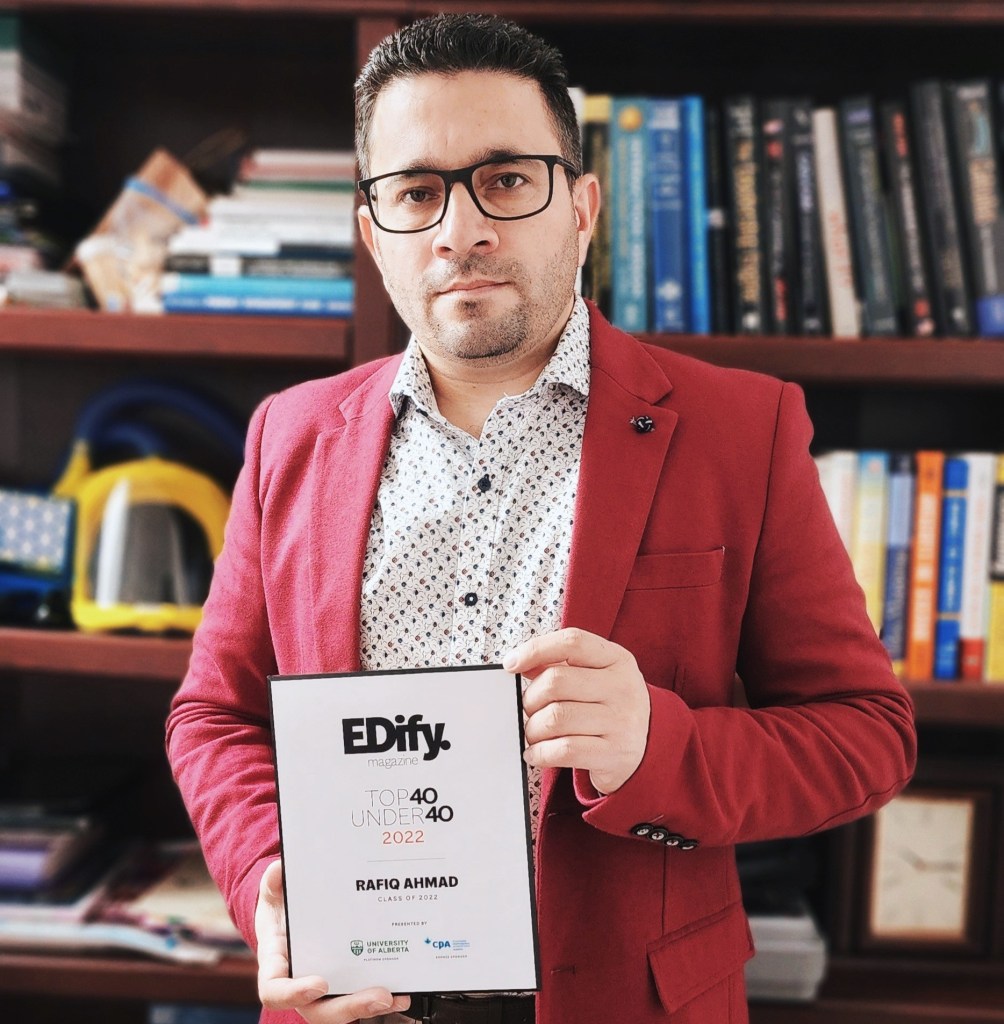
Dr. Rafiq Ahmad (PhD, P.Eng) is an Associate Professor at the University of Alberta’s Faculty of Engineering, Department of Mechanical Engineering. He directs the Smart & Sustainable Manufacturing Systems Laboratory (SMART LAB) and the Aquaponics 4.0 Learning Factory (AllFactory) . His work bridges fundamental research in design and manufacturing with advanced industrial applications. Education : PhD & MSc from French institutions (Ecole Centrale de Nantes and Ecole Arts et Metiers Paris), Postdoc at University of Luxembourg Research : Focuses on Smart Manufacturing (zero-defect production), Green Technologies (3R systems), Industrial Robotics (autonomous systems), and Sustainable Production (Aquaponics 4.0). The 15 most recent publications (2025) explore digital twins, robotics for extreme environments, hybrid manufacturing optimization, and sustainable food production. Articles span additive manufacturing, topology optimization, and AI-driven automation. Scientific Awards : 2023 ASTech Award for Digital Innovation; 2022 Edify Top 40 Under 40; multiple NSERC, Mitacs, and Alberta Innovates grants. Teaching : Offers courses in Manufacturing Systems, Lean Manufacturing, and Mechanical Measurements. Labs : SMART Lab (founded 2016) specializes in hybrid manufacturing and robotics; AllFactory focuses on sustainable aquaponics systems.
Derek Johnson is a Professor in the Department of Anthropology at the Faculty of Arts, University of Manitoba . His work bridges environmental anthropology, political ecology, and wellbeing frameworks to address critical issues in small-scale fisheries and food systems. PhD (Rural Studies and Anthropology), University of Guelph, 2002 MA (Sociology and International Development Studies), University of Guelph, 1994 BA (Social Anthropology and International Relations), University of Toronto, 1990 Research Focus: Johnson's research examines the intersections of development, environmental governance, and social wellbeing. Key areas include: Small-scale fisheries: Analyzing governance challenges, legal pluralism, and community resilience in India, Canada, and Uruguay. Food systems: Leading the Dried Fish Matters project to explore gendered economies and nutritional impacts across South/Southeast Asia. Political ecology: Investigating power dynamics in fisheries management and coastal resource degradation in Asia. Wellbeing approaches: Applying transdisciplinary frameworks to understand livelihood transitions and sustainability challenges. Scientific Awards: 2011 - Students Honouring Teachers Award (University of Manitoba) 2005 - Best South Asia PhD Dissertation Award Outreach: Actively supporting dried fish sector development (2023–present) and contributing to Residential School Ground surveys in Manitoba (2021–present).
Cole Van De Ven is an Assistant Professor in the Civil and Environmental Engineering department at Carleton University . His research focuses on quantifying and mitigating environmental impacts of human activity on the near-surface environment through energy development, industrial processes, and climate change, with emphasis on groundwater contamination, greenhouse gas monitoring, and soil quality degradation. Research Interests : Contaminant hydrogeology, Geo-environmental engineering, Groundwater/soil gas monitoring, Environmental sensors, Multiphase flow in porous media, Multicomponent mass transfer. Teaching Assignments : Courses include ENVE 2001 (Process Analysis), ENVE 4006/5301 (Contaminant Hydrogeology), ECOR 2050 (Design/Analysis of Experiments), and ENVE 5702 (Energy Development in the Critical Zone). Laboratory : Leads the Geo-environmental Gas and Contaminants Lab , specializing in high-resolution experimentation, advanced analytical techniques, and numerical modeling for subsurface processes. Current Students : Supervises doctoral students Madeline Calvert and Minxuan Wang; masters candidates Ava Bebbington, Sandesh Bhattarai, Isabella Hearne, Bryn Reynolds, David Szonyi, and Adele Watson.