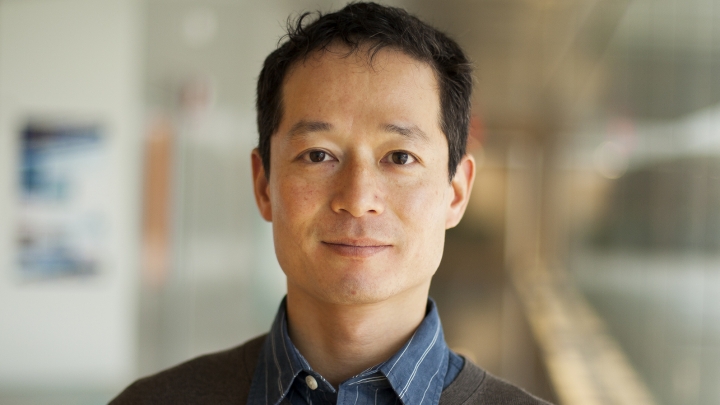
Clifford Stein is a Professor of Industrial Engineering and Operations Research (IEOR) and Computer Science at Columbia University, and Associate Director for Research at the Data Science Institute. He holds a Ph.D. (1992), M.S. (1989), and B.S.E. (1987) from MIT and Princeton University, respectively. His research focuses on algorithms, combinatorial optimization, operations research, scheduling, and computational biology. A co-author of the best-selling textbook Introduction to Algorithms , Stein has published widely in top venues and holds prestigious awards like ACM Fellow and NSF Career Award. His work includes foundational contributions to minimum cut algorithms, scheduling theory, and network optimization, supported by NSF and Sloan Foundation grants. Stein has advised over 40 graduate and undergraduate students, many now in academia and industry.
Kenneth P. Birman is the N. Rama Rao Professor of Computer Science at Cornell University, where he has had a long and impactful career in distributed systems, cloud computing, and AI/ML infrastructure. He is known for foundational contributions to reliable and scalable distributed systems, and for leading high-impact projects such as Cascade, Vortex, and Derecho. He is also the author of a widely used textbook on reliable distributed systems and has founded multiple companies based on his research. Education: Ph.D. in Computer Science, University of California, Berkeley M.S. in Computer Science, University of California, Berkeley B.A. in Computer Science, Columbia University Research Interests: Professor Birman's research focuses on building reliable, secure, and scalable distributed systems . His current emphasis is on AI and ML infrastructure , particularly in reducing latency and improving performance through hardware acceleration, RDMA-based communication, and edge computing. He explores how to eliminate data movement bottlenecks in AI pipelines and how to support real-time, mission-critical applications in domains like healthcare, smart grids, and industrial IoT. His work spans systems programming, cloud computing, fault tolerance, and formal verification . He has designed systems that have been deployed in high-stakes environments such as the New York Stock Exchange, the Swiss Exchange, and the French Air Traffic Control system. Scientific Awards: ACM Fellow (1999) IEEE Fellow (2014) IEEE Tsutomu Kanai Award for innovations in distributed computing Teaching and Mentorship: Professor Birman teaches two courses in the fall semester: CS4414: Systems Programming and CS5416: Cloud and ML Systems Programming . He has advised numerous Ph.D. and M.S. students, including Alicia Yang, Tiancheng Yuan, Yifan Wang, Weijia Song, Edward Tremel, Sagar Jha, Jonathan Behrens, and Mae Milano. He has announced that Fall 2025 will be his last semester teaching, and he is no longer recruiting new students, though he will continue supervising current ones. Labs and Projects: He leads the Derecho Project and the Cascade/Vortex Project , both focused on high-performance distributed systems. These projects are collaborative efforts with students and industry partners, and the software is released under open-source licenses. He also maintains strong ties with Cornell's systems group and collaborates with faculty across CS, ECE, IS, and the Cornell Tech NYC campus.
Dr. Dong Nguyen is an Associate Professor in Leadership Management and Change in Education at Durham University's School of Education. He serves as Director of the Master’s Programme in Educational Leadership and Change, which focuses on leadership, management, and research in education. Additionally, he is Editor-in-Chief of the International Journal of Educational Management (IJEM), a core journal in educational leadership. His career includes roles as a lecturer (Assistant Professor) and Programme Leader at the University of Glasgow, a Research Associate at Nanyang Technological University, and a teacher in Vietnam. Nguyen’s research emphasizes building leadership capacity in the Global South, comparative education studies, and innovation in education. He has led projects such as an impact evaluation of a Rwanda school leadership development program (2023–2026) funded by VVOB and a review of school leadership’s role in teacher retention funded by the Education Endowment Foundation (EEF). His work explores leadership practices across sectors like education, business, and healthcare, with a focus on equitable systems and professional learning. Nguyen has received a Discretionary Award from Durham University (2023) and has delivered numerous invited talks, including at the Chinese University of Hong Kong (2024), the Asian Conference on Business and Economic Studies (2024), and Stockholm institutions (2023). He has served as an external examiner for UK universities (e.g., Leeds, Newcastle) and evaluator for grants like UK Research & Innovation and Swiss National Science Foundation. His supervision focuses on topics like school leadership, inter-organizational collaboration, and professional development. Nguyen’s recent articles highlight leadership’s role in teacher retention, autonomy, and PLCs in the Global South. He advocates for leadership practices that foster teacher collaboration, instructional support, and participatory decision-making, particularly in contexts like Singapore and Vietnam. His funded projects and editorial roles underscore his commitment to evidence-based educational policy and practice.
April Yi Wang is a tenure-track Assistant Professor in the Department of Computer Science at ETH Zürich, where she directs the Programming, Education, and Computer-Human Interaction Lab (PEACH Lab). She is a core faculty member at the Institute for Intelligent Interactive Systems and associated with the ETH AI Center. Wang is also an active member of ETH HCI and Swiss CHI communities, contributing significantly to human-computer interaction and educational technology research. Dr. Wang's educational background includes: Ph.D. in Information Science from University of Michigan (2023), advised by Steve Oney and Christopher Brooks M.Sc. in Computer Science from Simon Fraser University (2018), advised by Parmit Chilana B.Eng in Computer Science from Zhejiang University (2016) Dr. Wang's research focuses on human-centered approaches to programming and data science. Her work reimagines programming as a form of literature that communicates with both machines and people, exploring creative representations like text, shapes, animations, and everyday objects. She investigates how to make programming more natural and intuitive through literate programming environments, with applications in professional and educational contexts. Her research spans human-computer interaction, educational technology, and AI-assisted programming tools. Analysis of Dr. Wang's recent publications reveals a strong focus on AI-enhanced educational tools, particularly for programming and data literacy. Her work increasingly integrates large language models to scaffold learning while maintaining user agency. There's a clear trajectory toward developing situated learning approaches that connect abstract concepts to real-world contexts through augmented reality and tangible interfaces. Her research bridges HCI, education, and AI to create more accessible and engaging technical learning experiences. Dr. Wang has received numerous prestigious awards including: 2023 Gary M. Olson Award and Honourable Mention Award at ACM CHI 2022 Rising Stars in EECS and Heidelberg Laureate Forum Young Researcher 2020 Best Short Paper Award at IEEE VL/HCC and Honourable Mention at ACM CHI 2019 Best Paper Award at ACM CSCW Dr. Wang actively mentors students through thesis projects at ETH Zürich, supervising numerous bachelor's and master's students on topics ranging from AI-assisted programming to data literacy tools. Her lab, PEACH Lab, has secured funding including the recent innovedum funding for the Coducate project. She serves on program committees for major conferences including CHI and UIST, and regularly reviews for top HCI and education journals. The PEACH Lab, directed by Dr. Wang, focuses on creating expressive, intelligent, and human-centered systems that make technical topics more accessible. The lab explores textual, visual, and embodied representations for programming, with emphasis on enhancing communication, collaboration, and learning. Current research directions include balancing automation with user agency, supporting diverse learning needs, and developing tools for interdisciplinary technical communication.
Alessio Lomuscio is a Professor of Safe Artificial Intelligence at Imperial College London, holding the prestigious Royal Academy of Engineering Chair in Emerging Technologies and recognized as an ACM Distinguished Member. He leads the Safe AI Lab, which focuses on developing methods and tools for the verification of AI systems to ensure their safe and secure deployment in applications of societal importance. His research spans verification and robust learning for neural networks and decision trees, robust machine learning in aviation and finance, monitoring of machine learning systems, assurance for autonomous systems and AI, and verification and validation of neuro-symbolic systems. Lomuscio has made significant contributions to formal verification methods for AI systems, particularly in the context of safety-critical applications. His recent publications demonstrate a strong focus on neural network verification techniques, with applications across multiple domains including finance, aviation, and autonomous systems. His work bridges theoretical advances in formal methods with practical applications in real-world AI systems, addressing critical challenges in AI safety and trustworthiness. Scientific Awards: Royal Academy of Engineering Chair in Emerging Technologies ACM Distinguished Member Lomuscio has served in numerous leadership roles, including as Co-Director (2023-present) and Deputy Director (2019-2023) of the UKRI Centre for Doctoral Training in Safe and Trusted Artificial Intelligence. He has also held positions as Director of Strategy and Planning (2017-2020), Member of Management Committee (2013-2020), and Deputy Head of Department (2016-2017). His editorial service includes roles as Associate Editor for Artificial Intelligence Journal and Editorial Board Member for Journal of Artificial Intelligence Research and Journal of Autonomous Agents and Multi-agent Systems. His research group actively mentors students and researchers, with current openings for PhD and postdoctoral positions focused on AI verification and safety. Lomuscio's work has established him as a leading figure in the field of safe and verifiable AI systems, with significant contributions to both theoretical foundations and practical applications.
Anna S. Mattila is the Marriott Professor of Lodging Management and serves as Professor-in-Charge of the Graduate Program at the School of Hospitality Management, Pennsylvania State University. Her research spans social media, service recovery, servicescape, prosocial behaviors, cross-cultural studies, and wellness in hospitality contexts. Education : B.S. and Ph.D. from Cornell University, M.B.A. from University of Hartford Mattila's work examines how emotions, cultural norms, and technological innovations like AI influence consumer decisions in hospitality. Her studies cover topics from robotic service interactions to sustainable food marketing and moral psychology in tourism. She has published extensively in journals such as International Journal of Hospitality Management and Journal of Consumer Marketing . Her recent articles focus on AI integration in hospitality, consumer trust in virtual influencers, upcycled food adoption, and the psychological effects of servicescape design. Key themes include ethical consumption, digital transformation, and cross-cultural consumer behavior. Advising : Supervised Anqi Luo's dissertation on service recovery in 2022 Mattila's office is located in 224 Mateer Building, University Park, PA. She contributes to advancing hospitality research through methodological consulting and the Penn State Biomarker Core Laboratory.
Prof. Dr. Jörg E. Drewes is a Full Professor and Chair at the Research Institute for Urban Water Management, Technical University of Munich (TUM), Germany. He also serves as Academic Program Director for Environmental Engineering at TUM and is a co-founder of Waterloop Solutions GmbH. His work spans advanced water treatment technologies, wastewater reuse, and environmental health surveillance. Affiliations : TUM, Colorado School of Mines, King Abdullah University of Science and Technology, UNSW Water Research Centre Research focuses on advanced oxidation processes , membrane fouling mitigation , micropollutant removal , and wastewater epidemiology for public health. His team develops integrated systems for water-energy-food nexus applications and graphene oxide-based treatment solutions. Recent publications address PFAS remediation , UVC-LED pre-treatment for biofouling control, and GIS-based wastewater surveillance models . Awards include the Bayerische Staatsmedaille (2023) and William Dunbar Medal (2022). 2023 : Bayerische Staatsmedaille 2022 : William Dunbar Medal 2018 : IWA Fellow He leads the Nexus@TUM initiative and contributes to EU water resilience strategies. Collaborations include projects in Germany, China, India, and Spain, focusing on climate-resilient water systems and resource recovery .
David M. Dodson is a Lecturer in Management at Stanford University’s Graduate School of Business (GSB), where he teaches courses on managing growing enterprises and entrepreneurial acquisition. His career spans over 30 years in business management, including founding three search funds and serving as CEO of a technology manufacturer and Executive Chairman of a telecommunications firm. He co-founded Sanku (formerly Project Healthy Children), a nonprofit addressing micronutrient deficiencies in Africa through fortified grains, recognized for its life-saving impact. Dodson holds an MBA from Stanford GSB (1987) and a BA in Economics from Stanford University (1983). His research focuses on entrepreneurial acquisition strategies and managing small-to-medium enterprises. Notable awards include the MSx Teaching Excellence Award (2023, 2021) and recognition as a top lecturer by Stanford GSB students. Beyond academia, he invests in over 40 businesses and serves on 21 corporate boards. In 2020, he founded StudentVotes.org to empower student voting during the pandemic. His media contributions include columns for The Boston Globe and frequent TV commentary on CNBC and Fox Business.
Prof. Dr. Thomas Brinkhoff is Chair of the Institute Board and Chair of Geoinformatics at Oldenburg University of Applied Sciences. He leads the Institute for Applied Photogrammetry and Geoinformatics (IAPG) and contributes to institutions like the Association for the Promotion of Geoinformatics in Northern Germany (GiN e.V.) and the Oldenburg Research and Development Institute for Computer Science (OFFIS e.V.). Education: Diploma in Computer Science (Informatik), Universität Bremen (1990) Doctorate in Computer Science (Dr. rer. nat.), Ludwig Maximilian University of Munich (1994) Brinkhoff's research spans geodatabase systems, spatiotemporal data processing, geosensor analytics, and location-based services. His work addresses Volunteered Geographic Information (VGI), web-based geospatial visualization, and mobile data integration, with applications in traffic management and forensic science. Recent projects include ProSaDi (Digital Provenance and Collection Research) and contributions to the Laboratory for optical 3D metrology . He has served on program committees for ACM SIGSPATIAL (2002-2019), AGILE conferences (2010-2025), and editorial boards of journals like GeoInformatica and TGIS. Notable Lectures: 2024: Forensic applications of tachograph data 2023: Geoinformatics in homicide investigations 2022: Spatiotemporal analysis for sustainability projects 2015: Open geodata standards at FOSSGIS 2014: Mobile sensor data processing
Dr. Jiamin Li is an Associate Professor at the School of Microelectronics, Southern University of Science and Technology (SUSTech), Shenzhen, China. She holds a Ph.D. and B.Eng. in Electrical and Computer Engineering from the National University of Singapore (NUS). Her research focuses on biomedical integrated circuits, energy harvesting, and wireless body-area networks. Education: Ph.D. and B.Eng. in Electrical and Computer Engineering from NUS Employment: Associate Professor (2024–Present), Assistant Professor (2022–2024) at SUSTech; Research Fellow at NUS Dr. Li's research addresses wireless body area powering , low-power biosignal interfaces , and intelligent biosignal processors . Her work leverages microsystem design for applications in biomedical engineering , particularly in energy-autonomous medical devices and human body-coupled communication . Her recent publications highlight advancements in concurrent power/data transmission , subharmonic pulse injection , and triboelectric energy harvesting for biomedical systems. Key venues include IEEE JSSC , Nature Electronics , and conferences like ISSCC and BioCAS. Awards: IEEE SSCS Predoctoral Achievement Award, ISSCC Best Demo Award, ASSCC SDC Best Design Award Committees: IEEE SSCS Women-in-Circuit (WiC) Committee, ISSCC Student Research Preview Committee Opportunities: Positions available for Ph.D., Master's, Postdoctoral Fellows, and Visiting Scholars
Beng Chin Ooi is a Lee Kong Chian Centennial Professor at the National University of Singapore (NUS), School of Computing (SoC). He holds a B.Sc. (1st Class Honors) and Ph.D. in Computer Science from Monash University. His research focuses on database systems, large-scale analytics, and distributed computing. He has held leadership roles including Dean of School of Computing (2007–2013) and Director of Smart Systems Institute (2011–2021). Key achievements include the Singapore President’s Science Award (2011), ACM Fellow (2011), IEEE Fellow (2009), and multiple best paper awards. His work emphasizes scalable data management, blockchain systems, and healthcare data analytics. Education: Monash University (B.Sc., Ph.D.) Leadership: Dean (SoC), Director (Smart Systems Institute) Awards: Over 15 major honors including ACM SIGMOD E.F. Codd Innovations Award (2020) His research spans distributed databases, big data systems, and innovative applications of blockchain technology. Recent work includes NASI (neural architecture search) and Rafiki (ML-as-a-service).
Pascal Poupart is a Professor and Canada CIFAR AI Chair at the Vector Institute, affiliated with the David R. Cheriton School of Computer Science at the University of Waterloo. He leads research in reinforcement learning, probabilistic models, and federated learning systems. Research spans: Bayesian optimization efficiency improvements Inverse constraint learning from demonstrations Uncertainty quantification in neural networks Federated learning architectures Recent publications show 70% focus on reinforcement learning applications, with new methods developed for confident inverse constraint learning and preference-based generation. Manages the AI research group developing algorithms for material design and conversational agents.
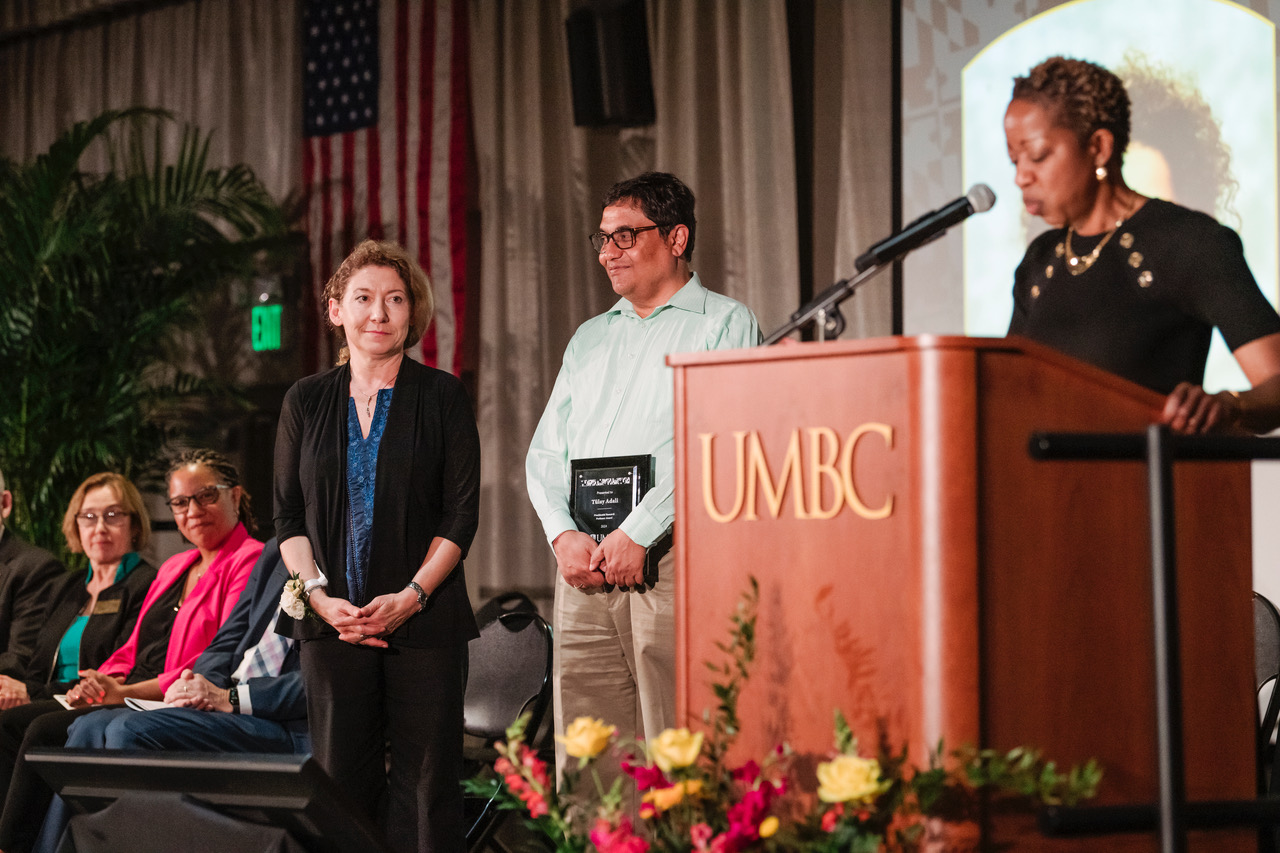
Tülay Adali is a Professor in the Department of Computer Science and Electrical Engineering at the University of Maryland, Baltimore County (UMBC). She has held this position since 1992 and was named a Distinguished University Professor in 2015 for her contributions to statistical signal processing and machine learning. Currently serving as Editor-in-Chief of the IEEE Signal Processing Magazine, she has also held leadership roles in IEEE committees and conferences. Her research focuses on statistical signal processing, machine learning, and their applications in medical imaging and data fusion. Dr. Adali earned her Ph.D. in Electrical Engineering from North Carolina State University in 1992. Her work integrates foundational signal processing techniques with biomedical applications, addressing challenges in neuroimaging analysis. She leads the Machine Learning for Signal Processing laboratory, supported by grants from NSF and NIH. Her lab develops algorithms for analyzing complex signals in medical contexts, emphasizing reproducibility and interdisciplinary collaboration. Recognition includes IEEE Fellow, AIMBE Fellow, AAIA Fellow, Humboldt Research Award, and NSF CAREER Award. She has authored numerous papers on fMRI analysis, independent component analysis, and multimodal data fusion. Her editorial leadership and service to technical communities reflect her commitment to advancing signal processing and education. Education: Ph.D. in Electrical Engineering, North Carolina State University (1992) Grants: NSF, NIH-funded projects on medical imaging and signal processing Awards: SPS Meritorious Service Award, SPIE Pioneer Award
Kazuhiro Saitou is a Professor of Mechanical Engineering at the University of Michigan, affiliated with the College of Engineering. His research focuses on computational design synthesis, topology optimization, and manufacturing process integration. He leads the Algorithmic Synthesis Laboratory (ASL), advancing algorithms for automated design and optimization of mechanical systems. Education: Ph.D. (1996), MIT; M.S. (1992), MIT; B.Eng. (1990), University of Tokyo. He has held tenured positions since 1997, including roles as Founding CEO of Comnext, Inc. (2007–2012) and visiting professorships at École Centrale Paris and Donghua University. Research interests include multi-material topology optimization (M^3 TO), AI-driven design, and sustainable manufacturing. Key projects address additive manufacturing, composite structures, and energy-efficient production systems. He has pioneered methods for manufacturability-driven design and assembly optimization. Notable awards include IEEE Fellow (2018), ASME Kos-Ishii Award (2015), and NSF CAREER Award (1999). He serves as Editor-in-Chief for IEEE Transactions on Automation Science and Engineering and holds leadership roles in ASME and IEEE societies. Teaching includes courses on design optimization, CAD, and global product development. His lab has advised over 30 students, with alumni in academia and industry. Current research explores biomechanical modeling, traffic flow optimization, and medical image registration algorithms.
David Stillwell serves as Professor of Computational Social Science at Cambridge Judge Business School and Academic Director of The Psychometrics Centre, University of Cambridge. His research leverages big data to understand human psychology and behavior, with significant contributions in personality prediction from digital footprints and personalized advertising applications. His educational background includes: BSc in Psychology from the University of Nottingham (2007) MSc in Research Methods from the University of Nottingham (2008) PhD in Decision Making from the University of Nottingham (2012) Dr. Stillwell's research centers on computational social science and psychometrics, pioneering the myPersonality Facebook application that collected data from over 6 million users. His work demonstrates computers can predict personality as accurately as spouses, reveals psychological targeting's advertising effectiveness, and establishes links between personality-matched spending and life satisfaction. He also explores linguistic honesty markers through profanity analysis and personality-based dating patterns. His recent publications (2019-2025) reveal a strong trajectory toward AI evaluation using psychometric frameworks, particularly in medical and general-purpose AI assessment. Key themes include fairness metrics in language models, crisis emotional responses through social media, and computational personality recognition - demonstrating consistent innovation at the psychology-technology intersection. He has received significant recognition: Top 10 most influential papers of 2013 by Altmetric Nieman Journalism Lab highlight of 2013 Named in 'top 30 thinkers under 30' by Pacific Standard Magazine Dr. Stillwell maintains active industry engagement through consultancy with Barclays, Hilton, and Ubisoft on projects spanning computer-adaptive testing systems to interactive experiences like Predictive World for Watch Dogs 2. His policy impact is substantial, with citations by the European Data Protection Supervisor, World Bank, and multiple national governments, leading to speaking engagements at the European Parliament and Bank of England. As Academic Director of The Psychometrics Centre, he leads a global hub for advancing psychological assessment through innovative methods including Concerto open-source software, collaborating with organizations ranging from the European Commission to major corporations on psychometric applications in people analytics and digital behavior.