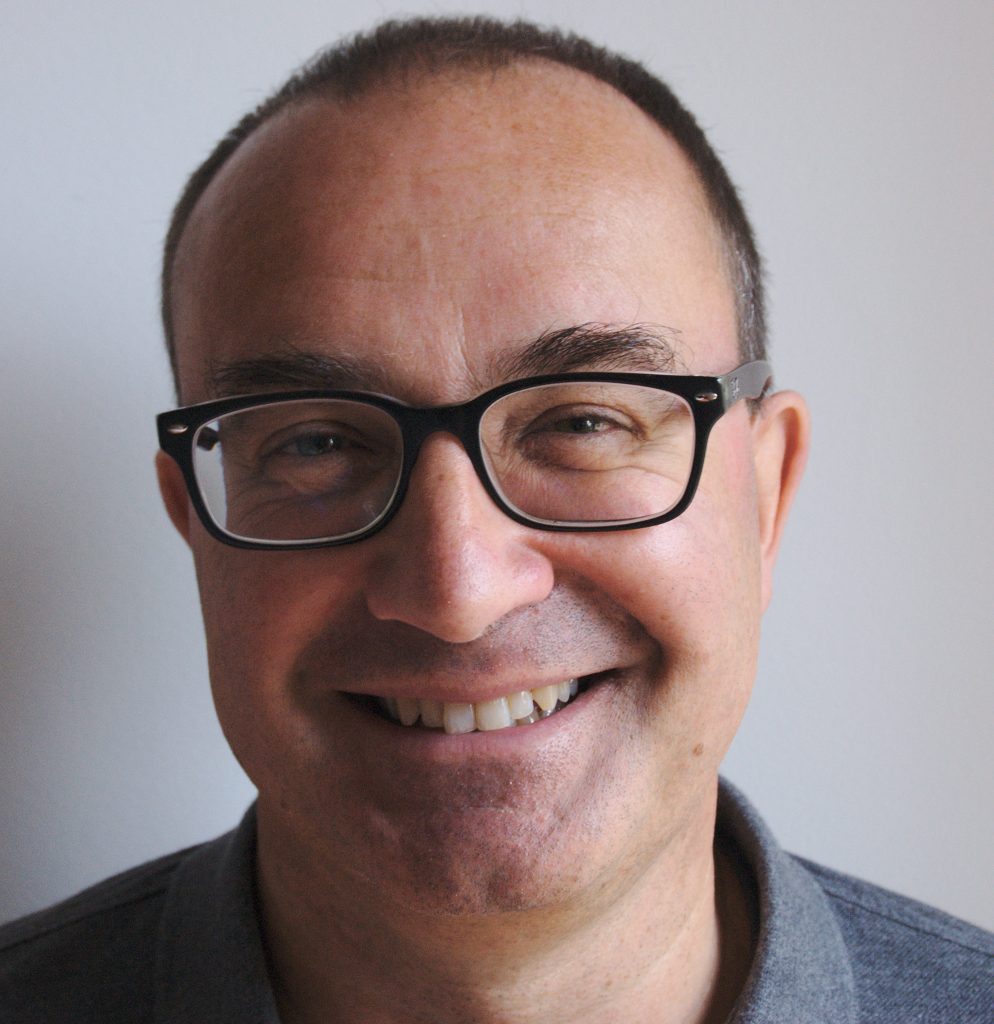
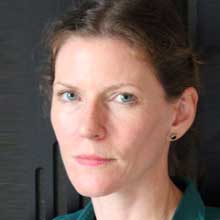
Barbara Caputo is a Full Professor at Politecnico di Torino, leading the VANDAL Laboratory and directing the AI@PoliTo Interdepartmental Lab. She holds a double affiliation with the Italian Institute of Technology (IIT) and has held roles at Idiap-EPFL and Sapienza University. Her research focuses on AI, computer vision, domain adaptation, and federated learning. She contributes to national AI policy, including the Italian Strategy on AI and the National PhD on AI for Industry 4.0. She is an ERC Laureate and ELLIS Fellow, co-founding ELLIS society. Her work spans visual place recognition, action recognition, and cross-domain learning. Education: PhD in Computer Science from KTH Royal Institute of Technology (2005). Major roles include Rector’s Advisor on AI at PoliTo, Board Member of ELLIS, and coordinator of the AI & Industry 4.0 vertical in the National PhD program. Awards include ERC Laureate (2017), ELLIS Fellow (2019), and Inspiring Fifty Italy (2018). Her research emphasizes federated learning, domain adaptation, and AI ethics. Recent articles explore domain generalization, resource-efficient federated models, and AI-environment interactions. She collaborates with institutions like MUR, CNR, and the European Commission on AI policy and tech initiatives.
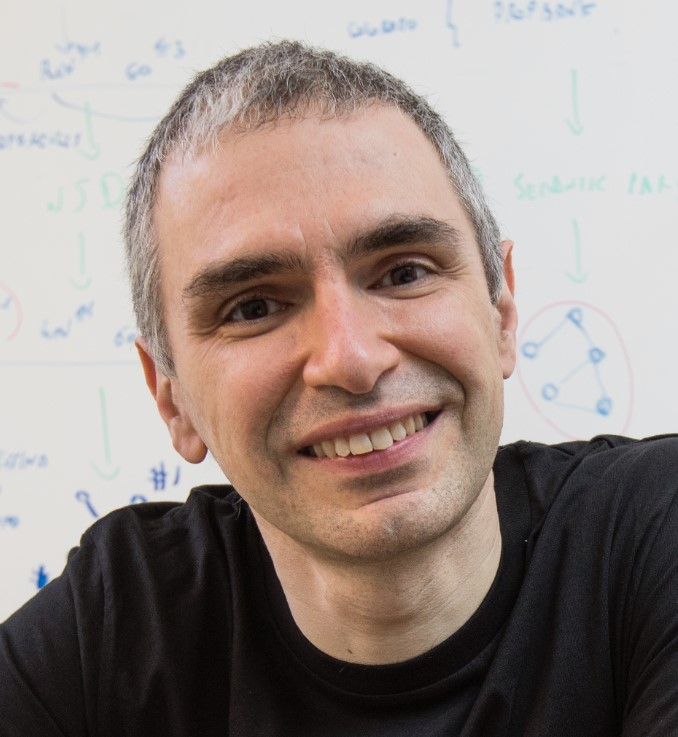
Roberto Navigli is a Full Professor in the Department of Computer, Control and Management Engineering at Sapienza University of Rome, where he leads the Sapienza NLP Group. He has held academic positions at Sapienza since 2007, progressing from Researcher to Associate Professor, and now Full Professor. Navigli is internationally recognized for his groundbreaking work in multilingual natural language processing and computational semantics. His research spans multiple areas within Natural Language Processing, with a particular focus on multilinguality , lexical semantics (Word Sense Disambiguation and induction), sentence-level semantics (Semantic Role Labeling and Semantic Parsing), and Large Language Models . As the leader of the Minerva LLM project, he pioneered the development of the first pretrained LLM in Italian. His creation of BabelNet, the largest multilingual encyclopedic computational dictionary covering 271 languages and about 14 million concepts, represents a landmark achievement in computational linguistics. Professor Navigli's recent publications demonstrate a strong focus on advancing multilingual capabilities of language models, addressing challenges in semantic understanding across languages, and developing robust evaluation frameworks. His work on Italian LLM optimization, lexical ambiguity in machine translation, and cross-lingual safety gaps reflects his commitment to building more accurate and reliable language technologies that work effectively across diverse linguistic contexts. AAAI Fellow (2025) EurAI Fellow (2024) ELLIS Fellow (2024) ACL Fellow (2023) Outstanding Paper Awards at ACL 2024, ACL 2023, and NAACL 2021 Best Resource Paper Award at ACL 2022 Prominent Paper Awards from the Artificial Intelligence Journal (2023, 2017) META Prize 2015 for BabelNet Professor Navigli has successfully secured substantial research funding, including two prestigious ERC Grants (MultiJEDI ERC Starting Grant 2010-2016 and MOUSSE ERC Consolidator Grant 2017-2023, totaling around 3 million euros), PI of PRIN 2017 and PRIN 2020 projects (overall 1.4 million euros), and a Google Focused Research Award (around 300k$). He has mentored over 30 PhD students, many of whom have gone on to successful careers in academia and industry. His leadership extends to major international conferences, serving as General Chair of ACL 2025 and Program Co-Chair of ACL-IJCNLP 2021. As the director of the Sapienza NLP Group and co-leader of the Transversal Project on Large Language/Multimodal Models in the FAIR (Future Artificial Intelligence Research) project, Professor Navigli oversees a vibrant research ecosystem focused on advancing the state-of-the-art in natural language understanding across languages. His spinoff company, Babelscape, translates academic research into practical applications for industry.
Michele Zorzi is a Professor of Telecommunications at the School of Engineering, University of Padova, Italy, where he has held a faculty position since 2003. He leads the SIGNET (Signal processing and Networking) Research Group, focusing on cutting-edge wireless networking challenges including mmWave communications and underwater networks. His extensive publication record exceeds 600 papers in top-tier journals and conferences, reflecting significant contributions to the field through both theoretical and experimental work. He received his Laurea Degree (1990) and Ph.D. (1994) in Electrical Engineering from the University of Padova. Prior academic appointments include Politecnico di Milano (1993-1996), University of California San Diego (1995-1998), and University of Ferrara (1998-2003), where he progressed from Associate Professor to full Professor. His educational trajectory demonstrates deep roots in Italian academia with international exposure. Professor Zorzi's research spans wireless communications and networking, with current emphases on mmWave networking for vehicular systems, underwater acoustic/optical communications, non-terrestrial networks, and AI-driven networking solutions. His group conducts experimental validations including at-sea trials for underwater systems and testbeds for vehicular networks. Key projects include PRATA for predictive QoS in autonomous driving and IoT-based environmental monitoring of the Venice Lagoon, demonstrating practical applications of theoretical work. Analysis of his 2022-2025 publications reveals strong trends in applying artificial intelligence to networking challenges across diverse environments. There is significant emphasis on vehicular networks (predictive QoS, teleoperated driving), underwater systems (acoustic/optical communications, AUV swarms), and satellite networks (Starlink integration, NTN security). Experimental validation in real-world scenarios like the Venice Lagoon monitoring project and underwater sea trials characterizes his applied research approach. His scientific accolades include: IEEE Fellow (2007) IEEE Communications Society Best Tutorial Paper Award (2008, 2019) Stephen O. Rice Best Paper Award (2018) Multiple best paper awards at IEEE conferences (2005-2020) As principal investigator for numerous European and US research projects plus 20+ industry-funded initiatives, Professor Zorzi has mentored over 35 PhD students and post-docs. Graduates now hold prominent positions at institutions including Stanford, UCSD, CTTC, and Huawei. His SIGNET group maintains active international collaborations and contributes to open-source networking tools via GitHub, demonstrating commitment to community engagement. The SIGNET Research Group, housed within the Department of Information Engineering, operates specialized experimental facilities for mmWave and underwater communications. Current initiatives include AI-based predictive QoS frameworks for vehicular networks, underwater optical communication systems using ultraviolet light, and large-scale IoT deployments for environmental monitoring. The group's GitHub presence indicates strong open-science practices, while recent sea trials confirm hands-on experimental capabilities beyond theoretical work.
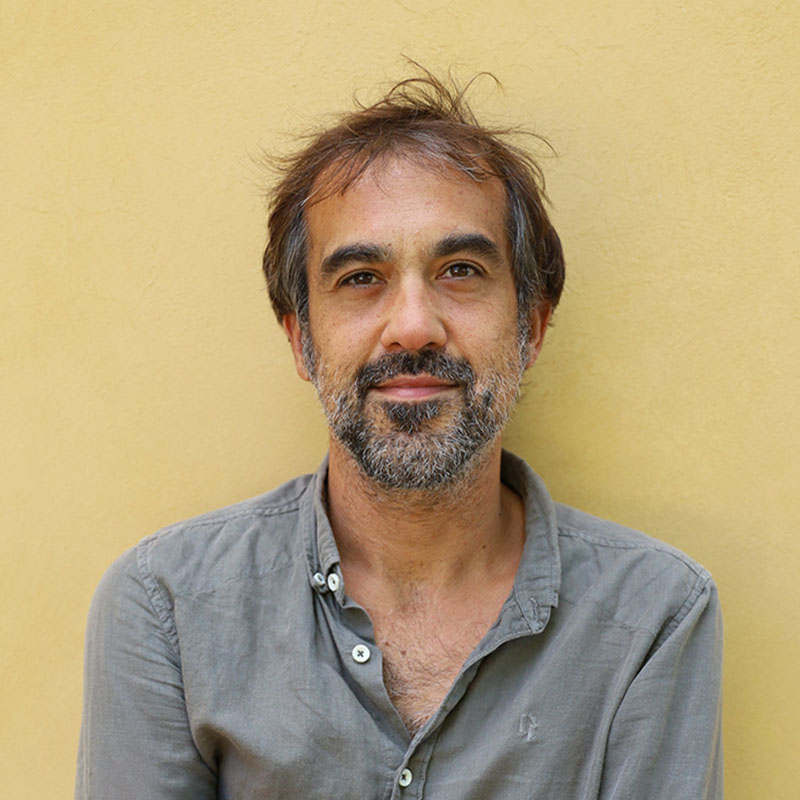
Elias Dinas is a Full-time Professor in the Department of Political and Social Sciences at the European University Institute (EUI). He holds the Swiss Chair in Federalism, Democracy, and International Governance. His research focuses on political socialization, authoritarian legacies, and research methodology. Dinas earned his PhD in Political Science from the EUI in 2010. His research interests include the impact of historical traumas on political attitudes, experimental methods, and the dynamics of norm change. He collaborates with institutions like the Graduate Institute in Geneva through seminars, conferences, and methodological workshops. Recent work explores topics such as ideology mapping via AI, the electoral effects of early voting experiences, and the interplay between migration crises and public policy. His research has been published in top journals like the American Political Science Review and highlighted in outlets like The New York Times. Received the Michael Wallerstein Award (2019) for his work on migration and hostility. Supervises 14 students researching memory politics, norm change, and intergroup relations. Leads projects on post-authoritarian ideologies, German political identity, and elite-driven norm erosion. His teaching and supervision emphasize causal inference, experimental design, and quantitative methods, reflecting his commitment to rigorous political analysis.
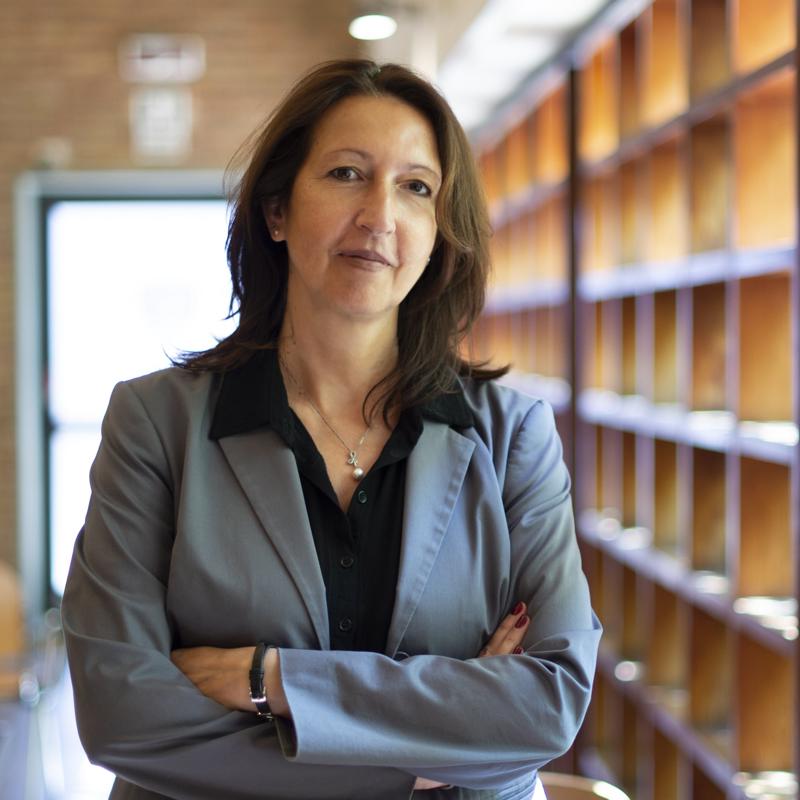
Raffaella A. Del Sarto is a Full-time Professor holding a Joint Chair in Mediterranean Studies between the Department of Political and Social Sciences and the Robert Schuman Centre for Advanced Studies at the European University Institute (EUI). Previously, she served as Associate Professor of Middle East Studies at Johns Hopkins SAIS Europe and held an ERC-funded BORDERLANDS project at the EUI. She earned her PhD (summa cum laude) in International Relations from the Hebrew University of Jerusalem and a MA in Political Science from Albert-Ludwigs University in Freiburg, Germany. Her research focuses on Middle East-North Africa (MENA) international relations, Europe-MENA relations, regional order dynamics, and the Israeli-Palestinian conflict. Notable works include Borderlands: Europe and the Mediterranean Middle East (2021) and Israel under Siege (2017). She is fluent in English, German, French, Italian, Hebrew, and has intermediate knowledge of Arabic and Spanish. Her publications analyze regional alliances, EU foreign policy, and border governance, reflecting her expertise in qualitative methods and constructivist approaches. Awards include the Robert Schuman Distinguished Fellowship (2019-2020) and Italian habilitation as Full Professor (2019). She advises on topics linking Mediterranean IR with comparative frameworks, emphasizing conceptual innovation beyond 'exceptionalism' narratives. Her research projects include the MENARA initiative (2016-2021) on post-2011 Middle East transformations and the BORDERLANDS ERC project (2011-2017), exploring EU-MENA border dynamics.
Francesca Simeoni is Associate Professor of Management at the University of Verona , Department of Business Administration, a position she has held since 2005 after serving as Assistant Professor. She earned her Ph.D. from the University of Naples “Parthenope” in 2003. Her research agenda centres on sustainable management practices , tourism destination governance , SME competitiveness , fair-trade business models , and service quality in public utilities . She leads or participates in nationally funded projects such as “Measuring the economic impact of cultural events: Tocatì – International Festival of Street Games” and “Graphic category in Confartigianato – Verona: profile and needs of services.” Since 2017 she is scientific coordinator of the Altromercato Campus public-engagement event and lecturer in the Kids University workshop “From the idea, passing through the project, to the enterprise.” She teaches extensively across bachelor’s and master’s programmes in tourism, business and languages, delivering courses including Principles of Management and Digital and Interactive Marketing . Francesca serves on multiple scientific committees for professional-development masters and specialisation courses within the university and is a member of the Department Board and the School of Economics and Management Council.
Francesco Pilati is an Associate Professor at the Department of Industrial Engineering, University of Trento, where he serves as local coordinator for the scientific field ING-IND/17 (Industrial Plants and Logistic Systems). He chairs the research group on Industrial Plants, Production Systems, and Logistics, and teaches courses in Industrial Plants and Design of Digital Production and Assembly Systems. As coordinator of the Master's program in Management and Industrial Systems Engineering and University Coordinator for the EIT double degree in Zero-Defect Manufacture, Pilati bridges academic leadership with advanced manufacturing research. He has also served as Invited Lecturer at universities in Vienna and Göttingen. His research focuses on integrating environmental sustainability with technical-economic criteria through multi-objective optimization and impact assessment. Key areas include: Distribution networks and warehousing systems Manufacturing and assembly line design Hybrid energy production systems Digitization of manual production processes using depth cameras Recent publications highlight applications of Industry 4.0 technologies to pandemic safety, logistics optimization, and smart manufacturing. Pilati has received significant recognition including the Philip Morris Italia Empowering Research Award (2016) and Autostrade per l'Italia academic recognition. His editorial contributions include guest editing special issues on Digital Twins and Smart Factories in Q1 journals.
Giuseppe Carlo Marano is a Full Professor at the Department of Structural, Building and Geotechnical Engineering at Politecnico di Torino. He is also a component of the SISCON Interdepartmental Center for Infrastructure Safety. With expertise in civil and structural engineering, his work focuses on machine learning applications, seismic risk reduction, and sustainable structural optimization. Education Graduated cum laude in Structural Engineering from Polytechnic University of Bari PhD in Structural Engineering from University of Florence (2000) Research Interests Marano's research spans structural optimization, seismic engineering, and machine learning applications in civil infrastructure. He develops advanced computational models for: Seismic retrofitting of existing structures Optimization of steel and masonry structures Recycled materials in concrete production AI-driven structural health monitoring Multiobjective design methodologies Publication Trends His recent work emphasizes: Machine learning for concrete mix design and damage assessment Optimization of gridshells and arch structures Seismic isolation systems and vibration control Sustainable construction practices with recycled materials Multiobjective genetic algorithms for structural design Scientific Recognitions National Scientific Qualification - First Band (2013, MIUR Italy) Certificate of Appreciation for Outstanding Lecture (2012, China) Academic Contributions As an educator, he teaches: Consolidamento Strutturale (Structural Consolidation) Dinamica delle Vibrazioni Random (Random Vibration Dynamics) Progettazione Generativa (Generative Design) He also leads Challenge@PoliTo initiatives and contributes to national infrastructure safety regulations. Research Projects ADAPT4CE - Adaptive Digital Systems for Circular Economy (2025-2028) AI-ENVISERS - AI for Seismic Retrofit Environmental Impact (2023-2025) ADDOPTML - Additive Manufacturing Optimization (2021-2025)
Gian Antonio Susto is an Associate Professor at the Department of Information Engineering , University of Padova . With a Ph.D. in Information Technology and post-doctoral experience at National University of Ireland, Maynooth, he leads research in Machine Learning , Semiconductor Manufacturing , and Industrial IoT . His work bridges Anomaly Detection , Continual Learning , and Algorithmic Fairness with applications in Hydroelectric Power Plants , Particle Accelerators , and Smart Mobility . B.Sc. and M.Sc. in Controls Engineering, University of Padova (cum laude) Ph.D. in Information Technology, University of Padova (2013) Post-Doc at National University of Ireland, Maynooth (2012-2013) Assistant Professor at University of Padova (2013-2021) His research focuses on Explainable AI , Virtual Metrology , and Deep Learning for manufacturing and infrastructure monitoring. Recent projects include the AIMS5.0 (AI for Manufacturing Sustainability) and MICS (Circular Economy in Italy) initiatives. His publications span Engineering Applications of Artificial Intelligence , IEEE Transactions , and Information Processing & Management , with 15+ recent papers on topics like Fault Diagnosis , Continual Learning , and Fair Ranking . Key scientific awards include: IEEE CCTA Best Student Paper Award (2021) IP&M 2020 Ph.D Paper Award Best Industry Paper Award, European Workshop on Advanced Control and Diagnosis (ACD 2019) He has supervised Ph.D. students on projects involving Particle Accelerators , Plant Behavior Modeling , and Explainable AI , with alumni now at institutions like Max Planck Institute , IBM , and Scripps Research . Current teaching includes Reinforcement Learning and Explainable Machine Learning at graduate and Ph.D. levels.
Marco Brogna is an Associate Professor of Economic Geography at the Department of Methods and Models for Economy, Territory, and Finance at Sapienza University of Rome. He has been serving in this capacity since March 2007, following his position as a Confirmed Researcher of Economic Geography from 2001 to 2007. His academic work is deeply rooted in the Faculty of Economics, where he has held significant administrative roles including Delegate of the Dean for Teaching and President of the Coordination Committee for Degree Programs. Professor Brogna's research interests span Tourism Development , Sustainable Tourism , Local Economic Development , Economic Geography , Territorial Planning , and Accessible Tourism . His work consistently focuses on the intersection between tourism, regional development, and sustainable practices. He has particular expertise in analyzing tourism dynamics in the Lazio region and Rome, examining how tourism impacts local economies and how territories can be developed to maximize tourism potential while maintaining sustainability. His recent publications reveal a clear trend toward analyzing post-pandemic tourism recovery, sustainable development models, and the evolving relationship between tourism and local communities. His research demonstrates a progression from traditional tourism studies toward more complex analyses of tourism's role in territorial development, with increasing focus on digital influences, accessibility, and sustainable practices. His work spans both theoretical frameworks and practical applications, often using case studies from Rome and the Lazio region to illustrate broader principles of tourism development. Professor Brogna has been actively involved in thesis supervision for undergraduate and graduate students, encouraging students to apply one semester before their expected completion date. He has led numerous research projects funded by the Lazio Region, including innovative research on tourist industry management, tourism training, and sustainable tourism development. His most significant projects include being responsible for the 2021 research on 'Innovative Management of the Tourist Industry' and the 2020 National Report on Open-Air Tourism. Professor Brogna has also been instrumental in organizing academic events, including the 'Giovedì del Turismo' conference series at Sapienza University since 2015, as well as numerous other conferences on tourism development, sustainable tourism, and territorial planning. His work extends beyond academia into practical applications through his involvement with Rome's strategic tourism planning and various governmental advisory roles.
Summary Tiziano VESCOVI is a Full Professor of Business Economics and Management at the Venice School of Management , Ca' Foscari University of Venice. He holds roles including Co-Director of the International Management to Asia Research Laboratory (IMA Lab), member of the technical-scientific Committee of the Ca' Foscari Challenge School, and scientific director of the Italian School of Booksellers. His teaching focuses on Cross-Cultural Marketing , Brand Management , and International Marketing to China in both English and Italian programs. Education : - Degree in Business Economics (Ca' Foscari, 1981) - ITP Certificate (HEC Paris, 1987). Research Interests : - Cross-cultural aspects in international markets, particularly China. - Digital transformation in marketing strategies. - Luxury brand management and global market entry strategies. - Made-in-Italy products in socio-culturally diverse markets. Recent Projects : - 'The Merchant and the Dragon' (2013-): Strategies for Italian SMEs entering China. - 'Managing Digital Transformation' (2021-): Strategic processes in tech adoption. - PNRR LEGO Project (2024-26): Italy-East Asia education collaboration. Office Hours : - Weekly online sessions (Thursdays 2-4 PM via Zoom). - Physical location: San Giobbe Campus, C1 Building, Room 127. Labs/Initiatives : - IMA Lab: Research on Asia-Pacific market dynamics. - Master in Luxury Client Advisor: Collaboration with LVMH Group.
Luca Iocchi is a Full Professor at Sapienza University of Rome, where he teaches in the Master in Artificial Intelligence and Robotics program. He is affiliated with the Department of Computer, Control, and Management Engineering and the Faculty of Engineering of Information, Computer Science and Statistics. Iocchi serves as an Associate Editor for Artificial Intelligence Journal and has been the scientific coordinator of Spoke of PNRR project FAIR (Future AI Research). His educational background includes: Master in Engineering in Computer Science (Laurea in Ingegneria Informatica) cum Laude, Sapienza Università di Roma, 1995 PhD in Engineering in Computer Science (Dottorato in Ingegneria Informatica), Sapienza Università di Roma, 1999 Professor Iocchi's research focuses on cognitive robotics, task planning, multi-robot coordination, robot perception, robot learning, human-robot interaction, and social robotics. His work has significant applications in security, surveillance, and environmental monitoring. He has published over 200 referred papers with an h-index of 46 (Google Scholar). His research bridges theoretical AI with practical robotic systems operating in real-world environments, with a particular emphasis on developing intelligent systems that can interact effectively with humans. His recent publications show a strong trend toward multi-agent reinforcement learning, trust modeling in human-AI teams, UAV coordination, and planning systems. There's a clear focus on making robotic systems more reliable, efficient, and capable of operating in complex real-world scenarios like healthcare facilities and smart cities. His work increasingly integrates formal planning approaches with machine learning techniques. Professor Iocchi has received numerous scientific awards: 1999 Top Paper Award WebNet'99 2006 Best Paper Award RoboCup 2006 2008 Best Robotics Demo Award AAMAS 2008 2014 Best Paper Award For Engineering Contribution RoboCup 2014 2017 RoboCup@Home SSPL 2017 - 3rd place 2018 Canada-Italy Innovation Award 2019 Best Paper Award For Engineering Contribution RoboCup 2019 As an academic advisor, Iocchi has directed the PhD Program in Engineering in Computer Science from 2020 to 2023. He has been Principal Investigator for numerous research projects including SciRoc (European Robotics League), AI4EU (European AI project), BUBBLES, AIPlan4EU, ROSITA, Trust Your Agents, and FAIR. His research has been supported by EU H2020 programs, national grants, and industry collaborations, demonstrating strong connections between academia and practical applications. Professor Iocchi is actively involved with the Cognitive Cooperating Robots Lab (LabRoCoCo) and is a key member of the RoboCup Federation, having served as Vice-President from 2019 to 2024. He has played a significant role in benchmarking domestic service robots through RoboCup@Home and the European Robotics League Service Robots (ERL-SR), which he helped establish. His leadership in organizing international scientific robot competitions has been instrumental in advancing the field of service robotics.
Luca Sebastiani is a Full Professor in Horticultural Sciences (AGR/03) at Scuola Superiore Sant'Anna in Pisa, Italy, since 2014. He currently coordinates the PhD Course in AgroBioSciences and has previously served as Director of the Institute of Life Sciences (2016-2021). His academic career includes roles as Associate Professor (2002-2014) and Assistant Professor (1998-2002) at the same institution. PhD in Plant Biology from Scuola Superiore Sant'Anna (1996) MSc in Agricultural Sciences from University of Pisa (cum laude, 1991) Postdoctoral research in agricultural biotechnology (1996-1998) Research Interests: Focus on plant-environment interactions, particularly abiotic and biotic stress responses in crops. Key areas include: Physiological and molecular responses to climate change stressors Nutraceutical enhancement of food crops Plant germplasm conservation using molecular markers Agriculture 4.0 integrating AI, IoT, and robotics Phytoremediation using poplar and Brassica species Scientific Contributions: His work bridges molecular mechanisms (aquaporin function, heavy metal transport) with ecosystem-level applications (precision irrigation, contaminant phytoremediation). Recent publications emphasize genome sequencing, stress tolerance modeling, and nutraceutical food development. ISHS Medal for SapFlow Workshop organization (2011) Giovanni Spitali Foundation Award for PhD dissertation (1998) Collaborations: Extensive international collaborations with institutions like Beijing Forestry University, Comenius University, and Purdue University. Currently supervises projects in plant phenotyping, omics technologies, and sustainable crop management.
Lucia Savadori is an Associate Professor in Psychology at the Department of Economics and Management, Università degli Studi di Trento. Her research focuses on risk perception, decision-making processes, behavioral economics, and effective communication strategies for risk-related information. She holds a BA and PhD in Psychology from the University of Padua, with postdoctoral research at Padova and visiting scholarships at institutions like the University of Illinois and Decision Research (USA). Education : B.A. in Psychology (1993), University of Padua PhD in Social and Personality Psychology (1999), University of Padua Research Interests : Risk communication in healthcare, technology, and environmental contexts Behavioral economics and decision-making under uncertainty Cognitive processes in judgment and choice Her work has been supported by grants including the Horizon 2020-funded BuildERS project (2019–2022) and the Italian Ministry of Health’s prenatal diagnostics initiative (2010–2012). She has led over a dozen research projects on topics like workplace safety, disaster preparedness, and consumer trust in food systems. Professional Activities : Head of Training and Communication at the Centro di Scienze della Sicurezza e della Criminalità (2021–present) Scientific Committee member for European research networks (e.g., SAFE, SMARTHEALTH) Editorial reviewer for journals like Risk Analysis and Medical Decision Making Her teaching spans courses on general psychology, behavioral economics, decision-making tools, and organizational psychology.
Stéphanie Novak is a Full Professor at the Department of Comparative Linguistic and Cultural Studies, Ca' Foscari University of Venice. Her research focuses on European institutions, transparency, accountability, collective decision-making, and international negotiations. She has published extensively in journals like the Journal of Common Market Studies and Global Policy, and co-edited a volume with Jon Elster on majority decisions. Current Assignments: Member of the Steering Committee of the Ca' Foscari International College; Delegate for Internationalization Research Interests include: EU institutional transparency and accountability Collective decision-making and consensus Intergovernmental relations and crises Legislative process conflict-resolution International negotiation dynamics Democratic compromise in supranational contexts Her 2023-2024 publications analyze transparency dilemmas, consensus fragility, and digital policy interoperability. Earlier works (2005-2020) examine voting norms, institutional hypocrisy, and EU global representation. Scientific Awards: Dalloz-Bibliothèque de thèses prize (doctoral thesis) Editorial Involvement: Associate Editor, Journal of European Policies (since 2017) Editorial Board, La Fabrique du Politique (since 2018) Former Board Member, La Vie des Idées (2009-2021) Grants & Projects: POLiN Project (2023-2025): Interoperability in EU digital health policies Universalism and Right of Man Project (2023-2026): Late Enlightenment political conditions Observatoire des Institutions Européennes (2014-2021): EU institutions and transparency