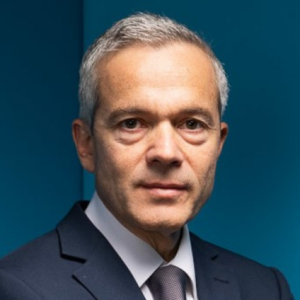
Professor Diomidis Spinellis is a renowned academic in Software Technology at Athens University of Economics and Business (AUEB). He specializes in software engineering practices, code quality, AI ethics, and system architecture. His work bridges theoretical advancements with practical applications in industry, emphasizing reproducibility and empirical methods. Recipient of the IEEE Computer Society's prestigious 'Distinguished Contributor Recognition,' Spinellis is the sole Greek scientist to achieve this honor. His research spans software evolution, security, and open-source ecosystems, with a focus on methodologies like refactoring, static analysis, and debugging strategies. Key research interests include AI-generated content detection, modular data analytics, and incident management systems. His studies often leverage large-scale datasets (e.g., Unix evolution, Linux supercomputing analysis) to uncover patterns in software behavior and development practices. Publications frequently address emerging technologies' societal impacts, such as energy-efficient computing and ethical AI deployment. He advocates for reproducible research through tools like the Alexandria3k framework and contributes to open-source initiatives.
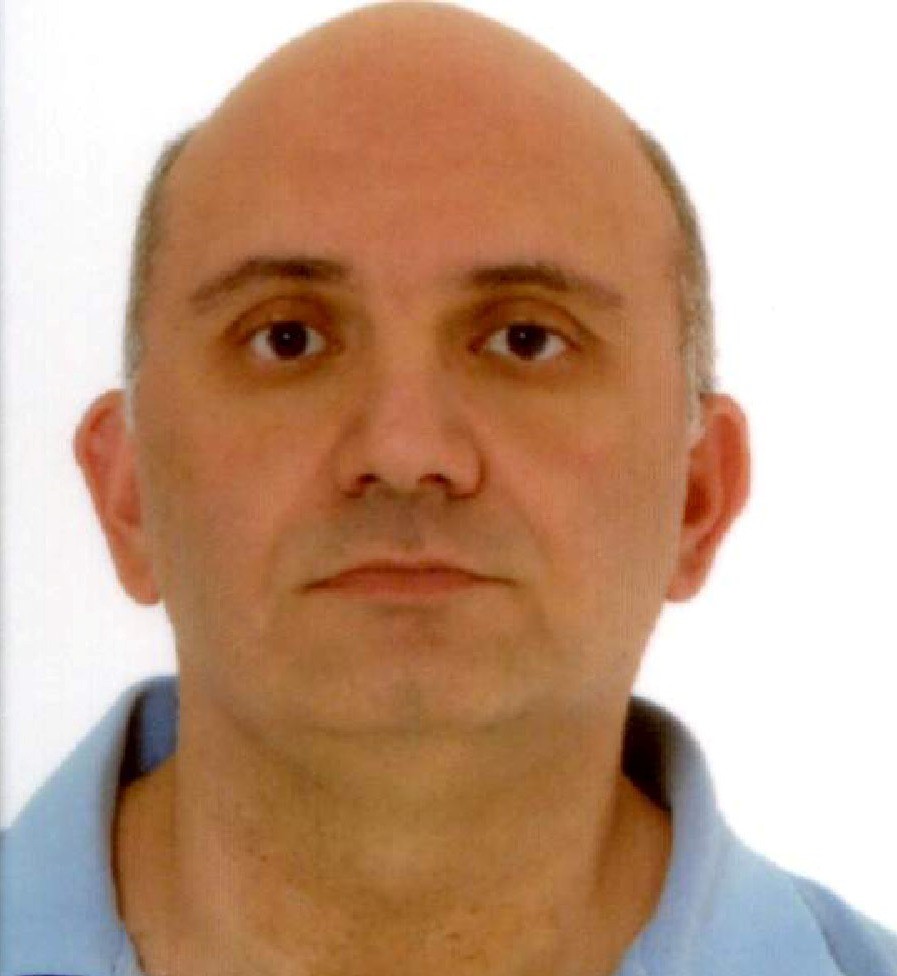
Mara Nikolaidou is a Professor in the Department of Informatics and Telematics at Harokopio University of Athens since 2007 and has served as the university's Rector since 2016. She represents Greek universities in the European University Association (EUA) for 2023-2024. Her research focuses on distributed systems, system modeling, and responsible computing, with a strong emphasis on IoT, cloud/edge computing, and cyber-physical systems. She leads projects funded by national, EU, and international agencies, exploring topics like autonomous systems, ethical requirements in design, and human-in-the-loop systems. Her educational background includes roles as a computer engineer and IT consultant before academia. She is a member of IEEE (SMC Society and Systems Council) and participates in the Object Management Group (OMG) working groups for SysML and responsible computing. She organizes international conferences in software and systems engineering. Research interests span distributed systems, IoT, and ethical computing. Recent work investigates cost analysis in cloud markets, human-AI collaboration, and smart city technologies. Over 200 publications highlight her contributions to model-based systems engineering, including SysML extensions for cost/QoS analysis and frameworks for autonomous fog nodes. Grants and projects include EU-funded initiatives on smart farming, cloud brokerage, and organizational interoperability. Her lab focuses on autonomous systems and context-aware middleware. She advises on e-Government compliance frameworks and collaborates with industry partners on IoT management platforms.
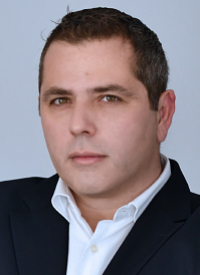
Nikolaos K. Efremidis serves as Professor in the Department of Mathematics & Applied Mathematics at the University of Crete and holds a Collaborating Researcher position at the Institute of Applied and Computational Mathematics (IACM) of the Foundation for Research & Technology - Hellas (FORTH) in Heraklion, Greece. His dual affiliation bridges theoretical mathematics with experimental photonics research at one of Greece's premier research institutions. His research spans nonlinear optics, photonic lattices, and optical beam engineering with particular focus on vortex beams, atmospheric turbulence mitigation, and statistical mechanics of light. Key contributions include the development of inverted pin beams for turbulence-resistant propagation, thermodynamic modeling of optical pressures in multimoded systems, and topological approaches to photonic thermalization. His work uniquely combines mathematical rigor with practical optical applications. Analysis of his 2021-2025 publications reveals three dominant research thrusts: (1) thermodynamic frameworks for optical systems including Dalton's law analogs for partial pressures, (2) topological models for prethermalization dynamics in photonic lattices, and (3) engineered beam solutions (particularly inverted pin beams) that maintain integrity through atmospheric turbulence. These intersect at the frontier of optical thermodynamics and topological photonics. Scientific recognition includes: Fellow of the Optical Society (OSA) His laboratory at FORTH's IACM specializes in computational modeling of nonlinear optical phenomena and experimental validation of novel beam propagation techniques. Current projects focus on extending turbulence-resistant beam concepts to quantum optical regimes and developing topological protection schemes for free-space optical communication.
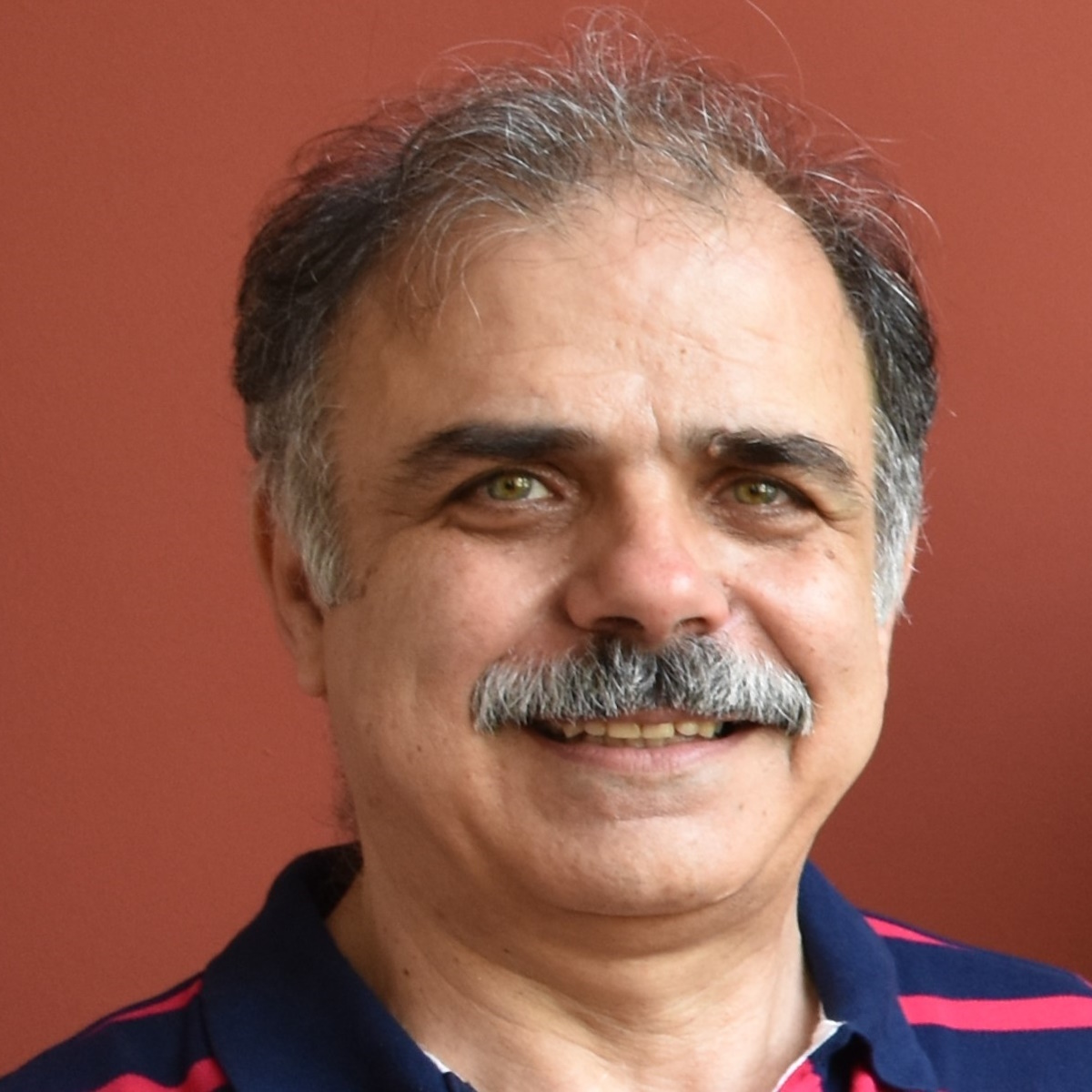
Spitas Vasilios is a Professor at the National Technical University of Athens (NTUA), affiliated with the School of Mechanical Engineering and the Department of Mechanical Engineering & Automatic Control. His research focuses on gear dynamics, additive manufacturing, computational modeling, thermal systems, and educational pedagogy in engineering. He leads projects involving advanced gear technologies, material science applications, and sustainable energy systems. His work integrates experimental, analytical, and numerical methods to address challenges in mechanical design and industrial applications. Key research areas include optimizing gear performance through bio-inspired surface texturing, developing novel clutch systems, and enhancing 3D printing precision. He explores interdisciplinary topics like energy-efficient Ericsson engines and hyper-damping systems. His contributions to engineering education emphasize active learning strategies and project-based curricula. His recent publications analyze magnetic gear dynamics, additive-manufactured components, and educational innovations. He collaborates on international projects, such as the HEV Ventilator initiative, merging biomedical and mechanical engineering.
George Alexandropoulos is an Associate Professor at the Department of Informatics and Telecommunications, National and Kapodistrian University of Athens. His research focuses on telecommunications, signal processing, and reconfigurable intelligent surfaces (RIS) for next-generation wireless networks. He has contributed to advancements in integrated sensing and communications (ISAC), 6G technologies, and holographic beamforming. His work includes experimental validation of RIS prototypes, optimization of RIS-assisted systems, and analysis of secure communication strategies. Research interests include RIS hardware design, channel modeling, and applications in IoT, UAV communications, and disaster recovery networks. He explores topics like energy-efficient RIS operation, multi-RIS coordination, and RIS-enabled localization. His studies often address challenges at sub-THz frequencies, mutual coupling effects, and hardware impairments. Publications emphasize practical implementations of RIS in both indoor and outdoor settings, with a focus on real-world performance evaluation. Awards and grants are not explicitly mentioned, but his extensive publication record indicates significant academic contributions. His research often integrates machine learning for RIS configuration and reinforcement learning for resource optimization in dynamic networks.
Boskos Georgios serves as Associate Professor in Organization and Management of Nutrition Units at Harokopio University of Athens, where he contributes to academic leadership in food safety and nutrition management. His position bridges scientific research with practical applications in food service systems across Greece. Education: Bachelor's degree in Chemistry, Aristotle University, School of Sciences, 1991 Postgraduate studies in Food and Nutrition Science, Ghent University, Belgium, 1992-1993 PhD in Applied Biological Sciences, Ghent University, Belgium, 1998 Research Focus: Dr. Boskos investigates critical intersections of Food Safety , Total Quality Management , and Food Legislation within mass catering environments. His work pioneers benchmarking methodologies for retail food safety systems, analyzes emerging chemical hazards like MCPD in processed foods, and develops technological solutions for nutritional information management. Current projects emphasize Gastronomy innovation through digital tools that transform customer behavior in restaurant settings while ensuring regulatory compliance. Publication Trends: Analysis of his 2015-2018 publications reveals consistent focus on Greek food safety infrastructure, with 60% examining benchmarking systems in retail and agricultural supply chains. His research increasingly integrates technology (mHealth applications, nutritional software) with traditional food safety protocols, particularly in hospital catering for chronic conditions. Collaborative work with Greek regulatory bodies dominates recent output, showing strong alignment with national food safety priorities. Professional Engagement: Dr. Boskos actively translates research into practice through collaborations with the Hellenic Food Authority and hospital nutrition units. His work on RASFF notifications and food recall systems directly informs Greek regulatory frameworks, while nutritional software evaluations drive innovation in commercial food service operations across Athens.
Professor Vassilios Angelidis is a distinguished academic in the field of Electrical Engineering, currently serving as a Professor at the Department of Electrical and Computer Engineering of Democritus University of Thrace. He joined the university in June 2024, bringing with him extensive international experience from prestigious institutions including the University of Glasgow, University of Sydney, University of New South Wales (UNSW), and the Technical University of Denmark. Professor Angelidis received his educational foundation with a degree in Electrical Engineering from Democritus University of Thrace, followed by a Master of Applied Science from Concordia University in Canada, and a PhD from Curtin University in Western Australia. He further enhanced his expertise with an MBA from Curtin Graduate School of Business. His research interests span Power Electronics, Renewable Energy Sources, Electrical Power Systems, and Autonomous Electricity Networks. Professor Angelidis has made significant contributions to the development of advanced power conversion techniques, grid integration of renewable energy sources, and the application of artificial intelligence in power system analysis and prediction. His work has been instrumental in advancing the field of smart grid technologies and sustainable energy systems. An analysis of his recent publications reveals a strong focus on power electronics applications in renewable energy integration, particularly in photovoltaic systems and electric vehicle charging infrastructure. His research demonstrates expertise in developing advanced algorithms for power system monitoring and control, with particular emphasis on frequency estimation, phase angle calculation, and power quality enhancement in modern grids with high penetration of distributed energy resources. Among his notable scientific achievements, Professor Angelidis has been recognized as an IEEE Fellow for his significant contributions to power electronics and the conversion and integration of renewable energy sources into power grids. He has also received the prestigious Advanced Research Fellowship for young researchers from the Engineering and Natural Sciences Council of the United Kingdom. Throughout his career, Professor Angelidis has secured research funding from various organizations across Australia, the United Kingdom, Denmark, China, India, and Malaysia, as well as industry partners with global reach. He has served on the International Councils of Beijing Jiaotong University and Universiti Tenaga Nasional (UNITEN), and currently holds the position of Vice President-elect of the IEEE Power Electronics Community. At Democritus University of Thrace, Professor Angelidis is affiliated with the Electrical Machines Laboratory within the Energy Systems Sector, where he leads research on Control and Diagnostic Methods of Electrical Machines. His current work focuses on advancing the integration of renewable energy sources into electrical power systems while maintaining grid stability and reliability.
Ioannis Andreadis is a Professor in the Department of Electrical and Computer Engineering at the School of Engineering, Democritus University of Thrace. He has been a faculty member since 1993, following his appointment as a Visiting Professor at the School of Technological Applications of TEI Kavala (1991-1992). His academic journey began with a Diploma in Electrical Engineering from Democritus University of Thrace (1983), followed by an M.Sc. in Electrical Engineering & Electronics (1985) and a Ph.D. in Instrumentation & Analytical Science (1989), both from the University of Manchester. Professor Andreadis's research spans the Design and Implementation of Electronic Systems with particular emphasis on Intelligent Systems and Machine Vision . His work has resulted in over 230 publications in international journals, book chapters, and conference proceedings. He has made significant contributions to image processing, particularly in mathematical morphology, color image processing, and real-time implementation of image processing algorithms. His research has practical applications in seismic signal processing, crowd management systems, and 3D reconstruction technologies. The analysis of his recent publications reveals a strong focus on advanced image processing techniques, with increasing integration of deep learning approaches. His work spans both theoretical foundations (such as entropy estimation and moment calculations) and practical applications (including image stabilization, multi-focus image fusion, and crowd management systems). The interdisciplinary nature of his research connects electrical engineering, computer vision, and signal processing with applications in safety engineering, structural analysis, and robotics. Among his notable achievements are the IET Image Processing Premium Award (2009) , Best Paper Award at PSVIT 2007 , and Best Paper Award at EUREKA 2009 . He was elected Fellow of the Institute of Engineering & Technology (IET) in 2006 and Fellow of the Institute of Measurement & Control (InstMC) in 2021. He has also served as Subject Editor of the IET Electronics Letters and as Guest Editor for special issues of Pattern Recognition journal. Professor Andreadis has supervised 14 PhD theses , 21 Master's theses , and 88 Diploma works , demonstrating his commitment to academic mentoring. His research has been supported by significant grants including the EDUnet project (€280,000), wireless network implementation (€37,000), laboratory infrastructure development (€120,000), school information systems support (€478,000), the RESCUER project (€350,000 as Deputy P.I.), and the EDUSAFE project (Marie Curie Actions). He leads the Electronics Laboratory at Democritus University of Thrace, which has undergone significant infrastructure development through multiple funding sources. His work on the RESCUER project demonstrates collaboration with European partners on emergency risk management systems, while his EDUSAFE involvement shows commitment to advanced AR/VR safety systems development. His research group applies computational intelligence techniques to diverse challenges from seismic analysis to pedestrian evacuation modeling.
Konstantinos G. Arvanitis is a Professor in the Department of Natural Resources Management & Agricultural Engineering at the Agricultural University of Athens, affiliated with the Agricultural Engineering Laboratory. He holds a PhD in Electrical and Computer Engineering from the National Technical University of Athens and has held diverse research and teaching roles across Greek institutions. Teaches courses on electrical engineering, sensors, automation, and AI in agriculture Supervised 2 PhD, 9 MSc theses, and guides 6 ongoing PhD projects Member of FEANI, EurAgEng, and IFAC Technical Committee (2000-2017) His research integrates IoT, machine learning, and cyber-physical systems into agricultural practices, focusing on precision agriculture and sustainability. He contributes to editorial boards of journals like Sensors and Energy , and has published over 342 technical works with significant citation metrics. His recent work explores quantum technologies, edge computing, and 3D printing in agricultural systems, emphasizing energy efficiency and educational innovation. He actively reviews for 130+ journals and conferences.
Chrysanthos Maraveas is an Assistant Professor at the Department of Technology and Natural Resources Management & Agricultural Engineering in the School of Environment and Agricultural Engineering at the Agricultural University of Athens since 2022. He earned his PhD in Structural Engineering from the University of Manchester and has held postdoctoral research positions at the University of Liège (EU-funded) and the University of Patras (Greek Ministry of Development-funded). Research Interests : Applications of AI and quantum computing in agriculture Sustainable materials and biodegradable polymers from agricultural waste Internet of Things (IoT) for greenhouse optimization Structural durability and corrosion resistance in agricultural environments Plastic waste management in agrifood systems 4D printing for sustainable agricultural plastics Scientific Recognition : Ranked in the top 2% of scientists worldwide by Stanford University (based on citations and h-index) Publications focus on: Cybersecurity in Agriculture 4.0/5.0 Smart sensors and edge computing for resource management Biopolymer innovations and nanotechnology Structural analysis of agricultural systems Sustainable construction materials from agro-waste Fire resistance in steel and composite structures
Dr. Dimitrios Bakalis is an Assistant Professor at the Department of Physics, University of Patras, specializing in Digital Electronic Circuits and Systems. He joined the faculty in 2004 and focuses on the design and control of digital circuits, emphasizing low-power testing and built-in self-test (BIST) methodologies. His academic roles include teaching courses such as Computer Programming I, Digital Electronics, and Microcomputer Architecture at both undergraduate and postgraduate levels. Education: Diploma in Computer Engineering and Informatics (University of Patras) Master’s Degree in Computer Science and Technology (University of Patras) PhD in Computer Engineering and Informatics (University of Patras) Research Interests: His work revolves around VLSI design, arithmetic circuits, and low-power techniques. Key areas include modulo arithmetic circuits, fault-tolerant systems, and reconfigurable computing architectures. He has published over 50 papers in top-tier journals and conferences, contributing to advancements in digital circuit efficiency and reliability. Teaching: He instructs core courses in digital electronics and computer architecture, integrating cutting-edge research into his pedagogy. His MSc courses focus on FPGA-based digital system design, emphasizing practical applications. Labs/Teams: His research aligns with the Electronics & Computers sector within the Department of Physics, collaborating on projects involving arithmetic core optimization and low-power testing strategies.
Minos Garofalakis is a Professor at the School of Electronic & Computer Engineering at the Technical University of Crete, specializing in data stream management, complex event processing, and privacy-preserving analytics. His work bridges theoretical and applied computer science, with a focus on scalable algorithms for high-velocity data. Best Paper Award at VLDB 2024 for 'OmniSketch' Leader in sketch-based and distributed stream processing Pioneer in differential privacy for relational data Research interests span stream analytics , probabilistic databases , and interactive query systems . Recent work includes oblivious parallel joins (2025), relational data synthesis under privacy constraints (2024), and cross-platform analytics frameworks (2020). His publications demonstrate a consistent focus on error-controlled approximations and real-time distributed processing. Scientific contributions have been recognized at premier conferences like VLDB, with awards highlighting innovations in multi-dimensional stream analysis and privacy-preserving operations . Collaborations span academia and industry, particularly in bioinformatics and distributed systems.
Professor Kyriazis Dimosthenis holds a faculty position at the Department of Digital Systems, University of Piraeus. He earned his diploma in Electrical & Computer Engineering from the National Technical University of Athens (2001) and a cross-disciplinary MSc in Techno-Economic Systems (2004). His academic rank is Professor specializing in service-oriented architectures with a focus on quality of service and workflow management. He has led European projects like BigDataStack, CrowdHEALTH, and CYBELE, addressing challenges in cloud computing, edge computing, and AI-driven solutions for healthcare, finance, and industrial sectors. His research emphasizes resilient service-oriented systems, AI explainability, and human-centric digital transformation. Notable contributions include frameworks for dynamic resource allocation in hybrid cloud/edge environments, AI applications for maritime safety, and data governance solutions for cross-sector integration. He coordinates initiatives such as the Future Internet Architecture Board and Cloud QoS&SLAs, driving advancements in federated data marketplaces and sustainable computing practices. His recent work explores Large Language Model (LLM) applications in financial decision-making, conversational AI for MLOps, and neurosymbolic systems for defect detection. He also investigates XAI methodologies, including VirtualXAI, which leverages GPT-generated personas for explainability assessment. His projects often bridge technical innovation with societal impact, such as the iHELP platform for holistic health records and SmartCHANGE for behavioral change strategies in youth health. Key themes in his publications include bias mitigation in machine learning, dynamic deployment prediction in hybrid cloud settings, and energy-efficient data spaces for mobility. He has contributed to standards like the H2020-funded IRMOS and 5GTANGO, emphasizing interoperability and fault-tolerant architectures. His work frequently intersects with EU policy frameworks, particularly in data governance and ethical AI implementation.
Sotirios Bersimis is an Associate Professor at the University of Piraeus, Department of Business Administration. He holds additional roles as an elected member of the board of directors of the National Statistical Institute (Greece) and representative for FenSTATs and ECAS. Previously, he served as President of the Hellenic Organization for Health Care Services (EOPYY) and as President of the European Healthcare Fraud & Corruption Network (EHFCN). His education includes a PhD in Statistics from the University of Piraeus, an MSc in Statistics from Athens University of Economics and Business, and a BSc in Statistics and Insurance Science from the University of Piraeus. His research focuses on stochastic models for process monitoring, statistical process control, and health analytics. He has published over 60 peer-reviewed articles in journals like Journal of Quality Technology , Statistics in Medicine , and Annals of the Institute of Statistical Mathematics . His work emphasizes applications in healthcare surveillance, quality management, and fraud detection. Notable contributions include the development of the Process Monitoring Group and the 'Multivariate Statistical Process Control Charts: An Overview' paper, which remains highly cited in the field. Bersimis has received awards such as the 2018 ENBIS Best Manager Award and a public honor from the Greek Prime Minister. He actively collaborates with healthcare institutions, pharmaceutical companies, and international organizations, contributing to projects on health expenditure modeling and anti-fraud initiatives. His teaching spans undergraduate and postgraduate programs in statistics, biostatistics, and data science.
Andreas Kastellakis serves as Associate Professor of Psychophysiology at the University of Crete's Department of Psychology since 1992, with prior affiliation as Associate of the Pharmacology Laboratory at the School of Medicine (1993-2021). His academic foundation includes a Biology degree from the University of Patras (1976-1980) followed by a PhD in Physiology (1981-1986) investigating thyroid hormone uptake mechanisms in rat brain. His research program centers on dopaminergic system interactions with thyroid hormones, somatostatin, opioids, and psychostimulants. Employing in vivo microdialysis , immunohistochemistry, HPLC, and behavioral assays, he examines neurochemical, anatomical, and pharmacological parameters in rodent models. Key focus areas include receptor pharmacology in basal ganglia pathways and neurobiological mechanisms of reward processing. Analysis of his 15 most recent publications (2000-2020) reveals persistent investigation into somatostatin receptor subtypes (sst1-sst4), cannabinoid systems, and dopaminergic modulation of motor activity and addiction. His work consistently bridges molecular neuropharmacology with behavioral outcomes, particularly in Parkinson's disease models, substance reinforcement, and stress-neuroendocrine interactions. Dr. Kastellakis has secured significant research funding including the THALES project on Parkinson's pathogenesis (2012-2015), Special Account for Research Grants projects on thyroid hormones (2000-01) and somatostatin (1994-95), and Region of Crete equipment grants (1996, 1999). He teaches undergraduate courses in Neurobiology-Genetics, Behavioral Physiology II, Comparative Psychology, and Stress-Neuroendocrine-Immune Relations, while co-teaching graduate coursework in Neurobiology and Psychopharmacology of Addiction. His laboratory (A1.104, Building A1) operates within the Department's Behavioral Neuroscience facility.