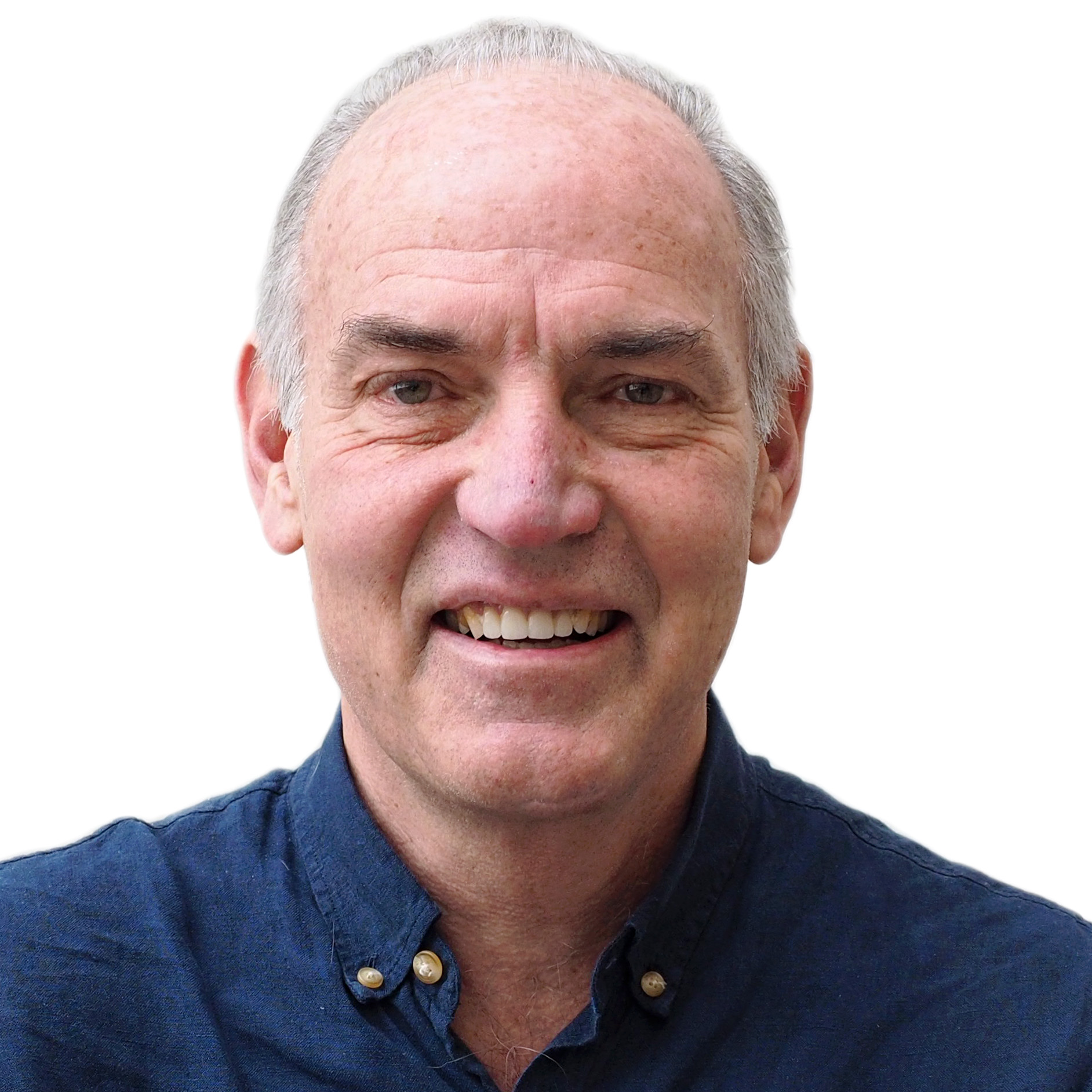
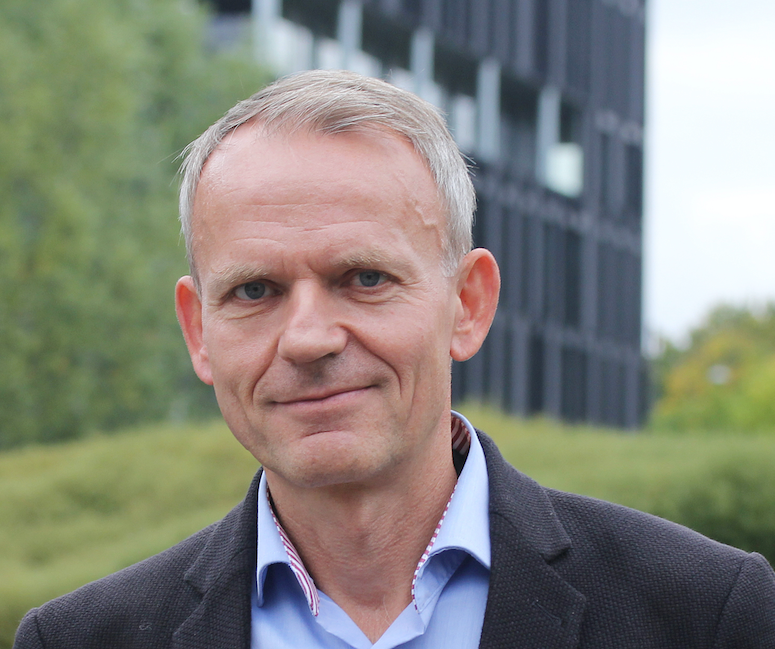
Dr. Ngoc Nha Vi Tran is an Associate Professor of Computer Science at UiT The Arctic University of Norway. She holds a PhD from UiT and was a visiting scholar at Rutgers University, USA. Her research focuses on high-performance and energy-efficient computing, machine learning, and bioinformatics. She is a member of the NORA.startup Steering Group and leads the Arctic Green Computing Group. Education: PhD in Computer Science (UiT), M.Sc. in Software Engineering via Erasmus Mundus (Blekinge Institute of Technology, Sweden & Technical University of Kaiserslautern, Germany). Research interests include energy-efficient algorithms, bioinformatics tools (e.g., vCOMBAT), and applications of machine learning in healthcare and robotics. She teaches courses such as INF-2200 Computer Architecture, INF-2900 Software Engineering, and INF-2202 Concurrent Programming. Her work spans computational models for antibiotic target-binding, runtime energy optimization (REOH framework), and power models for embedded systems (RTHpower/ICE). She contributed to the EXCESS project on energy-efficient computing systems. Labs/Teams: Arctic Green Computing Group, EXCESS consortium.
Sigurd Skogestad is Professor in the Department of Chemical Engineering at the Norwegian University of Science and Technology (NTNU). He serves as Program Leader for the 5-year Master program in Chemical and Biochemical Engineering. His research develops simple yet rigorous methods to solve engineering problems, focusing on self-optimizing control structures that enable near-optimal operation under varying conditions. His approach moves economic optimization from slow real-time optimization to faster control layers. Key research areas: Self-optimizing control structures Process systems engineering Multivariable feedback control Plantwide process control Distillation modeling and control He has received significant recognition including the AIChE Computing in Chemical Engineering Award and IFAC Fellow status. He leads research groups in Process Control and contributes to the SUBPRO center on subsea production.
Elena Marianne Pummer is a Professor in the Department of Civil and Environmental Engineering at NTNU. She specializes in hydraulic engineering, with a focus on hydrodynamics, sediment transport, and glacial lake outburst floods (GLOFs). Her research integrates experimental modeling, CFD simulations, and field studies to address challenges in hydropower, flood mitigation, and infrastructure design. Education: Dr.-Ing., RWTH Aachen University, Germany (2016) Dipl.-Wirtsch.-Ing., TU Darmstadt, Germany (2011) Research Interests: Her work spans hydraulic structures, ethohydraulics, and the dynamics of high-speed flows. She leads projects on GLOF hydraulics, underground pumped storage plants, and culvert blockage analysis. Key areas include sediment transport modeling, experimental validation of CFD frameworks, and sustainable hydropower solutions for climate resilience. Publications: Recent work addresses GLOF mechanisms in Peru, spillway capacity optimization, and CFD studies of supercritical flows. Her publications emphasize practical applications in infrastructure design and environmental risk management. Awards: 2019: DTK & WasserWirtschaft Studienpreis (3rd place) 2018: Young European Talent Award 2017: Friedrich-Wilhelm and ICOLD Young Engineers Awards Leadership & Projects: She chairs committees including IAHR's Hydraulic Structures and EERA's Hydropower SP2. Current projects include RenewHydro (sediment management), HydroCen (hydraulic structures), and Energydam (non-powered dam retrofitting). Advising: Supervises PhD students in GLOF hydraulics (Jan Hrebrina) and InSpillyFish (Nils Solheim). Past advisees include Subhojit Kadia (supercritical flows) and Joakim Sellevold (culvert hydraulics). Labs/Teams: Leads experimental hydraulics research at NTNU, collaborating with global institutions on projects like Pen@Hydropower (hydropower potential analysis) and Kajak Waves (nature-based infrastructure solutions).
Mina Mirhosseini is a Research Fellow at the Faculty of Logistics, Molde University College, Norway. She holds a PhD in Computer Science from Shahid Beheshti University of Tehran, Iran, and has prior academic experience as a faculty member and lecturer in Iran and as a remote teaching assistant at the University of Hertfordshire, UK. Her primary research interests include Optimization Methods, Metaheuristics, Heuristics, Linear Integer Programming, Parallel Processing, Machine Learning, Artificial Intelligence, and Logistics. She has made significant contributions to solving complex computational problems such as the n-similarity problem and Mixed Integer Linear Programming (MILP) models using hybrid and parallel algorithms, particularly in the context of high-level synthesis and wireless sensor networks. The analysis of her recent publications reveals a strong focus on developing and applying advanced optimization techniques, especially quantum-inspired gravitational search algorithms and parallel genetic algorithms, to real-world engineering and computational challenges. Her work consistently emphasizes performance improvement, scalability, and load balancing in distributed and heterogeneous computing environments. Mina Mirhosseini has an extensive publication record in high-impact journals such as IEEE Transactions on Parallel and Distributed Systems, Journal of Parallel and Distributed Computing, Journal of Supercomputing, and Computers and Electrical Engineering. Her research has been published across a range of venues, reflecting interdisciplinary work at the intersection of computer science, electrical engineering, and applied optimization. She has actively contributed to the academic community through roles such as program committee member and executive committee member for conferences on fuzzy systems, swarm intelligence, and evolutionary computation. Her academic journey includes teaching and research roles in Iran, demonstrating a sustained commitment to higher education and scientific inquiry. Mina Mirhosseini is part of the research group focused on Planning, Optimization and Decision Support at Molde University College. Her current work continues to advance the state-of-the-art in parallel and metaheuristic optimization methods, with applications in logistics, synthesis, and sensor network design.
Mulu Bayray Kahsay is a Researcher at the Department of Electric Energy, Norwegian University of Science and Technology (NTNU). Previously, he served as an Associate Professor at Mekelle University, Ethiopia. He holds a PhD (Dr. techn.) from Vienna University of Technology, Austria. His research focuses on renewable energy technologies, including solar energy systems in Nordic climates, thermal energy storage integration, and optimizing wind farm performance. He is a core member of the Team Solar Energy Technology Network (EnergyNET), a NORHED II project advancing off-grid energy solutions for heating and cooling with thermal storage. His teaching includes courses like ELDI 1001 Renewable Energy Informatics and specialized graduate courses in Wind Energy, Solar Technologies, and Experimental Methods. Supervision activities include MSc theses on renewable energy systems for schools/farms and PhD projects addressing wind turbine aerodynamics, solar industrial heat systems, and wind farm performance analysis. Research collaborations span validation of wind climatology models in Ethiopia, biomass stove efficiency studies, and solar fryer innovations for sustainable cooking. His work bridges laboratory solutions with field applications, emphasizing cost-effective renewable energy deployment in diverse contexts.
Tian Li is an Adjunct Associate Professor at the Department of Energy and Process Engineering, Faculty of Engineering, Norwegian University of Science and Technology (NTNU). Based at the Varmeteknisk building on the Gløshaugen campus, Dr. Li is affiliated with the ComKin Group and has been actively involved in numerous research projects focused on biomass conversion and combustion technologies since 2011. Dr. Li's research primarily focuses on: Biomass gasification and combustion technologies Computational Fluid Dynamics (CFD) modeling of energy conversion processes Multiphase flow and reaction kinetics in thermochemical processes Turbulence modeling in combustion systems Development of simulation tools for bioenergy applications Over the past decade, Dr. Li has led or contributed to multiple significant research projects funded by the Norwegian Research Council and industrial partners, including BioCarbUp, GASPRO, GrateCFD, GAFT, BioCarb+, CenBio, and GasBio. These projects have focused on optimizing biomass conversion processes for sustainable energy production. Dr. Li's publication record shows consistent contributions to high-impact journals in the energy and combustion fields, with a strong emphasis on computational modeling approaches. The research demonstrates expertise in developing and validating models for biomass conversion processes, with applications ranging from industrial-scale biomass furnaces to fundamental particle-level phenomena. Dr. Li has developed significant expertise in various computational tools and programming languages: Software: OpenFOAM, ANSYS Fluent, ANSYS ICEM CFD, Star-CD, MFiX, CHEMKIN, LOGEsoft, LabVIEW Programming: C/C++, Python, Fortran, Matlab Through participation in major research centers like CenBio (Bioenergy Innovation Centre), Dr. Li has contributed to advancing Norway's bioenergy research capabilities and fostering collaboration between academia and industry in the sustainable energy sector.
Lars Magne Lundheim is a Professor at the Department of Electronic Systems at Norwegian University of Science and Technology (NTNU). He holds an MSc and PhD in electrical engineering from NTNU. His career includes roles as Associate Professor (2002–2010), Research Scientist at SINTEF, and part-time academic positions. He belongs to the Signal Processing Group and focuses on signal processing for radar systems, power consumption optimization, and engineering education. His research spans technical domains like multicarrier communication systems and pedagogical innovations such as project-based learning and curriculum design. Notable contributions include work on sustainability integration in STEM education and competency development through active learning strategies. Lundheim is a Senior Member of IEEE and has reviewed for major journals/conferences including IEEE Transactions on Signal Processing. Recent publications emphasize educational frameworks linking mathematics with engineering practice, while earlier works address technical challenges in radar distortion correction and power-efficient multiplier design. He has contributed to 16 PhD examination committees and teaches courses like TTT4270 (Electronic System Design) and TTT4260 (Electronic System Design and Analysis). Lundheim’s outreach includes presenting at events like the Læringsfestivalen and collaborating on national initiatives like the 'Fremtidens teknologistudier' educational strategy report. His interdisciplinary work bridges technical innovation with pedagogical excellence in electrical engineering education.
Daniel Baltensperger is a Postdoctoral Fellow at NTNU affiliated with the Department of Electric Energy and Department of Language and Literature . His academic rank is classified as Research Fellow . Research Focus: Specializing in power systems and grid stability, Baltensperger's work explores hardware-in-the-loop simulation, dynamic state estimation, system protection schemes, and under-frequency load shedding. His research emphasizes adaptive algorithms for critical contingency management and real-time validation of smart grid technologies. Publications Trends: Recent works (2021–2023) focus on power system resilience, synchrophasor integration, and predictive control strategies. Collaborative efforts include co-authoring with Santiago Sanchez Acevedo, Salvatore D'Arco, and Kjetil Uhlen. Contact: Email: daniel.s.baltensperger@ntnu.no . Address: Elektro E/F, Gløshaugen, NTNU.
Roger Skjetne is a Professor in Marine Control Engineering at the Norwegian University of Science and Technology (NTNU), affiliated with the Department of Marine Technology under the Faculty of Engineering. His research focuses on autonomous ships, dynamic positioning systems, energy and power management for hybrid-electric vessels, Arctic stationkeeping, and ice management systems. He leads the SFI Autoship research center, which aims to advance autonomous ship technology for safe and sustainable operations in Arctic and maritime environments. Key projects include DigitalSeaIce (multiscale sea ice observation), ENDURE (safety solutions for autonomous ships), and ZEVS (zero-emission passenger vessel systems). His work integrates control systems, robotics, and environmental monitoring to address challenges in marine autonomy and energy efficiency. Skjetne’s research has produced over 150 publications since 2020, with a focus on hybrid control barrier functions, energy optimization, and autonomous navigation. He collaborates with industry partners to translate academic findings into practical maritime solutions.
Edmund Førland Brekke is a Full Professor at NTNU's Department of Engineering Cybernetics, specializing in autonomous maritime systems. He leads major projects like Autosea, Autosit, Autosight, and SFI Autoship. His research focuses on estimation theory, target tracking, SLAM, and collision avoidance for autonomous ships. He has held roles including Project Manager for key initiatives and was a Research Fellow at NUS's Acoustic Research Lab. Brekke teaches courses on sensor fusion and nonlinear state estimation. PhD: NTNU (2010), MSc: NTNU (2005) Research interests include sensor fusion, maritime navigation, and autonomous system safety. He supervises over 20 PhD students in topics like radar tracking, SLAM, and digital twins. His publications span collision avoidance algorithms, multi-sensor integration, and autonomous vessel control. He co-founded Zeabuz and collaborates on projects like Autoferry and AutoBarge. Recent work emphasizes maritime target tracking, scenario-based collision risk assessment, and sensor fusion for autonomous ferries. His contributions advance autonomous vessel autonomy and regulatory compliance with COLREGs.
Idelfonso Nogueira is an Associate Professor in the Department of Chemical Engineering at NTNU. His research focuses on integrating artificial intelligence, advanced control systems, and digitalization to address industrial challenges, particularly in chemical processes and product development. He leads the AiP²S² framework, emphasizing synergies between AI and traditional engineering methods. Education: PhD in Chemical and Biological Engineering (University of Porto, 2018), Visiting Researcher at Tampere University of Technology (2016–2018), and multiple master’s degrees from Brazilian and Portuguese institutions. Research Interests: Process optimization using AI, hybrid modeling, digital twins, and Industry 4.0/5.0 applications. Collaborations span universities, institutes, and industries globally. Teaching focuses on preparing engineers for modern industrial demands. Publications: Over 60 manuscripts, with 70% in Q1 journals (e.g., Chemical Engineering Science , Computers and Chemical Engineering ). Key areas include pressure swing adsorption, machine learning for process control, and fragrance molecule design. Grants/Advising: Active in parameter estimation, process modeling, and renewable energy projects. No explicit student advising list provided. Labs/Teams: Engages in AI-driven process systems engineering, digital twin development, and sustainable technology initiatives.
Frank Eirik Abrahamsen is an Associate Professor in the Department of Sport and Social Sciences at the Norwegian School of Sport Sciences. He earned his PhD in 2007 with research focused on performance anxiety in elite sports. With extensive practical experience, Abrahamsen has worked with international-level athletes across more than 40 sports, participated in four Olympic Games and four Paralympic Games, and consulted with the Norwegian national male soccer team. His research interests center around creating optimal environments for development, wellbeing, and peak performance across all athletic levels. Abrahamsen's scholarly work primarily explores motivation, stress, anxiety, focus and concentration within applied sport psychology contexts. His recent publications demonstrate a broadening scope that now includes rehabilitation science, particularly examining how sports-based interventions benefit individuals with acquired brain injuries. Abrahamsen's teaching portfolio spans bachelor's degrees in training, coaching and sports psychology, master's degrees in coaching and sports psychology, and PhD-level instruction on practical research ethics and privacy. His work on projects like Mind in Motion (MiM) and research into health-compromising behaviors among Norwegian youth athletes reflects his commitment to translating theoretical knowledge into practical applications that benefit athletes at all levels.
Sohail Umer is a University Lecturer in the Department of Electrical Technology at UiT The Arctic University of Norway, specializing in power electronics and energy systems. His work focuses on improving power quality, control techniques, and energy efficiency in standalone and grid-connected systems. Research group: Electromechanical Systems Project: DeHigh His research explores advanced control strategies for power electronic converters, particularly Current Source Converters and Modular Multilevel Converters, with applications in renewable energy integration, microgrids, and smart grid technologies. Recent publications highlight innovations in adaptive modulation techniques, overlap-time mitigation, and hybrid PV-battery systems. Key themes include energy storage optimization, distributed generation, and converter design for standalone applications. Collaborations span institutions like UiT and include co-authors such as Trond Østrem, Bjarte Hoff, and Andrei Blinov. His work addresses challenges in renewable energy systems, including grid stability, harmonic reduction, and multi-port converter efficiency.
Dag Sjøberg is a Professor at the Department of Informatics (Ifi), University of Oslo . He also holds a part-time position at SINTEF Digital . His research focuses on empirical software engineering with emphasis on development processes , agile methodologies , technical debt , and programming skill assessment . Research Interests: Empirical methods (controlled experiments, case studies) Construct validity frameworks Agile and Lean practices Microservices architecture Software quality and maintainability Scientific Achievements: Led Simula Research Laboratory's Software Engineering department ranked #1 globally (2004-2008) Developed Guidelines for Construct Validity in software engineering research Extensive publication record in top venues like IEEE Transactions and Journal of Systems and Software Academic Background: Cand.scient. in Informatics (University of Oslo, 1987) PhD in Software Engineering (University of Glasgow, 1993) Professional Involvement: Co-founder and board member of three IT companies Former research director at Simula Research Laboratory (2001-2008) Current head of the Programming and Software Engineering research section at Ifi
Hugo Lewi Hammer er professor ved Oslo Metropolitan University, tilhørende Faculty of Technology, Art and Design og Department of Information Technology – Mathematical Modeling . Hans forskning fokuserer på forbedring av pålitelighet og transparens i maskinlæring, forsterkende læring og dyb læringsmodeller gjennom metodikk innen modelltolkning, usikkerhetskvantifisering, robust statistikk og kausal inferens. Hans nylige arbeid inkluderer: AI-drevet optimering i assistert reproduksjonsteknologi (embryoutvalg og sædcelleanalyse) Medisinsk bildebehandling (polypdeteksjon, meibomkertutgang) Neural nettverkstolkning og usikkerhetsmodellering i EEG-analyse Biomekanisk prediksjon av muskelutmatting Hans publikasjoner viser mangfoldige anvendelser av AI i medisin og teknologi, med spesialvekt på: Explainable AI (XAI) i diagnostikk og behandling Usikkerhetskvantifisering i dyb læring Automatisering av medisinske prosedyrer (ICSI, embryoanalyse) Stokastisk simulering og kausal inferens Hammer er engasjert i forskningsgruppene Applied Artificial Intelligence og Mathematical Modeling og har publisert over 130 vitenskapelige artikler og 7 forskningsrapporter.