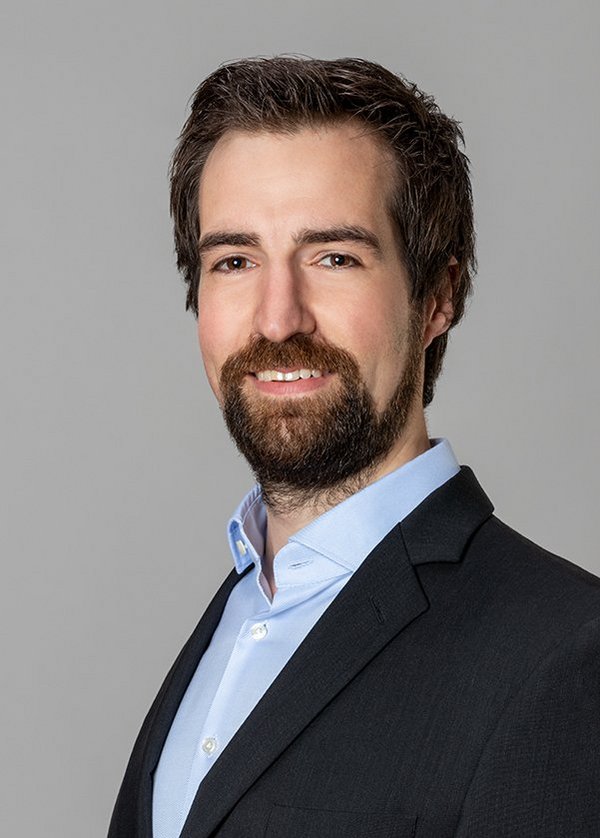
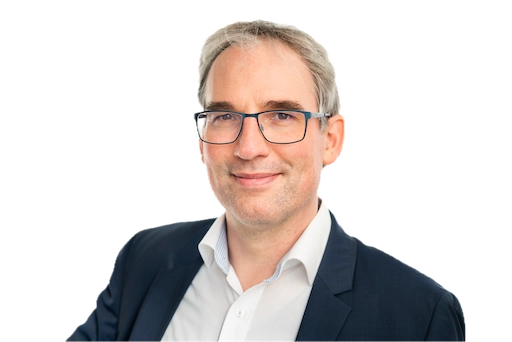
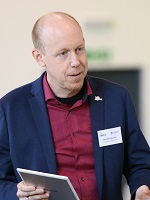
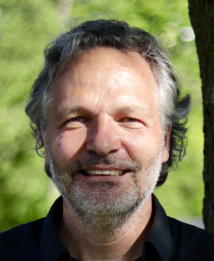
Fabian Khateb is a prominent researcher in low-voltage analog circuit design, with over 100 publications indexed in DBLP from 2010 to 2025. He collaborates extensively with Montree Kumngern and Tomasz Kulej, focusing on operational transconductance amplifiers (OTAs), current conveyors, and their applications in biomedical signal processing. His work emphasizes ultra-low power consumption (nanowatt to microwatt ranges) and sub-1V operation for portable/wearable health devices. Research Interests: Low-voltage analog IC design Biomedical signal conditioning Current-mode circuits OTA-based filters and oscillators CMOS technology optimization Publication Trends: His recent IEEE Access papers (2024-2025) explore mixed-mode filters, shadow oscillators, and bilinear filter designs. Earlier works in Circuits Syst. Signal Process. and Sensors address rail-to-rail amplifiers, rectifiers, and memristor emulators for adaptive systems.
Pubudu N. Pathirana is a Professor at the University of Melbourne's College of Engineering, specializing in Blockchain Technology, Edge Computing, Federated Learning, and Machine Learning for Healthcare . His work bridges theoretical advancements with practical applications in smart cities, cyber-physical systems, and medical diagnostics. Education : PhD in Electrical Engineering, Monash University His research focuses on privacy-preserving machine learning and blockchain integration with edge networks , demonstrated through collaborations with Dinh C. Nguyen, Minh K. Quan, and Bipasha Kashyap. Key contributions include quantum-enhanced models for acoustic classification and federated learning frameworks for IoT environments. Recent publications (2025) highlight advancements in spatio-temporal traffic modeling , adaptive privacy clipping , and secure client aggregation . Earlier work (2021-2024) explored applications in Covid-19 detection , Friedreich Ataxia severity classification , and entropy-based cerebellar ataxia analysis . He mentors students like Ali Reza Sattarzadeh and Kanishka Ranaweera, with grants supporting projects on blockchain-enhanced federated learning and quantum-inspired edge computing . His lab collaborates with institutions such as Monash University and the Florey Institute of Neuroscience.
Géza Szabó is a Researcher at Ericsson Research in Budapest, Hungary. His work focuses on advanced networking solutions for industrial and robotic systems, particularly in 5G/6G integration, network resource management, and AI-driven automation. He has extensively contributed to optimizing wireless resource allocation in industrial IoT environments and enhancing network performance through programmable data planes. Key areas: Network Co-Design, Industrial Automation, Reinforcement Learning Notable collaborations: József Peto, Sándor Rácz, Rafael Antonello His research bridges theoretical advancements with practical implementations, addressing challenges in real-time systems and quality-of-control (QoC) for cyber-physical processes. He has pioneered solutions for multipath channel switching in ROS2 and 3GPP frameworks, and developed adaptive traffic reduction techniques using SDN/NFV architectures. Recent work includes the FATHER project (Factory on the Road) exploring agile industrial production cells and the application of digital twins for network-physical system synchronization. His publications span top venues like IEEE Access, GLOBECOM, and ICC, reflecting his deep engagement with both academic and industry-relevant networking challenges.
Md. Munjure Mowla is an active researcher at Curtin University's School of Electrical Engineering, Computing and Mathematical Sciences, with a strong publication record spanning from 2014 to 2024. His work primarily focuses on next-generation wireless communications, with particular expertise in 5G/6G networks, energy efficiency, and resource allocation strategies. Dr. Mowla's research interests center around sustainable wireless communications, with a growing emphasis on 6G technologies and cell-less network architectures. His work explores innovative approaches to resource management, energy efficiency in backhaul networks, and the integration of emerging technologies like Free Space Optics (FSO) and mmWave for next-generation wireless systems. Recent publications demonstrate an increasing focus on sustainability in 6G networks, workload prediction in virtualized RAN environments, and the application of machine learning techniques to wireless resource management. Analysis of his recent publications (2021-2024) reveals a clear research trajectory toward more sustainable and intelligent wireless network architectures. His work shows a significant shift from traditional cellular approaches to cell-less RAN architectures, with increasing attention to energy efficiency metrics and sustainability frameworks. The publications demonstrate strong collaboration patterns, particularly with researchers from Curtin University including Iftekhar Ahmad, Daryoush Habibi, and Quoc Viet Phung, as well as international collaborators from European institutions. Dr. Mowla has contributed significantly to the understanding of resource allocation challenges in heterogeneous wireless environments, with publications spanning top-tier journals like IEEE Access, IEEE Transactions on Green Communications and Networking, and Computer Networks, as well as prestigious conferences including GLOBECOM, CSCN, and PIMRC. His research output shows consistent growth and increasing impact in the wireless communications domain, with recent work exploring the integration of quantum technologies and machine learning in next-generation networks.
Matthew Watson is a researcher at Durham University , Department of Computer Science, UK. His work spans Computer Science , Artificial Intelligence , and Human-Computer Interaction , with a focus on autonomous systems , semantic search , and pedagogical tools . Research Trends : Recent publications include applications of machine learning in adaptive cruise control , UAV-based wildlife tracking , and deep learning frameworks like KerasCV/KerasNLP. Earlier work involved mathematical combinatorics and cognitive modeling in dialogue systems. Collaborations : Co-authored with Navid Mohajer, Darius Nahavandi, Ashok K. Krishnamurthy, and others in domains like robotics, bioinformatics, and software engineering. Publications include 13 peer-reviewed articles from 2008–2025, covering topics in control systems , knowledge graphs , and algorithm design .
Dr. Donghun Lee is a Professor in the School of Mechanical Engineering at Soongsil University, South Korea. His research focuses on interdisciplinary areas spanning Machine Learning, Wireless Communications, and Control Systems. He holds a PhD from Princeton University (2019), where his dissertation explored Learning to Learn Optimally: A Practical Framework for Machine Learning Applications with Finite Time Horizon . His work bridges theoretical advancements with practical applications in IoT, manufacturing systems, and signal processing. Research Interests : - Machine Learning (Reinforcement Learning, Deep Learning) - Wireless Communications (Secrecy Communications, MIMO Systems) - Control Systems (Power Electronics, Optimization) - IoT Networks and Smart Manufacturing Recent Trends in Publications : Dr. Lee's recent work emphasizes practical applications of AI in manufacturing (e.g., OLED display scheduling), secure wireless protocols, and efficient neural network architectures. His 2025 papers highlight contributions to financial network analysis and sparse coding techniques for low-latency communications. Awards & Grants : No awards explicitly listed in the text, but his extensive publication record suggests sustained research funding. Labs/Teams : Collaborates widely across disciplines, with affiliations to robotics, signal processing, and semiconductor research groups.
Carlos Ramos is a researcher affiliated with the University of Porto's Faculty of Engineering and the Polytechnic Institute of Porto's GECAD Research Group. He holds a PhD in Electrical Engineering and Computers from the University of Porto (1993). His work focuses on AI applications in energy systems, ambient intelligence, and agent-based systems. Ramos has collaborated extensively with researchers like Zita A. Vale and Sabah Mohammed on projects involving smart grids, manufacturing optimization, and cyber-physical systems. Research Interests : His primary areas include artificial intelligence, smart grids, machine learning, agent-based systems, and ambient intelligence. Recent work emphasizes explainable AI models in building energy management and genetic algorithms for industrial scheduling. Publications : Ramos has over 138 publications spanning journals like Engineering Applications of Artificial Intelligence and IEEE Transactions on Intelligent Systems . Key themes include AI-driven energy optimization, IoT applications in smart cities, and multi-agent systems for market simulation. His work often bridges theoretical AI with practical industrial and healthcare applications. Labs/Teams : Active in the GECAD Research Group, focusing on intelligent engineering solutions. Collaborates with international partners on projects like the Mascem electricity market simulator and the ISEM agent-based marketplace.
Dr.-Ing. Nico Zengeler is a Researcher at the Institute for Neuroinformatics within Ruhr-Universität Bochum's Faculty of Computer Science. His work focuses on developing machine learning solutions for industrial automation challenges, particularly in waste management systems. Research interests span: Theory of Machine Learning : Foundational algorithms and models Reinforcement Learning : Environment design and application frameworks Industrial Automation : Robotic systems for sorting and processing Computer Vision : Sensor-based volume estimation Sustainable Technology : Waste management optimization Recent publications demonstrate a consistent focus on industrial applications of AI, with 2024-2025 works addressing waste sorting challenges through reinforcement learning environments and computer vision solutions. This reflects a research trajectory toward practical implementations in recycling infrastructure. As part of the Theory of Machine Learning group at INI, Zengeler contributes to interdisciplinary research bridging neuroscience, robotics, and artificial intelligence. The institute's mission emphasizes understanding biological cognition to inform artificial systems.
Stephan Westerdick is a Researcher at the Department of Electronic Circuits, Faculty of Electrical Engineering and Information Technology at Ruhr-University Bochum. His work focuses on advanced analytical instrumentation, plasma-based sensor systems, and microsystem technologies. Key research areas include microplasma dynamics, miniaturized mass spectrometry, and AI-driven spectral analysis. He has contributed to the development of lab-on-a-chip systems and ultrasonic process monitoring solutions. His interdisciplinary approach integrates plasma physics, MEMS fabrication, and machine learning for applications in chemical analysis and industrial process control. Recent publications highlight innovations in time-of-flight micro mass spectrometers, fouling detection via ultrasound, and AI-enhanced NMR/Mass Spectrometry. His work bridges fundamental plasma research with practical engineering challenges in sensor design and process optimization. Westerdick collaborates with institutions like FHR (Forschungszentrum Jülich) on projects involving plasma edge layers and terahertz technology. His team's research is applied in energy-efficient systems, medical engineering, and next-generation analytical tools.
Ruediger Ehlers is a Professor for Embedded Systems at Clausthal University of Technology, focusing on formal methods , automated reasoning , and cyber-physical systems . His research aims to bridge formal methods and artificial intelligence to enhance the efficiency and reliability of computational systems. University: Clausthal University of Technology Institute: Institute for Software and Systems Engineering Research Interests: His work centers on making correct-by-construction design processes more efficient, particularly through reactive synthesis , verification of finite- and infinite-state systems , and runtime monitoring . He has developed tools like slugs and planet for synthesis and neural network verification. Publications Trends: Recent articles emphasize temporal logic , reinforcement learning under constraints , and algorithm engineering for practical applications in manufacturing and quantum computing. Scientific Awards: Volkswagenstiftung Momentum endeavor (2023) Grants and Projects: He leads the EU/H2020 Project SAFE-10-T (2021) and secured funding from the German Science Foundation (2016) for synthesizing GUI code. His Open-MPW-6 program (2023) involves hardware implementation of runtime monitoring.
Dr. Anastasia Barabash is a Researcher at the Chair of Materials for Electronics and Energy Technology within the Department of Materials Science and Engineering at Friedrich-Alexander-Universität Erlangen-Nürnberg (FAU). Her work focuses on advanced materials for photovoltaic applications, particularly perovskite solar cells, organic photovoltaics, and light management systems. She is actively involved in high-throughput material synthesis and characterization projects. Research Areas: Perovskite Solar Cells, Lead-Free Perovskites, Hole Transport Materials, Quantum Dots, Thin-Film Technology, Light Management Key Collaborations: Helmholtz Institute Erlangen-Nürnberg for Renewable Energy (HI ERN), FAU Solar Profile Center Her recent publications highlight breakthroughs in inverted perovskite architectures, scalable aerosol-jet printing, and lead-free luminescent materials. She contributes to optimizing charge extraction layers and exploring novel hole transporters through inverse design workflows. Dr. Barabash's work intersects materials science and renewable energy technology, with a strong emphasis on manufacturability and stability improvements for next-generation solar devices.
Professor Michael Schmidt serves as the head of the Institute of Photonic Technologies (LPT) within the Department of Mechanical Engineering at Friedrich-Alexander-Universität Erlangen-Nürnberg (FAU). His research focuses on advanced laser-based manufacturing technologies with particular emphasis on additive manufacturing processes and laser materials processing. The institute maintains state-of-the-art facilities for laser processing research and collaborates extensively with industrial partners in the automotive, medical device, and manufacturing sectors. Professor Schmidt's research interests span laser-based additive manufacturing of metals and polymers, with particular expertise in powder bed fusion (PBF-LB/M), directed energy deposition (DED-LB/M), laser beam shaping, and laser welding technologies. His work addresses fundamental challenges in process optimization, material-property relationships, and quality assurance in additive manufacturing. Recent research has focused on improving process stability for challenging materials like copper, developing novel beam shaping techniques, and advancing in-situ monitoring capabilities for industrial applications. His group maintains strong expertise in both experimental and computational approaches to laser materials processing. Analysis of Professor Schmidt's recent publications reveals a strong focus on advancing the scientific understanding of laser powder bed fusion processes, particularly regarding melt pool dynamics, scan strategy optimization, and material-property relationships. His work spans both metallic and polymer materials systems, with significant contributions to understanding the effects of laser wavelength, beam shaping, and process parameters on final part quality. The research demonstrates strong interdisciplinary connections between mechanical engineering, materials science, and photonics. Professor Schmidt leads a substantial research group comprising numerous doctoral students and postdoctoral researchers who contribute to his extensive publication record. His team collaborates with multiple industrial partners on applied research projects focused on implementing advanced laser processing technologies in industrial manufacturing environments. The research group benefits from state-of-the-art laser processing equipment and characterization facilities at FAU. The Institute of Photonic Technologies under Professor Schmidt's leadership maintains specialized laboratories for laser materials processing, including facilities for metal and polymer additive manufacturing, laser welding, and advanced optical diagnostics. The institute houses multiple laser systems with varying wavelengths and power capabilities, enabling comprehensive research across different material systems and process conditions. The research environment emphasizes both fundamental scientific investigation and practical industrial implementation of laser processing technologies.
Daniel Lohmann is a Full Professor and Fachgebietsleiter (Head of Department) at the Department of Operating Systems and Middleware within the College of Engineering and Computer Science at Leibniz Universität Hannover . His research focuses on operating system construction , embedded systems , and dependable real-time systems , with a strong emphasis on generative approaches , software product lines , and hardware-RTOS co-design .
Prof. Dr.-Ing. Christian Grimme is an Associate Professor and Extraordinary Professor in the Department of Information Systems at the University of Münster. He leads the Computational Social Science and Systems Analysis research group. His roles include acting professorships, research group leadership, and academic co-direction of the ERCIS Competence Center for Social Media Analytics. He holds a Dr.-Ing. in Computer Science and has extensive postdoctoral and habilitation experience. Education Timeline: 2015–2018: Habilitation and venia legendi in Information Systems 2006–2012: PhD in Computer Science (Dr.-Ing.) 1999–2006: Diploma in Computer Science Research Interests focus on Multiobjective Evolutionary Computation, Social Media Analysis, Disinformation Detection, and AI Ethics. His work bridges algorithmic innovation (e.g., optimization algorithms) with societal challenges (e.g., automated propaganda detection). Recent projects include analyzing Large Language Models' role in disinformation mitigation and real-time social media content analysis using human attention mechanisms. Awards include the Best Teaching Award (2024), PPSN XIV Best Paper Award (2016), and multiple travel grants from ACM and DAAD. He actively participates in conferences like GECCO and EMO, contributing to both theoretical and applied research. Advising and grants highlight his role in guiding over 20 theses, spanning Master's and Bachelor's projects in IS/WI. Notable grants include DAAD-funded collaborations and internal university funding for projects like MODERAT! (moderation tools) and ERCIS SMA Competence Center. Labs/Teams: Leads the Computational Social Science & Systems Analysis group, collaborating with global partners via ERCIS. Engages in initiatives like CLAIRE and the Integrity & Security Initiative to address AI ethics and information security challenges.
Heiko Wagner is a Professor of Movement Science at the University of Münster since 2006. He holds a PhD in Physics (2000) and Habilitation in Social and Behavioral Sciences (2004). His research focuses on self-stability, motor control, and chronic back pain. He leads projects on biomechanics, neuromuscular modeling, and injury prevention, collaborating with institutions like CeNoS (Center for Nonlinear Science). Key contributions include studies on joint contact forces, spinal inhibition, and skateboarding interventions for ADHD. Education: 1989–1995: Studied Sports and Physics at Johann Wolfgang Goethe University Frankfurt am Main 2000: PhD in Physics, Goethe University 2004: Habilitation in Social and Behavioral Sciences, Friedrich Schiller University Jena Research Interests: Neuromuscular control and spinal stability Mechanisms linking pain and motor function Biomechanics of human movement (running, sprinting, jumping) Applications in sports medicine and injury prevention Grants & Projects: InterKI: Interdisciplinary program on machine learning (2021–2025) EVOC: Bicycle backpack airbag development (2023–2025) Smart TechTic: Inertial sensor-based motion capture (2022–2025) Chronic pain modeling for diagnostics (2010–2013) Advising: Supervised over 30 PhD/Master’s students, including work on spinal reflexes, sports biomechanics, and neuromuscular adaptations.