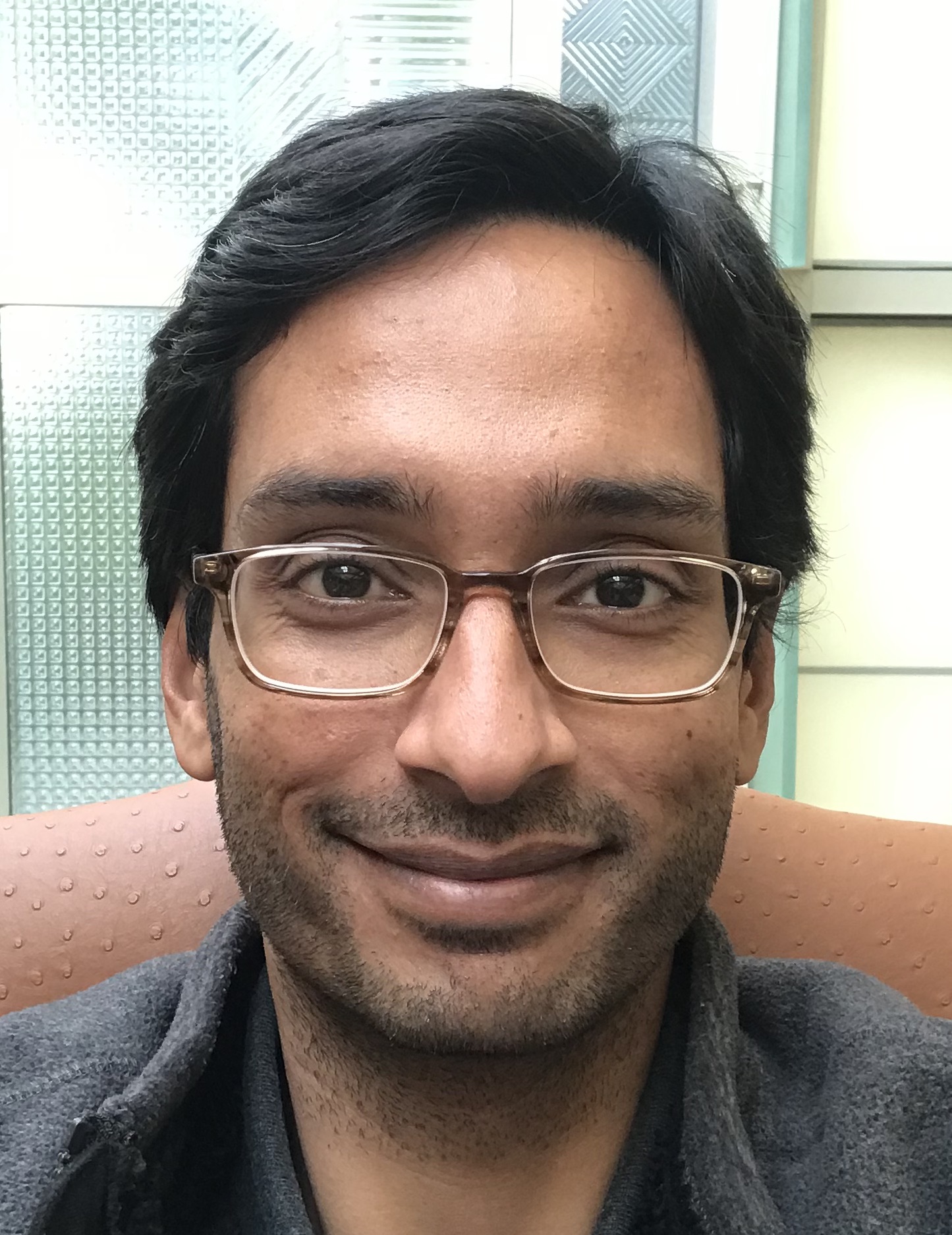
Dr. Konstantin Bauman is an Associate Professor in the Department of Management Information Systems at Temple University's Fox School of Business. He holds a PhD in Mathematics (Geometry and Topology) from Moscow State University and dual Master’s degrees in Mathematics and Machine Learning from prestigious Russian institutions. His research focuses on machine learning, data science, and context-aware recommender systems, emphasizing novel methods for predicting customer preferences and designing personalized recommendation frameworks. Education: PhD in Mathematics (Geometry and Topology), Moscow State University MS in Mathematics, Moscow State University MS in Machine Learning, Moscow Institute of Physics and Technology/Yandex School of Data Analysis Research Interests: Data Science and Analytics Machine Learning and Recommender Systems Context-Aware Systems and Text Mining Technology-Enhanced Learning Recent Work Trends: His publications emphasize context-aware recommendation algorithms, privacy concerns in personalized systems, and applications of hyperbolic embeddings. He also explores device impact on employee feedback and cryptocurrency investor behavior using multimodal data analysis. Awards: None explicitly listed in the provided materials. Advising/Grants: No formal advisees listed; his work at Yandex and NYU involved leading machine learning teams and tackling large-scale data science challenges. Labs/Teams: Active in the MIS department at Temple, contributing to research on adaptive learning systems and enterprise machine learning applications.
Dr. Shanna Williams is an Assistant Professor in the Department of Educational and Counselling Psychology at McGill University's Faculty of Education. She holds clinical licensure in Quebec and Ontario, with expertise in forensic child psychology and maltreatment-related research. Her work focuses on child lie-telling, commercial sexual exploitation, moral development, and eyewitness testimony. Prior roles include a postdoctoral fellowship at the University of Southern California’s Gould School of Law and forensic law enforcement collaboration in Los Angeles. Education: Ph.D., McGill University: School/Applied Child Psychology M.A., McGill University: Educational Psychology B.A., McGill University: Psychology Postdoctoral Visiting Fellow, University of Southern California Research Interests: Lie-Telling Dynamics: Investigating how cognitive and social factors influence children's deception across contexts. Child Maltreatment: Developing trauma-informed forensic interview protocols and assessing maltreatment impacts on memory and disclosure. Legal Systems: Enhancing child-witness support through improved questioning techniques and cross-cultural legal practices. Publications Trends: Her recent work emphasizes pandemic-era challenges in child protection, digital exploitation, and legal system adaptations. Over 20 peer-reviewed articles address topics like forensic interviewing methods, maltreatment detection, and interdisciplinary collaboration. Awards: SSHRC Postdoctoral Fellowship (2016-2017) SSHRC Joseph-Armand Bombardier CGS Doctoral Fellowship (2010-2013) Advising & Grants: Supervises graduate students in child psychology and maltreatment studies. Research funded by SSHRC, NSF, and NIH grants focusing on forensic child development. Labs/Teams: Child Interviewing & Witness Lab Canadian Child Interviewing Research Team
Jens Kreitewolf is a Faculty Lecturer in the Departments of Psychology and Mathematics and Statistics at McGill University. He teaches courses in statistics, research methodology, and psychophysics. His research focuses on auditory cognition, speech comprehension, and the neural mechanisms underlying voice perception. Dr. Kreitewolf holds a Ph.D. (Dr. rer. nat.) from Humboldt University of Berlin and completed postdoctoral fellowships at BRAMS and the University of Lübeck. His work combines experimental psychology, neuroimaging, and psychophysics to explore auditory processing challenges in adverse listening conditions. Key interests include how familiarity with a talker’s voice aids comprehension and the impact of hearing impairment on speech perception. Education: M.Sc. in Psychology (Ruhr University Bochum, 2009); Ph.D. in Psychology (Humboldt University of Berlin, 2014). Research Interests: Auditory scene analysis and speech-in-noise processing Voice recognition and familiarity effects Neural correlates of perceptual decision-making Circadian rhythms and perceptual sensitivity Cognitive neuroscience of auditory attention Publications highlight contributions to understanding: Risk factors for depression symptom progression Self-concept clarity in romantic evaluations Neurobiological mechanisms of working memory vulnerability Vestibular symptoms in migraine patients His interdisciplinary approach bridges psychology, statistics, and neuroscience, with applications to clinical populations and sensory processing disorders.
France Bouthillier is an Associate Professor and Associate Dean of Graduate and Postdoctoral Studies at McGill University's School of Information Studies. She holds a PhD from the University of Toronto and multiple advanced degrees in library science, administration, and education from Quebec institutions. Her research focuses on competitive intelligence, healthcare information systems, and small business information needs. She has led major grants including a SSHRC-funded study on children’s cyber-safety and CIHR projects on evidence dissemination in healthcare. Education: PhD, Faculty of Information Studies, University of Toronto MBSI, École de bibliothéconomie et des sciences de l'information, Université de Montréal C. Admin, Département des sciences de l'administration, UQAM BEd, Département des sciences de l'éducation, UQAM Research Interests: Dr. Bouthillier investigates digital resource assessment in healthcare, cross-cultural competitive intelligence practices, and information needs of marginalized communities. She emphasizes collaborative information monitoring and user-centered design in information systems. Her work bridges theory and practice, addressing gaps in evidence-based decision-making. Grants & Awards: Competia Award (2003) for co-authored book on CI software assessment SSHRC Standard Research Grant (2005-2008) on CI technology use CIHR grants for healthcare evidence dissemination (2006, 2008) Professional Involvement: Editorial Board member of the Journal of Information Science Theory and Practice, ASIST member, and SSHRC grant reviewer. She co-developed the eSRAP system for patient-oriented research monitoring. Her lab focuses on interdisciplinary projects in information visualization and collaborative tools.
Chris De Sa is an Associate Professor in the Department of Computer Science at Cornell University, affiliated with the Cornell Machine Learning Group and leading the Relax ML Lab. His research focuses on algorithmic, software, and hardware techniques for high-performance machine learning, particularly relaxed-consistency stochastic algorithms like asynchronous and low-precision stochastic gradient descent (SGD). He earned his Ph.D. from Stanford University under advisors Kunle Olukotun and Chris Ré. His work emphasizes constructing efficient, parallel, and distributed machine learning frameworks for deep learning and data analytics. Education: Ph.D. in Computer Science, Stanford University (2017) Research Interests: Algorithmic techniques for scalable ML, quantization, distributed optimization, hyperbolic geometry in ML, and reliable measurement of ML systems. His group develops frameworks for efficient inference/training and explores the intersection of ML with domains like agriculture and plant science through courses like PLSCI 7202. Recent Highlights: DARPA YFA Grant (2024), NSF CAREER Award, Google Research Scholar Award, and multiple best paper recognitions. Key contributions include QuIP quantization methods, Coneheads attention mechanisms, and theoretical advances in decentralized training. Awards: NSF CAREER Award DARPA YFA Grant (2024) Google Research Scholar Award Mr. & Mrs. Richard F. Tucker Teaching Award Grants & Advising: Advises 8 Ph.D. students (including Ruqi Zhang, Yucheng Lu, A. Feder Cooper) and holds leadership roles in MLSys conferences. Active in grant-funded research (e.g., NSF Robust Intelligence). Labs/Teams: Leads the Relax ML Lab and participates in Cornell’s Institute for Digital Agriculture (CIDA).
Snehal Banerjee is a Professor of Finance at the Stephen M. Ross School of Business, University of Michigan. He holds the Michael R. and Mary Kay Hallman Faculty Fellowship. Previously, he served as Associate Professor at UC San Diego's Rady School of Management and Northwestern University's Kellogg School of Management. His research focuses on financial markets' information dynamics, liquidity, and behavioral aspects, particularly how investors process information and regulatory policies impact market efficiency. Education: Ph.D. in Finance from Stanford University (2007); B.A. in Economics, Mathematics, and Computer Science from Brandeis University (2002). He has advised multiple Ph.D. students now at institutions like Chinese University of Hong Kong and INSEAD. Research interests include investor disagreement, strategic trading, and transparency effects. Notable publications explore topics like SPACs' theoretical foundations, information acquisition strategies, and securities lending market dynamics. His work has received awards including the RFS Young Researcher Prize and the AES Notable Working Paper Award. Teaching spans PhD and MBA courses in finance theory, asset pricing, and financial management. He serves on editorial boards for Journal of Financial Economics and Management Science, and has held roles in academic service committees at both Ross and Rady Schools.
Elizabeth Bruch is an Associate Professor of Sociology and Complex Systems at the University of Michigan, serving as Associate Director of the Institute for Data and AI in Society. She holds External Faculty status at the Santa Fe Institute and is affiliated with the Center for Population Studies. With a Ph.D. from UCLA and an M.S. in Statistics, her research integrates choice modeling, network science, and agent-based simulations to study individual decisions in social environments. Key areas include residential segregation, dating markets, and higher education. Education: Ph.D. and M.S. in Sociology/Statistics (UCLA), B.A. in Sociology (Reed College) Affiliations: Santa Fe Institute, Institute for Advanced Study Berlin Her work has been published in Science , PNAS , and American Journal of Sociology , earning awards like the ASA Methodology Innovation Prize and the Merton Prize. Her upcoming book Date Like a Local (Princeton, 2026) explores urban influences on romantic behavior. Bruch’s research addresses societal challenges through computational methods, including pandemic modeling during the 2020 crisis and algorithmic analysis of dating markets. She serves on Santa Fe Institute’s Science Steering Committee and collaborates across disciplines to advance complexity science.
Michael Smith is the McCosh Professor of Philosophy at Princeton University. He holds a DPhil from Oxford University (1989) and has been a faculty member since 2004, previously at the Australian National University. His research focuses on ethics, moral psychology, philosophy of mind, political philosophy, and philosophy of law. Smith’s work integrates constitutivist theories of practical reason with analyses of moral agency. He has contributed to debates on moral rationalism, the nature of reasons for action, and the relationship between rationality and normativity. Education: MA, Monash University (1980); BPhil (1983), DPhil (1989), University of Oxford Smith’s scholarship emphasizes the interplay between ethical theory and psychological explanations of agency. Recent publications explore topics like carbon capture technologies, cultural clashes in moral reasoning, and probabilistic forecasting in oceanography. His philosophical contributions address foundational questions in meta-ethics, including the ‘moral problem’ and the implications of constitutivism for normative frameworks. He advises on interdisciplinary projects at the intersection of philosophy and emerging technologies. Notable research trends include applying philosophical analysis to environmental ethics and developing frameworks for resolving moral dilemmas through rational agency models. His work often bridges analytic philosophy with empirical inquiries in psychology and social science.
Dr. Thijs Broekhuizen is an Associate Professor at the University of Groningen's Faculty of Economics and Business, specializing in Innovation Management & Strategy. He currently serves as Scientific Director of the University of Groningen Business School, Coordinator of the Northern-Netherlands Innovation Monitor, and Programme Director of the Executive MBA. His research focuses on digital transformation, value creation in innovation, and digital business models, with interdisciplinary insights bridging strategy, innovation, and digitalization. Education: PhD in Marketing (University of Groningen, 2006) MSc in Marketing (University of Groningen, 2001) Research Interests: Broekhuizen explores value appropriation in technology-driven contexts, digital business models, and strategic responses to disruptive technologies. His work emphasizes SMEs' digital transformation challenges, organizational identity during technological change, and AI-driven innovation management. Key areas include digital platforms, motion picture industries, and social media dynamics. Grants & Projects: TALENT4S3 (€165K, Interreg 2024-2028) SIRM (€189K, Interreg 2023-2027) NWO-funded studies on construction industry profitability and online customer journeys Awards: Best Paper Award at ISoF 2021 Best Short Paper Award Nomination 2021 Teaching & Leadership: Broekhuizen teaches strategy and digitalization in executive programs and has led the MScBA and EMBA initiatives. His educational roles include Programme Director of the Executive MBA (Energy Transition, Health, Sustainable Business Models tracks) and member of the Groningen Digital Business Centre. Labs/Teams: He coordinates the Northern-Netherlands Innovation Monitor (surveying 10,000+ SMEs) and collaborates with the Groningen Digital Business Centre to advance digital strategy research.
Wenping Wang is a Professor in the Department of Computer Science & Engineering at Texas A&M University, part of the College of Engineering. His research focuses on computer graphics, computer vision, geometric modeling, and visualization. He holds Fellowships from ACM and IEEE, and has received notable awards including the 2021 AsiaGraphics Outstanding Technical Contributions Award and the 2017 John Gregory Memorial Award. Wang's educational background includes a Ph.D. from the University of Alberta and M.Eng. and B.Sc. degrees from Shandong University. His work spans advancements in neural implicit surfaces, 3D reconstruction, and medical imaging applications such as orthodontic treatment prediction. He has authored numerous influential papers in top-tier conferences like SIGGRAPH and journals like ACM Transactions on Graphics. His research interests emphasize bridging geometric modeling with machine learning, particularly in neural rendering, surface parameterization, and medical visualization. Recent projects include developing frameworks for automatic tooth alignment and high-fidelity 3D geometry generation. Wang's contributions have significantly impacted both theoretical foundations and practical applications in computer graphics.
Andrea Megela Simmons is a Professor at Brown University in the Department of Cognitive, Linguistic, and Psychological Sciences with a secondary appointment in the Department of Neuroscience . She is a member of the Carney Institute for Brain Science and serves as a Principal Investigator on an ONR MURI project. Education : A.B. from the University of Pennsylvania (1973), Ph.D. from Harvard University (1978), Postdoctoral research at Cornell University Simmons specializes in cognitive and neural mechanisms of sound perception and communication across species including frogs, bats, dolphins, and humans. Her work bridges behavioral neuroscience, comparative neurology, and developmental studies to explore auditory processing, echolocation, and sensory integration. Her recent publications highlight interdisciplinary trends in auditory neuroscience, focusing on sound exposure effects, metamorphic neurodevelopment, and sensory-motor coordination in cluttered environments. Key subfields include echolocation, lateral line function, tectal connectivity, and acoustic adaptation across species. Scientific Awards : Fellow, Acoustical Society of America Simmons has received grants from the Office of Naval Research (ONR) for MURI projects and has taught courses such as Animal Behavior , Evolution and Development of the Brain , and Auditory Perception Laboratory .
Suzanne Stevenson is a Professor in the Department of Computer Science at the University of Toronto, affiliated with the Cognitive Science Research Community (CoRC). She holds a BS in Computer Science and Linguistics from William & Mary and MS/PhD in Computer Science from the University of Maryland. Before joining UofT in 2000, she was faculty at Rutgers University with joint appointments in Computer Science and Cognitive Science. Her research focuses on computational cognitive models of language acquisition and processing, integrating insights from linguistics, psycholinguistics, and machine learning. Key areas include semantic/syntactic learning from text, probabilistic computational models of word learning, and cross-situational learning. Notable awards include the NSERC University Faculty Award (2000) and NSF CAREER Award (1997). Her work bridges computational linguistics and cognitive science, emphasizing multidisciplinary approaches. Recent publications (2014–2018) explore topics like probabilistic perspective models in language production, bilingual word associations, and semantic search algorithms. She advises on computational linguistics and cognitive modeling, with grants supporting investigations into language acquisition dynamics and semantic networks. Active in teaching, she previously offered courses on computational linguistics and the computational lexicon. Her lab’s research themes include child language acquisition, ambiguity resolution, and computational modeling of linguistic phenomena.
Dr Anandadeep Mandal is an Associate Professor in Finance and the Scotcoin Distinguished Chair of Digital Finance at the University of Birmingham , within the Birmingham Business School and the Department of Finance . He is the founding director of the MSc Financial Technology programme and the Programme Director for the MBA (Distance Learning), demonstrating significant leadership in academic program development. Education: PhD in Probability Distribution Fitting, Cranfield University (2016) MRes in Management Science, Cranfield University (2012) MSc in Finance and Investments, Durham University (2008) Bachelor’s in Electronics Engineering Research Interests: Dr Mandal’s interdisciplinary research lies at the intersection of mathematical modelling, artificial intelligence, finance, and digital innovation . His work focuses on AI-enabled investment strategies , blockchain for financial transparency , ESG performance measurement , and the development of the Sustainable Efficiency Index (SEI) . He also pioneers AI applications in digital education , including a patent-pending platform for automated grading of multi-modal student submissions using ensemble AI methods. Publication Trends: His recent scholarly output spans high-impact journals and conferences, reflecting a strong focus on digital finance , climate and social media analytics , cryptocurrency regulation , and AI in financial forecasting . His work combines advanced data science techniques with real-world policy and financial applications, particularly in sustainability and public health. Scientific Awards: No specific awards are mentioned in the provided text. Advising and Grants: Dr Mandal has secured over £2 million in research funding from sources including UKRI, UoB QR Funding, and industry partners. While specific students are not listed, his role as programme director and research leader suggests active mentorship. His research has direct policy impact through collaborations with the NHS Trusts , NIHR , and the UK Government . Labs, Teams, and Impact: Dr Mandal leads a research agenda that bridges academia and public policy. His work extends beyond the university through public engagement at science festivals, outreach for young learners, and expert contributions to UK Parliamentary consultations on AI, sustainability, and financial innovation. He is a key figure in advancing digital finance education and research at the University of Birmingham.
Michael Lepech is a Professor of Civil and Environmental Engineering and Senior Fellow at the Woods Institute for the Environment at Stanford University. His research focuses on integrating sustainability into civil engineering through quantitative assessment and multi-scale modeling, particularly via the Sustainable Integrated Materials, Structures, Systems (SIMSS) framework. He also leads the Stanford Center at the Incheon Global Campus (SCIGC) in South Korea, exploring smart city technologies for urban sustainability. Education : PhD in Civil and Environmental Engineering (2006), MBA in Finance and Strategy (2008) from the University of Michigan. Research Areas : Sustainable infrastructure design, biopolymer composites, life cycle assessment, digital twinning, smart city technologies, and multi-physics deterioration modeling. Leadership : Director of SCIGC, advancing research on smart and sustainable urban environments in Songdo, South Korea. His recent publications focus on biopolymer-bound composites, traffic signal optimization, and life cycle sustainability analysis. He has received recognition as a Senior Fellow at Stanford’s Woods Institute for environmental research.
Hamsa Bastani is an Associate Professor of Operations, Information and Decisions at the Wharton School, University of Pennsylvania, with a secondary appointment in Statistics and Data Science. She co-directs the Wharton Healthcare Analytics Lab and serves as an Associate Editor for Operations Research, M&SOM and OR Letters. Her academic journey began with summa cum laude graduation from Harvard in 2012 with an A.M. in physics and A.B. in physics and mathematics. She completed her PhD in Stanford's Electrical Engineering department under Mohsen Bayati, followed by a Herman Goldstine postdoctoral fellowship at IBM Research. Professor Bastani's research focuses on developing novel machine learning algorithms for data-driven decision-making, with applications spanning healthcare operations, social good, and revenue management. Her work demonstrates particular expertise in sequential decision-making (bandits, reinforcement learning), learning from auxiliary data sources (transfer learning, meta-learning), and designing effective human-AI interfaces (interpretability, fairness). She has made significant contributions to understanding how AI systems affect and augment human behavior, with the goal of designing AI tools that help humans thrive. Her publications reveal a strong trend toward high-impact applications of machine learning in critical societal domains. A significant portion of her recent work focuses on healthcare applications, including optimizing health supply chains in low- and middle-income countries, designing clinical trial protocols, and creating targeted public health interventions. Another major theme examines the complex relationship between humans and AI systems, particularly how AI affects learning outcomes and decision-making processes. Her work frequently bridges theoretical advances with practical implementation, as evidenced by country-scale deployments in Greece and Sierra Leone. Wagner Prize for Excellence in Operations Research Practice (2021) Pierskalla Award for Best Paper in Healthcare (2021, 2019, 2016) Behavioral OM Best Paper Award (2021) Public Sector in OR Best Paper Award (2024) INFORMS Data Mining Best Paper Award (2022) Wharton Teaching Excellence Award (2019, 2020, 2021) Professor Bastani has advised numerous PhD students who have gone on to prominent positions, including Pia Ramchandani (Director of Responsible AI at PwC), Arielle Anderer (Assistant Professor at Cornell Johnson), and Kan Xu (Assistant Professor at ASU Carey). Her research has been supported by collaborations with national governments, including the Greek government where she co-designed Eva, the national-scale reinforcement learning system for targeted COVID-19 testing, and the Government of Sierra Leone where she improved patient access to essential medicines by nearly 20% via decision-aware learning. She has also conducted the first large field study deploying generative AI tutors in high school math classes. She leads the Wharton Healthcare Analytics Lab and serves on the Steering Committee for the Penn Center for Health Incentives and Behavioral Economics and on the statistics advisory committee for the AHA Food is Medicine Initiative. Outside academia, she serves on the Workday AI Advisory Board, demonstrating her commitment to translating academic research into practical applications.