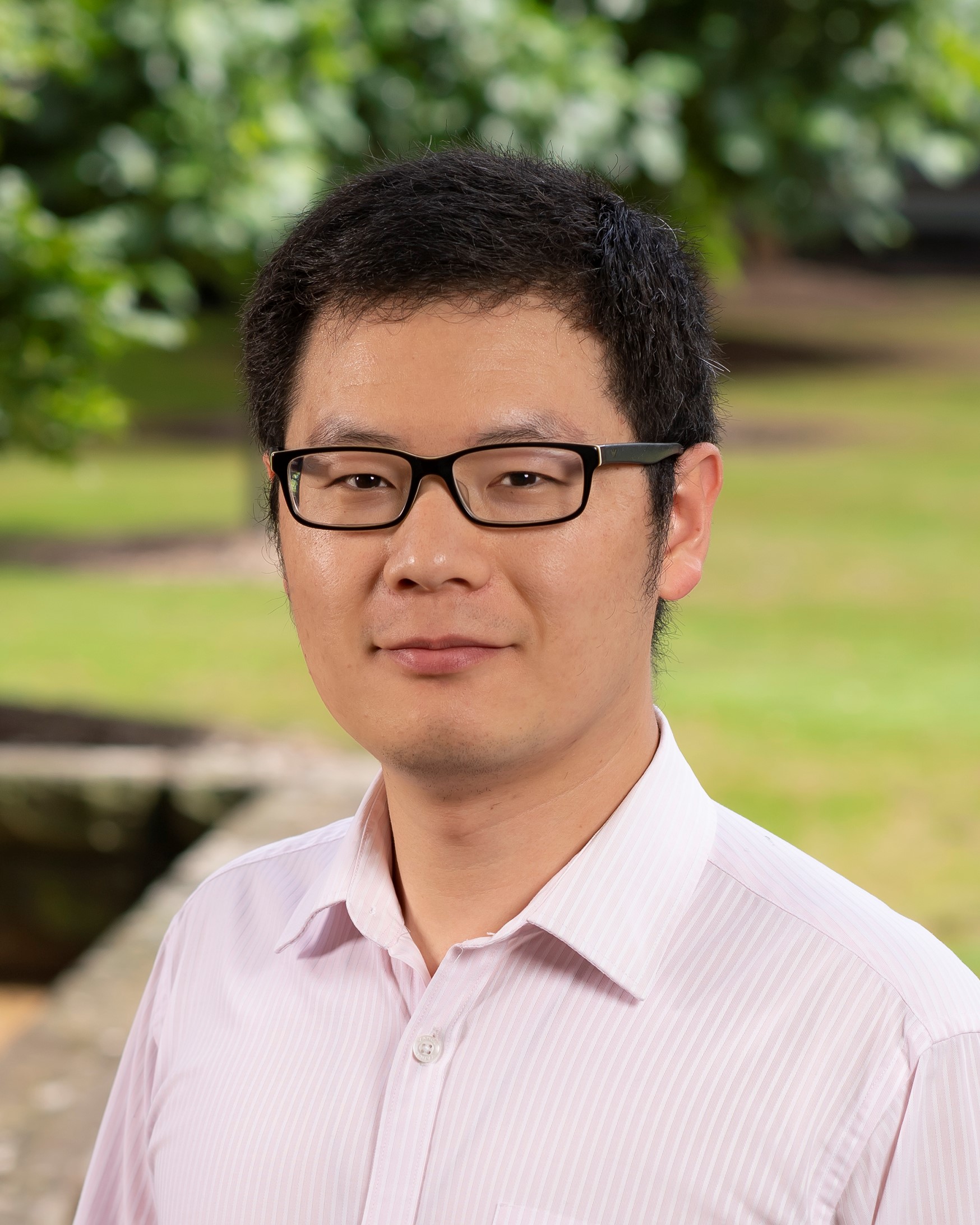
Matthew Stephenson is a Lecturer at Flinders University's College of Science and Engineering, specializing in Artificial Intelligence applications for games. He leads the Data for Decisions initiative within the Factory of the Future Transdisciplinary Hub, focusing on AI-powered scenario generation for smart digital twins. Additionally, he is a member of IRL CROSSING, an international lab studying human-autonomous agent teaming dynamics. PhD in Computer Science (Australian National University, 2019) B.Sc.(Hons) in Computer Science (University of Canterbury, 2015) His research applies AI, Machine Learning, and Data Science to game domains, including intelligent agent development for physics-based environments, procedural content generation, and game analytics. He also investigates deceptive behaviors in multi-agent systems and leverages games as testbeds for real-world AI solutions. Recent publications focus on large language models for game benchmarking, physical reasoning challenges, and evolutionary game generation. Scientific awards include an honourable mention at Foundations of Digital Games (FDG'18). He supervises students in procedural generation, game AI, and physics-based task creation, with teaching roles in computational intelligence and neural networks courses.
Asim Qayyum is a Senior Lecturer at Charles Sturt University's School of Information & Communication Studies, where he leads the Libraries Research Group. With over two decades of experience in library and information science, his work bridges academic research and professional practice through ongoing projects with ACT libraries and other library sectors across Australia. His educational background includes a PhD from the University of Toronto specializing in Information and Knowledge Management, an undergraduate degree in Electrical Engineering, and an MBA with a focus on Management Information Systems. His career path transitioned from engineering and business analysis to library science practice and academia, with previous positions at the University of Toronto and the University of Puerto Rico's School of Information Sciences. Dr. Qayyum's research focuses on evaluating library impact on communities, information practices of diverse populations including refugees and young adults, online academic reading behaviors, and knowledge management in library settings. His work examines how library and information services can be improved and enhanced to meet evolving community needs in contemporary society. Recent projects have investigated supervision styles in LIS education, service delivery costing for public libraries, and the role of libraries in supporting underserved populations. His publication record spans nearly 60 research outputs from 2002-2024, with consistent scholarly productivity including recent articles on diversity in library hiring practices, community engagement through library programming, and knowledge management in the Australasian region. His work demonstrates strong methodological diversity with both qualitative and quantitative approaches. Faculty's competitive research award (2010) Professional Excellence award (2016) Outstanding Paper for 2013, Journal of Documentation Best paper prize from ASIS&T New England chapter (2004) Research grant from OCLC (2007) As an educator, Dr. Qayyum supervises PhD students and contributes to curriculum development in library and information studies. He serves on the Faculty of Arts and Education Human Ethics Committee and maintains active collaborations with library professionals across Australia and internationally. His current research continues to strengthen the connection between academic research and professional library practice, ensuring libraries maintain their vital role in creating informed and information-literate communities.
Emille Boulot is a Lecturer in Law at the University of Tasmania's School of Law, affiliated with the Faculty of Law. She holds a PhD in Environmental Law and Regulation from McGill University (2023) and a Master’s in Environmental Governance from UTas (2019). Her research focuses on environmental law, legal theory, political ecology, and evidence-informed policy, with an emphasis on interdisciplinary approaches to ecological restoration governance. Professional Affiliations: Member of the Centre for Marine Socioecology, Society of Ecological Restoration, and Earth Systems Governance Project. She serves on the editorial board of the Australian Environment Review and steering committee of the Earth System Law Task Force. Education: Doctor of Philosophy (McGill University, Canada, 2023) Masters of Environmental Governance (UTas, Australia, 2019) Graduate Diploma of Legal Practice (UTas, Australia, 2013) Bachelor of Laws (Monash University, Australia, 2012) Bachelor of Science (Monash University, Australia, 2012) Research Interests: Environmental law and governance Ecological restoration and policy Legal theory and political ecology Climate change adaptation frameworks Recent Projects: Consultancy with the Society of Ecological Restoration (2025) to develop global legal frameworks for ecosystem restoration. Key deliverables include standardized restoration terminology, legislative templates, and regulatory processes. Teaching: Courses include Contract Law (LAW251), Law Review (LAW325), and Private Law Obligations and Remedies (LAW262) at the University of Tasmania. Awards: TEL Best Article Prize (2022), Lionel Murphy Postgraduate Scholarship (2021–2022).
Dr. Leo Wu is a Senior Lecturer at the School of Mechanical and Manufacturing Engineering, University of New South Wales (UNSW), Sydney, Australia. He earned his BS and PhD in Mechanical Engineering from Tsinghua University, followed by postdoctoral roles at National University of Singapore (2014-2015) and Queensland University of Technology (QUT) as a Vice-Chancellor’s Research Fellow (2016-2018). From 2016-2020, he was affiliated with the Australian Centre for Robotic Vision, an ARC Centre of Excellence. PhD in Mechanical Engineering, Tsinghua University (2013) BS in Mechanical Engineering, Tsinghua University (2008) His research focuses on medical robotics , particularly flexible robots and intelligent perception systems for minimally invasive surgery . He has also made significant contributions to Lie groups theory in robotics , kinematic modeling and calibration for surgical and industrial robots, and wearable assistive technologies . His work integrates soft robotics with variable stiffness mechanisms and multimodal sensing , often leveraging machine learning and control engineering to enhance robotic autonomy and precision. Scientific awards include prestigious fellowships such as the QUT Vice-Chancellor’s Research Fellowship , QUT ECARD/VCRF Travel Fellowship , and Associate Fellowship of Higher Education Academy . He has received multiple academic honors from Tsinghua University and national scholarship programs. Dr. Wu actively supervises HDR students, focusing on surgical robotics and teleoperated orthopaedic systems . His research portfolio includes grants from the ARC Discovery Projects , UNSW MME RIS , and QUT internal schemes , covering topics like bioinspired flexible haptics , vision-guided robotic assembly , and precision motion capture systems . Collaborations extend to institutions like QUT, NUS, and clinical partners in robotic vision.
Sarah Hopkins is an Associate Professor in the Faculty of Education at Monash University , dedicated to reducing educational inequalities through interdisciplinary research in Mathematical Cognition and inclusive education. Her work integrates cognitive psychology and mathematics education to address learning difficulties, particularly among students from disadvantaged backgrounds and those with intellectual disability. Developed the Keyboard , a visual-spatial tool to enhance arithmetic strategy development Coordinated the Keep on Learning (KoL) Program for adults with intellectual disability Current ARC Discovery Project examines classroom applications of the Keyboard for lower primary students Research Interests span mathematical cognition, retrieval strategies, procedural flexibility, and inclusive pedagogy. Her projects often involve collaborations with the Spencer Foundation , ARC , and Ecstra Foundation , focusing on tool development, assessment design, and teacher training. Methodological Expertise includes Rasch analysis, microgenetic approaches, and mixed-methods research. She works with interdisciplinary teams to validate measurement scales and analyze longitudinal learning outcomes, particularly for marginalized groups.
Liang Zheng is a Senior Lecturer in the School of Computing at The Australian National University (ANU). He holds a Computer Science Futures Fellowship and an ARC DECRA Fellowship. His research focuses on computer vision applications such as person re-identification and medical image understanding, alongside fundamental challenges in dataset-level learning and synthetic data analysis. Zheng has contributed to influential datasets like Market-1501, PRW, and MARS, advancing person re-identification and multi-camera tracking. He has served as Area Chair for CVPR, ECCV, and ACM Multimedia, and is an Associate Editor for IEEE T-CSVT. Education: PhD (Electrical Engineering) from Tsinghua University (2015), Bachelor of Science (Life Science) from Tsinghua University (2010). His research integrates deep learning and generative models, addressing challenges in image generation, adversarial robustness, and multi-agent systems. Notable awards include the Computer Science Futures Fellowship (ANU) and ARC DECRA Fellowship (2020). Key contributions include pioneering work on re-identification datasets and methods, as well as advancements in cross-modal retrieval and domain adaptation. Ongoing research emphasizes scalable models, synthetic data generation, and ethical AI practices.
Mark Jenkinson - Professor of Neuro-Imaging Mark Jenkinson is a Professor of Neuro-Imaging at the University of Adelaide, affiliated with the School of Computer and Mathematical Sciences and the Australian Institute for Machine Learning. His primary focus lies in advancing medical image analysis methodologies, particularly in MRI brain imaging. He specializes in developing deep learning, statistical, and model-based techniques for tasks such as anatomical/lesion segmentation, big data analysis, normative modeling, and motion correction. Research Interests: Medical image segmentation and registration Deep learning applications in neuroimaging MRI artifact reduction and harmonization Clinical fMRI for language mapping Biomarker-driven disease progression analysis (e.g., Parkinson’s, multiple sclerosis) Key Contributions: Development of tools like BIANCA-MS for automated lesion segmentation Pioneering work on diffeomorphic networks for brain template creation Advances in multi-site MRI harmonisation frameworks (e.g., FedHarmony) Affiliations: Faculty of Sciences, Engineering and Technology Australian Institute for Machine Learning Grants/Supervision: Eligible to supervise Masters and PhD students in computational neuroscience and medical AI. Active in collaborative projects involving international imaging consortia. Labs/Teams: Leads interdisciplinary teams integrating computer science and clinical neuroimaging for translational research.
Aurelio Gurrea-Martinez is an Associate Professor of Law and Head of the Singapore Global Restructuring Initiative at Singapore Management University's (SMU) Yong Pung How School of Law. He holds a JSM from Stanford University and a Master of Science in Law and Finance from the University of Oxford. His academic roles include teaching Comparative Corporate Governance, International Insolvency Law, and Securities Regulation. He previously served as a Fellow at Harvard Law School's Program on Corporate Governance and has held visiting appointments at institutions like the University of Cambridge and Reichman University. Education: JSM (Stanford), MSc in Law and Finance (Oxford), PhD in Law (CEU San Pablo University), Bachelor of Laws and Business Administration (University of Granada). Affiliations: Lee Kong Chian Fellow (SMU), Member of the OECD Latin America Corporate Governance Roundtable, and Chair of the Insolvency Law Academy’s Task Force on Emerging Markets. His research focuses on corporate insolvency law, business restructuring, and fintech regulation. He has advised governments and international organizations, including the World Bank and the Singapore Ministry of Law. Key publications include Reinventing Insolvency Law in Emerging Economies (Cambridge UP, 2024) and over 30 articles in journals like the European Business Organization Law Review. Awards include the 2024 Cross-Border Insolvency Academic of the Year and the 2021 American Bankruptcy Institute’s 40 Under 40 Award. He has secured grants for projects on litigation funding in insolvency and cross-border restructuring frameworks. He advises on global restructuring strategies, chairs the Singapore Global Restructuring Initiative, and collaborates with institutions worldwide to modernize insolvency laws. His work bridges legal frameworks with economic outcomes, emphasizing policy reforms for emerging markets.
Professor Ilana Mushin is a linguist affiliated with the School of Languages and Cultures at the University of Queensland . Her research focuses on discourse analysis, pragmatics, and the study of Australian First Nations Languages, particularly Garrwa. She is a Chief Investigator on the ARC Discovery Project 'Conversational Interaction in Aboriginal and Remote Australia' (CIARA) and has authored/edited multiple publications on Aboriginal English, classroom interaction, and linguistic typology. Research Interests : Discourse-Cognition-Grammar Interface, Epistemic Stance, Conversation Analysis, Narrative Structure, Language Maintenance, Indigenous Pedagogy. Supervision : Advised PhD/Master's students on topics including Bahasa Indonesian discourse, Vietnamese social competence, and Hijazi Arabic modals. Grants : ARC Discovery Projects (2018-2024, 2015-2019, 2014-2017), MRFF Indigenous Health Research Grant (2021-2023). Publications : Over 60 works including books on Garrwa grammar, Aboriginal English, and edited volumes on Indigenous language and social identity.
Professor Melinda Hodkiewicz is a leading academic at the University of Western Australia (UWA), affiliated with the School of Engineering's Mechanical Engineering department. Her work focuses on advancing maintenance, asset management, and safety practices through data-driven approaches, particularly in Technical Language Processing (TLP) and industrial ontologies. She has held significant roles such as the BHP Fellow for Engineering for Remote Operations (2015–2022) and leadership in the $8.8M Australian Government-funded Training Centre for Transforming Maintenance through Data Science. Research interests include applying TLP to maintenance and safety texts, ontology development for industrial interoperability, and advancing standards like ISO 23726. Awards include the MESA Medal (Lifetime Achievement in Asset Management) and Fellow of the Australian Academy of Technology and Engineering (ATSE). She has contributed to international standards (ISO 55000 series) and served on boards of organizations like NOPSEMA and MRIWA. Her work aligns with UN SDG 4 (Quality Education) and SDG 9 (Industry, Innovation & Infrastructure). Key contributions include developing the Industrial Ontology Foundry's Maintenance Working Group, creating open-source tools like OpenBoltRF for wind turbine analysis, and advancing semantic quality assurance frameworks for maintenance procedures. Her research bridges technical language processing with industrial applications, enhancing safety and operational efficiency in sectors like mining, energy, and offshore engineering. Education: BA(Hons) in Metallurgy (University of Oxford, 1985), PhD in Engineering (UWA, 2014) Grants: ARC Training Centre for Transforming Maintenance (2019–2025), ARC Hub for Offshore Floating Facilities (2014–2021) Advisory Roles: Standards Australia EL-069 (Automation Systems), ISO TC184/SC4 (Industrial Data)
Dr. Li-Ann Leow is a Research Fellow at the Centre for Sensorimotor Performance , affiliated with the School of Psychology in the Faculty of Health, Medicine and Behavioural Sciences at the University of Queensland . She holds a PhD in Motor Learning and Parkinson's Disease from the University of Western Australia, and has held postdoctoral positions at the Brain and Mind Institute (Western University) and the University of Queensland. Research Interests : Mechanisms of sensorimotor adaptation Dopamine's role in motor learning Neurostimulation techniques (tDCS) Rhythm perception and movement disorders Implicit vs explicit learning processes Motor rehabilitation in stroke and Parkinson's Article Trends show focus on neural plasticity , auditory-motor integration , and dopaminergic modulation of motor skills. Her 2025 works highlight error-driven memory consolidation and auditory cueing effects . She explores how brain stimulation reliability affects procedural learning and decision-making in both healthy and clinical populations. Scientific Awards : Honorary Fellow, School of Psychology, University of Queensland Advisory Activities : Available for supervision in motor learning and reward-based movement research Completed supervision of projects on stroke rehabilitation and implicit motor learning
Dr. Rachel Anne Searston serves as an Honorary Senior Lecturer in the School of Psychology at The University of Queensland, where she conducts research at the intersection of perceptual expertise and forensic science. Her work critically examines cognitive processes in expert decision-making, particularly within fingerprint analysis contexts. PhD in Psychology, The University of Queensland (2016) Bachelor of Psychology (Honours), The University of Queensland (2012) Her research program investigates how perceptual expertise develops through training, the transfer of expertise across object categories, and the pervasive influence of contextual biases in forensic identification. She pioneers methodologies for enhancing expert performance while identifying systemic vulnerabilities in high-stakes forensic domains. Current projects focus on optimizing feedback protocols and understanding non-analytic cognition in human fingerprint discrimination. Analysis of her 12 publications (2014-2022) reveals a cohesive trajectory in perceptual expertise research, evolving from foundational studies on fingerprint identification to comprehensive investigations of cognitive bias mechanisms. Her work consistently bridges theoretical cognitive psychology with practical forensic applications, demonstrating increasing emphasis on bias mitigation strategies and training efficacy across recent publications. No formal scientific awards are documented in the source material. As an Honorary Senior Lecturer, Dr. Searston contributes to academic supervision and teaching within UQ's psychology programs. Her research collaborations with forensic practitioners and legal experts, including significant contributions to model forensic science frameworks, indicate active engagement in knowledge translation despite the absence of explicitly stated grant funding in the provided texts. She operates within UQ's forensic psychology research ecosystem through the School of Psychology, maintaining strong collaborative ties with the forensic science research group led by Professor Jason Tangen. Her work frequently interfaces with forensic laboratories and legal institutions through projects addressing real-world identification challenges.
Professor Karen Ginn is a Professor of Musculoskeletal Anatomy in the School of Medical Sciences, Faculty of Medicine and Health at the University of Sydney. She teaches functional, applied anatomy to various health professional groups and maintains a part-time private practice as a musculoskeletal physiotherapist. Professor Ginn is regularly invited to present at national and international conferences and serves as a Visiting Lecturer at the University of Gothenburg, Sweden, where she has designed and teaches a subject entitled "Physiotherapy and Shoulder Rehabilitation" in the MSc program. Professor Ginn's research focuses on the assessment and treatment of shoulder dysfunction, with particular interest in evaluating the validity and reliability of components of the physical examination of the shoulder. Her work spans multiple areas including evidence-based medicine , musculoskeletal diseases , orthopaedics , physiotherapy , and shoulder function . She has developed a continuing education course for health professionals entitled "Functional rehabilitation of shoulder muscles - evidence & application" which she conducts in Australia and internationally. Professor Ginn's extensive publication record, with over 60 publications in prestigious journals such as Journal of Orthopaedic Research and Physical Therapy, demonstrates consistent contributions to understanding shoulder biomechanics, rehabilitation approaches, and clinical assessment methods. Her recent work shows increasing focus on diagnostic imaging for shoulder conditions, cross-cultural adaptation of assessment tools, and the application of electromyography to understand muscle activation patterns in both healthy subjects and patients with shoulder dysfunction. Professor Ginn has held significant leadership roles including Past President of Shoulder & Elbow Physiotherapists Australasia (SEPA) and SEPA representative on the Board of the International Congress of Shoulder & Elbow Therapists. She is also a member of the Australian Physiotherapy Association. 2020: Is online ergonomics training, with & without individual feedback on adherence, effective in reducing musculoskeletal upper limb pain & work performance in sonographers: a cluster randomised trial 2014: The BEST at Home pragmatic fall prevention program: effectiveness, cost effectiveness and implementation (NHMRC Partnership Project) 2005: A comparison of shoulder muscle function in patients with rotator cuff tears and age-matched control subjects 2004: A Randomised, Controlled, Clinical Trial To Evaluate The Efficacy Of Passive Joint Mobilisation Applied To The Shoulder Region Joints For The Treatment Of Shoulder Pain 2002: Rotator cuff muscle activity during shoulder rotation exercises Professor Ginn maintains strong international collaborations, serving as one of three invited international representatives on a project entitled "Shoulder pain in Europe: optimizing management across the lifespan" coordinated by Dr. Karen McCreesh from the University of Limerick, Ireland. She also collaborates with the Royal National Orthopaedic Hospital London on a randomized controlled clinical trial investigating the effectiveness of surgery in the treatment of atraumatic shoulder instability.
Dr. Drew Rae is an Associate Professor in the Safety Science Innovation Lab at Griffith University's School of Humanities, Languages and Social Science. He teaches courses on research methods and safety engineering while managing the lab's research program. Rae holds a Bachelor of Engineering with Honours and Doctor of Philosophy from the University of Queensland, along with a Postgraduate Certificate in Academic Practice from the University of York. His research utilizes ethnography, field experiments, and theory-building to investigate organizational safety practices, focusing on myths, rituals, and habits affecting managerial safety decisions. Rae co-hosts the Safety of Work podcast and serves on the editorial board of Safety Science. His work examines how safety practices influence front-line operations and aims to identify systemic improvements. Rae has secured numerous consultancy grants from organizations including Airservices Australia, Queensland Health, and Ferrovial Construction. These projects focus on safety culture, operational decision-making, and human factors. His publications consistently demonstrate empirical approaches to safety science, emphasizing practical applications in high-risk industries and healthcare settings. Professional recognitions include Fellowship in the Higher Education Academy. Rae actively contributes to industry safety forums and advisory boards, including Queensland Health's Occupational Violence Task Force and the Safety Leadership Program Advisory Board.
Dr. Ann Downton is a Senior Lecturer in Mathematics Education at Monash University's School of Curriculum Teaching & Inclusive Education. Previously, she held roles at the Australian Catholic University (ACU) and worked as a primary school teacher, mathematics specialist, and consultant. Her research focuses on early years mathematics education, multiplicative thinking, and teacher professional development. A key project, the Contemporary Teaching and Learning of Mathematics (CTLM), aimed to enhance teacher pedagogy and student learning through collaborative professional learning. She earned her PhD in 2013 with a study on children's transition to multiplicative thinking. Recent projects include evaluating mathematics approaches in Catholic diocesan schools and investigating teachers' impact on students' multiplicative reasoning. Her research interests span young children's number learning, teacher practices, problem posing, and supporting low-achieving students. Notable awards include the MERGA Research Award (2011) and collaborative grants totaling over $1.5 million. She has led projects such as the 'Supporting Children’s Mathematics Transition to Primary School in Play' and contributed to the Victorian Curriculum Mathematics review. Her work aligns with UN Sustainable Development Goal 4 (Quality Education), emphasizing equitable mathematics learning opportunities. Awards and recognitions highlight her contributions to mathematics education research and program development. Collaborations with institutions like Catholic Education Diocese of Parramatta and Broken Bay reflect her commitment to bridging research and practice in schools.