معرفی
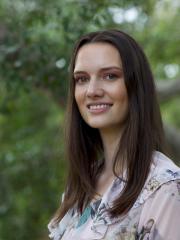
Dr. Rachel Anne Searston serves as an Honorary Senior Lecturer in the School of Psychology at The University of Queensland, where she conducts research at the intersection of perceptual expertise and forensic science. Her work critically examines cognitive processes in expert decision-making, particularly within fingerprint analysis contexts.
- PhD in Psychology, The University of Queensland (2016)
- Bachelor of Psychology (Honours), The University of Queensland (2012)
Her research program investigates how perceptual expertise develops through training, the transfer of expertise across object categories, and the pervasive influence of contextual biases in forensic identification. She pioneers methodologies for enhancing expert performance while identifying systemic vulnerabilities in high-stakes forensic domains. Current projects focus on optimizing feedback protocols and understanding non-analytic cognition in human fingerprint discrimination.
Analysis of her 12 publications (2014-2022) reveals a cohesive trajectory in perceptual expertise research, evolving from foundational studies on fingerprint identification to comprehensive investigations of cognitive bias mechanisms. Her work consistently bridges theoretical cognitive psychology with practical forensic applications, demonstrating increasing emphasis on bias mitigation strategies and training efficacy across recent publications.
No formal scientific awards are documented in the source material.
As an Honorary Senior Lecturer, Dr. Searston contributes to academic supervision and teaching within UQ's psychology programs. Her research collaborations with forensic practitioners and legal experts, including significant contributions to model forensic science frameworks, indicate active engagement in knowledge translation despite the absence of explicitly stated grant funding in the provided texts.
She operates within UQ's forensic psychology research ecosystem through the School of Psychology, maintaining strong collaborative ties with the forensic science research group led by Professor Jason Tangen. Her work frequently interfaces with forensic laboratories and legal institutions through projects addressing real-world identification challenges.