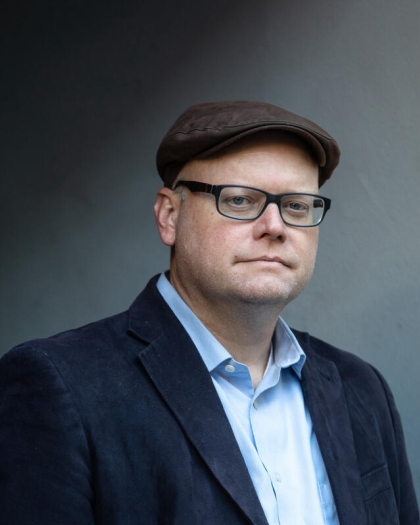
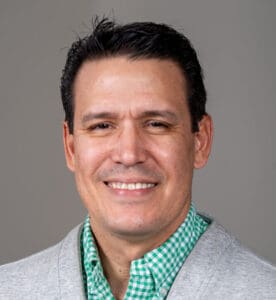
José Angel Araguz is an Assistant Professor of English at Suffolk University, specializing in creative writing and literary studies. His research focuses on Latinx poetics, poetic forms, and experimental literary genres. He holds a PhD from the University of Cincinnati, an MFA from New York University, and a BA from the College of Santa Fe. Dr. Araguz is deeply involved in literary publishing, serving as Editor-in-Chief of Salamander , a member of The Cincinnati Review’s Strategic Board, and an advisory board member for SWING literary journal. He also leads editorial roles at Airlie Press and Right Hand Pointing. His creative work spans poetry, nonfiction, and hybrid genres, with a focus on Latino/a identity, speculative elements, and formal innovation. Major publications include Ruin and Want (2023), La esperanza espera (2023), and Rotura (2022). His research explores blackout poetry, microcuentos, and the intersection of creative writing with cultural critique. He teaches courses like Latinx Literature, Creative Writing, and Poetry Workshops. Office hours are Fridays 10:30 a.m.–1:30 p.m. or by Zoom appointment.
Andrew Campana is an Assistant Professor of Asian Studies at Cornell University's College of Arts and Sciences, specializing in modern and contemporary Japanese literature and media. His research explores the possibilities and limitations of expression during media transitions, with particular focus on poetry, digital media, and disability studies. His academic journey includes a Ph.D. in East Asian Languages and Civilizations from Harvard University and an Honors B.A. in East Asian Studies from the University of Toronto. Campana's first book, Expanding Verse: Japanese Poetry at the Edge of Media , published by the University of California Press in 2024 as an open access work, examines Japanese poetic practice from the 1920s to the present as poets engaged with evolving media technologies including film, tape recording, television, and the internet. As a researcher, Campana's work bridges literary studies, media studies, game studies, and disability studies, with current projects exploring how poetry became a key site of digital experimentation in Japan. His research methodology combines traditional literary analysis with hands-on creative practice, informed by his experiences at MIT's Trope Tank laboratory. His scholarly interests span Japanese media history, disability representation in literature and gaming, digital poetics, and gender studies. His research has received significant media attention, including features in the Cornell Chronicle ('Poets in Japan Experiment at the Edge of Media' and 'Japanese Poets Open New Ways of Thinking About Media'), The Statesman, and interviews on NPR's Academic Minute and the Curiosity Daily podcast discussing his work on gaming and accessibility. As an educator, Campana teaches courses including 'Introduction to Japan,' 'Japanese Poetry,' and 'The Glitch: Errors, Disability, and the Edges of Digital Media' (ASIAN 4703/6703), guiding students through interdisciplinary explorations of Japanese literature, media, and digital culture. His teaching reflects his commitment to understanding media transitions through both theoretical and practical lenses.
Mary Gallagher is Professor of French and Francophone Studies at University College Dublin, affiliated with the School of Languages, Cultures and Linguistics. She has held significant academic appointments at UCD since 1991, progressing from Lecturer to full Professor, and has served as a Visiting Professor in France, China, and Tunisia. Her scholarly leadership includes founding roles in the Association for the Study of Caribbean and African Literature in French (ASCALF) and the Irish Association of French and Francophone Studies (ADEFFI), where she was president from 2006 to 2008. She led the PRTLI-funded 'World Writing in French' research programme and has coordinated multiple Erasmus+ partnerships with institutions in the French Caribbean, Tunisia, and Vietnam. Education: BA in French and German, Trinity College Dublin DEA in French Literature, Université de Paris VII (Denis Diderot) Doctorat ès Lettres, Université de Paris VIII (Vincennes-Saint-Denis), supervised by Henri Meschonnic, viva chaired by Édouard Glissant Higher Diploma in Mediation and Diploma in Arbitration Law and Procedure, University College Dublin Her research focuses on postcolonial Francophone literature, Caribbean studies, Creole identity, migration, and ethical dimensions of writing. She has published extensively on Saint-John Perse, Lafcadio Hearn, and Paul Morand, with a recent emphasis on Holocaust testimony through her critical edition of Paul Léon’s letters from Drancy. Her work bridges literary scholarship, cultural critique, and historical recovery, often engaging with themes of displacement, memory, and transcultural dialogue. The 15 most recent publications illustrate a sustained engagement with global Francophone narratives, from Caribbean poetics and Creole hybridity to Shoah testimony and critiques of academic corporatism. Her scholarship reveals a trajectory from regional Caribbean studies to broader global and ethical concerns, emphasizing literary witness, intercultural translation, and the responsibilities of the intellectual in an age of globalization. Scientific Recognition and Editorial Roles: Editor of 22 issues of the biennial journal of ASCALF Editorial Board member, Journal of French and Francophone Philosophy (US) Editorial Board member, Forum Poetiki (Poland) Editorial committee roles for monograph series at Palgrave, Gallimard, Brill, and Peter Lang As an advisor and grant leader, she has supervised major research programmes and cross-institutional collaborations. She has not advised named students in the provided texts but has mentored through programme leadership and editorial guidance. She convened UCD’s Asia-Pacific Research Forum (2018–2022), now a formal Research Centre. Her work continues to shape interdisciplinary approaches to Francophone and postcolonial studies. Research Groups and Collaborations: Founder, Association of Francophone Postcolonial Studies (formerly ASCALF) President, Irish Association of French and Francophone Studies (ADEFFI, 2006–2008) Convenor, UCD Cross-College Asia-Pacific Research Forum (2018–2022) Initiator of Erasmus+ partnerships with Université des Antilles, Université de Tunis, and Université Nationale du Vietnam Developing an all-island Irish research group on Former French Island Colonies
Professor David Millard is a Professor of Computer Science at the University of Southampton's Electronics and Computer Science department. He serves as Head of the ECS Education Group, leading a team of 15 Teaching Fellows and Senior Fellows to improve teaching and learning across the department. Previously, he was Director of Admissions for ECS from 2012 to 2022. David is a founding member of the Web and Internet Science research group and has been active in the international hypermedia community for over twenty-five years. His professional affiliations include: Chair of the ACM Hypertext steering committee SIGWEB Liaison for ACM Web Science Former vice-chair of ACM SIGWEB (2015-2019) Editorial board member of the New Review of Hypermedia David Millard's research focuses on the intersection of hypertext, digital narratives, and mixed reality games, with particular emphasis on locative literature. His work has helped define 'Sculptural Hypertext' - hypertext governed by rules and constraints rather than navigational links - which is highly suitable for designing narrative structures within digital games. He has been a pioneer in locative narratives, interactive digital narrative games experienced on location-aware smart devices, with work dating back to 2002 at Chawton House. His recent research focuses on understanding the locative narrative design space and proposing the 'Balance of Attention' as the primary poetic of locative narrative. His research has been recognized with multiple awards including the Engelbart Award in 2013 and 2016 for his work on location-based storytelling and sculptural hypertext. His interdisciplinary StoryPlaces project explores the poetics of location-based narratives through digital storytelling deployments in Southampton, Bournemouth, and Crystal Palace. David has authored more than 230 peer-reviewed articles across Technology Enhanced Learning, Web Science, and Hypertext and Narrative, with over 4800 citations and an h-index of 35. His work has been published in prestigious journals including Springer Multimedia Tools and Applications, Elsevier Computers in Education, IEEE Intelligent Systems, PloS one, ACM Transactions on Information Systems, and ACM Transactions on Learning Technologies. He leads a team of PhD students focused on Interactive Narratives and Mixed Reality Spaces and has graduated 34 postgraduate students. His students have pursued careers in academia at institutions like Oxford, Winchester, Bournemouth, and East Anglia, as well as in industry at major technology firms including IBM and Google. David has been instrumental in Open Educational Resources development, creating EdShare in 2010 - an OER platform based on EPrints that now hosts over 20,000 learning items. He has also developed innovative teaching approaches, including modules on Multimedia Systems (which won the Vice-Chancellor's Teaching award), Programming 1, Social Media and Network Science, and Games Design and Development.
Paul Michael Johnson is an Associate Research Professor of Spanish in the Department of Modern Languages and Literatures at Johns Hopkins University's Krieger School of Arts and Sciences. He holds a PhD from the University of California, Irvine, and specializes in the cultural history of early modern Spain through interdisciplinary frameworks including emotion studies, sensory history, and performance theory. His research examines representations of the body, emotions, and cultural encounters in Spanish literary texts, particularly the works of Cervantes. Current projects investigate how soundscapes and voice mediate imperial violence in Mediterranean contexts, the transcultural adaptations of Spanish classics, and theoretical developments in Iberian studies. Publications demonstrate expertise in Cervantes scholarship while engaging critically with contemporary debates on race, gender, and translation. Recent works explore the aural dimensions of imperial power, back-translation practices in global contexts, and the religious dimensions of Cervantes' late romance. Dr. Johnson serves on the editorial board of LSU Press's New Hispanisms series and the advisory board of the Ibero-American Society for the History of Emotions. He has previously served on the executive council of the Cervantes Society of America.
Jason Nelson is a Professor of Digital Culture in the Department of Linguistic, Literary and Aesthetic Studies at the University of Bergen, Norway. He is a creator of digital poems and fictions, builder of surrealist and politically focused art games and digital creatures. His work is exhibited widely in galleries and journals around the globe at FILE, ACM, LEA, ISEA, SIGGRAPH, ELO and numerous other venues. Nelson serves on organizational boards including the Australia Council Literature Board and the Electronic Literature Organization. Nelson's research focuses on the intersection of digital technology, creative writing, and artistic expression. He explores how AI and machine learning can be harnessed for creative purposes, developing new forms of digital literature and interactive art. His work often involves building expansive visual worlds through collaborative AI processes, creating interactive digital poetry, and developing novel approaches to digital narrative. Nelson's research spans digital humanities, electronic literature, AI-generated art, and interactive media, with particular emphasis on how these technologies transform creative processes and experiences. Over the past decade, Nelson's work has increasingly focused on the creative potential of AI technologies, especially in the areas of text-to-image generation and multimodal authorship. His projects often blend game engines with poetic expression, creating immersive experiences that challenge traditional boundaries between human and machine creativity. Recent works explore themes of multispecies futures, time perception, and the transformation of physical spaces through augmented reality. Nelson has received numerous scientific awards and fellowships including: Fulbright Fellowship at the University of Bergen Moore Fellowship at the National University of Ireland Winner of the Digital Writing Prize, Queensland Literary Awards (15,000 AUD) Winner of the Woollahra Library Digital Poetry Prize (5,000 AUD) Runner-Up Prize at the Videomedeja digital art exhibition Finalist for the Turn-on Literature Prize Finalist for the Queensland Literary Awards, Digital Writing Category Multiple finalist nominations for the New Media Writing Prize Nelson actively participates in academic advising and has secured significant research funding, including a 125,000 AUD grant from the Australia Council of the Arts, Literature Board for his project "Cube Cryptext and Nomencluster," which was recognized as the world's largest interactive art-game. His work "Nine Billion Branches" received multiple awards including the Digital Writing Prize from the Queensland Literary Awards. He has also received a 75,000 NOK grant for the "Flood Mosaic Artwork" project featured in the Floodlines Exhibition at the State Library of Queensland. Nelson is affiliated with the Center for Digital Narrative at the University of Bergen, where he collaborates with researchers like Scott Robert Rettberg and Alinta Krauth. Together they form EphemerLab, exploring new creative processes that move beyond simple "ask and generate" AI methods. Their work involves stitching together hundreds of individual image fragments and components into cohesive visual and narrative concepts, pushing the boundaries of what's possible with current AI technologies.
Lynn Kozak is an Associate Professor in the Department of History at McGill University, affiliated with the Faculty of Arts. They specialize in ancient Greek literature, its modern receptions, and comparative media studies. Currently on leave until 2023, Kozak holds a PhD from the University of Nottingham (2009), an MA from King's College, University of London (2004), and a BA from Barnard College, Columbia University (2003). Research focuses on Homeric epic, classical reception in contemporary media (e.g., television, performance), and queer interpretations of ancient texts. Notable work includes Experiencing Hektor: Character in the Iliad (2016) and collaborations on projects like McGill Classics Play and Oimoi Productions . Publications analyze Homeric fandom in Greek tragedy, modern adaptations of classical texts (e.g., Lucifer , Stranger Things ), and H.D.’s translations. They co-edit The Classics in Modernist Translation and lead creative initiatives bridging classical studies with Montreal’s theatre community. Teaching includes advanced Latin, ancient Greek language courses, and topics in Greek literature. Kozak’s innovative work spans academic writing, performance (e.g., serial Iliad readings), and mentorship through Oimoi Productions, fostering student engagement with classical texts in modern contexts.
Arkady Plotnitsky is a Distinguished Professor in the Department of English at Purdue University, affiliated with the School of Interdisciplinary Studies (SIS), where he also serves as Director of Theory and Cultural Studies. His work bridges literature, philosophy, and science, positioning him as a leading figure in interdisciplinary humanities. Research Interests: His scholarship spans critical and cultural theory, continental philosophy, Romanticism, modernism and postmodernism, and the philosophical foundations of science and mathematics. He explores how literary and philosophical modes of thought interact with scientific paradigms, especially in quantum theory and non-classical logics. The analysis of his recent publications reveals a sustained engagement with the intersections of philosophy and theoretical physics, particularly quantum mechanics and relativity, as well as deep inquiries into the works of thinkers like Deleuze, Derrida, Riemann, and Kant. His work often examines non-classical epistemologies, the limits of representation, and the role of imagination in scientific discovery. Scientific Awards: No awards explicitly listed in the provided text. Advising and Grants: While no formal list of advisees or grants is mentioned, Plotnitsky has supervised numerous scholarly projects through his editorial work and leadership in theory and cultural studies. His extensive publication record and editorial roles suggest significant mentorship and research leadership. Labs and Research Teams: He leads the Theory and Cultural Studies initiative within SIS, fostering interdisciplinary dialogue among humanities and science scholars. His work cultivates collaborative intellectual spaces focused on the philosophical dimensions of scientific and literary thought.
Edward Wells is a research student at the University of Brighton, affiliated with the School of Humanities and Social Science, the Centre for Applied Philosophy, Politics and Ethics, and the Centre for Arts and Wellbeing. He holds an interdisciplinary academic background in creative writing and philosophy, with advanced degrees from Prescott College and Colorado State University. He serves as a part-time faculty member and adjunct instructor in higher education. Education: Master of Arts in Interdisciplinary Studies: Creative Writing and Philosophy, Prescott College (Awarded: 13 Aug 2023) Master of Fine Arts, Creative Writing (Awarded: 15 May 2020) Bachelor, English: Creative Writing: Fiction, Colorado State University (Awarded: 15 Dec 2013) Edward's research centers on creative writing, particularly fiction and poetry, with a focus on experimental and interdisciplinary approaches. Key themes include unreadability , irrealism , narrative vulnerability , and city-texts . His work bridges literary practice with philosophical inquiry, often engaging with urban environments, poetic responses, and digital methods such as Markov chains. His recent publications (2021–2024) reflect a strong engagement with avant-garde literary forms and hybrid creative-critical writing. Themes across these works include spatial narratives, algorithmic text generation, and the limits of reading and interpretation. He frequently publishes in journals like Impost and presents at interdisciplinary conferences. Professional Activities: Part-time Faculty (since 2021) Adjunct Instructor (2020–2022) Presenter at "City as Text: London" (2025) Chair, Great Writing International Creative Writing Conference (2024) Organiser, Festival for the Summer Solstice (2024) Organiser, REWILD conference (2023) Edward is actively involved in creative and academic communities, contributing to knowledge exchange, public festivals, and research events. While no formal advising or grant history is listed, his participation in peer-reviewed publications, conferences, and interdisciplinary projects demonstrates a growing scholarly and artistic presence.
Scott Rettberg is a Professor of Digital Culture at the University of Bergen's Department of Linguistic, Literary and Aesthetic Studies. He leads the Center for Digital Narrative and has directed major projects like ELMCIP, funded by the Ford and Rockefeller Foundations. Contact: scott.rettberg@uib.no. Research Focus: Electronic literature, AI-generated narratives, digital humanities infrastructure. Recent Work: Explores AI writing practices, pandemic-themed digital art, and cyborg authorship models. His publications analyze intersections between generative algorithms and literary form, with a strong emphasis on digital ethics and pedagogy. Awards include the Robert Coover Award (2016) and N. Katherine Hayles Award (2019). Key Contributions: Co-founder, Electronic Literature Organization Director, ELMCIP Electronic Literature Knowledge Base Author, Electronic Literature (Polity, 2018)
Amy Krauss is an Assistant Professor in the Department of Gender, Sexuality, and Women's Studies at Simon Fraser University. She holds a Ph.D. in Anthropology from Johns Hopkins University and a B.A. in Social Thought and Political Economy from the University of Massachusetts, Amherst. Her research focuses on reproductive governance, feminist legal theory, and medical anthropology, with a particular emphasis on abortion access and healthcare justice in Latin America and the U.S. Education: Ph.D., Anthropology, Johns Hopkins University (2017) B.A., Social Thought and Political Economy, University of Massachusetts, Amherst (2006) Research Interests: Reproductive justice and abolition feminisms Ethnography of healthcare systems Colonial connections in extractive industries Medical humanities and pain representation Her recent work explores the role of abortion doulas in Mexico, anticapitalist ethics of care, and the intersection of law, medicine, and social justice. She has held postdoctoral fellowships at Princeton University, the University of Chicago, and the University of California, Santa Cruz.
Virginie ROCHE-TIENGO is a Lecturer in English Studies at Artois University, Faculty of Foreign Languages and Civilizations, where she has taught since 2022. Prior to this, she served at University of Paris 13 (Sorbonne Paris Nord) from 2004 to 2022, holding significant administrative positions including Vice-Dean for International and Institutional Relations (2018-2022) and Head of Master's programs. Her academic career spans over two decades with specialized expertise in Irish theater studies, particularly focusing on Brian Friel's works and Irish cultural representation. Her educational background features: 2003: Doctorate in Anglophone Studies from the University of Paris 4 Sorbonne. Dissertation: "The Lost Unity: Poetics of Myth in the Work of Irish Playwright Brian Friel." Supervised by Professor Élisabeth Angel-Perez. Awarded first class honors. Dr. ROCHE-TIENGO's research encompasses Irish theater from the 17th to the 21st century, with particular interest in myths and borders, writing and language, law and theater, enforced disappearances and diaspora, Irish theater and intercultural transfers, the Anglo-Irish conflict in visual and performing arts, dichotomies, hermeticism and transcendence in theater, and syncretism of Irish theater with other arts. Her scholarship demonstrates deep engagement with Irish cultural identity, political dimensions of theater, and the intersection of literature with legal and social frameworks across centuries of Irish dramatic production. Her publication record reveals a consistent scholarly trajectory focused on Irish theater, particularly the works of Brian Friel, while expanding into broader themes of cultural representation, diaspora, and intercultural exchange. Her research shows progression from close textual analysis of specific playwrights toward more expansive investigations of Irish cultural production in global contexts, including examinations of food representation, monetary symbolism, and the legacy of historical figures like Molière in Irish theater. The interdisciplinary nature of her work bridges literary studies, theater studies, cultural studies, and legal studies. Dr. ROCHE-TIENGO maintains active involvement in the academic community through service on scientific committees for international conferences, including the Spanish Association for Irish Studies (AEDEI) and the Nordic Irish Studies Network. Since 2023, she has served on the reading committee of the biannual scientific journal "Les Cahiers de la Nouvelle / Journal of the Short Story in English." Her international scholarly presence is evidenced by presentations at conferences across Europe, Japan, Mexico, Argentina, and the United States, reflecting the global significance of her research on Irish theater and culture.
Professor Gwynedd Parry serves as Head of the Welsh Department at Swansea University within the Faculty of Humanities and Social Sciences. As both a scholar and qualified barrister, he brings a unique interdisciplinary perspective to his academic work, bridging legal practice with scholarly research. His position at Swansea University places him at the forefront of Welsh language academic studies in higher education. Professor Parry's research primarily focuses on the intersection of law, history, and language, with particular emphasis on Wales and the Welsh language context. His scholarly work demonstrates a consistent engagement with Welsh legal history, language rights frameworks, and the development of Welsh jurisprudence. Through his publications, he has explored medieval Welsh legal concepts in poetry, historical language rights, and contemporary issues such as Brexit's impact on language protections. His research shows a trajectory from historical analysis toward addressing current legal challenges facing the Welsh language. His teaching portfolio includes specialized modules such as Status of the Welsh Language, Hywel Law, Language Rights in the International Context and the Welsh Language, and Decentralization and the Law. As a Fellow of the Higher Education Academy, he maintains high standards in pedagogy while contributing to the academic development of Welsh language studies. Professor Parry actively supervises PhD students working on Welsh-related legal and cultural topics, continuing the tradition of Welsh legal scholarship. Professor Parry has served on several significant national committees related to the Welsh language, including the Welsh Language Commissioner's Advisory Panel, the Welsh Government Welsh Language Partnership Council, and the Academic Board of the Coleg Cymraeg Cenedlaethol. These appointments demonstrate his recognized expertise and influence in Welsh language policy development. His publication record spans over fifteen years with works appearing in both Welsh and English, reflecting his commitment to the Welsh language academic tradition while engaging with international scholarly discourse. His most recent works address contemporary legal challenges while maintaining connections to historical Welsh legal traditions.
Allen Guillermo Rivas Prado is an Assistant Professor of Spanish at Asbury University with a dual background as an academic and former professional ballet dancer. His research focuses on 19th-21st century Latin American and Peninsular literature/film, emphasizing performance studies, transatlantic dynamics, Cuban cultural production, and gender studies. He holds a Ph.D. (2019) and M.A. (2018) in Hispanic Studies from University of Kentucky, plus a B.A. (2015) from Transylvania University. His work bridges literary analysis with dance/performance studies, evidenced by publications like Flamenco, Folklore, and Tango (2024) and Enrique Colina... (forthcoming). He's contributed to over 15 peer-reviewed journals including Hispanic Research Journal and Arizona Journal of Hispanic Cultural Studies , with articles addressing topics like Cuban cinema's political dimensions, gender dynamics in Argentine crime narratives, and colonial-era poetic nationalism. Rivas Prado teaches undergraduate/graduate Spanish courses ranging from language fundamentals to advanced literature seminars. His recent scholarship emphasizes interdisciplinary approaches, linking literary texts with dance choreography (e.g., analyzing Lorca's Bodas de Sangre through Gades' ballet adaptations). Conference presentations include explorations of marginalized voices in Puerto Rican Nuyorican movements and racial conflicts in Cuban literature. While no specific awards are noted, his prolific publication record reflects sustained academic engagement. Teaching responsibilities span foundational language courses to specialized topics like the Latin American short story and advanced textual analysis.
Frank Lovett is Professor of Political Science and Philosophy (by courtesy) at Washington University in St. Louis, serving as Director of Legal Studies. He earned his PhD from Columbia University and completed postdoctoral work at the National Institutes of Health and Princeton University's University Center for Human Values. His research examines political freedom, domination theories, and justice frameworks within civic republicanism. Core themes include: Arbitrary power and social justice relationships Institutional designs minimizing domination Republican conceptions of law and liberty Historical development of republican thought His publications demonstrate consistent theoretical development of domination frameworks, with recent work expanding into cultural identity, economic applications, and Milton's political philosophy. The Oxford Handbook of Republicanism (2024) represents a comprehensive scholarly contribution. Honors include the APSA Foundations Best First Book Prize for A General Theory of Domination and Justice and a Rockefeller Fellowship at Princeton. He teaches courses in political theory, history of political thought, and legal studies.