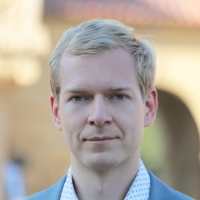
Vladimir Kazeev is an Assistant Professor at the Faculty of Mathematics, University of Vienna , where he has held a faculty position since 2019. He also held previous academic appointments as a Szegő Assistant Professor at Stanford University (2017–2019), a postdoctoral researcher at the University of Geneva (2015–2017), and research positions at ETH Zurich (2011–2015), Russian Academy of Sciences (2008–2011), and Moscow Institute of Physics and Technology (2009). His research focuses on adaptive, data-driven numerical methods for differential equations, nonlinear low-parametric approximation, and numerical linear algebra. His work intersects computational mathematics, tensor methods, and high-dimensional problem-solving, particularly in the context of partial differential equations (PDEs) and stochastic modeling. The 15 most recent publications reveal a strong emphasis on quantized tensor-structured methods for PDEs, low-rank approximations, and high-dimensional numerical analysis. His research spans theoretical advancements in tensor decomposition, practical applications in chemical reaction networks, and novel discretization techniques for multiscale and degenerate diffusion problems. Scientific awards include the prestigious ETH Medal for outstanding doctoral theses (2016) Russian Academy of Sciences Medal for outstanding student works in mathematics (2011) Advising and teaching activities include supervising Jason Zhu (Stanford, 2019) and Simon Etter (ETH Zurich, 2014), as well as teaching advanced courses in tensor methods, numerical analysis, and PDEs at the University of Vienna, Stanford University, and the University of Geneva. His service to the community includes peer review for 15+ journals and co-organizing minisymposia at SIAM meetings.
Xu Jinchao is a Professor of Applied Mathematics and Computational Sciences at King Abdullah University of Science and Technology (KAUST) and the Verne M. Willaman Professor of Mathematics at Penn State University. He has held distinguished roles, including Director of the Center for Computational Mathematics and Applications at Penn State since 1997 and is an Affiliated Faculty member of the College of Information Sciences and Technology at Penn State. His research focuses on numerical partial differential equations (PDEs), multigrid methods, machine learning, finite element methods, and domain decomposition methods. He is renowned for pioneering contributions such as the Bramble-Pasciak-Xu (BPX) preconditioner, Hiptmair-Xu (HX) preconditioner, Xu-Zikatanov (XZ) identity, and Morley-Wang-Xu (MWX) element. His work bridges computational mathematics and machine learning, including the development of MgNet, which unifies multigrid methods with convolutional neural networks. Xu has been recognized with numerous awards, including Fellowships from SIAM, AMS, AAAS, and the European Academy of Sciences. Notable accolades include the 2008 DOE Top 10 Breakthroughs for his HX preconditioner and the 1995 Feng Kang Prize for Scientific Computing. He has organized over 100 conferences and serves on editorial boards of top journals such as Mathematics of Computations and Numerische Mathematik . His leadership includes directing research centers and advancing computational science through collaborative efforts.
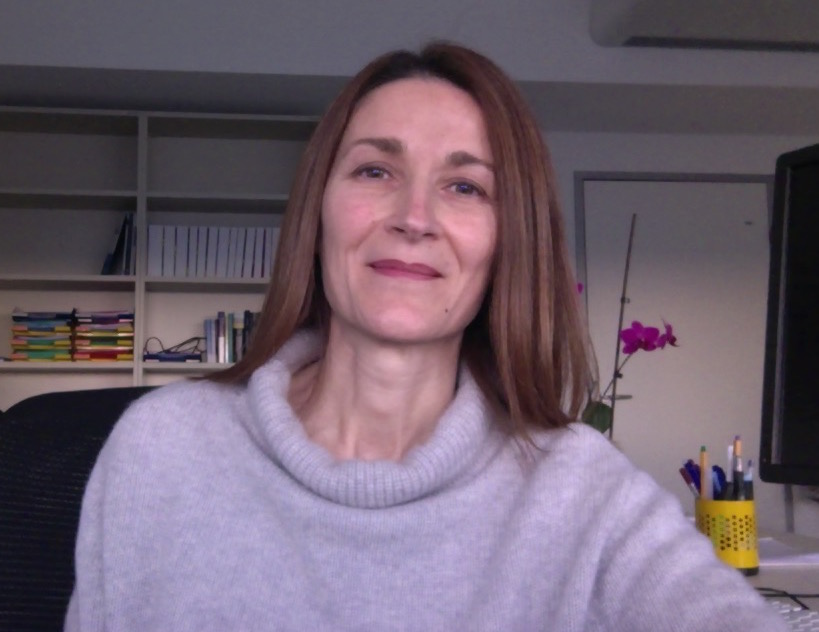
Ilaria Perugia is a University Professor (Univ.-Prof.) and Chair of Numerics of PDEs at the Department of Mathematics, Faculty of Mathematics, University of Vienna. She also serves as Deputy Head of the Research Platform Erwin Schrödinger International Institute for Mathematics and Physics. Her research focuses on numerical methods for partial differential equations with applications in computational physics and engineering. Professor Perugia's primary research interests include: Numerical methods for PDEs Finite element methods Discontinuous Galerkin methods Trefftz methods Virtual element methods Space-time methods Computational electromagnetics Wave propagation problems Nonlinear reaction-diffusion problems Her work spans theoretical analysis, algorithm development, and practical implementation of numerical methods for solving complex physical phenomena. Her recent publications demonstrate a strong focus on space-time methods, virtual element methods, and structure-preserving discretizations for wave equations, heat equations, and other PDEs. She has made significant contributions to the development of stable and efficient numerical schemes that preserve important physical properties of the underlying continuous problems, particularly in the context of wave propagation and computational electromagnetics. Professor Perugia leads a research group comprising several researchers and students including Mattia Corti, Matteo Ferrari, Monica Nonino, Andrea Scaglioni, Paul Stocker, Enrico Zampa, and Marco Zank. Her group actively collaborates on projects related to numerical analysis and scientific computing, with particular emphasis on developing novel discretization techniques for challenging PDE problems.
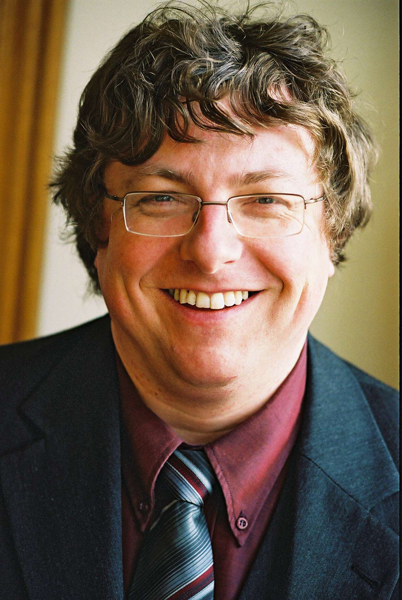
Radu Ioan Bot is a Professor and Dean of the Faculty of Mathematics at the University of Vienna, where he also serves as Head of the Department of Mathematics. His primary affiliations include the Department of Mathematics (Oskar-Morgenstern-Platz 1, 1090 Wien) and the Research Network Data Science (Währinger Straße 29, 1090 Wien). Bot's research centers on optimization theory with emphasis on convex/nonconvex optimization, monotone operators, and dynamical systems. He develops fast algorithms for variational inequalities and monotone inclusions by bridging continuous-time dynamics with discrete optimization methods. His work frequently addresses bilevel optimization, Tikhonov regularization, and second-order dynamics, yielding accelerated convergence rates for complex problems. Analysis of his 15 most recent publications (2023-2025) reveals dominant trends in time-scaling techniques, vanishing damping dynamics, and structured splitting methods. Key contributions include unifying Nesterov acceleration with Heavy Ball dynamics, developing reflected forward-backward algorithms for constrained optimization, and establishing strong convergence guarantees for monotone operator flows. These advances demonstrate consistent innovation in accelerating optimization while maintaining theoretical rigor. No scientific awards were mentioned in the provided source material. Details regarding student advising and research grants were not specified in the available information, though his leadership roles as Dean and Department Head indicate significant administrative responsibilities alongside active research. Bot participates in the University of Vienna's Research Network Data Science, suggesting interdisciplinary engagement in data-driven methodologies with potential applications in machine learning and computational mathematics.
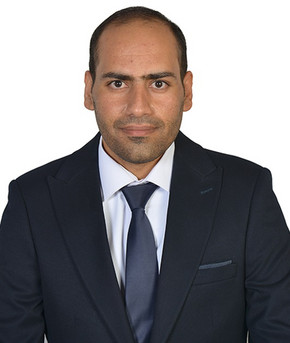
Dr. Adel Aazami is an Assistant Professor at the Institute of Transport Economics and Logistics at Vienna University of Economics and Business (WU Vienna) since 2023. His academic journey began with a B.Sc. in Industrial Engineering from University of Tehran (2010-2014), followed by an M.Sc. (2014-2016) and Ph.D. (2016-2021) from Iran University of Science and Technology (IUST), Tehran. Prior to his current position, he worked as a Postdoctoral Researcher at Sharif University of Technology (2021-2022) and was a Visiting Researcher at the University of Toronto (2020). His educational background includes: Ph.D. in Industrial Engineering (2016-2021) - Iran University of Science and Technology (IUST), Tehran, Iran M.Sc. in Industrial Engineering (2014-2016) - Iran University of Science and Technology (IUST), Tehran, Iran B.Sc. in Industrial Engineering (2010-2014) - University of Tehran, Tehran, Iran Dr. Aazami's research spans multiple interconnected domains within operations research and supply chain management. His primary focus areas include Operations Research and Optimization, Supply Chain and Logistics, Production and Distribution/Transportation Planning, Competition and Game Theory, Stochastic Programming, and Decomposition Algorithms. His work demonstrates a strong emphasis on developing mathematical models and optimization algorithms for complex supply chain problems, particularly those involving perishable goods, competitive environments, and sustainability considerations. He has made significant contributions to integrating environmental factors into traditional logistics problems and developing robust optimization approaches for supply chain networks. Analysis of Dr. Aazami's publication record reveals a consistent trajectory of increasingly sophisticated research in supply chain optimization. His work shows a clear progression from foundational mathematical optimization techniques to increasingly complex integrated problems involving multiple stakeholders, uncertainty, and environmental considerations. A notable trend is his focus on perishable products within supply chains, developing models that account for limited product lifetimes while optimizing across multiple echelons of the supply chain. More recently, his research has expanded to incorporate green logistics considerations, developing algorithms that balance economic and environmental objectives in transportation and distribution problems. His notable scientific achievements include: Winner of the 'Best Student' award among nationwide students evaluated by the Iranian Ministry of Science (2020) Winner of the Iranian Nobel Prize (known as the Alborz National Foundation Prize) (2019) Winner of the Best Student Award at IUST (2018) Winner of the Top Researcher Award at IUST (2018) Annual Awards of the National Elites Foundation Iran (2015-2020) Dr. Aazami has extensive teaching experience across multiple Iranian universities including Tehran University, Amirkabir Technical University, Isfahan University, Yazd University, Zanjan University, Damghan University, Abrar University and Iran Technical University. His peer review activities include reviewing for prestigious journals such as Soft Computing, Expert Systems with Applications, and Annals of Operations Research. While specific grant information isn't detailed in the provided text, his research output suggests active engagement with complex optimization problems relevant to transportation and logistics industries. At WU Vienna, Dr. Aazami is part of the research team at the Institute of Transport Economics and Logistics, working alongside other faculty members including Prof. Kummer and Prof. Wakolbinger. His research integrates theoretical optimization methods with practical applications in transportation and logistics, contributing to the institute's focus on sustainable and efficient supply chain solutions.
Bart De Moor is a Full Professor at the Department of Electrical Engineering, KU Leuven, Belgium, and a guest professor at the University of Siena. He leads the STADIUS research group and has supervised 85 PhD students. His roles include chairman of Health House (2016–present), member of the Board of VIB (Biotech Institute), and former Vice-Rector for International Policy (2009–2013). Education: Master Degree in Electrical Engineering (1983), KU Leuven PhD in Engineering (1988), KU Leuven Research Interests: His work spans numerical linear algebra, optimization, algebraic geometry, systems and control theory, data-driven AI, machine learning, and applications in process industry and biomedical big data. He has contributed to subspace identification, tensor decomposition, bioinformatics, and quantum computing. Publications Trends: His publications highlight subspace identification methods, tensor decomposition, bioinformatics, and biomedical data analysis. These reflect interdisciplinary advancements in control theory, quantum physics, and mathematical engineering, with applications in industrial and healthcare domains. Scientific Awards and Honors: Leslie Fox Prize (1989) Laureate of the Belgian Royal Academy of Sciences (1992) Bi-annual Siemens Award (1994) Fellow of IEEE (since 2004) Member of the Royal Academy of Belgium for Science and Arts (since 2000) Fellow of IFAC (since 2022) Commander in the Order of King Leopold I (2020) Fellow of SIAM (since 2017) FWO Excellence Award (2010) Advising and Grants: He has led a research group of 20 PhD students and postdocs, co-founded 8 spinoff companies, and secured the ERC Advanced Grant ‘Back to the roots’ (2020–2025). He also co-holds the KU Leuven Chair on healthcare systems (2018–present). Labs and Organizations: Active in the STADIUS research group (KU Leuven), he has served on boards of the Flemish Interuniversity Institute for Biotechnology (VIB), the Alamire Foundation, and the Health Tech Experience Center Health House. His spinoffs include Trendminer, Cartagenia, and Ugentec.
Zhang Yan is a Full Professor at the Department of Informatics, University of Oslo, Norway. He previously served as Head of Department and Chief Scientist at Simula Research Laboratory (2014–2016). His research focuses on advanced communication technologies including Internet of Things (IoT), 5G/6G networks, mobile edge computing, and blockchain applications. He has held significant roles such as IEEE VTS Distinguished Lecturer (2016–2020) and Chair of IEEE TCGCC (2019–2021). His honors include IEEE Fellow (2020), election to Academia Europaea (2020), and recognition as a Web of Science Highly Cited Researcher (2018–2019). Research interests span interdisciplinary areas like network dynamics, socio-economic systems, and algorithmic design. His work bridges theoretical foundations with practical applications in smart grids, vehicular networks, and global trade systems. Recent publications emphasize network science methodologies applied to economic complexity and information diffusion. Professional contributions include editorial roles for top journals and leadership in EU-funded projects. His awards reflect impactful contributions to both technical innovation and scientific leadership in informatics and communications.
Prof. Lukas Einkemmer is a faculty member at the University of Innsbruck, holding a position in the Institute of Mathematics. He specializes in numerical analysis, plasma physics, and high-performance computing. His work focuses on developing advanced numerical methods for solving complex kinetic equations and PDEs, with applications in plasma simulation and computational fluid dynamics. Education: He earned a PhD in applied mathematics (2014) and MSc in physics (2013) from the University of Innsbruck, alongside BSc in applied mathematics (2010). He completed research stays at UC Merced and holds notable academic awards, including the SciCADE New Talent Award (2015) and participation in the Heidelberg Laureate Forum (2013). Research & Teaching: His research includes exponential integrators, dynamical low-rank methods, and semi-Lagrangian discontinuous Galerkin schemes. He teaches numerical methods, PDEs, and computational courses at both undergraduate and graduate levels. He also leads training programs in parallel computing (OpenMP/MPI) at the University’s Research Center for High-Performance Computing. Publications & Grants: Over 70 peer-reviewed articles in journals like J. Comput. Phys. and SIAM J. Sci. Comput. , focusing on numerical algorithms and their applications. He has secured grants from FWF and other agencies, advancing methods for plasma physics and kinetic theory. Awards & Recognition: Multiple honors, including the Oberwolfach Leibniz Graduate Student award (2014) and sustained scholarship support for academic excellence.
Benjamin Sudakov is a Professor of Mathematics at ETH Zurich, where he has held positions since 2013. Previously, he served as a Professor at UCLA (2007-2014) and as an Assistant Professor at Princeton University (2002-2007). He has also been affiliated with the Institute for Advanced Study (2005-2006) and held prestigious fellowships including the Veblen Instructorship (1999-2002). His academic journey began with a Ph.D. from Tel Aviv University in 1999 under the supervision of Noga Alon. Education: Ph.D. in Mathematics, Tel Aviv University (1999) Advisor: Noga Alon Sudakov is a leading expert in combinatorics, with primary research interests in probabilistic and extremal combinatorics, random structures, and the application of combinatorial methods to theoretical computer science and mathematics. His work spans algebraic combinatorics, Ramsey theory, and graph theory, addressing foundational questions and developing novel methodologies. His publications and talks highlight his contributions to Ramsey graphs, equiangular lines, hypergraph theory, and submodular optimization. Key themes include structural graph theory, extremal problems, and probabilistic techniques in discrete mathematics. Scientific Awards: Humboldt Research Award (2014) Fellow of the American Mathematical Society (2013) Invited Speaker, ICM 2010 David Saxon Presidential Term Chair (2007-2011) NSF CAREER Award (2006-2011) Alfred P. Sloan Fellowship (2004-2006) Sudakov has mentored 21 Ph.D. students, including prominent mathematicians like Peter Keevash, Jacob Fox, and Matija Bucic, many of whom hold academic positions globally. He has received significant funding, including the SNSF grant 200021_196965, and actively participates in editorial boards and workshops on extremal combinatorics and related fields. Notable among his collaborative efforts is a series of workshops and seminars at institutions like Banff Research Center, IPAM, DIMACS, and BIRS, focusing on probabilistic and extremal combinatorics. His teaching includes graduate-level courses such as Graph Theory, Probabilistic Methods in Combinatorics, and Algebraic Methods in Combinatorics.
Markus Faustmann is a Senior Scientist at the Institute of Analysis and Scientific Computing (E 101) at TU Wien. He holds a Dipl.-Ing. Dr.techn. degree in Technical Mathematics. His research focuses on numerical methods for partial differential equations (PDEs), finite element methods (FEM), boundary element methods (BEM), hierarchical matrices, elliptic regularity, and fractional differential operators. Faustmann has been recognized with the TU Best Teacher Award (2022) and TU Best Paper Award (2022) from TU Wien's Faculty of Mathematics and Geoinformation. Education: PhD in Mathematics from TU Wien (2015), supervised by J.M. Melenk; Diploma in Technical Mathematics (2011) and Bachelor of Science in Mathematics (2009), both from TU Wien. Research Interests: Development and analysis of numerical methods for non-local operators, including fractional Laplacian problems, hp-FEM, matrix compression techniques, and error estimation. His work emphasizes efficient discretization strategies and theoretical foundations for complex PDE systems. Teaching: Current courses include Numerical Methods for PDEs (Summer 2025), Non-local Operators (Winter 2024/25), and Scientific Programming for Interdisciplinary Mathematics . He has also supervised numerous bachelor's and master's theses in numerical analysis and computational mathematics. Awards: His research contributions have been highlighted through prestigious awards, reflecting his expertise in both teaching and applied numerical analysis.
Matthias Paul Lanzinger is an Assistant Professor at the Technische Universität Wien's Faculty of Informatics, Department of Database and Artificial Intelligence. His research focuses on algorithms, graph neural networks, hypergraph decomposition techniques, parameterized complexity, and computational logic. He leads projects like 'DeConquer' (Vienna Science Fund) and 'HyperTrac', exploring efficient query processing and hypergraph-based algorithms. Research interests include theoretical computer science, database systems, and applying logical frameworks to solve complex computational problems. Recent work emphasizes hypertree decompositions, fuzzy Datalog, and graph motif analysis via the Weisfeiler-Leman test. He co-edited the 2024 Datalog-2.0 workshop proceedings and has supervised students on topics like column-store performance and graph query languages. His publications span venues like ACM Transactions on Database Systems, ICLR, and IJCAI, highlighting contributions to algorithmic efficiency, database theory, and logical reasoning systems. Active in academic service, he teaches courses on database systems, scientific research, and advanced topics in informatics.
Günther Raidl is an Associate Professor and Head of the Algorithms and Data Structures Group at the Institute of Computer Graphics and Algorithms, Faculty of Informatics, TU Wien. He holds a Dipl.-Ing. (1992), Ph.D. (1994), and Habilitation (2003) from TU Wien. His research focuses on combinatorial optimization, heuristic methods, and hybrid optimization techniques, addressing large-scale problems in transportation, network design, and cutting/packing. He leads a group of 1 PostDoc, 8 PhD candidates, and collaborates with institutions like the Vienna Graduate School on Computational Optimization (VGSCO). Education: Dipl.-Ing. in Computer Science (1992), TU Wien Ph.D. in Computer Science (1994), TU Wien Habilitation (2003), TU Wien Research Interests: Raidl’s work combines exact and heuristic optimization techniques, including mixed-integer programming, metaheuristics, and matheuristics. Applications span transportation systems (e.g., electric vehicle routing, bike-sharing systems), network design, and bioinformatics. His group leverages high-performance computing resources, such as the Vienna Scientific Cluster (VSC). Publications & Awards: Over 115 reviewed articles in journals/conferences like INFORMS Journal on Computing and Evolutionary Computation. Notable recognition includes the EvoStar 'Old Croc' Award (2012) for contributions to evolutionary computation. Advising & Grants: Supervises 8 funded PhD students and contributes to the Vienna Graduate School’s DK funding (€20,000/year for personnel and travel). Labs/Teams: Algorithms and Data Structures Group at TU Wien, collaborating with researchers like Monika Henzinger and Nysret Musliu.
Fabian Klute is a Research Fellow at Universitat Politècnica de Catalunya, specializing in discrete and computational geometry. His research focuses on graph drawing, automated cartography, map labeling, and geometric computing, with emphasis on theoretical foundations and algorithm development. Klute's publications demonstrate consistent focus on geometric complexity, graph visualization, and combinatorial optimization. Recent works establish hardness results for segment folding and edge insertion problems, develop algorithms for geometric set diversity, and advance boundary labeling techniques. A significant research thread explores parameterized complexity in graph modification problems. His contributions in graph drawing include innovations in confluent drawings, book embeddings, and 1-planar extensions. Cartography-related research advances automated labeling and spatial representation for complex curve arrangements.
Thomas Führer is a Researcher at TU Wien's Institut für Analysis und Scientific Computing, part of the Faculty of Mathematics and Geoinformation. His primary research focuses on numerical analysis and computational mathematics, with expertise in boundary element methods (BEM), finite element methods (FEM), and adaptive algorithms. He has contributed significantly to the development of efficient solvers and preconditioning techniques for partial differential equations, particularly in FEM-BEM coupling and nonlinear transmission problems. His work emphasizes computational efficiency and optimal convergence rates in adaptive methods. Key research areas include: Adaptive mesh refinement strategies Preconditioning for iterative solvers Isogeometric analysis (IGA) Stokes and Navier-Stokes equations Domain decomposition methods Publications highlight contributions to the theoretical foundations of numerical methods, with a focus on practical implementation and computational performance. Collaborations include Dirk Praetorius, Michael Feischl, and other leading figures in computational mathematics.
Lukas Exl is a Senior Lecturer at the University of Vienna and a Research Director at the Wolfgang Pauli Institute (WPI), where he leads the Mathematical AI/ML Research Division. He holds a habilitation (venia docendi) in Computational Science from the University of Vienna, the first in this interdisciplinary field. Research Platform MMM Mathematics-Magnetism-Materials Wolfgang Pauli Institute (WPI), Vienna His research integrates Applied Mathematics, Computational Physics, and Scientific Machine Learning, focusing on numerical methods for PDE-based simulations, data-driven modeling, and reduced-order approaches. Key applications include computational micromagnetism for green energy materials and developing physics-informed neural networks (PINNs) with interpretable architectures. Recent publications emphasize machine learning techniques for magnetic material optimization, stray field computation, and trustworthy AI (TAI/XAI). He supervises students in Computational Science, Applied Mathematics, and Physics, with a focus on Extreme Learning Machines (ELMs), PINNs, and tensor decomposition methods. Data-driven Reduced Order Approaches for Micromagnetism (FWF Project, €484k, 2024-2028) Design of Nanocomposite Magnets by Machine Learning (FWF Project, €254k, 2022-2027) Reduced Order Approaches for Micromagnetics (FWF Project, €402k, 2018-2024) His team includes researchers like Dr. Sebastian Schaffer (PhD graduate), Kein Gjordeni, and Caroline Maitz. Collaborations span Danube University Krems and Technical University of Denmark's Energy Conversion and Storage department.