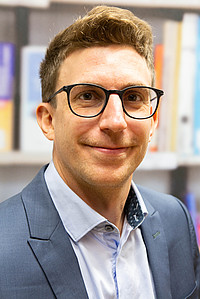
Christian Dorner is a Professor of Mathematics Education and Head of Studies at the Department of Mathematics Education, Pädagogische Hochschule Steiermark. His work focuses on procedural knowledge development, financial mathematics in education, and student perspectives in mathematics teaching. He leads curriculum design initiatives and assessment frameworks for secondary mathematics education. Research interests include: Procedural knowledge measurement and deficiencies Integration of technology in mathematics classrooms Financial literacy education Student-centered lesson analysis Recent work emphasizes cross-national comparisons of financial education systems and the role of technology in procedural skill development. His research often involves collaborative projects with Austrian secondary schools and teacher communities. Notable contributions include the AmadEUs project analyzing classroom dynamics from student perspectives, and curriculum materials like 'Mathematik verstehen' series integrating GeoGebra tools. His work bridges theoretical educational research with practical classroom implementation.
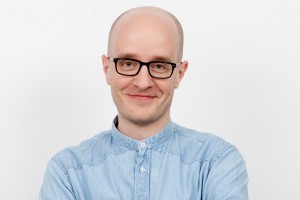
Friedrich Slivovsky is a researcher at the Institute of Logic and Computation within the Faculty of Informatics at Technische Universität Wien (Vienna University of Technology). His work focuses on theoretical and practical aspects of computational logic, with particular expertise in Quantified Boolean Formulas (QBFs), Propositional Model Counting (#SAT), and Knowledge Compilation. His research interests span the theoretical foundations and practical applications of computational logic. Slivovsky investigates the complexity of logical reasoning problems, develops efficient algorithms for solving them, and creates practical tools that implement these theoretical advances. His work bridges the gap between theoretical computer science and practical applications in areas like hardware verification, artificial intelligence, and electronic design automation. Analysis of his publication trends reveals a consistent focus on QBF solving techniques, with increasing emphasis on circuit minimization, proof complexity, and practical solver engineering. His recent work (2023-2024) shows a strong focus on circuit minimization techniques, combining QBF and SAT approaches to solve complex optimization problems in hardware design. Earlier work (2019-2021) emphasized dependency schemes, certification methods, and theoretical foundations of QBF solving. Slivovsky leads several significant software projects that have become important tools in the computational logic community: Qute : A dependency learning QBF solver with GitHub repository showing active development (latest commit December 2024) Unique : A preprocessor for (D)QBF that computes unique Skolem and Herbrand functions Pedant : A certifying DQBF solver These projects demonstrate his commitment to translating theoretical advances into practical tools that benefit the broader research community.
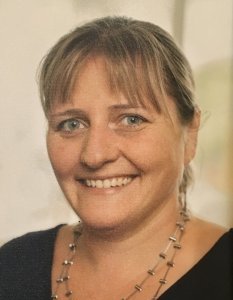
Martina Seidl is a researcher and principle investigator at TU Wien's Institut für Softwaretechnik und Interaktive Systeme (E188). Her main affiliation is within the Faculty of Informatics. She leads the FAME Project (Formalizing and Managing Evolution in Model-Driven Engineering), focusing on advancing formal methods in software engineering. Her research interests include formal verification techniques, SAT/QBF solving algorithms, model-driven engineering, and automated reasoning. She has contributed to advancements in quantified Boolean formula (QBF) solving, parallel computing methodologies for logical problems, and formal methods in software model analysis. Her work spans theoretical computer science and practical applications in automated theorem proving and model checking. Notable contributions include expansion-based QBF solving approaches, parallel solving frameworks, and feature-based classifications of formal verification techniques. Seidl co-organized the QBF Gallery initiative, which curates benchmark suites for quantified Boolean formula competitions. She has also published extensively on clause redundancy optimization, blocked clause analysis, and the integration of formal methods in educational contexts like UML@Classroom.
Prof. Nysret Musliu is an Associate Professor at TU Wien's Department of Databases and Artificial Intelligence within the Faculty of Informatics. His primary affiliation is with the E192-02 research area, focusing on optimization, scheduling, and AI applications. He leads projects like 'Artificial Intelligence in Employee Scheduling' and 'Predictive Analytics for Emergency Call Infrastructure,' demonstrating expertise in combinatorial optimization and real-world problem-solving. Academic Rank: Associate Professor Institution: TU Wien Key Projects: AI-driven scheduling, constraint programming, metaheuristics Research interests include scheduling algorithms, constraint programming, and hybrid optimization methods. His work bridges theoretical advancements with industrial applications, addressing challenges in manufacturing, healthcare, and transportation. Recent publications emphasize hyper-heuristics, large neighborhood search, and AI integration for complex scheduling problems. Notable contributions include systematizing test laboratory scheduling and developing exact methods for oven scheduling. His research group collaborates on projects involving personnel scheduling, production leveling, and parallel machine optimization.
Thomas Eiter is a Professor at TU Wien's Institute of Logic and Computation. His research focuses on declarative programming paradigms, knowledge representation, and artificial intelligence. He leads projects in neurosymbolic systems, answer set programming (ASP), and stream reasoning, with applications in visual question answering, scheduling optimization, and semantic scene generation. Eiter has contributed to foundational work in ASP semantics, computational complexity, and hybrid reasoning frameworks. His work bridges logical formalisms with practical AI challenges, emphasizing explainability and scalability. Projects like ALASPO and neurosymbolic integration showcase his focus on advancing both theoretical and applied aspects of AI. Projects: HumanE AI Network, WASP, REWERSE Research Themes: Neurosymbolic AI, Answer Set Programming, Stream Reasoning Notable achievements include pioneering work on semiring-based reasoning frameworks and developing efficient ASP solvers like Alpha. His contributions span over 471 publications, emphasizing interdisciplinary applications in computer vision, robotics, and automated planning.
Lukas Gahleitner is a Researcher at the Research Center Wels, Center of Excellence Automotive/Mobility, University of Applied Sciences Upper Austria, specializing in Materials Thermography and Non-Destructive Testing for high-performance composite components in automotive applications. His work directly supports UN Sustainable Development Goals related to industry and innovation. Education: BSc Dipl.-Ing. (Diplom-Ingenieur) His research focuses on advanced thermographic NDE methodologies including photothermal imaging, virtual wave concepts, and pulsed thermography for defect detection in carbon fiber composites. He pioneers techniques for 3D defect reconstruction in curved orthotropic structures and develops industrial solutions for quality control in fluid injection molding processes. His fingerprint analysis confirms deep expertise in subsurface defect characterization and virtual wave parameter estimation. Recent publications (2024-2025) reveal a strong trend toward solving industrial NDE challenges through algorithmic innovation, particularly in handling non-uniform thermography data and reconstructing defects in complex composite geometries. This work bridges fundamental thermal physics with practical applications in automotive manufacturing. Scientific recognition: Teufelberger Master-Thesis Award 2023 Innovation Award FH Wels 2023 (1st place in Engineering) Research leadership: Co-Investigator in EXCITE project (2025-2028): Thermo-tomographic sensor technologies for composite quality control Co-Investigator in JR-Centre for Thermal NDE of Composites (2018-2022) Active peer-reviewer for Nondestructive Testing and Evaluation journal He operates within the Research Center Wels infrastructure, collaborating with Gerald Mayr's team on the Center of Excellence Automotive/Mobility initiatives, with experimental facilities focused on thermographic NDE of composite materials.
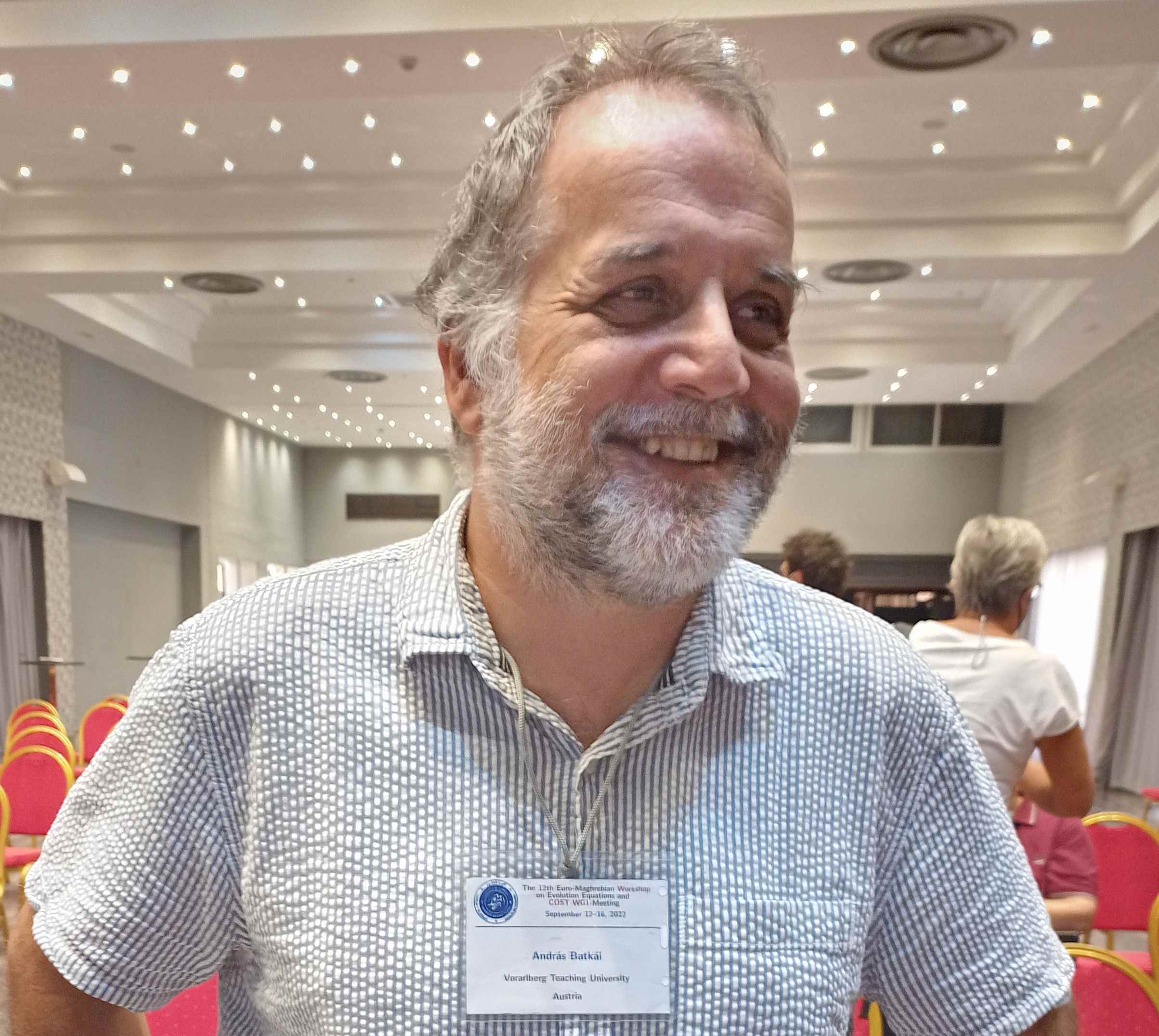
Habilitation in Mathematics at Eötvös Loránd University (ELTE Budapest) in 2007. Full Professor of Mathematics at Vorarlberg University of Education since 2016, leading the Institute for Secondary Education & Subject Didactics. Holds a Dr. rer. nat. from Eberhard-Karls Universität Tübingen (2000). Extensive international experience includes roles as Humboldt Fellow at Universität Siegen (2009-2010), Guest Professor at Bergische Universität Wuppertal (2014-2016), and researcher at institutions across Europe. Research focuses on applied functional analysis, particularly operator semigroups and their applications to delay equations, wave equations, and numerical methods. Engaged in mathematics education research, emphasizing problem-solving, language-sensitive teaching, and intelligent practice strategies. Former spokesperson of the Austrian Mathematics Education Society (GDM) working group (2021–2024). Authored/co-authored over 100 publications, including monographs such as Positive Operator Semigroups (2016) and Semigroups for Delay Equations (2005), cited over 1000 times. Core member of the EU COST Action on network dynamics and former leader of ECMI’s Numerical Weather Prediction Special Interest Group.
Birgit Döbrentey-Hawlik is a part-time lecturer and research staff member at the Vienna University of Teacher Education’s Department for Media Education, Information Technology Education and Digitality (Competence Center MINT and Digitality). She holds a 25% role, focusing on digital media integration in primary education and project coordination for initiatives like First Lego League Explore and the BMBWF project „Learning to think, solving problems.“ Her career includes 20+ years as a primary school teacher in Vienna, where she also served as IT custodian and led the SQA „New Media“ team. She has implemented projects such as „MINT School,“ „Digitally Competent Cash Register,“ and „Digicheck4,“ emphasizing technology integration and teacher training. Since 2018, she has contributed to the ZLI (Center for Learning Technology and Innovation), organizing events like the eBazar conference series and developing digital education resources. Research interests include coding/robotics in primary education, hybrid learning methodologies, and STEM education innovation. She co-authored the „digi.case“ media package and „ÖHA!“ sustainability-focused materials, recognized with the Comenius EduMedia Medaille 2021 and GENE Award. Key projects include the „Education Innovation Studio (EIS),“ which promotes experimental learning spaces, and the „Digitale Medienbildung in der Primarstufe“ training program for educators. She actively collaborates with EU initiatives (e.g., RoboCoop) and local organizations to advance digital literacy and teacher professional development.
Peter Kirschenhofer holds the Chair of Mathematics, Statistics and Geometry at the Graz University of Technology, within the Faculty of Mathematics, Physics and Geodesy. His research focuses on number theory, combinatorics, discrete mathematics, and polynomial analysis with applications to data structures. He has published 15 research outputs between 2005 and 2019, including peer-reviewed articles in journals like Monatshefte für Mathematik and INTEGERS . His work often explores distribution results of polynomials, Catalan sequences, and theoretical mathematical frameworks. Kirschenhofer has actively participated in academic events such as the 'Numeration and Substitution 2012' conference and the 'Seminar des steirischen Doktoratskollegs'. He contributed to academic recognition efforts, including a laudatio for Wilfried Imrich and an obituary for Gerd Baron. His research aligns with the university's focus on discrete mathematics and theoretical computer science.
Ekaterina Fokina is an associate professor at the Institute of Discrete Mathematics and Geometry, Vienna University of Technology. Her research focuses on computable model theory, equivalence relations, and algorithmic properties of structures. Projects: Stand-alone Project P27527, Elise Richter Project V206, Stand-alone Project P23989, Lise Meitner Project M1188. Collaborators: V. Harizanov, D. Turetsky, N. Bazhenov, L. San Mauro, P. Semukhin, S. Goncharov, J. Knight, R. Miller. Her work investigates categoricity spectra, bi-embeddability, and the complexity of equivalence relations. Key contributions include solving the long-open Covering Problem for Martin-Löf randomness and analyzing the computational complexity of the Finite Intersection Principle. She has published in journals like Annals of Pure and Applied Logic , Archiv für Mathematische Logik und Grundlagenforschung , and Journal of Symbolic Logic . Articles supported by FWF grants explore computable categoricity, equivalence relation complexity, and parameterized complexity theory. Her recent work includes bi-embeddability spectra, degree spectra, and intrinsic complexity bounds. Scientific Awards: Elise Richter Fellowship (FWF V206) Lise Meitner Fellowship (FWF M1188) She has contributed to understanding algorithmic randomness, effective versions of the Axiom of Choice, and hyperarithmetic isomorphism complexity.
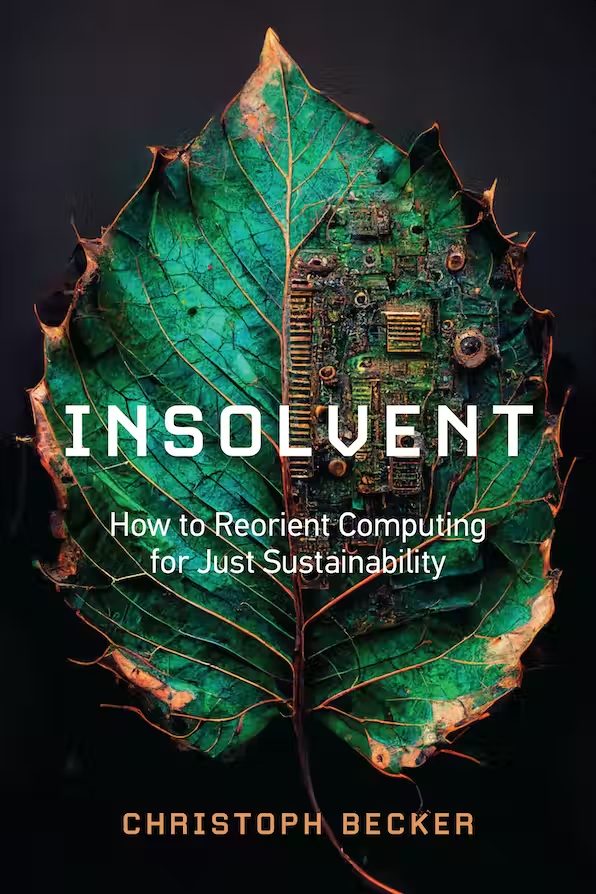
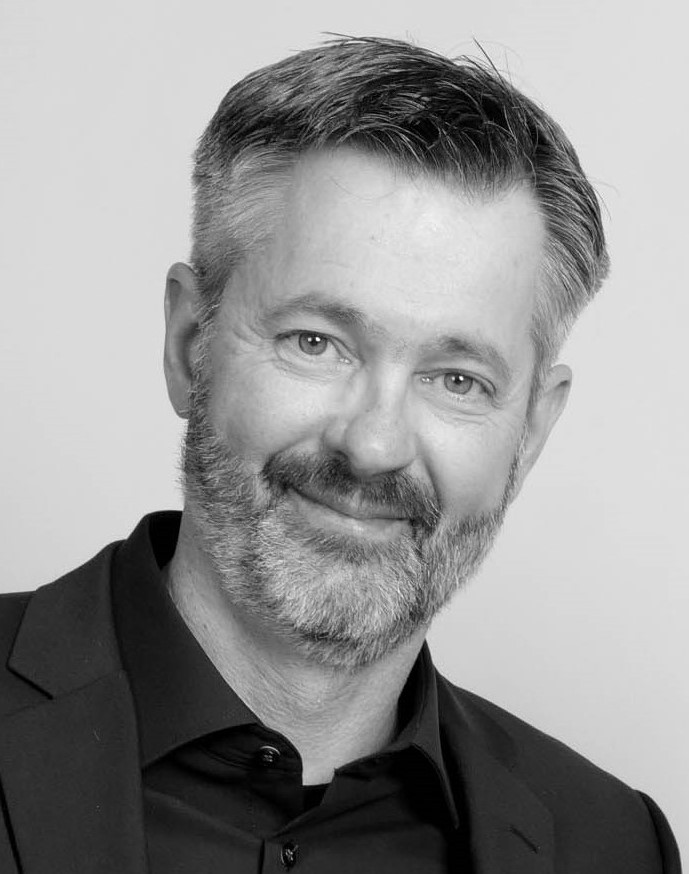
Christoph Becker is a Full Professor at the Faculty of Information and the School of the Environment at the University of Toronto. He leads the Just Sustainability Design Lab, focusing on transdisciplinary research that integrates sustainability and social justice into computing and technology design. His work addresses the urgent ecological and societal crises through critical examination of technological values and development of methods for equitable systems. Current affiliations: Faculty of Information, School of the Environment (University of Toronto) Research focus: Just Sustainability Design, Critical Systems Thinking, Feminist STS Becker’s research explores how computing’s entrenched myths about problem-solving and neutrality hinder sustainability and justice. He advocates for collaboration with critical disciplines to reorient technology toward ecological responsibility. His monograph Insolvent: How to Reorient Computing for Just Sustainability (MIT Press, 2023) was a finalist in the AAP PROSE Awards 2024 for Engineering and Technology. The work has been endorsed by leading scholars as essential reading for technologists and designers. His research is funded by the National Science and Engineering Research Council of Canada (NSERC), the Canada Foundation for Innovation (CFI), the Ontario Research Fund, and the School of Cities at the University of Toronto. Previously, he held roles directing the Digital Curation Institute at UofT (2014–2024) and developing international consortia for digital heritage projects in Europe. Grants: NSERC, CFI, Ontario Research Fund, School of Cities Former roles: Director, Digital Curation Institute (UofT) Becker’s lab creates design tools for urban computing projects, emphasizing collective action and equity. He critiques large language models and AI as unsustainable, advocating for low-tech solutions like bicycles or heat pumps. His social media presence highlights #TechOtherwise, #Degrowth, and #DisabilityJustice perspectives.
Gyula K. Gajdon is a Senior Scientist in the Department of Psychology at Paris-Lodron-University Salzburg, affiliated with the Division of Psychological Assessment. His research centers on animal cognition, particularly focusing on exploration, social learning, innovation, and technical understanding in birds such as kea parrots. He has been with the university since 2021, contributing to research on animal personality and temperament assessment. Education: PhD in Zoology (with Psychology), ETH Zurich (1996–2001) Diploma in Zoology (minor in Psychology), University of Zurich (1987–1995) His research interests include animal cognition, comparative psychology, innovation, tool use, and behavioral assessment in non-human species. His work emphasizes the cognitive mechanisms underlying problem-solving and exploratory behavior in birds. Over the years, he has published in high-impact journals such as Scientific Reports , Animal Cognition , and PLoS ONE , with a consistent focus on avian intelligence and behavioral flexibility. The publications analyzed show a strong thematic focus on cognitive processes in kea and corvids, particularly examining how animals interact with mechanical problems, innovate during play, and exhibit individual differences in exploration. His research often involves experimental paradigms like the Multi Access Box and investigates both observable and hidden functional mechanisms in problem solving. Academic Positions: Senior Scientist, Department of Psychology, Paris-Lodron-University Salzburg (2021–present) Senior Scientist and Head of Kea-Lab, Messerli Research Institute, Vetmeduni Vienna (2011–2016) Postdoctoral Researcher, Department of Cognitive Biology, University of Vienna (2002–2011) Assistant, Division of Ethology, University of Zurich (1994–1995) Gajdon has been actively involved in mentoring and collaborative research, though no formal students are listed. He has not received any explicitly mentioned scientific awards. His work is conducted primarily within research groups focused on animal cognition and psychological assessment, contributing to interdisciplinary efforts in cognitive biology and comparative psychology. Research Groups and Labs: Division of Psychological Assessment, Department of Psychology, PLUS Former Head of Kea-Lab, Messerli Research Institute
Fabian Kleon Zehetgruber is a Project Assistant at the Institute of Analysis and Scientific Computing, Vienna University of Technology (TU Wien), since November 2023, working under the supervision of Univ. Prof. Michael Feischl. His research explores the integration of artificial neural networks with numerical mathematics. His educational background includes: Master of Science in Mathematical Modeling from Sorbonne Université Paris (completed September 2023) Bachelor of Science in Technical Mathematics from TU Wien (2021) His research focuses on Numerical Mathematics , Artificial Neural Networks , and Partial Differential Equations , specifically investigating how neural networks can solve complex computational problems in scientific computing. This work bridges deep learning with classical numerical analysis techniques. His recent publications (2024-2025) reveal a strong trend toward developing neural network frameworks for operator learning and optimization in numerical mathematics, addressing computational hardness and hierarchical training methodologies. No scientific awards are documented in the provided information. As a supervised Project Assistant, he is actively engaged in doctoral-level research within TU Wien's institutional framework, though specific grants are not detailed. His role involves collaborative work under Prof. Feischl's guidance. He contributes to the Computational PDEs research group within TU Wien's Numerical Analysis unit, focusing on numerical methods for partial differential equations and their intersection with machine learning.
Lisa Marie Allmesberger-Riegler serves as a Researcher at the Institute of Computational Biology within the Department of Biotechnology and Food Science at the University of Natural Resources and Life Sciences, Vienna (BOKU). She holds an M.Sc. degree and is based at Muthgasse 18, 1190 Wien, Austria. Her research profile indicates specialization in computational biology and related fields, with interests spanning bioinformatics, systems biology, molecular modeling, and data analysis of biological systems. The Institute of Computational Biology focuses on applying advanced computational methods to solve complex biological problems, which forms the foundation of her research activities. According to BOKU's research information system (FIS), she currently has no recorded publications, projects, or presentations. This absence of documented research output suggests she may be in the early stages of her research career or recently joined the institution. She is actively listed in the university directory with contact information including email (lisa.allmesberger@boku.ac.at) and telephone (+43 1 47654-79152), indicating her current affiliation with the institution.
Johannes Stadlmann is an Assistant Professor at the Institute of Biochemistry (DCH/BC) within the Department of Chemistry at the University of Natural Resources and Life Sciences (BOKU) in Vienna since 2020. His academic journey includes positions as a Staff Scientist at the Institute of Molecular Biotechnology of the Austrian Academy of Sciences (IMBA) from 2015-2020, Post-Doctoral Fellow at the Institute for Molecular Pathology (IMP) from 2010-2013, and earlier postdoctoral work at BOKU from 2009-2010. He earned his Doctorate (Dr. nat. techn.) from BOKU between 2004-2009. Dr. Stadlmann's primary research focuses on glycobiology with particular emphasis on N-glycans and O-glycans. His work spans multiple disciplines including biochemistry, molecular biology, and analytical chemistry. He has made significant contributions to understanding glycan structures in various biological contexts, including viral infections, bacterial interactions, and mammalian tissue diversity. His research employs advanced techniques such as mass spectrometry, NMR spectroscopy, and glycoproteomics to analyze complex carbohydrate structures and their biological functions. Analysis of his recent publications reveals a strong trend toward comprehensive glycome profiling across different biological systems. His work demonstrates increasing sophistication in analyzing isomer-sensitive N-glycome patterns, with applications ranging from understanding organ-specific diversity in mammalian systems to developing therapeutic approaches for viral infections. A notable theme in his research is the application of glycan analysis to solve practical problems in medicine and biotechnology, including coronavirus research, periodontal health, and neurodevelopmental disorders. Dr. Stadlmann has supervised multiple academic theses, including Helm J.'s 2023 dissertation on "Analysis of isomeric N-glycans with PGC-ESI-MS" and Gamperl A.'s 2022 master's thesis on "Enzyme activity determination of carbohydrate methylases." He has been involved in significant research projects including "Recombinant Pharmaceuticals from Plants for Human Medicine" (2004-2009), demonstrating his long-standing interest in applying biochemical principles to pharmaceutical development. His work has resulted in over 100 publications spanning diverse areas of glycobiology and its applications.