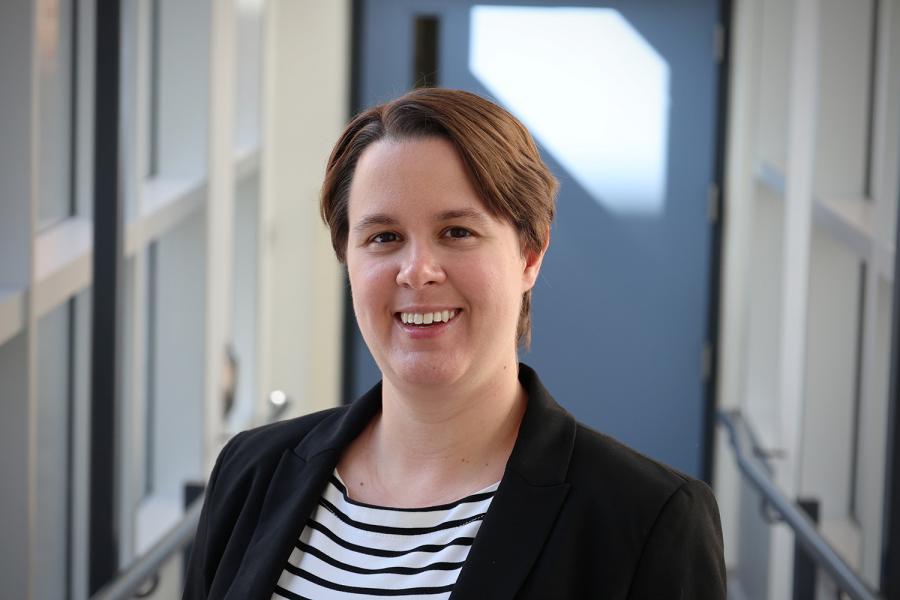
Nooshin Ahmadi serves as a Senior Lecturer in the Department of Human Centered Design within Cornell University's College of Human Ecology, where she applies research-driven methodologies to align spatial design with human behavioral needs and capabilities. Her academic credentials include: Master of Science in Architecture from Texas A&M University, College Station Professional Bachelor of Architecture from Art University of Isfahan, Iran Dr. Ahmadi's research synthesizes architectural theory with human behavioral science to develop environments that enhance usability and well-being, emphasizing evidence-based approaches to object and space optimization. She actively promotes design advocacy and innovative pedagogy to cultivate student problem-solving skills for real-world societal challenges. No scientific awards or honors were documented in the source material. Her advising philosophy centers on fostering lifelong learning through engaging educational experiences, though specific grant funding or formal mentorship records remain unreported in available biographical information.
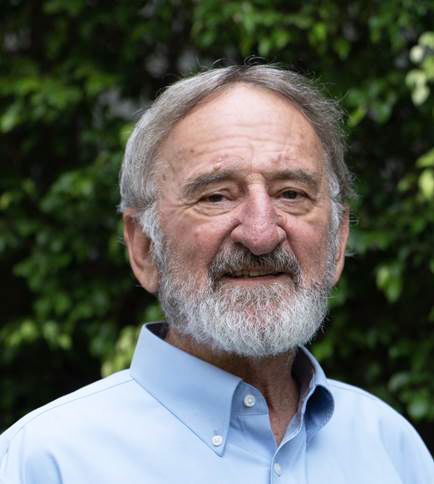
Keith J. Holyoak is a Distinguished Professor in the Department of Psychology at the University of California, Los Angeles (UCLA), where he conducts foundational research in cognitive psychology. His work centers on human reasoning, learning, decision making, and problem solving, with a specific focus on the psychological mechanisms of analogy and relational knowledge across diverse domains including law, politics, mathematics, and science. He directs the Reasoning Lab at UCLA, integrating experimental, computational, and neuroimaging approaches to investigate cognitive processes. Education: Ph.D. from Stanford University Research Focus: Holyoak's research program systematically explores how analogy facilitates knowledge transfer and learning, examining the neural underpinnings of complex reasoning with emphasis on prefrontal cortex functions. His work bridges theoretical cognitive science with practical applications, investigating causal learning, deductive processes, and the constraints shaping human inference. Through computational modeling and cross-domain studies, he reveals universal principles governing relational reasoning while addressing domain-specific manifestations in scientific, legal, and social contexts. Publication Trends: His scholarly output demonstrates consistent evolution from foundational work on pragmatic reasoning schemas (1980s) toward integrated models of causal learning and Bayesian inference (2000s-2010s). Recent publications emphasize rational analysis frameworks, cross-species comparisons in causal cognition, and the role of invariance principles in knowledge generalization. The corpus reveals deep methodological pluralism—combining behavioral experiments, computational modeling, and neuroimaging—to address fundamental questions about the architecture of human thought. Research Infrastructure: Holyoak leads the Reasoning Lab (https://reasoninglab.psych.ucla.edu), which maintains a collaborative environment for interdisciplinary research. The lab's infrastructure supports advanced experimental paradigms, computational modeling suites, and neurocognitive investigations, facilitating research on analogical transfer, causal inference, and decision-making under uncertainty across the lifespan.
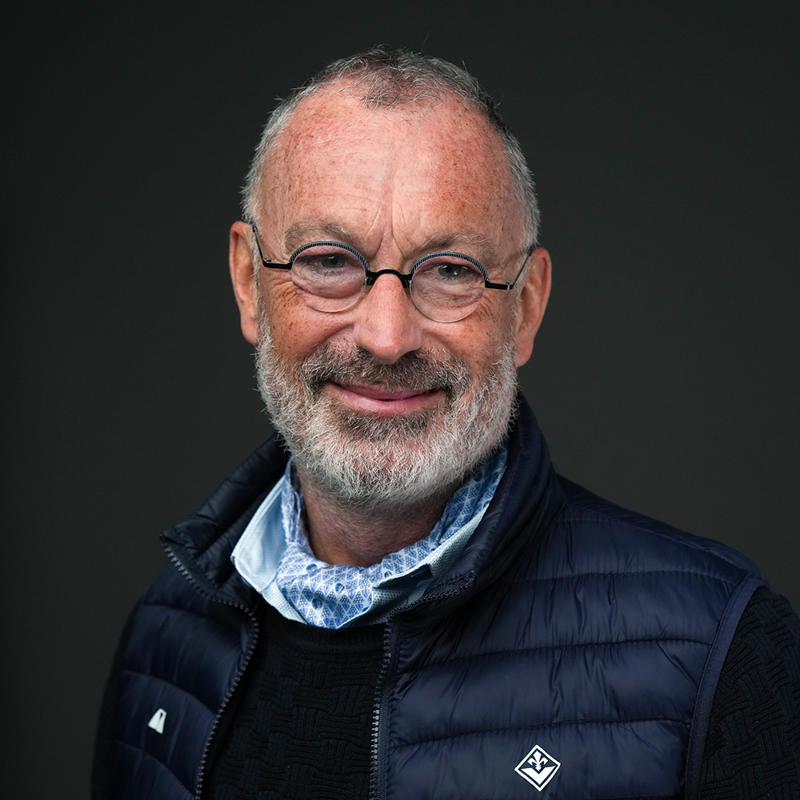
Alain Lempereur is the EUI Chair in Leadership and Negotiation at the Florence School of Transnational Governance , with a focus on responsible negotiation and mediation frameworks. As a tenured professor at Brandeis University (Alan B. Slifka Chair in Conflict Resolution), he bridges academic theory with field practice across 75+ countries. Harvard Law School affiliate faculty since 1993 Co-founder of Co-Dev capacity-building organization Former director of Brandeis Coexistence Program (2011-2021) Research Pillars : Humanitarian negotiation power dynamics, post-conflict reconciliation in Burundi/DRC, and philosophical foundations of negotiation. His work emphasizes joyful mediation , nonverbal emotional perception , and responsible leadership through 20+ books and 150+ articles. Training Impact : Designed executive programs for EU institutions, UN initiatives, and global corporations (Airbus, Sanofi-Pasteur). Pioneered the LEARN hybrid program for senior humanitarian leaders with the Slifka Chair. Awards & Recognition : Chevalier des Tastevins (2019) UN Mediation Roster member Harvard PON affiliate faculty Who's Who (2009, 2010) Global Engagement : Facilitated Israeli-Palestinian dialogues with the Negotiation Strategies Institute. Developed negotiation methodologies for MSF, ICRC, and UNDP. Holds degrees from Harvard (SJD) and Université Libre de Bruxelles (MPhil, LL.M).
Professor Charlotte Hanlon serves as Co-Director of the Centre for Global Mental Health and co-director of the World Health Organization Collaborating Centre for Mental Health Research and Training at King's College London's Institute of Psychiatry, Psychology & Neuroscience. Based in Ethiopia, she has maintained a continuous research and implementation presence in the country since her PhD work from 2004-2006 on perinatal mental health in rural settings, returning permanently in 2009. Her research expertise spans global mental health implementation science, with particular focus on developing, testing and implementing interventions for people with mental health conditions in low- and middle-income countries. Professor Hanlon has significant experience with psychological interventions, social/psychosocial approaches, service models, and system strengthening, with special attention to severe mental health conditions including psychoses and developmental disabilities. Her work consistently incorporates capacity strengthening as an integral component. She coordinates the PhD program for Mental Health Epidemiology at Addis Ababa University and serves on Ethiopia's technical working group for mental health scale-up. Analysis of her recent publications reveals a strong emphasis on context-specific implementation research, particularly in Ethiopia, with growing attention to developmental disabilities, caregiver support, and inclusive education. Her work bridges clinical interventions with health systems strengthening, demonstrating how context shapes effective mental health service delivery in resource-limited settings. The publications show increasing collaboration with African institutions and a focus on sustainable, locally adapted solutions. Commissioner on the Lancet Commission on Ending Stigma and Discrimination in Mental Health Co-lead (with Professor Ashok Malla) of the interventions, services and systems section of the Lancet Psychiatry Commission on Psychoses in Global Context Professor Hanlon leads multiple major research initiatives including HOPE (NIHR global health research group on homelessness and severe mental illness), SCOPE (Wellcome Trust-funded study of psychosis context in Ethiopia), PROMISE (improving detection and care for psychosis in Malawi), PRIZE (peer support intervention for psychosis in South Africa), and SPARK (WHO caregiver skills training for developmental disabilities). Her research approach emphasizes participatory methods, cultural adaptation, and building local research capacity across multiple African countries. She works closely with the Centre for Global Mental Health, which aims to address inequities by closing the care gap and reducing human rights abuses experienced by people living with mental, neurological and substance use conditions in low-resource settings. Her projects often involve collaboration between King's College London, Addis Ababa University, and other African institutions to develop sustainable mental health solutions.
Thomas W. Malone is the Patrick J. McGovern Professor of Management at the MIT Sloan School of Management. He holds joint appointments as Professor of Information Technology and Professor of Work and Organizational Studies. As founding director of the MIT Center for Collective Intelligence, he leads pioneering research on how people and computers can connect intelligently. Previously, he founded the MIT Center for Coordination Science and co-directed the MIT Initiative on 'Inventing the Organizations of the 21st Century'. His teaching focuses on organizational design, IT, and leadership. His research examines how new organizations leverage information technology, with groundbreaking predictions about electronic business in 1987. Major works include the influential books The Future of Work (2004) and Superminds (2018). Research areas span: Collective Intelligence: Designing systems combining human and machine intelligence Organizational Structure: Decentralization, coordination, and future work models Climate Solutions: Crowdsourcing through Climate CoLab AI Implications: Human-AI collaboration in business strategy His publications demonstrate consistent focus on collective problem-solving, with recent emphasis on AI-workforce integration, remote team intelligence, and computational group metrics. Key research projects include the Collective Intelligence Design Lab, Minglr, Climate CoLab, and Measuring Collective Intelligence. Honors include an honorary doctorate from the University of Zurich . He co-founded four software companies and holds 11 patents in collaboration systems and organizational modeling. He directs the MIT Center for Collective Intelligence, leading interdisciplinary teams on global challenges. Current initiatives explore AI-enhanced prediction markets, collective intelligence genomes, and hybrid human-machine systems for organizational design.
Michela Maschietto is a Full Professor at the Department of Education and Human Sciences, University of Modena and Reggio Emilia, with a focus on mathematics education methodology and historical mathematical artifacts. She previously held positions at the Mathematics campus and leads the Laboratory of Mathematical Machines. Research Interests: Her work bridges physical and digital tools in mathematics education, emphasizing semiotic mediation, argumentation development, and historical instrument reconstruction for pedagogical purposes. She explores geometric-mechanical artifacts for calculus concepts and investigates connections between spatial/geometrical knowledge. 2025 study on geometry education trends using didactic tetrahedron model 2024 research on physical-digital tool integration for argumentative skill development 2023 projects involving tactile calculus devices and conic section machines Teaching Activities: She designs mandatory laboratory components for primary education students, covering national guidelines, semiotic mediation theory, and historical artifacts like abacuses and programmable robots. Her courses emphasize problem-solving, geometric visualization, and standardized assessment analysis. Laboratory Involvement: As head of the Mathematical Machines Laboratory, she organizes exhibitions and workshops using reconstructed historical instruments for mathematics popularization. This includes collaborations with international researchers on topics like the Pythagorean theorem and conic sections.
Rafael Villena Taranilla is a Professor at Camilo José Cela University (UCJC) and the International University of La Rioja (UNIR), teaching in master's programs on advanced teaching competencies, digital technology in teaching, and inclusive education. He concurrently serves as a primary school teacher, integrating practical classroom experience with academic research in educational technology. His academic credentials include: PhD in Education from the University of Castilla-La Mancha (Outstanding Cum Laude), focusing on Virtual Reality for Social Studies in Primary Education Master's degree in Educational Research and Innovation from the University of Castilla-La Mancha Bachelor's degree in Primary Education with specialization in History, Culture, and Heritage Villena Taranilla's research centers on emerging technologies in education, particularly virtual reality, augmented reality, educational robotics, and artificial intelligence applications for primary education. He investigates their impact on learning outcomes, historical thinking development, and teacher digital competence, with significant contributions to motivation studies and technology acceptance models in educational contexts. His recent publications (2022-2025) demonstrate a concentrated focus on virtual reality for history and social sciences education in primary schools, supported by rigorous meta-analyses and technology acceptance frameworks. The work shows progressive expansion into gamification for historical thinking, augmented reality for geometry instruction, and robotics for computational thinking, reflecting a cohesive interdisciplinary approach bridging education, cognitive science, and technology innovation. His scientific recognition includes: Second prize in the 'Thesis in three minutes' contest (UCLM, 2020) National finalist in the #HiloTesis contest (CRUE Universidades) Villena Taranilla has supervised numerous Master's theses and academic internships across educational innovation programs. He has secured research funding from prestigious entities including FECYT, La Caixa Foundation, and the University of Valencia, while contributing to teacher training initiatives as a digital competence tutor with Castilla-La Mancha's Regional Teacher Training Center. He is an active member of the Labintic research group at the University of Castilla-La Mancha, dedicated to critical ICT integration in teaching. His collaborative research extends to the University of Valencia, where he completed a 2024 research stay and has scheduled another for June-September 2025 under Dr. Pascual D. Diago Nebot's supervision.
Travis J. Fuerst is an Assistant Professor of Practice at the School of Engineering Technology within the Purdue Polytechnic Institute at Purdue University, West Lafayette. He has held this position since 2022, previously serving in the Department of Computer Graphics Technology from 2016 to 2022. Before returning to academia, he accumulated over 13 years of industry experience at The Boeing Company as an Engineering Workplace Coach, IT Project Manager, and Continuous Improvement Leader, complemented by 21 years of military service in the U.S. Army Reserves where he retired as a Major from USTRANSCOM in 2017. His academic credentials include: Master of Science in Technology (Product Lifecycle Management) from Purdue University (2002) Bachelor of Science in Computer Graphics Technology from Purdue University (2000) with a minor in Organizational Leadership and Supervision Professor Fuerst specializes in Product Lifecycle Management (PLM), Project Management, Continuous Improvement, and Configuration Management, integrating Lean Manufacturing and Six Sigma methodologies into both industrial applications and educational frameworks. His instruction emphasizes practical skill development for industry readiness, leveraging extensive real-world experience to bridge theoretical concepts with professional practice in engineering technology fields. His publication portfolio demonstrates a clear trajectory toward integrating Product Data Management systems into engineering education, with emphasis on digital enterprise solutions and pedagogical innovation. Key themes include parametric solid modeling applications, collaborative project-based learning frameworks, and curriculum development for PLM implementation across undergraduate programs, reflecting his dual focus on technological advancement and educational transformation. His recognition includes: Purdue Polytechnic 2013 Early Career Award Professor Fuerst actively mentors undergraduate and graduate students through project-based design learning that cultivates higher-order thinking skills, directly applying his industry expertise in risk analysis, resource allocation, and cross-functional team leadership. His curriculum development work demonstrates sustained commitment to advancing engineering education practices through practical, industry-aligned methodologies. His leadership experience spans Boeing's continuous improvement initiatives and U.S. Army cyber operations, providing a robust foundation for developing team-based project management approaches that emphasize operational efficiency and strategic problem-solving in academic settings.
Dr. TAN Wee Kek is an Associate Professor (Educator Track) in the Department of Information Systems and Analytics at the National University of Singapore's School of Computing. He served as Assistant Dean in the School's Office of Student Life from 2019 to 2024 and has been a Fellow of the NUS Teaching Academy since 2017. He holds a Doctor of Philosophy in Information Systems and Bachelor of Computing in Information Systems (First Class Honours) from NUS, and previously earned a Diploma in Computer Information Systems from Singapore Polytechnic. His research focuses on Technology-Enhanced Learning (TEL), particularly artificial intelligence applications in education, and consumer-based information technology including online decision aids, social computing, virtual worlds, and consumer cloud services. His methodological approach primarily employs design science paradigms. Publication analysis reveals his scholarly work spans educational technology, e-commerce systems, human-computer interaction, and information systems pedagogy, with recent emphasis on learning analytics and AI-enhanced educational frameworks. Major Honors: Commendation Medal from Singapore's President (2017) Multiple Annual Teaching Excellence Awards (2009-2024) Crystal Service Award, WorldSkills Singapore Council (2018) Lee Kuan Yew Award for Mathematics and Science (2001)
Associate Professor Christine Preston at the University of Sydney's Faculty of Education and Social Work specializes in primary science education with a focus on early childhood development. She maintains active classroom experience through her kindergarten science teaching and leads research on science diagrams, toy-based learning, and teacher professional development. Her work integrates embodied learning and representational pedagogies to enhance conceptual understanding in STEM subjects. Dr. Preston's research examines innovative approaches including citizen science integration, digital technologies, and adaptive curriculum design. She currently lectures in primary science and technology education, while supervising doctoral candidates exploring computational thinking and marine biology education. Her scholarly contributions emphasize practical classroom applications and teacher support resources. Award recognition includes multiple Excellence in Teaching awards (2007, 2016) and the 2001 NSW Quality Teaching Award. She maintains active membership in international science education associations including ASTA, ESERA, and NSTA, serving on editorial boards for science education journals.
Dr. Stephanie Hladik is an Assistant Professor in the Department of Engineering Education at the University of Manitoba's Price Faculty of Engineering. Holding a PhD in Educational Research from the University of Calgary, her research integrates engineering, education, and critical theory to promote equity in STEM. She teaches technology & society and engineering communication courses. Research examines facilitation in informal learning spaces (museums, makerspaces), sociocultural approaches to STEM identity, and equity-focused pedagogy. Publications emphasize design-based research, collaborative learning, and inclusive practices. She is not currently seeking graduate students.
Dr. Kieran O'Halloran is a Reader in Applied Linguistics at King's College London, based in the School of Education, Communication & Society within the Faculty of Social Science & Public Policy. He holds a BA from the University of Cambridge and a PhD in Applied Linguistics from University College London. His research focuses on critical thinking, posthumanism, and digital pedagogy, integrating corpus linguistics and posthumanist theory. Key interests include creative teaching methods, digital text analysis, and the intersection of technology with education. He teaches modules such as 'Critical Posthumanism, Digital Data' and 'Film, Poetry, Style' in the BA English Language and Linguistics program. O'Halloran's work emphasizes innovative approaches to literary interpretation using AI and digital tools, as seen in his recent articles on AI-driven creative analysis and posthumanist stylistics. He leads initiatives like the King’s Festival of Artificial Intelligence, exploring AI's role in education and creativity. His research is affiliated with the Research Centre for Language, Discourse & Communication, focusing on descriptive linguistics and applied linguistic practices. Publications include books like Posthumanism and Deconstructing Arguments (2017) and Posthumanism and Corpus Linguistics (2022), alongside peer-reviewed articles in Language and Literature and Discourse, Context & Media . His pedagogical contributions highlight digital literacy and creative problem-solving in higher education.
Paul L. Harris is the Victor S. Thomas Professor of Education at Harvard University's Graduate School of Education. He holds a D.Phil. from Oxford University (1971) and specializes in cognitive, emotional, and imaginative development in children. His research examines how children evaluate testimony about domains like history, science, and religion, focusing on their trust in others' claims versus firsthand observation. Key publications include *Trusting What You're Told: How Children Learn from Others* (2012, Harvard UP), exploring children's reliance on testimony. His work spans developmental psychology, epistemology, and cultural learning. He has served on editorial boards for journals like *Child Development* and is a Fellow of the British Academy. Notable awards include the 2017 APS Mentor Award and the 2009 William Thierry Preyer Award. He is affiliated with the British Academy, the Norwegian Academy of Science and Letters, and the Max-Planck-Institut für Evolutionäre Anthropologie. Currently retired from advising doctoral students, he remains active in research and publishing. Education: D.Phil. in Psychology, Oxford University (1971) Research Themes: Testimonial learning, imagination's role in cognition, moral development, cross-cultural emotional understanding Recent Work: Investigating children's skepticism of adult claims, the impact of religion on belief systems, and the development of empirical reasoning Grants & Fellowships: Recipient of the Guggenheim Fellowship (2005) and Fellow of the Center for Advanced Study in the Behavioral Sciences (1992). Collaborates with institutions like the Living Laboratory® for museum-based research.
Nicola Ballhausen is an Assistant Professor in the Department of Developmental Psychology at the Tilburg School of Social and Behavioral Sciences, Tilburg University, Netherlands. Her research focuses on cognitive and psychological aspects of aging, particularly prospective memory, executive function, and social influences on cognitive health in older adults. Her research interests include prospective memory , cognitive aging , metacognition , problem-solving in older adults , social cognition , and longitudinal studies of aging . She investigates how factors such as intergenerational contact, sense of purpose, and technology use impact cognitive performance and well-being in later life. Her work integrates experimental, survey-based, and qualitative methods, often in cross-national datasets like the Health and Retirement Study (HRS) and the English Longitudinal Study of Ageing (ELSA). The most recent articles highlight a strong focus on prospective memory across the lifespan , the role of social engagement in cognitive functioning , and designing accessible cognitive interventions for older adults. Her publications span top journals in gerontology, psychology, and cognitive science, reflecting interdisciplinary collaboration and methodological rigor. Dr. Ballhausen contributes to research aligned with the UN Sustainable Development Goals, particularly those related to healthy aging and well-being. She collaborates extensively with researchers across Europe and has contributed to major reference works such as The Oxford Handbook of Human Memory . Her work includes both empirical studies and methodological advancements, such as exploratory structural equation modeling. While no formal students or awards are listed, her role in supervising research and contributing to academic training is implied through her position and course involvement. Dr. Ballhausen is involved in the design and evaluation of web-based cognitive tools, such as the Shared, Web-based, Intelligent Flexible Thinking Training (SWIFT), emphasizing user-centered design and ecological validity. Her work bridges fundamental cognitive research with practical applications for aging populations.
Grace K.M. Wong is a Senior Lecturer at the NUS Business School, National University of Singapore (NUS), specializing in Real Estate. She holds a B.Sc. (Estate Management) (Honours) and an M.Sc. (Property & Maintenance Management) from NUS, alongside an MPhil and PhD in Housing Economics from the University of Cambridge, UK. Educated at NUS and University of Cambridge Teaching since 1989 Specializes in housing economics and urban policy Advocates student-centric pedagogy Dr. Wong's research spans housing markets, economics and policies; elderly housing; property management; and quality of life issues. Her pedagogical approach emphasizes active learning , scenario thinking , and metacognitive development . She has contributed to journals like Urban Design International and Journal of Cleaner Production , focusing on sustainable housing solutions and SME energy adoption. Notable scientific awards include multiple NUS Annual Teaching Excellence Awards and recognition from the Centre for Development of Teaching and Learning. She served as Vice-Chair of the NUS Teaching Academy Executive Council (2020-2022) and was a Fellow (2014-2023). Her teaching philosophy prioritizes lifelong learning and adapting to diverse student modalities (visual, auditory, kinesthetic).