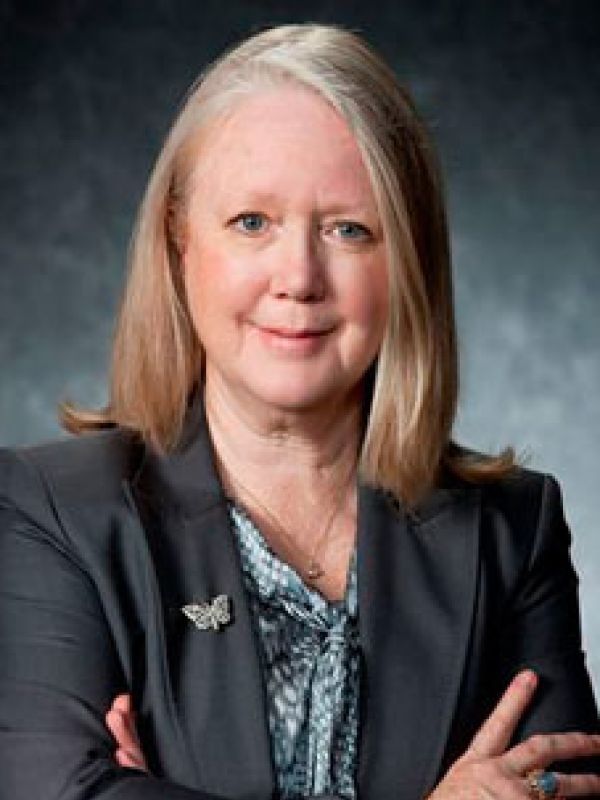
Jeffrey A. Cooper is a Professor of Law at Quinnipiac University School of Law , where he teaches courses in estate planning, wills and trusts, and taxation. He previously served as Associate Dean for Research and Faculty Development and is currently faculty adviser to the Quinnipiac Probate Law Journal . Education: AB from Harvard University, JD from Yale University, LLM from New York University Research Interests: His work focuses on tax policy , estate and gift taxation , and the intersection of federal tax law with state probate systems . He specializes in trust enforceability , uniform trust code , and historical analysis of tax legislation. Publications: Recent articles address perpetual trusts , state death tax decline , and curriculum reforms in estate planning education. His scholarship is widely published in national law journals and cited in casebooks. Scientific Awards: Academic Fellow, American College of Trust and Estate Counsel (ACTEC) Faculty Scholar, Quinnipiac University Professional Background: Before academia, Cooper practiced law for over a decade as a principal at Cummings & Lockwood, senior officer at United States Trust Company, and special counsel to Shipman & Goodwin. He also served as a senior adviser to Fiduciary Trust Company International.
Sarah Turnbull is an Associate Professor at the University of Waterloo, affiliated with the Balsillie School for International Affairs. Her work intersects criminology, sociolegal studies, and critical border/migration studies, focusing on immigration detention, deportation, punishment, and social justice through postcolonial, antiracist, and feminist lenses. Education: PhD and MA in Criminology and Socio-Legal Studies from the University of Toronto; BA from Simon Fraser University. Her current research includes: (1) a SSHRC-funded study on the National Immigration Detention Framework in Canada using Foucauldian genealogical methods; (2) the Prison Transparency Project , a comparative analysis of carceral transparency in Canada, Spain, and Argentina; and (3) a transatlantic study on pandemic impacts in prisons. She employs ethnographic and qualitative methods in her research. Selected Grants: 2023–2030: Co-Investigator, Prison Transparency Project (SSHRC Partnership Grant). 2022–2025: Principal Investigator, Reforming Detention (SSHRC Insight Grant). 2022–2023: Co-Principal Investigator, COVID-19 Justice as Penal Justice (Strathclyde-Waterloo Transatlantic Award). Turnbull’s publications and collaborations emphasize systemic inequalities, carceral mobilities, and ethical research practices. She co-founded the Prison Transparency Project and has contributed to dialogues on art as resistance in detention settings.
Catherine Anne Brown is a Professor at the Faculty of Law, University of Calgary with extensive international experience, having held visiting professorships at Stanford University (as a Fulbright Fellow), University of Toronto, UCLA, McGeorge School of Law, and Whittier Law School. Her expertise spans taxation, international trade law, and estate planning across multiple jurisdictions. Her research focuses on the critical intersection of tax and trade agreements, particularly how non-discrimination principles operate within services trade frameworks. Current work examines tax treaty mechanisms for addressing discriminatory practices in cross-border commerce, building on her 2017 monograph "Tax Discrimination and Trade in Services". She actively explores evolving regulatory challenges in digital services taxation and international compliance. Professor Brown's scholarship demonstrates consistent engagement with practical legal applications, bridging academic theory and professional practice through textbooks, treatises, and policy-oriented analyses. Her publications reveal progressive specialization in tax-trade interfaces while maintaining foundational contributions to estate planning education. Her distinguished career has been recognized through: Lifetime Achievement Award (Canadian Tax Foundation, 2017) Doug Sherbaniuk Award for Distinguished Writing (Canadian Tax Foundation, 2014) Award for Distinguished Service in Legal Scholarship (Law Society of Alberta/Canadian Bar Association, 2011) Widdifield Award for estate planning scholarship (2006, 2012) Induction into the International Academy of Estate and Trust Law (2012) As an educator, she directed the Business Clinical program until 2014, providing practical training in business law applications. She maintains active professional engagement through appointments to the NAFTA Chapter 19 roster (2018), STEP Canada's Public Policy Committee (2016), and the Canada Revenue Agency's Offshore Compliance Advisory Committee (2016), while serving on the Legal Education Society of Alberta's Board of Directors.
Sebastian Kube is a Professor of Behavioral and Experimental Economics at the University of Bonn, Germany. He holds concurrent positions as Senior Researcher at the Max Planck Institute for the Study of Public Goods, Research Fellow at the Institute for the Future of Labor (IZA), and Vice Director of the BonnEconLab. He also coordinates the European Doctoral Program in Quantitative Economics and serves on multiple editorial/research boards. University of Bonn Max Planck Institute for Research on Collective Goods Institute for the Study of Labor (IZA) BonnEconLab European Doctoral Program in Quantitative Economics His experimental research examines social preferences , cooperation mechanisms , incentive design , and norm enforcement . Key areas include: how remuneration schemes affect workplace cooperation, the effectiveness of social sanctions in social dilemmas, and the psychological foundations of environmental behavior. Recent work explores trust communication strategies for maintaining cooperation, information asymmetry effects in group dynamics, and incentive reversal phenomena where higher rewards paradoxically reduce effort. His 2025 publications particularly focus on sanction removal strategies and environmental behavior. Scientific Awards: Excellence in Teaching Award (2017, 2016, 2015, 2012) IZA Young Labor Economist Award (2011) Etienne-Laspeyres Prize (2011) Heinz Sauermann Prize (2004) As Vice Director of BonnEconLab, he oversees experimental infrastructure for economic research. His methodological approach combines field experiments with laboratory studies , often using behavioral game theory frameworks. He has published extensively in top journals including American Economic Review , Journal of Public Economics , and Management Science .
John D. Morley is the Augustus E. Lines Professor of Law at Yale Law School. He holds a B.S. from the University of Utah (2003) and a J.D. from Yale Law School (2006). His research focuses on the law and economics of organizations, particularly investment funds (mutual, private equity, and hedge funds), law firm dynamics, and trusts and estates. He teaches courses on business organizations, securities regulation, trusts and estates, and investment management regulation. Morley previously served as a faculty member at the University of Virginia School of Law and as Executive Director of the Center for the Study of Corporate Law at Yale. He is the reporter for the Uniform Directed Trust Act and has advised on legal reforms. His recent work examines political pressures on law firms and their vulnerabilities in adversarial environments, as highlighted in his analyses of Trump administration policies and SPAC litigation. Key contributions include studies on law firm collapses, the historical role of common law trusts, and regulatory challenges in investment management. He frequently engages with media on legal topics, appearing in outlets like the New York Times, Bloomberg, and Wall Street Journal, and hosts the Capitalisn't podcast discussing law firms’ ethical dilemmas and structural challenges.
Professor Philip Birch is a distinguished academic in Criminology at the University of Technology Sydney (UTS), Faculty of Design & Society, School of International Studies & Education. With over 15 years of academic experience across British, American, and Australian university systems, he has established himself as a leading expert in policing, community safety, and criminal justice. His extensive practical background in criminology, including roles as a Specialist Crime Team Manager, Community Safety Research Manager, and Through Care Worker in UK correctional facilities, informs his applied research approach. Professor Birch's educational background includes a BSocSci. (Hons) in Social Policy (Crime & Justice) from the University of Manchester, multiple postgraduate qualifications from the Open University (including an MSc. in Social & Criminological Research Methods), a Post Graduate Certificate in Higher Education Practice from the University of Huddersfield, and a PhD in Criminology from the University of New South Wales. He also holds a Fellowship with the Higher Education Academy. His research centers on six key areas: Police & Policing; Community Safety & Crime Prevention; Prisons, Probation & Parole Policy & Practice; Assessment, Treatment & Management of Offenders; Gender & sexuality inclusive Domestic and Family Violence; and Sex Work, Sex Workers and Procurement. His work emphasizes the practical application of criminological research to real-world justice issues, with strong industry engagement across law enforcement and correctional services. Recent publications reveal a clear trend toward police mental health, aging in policing, hate crime identification, trauma-informed policing approaches, and digital community safety initiatives. His research employs diverse methodologies including qualitative case studies, Delphi methods, rapid evidence assessments, and comparative analyses across multiple jurisdictions. Teaching award (2019) from Australian College of Educators for outstanding contribution to education Literati Award (2019) for published work Fellowship of the Higher Education Academy Professor Birch has supervised numerous Honours, Masters by Coursework, Masters by Research and PhD students in Criminology, Criminal Justice and Policing, with several completions to date. He has secured over $1.3 million in research funding, including an ARC Linkage grant, and has acted as an external assessor for domestic and international funding bodies. His research projects address critical issues in criminology and policing, often with direct policy implications. He established the Crime & Security Science (CaSS) Research Group at UTS in 2022, a cross-faculty initiative connecting academia with industry to advance evidence-based criminology, criminal justice, policing, and community safety research. This group serves as a hub for collaborative projects addressing contemporary security challenges through translational research.
Robert W. Brown serves as President, CEO, and COO of the University of West Los Angeles (UWLA), leading its School of Law and School of Business. He holds a Bachelor of Science in Business Administration from California State University, Los Angeles (1974) and a Juris Doctor from UCLA (1977). A licensed attorney since 1977, he has 43 years of expertise in real estate and banking law, advising Fortune 100 institutions on transactions exceeding $10 billion. His career spans roles as General Counsel at Sears Savings Bank, Vice President at City National Bank, and arbitrator for the American Arbitration Association. He has handled major transactions, including a $2.2 billion sale of Sears Savings Bank assets and the transition of Security Pacific National Bank’s real estate portfolio to Bank of America. Brown also serves as a Probate Referee in Orange County and contributes to CEB publications on commercial leasing. Brown’s leadership at UWLA has driven its growth into one of the largest State Bar-accredited law schools, expanding into international partnerships with institutions in China, India, Mexico, and Africa. He is a frequent lecturer on real estate and banking, and his accolades include multiple Hall of Fame inductions.
Joseph Frey is an Assistant Professor in the Department of Social Work at the University of North Texas. His research focuses on stigma-related issues affecting marginalized populations, including LGBTQ+ communities and families involved in social service systems. He examines intersections between mental health, criminal justice policies, and child welfare, with a particular emphasis on adverse childhood experiences (ACEs) and parenting support mechanisms. His work utilizes both quantitative and qualitative methods to address systemic barriers in service provision. Key themes include the impact of regional cultural attitudes on sexual identity stigma in the American South, the role of probation officer networks in connecting individuals with mental health resources, and strategies to enhance parental self-efficacy in under-resourced communities. Dr. Frey has published extensively on topics such as Head Start program effectiveness, latent class analysis of ACEs, and peer support interventions for fathers. His scholarship bridges academic research with practical applications in social work practice and policy development.
Rachel Ellis is an Associate Professor of Criminology and Criminal Justice at the University of Maryland. Her research focuses on women's experiences of punishment in the U.S., employing qualitative methods like ethnography and interviews to explore themes of race, class, gender, sexuality, and religion in carceral contexts. She holds a PhD in Sociology from the University of Pennsylvania, as well as MA and BA degrees from the University of Pennsylvania and Georgetown University, respectively. Ellis's current projects include a Russell Sage-funded study on women’s lived experiences on probation and an interview-based examination of women's reentry after incarceration. Her 2023 book, *In This Place Called Prison: Women's Religious Life in the Shadow of Punishment*, analyzes how religion shapes freedom and constraint within prisons. Recent publications address topics such as desistance narratives, maternal incarceration impacts, and the porous nature of prison institutions. Her teaching includes courses like *CCJS342 Corrections* and *CCJS418C Gender and Crime*, reflecting her commitment to integrating research into pedagogy. Ellis advises three current graduate students and has contributed to prominent journals in criminology and sociology. Her work bridges sociological theory with empirical research on criminal justice systems and gendered inequality.
Margaret Drew is an Associate Professor at UMass School of Law , focusing on Gender Violence , Human Rights , and Legal Ethics . With decades of practical legal experience in Massachusetts courts, she transitioned to academia in 2005 after a career in family law, probate, and residential real estate litigation. Education: BA from University of Massachusetts Boston, JD from Northeastern University School of Law, LLM in Taxation from Boston University School of Law Her research explores the intersection of law and gender-based violence , including trauma healing frameworks and feminist jurisprudence. She co-founded the Human Rights at Home Blog and has designed clinics enabling students to work directly with survivors of domestic abuse. Recent publications address complex social determinants in HIV care, feminist perspectives on pandemic response, and human rights remedies in domestic violence cases. In 2025, she received the Lifetime Achievement Award for her contributions. Scientific Awards: 20/20 Vision Award (ABA Commission on Domestic and Sexual Violence) Lifetime Achievement Award (May 1, 2025) As a former Director of Clinics at multiple law schools and current member of the American Bar Association and National Association of Women Lawyers , she continues to advocate for survivors while teaching courses like Intimate Partner Violence and State Attorney General Clinic .
Shoshana R. Shelton is a Professor at the RAND School of Public Policy and a Policy Researcher at the RAND Corporation. Her work centers on program evaluation, public health systems, emergency preparedness, and national health security, with significant contributions to pandemic response, violence prevention, and crisis decision-making. She has led major projects for federal agencies including the CDC, DHS, FEMA, and the U.S. Secret Service. Education: M.P.H., The Ohio State University B.A. in English, Denison University Her research focuses on strengthening public health infrastructure through performance measurement, logic modeling, and stakeholder engagement. She has developed tools such as tabletop exercises for continuity of operations in public health laboratories and led after-action reviews of the public health response to COVID-19. Her work emphasizes building resilience against biological threats, natural disasters, and targeted violence. Shelton's recent publications highlight trends in emergency alert systems, disaster resilience, criminal justice reform during pandemics, and equitable health security research investment. She advocates for evidence-based policies that balance bioterrorism preparedness with responses to natural disasters and climate-related emergencies. Scientific Awards: No awards listed in the provided text. She has advised or collaborated with numerous federal and state agencies, contributing to national health security through rigorous evaluation and policy analysis. Her grants and projects reflect sustained funding from DHS, CDC, and other federal bodies focused on improving public safety and health system readiness. She has also led initiatives on behavioral threat assessment in schools and wearable technology for law enforcement wellness. Labs and Teams: Previously led a four-year project on mass attacks and targeted violence for the U.S. Secret Service. Collaborated with the Association of Public Health Laboratories (APHL) on continuity of operations planning. Contributed to the Priority Criminal Justice Needs Initiative, fostering innovation across law enforcement, courts, and corrections.
Dr. Sarah Hupp Williamson is an Associate Professor in the Department of Civic Engagement and Public Service at University College, University of West Georgia. She specializes in criminology with a focus on human trafficking, global inequality, and media representations of crime. Her research examines the intersections of globalization, power structures, and criminal behavior across multiple contexts. Dr. Williamson holds a B.A. (2013) and M.A. (2015) in Criminology from the University of North Carolina Wilmington, and a Ph.D. in Sociology from North Carolina State University (2019). Her educational background provides a strong foundation in sociological analysis of crime patterns. Her research focuses on: Human trafficking networks and policy responses in global contexts Criminological theory development through integrated frameworks Media representations of crime and their societal impacts Neoliberal economic policies and their relationship to criminal activity Recent publications demonstrate her exploration of human trafficking mechanisms, media-fueled crime panics, and economic policy impacts. Her work consistently integrates sociological theory with empirical analysis of global crime patterns. Dr. Williamson teaches courses including Criminological Theory, Global Crime and Justice, Human Trafficking, and Environmental Crime, reflecting her interdisciplinary approach to criminal justice studies.
Melissa Brown is a Clinical Professor of Law at the University of the Pacific’s McGeorge School of Law. She serves as Director of both the Elder & Health Law Clinic and the Elder & Health Law Certificate of Concentration. Professor Brown also acts as faculty advisor for the Native American Law Student Association and previously led the development of the Legislative & Public Policy Clinic and the Homeless Advocacy Clinic from 2013–2023. Education: BA from California State University, Chico JD from Loyola Law School, Los Angeles Her research and teaching focus on elder law, health law, and social policy, emphasizing interdisciplinary approaches to legal and medical challenges such as informed consent, surrogate decision-making, and elder abuse. Her advocacy work has influenced legislation on probate courts, nursing home citations, durable powers of attorney, and Medicare supplemental insurance. Scientific Awards: 2022 Hether Clash Macfarlane Faculty Teaching Innovation Award Listed in 'Sacramento's 40 Top Lawyers' by The Best Lawyers in America (over a decade) Professor Brown’s students engage in direct client representation, courtroom advocacy, and interdisciplinary collaborations with UC Davis Medical School. She has authored educational materials for attorneys and advocates across multiple states and organizations, including the American Bar Association and AARP.
Professor Coral Dando is a Professor of Psychology at the University of Westminster, leading research in forensic cognition and investigative interviewing. With a background as a London Police Officer, she completed a BSc (Hons) Psychology and PhD in Applied Forensic Cognition. She is a Chartered Psychologist, National Teaching Fellow, and Registered Forensic Psychologist. Her research focuses on eyewitness memory, deception detection, and cross-cultural interviewing, with a particular emphasis on improving investigative methods in security and forensic contexts. Her academic roles include teaching forensic psychology modules (e.g., detecting deception, investigative interviewing) and supervising PhD students researching topics like virtual environments in interviews and neurodivergent credibility. She has secured significant research funding from entities like the Home Office, FBI, and CPNI, totaling over £2M across projects addressing insider threats, county lines exploitation, and aviation security. Key Research Themes: Eyewitness reliability, cognitive interviewing techniques, cross-cultural persuasion, and insider threat detection. Grants: Includes a 2024 €97,000 COST grant for implementing the Mendez Principles and a 2016 $469,000 FBI-funded study on intelligence interviewing. Professor Dando’s work bridges academia and practice, training professionals from police forces, security agencies, and NGOs. She contributes to policy development and has authored over 100 peer-reviewed publications, including seminal works on the cognitive interview and WAFA (Witness-Aimed First Account) for neurodivergent individuals. Her research emphasizes ethical, context-aware methodologies to enhance justice outcomes.
Frederick Royal is a Professor of Law at the Western New England University College of Law , where he has been a faculty member since 1978. He serves as the Director of the LL.M. program in Elder Law and Estate Planning , reflecting his specialization in tax and estate-related legal frameworks. Royal’s career combines academic rigor with practical experience, including a clerkship with U.S. Tax Court Judge William M. Drennan and work in private tax law practice. Education: B.A., University of Massachusetts J.D., Cornell Law School LL.M., Boston School of Law His research focuses on tax procedure , corporate taxation , and estate planning , with publications spanning trust administration, tax code compliance, and elder law applications. He actively engages in public discourse through talks on tax issues sponsored by organizations like Massachusetts Continuing Legal Education, Inc. The LL.M. program under his leadership emphasizes elder law and estate planning, aligning with his teaching of courses such as Estate & Gift Tax , Estate Planning , and Taxation of Business Entities . His scholarly works include book chapters and articles on trusts, tax redemption strategies, and life insurance policy management.





/prod01/production-cdn-pxl/media/umassdartmouth/profiles/umass-law/Margaret-Drew-2023.jpg)