Mateusz Skomraمشاهده پروفایل
پژوهشگر
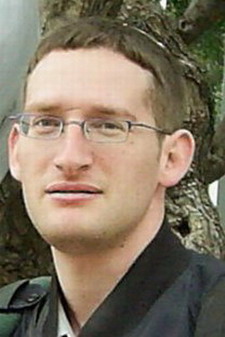
Mateusz Skomra is a CNRS researcher currently based at the Laboratoire d'analyse et d'architecture des systèmes (LAAS) in Toulouse, France, where he is a member of the POP research team. Previously, he held postdoctoral positions at École normale supérieure de Lyon and CNRS within the Laboratoire de l'Informatique du Parallélisme and the MC2 team. He earned his PhD from École polytechnique, Centre de Mathématiques Appliquées, under the supervision of Xavier Allamigeon and Stéphane Gaubert, as part of the INRIA Tropical team and Université Paris-Saclay. His research lies at the intersection of tropical geometry, convex optimization, algorithmic game theory, and algebraic complexity. He has made significant contributions to the understanding of tropical convexity, semidefinite programming over nonarchimedean fields, mean payoff and stochastic games, and algebraic reconstruction problems. His work often bridges theoretical mathematics with computational aspects, particularly in optimization and complexity theory. The analysis of his recent publications reveals a consistent focus on tropical methods in optimization and game theory, with increasing attention to algorithmic and computational implications. His work connects deep algebraic structures with practical algorithm design, especially in deriving complexity bounds and developing solution methods for games and polynomial systems. Key recurring themes include value iteration, derandomization, Minkowski sums, and the interplay between geometry and algebra in computational settings. Prix Dodu for best presentation by a young researcher Mateusz Skomra has advised doctoral research during his PhD under leading experts and continues to mentor students through master’s internships, such as one on analyzing mean payoff games using sums-of-squares techniques. While specific grant details are not listed, his affiliations with CNRS, INRIA, and participation in numerous national and international workshops suggest active involvement in collaborative research projects. He frequently contributes to academic discourse through seminars and conference presentations across Europe. He is actively involved in research teams including the POP team at LAAS-CNRS, previously the MC2 team at ENS Lyon and the Tropical team at INRIA. These teams focus on mathematical computing, optimization, and theoretical computer science, providing a rich interdisciplinary environment for his work.