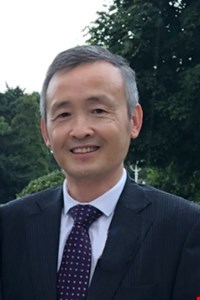
Vishesh Mishra is a Prime Minister's Research Fellow at the Department of Computer Science and Engineering, Indian Institute of Technology Kanpur. He concurrently serves as a Visiting Research Fellow at INRIA Centre, University of Rennes, France, and an External Research Collaborator at CANDLE LAB, IIT Roorkee. His research centers on hardware security vulnerabilities in approximate computing systems, with focus areas including hardware trojan detection in approximate circuits, energy-efficient error-resilient architectures, and side-channel attack mitigation. He develops novel methodologies for securing IoT devices and blockchain implementations through circuit-level innovations and floating-point approximation techniques. Analysis of his 15 most recent publications reveals dominant themes in approximate arithmetic unit design (adders/multipliers), hardware trojan countermeasures, and floating-point resilience. His work bridges theoretical security models with practical VLSI implementations, consistently targeting energy efficiency without compromising critical functionality in error-tolerant applications. Scientific recognition includes: Prime Minister's Research Fellowship (India's premier PhD fellowship) Collège doctoral de Bretagne international mobility grant (€9600 for 6-month INRIA research) His research is supported through competitive fellowships rather than traditional grants, with no student advising roles documented. Current collaborations span IIT Kanpur's C3i Center, IIT Roorkee's CANDLE LAB, and INRIA's Rennes research unit, focusing on cross-institutional hardware security projects.
Christine Rizkallah is a Senior Lecturer in the School of Computing and Information Systems at the University of Melbourne, Australia. She joined the university in December 2021 after serving as a Lecturer at the University of New South Wales (UNSW) from April 2018 to December 2021. Her research focuses on interactive theorem proving, formal verification, programming languages, and systems, with an emphasis on building practical tools for high-assurance software development. She leads a research group working on the Cogent and Dargent languages, aiming to reduce the burden of formal verification in systems programming. Education: PhD in Computer Science, Universität des Saarlandes and Max-Planck-Institut für Informatik, Germany (2015), thesis: Verification of Program Computations , supervised by Prof. Dr. Kurt Mehlhorn. MSc in Computer Science, Universität des Saarlandes, Germany (2009), thesis: Proof Representations for Higher Order Logic , supervised by Prof. Dr. Gert Smolka and Dr. Chad E. Brown. BSc in Computer Science, German University in Cairo, Egypt (2007), thesis: X2-Planner: A Hierarchical Task Network Planner for Real Time Gaming Applications , supervised by Prof. Dr. Slim Abdennadher and Dr. Thorsten Maier. Her research interests lie at the intersection of programming languages and formal methods. She develops domain-specific languages with strong type systems and verified compilers to enable trustworthy software systems. Her work spans algorithms, logic, security, and social choice theory, reflecting a strong interdisciplinary approach. She has published extensively in top venues such as POPL, ICFP, ASPLOS, JAR, and PACMPL, with a focus on certifying compilation, refinement verification, and mechanized reasoning. Her recent publications reveal a consistent focus on formal verification of systems software, particularly through the Cogent language and its ecosystem. Key themes include verified data layout refinement (Dargent), property-based testing, termination analysis, cost modeling, and integration with foreign functions. Her work combines theoretical rigor with practical implementation, often involving mechanized proofs in Isabelle/HOL and Coq. Scientific Awards and Recognition: Distinguished Artefact Award at SLE'22 (awarded to Zilin Chen for work under her supervision). First Prize, SPLASH'22 Student Research Competition (undergraduate), won by Raphael Douglas Giles. Second Prize, ACM-wide Student Research Competition (undergraduate, 2023), won by Raphael Douglas Giles. She has supervised numerous PhD, Masters, and Honours students, many of whom have continued in academia or industry research roles. She has received research funding through institutional support and collaborative grants, though specific grants are not detailed in the provided text. She is actively involved in the programming languages community, serving on program committees for POPL, ICFP, CPP, PLDI, and others, and holding leadership roles such as Program Chair for FUNARCH'25 and Diversity and Inclusion Co-Chair for PLDI'25. She teaches core courses including Declarative Programming and Models of Computation at the University of Melbourne. She leads a vibrant research team and collaborates widely across institutions including UNSW, University of Pennsylvania, and international partners. Her lab focuses on building verified systems using functional programming and formal methods, with strong ties to the DeepSpec project and the Isabelle/HOL community.
Dr. Liang Min serves as the Managing Director of the Bits & Watts Initiative at Stanford University's Precourt Institute for Energy and as the founding Managing Director of the Stanford Net-Zero Alliance at the Stanford Doerr School of Sustainability. He leads multidisciplinary programs advancing the digital transformation of the electric grid and promoting net-zero emissions solutions through research, education, and industry collaboration. Dr. Min's educational background includes: Ph.D. from Texas A&M University (2007) M.S. from Tianjin University (2004) B.S. from Tianjin University (2001) His research focuses on the digital transformation of electric grids, with pioneering work on 100% Clean Electric Grid, EV50, AI for Climate and Energy, and the Digital Grid platform for integrating distributed energy resources. He recently launched the Powering AI Sustainably program addressing AI's energy demands while accelerating clean power transition. His work bridges high-performance computing with power system operations to enhance grid reliability, security, and sustainability amid increasing renewable penetration and electrification trends. Analysis of Dr. Min's recent publications reveals a strong emphasis on grid modernization through digital technologies, with particular focus on integrating distributed energy resources, enhancing grid resilience, and applying advanced computational methods to power system challenges. His research spans from fundamental work in power system dynamics and control to practical applications addressing energy transition, electric vehicle integration, and AI's role in sustainable energy systems. Dr. Min has led significant research projects funded by the Department of Energy, Bonneville Power Administration, and other organizations, resulting in multiple U.S. patents related to grid technologies including voltage stability smart meters and synchronized electric meters with atomic clocks. As the founder of the Stanford Energy Executive Education Program, Dr. Min has created platforms to equip energy leaders with strategic insights for navigating the rapidly evolving energy landscape. He also established the Stanford Net-Zero Alliance to bring together industry leaders, faculty, and students for collaborative research and education toward net-zero emissions.
Nikhil Shukla is an Associate Professor at the University of Virginia with a joint appointment in Electrical and Computer Engineering and Materials Science and Engineering. His work bridges emerging hardware technologies with computational paradigms for energy-efficient systems. Education: Ph.D. in Electrical Engineering (University of Notre Dame, 2017), BS in Electronics and Telecommunications (University of Mumbai, 2010) His research focuses on emerging solid-state devices for non-Boolean computing, energy-efficient data storage , and integration of novel materials to redefine computing architectures. Key efforts include co-designing devices, circuits, and system-level solutions for Ising machines and dynamical systems solving combinatorial optimization problems. The 15 most recent articles highlight trends in oscillator-based Ising machines for optimization, ferroelectric and phase-transition materials, and hardware acceleration for NP-hard problems like Max-Cut and MaxSAT. Topics span from device physics (e.g., hafnium oxide endurance) to circuit-level implementations (FPGA accelerators, CMOS-compatible designs). Scientific Awards: IEEE TMSCS Best Paper Award (2017), STARnet LEAST Center Best Publication Awards (2015–2017), J.N. TATA and J.R.D TATA Scholarships (2011) Shukla's work at the Computing Hardware Research Lab emphasizes cross-disciplinary approaches, leveraging synchronized oscillators and correlated materials to push beyond CMOS-era limitations.
Supriyo Datta is the Thomas Duncan Distinguished Professor of Electrical and Computer Engineering at Purdue University, affiliated with the School of Electrical and Computer Engineering. His work bridges physics and computing, focusing on nanoscale devices and quantum phenomena. He pioneered spintronics and proposed spin transistors, foundational to modern spin-based electronics. His research on negative capacitance aims to extend Moore’s Law, while recent work explores probabilistic computing via p-bits, addressing complex problems at room temperature. Research Interests: Probabilistic Computing Spintronics and Quantum Transport Nanoelectronics and Device Simulation Unconventional Computing Architectures He authored seminal books like Quantum Transport: Atom to Transistor , which underpin semiconductor device modeling. His NEGF formalism is industry-standard for nanotransistor design. Datta’s contributions earned him NAE membership and global recognition in physics and engineering. Awards: Elected to the National Academy of Engineering (NAE) His group has advised over 50 PhD students, advancing fields from molecular electronics to autonomous probabilistic hardware. Current projects include p-bit-based Ising machines and spin-inspired quantum emulation systems.
Daniel Grier is an Assistant Professor at the University of California, San Diego in the Computer Science and Engineering and Mathematics departments. His research focuses on quantum complexity theory , particularly near-term quantum computing paradigms and proving quantum advantage over classical systems. PhD in Computer Science from MIT under Scott Aaronson Postdoc at the Institute for Quantum Computing (University of Waterloo) B.S. in Computer Science and Mathematics from University of South Carolina His work spans quantum algorithms , complexity theory , and quantum simulation , with notable contributions to BosonSampling , Clifford circuits , and classical shadow tomography . He has developed open-source tools like gridCHP++ , a C++ stabilizer simulator for planar quantum circuits. Publications highlight collaborations with researchers including Scott Aaronson , David Gosset , and Luke Schaeffer , covering topics such as quantum query complexity , quantum simulation efficiency , and quantum-classical separations .
Martina Cardone is an Associate Professor in the Department of Electrical and Computer Engineering at the University of Minnesota, Twin Cities, leading the Cardone Research Group from her office in Keller Hall. Her work bridges theoretical frameworks with practical engineering solutions in next-generation communication systems. Her research focuses on developing fundamental theoretical frameworks and computationally feasible techniques for real-world problems. Primary areas include information theory foundations for wireless communications (particularly 5G/mmWave networks), network security protocols, privacy-preserving data publishing, distributed caching architectures, and optimization of network coding algorithms. She investigates high-data-rate transmission schemes, low-complexity scheduling for relay networks, and vulnerability mitigation strategies. Recent publications reveal strong thematic trends in mmWave network optimization for ultra-reliable low-latency communication, information-theoretic bounds in estimation theory, and secure distributed computing under adversarial conditions. Her work consistently connects theoretical limits with implementable solutions for emerging communication paradigms. Scientific Awards: NSF CAREER Award Professor Cardone directs multiple NSF-funded research initiatives including the CAREER project on secure mmWave communications, RINGS for network reliability, and projects on half-duplex wireless scheduling and privacy-preserving distributed computing. She actively mentors graduate students and recruits new researchers through her Cardone Research Group, emphasizing both theoretical depth and practical implementation. The Cardone Research Group operates at the intersection of information theory and network engineering, with current projects targeting mmWave reliability, secure communication frameworks, and distributed computing architectures that withstand adversarial attacks while maintaining privacy guarantees.
Martin Trapp is an Academy Postdoctoral Researcher in the Department of Computer Science at Aalto University, specializing in probabilistic machine learning. He is affiliated with Professor Arno Solin's research group, focusing on advancing tractable probabilistic models for real-world applications. His research centers on Probabilistic Circuits , Probabilistic Programming , and Bayesian Nonparametrics , with emphasis on hardware-efficient implementations for edge devices and multimodal systems. Key interests include uncertainty quantification in deep learning, neurosymbolic AI integration, and medical imaging applications. His work bridges theoretical foundations with practical deployment constraints, particularly in resource-limited environments. Analysis of his 15 most recent publications (2022-2025) reveals three dominant trends: (1) hardware-aware probabilistic inference for TinyML applications, (2) scalable Bayesian methods using bitstring representations and probabilistic programming, and (3) multimodal robustness in vision-language systems and medical imaging. His contributions span from theoretical circuit representations to real-world implementations in mammography analysis and vision-language models. Trapp secured a HIIT short-term project grant (November 2022) for "Positive Semi-Definite Circuits" under the Department of Computer Science. No formal advising relationships are documented in available sources. He actively collaborates with researchers including Arno Solin, Rui Li, and Marcus Klasson across institutions like Aalto University and the Helsinki Institute for Information Technology. As a core member of Aalto's Probabilistic Machine Learning group, he contributes to advancing probabilistic AI methodologies with applications in healthcare, edge computing, and multimodal reasoning. His current work emphasizes deployable probabilistic systems that maintain rigorous uncertainty quantification while meeting hardware constraints.
Dr. Silviu Filip is a Chargé de Recherche (junior researcher) at INRIA Rennes - Bretagne Atlantique, affiliated with the Taran team since October 2018. Previously, he held postdoctoral positions at INRIA (2018) and the University of Oxford's Numerical Analysis group (2017-2018). He obtained his PhD in Computer Science from École Normale Supérieure de Lyon in 2016, focusing on algorithmic aspects of digital filter design. His research spans: Approximation theory and numerical computations Computer arithmetic and hardware acceleration Convex/integer optimization Efficient deep learning computations Digital filter design and FPGA implementations Research trends from publications show consistent focus on numerical optimization techniques applied to hardware-efficient deep learning, including mixed-precision training (70% of recent papers), FPGA acceleration (40%), and novel quantization methods (30%). Awards: Best Paper Award at IEEE Symposium on Computer Arithmetic (ARITH-30, 2023) PhD Supervision: Cédric Gernigon (2020-present) Léo Pradels (2020-present) Sami Ben Ali (2022-present) Software Development: Leads multiple open-source projects including firpm (FIR filter design), MPTorch (mixed-precision training), srfloat (stochastic rounding), and contributes to Chebfun (numerical computing).
Danny Bøgsted Poulsen is an Associate Professor at the Department of Computer Science, Aalborg University, affiliated with The Technical Faculty of IT and Design. His research focuses on formal methods, model checking, and cyber-physical systems with applications in security analysis and programming languages. He contributes to projects like BEO-COVID (2020–2020) and IDEA4CPS (2011–2015), which explore decision support tools and foundational cyber-physical systems. His academic background includes advanced work in formal verification and statistical model checking. Key research interests include: Formal methods for string constraints and SMT solvers Statistical analysis of security-critical systems Modelling protocols like DTLS and attack-defense scenarios Applications of formal methods in education and public health Recent work highlights include developing SMTQuery for benchmark analysis, statistical evaluation of bit-flip vulnerabilities, and leveraging large language models for educational feedback. His research outputs span over 36 publications across journals and conferences, with active contributions to UPPAAL tool development and open datasets for reproducibility. Poulsen collaborates internationally on projects involving formal verification of embedded systems and cybersecurity protocols. His work bridges theoretical computer science with practical applications in safety-critical systems.
Yaniv Plan is an Associate Professor of Mathematics at the University of British Columbia. His research focuses on applied probability, compressive sensing, matrix completion, and mathematical foundations of machine learning. He co-organizes the interdisciplinary group Mathematics of Information, Learning, and Data (MILD). His work bridges high-dimensional probability with applications in signal processing and data science. He teaches advanced courses such as Probability in High Dimensions and Compressed Sensing , emphasizing theoretical foundations like concentration inequalities, random matrix theory, and optimization. His research has led to advancements in 1-bit compressed sensing, matrix completion, and robust recovery algorithms. Notably, he received the NIPS 2018 Best Paper Award for contributions to learning Gaussian mixtures via sample compression. Plan’s publications address topics like sub-Gaussian matrices, weighted matrix completion, and non-smooth stochastic gradient descent. His work often combines rigorous mathematical analysis with practical applications in compressed sensing and sparse recovery. He collaborates widely, with co-authors including Roman Vershynin, Emmanuel Candès, and Mary Wootters. His research has been supported by grants exploring compressed sensing, high-dimensional data, and algorithmic robustness.
Gian Carlo Cardarilli is a researcher specializing in digital hardware design and machine learning acceleration. His work focuses on FPGA implementations, Residue Number System (RNS) architectures, and reconfigurable computing for applications in wireless communication, edge AI, and fault-tolerant systems. Key collaborations with institutions like IEEE and ACM through publications. Active in translating theoretical algorithms into practical hardware solutions for real-time systems. Research interests include: Optimizing deep learning models for heterogeneous platforms. Developing radiation-hardened memory systems. Creating energy-efficient signal processing architectures. Advancing reconfigurable functional units for embedded processors. His article analyses span fields like Quantum Cellular Automata , Variable Fractional Delay Filters , and RNS-Based Position Estimation , reflecting a trend toward adaptive, low-power, and domain-specific hardware.
Dr. Yuheng Bu is an Assistant Professor in the Department of Electrical & Computer Engineering at the University of Florida, part of the Herbert Wertheim College of Engineering. His research focuses on machine learning, information theory, and signal processing, with applications in fair/trustworthy ML, uncertainty quantification, and anomaly detection. He holds a Ph.D. from the University of Illinois at Urbana-Champaign (2019), an MS from the same institution (2016), and a B.E. from Tsinghua University (2014). Research interests include developing robust watermarking techniques for large language models, ensuring algorithmic fairness, and advancing theoretical foundations of learning algorithms via information-theoretic methods. His work bridges theory and practice, addressing challenges in model security, interpretability, and generalization. Key honors include the Yi-Min Wang and Pi-Yu Chung Research Award (2019). His publications emphasize security-aware ML, uncertainty quantification, and information-theoretic analysis of learning algorithms. While no advising or grants are listed, his lab likely focuses on interdisciplinary projects at the intersection of ECE and computer science.
Adway Girish is a third-year Ph.D. candidate and Doctoral Assistant at the School of Computer and Communication Sciences (IC), École Polytechnique Fédérale de Lausanne (EPFL), Switzerland. He is affiliated with the Information Processing Group (IPG) and the Laboratory for the Theory of Information (LTHI), working under the supervision of Prof. Emre Telatar. He has also collaborated with leading researchers including Michael Gastpar, Hyeji Kim, and Shlomo Shamai. His educational background includes a B.Tech. in Electrical Engineering with honors and a minor in Mathematics from the Indian Institute of Technology Bombay (IITB), completed in 2022. Adway's research centers on information theory and its applications in communication, security, and machine learning. He is particularly interested in foundational aspects of information measures, entropy optimization, and the theoretical underpinnings of modern deep learning architectures such as transformers and large language models. His recent work explores rate-distortion frameworks for prompt compression, learning dynamics in transformers, and entropy-constrained communication channels. His research bridges theoretical rigor with practical implications in AI and communication systems. The trend in his recent publications shows a shift from classical signal processing and micro-Doppler analysis during his undergraduate years to advanced topics in information theory and machine learning during his Ph.D. His contributions are published in top-tier venues such as ISIT, NeurIPS, ICLR, and ICML workshops, indicating a strong trajectory in theoretical computer science and applied mathematics. Scientific Awards and Recognitions: ICLR 2025 Spotlight Paper (awarded to top 5% of accepted papers) Oral presentation at ICML 2024 Workshop on Theoretical Foundations of Foundation Models (selected as one of top 4 out of 58 submissions) Adway advises no students currently, as he is himself a doctoral candidate. However, he plays an active role in collaborative research projects involving multiple co-authors across institutions. He has not received specific mention of external grants in the provided text, but his position as a Doctoral Assistant at EPFL suggests institutional funding. His collaborations with renowned researchers suggest involvement in larger research initiatives and potential access to grant-supported projects. He is a core member of the Information Processing Group (IPG) at EPFL, a research lab focused on theoretical and applied aspects of information science, including coding, communication, learning, and data analysis. The group fosters interdisciplinary research and hosts regular seminars, candidacy reviews, and internal presentations, all of which Adway actively participates in.
Professor Xiaohui Liu is a distinguished Professor of Computing at Brunel University London, serving within the Computer Science department of the College of Engineering, Design and Physical Sciences. He maintains his office in the Wilfred Brown Building (Room 218) and has established himself as a leading figure in intelligent data analysis and artificial intelligence research. With over 20 years of academic leadership, Professor Liu has held significant visiting appointments including Honorary Pascal Professor at Leiden University (2004), Visiting Scientist at Harvard Medical School (2005), and Visiting Professor at the Chinese Academy of Sciences (2010). Professor Liu's research spans intelligent data analysis, deep learning, dynamical systems, human factors, innovative AI applications, optimisation, statistical pattern recognition, and trustworthy decision making. His work bridges theoretical advances with practical implementations across various industries, demonstrating exceptional translational impact. He has pioneered approaches that integrate artificial intelligence with data science to enable effective data interpretation and trustworthy decision-making systems, with applications spanning healthcare, manufacturing, and business domains. Analysis of Professor Liu's recent publications reveals a strong focus on transformer architectures, transfer learning, and optimization techniques applied to real-world problems. His work demonstrates consistent innovation in neural network architectures, particularly for anomaly detection, fault diagnosis, and recommendation systems. The publications show interdisciplinary applications spanning manufacturing, healthcare, digital marketing, and network science, reflecting his commitment to solving practical challenges through advanced computational methods. Clarivate Highly Cited Researcher for 11 consecutive years (2014-2024) World's top 2% of scientists by Stanford University (2020-2024) ScholarGPS Highly Ranked Scholar – Lifetime: Neural Network (2022-2024) Daniel Berg Award (2023) Research.com United Kingdom Leader Award in Computer Science (2023-2025) IDA Founders Award (2025) Professor Liu has secured substantial research funding from diverse sources including the European Commission, Innovate UK, Royal Society, and EPSRC. His current projects include AI-assisted tax assessment, intelligent data-driven pipelines for manufacturing certified metal parts, and maintenance models for zero-unexpected-breakdowns. He leads collaborative efforts through knowledge transfer partnerships with industry partners like Veritas Advisory Limited and has directed multiple European Commission-funded initiatives focused on IoT platforms, water resource management, and predictive maintenance systems. His research group actively mentors PhD students and collaborates with international partners across multiple continents. Professor Liu leads research activities within the IEHS and CSSB research groups at Brunel University, fostering interdisciplinary collaboration between computer scientists, engineers, and domain experts. His teams integrate expertise in neural networks, optimization algorithms, and statistical pattern recognition to develop innovative solutions for complex real-world problems. The research environment emphasizes both theoretical rigor and practical application, with strong industry partnerships ensuring that research outputs deliver tangible societal and economic impact.