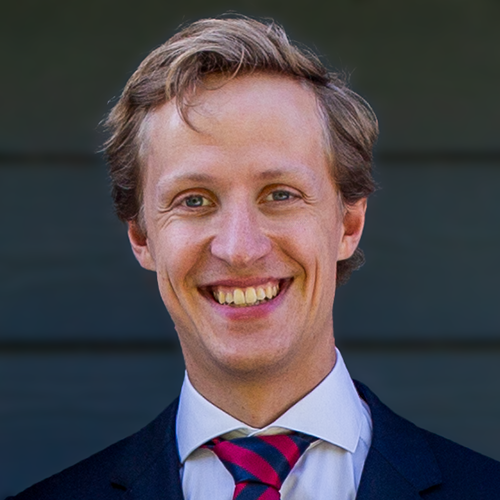
Einar Broch Johnsen is a Professor at the Department of Informatics , University of Oslo . His research focuses on formal methods , distributed systems , and digital twins , with applications in cloud computing , robotics , and healthcare . Leadership: Strategy Director of SIRIUS (2015-2023), Coordinator of EU projects Envisage and HyVar . Community Roles: Board member of Formal Methods Europe , editorial board member of Formal Aspects of Computing , and chair of conferences like FM 2015 and FASE 2022 . His recent work explores symbolic execution , probabilistic logic , and self-adaptive systems , as reflected in his 15 most recent publications . He teaches courses such as IN2031 – Project in Programming and IN5170: Models of Concurrency .
Emanuele D'Osualdo is a Tenure-Track Professor of Formal Methods for Software Engineering at the University of Konstanz, Department of Computer and Information Science. Previously, he was a Postdoctoral Researcher at Max Planck Institute for Software Systems (MPI-SWS) in Saarbrücken until April 2024, working with Derek Dreyer on verification of concurrent software. Before that, until September 2020, he was a Marie Curie Fellow at Imperial College London, working with Prof. P. Gardner. From 2015 to 2017, he was a PostDoc in the Concurrency Theory Group at the University of Kaiserslautern, working with Prof. Roland Meyer. His educational background includes: PhD (DPhil) in Computer Science from the University of Oxford (2015), supervised by Prof. C.-H. Luke Ong Undergraduate and master's studies at the University of Udine, Italy, graduating with honors and supported by the Scuola Superiore scholarship Emanuele D'Osualdo's research focuses on Formal Methods for the verification of software, with particular emphasis on two main approaches: automatic verification methods using static analysis and infinite-state model checking; and compositional methods, focusing on program logics for properties beyond safety. His work spans several areas including Programming Languages, Verification, Security, Concurrency Theory, Probabilistic Programs, Types, Static Analysis, Process Algebra, and Model Checking. His research has led to the development of tools such as Soter for automatic safety verification of Erlang programs and James Bound for analyzing π-calculus. His recent publications demonstrate a strong focus on advanced verification techniques for concurrent and distributed systems, with particular attention to linearizability, session types, security protocols, and probabilistic reasoning. His work bridges theoretical foundations with practical applications in software verification, showing a progression from foundational work on π-calculus to more applied verification of concurrent data structures and probabilistic systems. He has received notable recognition for his work, including: Winner of the 2016 CPHC/BCS Distinguished Dissertation award Marie Curie Fellow Emanuele actively supervises students and leads research in formal methods. He is involved in several research projects related to software verification and has presented his work at top-tier conferences including POPL, OOPSLA, ESOP, and CAV. He is scheduled to give a keynote at HYPER'25 in Zagreb and will be attending POPL'25. His research group appears to focus on developing theoretically sound yet practical verification techniques for modern concurrent and distributed software systems.
Simon Oddershede Gregersen is a postdoctoral researcher at the Courant Institute of New York University, working with Joseph Tassarotti. He earned his PhD from Aarhus University in 2023 under Amin Timany and Lars Birkedal. His research focuses on programming languages and program verification, particularly for security properties, distributed systems, and randomized programs. Current Position: Postdoctoral Researcher, Courant Institute, New York University PhD: Aarhus University (2023) Future Role: Tenure-Track Faculty, CISPA (starting January 2026) Simon devises techniques like program logics and logical relations to enable formally verified software systems with machine-checked proofs. His work is supported by an Internationalization Fellowship from the Carlsberg Foundation (CF23-0791). He has presented his research at international conferences and workshops, including ICFP, POPL, and POST. Recent publications highlight his contributions to probabilistic programming verification, error bound reasoning, and logical relations for security. He received the ICFP 2024 Distinguished Paper Award for his work on error bound analysis. Simon invites collaboration with prospective interns and PhD students at CISPA starting 2026. Email: s.gregersen@nyu.edu
Harold Connamacher is an Associate Professor in the Department of Computer and Data Sciences at Case School of Engineering, Case Western Reserve University . He holds the Robert J. Herbold Professor of Transformative Teaching title and serves as Associate Chair in his department. University: Case Western Reserve University School: Case School of Engineering Department: Computer and Data Sciences Academic Rank: Associate Professor Research Interests Harold's research focuses on random constraint satisfaction problems , algorithms , and artificial intelligence . He applies theoretical computer science techniques to analyze problem structures and enhance algorithm performance, particularly in combinatorial optimization and computational complexity. Teaching Interests : Programming languages, discrete mathematics, graph theory, algorithms, data structures, computer science theory, and database programming. His work in computer science education has been recognized with multiple awards, including the Carl F. Wittke Award for Excellence in Undergraduate Teaching (2019) and the Delta Upsilon Srinivasa P. Gutti Engineering Teaching Award (2017). Scientific Awards Carl F. Wittke Award for Excellence in Undergraduate Teaching 2019 Guy Savastano Outstanding Educator Award 2019 Delta Upsilon Srinivasa P. Gutti Engineering Teaching Award 2017 Tau Beta Pi Publications span topics in theoretical computer science , machine learning , and mathematical combinatorics , including works on satisfiability thresholds, spanning tree optimization, and educational methodologies in programming instruction.
Andrea Tridello is an Associate Professor in the Department of Mechanical and Aerospace Engineering at the Polytechnic University of Turin, Italy, and a member of the Interdepartmental Center J-Tech@PoliTO. His academic work focuses on mechanical design, fatigue analysis, and additive manufacturing technologies with significant contributions to Very High Cycle Fatigue (VHCF) research. Dr. Tridello's research spans multiple areas including Additive Manufacturing , Composite Materials , Fatigue Behavior , and Machine Learning applications for predicting material responses. His work addresses critical challenges in non-destructive testing methodologies for damaged composites, fatigue analysis of additively manufactured components, and the mechanical behavior of lattice structures. He has developed machine learning algorithms specifically for predicting mechanical behavior of structural materials. His recent publications demonstrate a strong focus on the intersection of additive manufacturing and fatigue analysis, with particular attention to defect characterization, statistical modeling of fatigue data, and development of predictive algorithms. His research also extends to composite materials, exploring impact damage assessment and non-destructive evaluation techniques across aerospace and automotive applications. Young Researcher Award from VHCF8 conference (2021) Steering Committee member of European Structural Integrity Society (ESIS) (2024-) Steering Committee member of Italian Fracture Group (2023-) Editorial Board member of FRACTURE AND STRUCTURAL INTEGRITY (2023-) Editor-in-Chief of MATERIAL DESIGN & PROCESSING COMMUNICATIONS (2023-) Dr. Tridello actively supervises PhD students Alessio Centola (39th cycle) and Rujun Li (38th cycle). He leads and participates in significant research projects including ML4FatigueDesign (statistical software for fatigue data analysis), FAAST (Fatigue on Additive Alloys Speedy Technique), and PLEIADES (advancing aerospace composites). His work has practical applications across aerospace, automotive, and industrial sectors. He is a key member of the Mechanics of Materials and Joints research group within DIMEAS, focusing on fatigue, impact, and testing methodologies for advanced materials and structures, contributing to both theoretical frameworks and practical engineering solutions.
Giovanni Denaro is a Researcher at the University of Palermo, affiliated with the School of Basic and Applied Sciences. His work integrates mathematical modeling with environmental and marine research, focusing on mercury bioaccumulation, phytoplankton dynamics, and climate change impacts on Mediterranean ecosystems. He teaches Mathematics for Experimental Research with Statistics in the Biodiversity and Technological Innovation program. University: University of Palermo School: School of Basic and Applied Sciences Role: Researcher (MATH-04/A) His research spans stochastic ecological modeling, deep chlorophyll maximum analysis, and marine pollution tracking. Recent publications highlight applications of computational methods to understand species interactions, contaminant transport, and ecosystem responses to environmental variability. Office hours are held in Trapani, Palermo, and via Microsoft Teams.
Luca Spalazzi is an Associate Professor at the Department of Information Engineering , Università Politecnica delle Marche , Italy. His research spans multiple domains including cybersecurity , blockchain technology , machine learning , and telerehabilitation systems for Parkinson's disease. He applies formal methods to software verification and security analysis, with a focus on real-time systems and distributed architectures . Key research areas: Cybersecurity, Blockchain, Machine Learning, IoT, Formal Verification Recent work: Blockchain-based sustainable supply chains, Zero-Knowledge Proofs, Smartphone health monitoring His publications (2013-2025) demonstrate expertise in malware detection , smart contract verification , and AI-driven health solutions . Articles include BRAIN 2024 workshop organization and RAPIDO system for Parkinson's telerehabilitation.
Ronald Barry is a Professor of Statistics at the University of Alaska Fairbanks, where he has maintained an active research and consulting practice since 1991. Holding a PhD from the University of California, Irvine, he operates from office CH 201C (contact: 907-474-7226, rpbarry@alaska.edu) and specializes in methodological innovations with cross-disciplinary applications. Education PhD in Statistics, University of California, Irvine (1991) Research Focus Barry's core expertise lies in spatial statistics, developing advanced techniques for geolocated data analysis in regions with irregular boundaries and holes. His work includes diffusion-based density estimators, nonparametric co-kriging, and lattice-based smoothing algorithms implemented through R packages. This methodological research extends to biostatistical applications in wildlife biology, nutrition, and fisheries, alongside chemometrics projects involving NMR spectroscopy for chemical mixture analysis and medical statistics research on sentinel node biopsy failures in melanoma using SEER cancer data. Publication Trends His recent publications (2015-2021) reveal three dominant trajectories: (1) continuous refinement of spatial modeling techniques for complex geometries, (2) expansion into biomedical and petroleum engineering applications through collaborative consulting, and (3) development of statistical software tools that bridge theoretical methodology with practical implementation. The interdisciplinary nature of his work is evident in publications spanning environmental statistics, reservoir engineering, and adolescent health studies. Scientific Awards No specific awards, fellowships, or honors were documented in the source material. Advising and Collaborations Barry actively mentors graduate students at UAF, with Bernard, Paryani, Canary, and Maier serving as primary authors on collaborative publications. His extensive consulting portfolio—covering experimental design, analysis, and reporting across wildlife biology, nutrition, and fisheries—suggests significant engagement with external research funding, though specific grants aren't detailed. Current projects indicate ongoing collaboration with medical researchers on melanoma diagnostics and petroleum engineers on reservoir modeling.
Dr. FÜLÖP Roland is an Associate Professor at the Department of Sanitary and Environmental Engineering, Faculty of Civil Engineering, Budapest University of Technology and Economics. His professional activities focus on urban water infrastructure management, with extensive experience in hydraulic modeling, pipeline failure analysis, and water distribution systems optimization. Current Courses: Dewatering (BMEEOVKMI53) Public water utility systems modelling (BMEEOVKMV63) Public Works I. (BMEEOVKAT42) Research Interests: His work addresses critical challenges in water infrastructure sustainability through advanced modeling techniques and data-driven decision-making. Key research areas include: Hydraulic model calibration for complex networks Probabilistic failure prediction in pipeline systems Optimization of water balance calculations Pressure management in distribution zones Long-term infrastructure rehabilitation planning Integration of mobile technologies for utility management
Dr. Robert Davis is a Reader at the Real-Time Systems Research Group within the Department of Computer Science at the University of York, UK. He is renowned for his work in real-time embedded systems, particularly in scheduling theory and its applications to mixed-criticality and multi-core platforms. Current role: Reader, University of York Research group: Real-Time Systems Research Group Contact: Department of Computer Science, University of York, Deramore Lane, York YO10 5GH, UK Education DPhil in Computer Science, University of York (1995) Research Interests include real-time scheduling, mixed-criticality systems, cache-related preemption delays (CRPD), probabilistic real-time systems, and scheduling IDK classifiers. His work addresses the integration of schedulability analysis with worst-case execution time (WCET) analysis, focusing on systems with single-core, multi-core, and networked architectures. Article Trends show a focus on IDK classifiers, mixed-criticality systems, and multi-core schedulability. His recent work explores probabilistic timing, adaptive scheduling, and industry-driven real-time practices, often bridging theoretical analysis with industrial applications (e.g., automotive, avionics). Scientific Awards Outstanding paper at RTNS 2016, RTNS 2015, ECRTS 2015 Best paper at RTNS 2014, ECRTS 2011, RTCSA 2013 Influential paper award at RTNS 2017 Advising and Grants involve collaborations on European projects like HI-CLASS and MCC, and he has received funding from EPSRC and Inria International Chair. He co-founded three spin-out companies for technology transfer. Labs and Teams include the Real-Time Systems Research Group at York and collaborations with international institutions (e.g., Inria, France; NJIT, USA).
Nathaniel Starkman is a Brinson Prize Fellow and Astrophysics Postdoc at MIT. He is a key maintainer for open-source projects including @astropy , @GalacticDynamics , and @cosmology-api , with over 2,500 GitHub contributions in the last year. His work focuses on dark matter detection, stellar stream dynamics, and computational astrophysics using JAX and differentiable simulations. Current affiliations: MIT, GalacticDynamics, cosmology-api Former affiliations: Astropy Project, Quax, Potamides Research interests span dark matter substructure mapping via stellar streams, Hamiltonian perturbation theory applications, and JAX-based galactic dynamics tools. He develops unit-aware numerical frameworks (unxt, coordinax) and contributes to astronomical data infrastructure standards. Scientific contributions include: Leading differentiable simulations for galactic potentials Creating data-driven stellar stream characterization methods Advancing type annotations in astropy Awards: Brinson Prize Fellowship (MIT) Contact: starkman@mit.edu | ORCiD
Ana Sokolova is a Full Professor in the Department of Computer Science at the University of Salzburg. Her research focuses on formal methods, concurrency theory, and coalgebra, with significant contributions to probabilistic systems and concurrent data structures. Department: Computational Systems Group, University of Salzburg Key Research Areas: Formal Methods, Concurrency Theory, Coalgebra, Probabilistic Systems Her work bridges theoretical and applied computer science, including memory management, real-time systems, and security. She has been actively involved in organizing international conferences and workshops, such as Dagstuhl Seminar 22492 , and served on program committees for venues like FoSSaCS, CAV, and CONCUR. Recent publications explore coalgebraic trace semantics, probabilistic anonymity, and concurrent data structures. She has supervised numerous PhD students, including Sebastian Arming and Clemens Brunner, and is recognized for her Elise Richter Fellowship.
Carlos Fernández Bandera is a Part-Time Lecturer at the University of Navarra , affiliated with the Institute of Biodiversity and Environment (BIOMA) and the SAVIArquitectura Sostenibilidad Ambiental Vivienda Industrialización y Arquitectura research group. His work focuses on building energy modeling, artificial intelligence in architectural design, and sustainable decarbonization strategies. Education: PhD in Architecture, University of Navarra (2016), thesis: "Artificial intelligence as inspiration for generating and designing building thermal models" Research Interests: Carlos specializes in building energy modeling and model calibration methodologies, leveraging artificial intelligence to optimize thermal performance. His work addresses photovoltaic self-consumption , air infiltration validation , and circular economy applications in construction. He investigates digital twin technologies for teaching and designing sustainable buildings. Publication Trends: His recent articles (2025–2024) emphasize HVAC optimization , 3D element interoperability between BIM and BEM, and climate-specific calibration for Mediterranean and high-rise contexts. He explores renewable energy integration and circular economy in food sector sustainability. Correspondence: Email: cfbandera@unav.es
Nada Amin is an Assistant Professor of Computer Science at Harvard University's John A. Paulson School of Engineering and Applied Sciences (SEAS). She previously served as a University Lecturer in Programming Languages at the University of Cambridge and was a key contributor to the Scala programming language at EPFL during her PhD. Her research at the Metareflection Lab focuses on neurosymbolic systems that integrate programming languages (PL) and artificial intelligence (AI) to enable correct-by-construction software in domains like program synthesis and precision medicine. Her work emphasizes three pillars: Safer systems via formal verification and type theory; Faster development through generative programming and multi-stage interpreters; Easier access by bridging neural (learnable) and symbolic (interpretable) representations. She has contributed to the POPL, ICFP, PLDI, and OOPSLA conferences, with recent work on Dafny proof assistants and Persimmon's polymorphism techniques. Scientific awards include: Fellow of Jesus College (Cambridge, 2017-2019); Michigan Cambridge Research Initiative Grant (2018); Teaching Assistant Team Award (EPFL, 2015); 6.170 Letter of Commendation (MIT, 2005); ArsDigita Prize Finalist (1999). She has advised committees at ICFP, PLDI, POPL, and SPLASH , and taught courses like Neurosymbolic Programming (2025) and Advanced Semantics of Programming Languages (2022). Her lab explores language design through projects like Persimmon , LURK , and DafnyBench .
Francisco Javier Esparza Estaun (born 1964) is a Professor at the Technical University of Munich, holding the Chair for Foundations of Software Reliability and Theoretical Computer Science within the Department of Computer Science at the TUM School of Computation, Information and Technology. He has held academic positions at Edinburgh University (2001-2003) and the University of Stuttgart (2003-2007) prior to his current appointment at TUM since 2007. Prof. Esparza's research spans theoretical computer science with a focus on formal methods for software verification. His primary interests include algorithms and tools for the design and verification of reactive and distributed systems, verification of systems with infinitely many states, software model checking, program analysis, formal models for distributed systems (particularly Petri nets and process algebras), logic and automata theory, and analysis of probabilistic systems. His work applies mathematical techniques including logic, automata theory and complexity theory to develop methods for locating and eliminating errors in software systems or verifying their correctness. His research output shows consistent contributions to verification techniques, with recent publications focusing on parameterized verification, population protocols, and novel approaches to model checking. His work bridges theoretical foundations with practical verification tools, demonstrating how deep theoretical insights can lead to efficient verification algorithms. ERC Advanced Grant (2018) Honorary Doctor of Masaryk University, Brno, Czech Republic (2009) Member of Academia Europaea (2011) Prof. Esparza has supervised numerous PhD students who have gone on to successful careers in academia and industry. His current research projects include the Continuous Verification of Cyber-Physical Systems (ConVeY) funded by a DFG Research Training Group. Previously, he led the Parameterized Verification and Synthesis (PaVeS) project funded by an ERC Advanced Grant. His research group has developed several influential verification tools including Rabinizer (for LTL translation), Strix (for LTL synthesis), Peregrine (for population protocol verification), and Owl (for omega-automata). His laboratory focuses on developing theoretical foundations for software verification while creating practical tools that implement these theories. The group maintains active collaborations with researchers worldwide and contributes to major verification conferences and journals.