Dr. Lea Eisenstein is a postdoctoral researcher at the Institute of Meteorology and Climate Research (IMKTRO) , Karlsruhe Institute of Technology (KIT), specializing in extratropical cyclones and mesoscale wind hazards. She focuses on numerical modeling, statistical downscaling, and predictability of extreme weather systems. Education : M.Sc. (2018) and B.Sc. (2016) in Meteorology from KIT. Affiliations : IMKTRO (KIT), Regional Climate and Weather Hazards group. Her research combines numerical weather prediction models with machine learning techniques (e.g., random forests) to detect and analyze high-wind features like sting jets in European winter storms. Key projects include 'Waves to Weather' (SFB/TRR 165) and HIWeather, addressing cyclone dynamics and hybrid forecasting systems. Recent publications emphasize mesoscale wind climatology , 3D frontal structure analysis , and disaster impact studies of storms such as Ylenia and Dudley. She has co-authored peer-reviewed work in Weather and Climate Dynamics and presented at major conferences like the AMS Annual Meeting.
Professor Jacqueline Christmas is a faculty member at the University of Exeter's Department of Computer Science. Her research spans interdisciplinary domains including maritime engineering, computer vision, machine learning, oceanography, and biomedical engineering. Institutional Affiliation: University of Exeter Core Expertise: Computer vision, machine learning, environmental monitoring Specialized Areas: Maritime engineering applications, sea state estimation, biometric recognition Collaborations: Active in Exeter Marine and Environmental Intelligence networks Her recent publications focus on sea wave prediction using radar data, computer vision applications in archaeology, and advanced Bayesian learning methods. Articles demonstrate expertise in environmental remote sensing, biometric security systems, and maritime engineering challenges, particularly in oceanographic and aerospace recovery contexts. She contributes to environmental intelligence initiatives through interdisciplinary research and maintains a strong publication record across statistical modeling, image analysis, and predictive systems.
Serhiy Mykolayovych Turpak is a Professor and Head of the Department of Transport Technologies at Zaporizhzhia Polytechnic University's Transport Faculty. With over 18 years of academic service since 2006, he has established himself as a leading expert in transport logistics and simulation modeling within metallurgical enterprises. Dr. Turpak earned his higher education at Zaporizhia State Technical University, Faculty of Automechanics in 1996, specializing in "Organization of transportation and management in transport" with qualifications as an "engineer in organization and management." He further advanced his academic credentials by defending his Candidate's thesis in 2006 on "Improving the efficiency of transportation at metallurgical enterprises through the rational use of freight cars" and his Doctoral dissertation in 2016 on "Development of the theory of functioning of railway transport of metallurgical enterprises," both at V. Dahl East Ukrainian National University. Professor Turpak's research focuses on logistics and simulation modeling of transport systems, with particular emphasis on industrial transport within metallurgical enterprises. His work spans railway transport optimization, cargo flow management, and innovative solutions for specialized transport challenges including temperature control and frozen cargo handling. He has developed comprehensive theoretical frameworks for understanding transport processes in industrial settings, contributing significantly to both academic knowledge and practical applications in the field. His extensive publication record includes 70 scientific works comprising 5 patents, 4 monographs, and 1 textbook. His recent research demonstrates a clear progression from foundational work on transport theory to increasingly sophisticated applications addressing contemporary logistics challenges, particularly in metallurgical contexts. His publications reveal consistent focus on optimizing transport flows, improving operational stability, and developing specialized management systems for industrial transport. Pochesna gramota of Zaporizhzhia Regional Council (2016) Multiple Pochesna gramotas from Zaporizhzhia National Technical University (2013-2015) Honorific certificate from Zaporizhzhia City Council Executive Committee (2012) Recognition for contributions to 50th anniversary of Transport Faculty (2011) Certificate for 1st place at International Scientific Conference of JSC "Zaporizhstal" (2003) Professor Turpak actively teaches courses including Organization and technology of cargo operations in transport, Interaction of transport modes, Railway transport of industrial enterprises, and Modeling of transport processes. His guidance has led to student successes, including Valeriya Ihorivna Godz who placed 2nd in the university competition for best student research work. His work with international conferences and collaborations demonstrates his commitment to advancing transport science both locally and globally.
Michael Gee is a Professor at Technische Universität München (TUM), specializing in Mechanics on High-Performance Computers. His research focuses on computational biomechanics, fluid-structure interaction, and patient-specific modeling of cardiovascular systems, particularly abdominal aortic aneurysms (AAAs). He employs advanced numerical methods like algebraic multigrid and mortar contact formulations to address complex biomechanical challenges. Recent work highlights include the development of digital twin technologies for endovascular repair, integration of artificial intelligence in vascular diagnostics, and multiscale modeling of atherosclerosis. His publications emphasize high-performance computing applications in cardiovascular disease modeling, medical device simulation, and rupture risk assessment. Institution: Technische Universität München Department: Mechanics on High-Performance Computers Contact: gee@tum.de
Dr. Christopher L. Atkinson serves as Associate Professor in the Department of Business Administration at the University of West Florida's Lewis Bear Jr. College of Business, where he has taught since 2018. His professional trajectory uniquely combines academic scholarship with 17 years of practical experience in local government (Broward County, Florida) focusing on equal opportunity and economic development, plus federal contracting expertise from his tenure at the Federal Trade Commission. His educational foundation includes a PhD in Administration from Florida Atlantic University (2011), an MPA from George Washington University (2000), a BA in English from George Washington University (1998), and an AS in Business Administration from Sinclair Community College (2000). Key milestones: Dissertation: An evaluation of the impact of local government institutions on business resilience in disaster Author of two Routledge-published books: Semiotic Analysis and Public Policy (2019) and Toward Resilient Communities (2014) Current Book Review Editor for Public Organization Review Dr. Atkinson's research centers on institutional resilience through three interconnected lenses: disaster management (particularly hurricane impacts and business continuity), public procurement equity (examining disparity studies and vendor diversity), and policy semiotics (analyzing discourse frameworks in governance). His recent work increasingly addresses Global South climate adaptation challenges and the corporatization of academic freedom, reflecting evolving scholarly priorities while maintaining core focus on governmental responsiveness during crises. Analysis of his 15 most recent publications reveals dominant thematic clusters: 47% examine disaster resilience and vulnerability frameworks, 33% critique public procurement systems (with emphasis on disparity and competition), and 20% engage in theoretical book reviews spanning public administration, inequality studies, and academic governance. Notably, his scholarship consistently connects theoretical constructs like semiotic analysis to practical policy outcomes, particularly in emergency contexts. Professional engagement includes active membership in the American Society for Public Administration (ASPA), National Contract Management Association (NCMA), National Institute of Governmental Purchasing (NIGP), and Society for Human Resource Management (SHRM). His advising work extends to doctoral dissertation committees at Walden University, though specific student names aren't documented in available materials. Current research trajectories indicate deepening exploration of climate-vulnerable communities and procurement ethics in polarized political environments.
Prof. Dr. Mario Fritz is a Professor at Saarland University and faculty member at CISPA Helmholtz Center for Information Security. He serves as a Fellow at the European Laboratory for Learning and Intelligent Systems (ELLIS). His research focuses on Trustworthy Information Processing at the intersection of AI & Machine Learning with Security & Privacy. Mario Fritz leads numerous significant research initiatives including the European Large Open Multi-Modal Foundation Models for Robust Generalization (ELLIOT), European Lighthouse on Secure and Safe AI (ELSA), and multiple projects on privacy-preserving AI applications in healthcare. His work spans security and privacy aspects of large language models, foundation models, and medical AI applications. He has established himself as a leading researcher in trustworthy AI through his extensive publication record and leadership in major collaborative projects. His recent research (2025 publications) demonstrates a strong focus on the security and safety challenges of large language models, including model stealing attacks, causal reasoning capabilities, sampling methods, and privacy risks. His work bridges theoretical foundations with practical applications across multiple domains, particularly in healthcare and cybersecurity. Mario Fritz actively mentors PhD students and Post-Docs, seeking new researchers to join his group. He has been involved in numerous grants and collaborative projects, including those funded by BMBF and the Helmholtz Association, demonstrating his ability to secure substantial research funding and lead large interdisciplinary teams.
Benoit Chachuat serves as an Adjunct Assistant Professor in the Department of Chemical Engineering at McMaster University. His academic appointment reflects his active engagement in research and scholarly activities within the field of process systems engineering, with particular emphasis on optimization, sustainability, and environmental assessment of chemical processes. Dr. Chachuat's research interests span across multiple domains of chemical engineering with a strong focus on process systems engineering. His work integrates advanced mathematical modeling, optimization techniques, and environmental considerations to address challenges in sustainable energy systems, chemical process design, and bioprocess engineering. Key research areas include real-time optimization, life cycle assessment, sustainable aviation fuels, carbon utilization technologies, and the application of machine learning to industrial process monitoring and control. His research demonstrates a consistent commitment to developing methodologies that balance economic viability with environmental sustainability in chemical engineering applications. Analysis of his recent scholarly output reveals a clear trend toward sustainability-focused research, particularly in sustainable aviation fuels, waste-to-chemicals conversion, and carbon utilization technologies. His work increasingly incorporates environmental life cycle assessment alongside techno-economic analysis, reflecting the growing importance of holistic sustainability metrics in process design. The integration of machine learning tools for process monitoring and control represents another significant trend in his recent publications, demonstrating adaptation to emerging technologies in industrial applications. Dr. Chachuat's scholarly activity demonstrates substantial impact across the chemical engineering community, with numerous publications in high-impact journals and conference proceedings. His research has been referenced in patents, policy sources, and news outlets, indicating practical relevance beyond academic circles. The breadth of his work spans from fundamental mathematical methods in optimization to applied environmental assessments of emerging technologies. His research collaborations extend across multiple domains, including sustainable energy systems, biopharmaceutical manufacturing, and environmental process engineering. Recent work has particularly focused on pandemic-response vaccine manufacturing and supply chain resilience, highlighting the adaptability of process systems engineering methodologies to address urgent global challenges. While specific grant information isn't detailed in the provided text, the scope and impact of his research suggest substantial external funding support.
Prof Philip Treleaven is Professor of Computer Science at the Department of Computer Science, University College London since 1986. He holds a PhD from the University of Manchester and has significantly contributed to Artificial Intelligence Financial Computing Blockchain Technologies Human-Centered Computing . His recent publications focus on Ethical AI applications Token economy modeling Algorithm auditing Language model bias mitigation Financial market dynamics Explainable AI systems . These works demonstrate interdisciplinary research spanning computer science, finance, and policy domains.
Professor Ahti Salo is a distinguished academic at Aalto University's School of Sciences, Department of Mathematics and Systems Analysis, specializing in operations research and systems analysis. Holding a Doctor of Science (Technology) degree, he has established himself as a leading expert in portfolio decision analysis, risk assessment, and scenario planning methodologies. His research interests span multiple domains including infrastructure management, energy systems optimization, healthcare decision support, and innovation ecosystem governance. Professor Salo's work bridges theoretical advances in decision analysis with practical applications in critical infrastructure, energy policy, and public health planning, creating robust frameworks for decision-making under uncertainty. His recent publication record demonstrates consistent scholarly productivity with 204 total publications spanning from 1989 to 2025. His research trajectory shows increasing focus on applying portfolio decision analysis to complex real-world problems including infrastructure resilience, energy transition planning, and healthcare optimization. His work often combines methodological innovation with practical case studies, particularly in Finnish contexts. Professor Salo has received seven scientific prizes for his contributions to operations research and decision analysis, though specific award names aren't detailed in the available materials. His research has generated significant impact with numerous highly-cited publications in top-tier journals. As an academic mentor, Professor Salo has supervised 24 theses, contributing to the development of the next generation of operations research specialists. His research is supported by multiple projects, including significant work on infrastructure networks, energy systems, and healthcare optimization. His work often involves interdisciplinary collaboration with experts in engineering, environmental science, and policy domains. Professor Salo leads research efforts in operations research and systems analysis at Aalto University, working within teams focused on portfolio decision analysis, risk management, and scenario planning. His research group contributes to both theoretical advances in decision support methodologies and their practical implementation in critical infrastructure, energy systems, and public health domains.
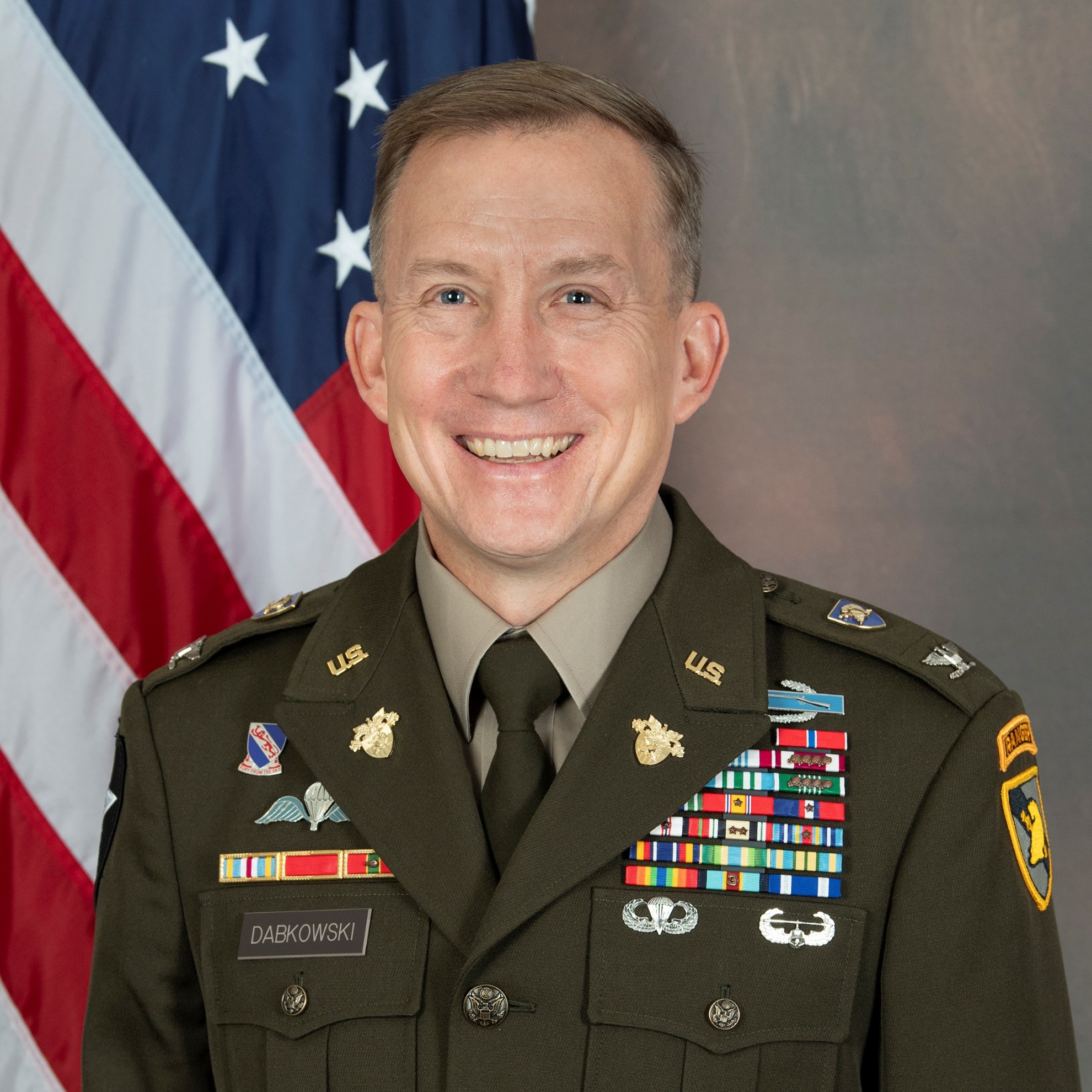
COL Matthew Dabkowski is the Deputy Department Head of the United States Military Academy's Department of Systems Engineering. A 1997 graduate of the United States Military Academy, he earned an MS in Systems Engineering (2007) and a PhD in Systems and Industrial Engineering (2016) from the University of Arizona. His academic career includes roles as an instructor and assistant professor at USMA, with research focusing on systems engineering, decision analysis, and network science. Ph.D. in Systems and Industrial Engineering - University of Arizona (2016) M.S. in Systems Engineering - University of Arizona (2007) B.S. in Operations Research - United States Military Academy (1997) Dabkowski's research spans systems engineering, decision analysis, and network science, with applications in military operations, technical communication pedagogy, and biostatistics. His work develops methodologies for equitable student group assignments, stochastic tradeoff analysis, uncertainty reporting in usability metrics, and social network modeling. Recent publications highlight interdisciplinary collaborations across computer science, engineering education, optometry, and operations research. Key trends include integrating data-driven decision tools into educational frameworks and applying network analysis to deterministic systems with structural equivalence. Scientific Awards: Army Dr. Wilbur B. Payne Award TRAC LTC Paul J. Finken Memorial Award MORS Wayne P. Hughes Junior Analyst Award MORS David Rist Prize Army Operational Analysis Award COL Dabkowski's military service includes combat deployments in Operation IRAQI FREEDOM and leadership roles in data analysis during Operation ENDURING FREEDOM and Operation FREEDOM’S SENTINEL. He continues to contribute to systems engineering education and operational research.
Tianlong Chen is an Assistant Professor in the Department of Computer Science at The University of North Carolina at Chapel Hill , starting in Fall 2024. His research focuses on AI trustworthiness, efficiency, and scientific applications , particularly through sparsity, multimodal learning, and large language model (LLM) innovations. Research Interests include: Sparsity techniques for LLM optimization Multimodal learning and graph neural networks AI safety and privacy preservation Quantum computing applications Biological-informed AI systems Recent Trends in his publications emphasize Mixture-of-Experts (MoE) , LLM safety mechanisms , and lifelong learning architectures . Awards highlight recognition from Amazon, UNC Provost, NAIRR, and AAAI. Scientific Awards : Amazon Research Award (2025) UNC Accelerating AI Awards (2025) NAIRR Pilot Award (2025) CPAL/KAUST Rising Star Awards (2025) AAAI New Faculty Highlights (2025) Advising : Mentors 19 Ph.D. students across UNC Chapel Hill and remote collaborations, focusing on AI4Science, LLMs, and quantum computing. Grants include Cisco Research funding and UNC Provost AI support.
Grigorios Tsinidis is an Assistant Professor at the Department of Civil Engineering, University of Thessaly, specializing in Geotechnical Computational Engineering and Soil-Structure Interaction. His research focuses on the seismic response and vulnerability of underground structures, tunnels, and bridge foundations through numerical and experimental analyses. Education: Diploma (2007), Postgraduate Diploma (2008), PhD (2015) in Civil Engineering from Aristotle University of Thessaloniki. Current Role: Scientific director of the project “INFRARES – Improving the resilience of transport infrastructure to natural hazards” funded by the Hellenic Foundation for Research & Innovation. His publications (>55) emphasize seismic fragility of tunnels, multi-hazard bridge resilience, and risk assessment frameworks. He has served as a reviewer for 26 international journals and worked as a consultant in Austria for seismic design of infrastructure, including railway insulation systems. His recent work integrates AI for geotechnical risk modeling and multi-hazard interaction effects.
Georgios Balomenos is an Adjunct Assistant Professor in Civil Engineering at McMaster University. His academic work focuses on structural reliability, infrastructure resilience, and probabilistic modeling of structural systems under extreme loads. With over 50 publications in the last decade, he maintains an active research profile in civil engineering mechanics. Dr. Balomenos's research interests span several key areas of structural engineering: Earthquake engineering and seismic vulnerability assessment Bridge safety and infrastructure durability modeling Probabilistic analysis of structural systems Multi-hazard impact assessment Structural component behavior under extreme loads Infrastructure management using advanced computational methods His work consistently addresses complex challenges in structural reliability through innovative analytical frameworks. Analysis of Dr. Balomenos's recent publications reveals a strong focus on developing computational frameworks for infrastructure vulnerability assessment. His work frequently employs probabilistic methods, finite element analysis, and machine learning techniques to model structural behavior under diverse hazard scenarios including earthquakes, blasts, fires, and coastal hazards. The publications demonstrate consistent application of fragility modeling across different infrastructure systems. In teaching, Dr. Balomenos has instructed several core civil engineering courses including: Engineering Risk and Reliability (CIVENG 707, 2020-2022) Engineering Mechanics: Dynamics (CIVENG 2Q03, 2020-2022) Structural Dynamics and Seismic Design (CIVENG 4DD4, 2021-2022) Specialized Studies in Civil Engineering (CIVENG 704, 2020) Seismic Design of Structures (CIVENG 4ED4, 2019) This demonstrates substantial involvement in both fundamental mechanics and specialized structural engineering instruction.
Georg Bollweg is a Scientific Staff member at the Mathematical Institute of the University of Munich , affiliated with the Stochastics and Financial Mathematics working group. His research focuses on advanced stochastic modeling and quantitative risk analysis. Research Interests : Model Uncertainty, Sublinear Expectations, Mean-Field SDEs, Affine Processes. Contact : Office B231, Theresienstr. 39, Munich; Phone: +49 (0)89 2180-4488; Email: bollweg@math.lmu.de. Recent publications include studies on mean-field SDEs driven by G-Brownian motion (2025) and non-linear affine processes with jumps (2023), reflecting his expertise in stochastic analysis and financial mathematics. These works align with his broader focus on model uncertainty and risk modeling. His collaborations with scholars like Thilo Meyer-Brandis and Francesca Biagini highlight his engagement in cutting-edge probabilistic research.
Femi Oloye is an Assistant Professor of Chemistry at the University of Pittsburgh within the Division of Physical and Computational Sciences. Previously, he worked as a Research Associate at the Prof. John Giesy laboratory, University of Saskatchewan, and as a Lead Wastewater Scientist at the Roy Romanow Provincial Laboratory in Canada. His academic journey includes a Ph.D. in Chemistry from the University of Aberdeen, UK, and a BSc in Industrial Chemistry from Adekunle Ajasin University, Nigeria. Research Focus: Oloye specializes in synthesizing novel nanomaterials for catalytic applications and studying the environmental chemo-dynamics of pollutants . His work spans heterogeneous catalysis for hydro-isomerization, photocatalytic materials , and ecotoxicology of agrochemicals and pharmaceuticals. He employs advanced characterization techniques like XRD , Raman Spectroscopy , and XPS to analyze catalysts and pollutants. Key Trends in Publications: Oloye's research bridges environmental health , virology , and catalysis . Recent studies focus on SARS-CoV-2 wastewater surveillance , heavy metal contamination , and herbicide safener toxicity . Earlier works emphasize molybdenum-based catalysts for fuel efficiency and pollutant sorption mechanisms .